
Peatland Restoration Information Monitoring System PRIMS Peatland Restoration

- Slides: 15
Peatland Restoration Information & Monitoring System (PRIMS) © Peatland Restoration Agency – 2019
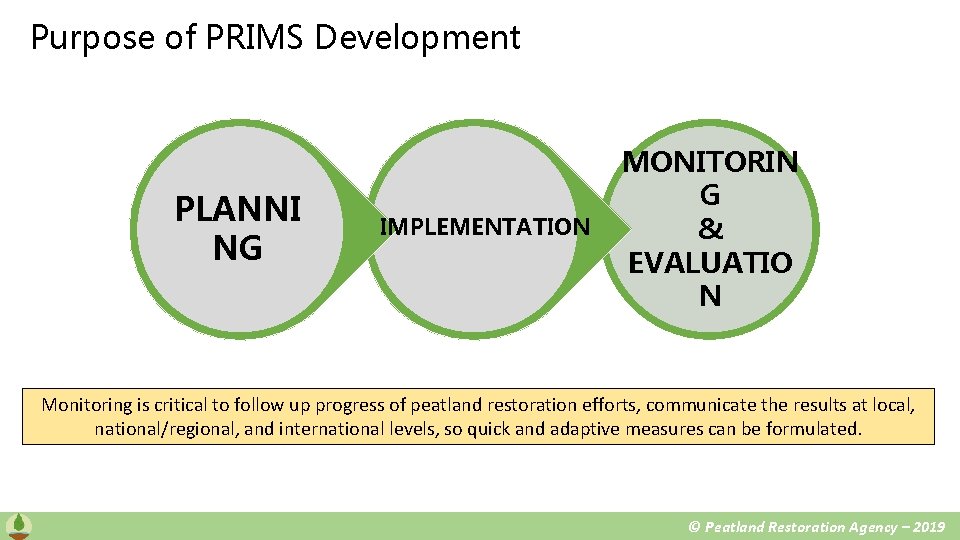
Purpose of PRIMS Development PLANNI NG IMPLEMENTATION MONITORIN G & EVALUATIO N Monitoring is critical to follow up progress of peatland restoration efforts, communicate the results at local, national/regional, and international levels, so quick and adaptive measures can be formulated. © Peatland Restoration Agency – 2019
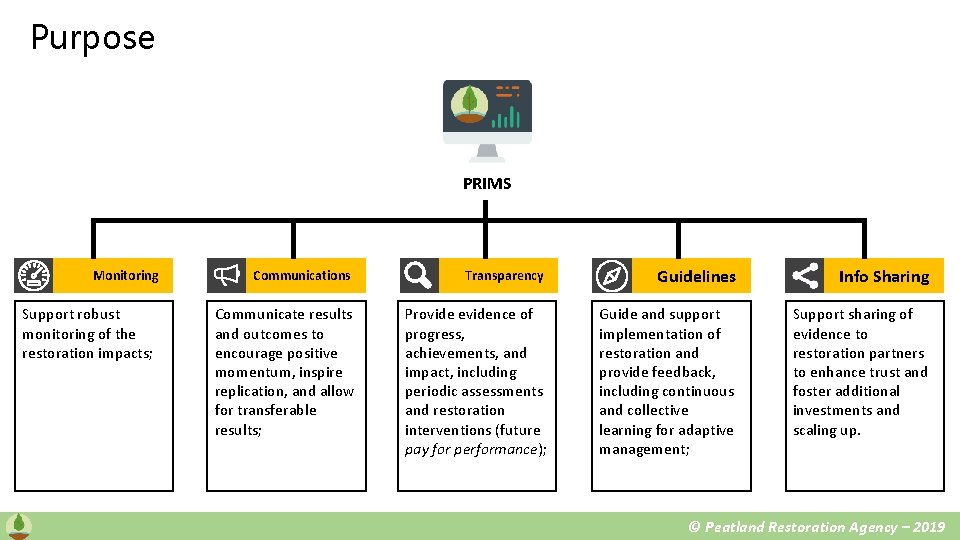
Purpose PRIMS Monitoring Support robust monitoring of the restoration impacts; Communications Transparency Guidelines Info Sharing Communicate results and outcomes to encourage positive momentum, inspire replication, and allow for transferable results; Provide evidence of progress, achievements, and impact, including periodic assessments and restoration interventions (future pay for performance); Guide and support implementation of restoration and provide feedback, including continuous and collective learning for adaptive management; Support sharing of evidence to restoration partners to enhance trust and foster additional investments and scaling up. © Peatland Restoration Agency – 2019
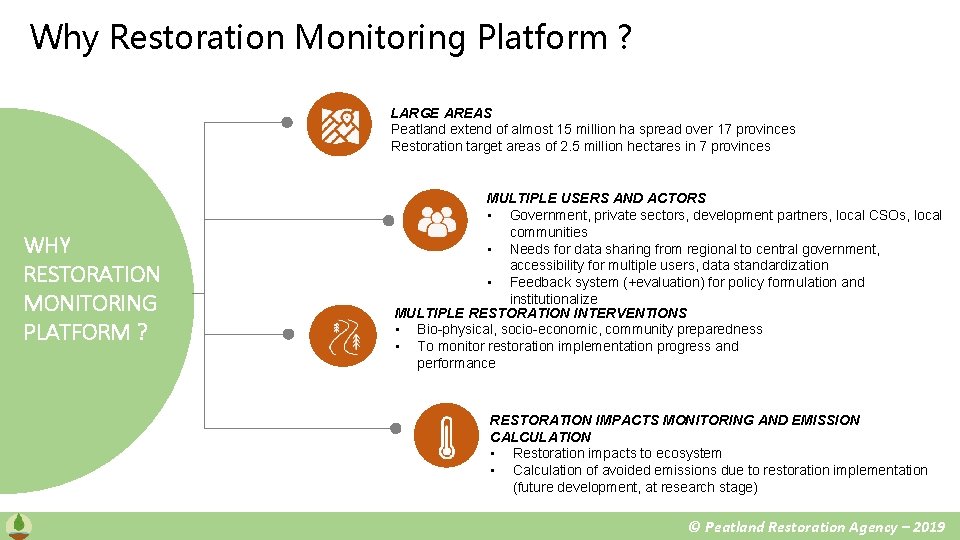
Why Restoration Monitoring Platform ? LARGE AREAS Peatland extend of almost 15 million ha spread over 17 provinces Restoration target areas of 2. 5 million hectares in 7 provinces WHY RESTORATION MONITORING PLATFORM ? MULTIPLE USERS AND ACTORS • Government, private sectors, development partners, local CSOs, local communities • Needs for data sharing from regional to central government, accessibility for multiple users, data standardization • Feedback system (+evaluation) for policy formulation and institutionalize MULTIPLE RESTORATION INTERVENTIONS • Bio-physical, socio-economic, community preparedness • To monitor restoration implementation progress and performance RESTORATION IMPACTS MONITORING AND EMISSION CALCULATION • Restoration impacts to ecosystem • Calculation of avoided emissions due to restoration implementation (future development, at research stage) © Peatland Restoration Agency – 2019
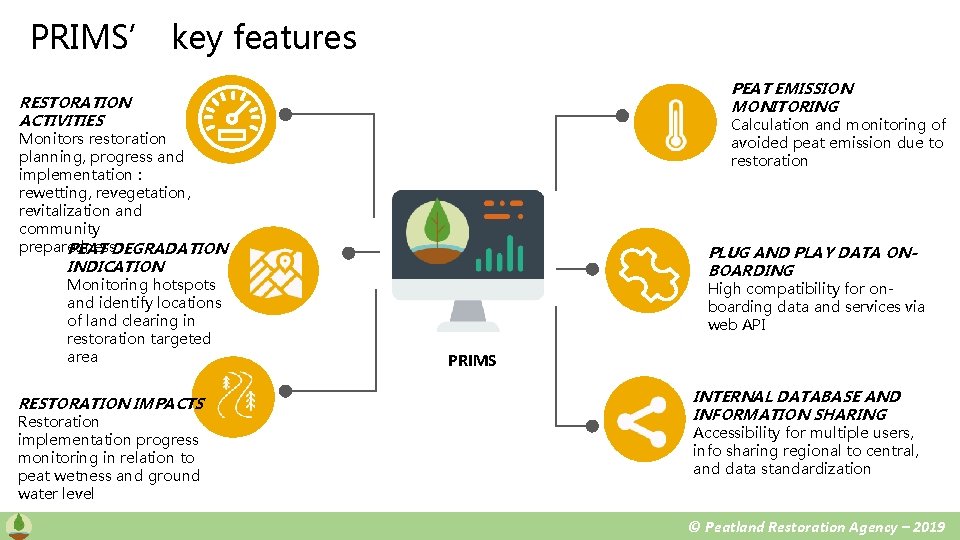
PRIMS’ key features PEAT EMISSION MONITORING RESTORATION ACTIVITIES Calculation and monitoring of avoided peat emission due to restoration Monitors restoration planning, progress and implementation : rewetting, revegetation, revitalization and community preparedness PEAT DEGRADATION PLUG AND PLAY DATA ONBOARDING INDICATION Monitoring hotspots and identify locations of land clearing in restoration targeted area RESTORATION IMPACTS Restoration implementation progress monitoring in relation to peat wetness and ground water level High compatibility for onboarding data and services via web API PRIMS INTERNAL DATABASE AND INFORMATION SHARING Accessibility for multiple users, info sharing regional to central, and data standardization © Peatland Restoration Agency – 2019
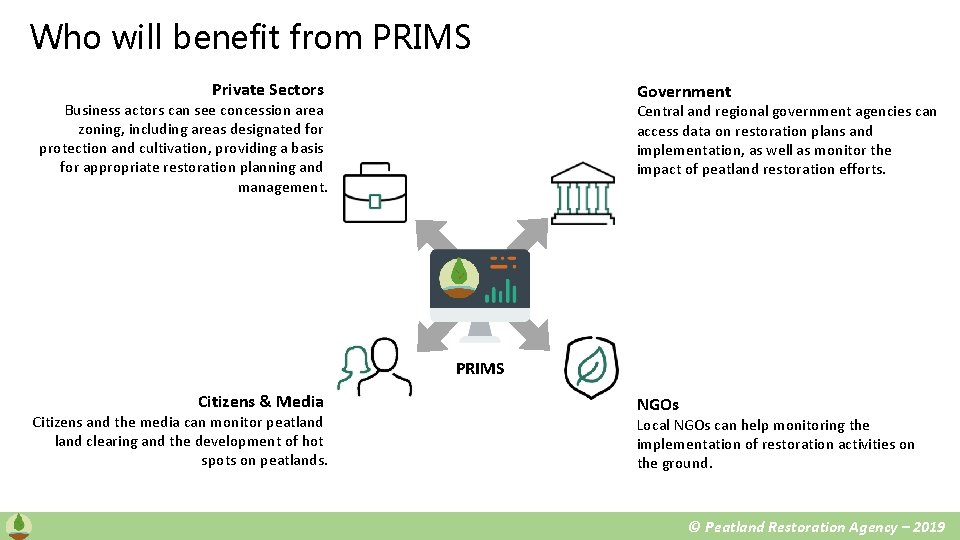
Who will benefit from PRIMS Private Sectors Government Business actors can see concession area zoning, including areas designated for protection and cultivation, providing a basis for appropriate restoration planning and management. Central and regional government agencies can access data on restoration plans and implementation, as well as monitor the impact of peatland restoration efforts. PRIMS Citizens & Media Citizens and the media can monitor peatland clearing and the development of hot spots on peatlands. NGOs Local NGOs can help monitoring the implementation of restoration activities on the ground. © Peatland Restoration Agency – 2019
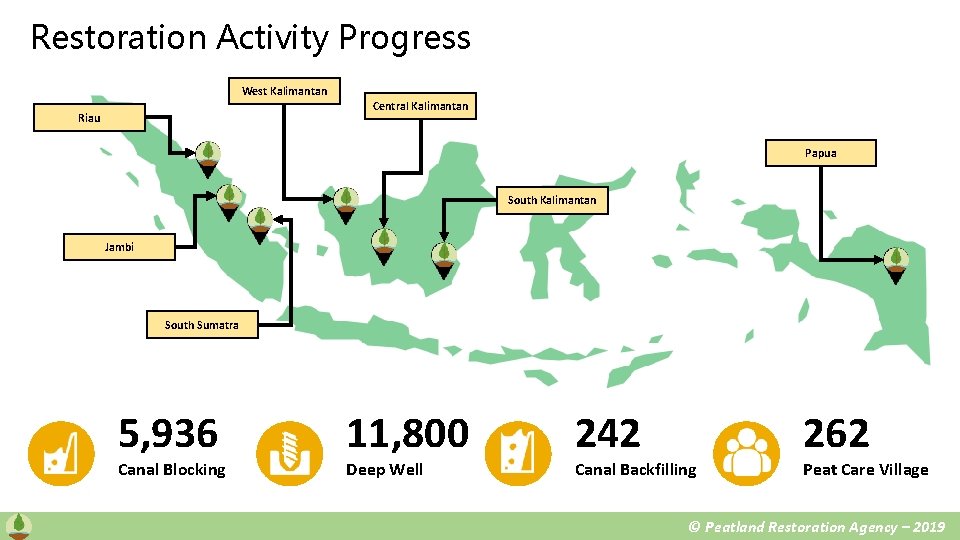
Restoration Activity Progress West Kalimantan Central Kalimantan Riau Papua South Kalimantan Jambi South Sumatra 5, 936 Canal Blocking 11, 800 Deep Well 242 Canal Backfilling 262 Peat Care Village © Peatland Restoration Agency – 2019
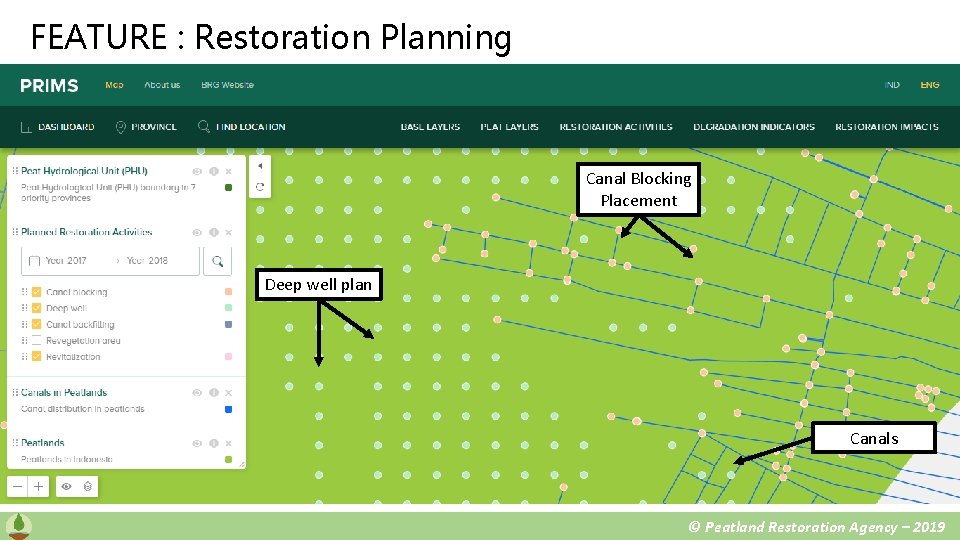
FEATURE : Restoration Planning Canal Blocking Placement Deep well plan Canals © Peatland Restoration Agency – 2019
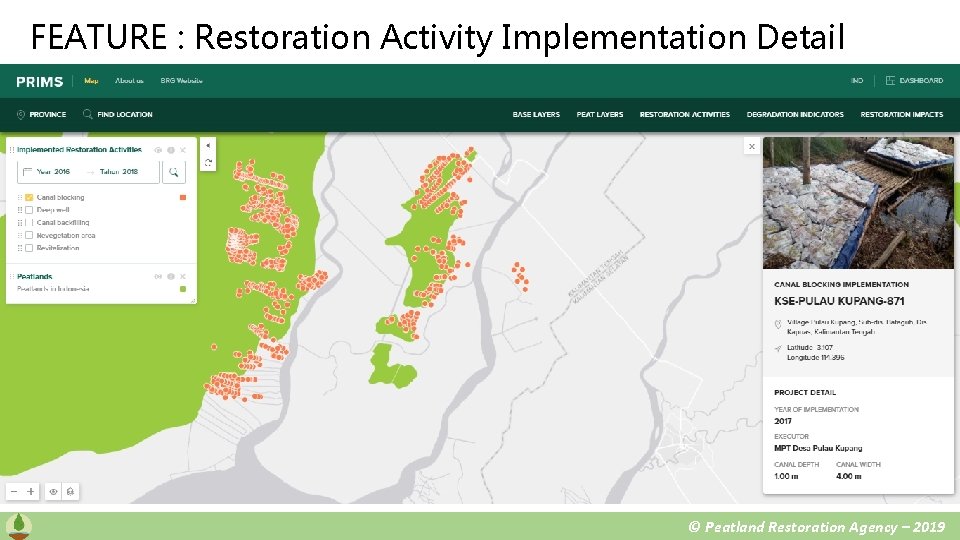
FEATURE : Restoration Activity Implementation Detail © Peatland Restoration Agency – 2019
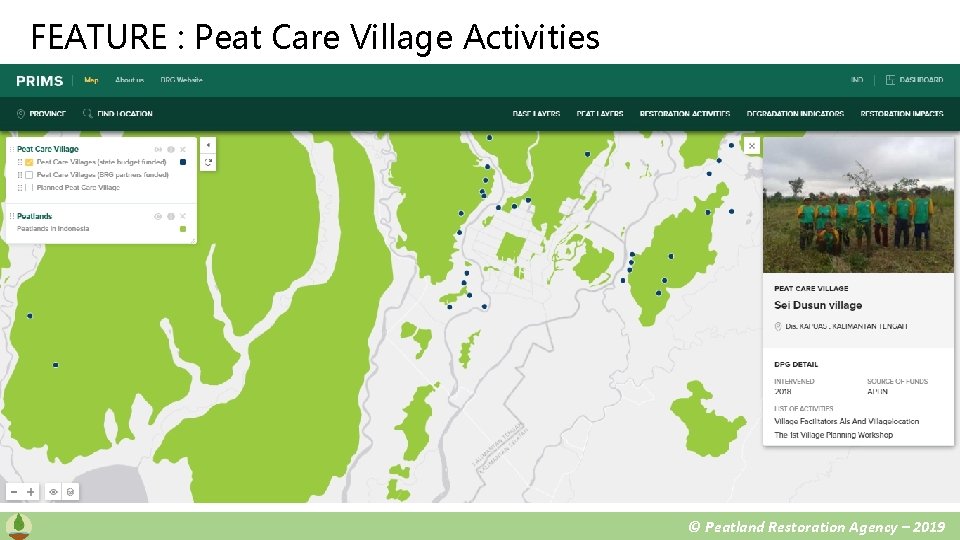
FEATURE : Peat Care Village Activities © Peatland Restoration Agency – 2019
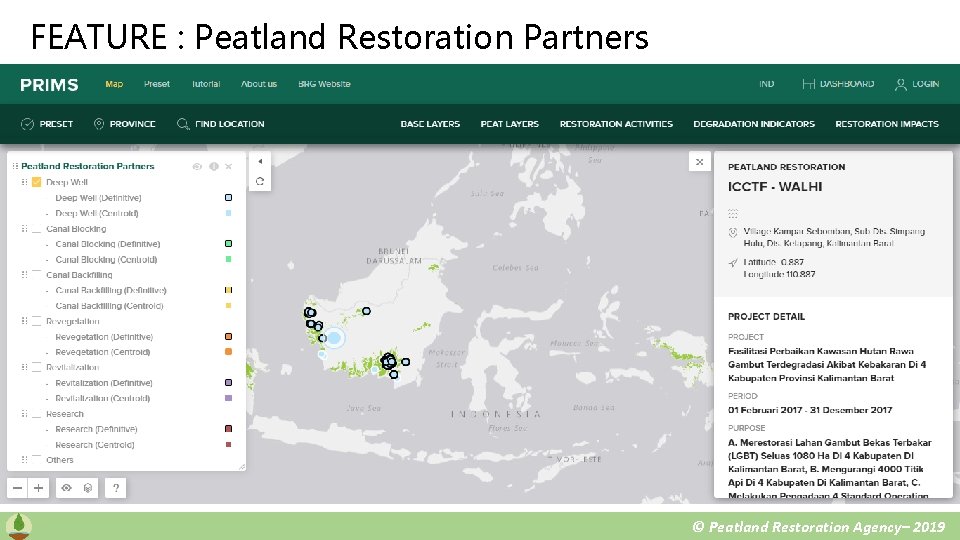
FEATURE : Peatland Restoration Partners © Peatland Restoration Agency– 2019
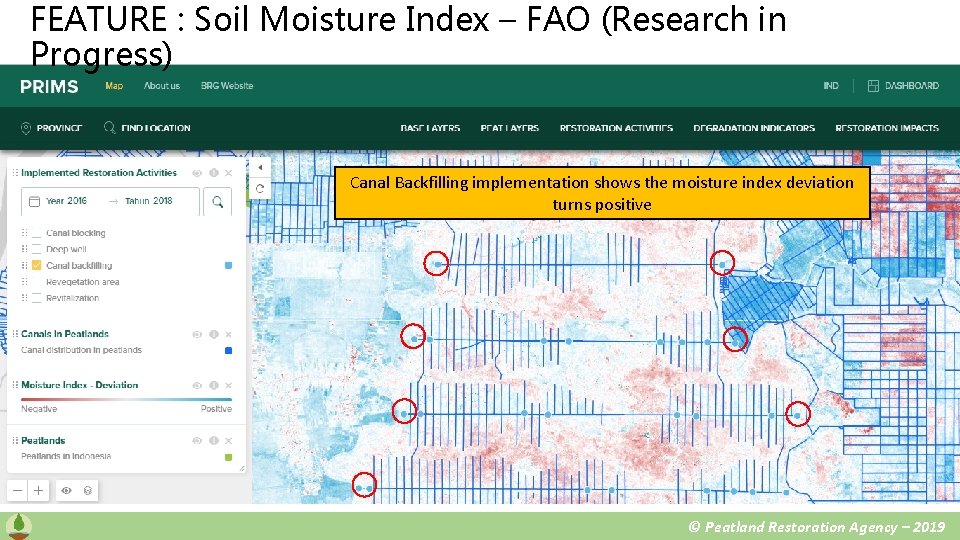
FEATURE : Soil Moisture Index – FAO (Research in Progress) Canal Backfilling implementation shows the moisture index deviation turns positive © Peatland Restoration Agency – 2019
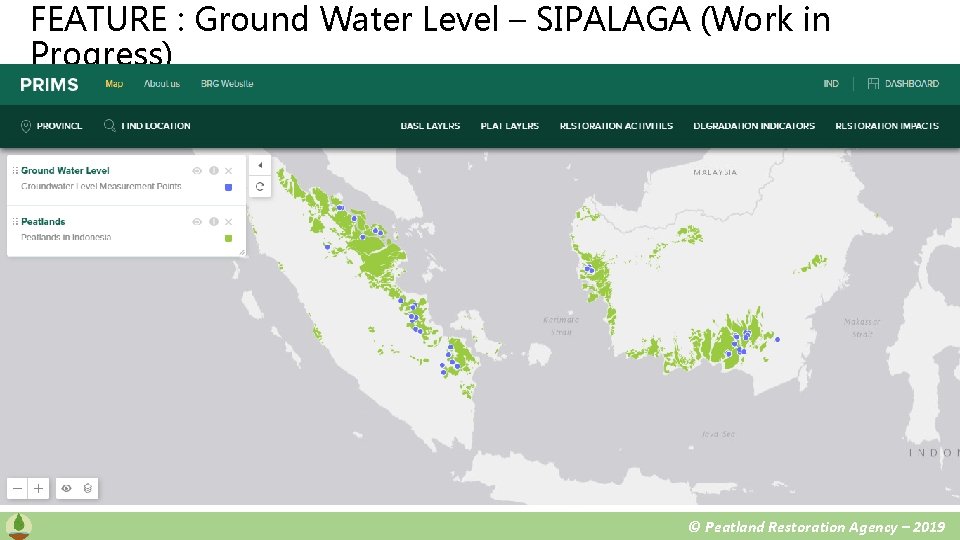
FEATURE : Ground Water Level – SIPALAGA (Work in Progress) © Peatland Restoration Agency – 2019
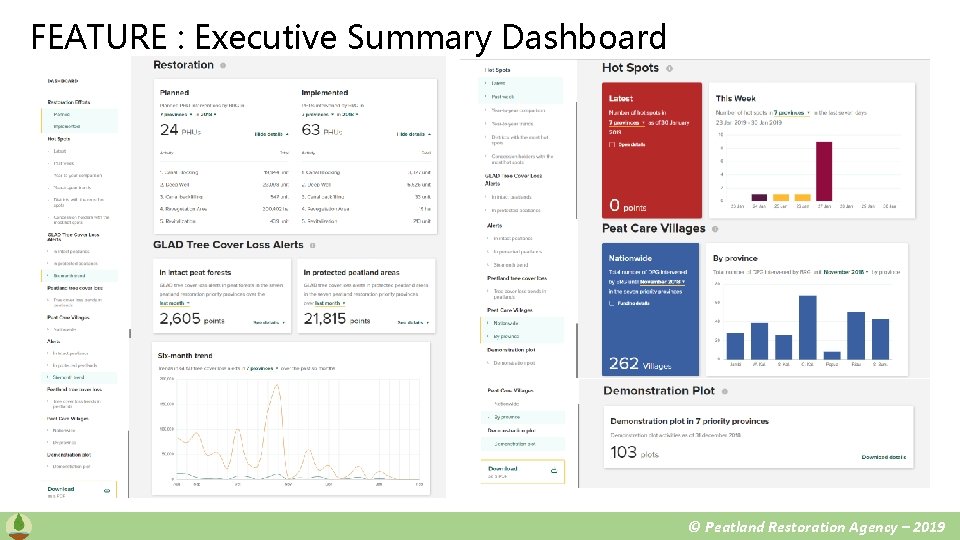
FEATURE : Executive Summary Dashboard © Peatland Restoration Agency – 2019
THANK YOU © Peatland Restoration Agency – 2019