
Pearls on Underwriting Liver Disease including Hep B
Pearls on Underwriting Liver Disease including Hep B, Hep C, Alcoholic and Fatty Liver Disease Elyssa Del Valle, M. D. Vice President & Medical Director March 2019

AGENDA § Epidemiology Of Our Top Liver Conditions § Liver Biopsy: Historical Review § Predicting Cirrhosis Without Liver Biopsy: Making diagnosis at the bedside! § Fibro. Sure/Fibrotest and Hepa. Score/Fibro. Score § Fibro. Scan § Underwriting Risks for Hep B, Hep C, ALD and NAFLD using Noninvasive Testing § Case examples 2
Top Liver Conditions in Developed Countries § Chronic viral hepatitis (B and C) – increase in Hep C related to IV heroin on rise § Alcoholic liver disease § Hemochromatosis (iron overload) § Nonalcoholic fatty liver disease (NAFLD) Less common causes: Autoimmune hepatitis, Primary and secondary biliary cirrhosis, Primary Sclerosing Cholangitis, Wilson, Alpha 1 antitrypsin deficiency, Celiac, Granulomatous liver disease, Polycystic liver diseases, Infection (brucellosis, syphilis, echinococcosis), Right heart failure, Osler Weber, veno-occlusive disease 3
Top Liver Conditions in Developing Countries § Highest burden is Hepatitis B via vertical transmission Mother to Child § Hepatitis E especially in Africa and Asia from contaminated waters § Concomitant HIV with or without Hep B or C § Alcoholism § Aflatoxin (carcinogen) especially in sub-Saharan Africa and China § Liver cancer is most common cause of cancer in men in 11 developing countries: Mongolia, Gambia, Thailand, South Korea, Taiwan, North Korea, Guinea, Mali, Cameroon, Tonga and Guinea-Bissau (in order of most to least) § Liver flukes-Clonorchiasis – high association with cholangiocarcinoma 4
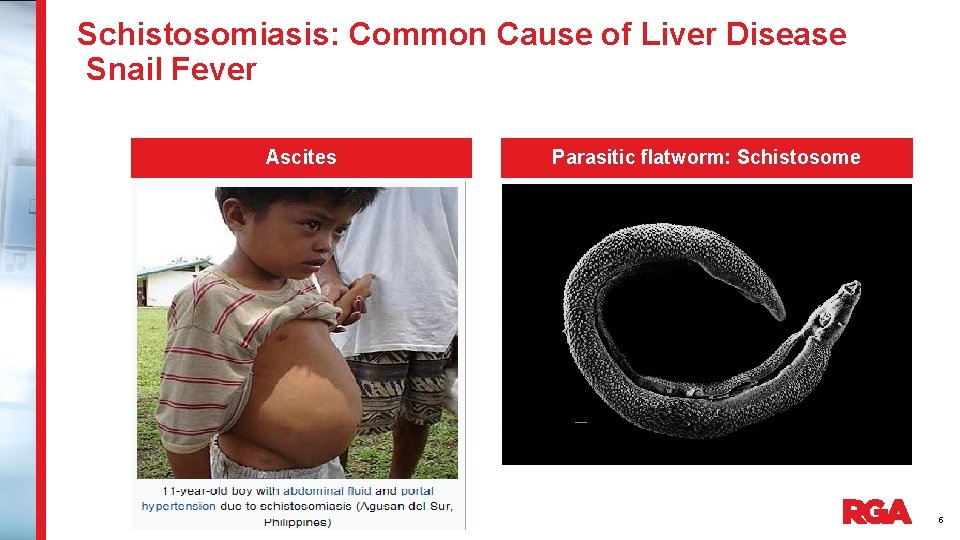
Schistosomiasis: Common Cause of Liver Disease Snail Fever Ascites Parasitic flatworm: Schistosome 5
Prevalence of Hepatitis B § Estimated 350 million worldwide have Chronic Hep B § 2 Billion are infected at some point in their life § Most prevalent in Western Pacific and Africa in which 6% of population infected; South-East Asia, China, Taiwan, Sub-Saharan Africa and the Amazon basin with prevalence up to 60%; Rates falling with increased Hep B vaccination § Those at risk for chronic disease: depends mostly on age at which infected In infants and children: 80 -90% of infants infected during the first year of life 30 -50% of children infected before age 6 In adults: Less than 5% of otherwise healthy persons infected Concern is 20 -30% of adults with chronic Hep B will develop cirrhosis and/or liver cancer Data from EASL Paris 2018 Liver Congress 6
Prevalence of Hepatitis C § HCV most widespread transmissible disease globally, infecting 185 million people worldwide (3% of world population) of which 71 million have Chronic Hep C § 14 -45% spontaneously clear the virus within 6 months § UK National HCV database: 1/3 of those < 18 yrs old have HCV (53% by IV drug use) § Egypt has highest prevalence with estimated 40, 000 death per year; 10% between ages 15 -59 have chronic hep C § Baby boomers born between 1945 -1965 make up 75% of cases of Hep C per CDC in USA § Why Baby Boomers? 1970 -1980 highest rates of Hep C Non A/non B Hep not isolated in blood products until 1992 Universal precautions were not implemented until 1990 s § HCV the silent pandemic Stats from EASL Amsterdam liver congress April 2017 7
Prevalence of NAFLD and NASH § NAFLD has doubled over last 20 yrs, affecting 20% of world population § 34% of Americans § Associated with obesity and DM and together are considered #1 cause of liver disease in Western countries § Estimated from 2 large European studies that 43 -70% with DM type 2 have NAFLD (EASL Amsterdam Liver Congress 2017) § Estimated up to 10% of American children have NAFLD per CDC § 10 -30% with NAFLD have NASH § 6 million estimated in USA have NASH § 25% of those with NASH have cirrhosis 8
Prevalence of ALD § Most prevalent cause of advanced liver disease in Europe § Estimated 10 -35% of alcoholics have ALD § Common for those with ALD to share other risk factors such as NAFLD or chronic viral hepatitis § Synergy with combination of HCV and alcohol: Cohort study found 30 fold increase in cirrhosis w/heavy ETOH and post transfusion Hep C Per EASL Barcelona 2016 9
What Increases Risk of ALD? Increase risk for cirrhosis if >60 gm/day for > 10 yrs in men and >20 gms/day in women. Yet only 6 -41% develop cirrhosis. Denmark found drinking beer and spirits over wine was a factor in ALD (per survey of 30, 000) Drinking outside of meal times increases risk of ALD by almost 3 fold Binge drinking: Defined as > 5 drinks in men and > 4 in women in 2 hour period Protein calorie malnutrition – mortality directly proportional to degree of malnutrition with up to 80% mortality with severe malnutrition (< 50% of normal nutritional intake) 10
Prevalence of Liver Cirrhosis § Globally, estimated one million deaths in 2010 (equates to 2% of all deaths worldwide) d/t cirrhosis § Most liver transplants are for those with histories of ALD and Hep C 11
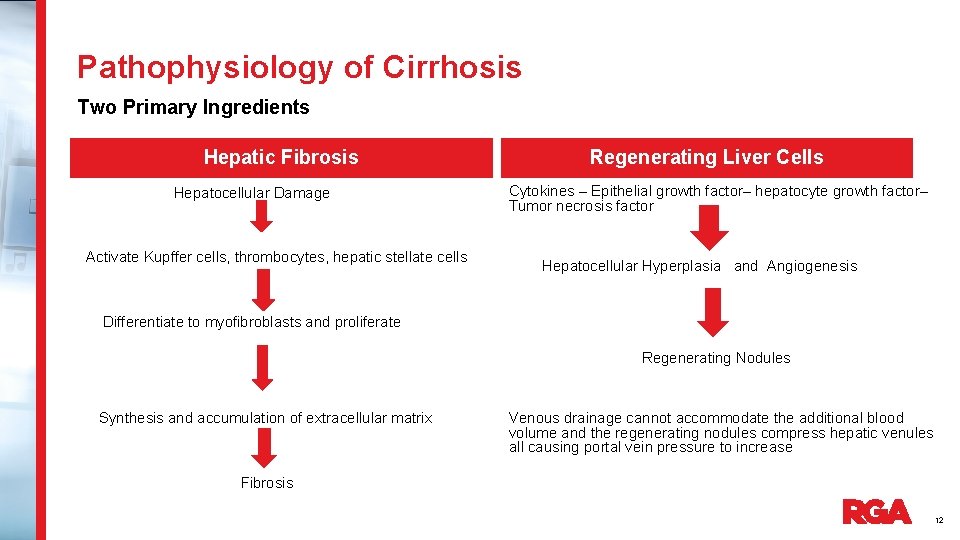
Pathophysiology of Cirrhosis Two Primary Ingredients Hepatic Fibrosis Hepatocellular Damage Activate Kupffer cells, thrombocytes, hepatic stellate cells Regenerating Liver Cells Cytokines – Epithelial growth factor– hepatocyte growth factor-Tumor necrosis factor Hepatocellular Hyperplasia and Angiogenesis Differentiate to myofibroblasts and proliferate Regenerating Nodules Synthesis and accumulation of extracellular matrix Venous drainage cannot accommodate the additional blood volume and the regenerating nodules compress hepatic venules all causing portal vein pressure to increase Fibrosis 12
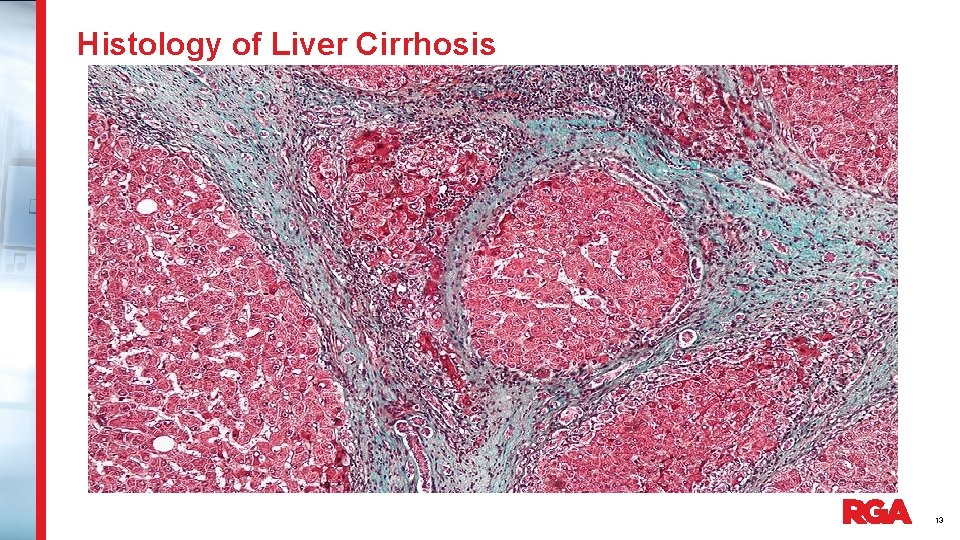
Histology of Liver Cirrhosis 13
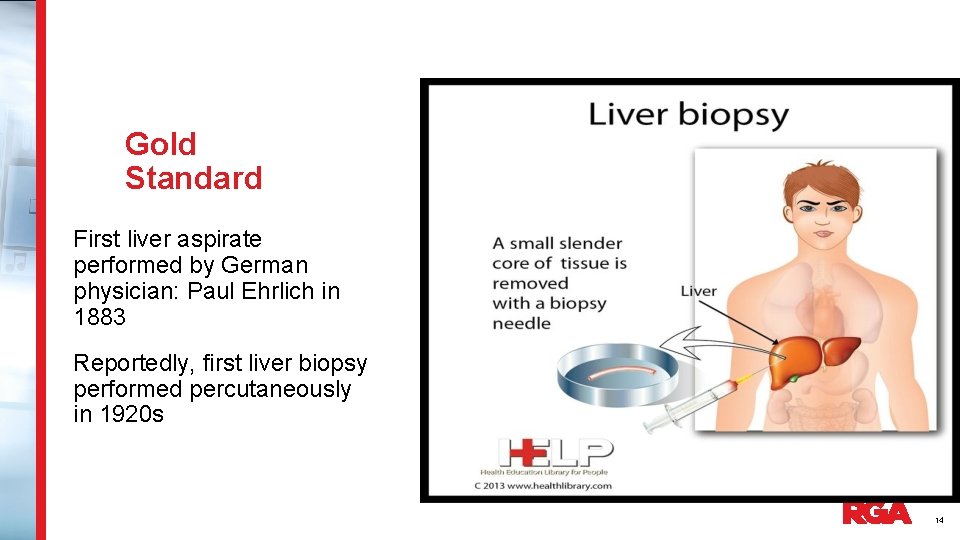
Gold Standard First liver aspirate performed by German physician: Paul Ehrlich in 1883 Reportedly, first liver biopsy performed percutaneously in 1920 s 14
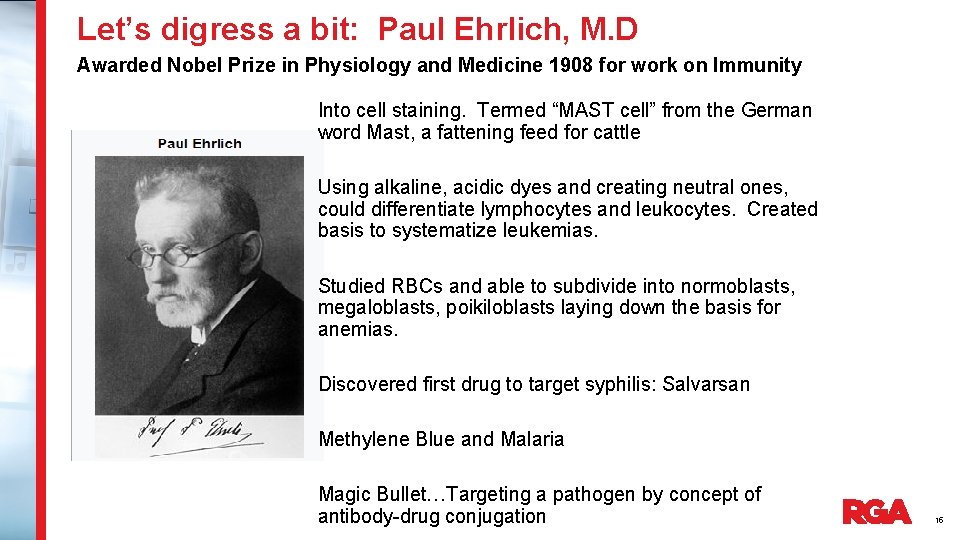
Let’s digress a bit: Paul Ehrlich, M. D Awarded Nobel Prize in Physiology and Medicine 1908 for work on Immunity Into cell staining. Termed “MAST cell” from the German word Mast, a fattening feed for cattle Using alkaline, acidic dyes and creating neutral ones, could differentiate lymphocytes and leukocytes. Created basis to systematize leukemias. Studied RBCs and able to subdivide into normoblasts, megaloblasts, poikiloblasts laying down the basis for anemias. Discovered first drug to target syphilis: Salvarsan Methylene Blue and Malaria Magic Bullet…Targeting a pathogen by concept of antibody-drug conjugation 15
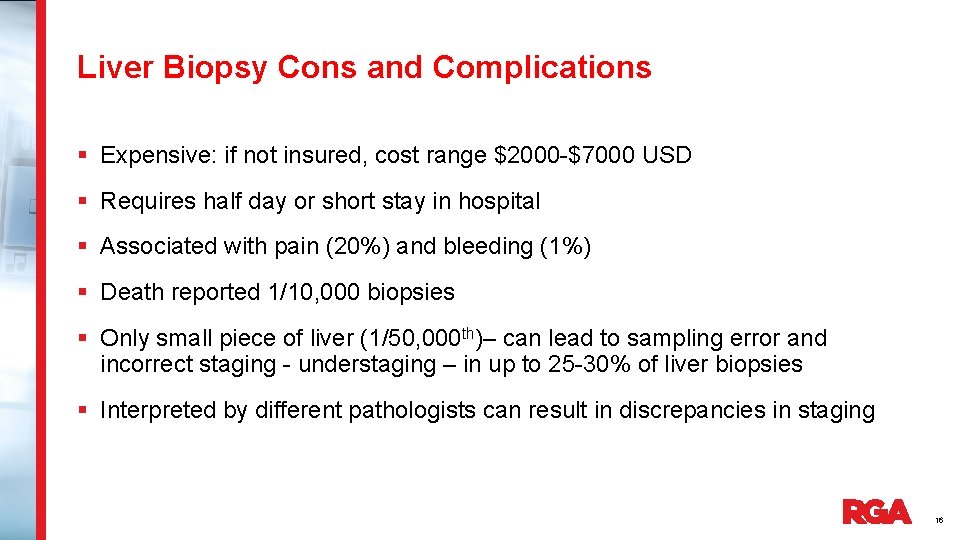
Liver Biopsy Cons and Complications § Expensive: if not insured, cost range $2000 -$7000 USD § Requires half day or short stay in hospital § Associated with pain (20%) and bleeding (1%) § Death reported 1/10, 000 biopsies § Only small piece of liver (1/50, 000 th)– can lead to sampling error and incorrect staging - understaging – in up to 25 -30% of liver biopsies § Interpreted by different pathologists can result in discrepancies in staging 16
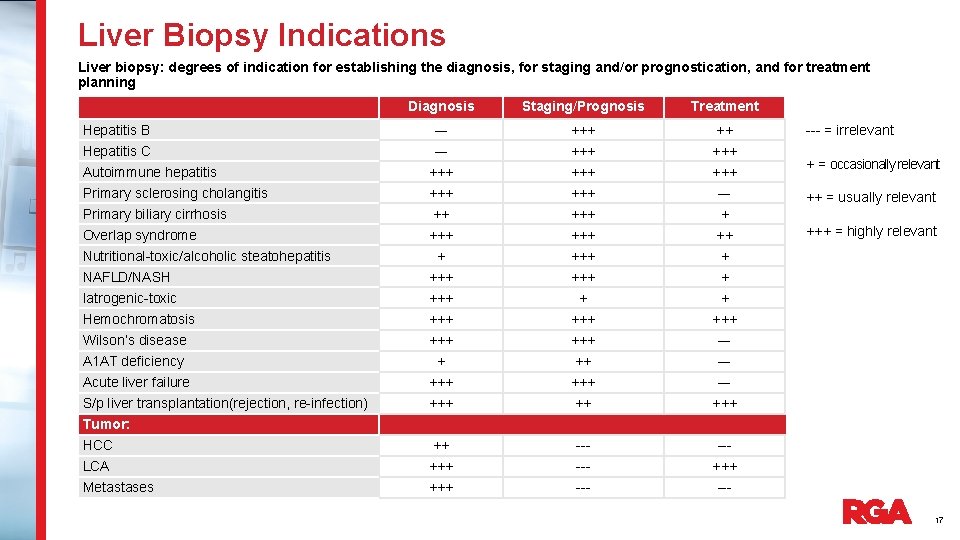
Liver Biopsy Indications Liver biopsy: degrees of indication for establishing the diagnosis, for staging and/or prognostication, and for treatment planning Diagnosis Staging/Prognosis Treatment Hepatitis B –- +++ ++ Hepatitis C –- +++ Autoimmune hepatitis +++ +++ Primary sclerosing cholangitis +++ –- Primary biliary cirrhosis ++ + Overlap syndrome +++ +++ + NAFLD/NASH +++ + Iatrogenic-toxic +++ + + Hemochromatosis +++ +++ Wilson’s disease +++ –- A 1 AT deficiency + ++ –- Acute liver failure +++ –- S/p liver transplantation(rejection, re-infection) +++ ++ +++ HCC ++ --- LCA +++ --- +++ Metastases +++ --- Nutritional-toxic/alcoholic steatohepatitis --- = irrelevant + = occasionally relevant ++ = usually relevant +++ = highly relevant Tumor: 17
Classification of Liver Histology § Grade – Inflammation § Stage - Fibrosis 18
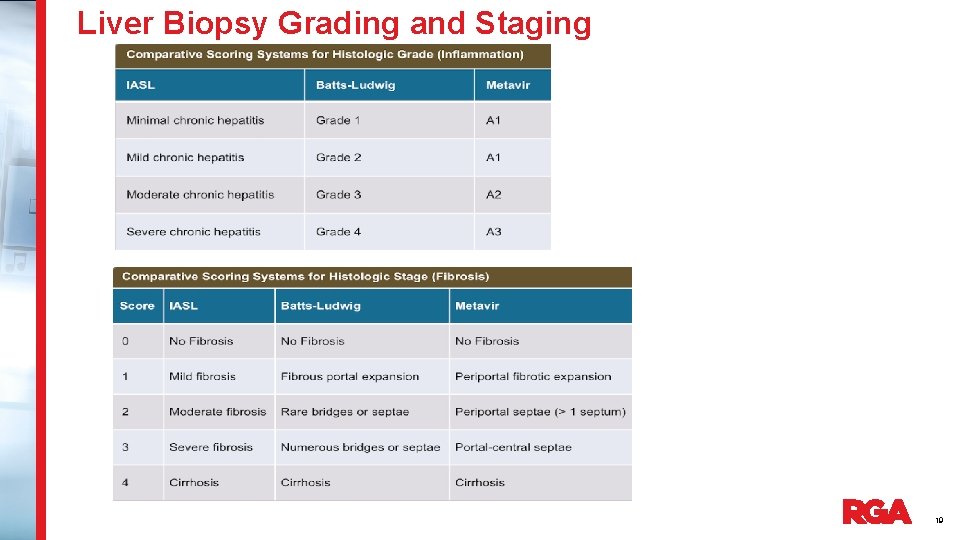
Liver Biopsy Grading and Staging 19
Key Points On Liver Biopsy § The indications for biopsy must be weighed against the risk of complications § Liver biopsy - means of securing the initial diagnosis of autoimmune diseases including AIH, PSC, mixed forms of both AIH and PSC (overlapping syndrome) and PBC § Among all diagnostic methods for hepatic nodules, liver biopsy has the greatest sensitivity and specificity with respect to determination of malignancy § Liver bx not necessary if clinical, labs and radiologic data strongly suggest the presence of cirrhosis or results do not alter the patient’s management 20
How to Suspect Liver Cirrhosis w/o Biopsy § Stigmata of chronic liver disease: physical exam findings § Evidence of cirrhosis on lab or radiologic testing or by direct visualization while undergoing surgical procedure § Evidence of decompensated cirrhosis: esophageal varices, ascites, spontaneous bacterial peritonitis or hepatic encephalopathy Meta-analysis found best ability to predict cirrhosis: Presence of ascites Platelet counts < 160 K Spider angiomas Bonacini cirrhosis discriminant score greater than 7 21
Stigmata of Liver Disease Physical Exam Findings 22
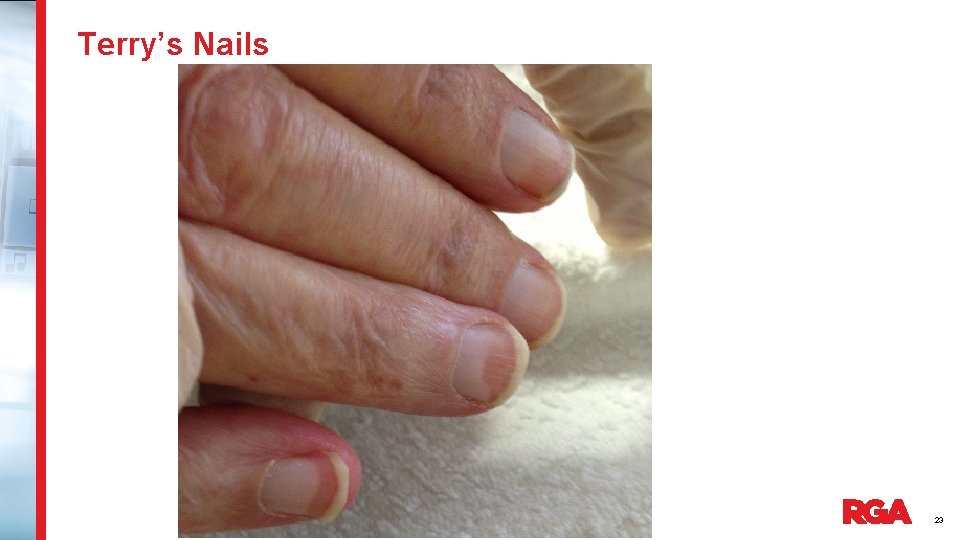
Terry’s Nails 23
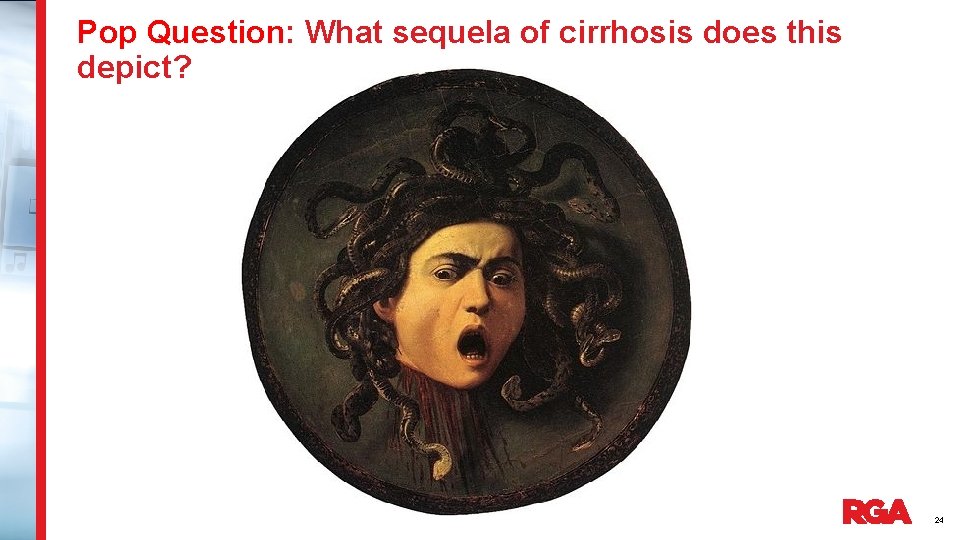
Pop Question: What sequela of cirrhosis does this depict? 24
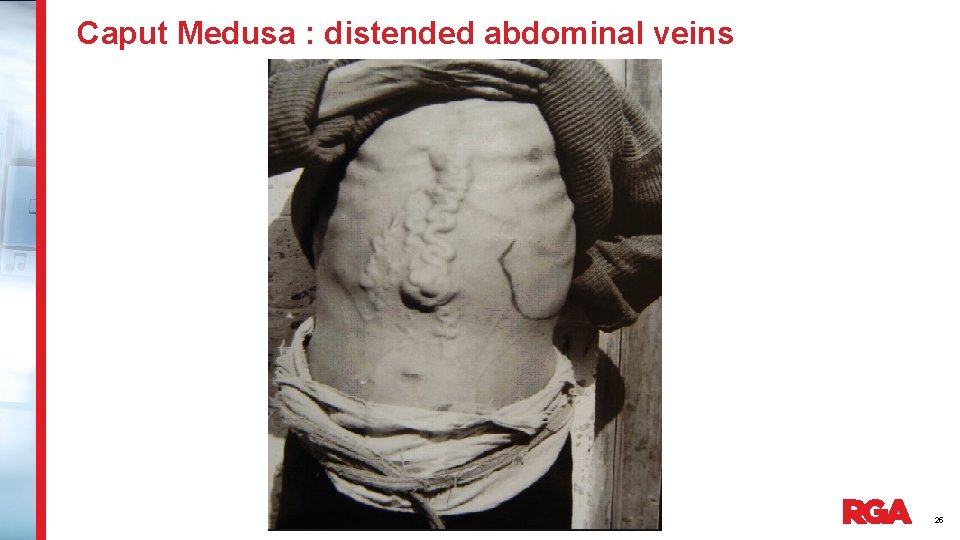
Caput Medusa : distended abdominal veins 25
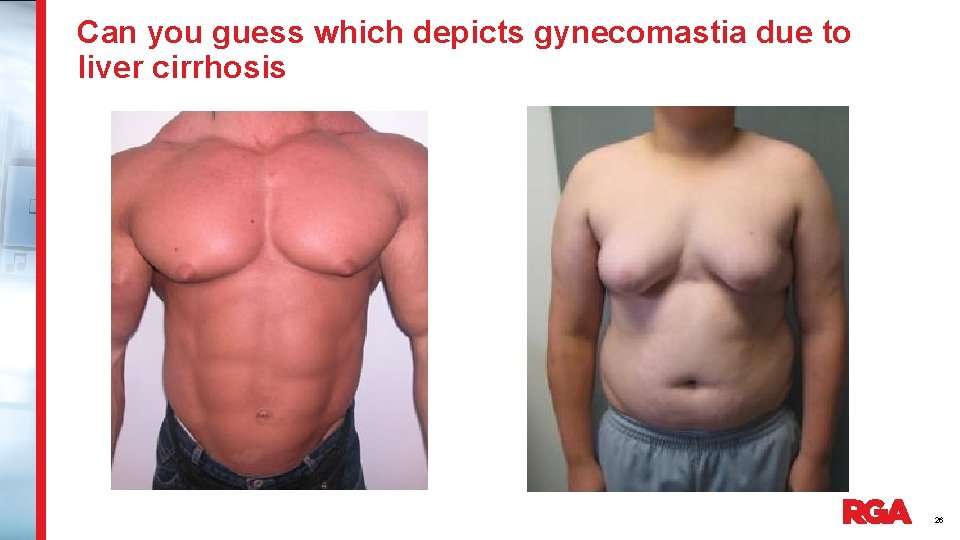
Can you guess which depicts gynecomastia due to liver cirrhosis 26
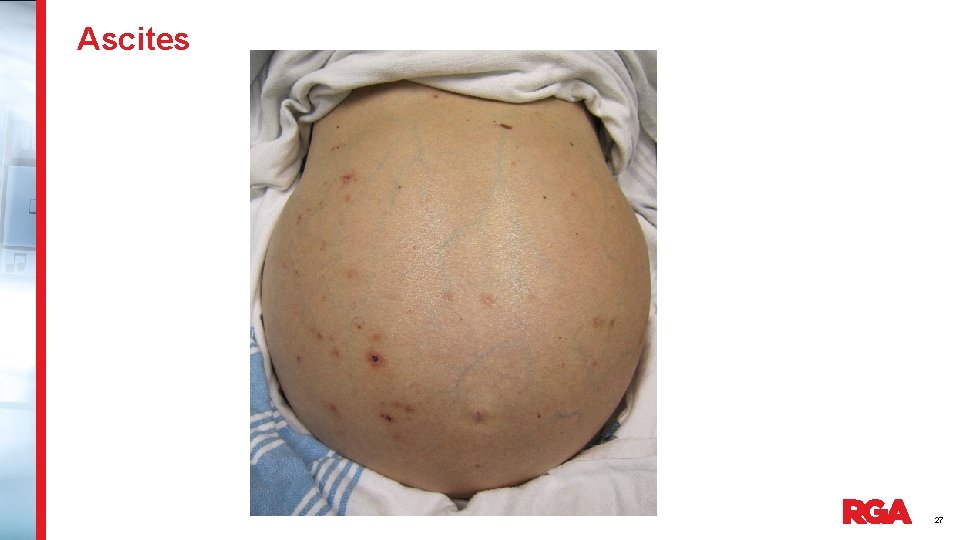
Ascites 27
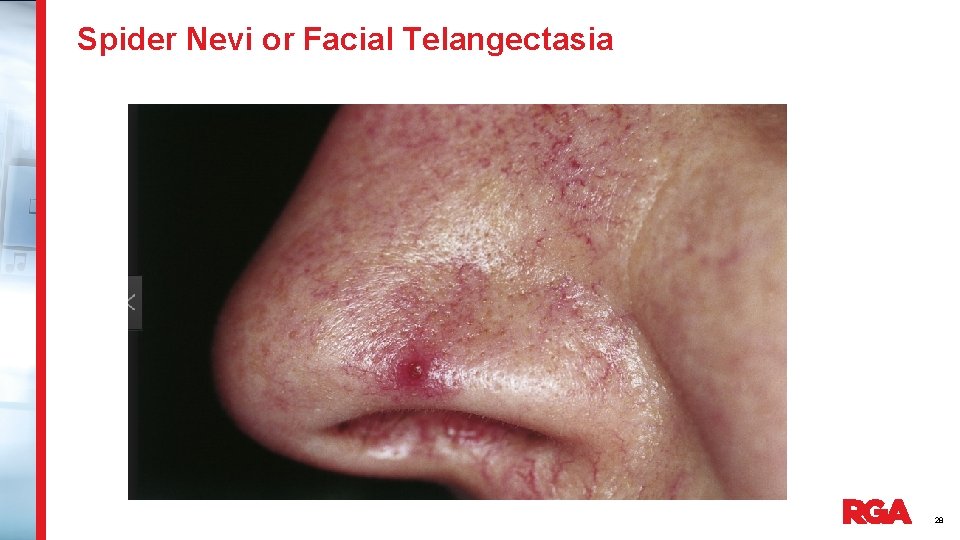
Spider Nevi or Facial Telangectasia 28
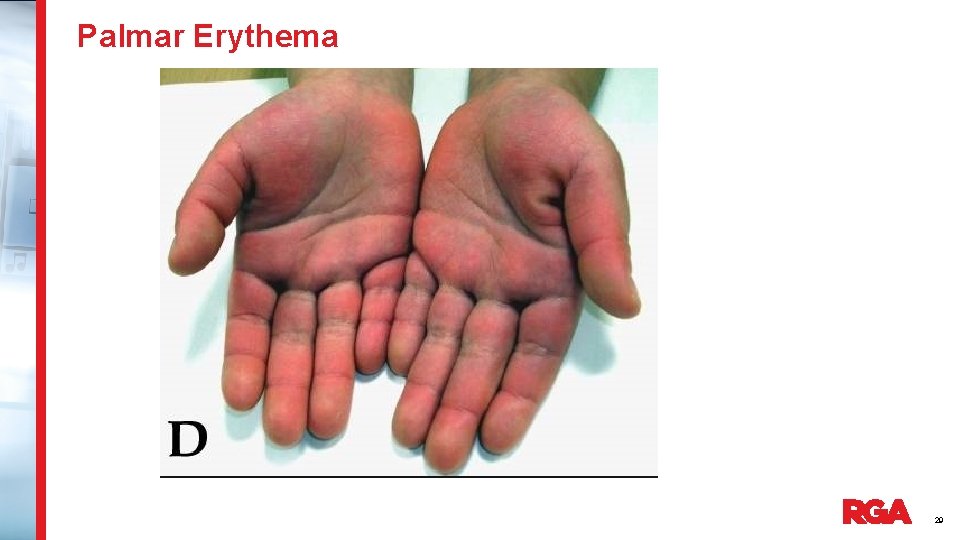
Palmar Erythema 29
William Bean’s poem on Spider nevi An older Miss Muffett Decided to rough it And lived upon whisky and gin. Red hands and a spider Developed outside her – Such are the wages of sin. Bean studied spider nevi extensively and noted its association with alcoholic cirrhosis. He was a British physician of the 19 th century 30
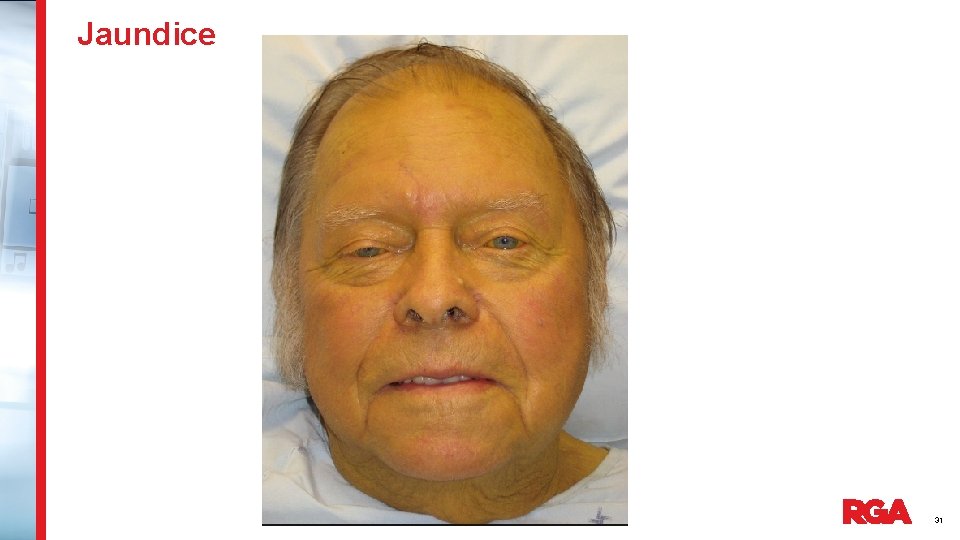
Jaundice 31

Now for the PEARLS to make your lives easier!! 52 yr old global business man with truncal obesity, social ETOH, ED, gynecomastia, platelets 170 K, nml LFTs w/ ALT 20, AST 35, nonreactive Hep. BSAg and nonreactive Hep. CAb on Spironolactone, Nexium and Viagra That’s all you have and there is enough info to provide an action. 32
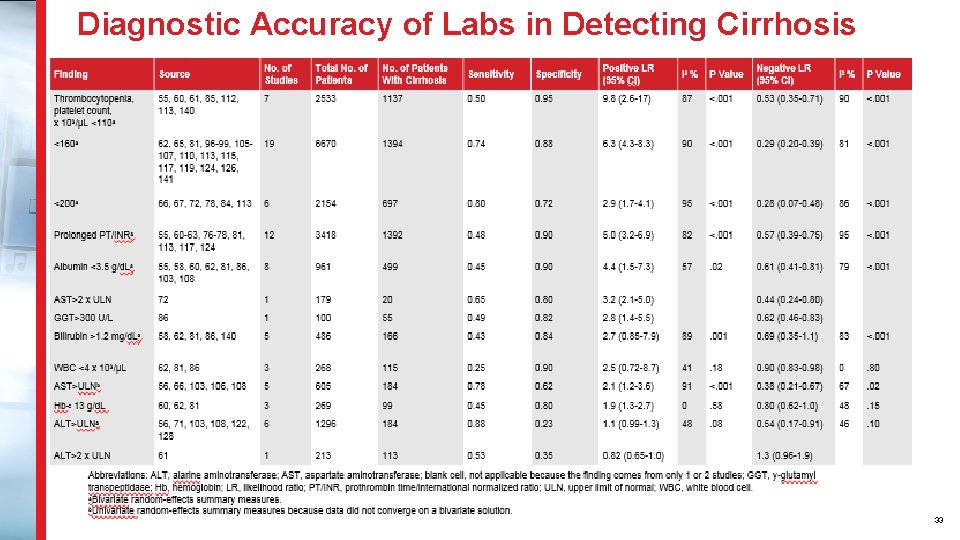
Diagnostic Accuracy of Labs in Detecting Cirrhosis 33
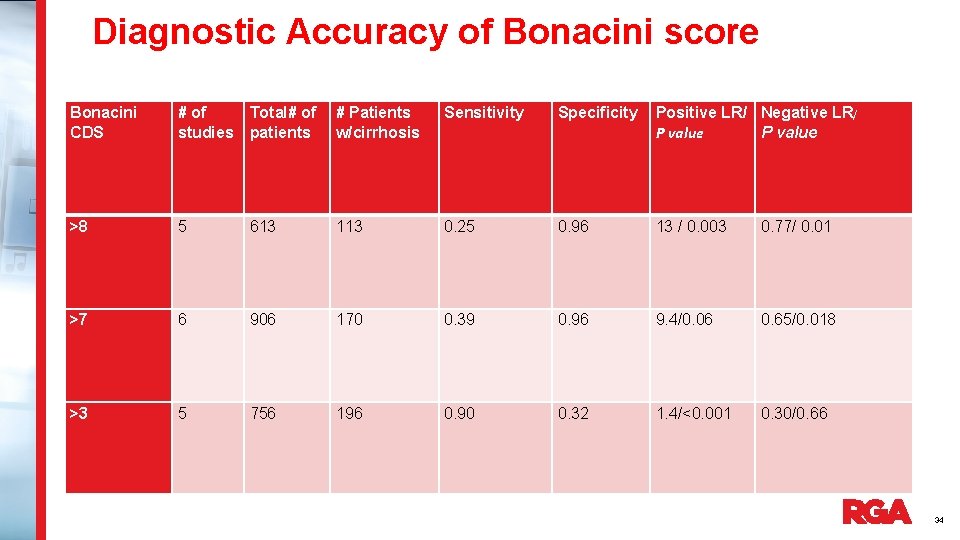
Diagnostic Accuracy of Bonacini score Bonacini CDS # of studies Total# of patients # Patients w/cirrhosis Sensitivity Specificity Positive LR/ Negative LR/ P value >8 5 613 113 0. 25 0. 96 13 / 0. 003 0. 77/ 0. 01 >7 6 906 170 0. 39 0. 96 9. 4/0. 06 0. 65/0. 018 >3 5 756 196 0. 90 0. 32 1. 4/<0. 001 0. 30/0. 66 34
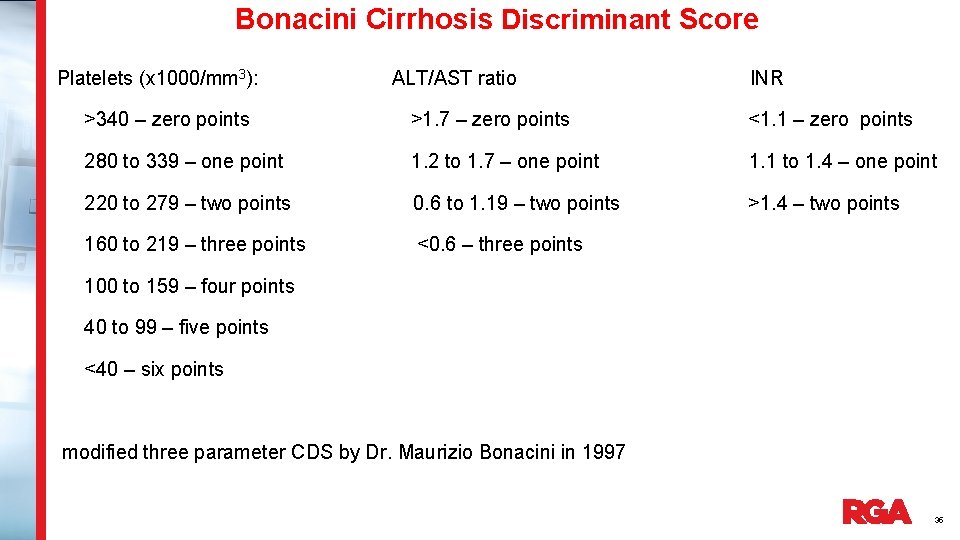
Bonacini Cirrhosis Discriminant Score Platelets (x 1000/mm 3): ALT/AST ratio INR >340 – zero points >1. 7 – zero points <1. 1 – zero points 280 to 339 – one point 1. 2 to 1. 7 – one point 1. 1 to 1. 4 – one point 220 to 279 – two points 0. 6 to 1. 19 – two points >1. 4 – two points 160 to 219 – three points <0. 6 – three points 100 to 159 – four points 40 to 99 – five points <40 – six points modified three parameter CDS by Dr. Maurizio Bonacini in 1997 35
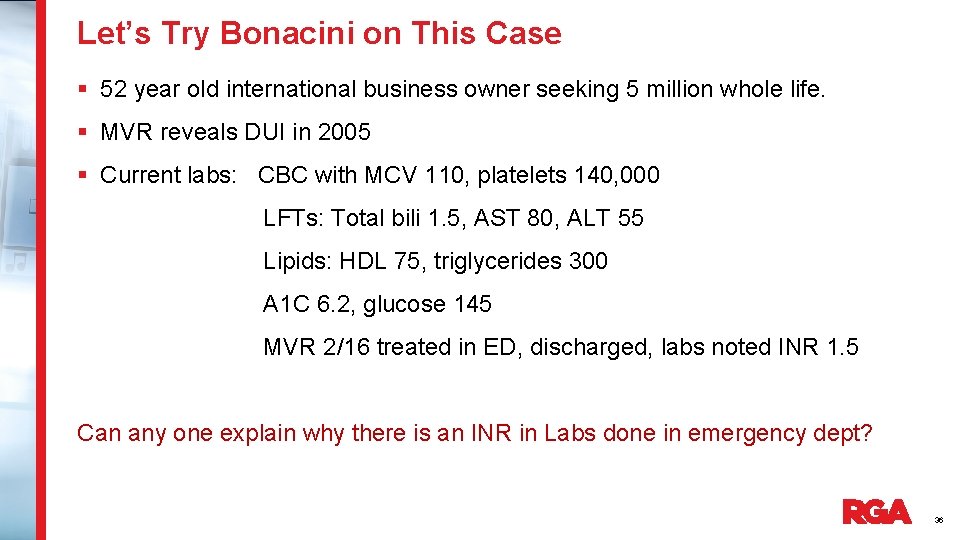
Let’s Try Bonacini on This Case § 52 year old international business owner seeking 5 million whole life. § MVR reveals DUI in 2005 § Current labs: CBC with MCV 110, platelets 140, 000 LFTs: Total bili 1. 5, AST 80, ALT 55 Lipids: HDL 75, triglycerides 300 A 1 C 6. 2, glucose 145 MVR 2/16 treated in ED, discharged, labs noted INR 1. 5 Can any one explain why there is an INR in Labs done in emergency dept? 36
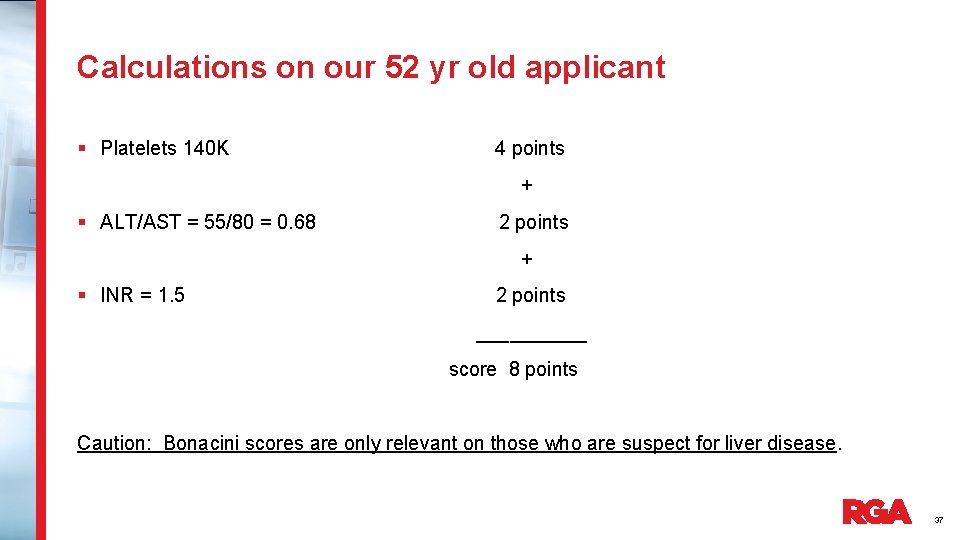
Calculations on our 52 yr old applicant § Platelets 140 K 4 points + § ALT/AST = 55/80 = 0. 68 2 points + § INR = 1. 5 2 points _____ score 8 points Caution: Bonacini scores are only relevant on those who are suspect for liver disease. 37
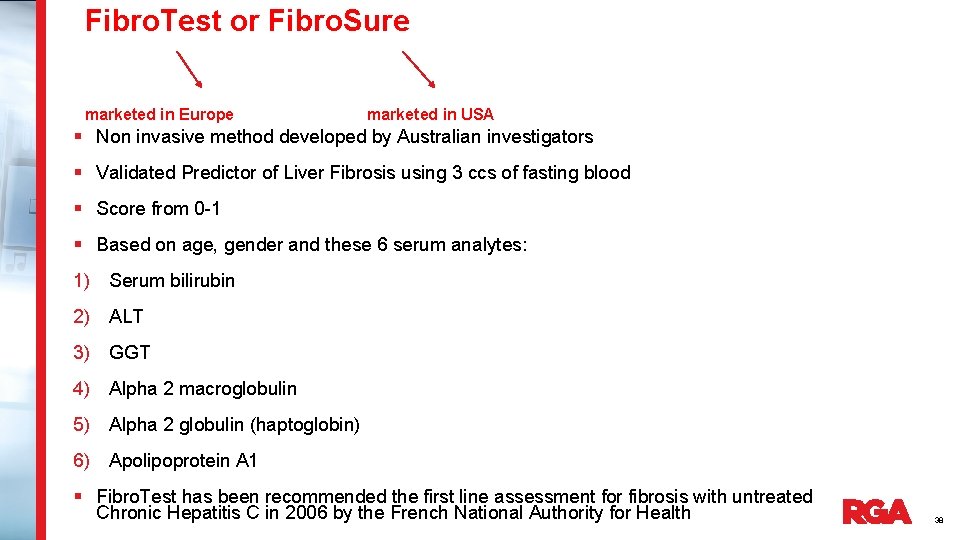
Fibro. Test or Fibro. Sure marketed in Europe marketed in USA § Non invasive method developed by Australian investigators § Validated Predictor of Liver Fibrosis using 3 ccs of fasting blood § Score from 0 -1 § Based on age, gender and these 6 serum analytes: 1) Serum bilirubin 2) ALT 3) GGT 4) Alpha 2 macroglobulin 5) Alpha 2 globulin (haptoglobin) 6) Apolipoprotein A 1 § Fibro. Test has been recommended the first line assessment for fibrosis with untreated Chronic Hepatitis C in 2006 by the French National Authority for Health 38
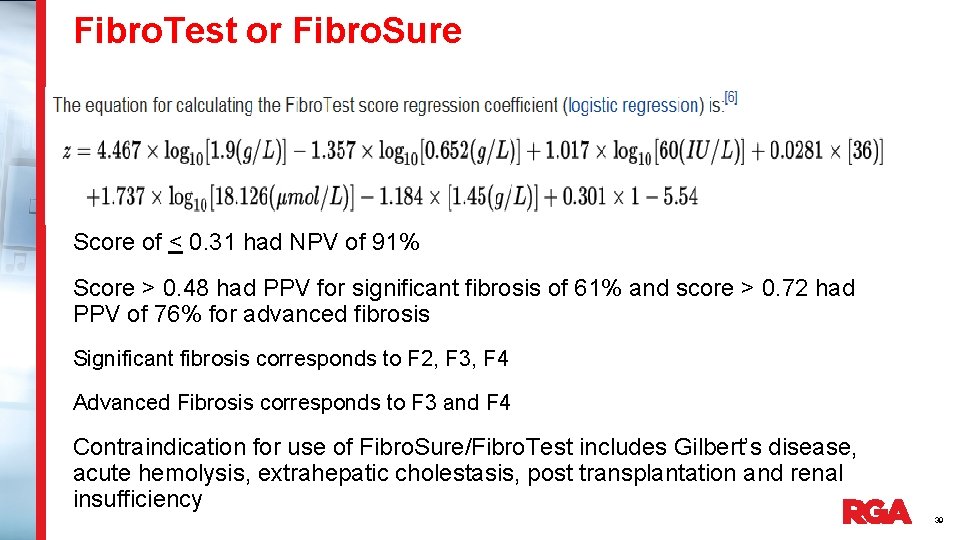
Fibro. Test or Fibro. Sure Score of < 0. 31 had NPV of 91% Score > 0. 48 had PPV for significant fibrosis of 61% and score > 0. 72 had PPV of 76% for advanced fibrosis Significant fibrosis corresponds to F 2, F 3, F 4 Advanced Fibrosis corresponds to F 3 and F 4 Contraindication for use of Fibro. Sure/Fibro. Test includes Gilbert’s disease, acute hemolysis, extrahepatic cholestasis, post transplantation and renal insufficiency 39
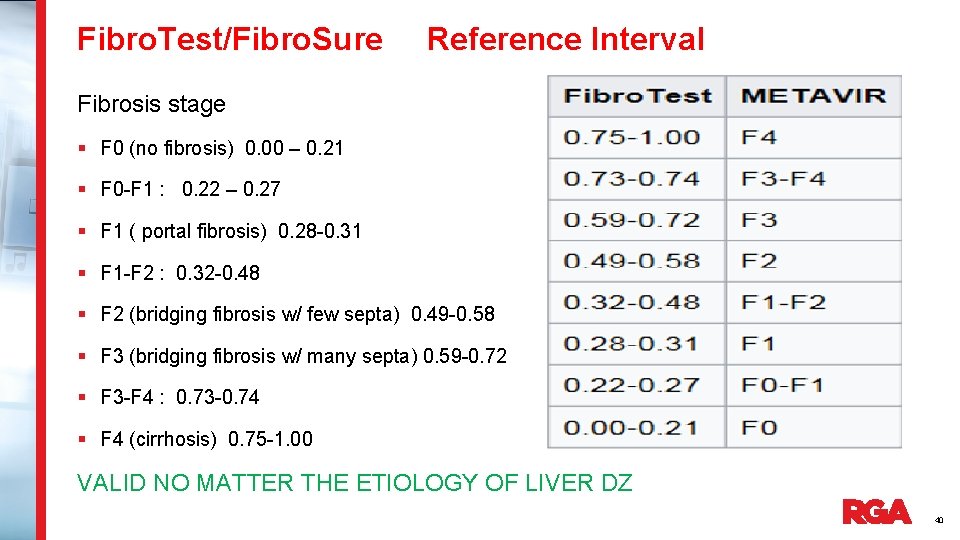
Fibro. Test/Fibro. Sure Reference Interval Fibrosis stage § F 0 (no fibrosis) 0. 00 – 0. 21 § F 0 -F 1 : 0. 22 – 0. 27 § F 1 ( portal fibrosis) 0. 28 -0. 31 § F 1 -F 2 : 0. 32 -0. 48 § F 2 (bridging fibrosis w/ few septa) 0. 49 -0. 58 § F 3 (bridging fibrosis w/ many septa) 0. 59 -0. 72 § F 3 -F 4 : 0. 73 -0. 74 § F 4 (cirrhosis) 0. 75 -1. 00 VALID NO MATTER THE ETIOLOGY OF LIVER DZ 40
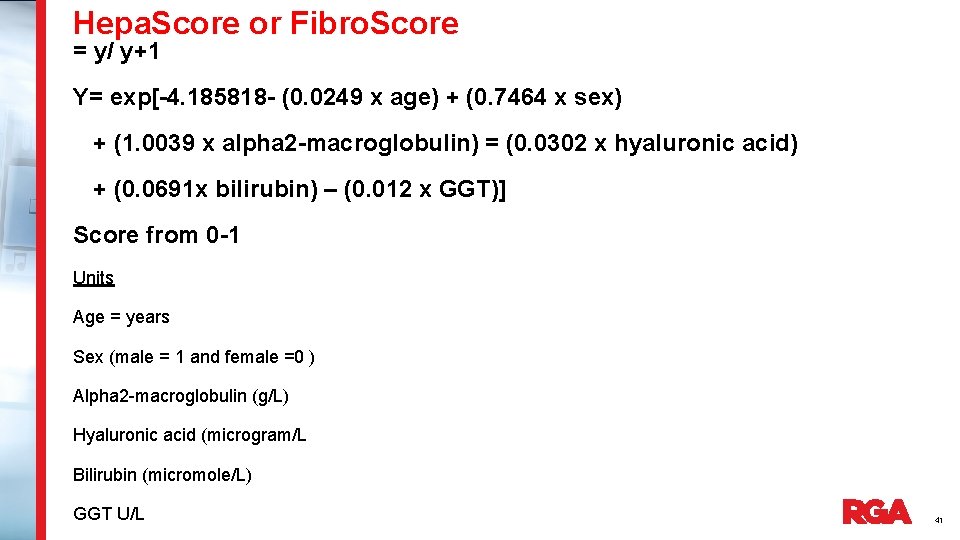
Hepa. Score or Fibro. Score = y/ y+1 Y= exp[-4. 185818 - (0. 0249 x age) + (0. 7464 x sex) + (1. 0039 x alpha 2 -macroglobulin) = (0. 0302 x hyaluronic acid) + (0. 0691 x bilirubin) – (0. 012 x GGT)] Score from 0 -1 Units Age = years Sex (male = 1 and female =0 ) Alpha 2 -macroglobulin (g/L) Hyaluronic acid (microgram/L Bilirubin (micromole/L) GGT U/L 41
Hepa. Score or Fibro. Score Overnight fasting preferred Requires 3. 6 cc blood Score of < 0. 2 has NPV 98%, thus, excludes fibrosis (means F 0) Score > 0. 8 has PPV for predicting cirrhosis of 62% Thus Hepa. Score is excellent method to rule out significant fibrosis 42
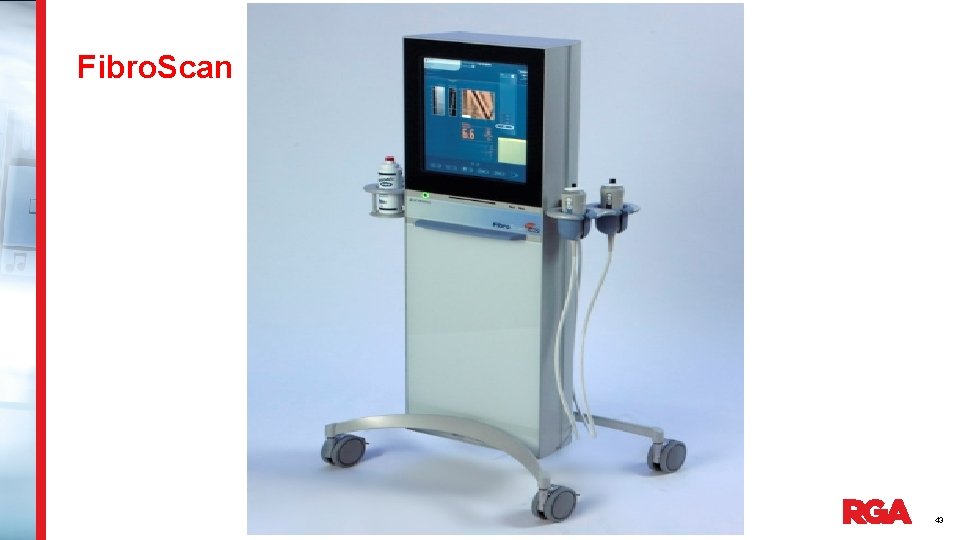
Fibro. Scan 43
Fibro. Scan § Historical background: Palpating for liver firmness since 1500 BC and has been the usual practice since 1930 § Fibro. Scan introduced in Europe in 2003 § Approved in April 2013 by the FDA in US § Painless rapid test (15 minutes) § Shear waves measure the elasticity of the liver using technique called Vibration controlled Transient Elastography (VCTE) § Units are called k. Pa (kilopascals) – higher the number, greater the stage of fibrosis – score range 2. 5 -75 k. Pa § Caution: the degree of stiffness varies according to type of liver disease. For example, cut off for cirrhosis is lower in Hepatitis B and C and higher for ALD and cut off even lower in NAFLD 44
Magnetic Resonance Elastography § Applies a probe to back of patient that results in emission of low frequency vibrations through liver, which are then measured through MRI spin echo sequence § Meta-analysis of 5 trials comparing MRE to liver bx show sensitivity of 94% and specificity of 95% in differentiating F 0 -1 from F 2 -4 § Sensitivity of 98% and specificity of 94% differentiating F 0 -3 from F 4 § Meta-analysis of 12 retrospective studies concluded MRE has high accuracy for diagnosis of significant or advanced fibrosis and cirrhosis, independent of BMI and etiology of CLD § Case series from Children’s Hospital in Cincinnati: Lead author found MRE can accurately detect fibrosis in children including those whom are severely obese with NAFLD and other forms of chronic liver 45

Use of Fibro. Scan in Clinical Practice Key Points § To determine severity of fibrosis prognostically and identifying who would most benefit from treatment § For those receiving treatment, can determine response to treatment § Useful in identification those who warrant variceal and HCC screening § Higher cut off values correspond to higher fibrosis stages § Cut off values differ among different liver diseases 46 46
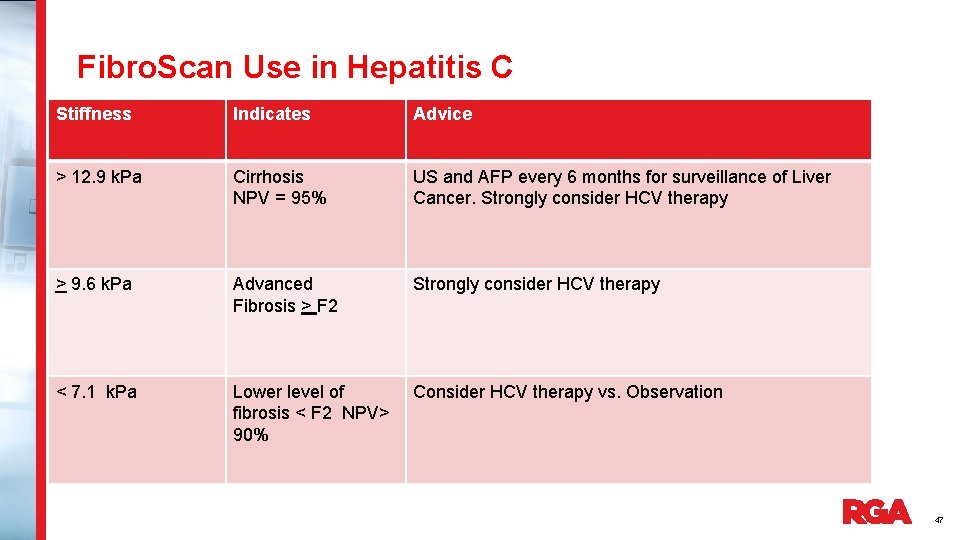
Fibro. Scan Use in Hepatitis C Stiffness Indicates Advice > 12. 9 k. Pa Cirrhosis NPV = 95% US and AFP every 6 months for surveillance of Liver Cancer. Strongly consider HCV therapy > 9. 6 k. Pa Advanced Fibrosis > F 2 Strongly consider HCV therapy < 7. 1 k. Pa Lower level of fibrosis < F 2 NPV> 90% Consider HCV therapy vs. Observation 47
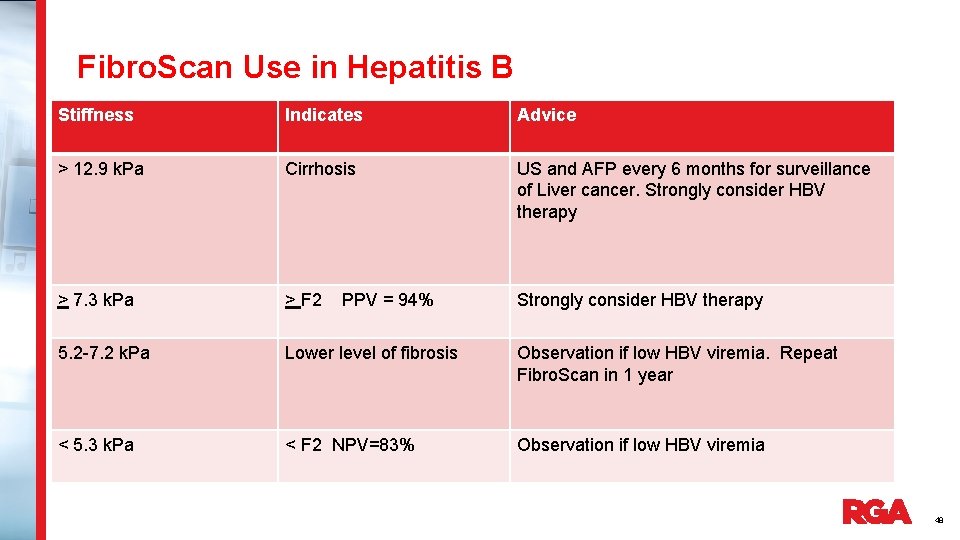
Fibro. Scan Use in Hepatitis B Stiffness Indicates Advice > 12. 9 k. Pa Cirrhosis US and AFP every 6 months for surveillance of Liver cancer. Strongly consider HBV therapy > 7. 3 k. Pa > F 2 PPV = 94% Strongly consider HBV therapy 5. 2 -7. 2 k. Pa Lower level of fibrosis Observation if low HBV viremia. Repeat Fibro. Scan in 1 year < 5. 3 k. Pa < F 2 NPV=83% Observation if low HBV viremia 48
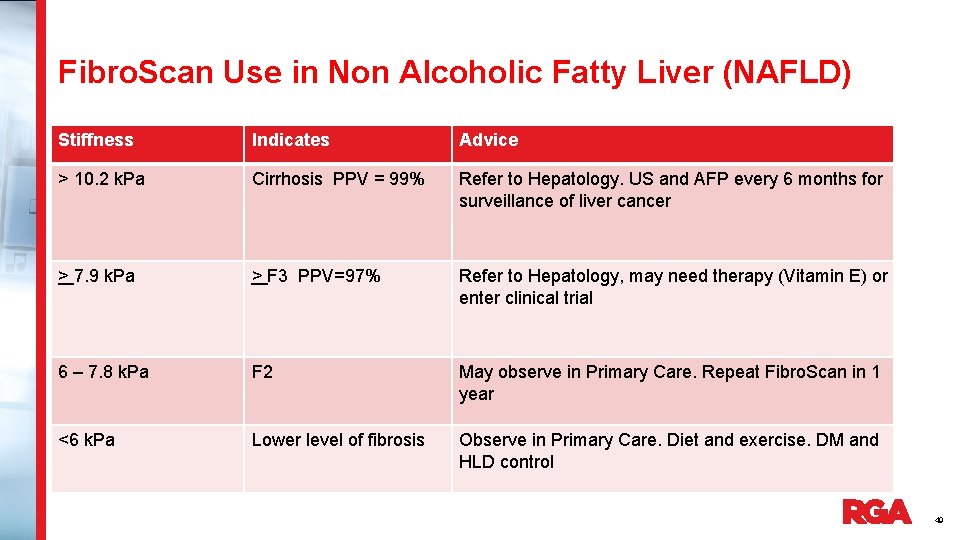
Fibro. Scan Use in Non Alcoholic Fatty Liver (NAFLD) Stiffness Indicates Advice > 10. 2 k. Pa Cirrhosis PPV = 99% Refer to Hepatology. US and AFP every 6 months for surveillance of liver cancer > 7. 9 k. Pa > F 3 PPV=97% Refer to Hepatology, may need therapy (Vitamin E) or enter clinical trial 6 – 7. 8 k. Pa F 2 May observe in Primary Care. Repeat Fibro. Scan in 1 year <6 k. Pa Lower level of fibrosis Observe in Primary Care. Diet and exercise. DM and HLD control 49
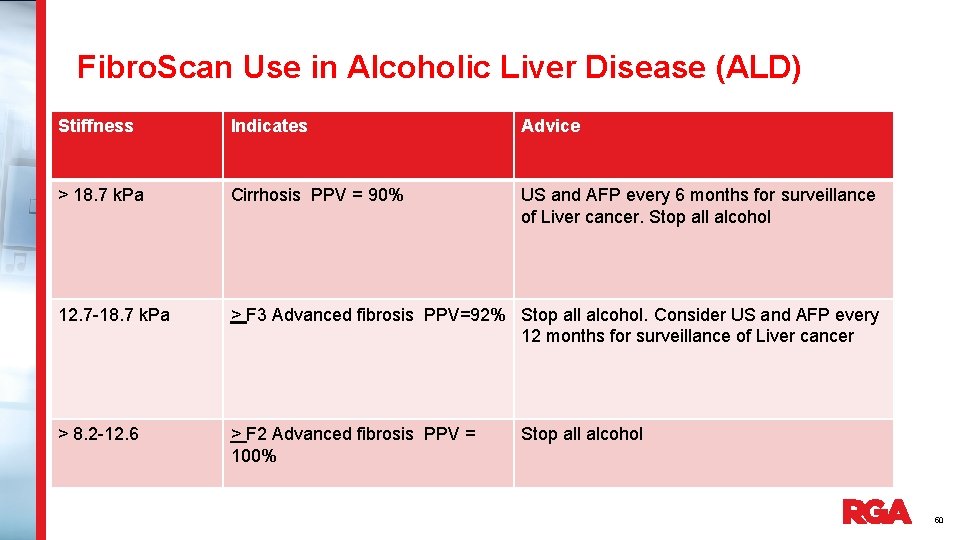
Fibro. Scan Use in Alcoholic Liver Disease (ALD) Stiffness Indicates Advice > 18. 7 k. Pa Cirrhosis PPV = 90% US and AFP every 6 months for surveillance of Liver cancer. Stop all alcohol 12. 7 -18. 7 k. Pa > F 3 Advanced fibrosis PPV=92% Stop all alcohol. Consider US and AFP every 12 months for surveillance of Liver cancer > 8. 2 -12. 6 > F 2 Advanced fibrosis PPV = 100% Stop all alcohol 50
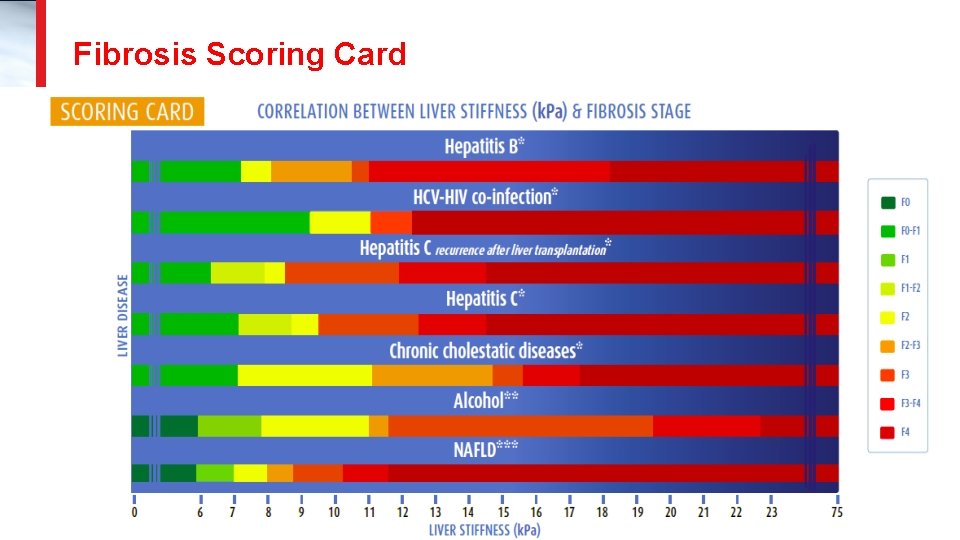
Fibrosis Scoring Card 51
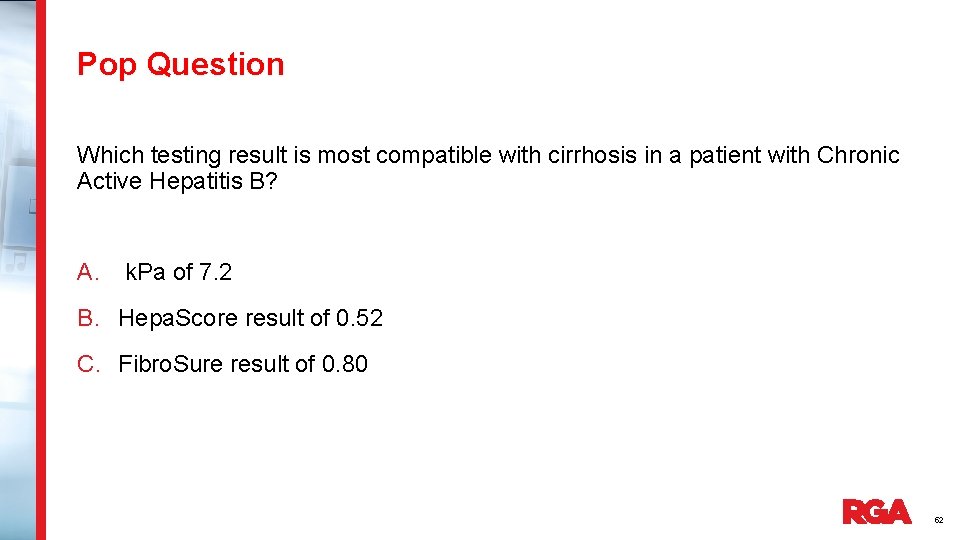
Pop Question Which testing result is most compatible with cirrhosis in a patient with Chronic Active Hepatitis B? A. k. Pa of 7. 2 B. Hepa. Score result of 0. 52 C. Fibro. Sure result of 0. 80 52
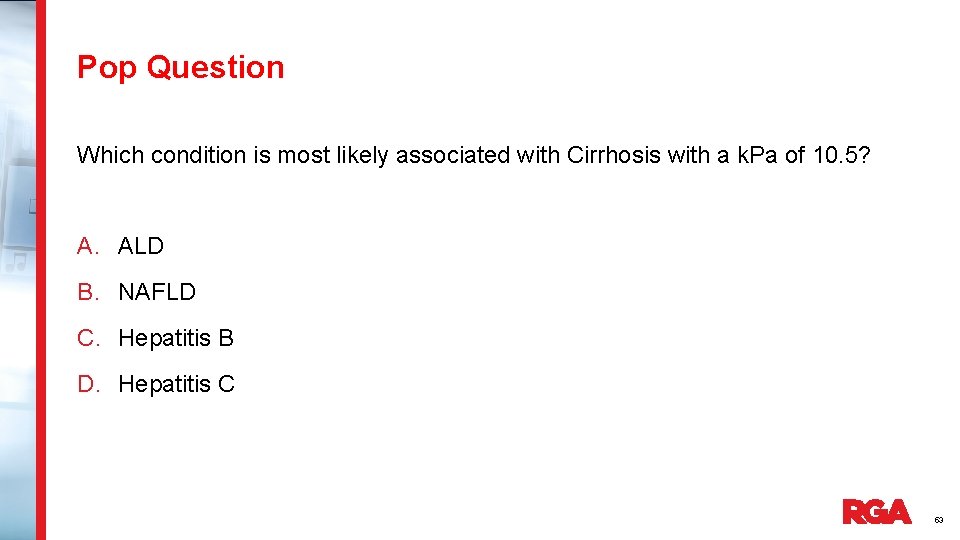
Pop Question Which condition is most likely associated with Cirrhosis with a k. Pa of 10. 5? A. ALD B. NAFLD C. Hepatitis B D. Hepatitis C 53

CASES 54
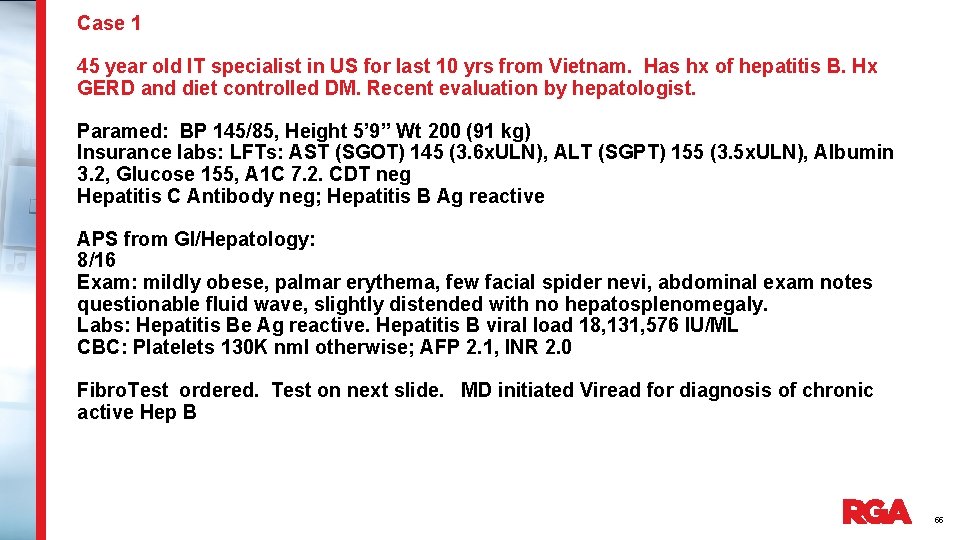
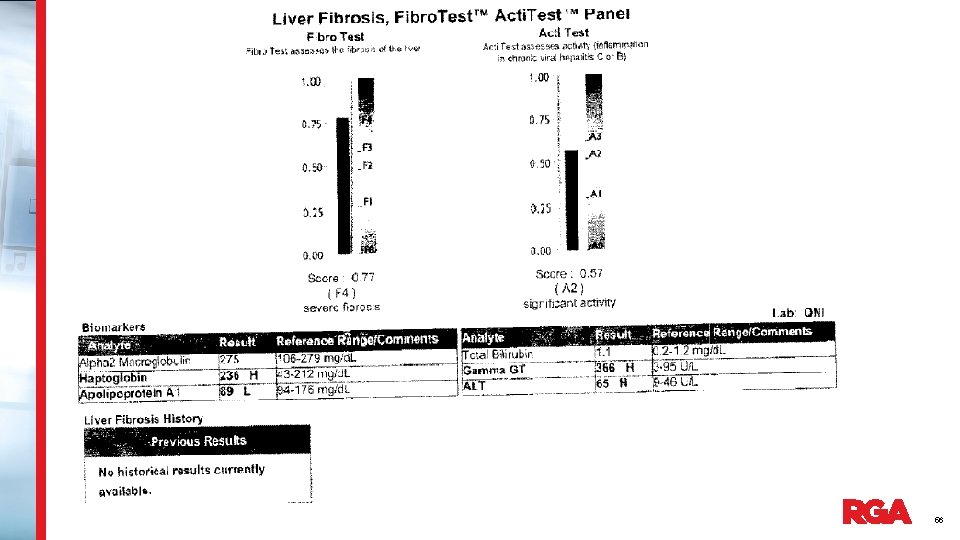
Case 1 45 year old IT specialist in US for last 10 yrs from Vietnam. Has hx of hepatitis B. Hx GERD and diet controlled DM. Recent evaluation by hepatologist. Paramed: BP 145/85, Height 5’ 9” Wt 200 (91 kg) Insurance labs: LFTs: AST (SGOT) 145 (3. 6 x. ULN), ALT (SGPT) 155 (3. 5 x. ULN), Albumin 3. 2, Glucose 155, A 1 C 7. 2. CDT neg Hepatitis C Antibody neg; Hepatitis B Ag reactive APS from GI/Hepatology: 8/16 Exam: mildly obese, palmar erythema, few facial spider nevi, abdominal exam notes questionable fluid wave, slightly distended with no hepatosplenomegaly. Labs: Hepatitis Be Ag reactive. Hepatitis B viral load 18, 131, 576 IU/ML CBC: Platelets 130 K nml otherwise; AFP 2. 1, INR 2. 0 Fibro. Test ordered. Test on next slide. MD initiated Viread for diagnosis of chronic active Hep B 55
56
What Concerns You? § Chronic Active Hepatitis B from endemic region § Physical exam findings § Lab findings § No liver bx however Fibro. Test score § Try a Bonacini score § What Risk Assessment? 57
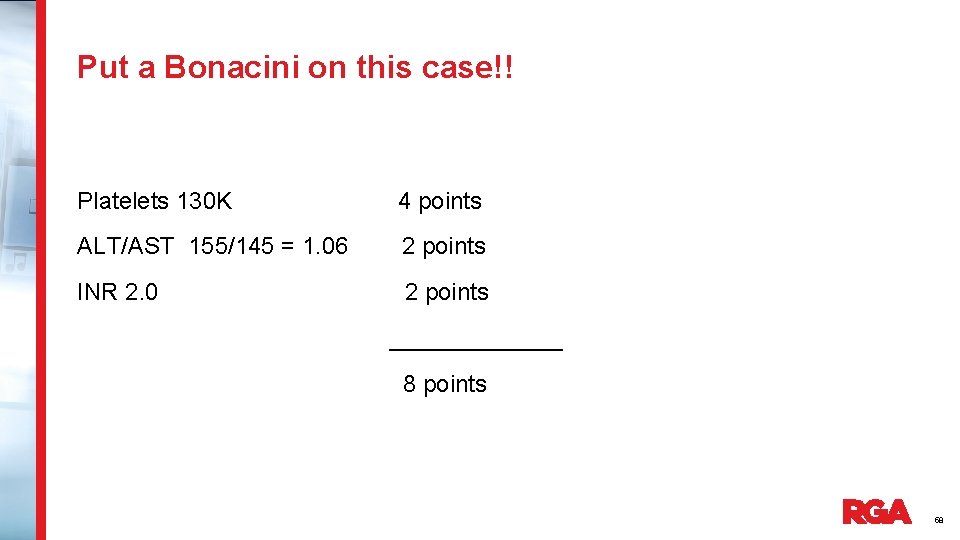
Put a Bonacini on this case!! Platelets 130 K 4 points ALT/AST 155/145 = 1. 06 2 points INR 2. 0 2 points _______ 8 points 58
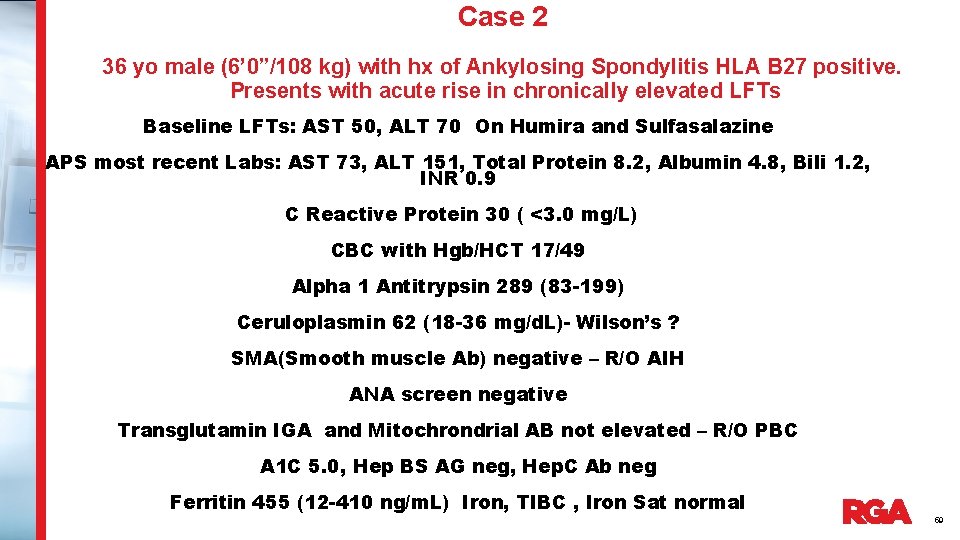
Case 2 36 yo male (6’ 0”/108 kg) with hx of Ankylosing Spondylitis HLA B 27 positive. Presents with acute rise in chronically elevated LFTs Baseline LFTs: AST 50, ALT 70 On Humira and Sulfasalazine APS most recent Labs: AST 73, ALT 151, Total Protein 8. 2, Albumin 4. 8, Bili 1. 2, INR 0. 9 C Reactive Protein 30 ( <3. 0 mg/L) CBC with Hgb/HCT 17/49 Alpha 1 Antitrypsin 289 (83 -199) Ceruloplasmin 62 (18 -36 mg/d. L)- Wilson’s ? SMA(Smooth muscle Ab) negative – R/O AIH ANA screen negative Transglutamin IGA and Mitochrondrial AB not elevated – R/O PBC A 1 C 5. 0, Hep BS AG neg, Hep. C Ab neg Ferritin 455 (12 -410 ng/m. L) Iron, TIBC , Iron Sat normal 59
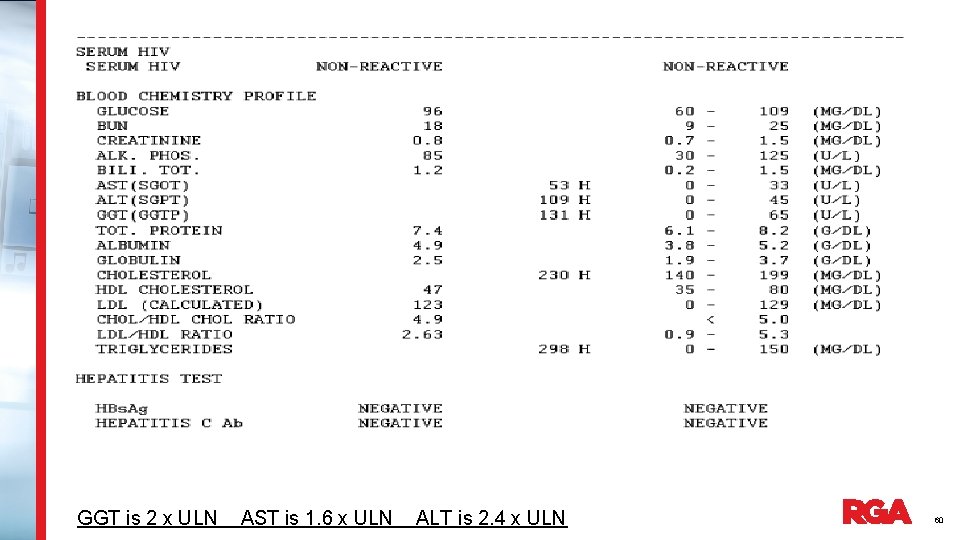
GGT is 2 x ULN AST is 1. 6 x ULN ALT is 2. 4 x ULN 60
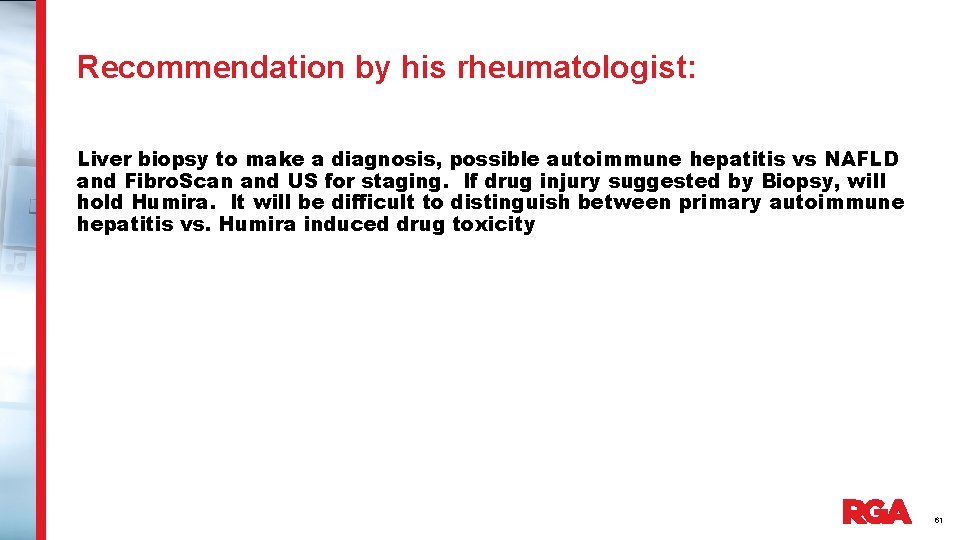
Recommendation by his rheumatologist: Liver biopsy to make a diagnosis, possible autoimmune hepatitis vs NAFLD and Fibro. Scan and US for staging. If drug injury suggested by Biopsy, will hold Humira. It will be difficult to distinguish between primary autoimmune hepatitis vs. Humira induced drug toxicity 61
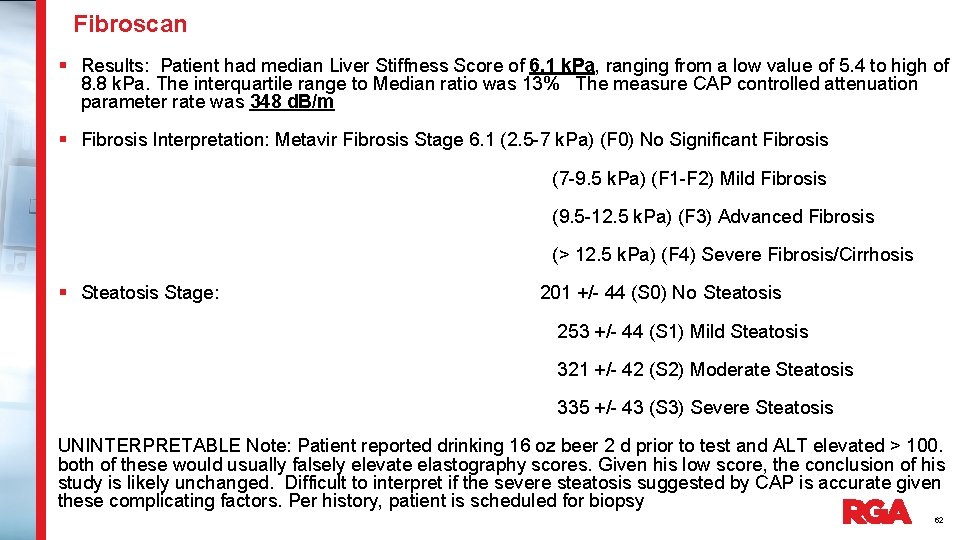
Fibroscan § Results: Patient had median Liver Stiffness Score of 6. 1 k. Pa, ranging from a low value of 5. 4 to high of 8. 8 k. Pa. The interquartile range to Median ratio was 13% The measure CAP controlled attenuation parameter rate was 348 d. B/m § Fibrosis Interpretation: Metavir Fibrosis Stage 6. 1 (2. 5 -7 k. Pa) (F 0) No Significant Fibrosis (7 -9. 5 k. Pa) (F 1 -F 2) Mild Fibrosis (9. 5 -12. 5 k. Pa) (F 3) Advanced Fibrosis (> 12. 5 k. Pa) (F 4) Severe Fibrosis/Cirrhosis § Steatosis Stage: 201 +/- 44 (S 0) No Steatosis 253 +/- 44 (S 1) Mild Steatosis 321 +/- 42 (S 2) Moderate Steatosis 335 +/- 43 (S 3) Severe Steatosis UNINTERPRETABLE Note: Patient reported drinking 16 oz beer 2 d prior to test and ALT elevated > 100. both of these would usually falsely elevate elastography scores. Given his low score, the conclusion of his study is likely unchanged. Difficult to interpret if the severe steatosis suggested by CAP is accurate given these complicating factors. Per history, patient is scheduled for biopsy 62
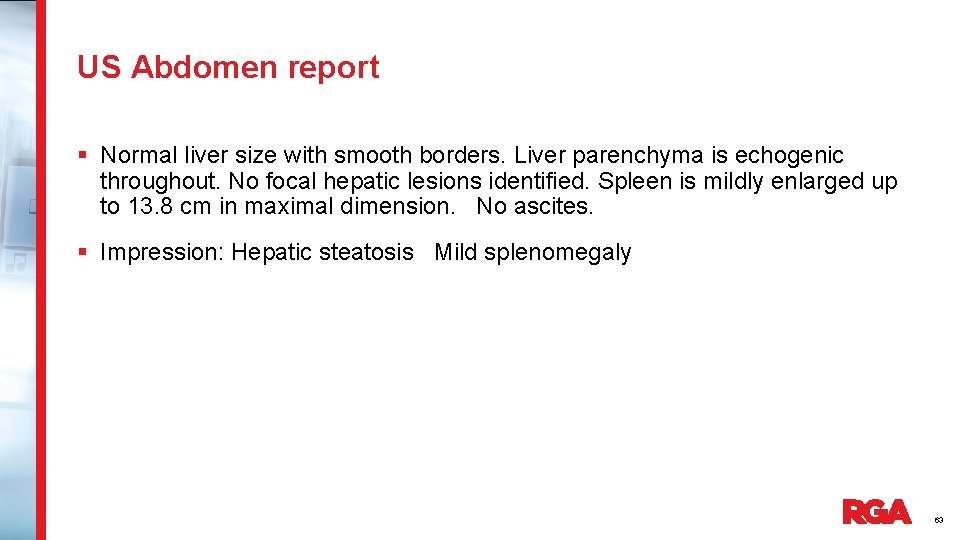
US Abdomen report § Normal liver size with smooth borders. Liver parenchyma is echogenic throughout. No focal hepatic lesions identified. Spleen is mildly enlarged up to 13. 8 cm in maximal dimension. No ascites. § Impression: Hepatic steatosis Mild splenomegaly 63
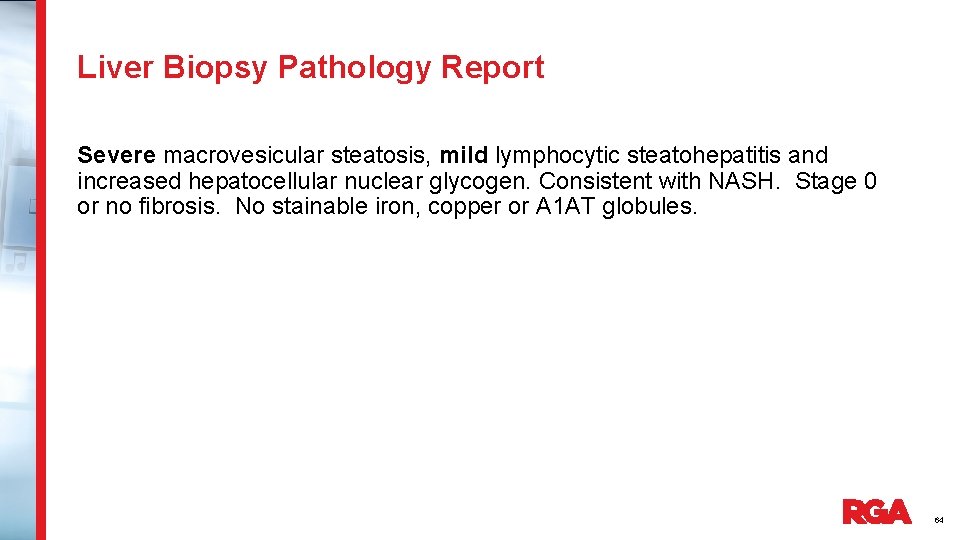
Liver Biopsy Pathology Report Severe macrovesicular steatosis, mild lymphocytic steatohepatitis and increased hepatocellular nuclear glycogen. Consistent with NASH. Stage 0 or no fibrosis. No stainable iron, copper or A 1 AT globules. 64
What is the Ratable Condition? 65
What is the Ratable Condition? § NASH of course! 66
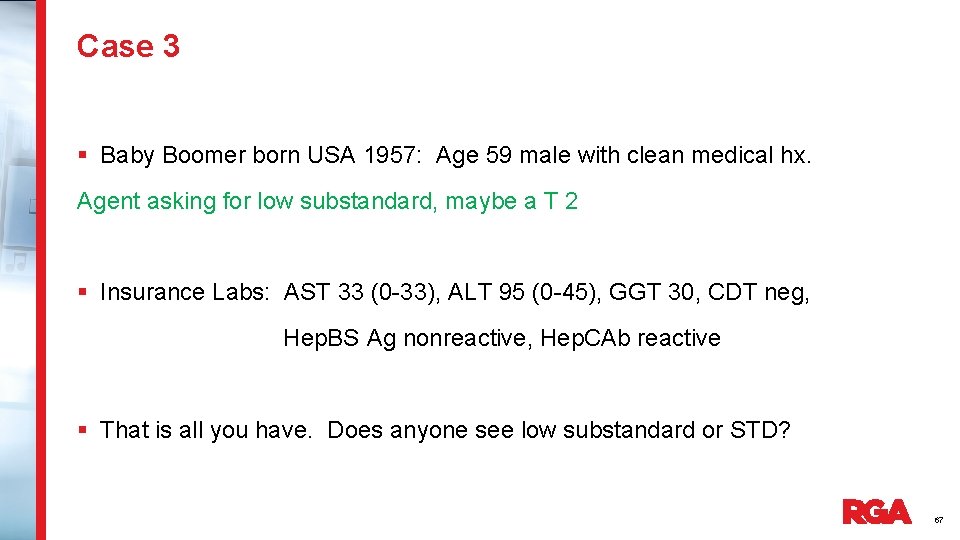
Case 3 § Baby Boomer born USA 1957: Age 59 male with clean medical hx. Agent asking for low substandard, maybe a T 2 § Insurance Labs: AST 33 (0 -33), ALT 95 (0 -45), GGT 30, CDT neg, Hep. BS Ag nonreactive, Hep. CAb reactive § That is all you have. Does anyone see low substandard or STD? 67
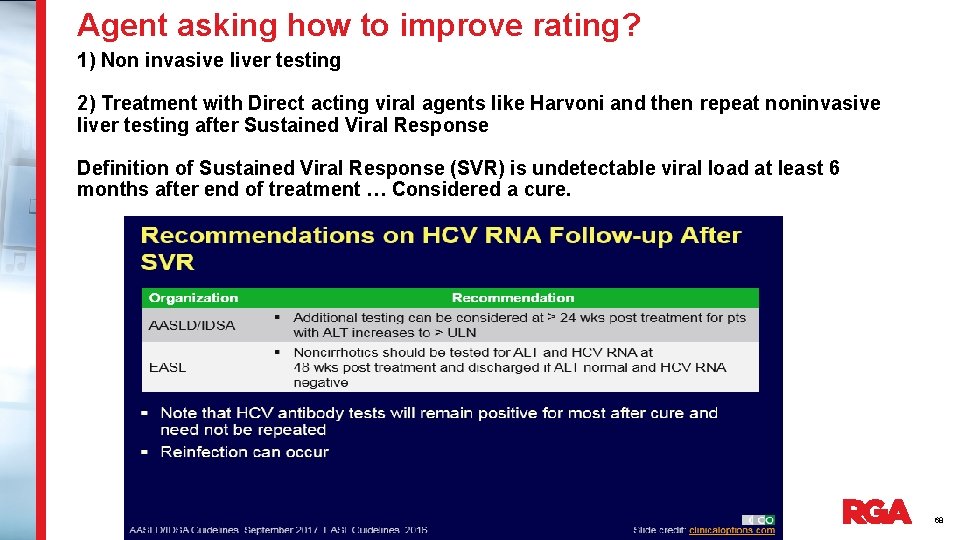
Agent asking how to improve rating? 1) Non invasive liver testing 2) Treatment with Direct acting viral agents like Harvoni and then repeat noninvasive liver testing after Sustained Viral Response Definition of Sustained Viral Response (SVR) is undetectable viral load at least 6 months after end of treatment … Considered a cure. 68
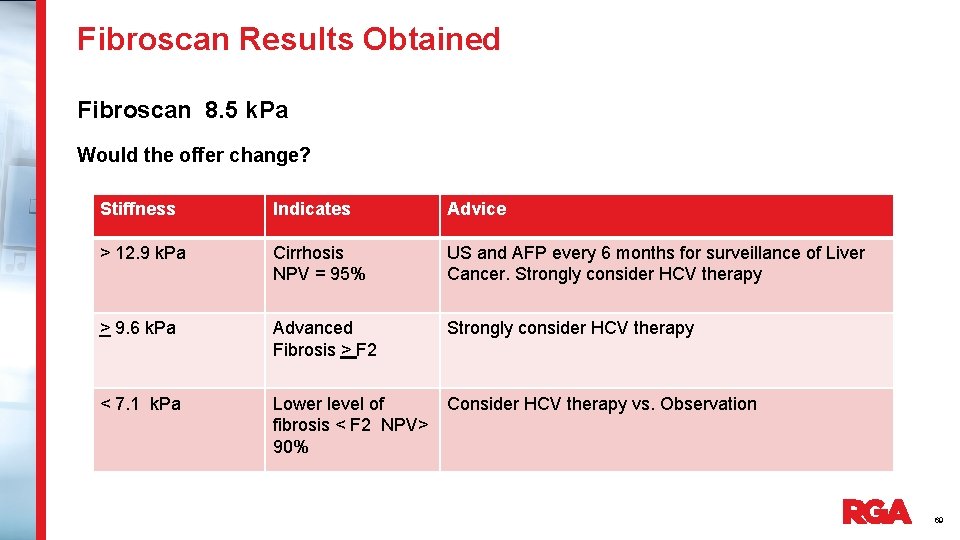
Fibroscan Results Obtained Fibroscan 8. 5 k. Pa Would the offer change? Stiffness Indicates Advice > 12. 9 k. Pa Cirrhosis NPV = 95% US and AFP every 6 months for surveillance of Liver Cancer. Strongly consider HCV therapy > 9. 6 k. Pa Advanced Fibrosis > F 2 Strongly consider HCV therapy < 7. 1 k. Pa Lower level of Consider HCV therapy vs. Observation fibrosis < F 2 NPV> 90% 69
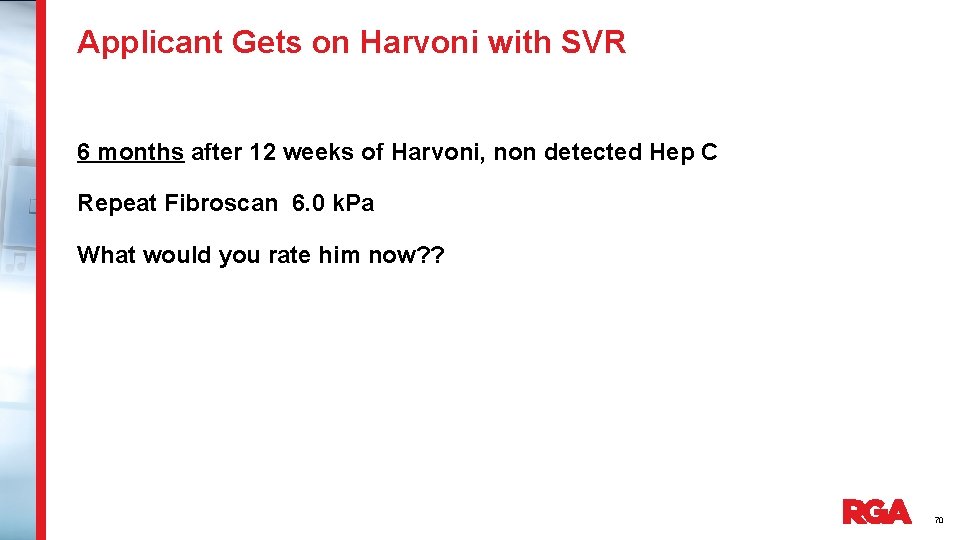
Applicant Gets on Harvoni with SVR 6 months after 12 weeks of Harvoni, non detected Hep C Repeat Fibroscan 6. 0 k. Pa What would you rate him now? ? 70
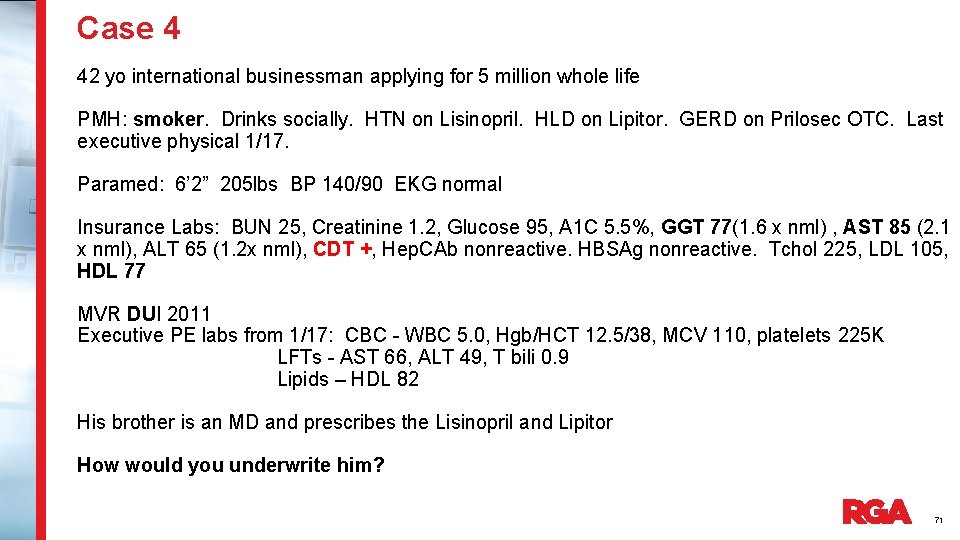
Case 4 42 yo international businessman applying for 5 million whole life PMH: smoker. Drinks socially. HTN on Lisinopril. HLD on Lipitor. GERD on Prilosec OTC. Last executive physical 1/17. Paramed: 6’ 2” 205 lbs BP 140/90 EKG normal Insurance Labs: BUN 25, Creatinine 1. 2, Glucose 95, A 1 C 5. 5%, GGT 77(1. 6 x nml) , AST 85 (2. 1 x nml), ALT 65 (1. 2 x nml), CDT +, Hep. CAb nonreactive. HBSAg nonreactive. Tchol 225, LDL 105, HDL 77 MVR DUI 2011 Executive PE labs from 1/17: CBC - WBC 5. 0, Hgb/HCT 12. 5/38, MCV 110, platelets 225 K LFTs - AST 66, ALT 49, T bili 0. 9 Lipids – HDL 82 His brother is an MD and prescribes the Lisinopril and Lipitor How would you underwrite him? 71
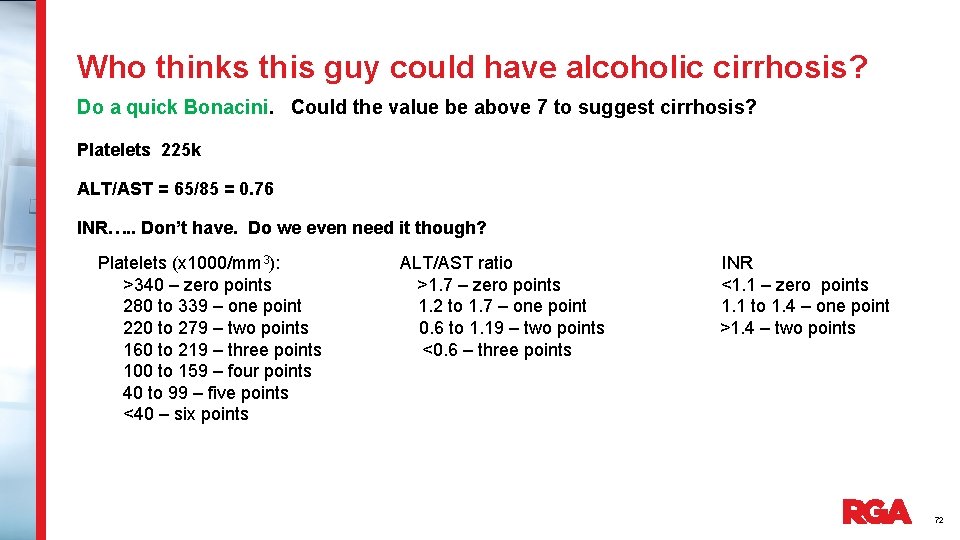
Who thinks this guy could have alcoholic cirrhosis? Do a quick Bonacini. Could the value be above 7 to suggest cirrhosis? Platelets 225 k ALT/AST = 65/85 = 0. 76 INR…. . Don’t have. Do we even need it though? Platelets (x 1000/mm 3): ALT/AST ratio INR >340 – zero points >1. 7 – zero points <1. 1 – zero points 280 to 339 – one point 1. 2 to 1. 7 – one point 1. 1 to 1. 4 – one point 220 to 279 – two points 0. 6 to 1. 19 – two points >1. 4 – two points 160 to 219 – three points <0. 6 – three points 100 to 159 – four points 40 to 99 – five points <40 – six points 72

Asks his MD brother to order Fibroscan, thinking he could get a better rating Fibroscan Results 8. 1 k. Pa Any rate change What if Fibroscan report was 19. 5 k. Pa? 73

74 74

© 2016 RGA. All rights reserved. No part of this publication may be reproduced in any form without the prior permission of RGA. The information in this publication is for the exclusive, internal use of the recipient and may not be relied upon by any other party other than the recipient and its affiliates, or published, quoted or disseminated to any party other than the recipient without the prior written consent of RGA.
- Slides: 75