
PCTF Toolkit Requires collaborative team effort with experts
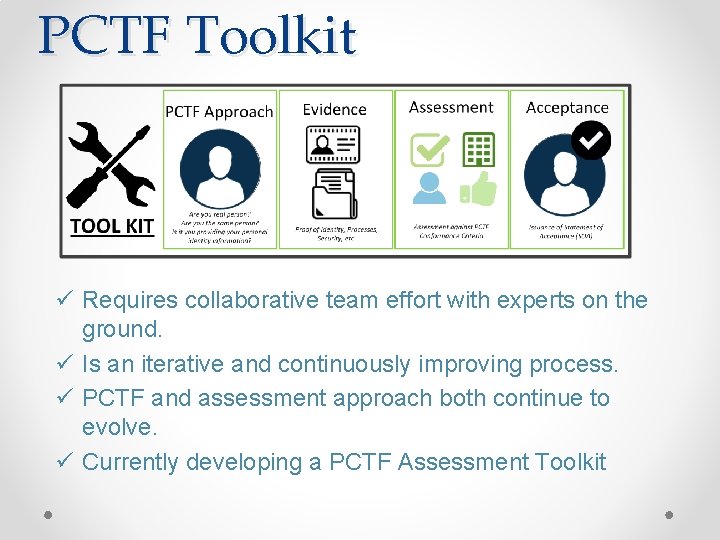
PCTF Toolkit ü Requires collaborative team effort with experts on the ground. ü Is an iterative and continuously improving process. ü PCTF and assessment approach both continue to evolve. ü Currently developing a PCTF Assessment Toolkit
Lessons Learned (1) • Requires collaborative team effort (with experts on the ground) o o o • Is an iterative process(and continuously improving) o o o • Kick-off involved in-person visit to i) gain direct knowledge of program and ii) establish close working relationship between team members. Regular calls (and videoconferencing) between teams. Gathered and compiled evidence using conformance criteria templates submitted for assessment. Developed a master spreadsheet to assess evidence against conformance criteria with traceability to TB policy requirements. Assessment sheet created for each component (Verified Person, Verified Login, Notice & Consent, Confirmation &Binding) Final review resulted in a Statement of Acceptance with Conditions, Observations and Recommendations. PCTF and assessment approach both continue to evolve (we are defining the ‘state of the art’) o o Clarified distinction between Identity Registration and Program Enrolment. Identified dependences with processes in existing programs (e. g. vital statistics, motor vehicle licensing) and other jurisdictions (e. g. , federal immigration). Clarified role of PCTF as a business process integrity framework to complement technical interoperability standards and emerging frameworks (e. g. , SAML, Open ID Connect, Verifiable Claims). Complements (doesn’t replace) existing assessment processes or agreements (e. g. , Security Assessment and Authorization, SOC 2 Trust Principles).
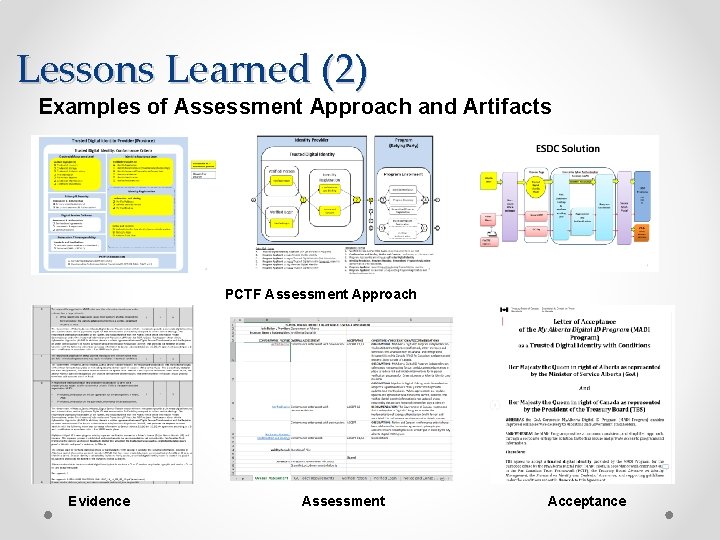
Lessons Learned (2) Examples of Assessment Approach and Artifacts PCTF Assessment Approach Evidence Assessment Acceptance
- Slides: 3