
PCR Learning Objectives After this lecture you should
PCR
Learning Objectives: After this lecture you should be able to understand the following: 1. What is the Polymerase chain reaction? 2. What are its main advantages? 3. What are it main disadvantages? 4. How can PCR be applied to i. Diagnosis? ii. Criminal Investigation & Parentage analysis? iii. DNA cloning and analysis?
WHAT IS PCR? Polymerase chain reaction (PCR) is a technique which is used to amplify the number of copies of a specific region of DNA, in order to produce enough DNA to be adequately tested. This technique can be used to identify with a very high-probability, disease-causing viruses and/or bacteria, a deceased person, or a criminal suspect.
Requirements of PCR n Primers (Forward & Reverse) n d. NTPs (d. ATP, d. CTP, d. GTP, d. TTP) n Polymerase Enzyme* n Template DNA n PCR Buffer *Thermus aquaticus Taq polymerase Thermococcus litoralis Vent polymerase Pyrococcus species Deep Vent Polymerase Pyrococcus furiosus Pfu polymerase.

PCR? Easy. Primers Buffer NTP Nucleotide Template Denature, anneal, extend X 35 -40 Taq polymerase
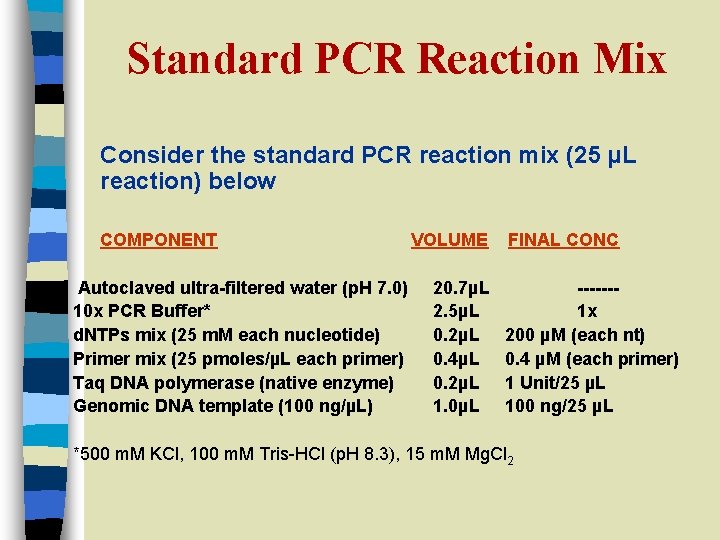
Standard PCR Reaction Mix Consider the standard PCR reaction mix (25 µL reaction) below COMPONENT VOLUME FINAL CONC Autoclaved ultra-filtered water (p. H 7. 0) 10 x PCR Buffer* d. NTPs mix (25 m. M each nucleotide) Primer mix (25 pmoles/µL each primer) Taq DNA polymerase (native enzyme) Genomic DNA template (100 ng/µL) 20. 7µL 2. 5µL 0. 2µL 0. 4µL 0. 2µL 1. 0µL ------1 x 200 µM (each nt) 0. 4 µM (each primer) 1 Unit/25 µL 100 ng/25 µL *500 m. M KCl, 100 m. M Tris-HCl (p. H 8. 3), 15 m. M Mg. Cl 2
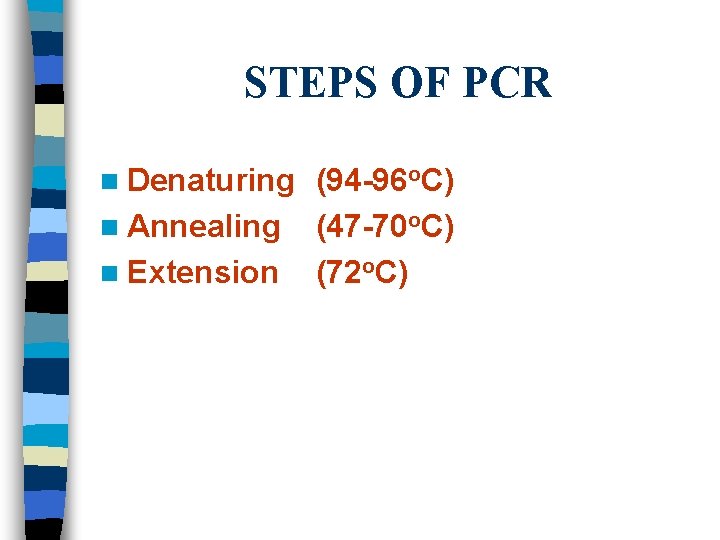
STEPS OF PCR n Denaturing n Annealing n Extension (94 -96 o. C) (47 -70 o. C) (72 o. C)
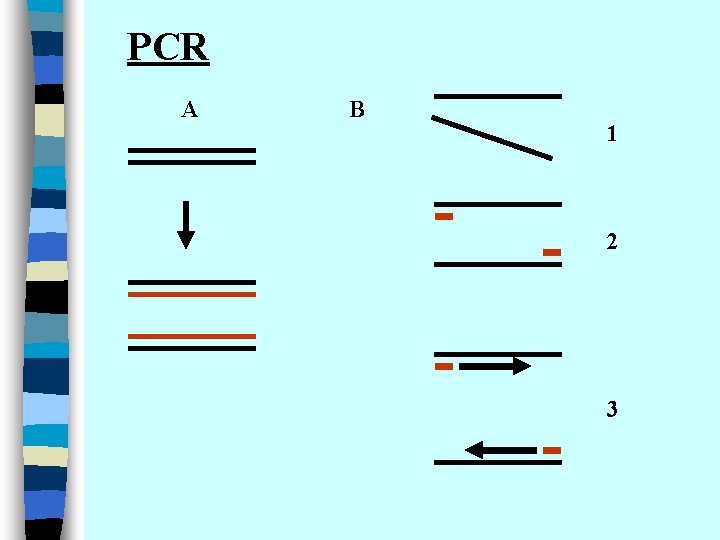
PCR A B 1 2 3

Designing a First PCR Program 1. First denaturing (optional) 2. Denaturing 3. Annealing 4. Extension 95 o C 2 -5 min 94 o C 47 -70 o C 72 o C 30 -60 sec 30 -90 sec 5. Go step 2 to 25 -35 Times 6. Last extension (optional) 72 o C 5 -10 min

Stages of PCR n n n n Identify target Design primers Select tissue Extract Nucleic Acid (DNA or RNA) Synthesize c. DNA (if RNA is target) Amplify target using specific primers Visualise products using gel electrophoresis Analyse further if necessary – SSCP – sequence
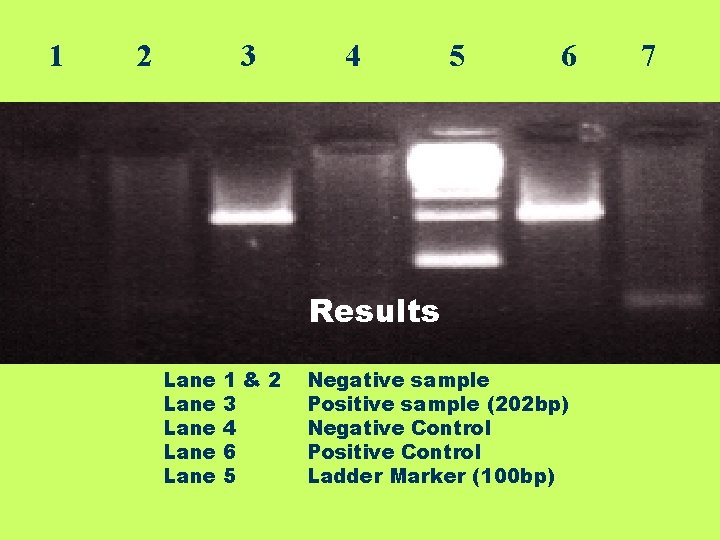
1 2 3 4 5 6 Results Lane Lane 1&2 3 4 6 5 Negative sample Positive sample (202 bp) Negative Control Positive Control Ladder Marker (100 bp) 7
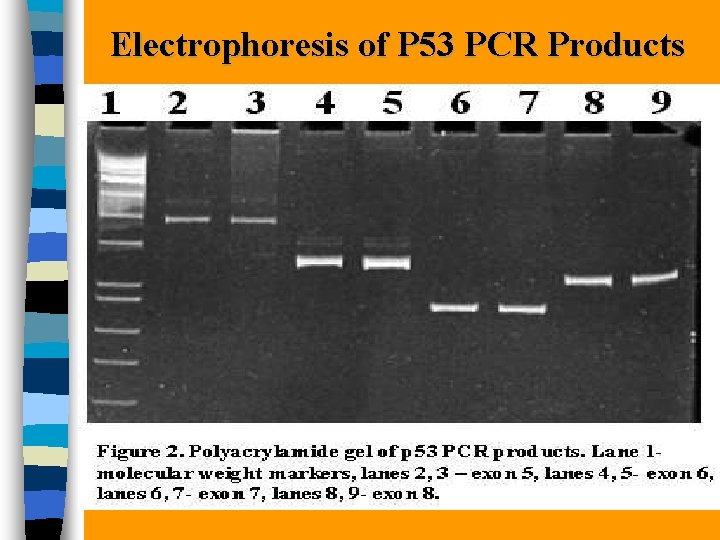
Electrophoresis of P 53 PCR Products

PCR set-up- avoid contamination!
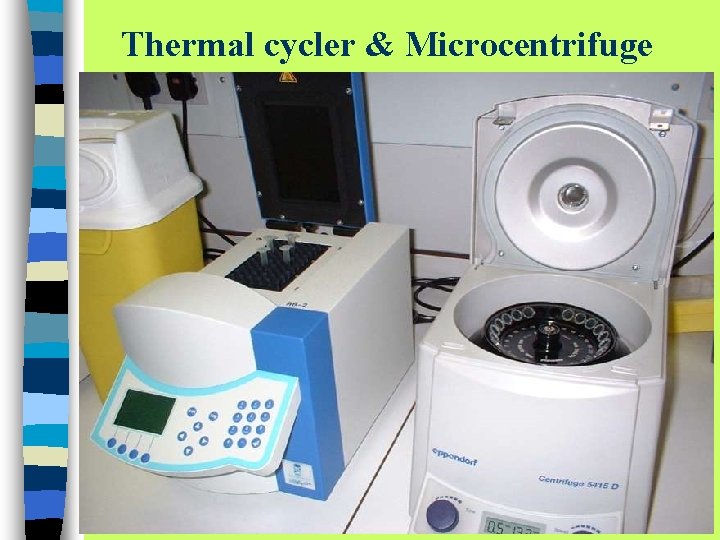
Thermal cycler & Microcentrifuge
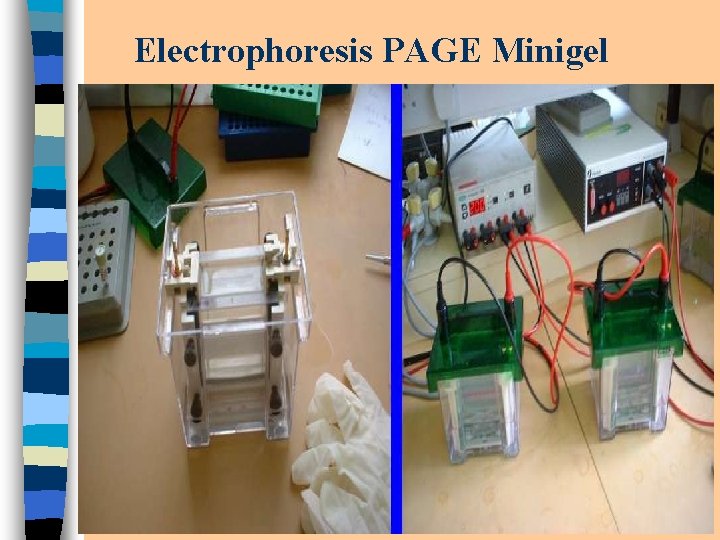
Electrophoresis PAGE Minigel
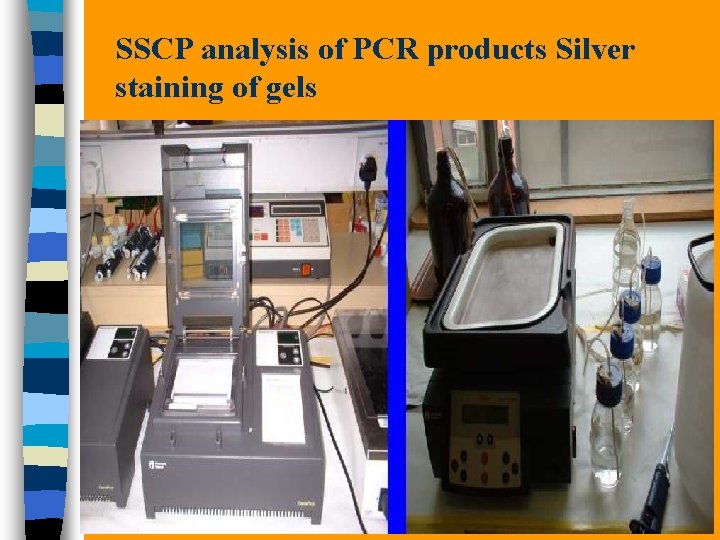
SSCP analysis of PCR products Silver staining of gels
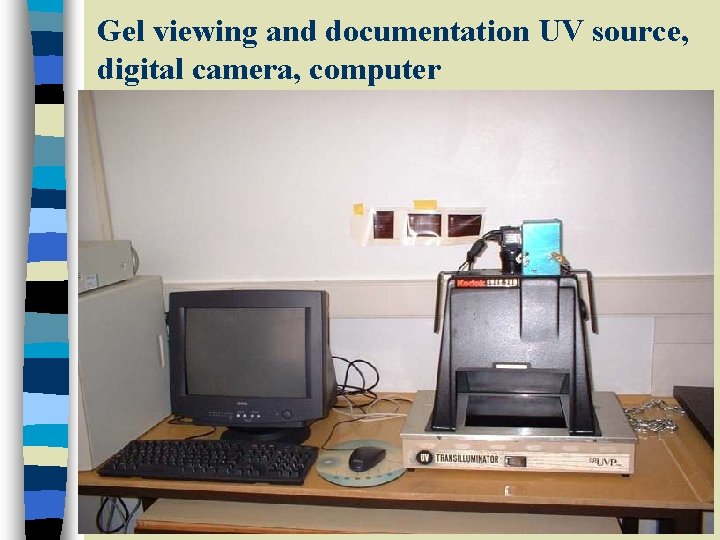
Gel viewing and documentation UV source, digital camera, computer
Mg. Cl 2 concentration Relationship between Mg. Cl 2 and d. NTP concentrations of about 200µM each are usually recommended for the Taq polymerase, at 1. 5 m. M Mg. Cl 2. Taq polymerase requires free magnesium. Relationship between Mg. Cl 2 and buffer (or salt) concentration n At 1 x salt concentration and 200 m. M each d. NTP, reaction worked best at about 1. 5 m. M magnesium. n At 3 x salt concentration and 200 m. M each d. NTP, reaction worked best between 1. 5 and 3. 5 m. M magnesium. n At 10. 8 m. M Mg. Cl 2 and 200 m. M each d. NTP, reaction worked best around 2 x salt (KCl) concentration n At 1. 5 m. M magnesium and 200 m. M each d. NTP, reaction worked best around 2 x salt (KCl) concentration
Choosing/designing PCR primers In designing primers for PCR, the following steps/rules may be tested and proven to be useful: n length of individual primers between 18 -24 bases. n It is desirable (but not absolutely necessary) that the two primers have a close melting temperature or Tm (say, within 5 o C or so). Purine: pyrimidine content around 1: 1 (maybe 40 -60%) n If possible, primer sequence should start and end with 1 -2 GC pairs n Each primer pair should be tested for primer-primer interactions. n Primer sequences should be aligned with all DNA sequences entered in the databases (using BLAST programs) and checked for similarities with repetitive sequences or with other loci, e anywhere in the genome. If two loci are very similar (for example across species) it is useful to design the primers so that at least 1 -2 bases at the 3' end are specific for the locus to be amplified n Cycling conditions and buffer concentrations should be adjusted for each primer pair, so that amplification of the desired locus is specific, with no secondary products
Advantages of PCR – Speed and Ease of use. The advent of thermal cycler has allowed PCR to become common place. Usually 30 to 35 cycles are completed in 3 hrs. This means PCR amplification can be performed analyzed in a single day depending on the type of analysis done. – Sensitivity PCR is capable of amplifying a single target DNA molecule. Due to this extreme sensitivity care must be taken to protect samples from contamination. The sensitivity of PCR is such that one can use single sperm or embryo cells to test for mutation. PCR has quickly made its way into the forensic science. The sensitivity of PCR allows the detection of DNA from samples of chewing gum, a licked stamp, semen , blood, hair follicles, and skin cells. – Robustness of PCR Samples can be degraded, fixed with chemical fixatives, or embedded resins and will still give rise to amplification if prepared properly. Even DNA from mummified samples can be amplified. This is due to the complementarity of DNA. n
Disadvantages of PCR – Need to have DNA sequence information To allow the design of primers one needs to know the DNA sequence of the gene or DNA fragment to be amplified. – Size limitation of product Typically the size range of PCR primers is up to 5 kb. Gene cloning methods can handle DNA up to 2000 kb. – Infidelity of DNA replication Taq polymerase does not have 3'->5' exo activity that is associated with proof reading. Thus misincorporation of bases during the synthesis can be as high as 40% of the DNA fragments will have misincorporated bases. This is not a problem for most analyses. In most cases the changes in the PCR products do not affect the overall properties of the products as a whole. For example DNA sequence can still be determined by PCR because each change does not affect a large number of molecules.
Applications of PCR n n n n n Molecular Diagnosis (Infectious & Genetic Diseases) Criminal Investigation & Parentage analysis Assay for Restriction site polymorphism Assay for Short Tandem repeat polymorphism Mutation screening Allele-specific PCR and mutation detection DOP-PCR (Degenerate oligo primed PCR to isolate the c. DNA for specific protein based on protein sequence information. Indiscriminate PCR (PCR of regions with little or no DNA sequences) Linker primer PCR products used for specific Molecular Techniques
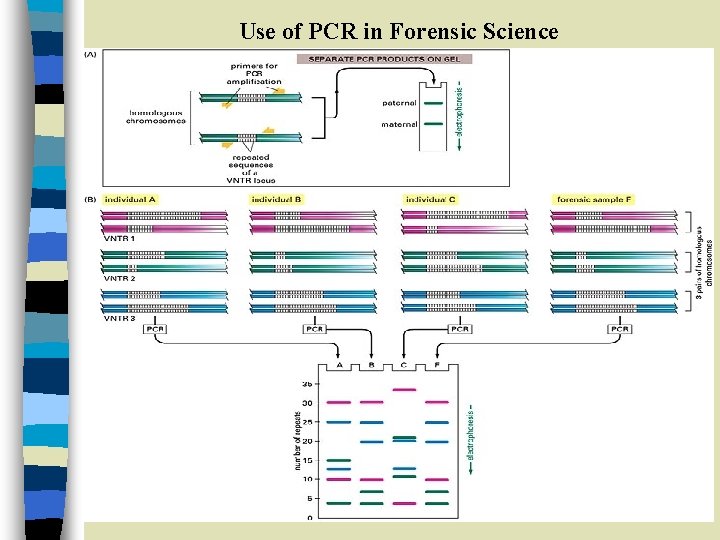
Use of PCR in Forensic Science
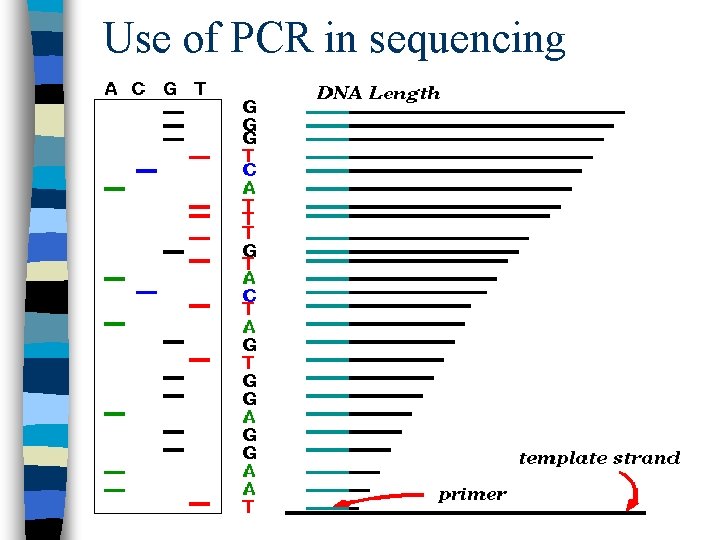
Use of PCR in sequencing
Future n Quantitative PCR – “Real-time” PCR – Multiplexing n Tissue and DNA micro-arrays
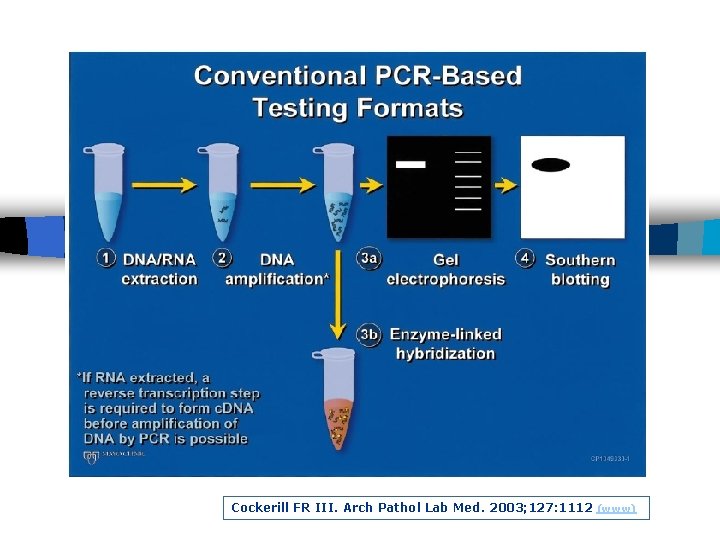
Cockerill FR III. Arch Pathol Lab Med. 2003; 127: 1112 (www)
What is Wrong with Agarose Gels? * * * * Poor precision Low sensitivity Short dynamic range < 2 logs Low resolution Non-automated Size-based discrimination only Results are not expressed as numbers Ethidium bromide staining is not very quantitative ABI: Real-Time PCR vs Traditional PCR (www)
- Slides: 27