
PCD Objective 4 01 Understand physical development care
PCD Objective 4. 01 Understand physical development & care of the infant (Birth-1 year old)
Never in a person’s lifetime will there be more rapid growth & physical changes than during infancy.

Infancy • The period between birth and one year.
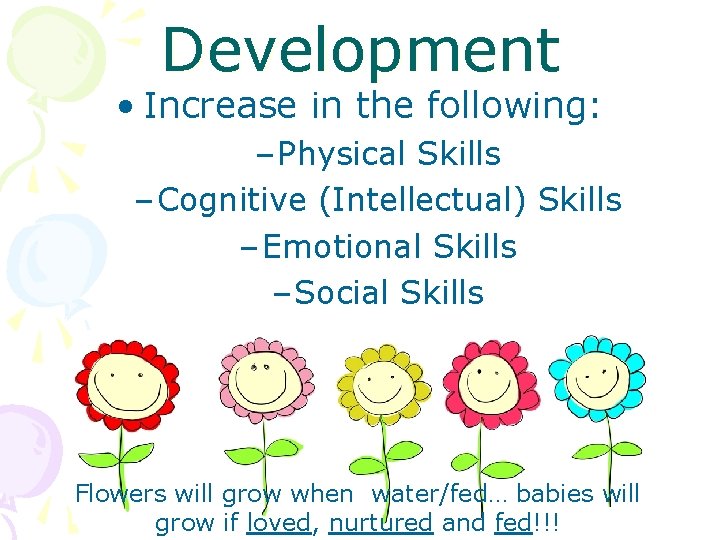
Development • Increase in the following: – Physical Skills – Cognitive (Intellectual) Skills – Emotional Skills – Social Skills Flowers will grow when water/fed… babies will grow if loved, nurtured and fed!!!
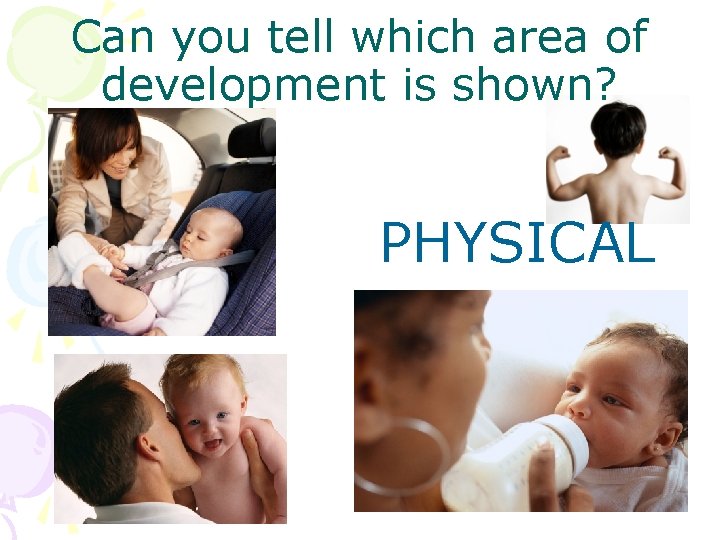
Can you tell which area of development is shown? PHYSICAL
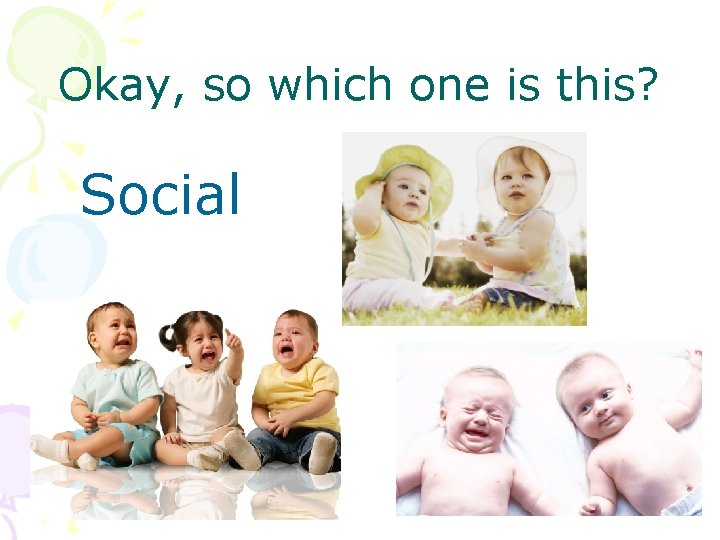
Okay, so which one is this? Social
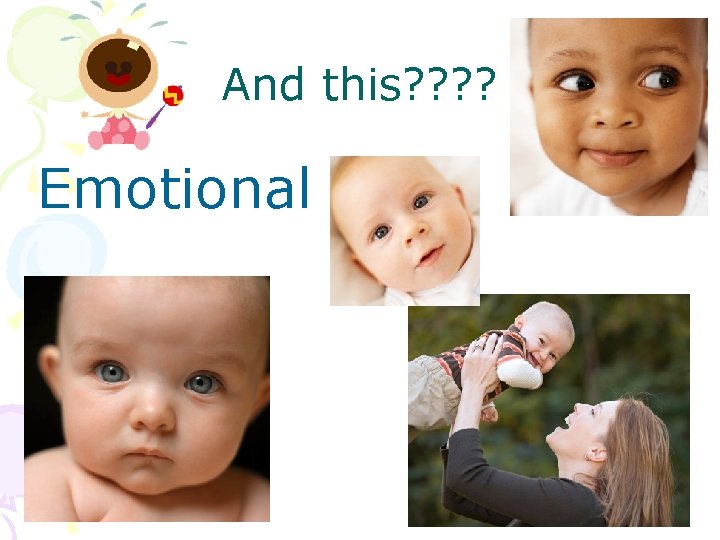
And this? ? Emotional
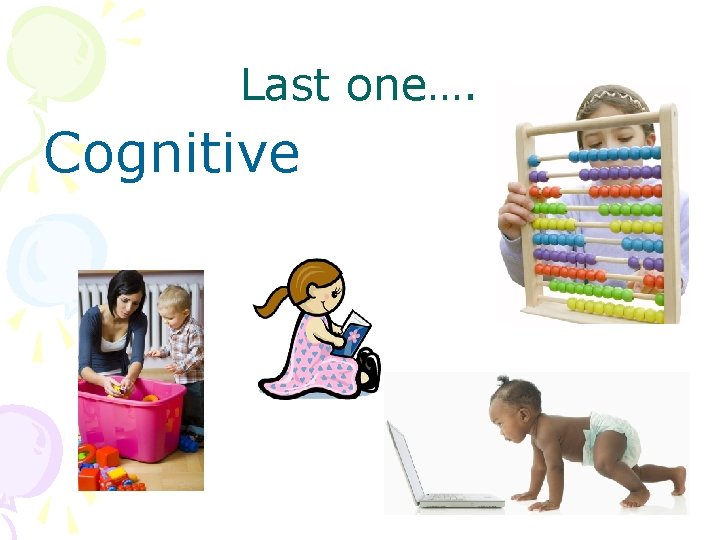
Last one…. Cognitive
Patterns of Development
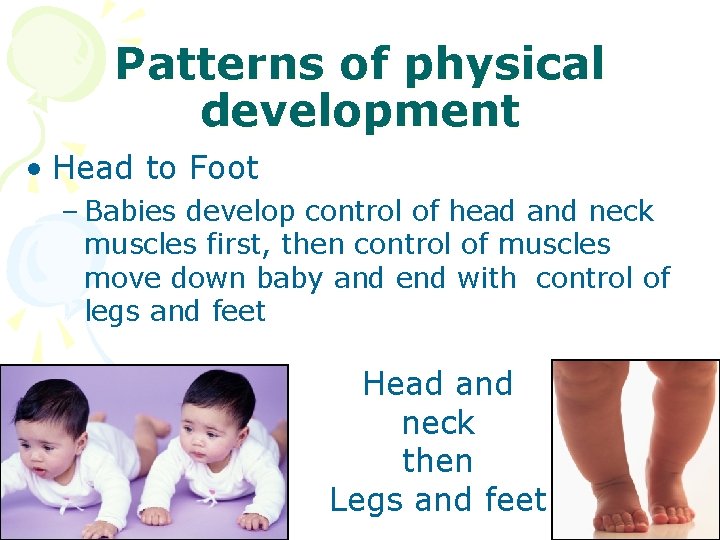
Patterns of physical development • Head to Foot – Babies develop control of head and neck muscles first, then control of muscles move down baby and end with control of legs and feet Head and neck then Legs and feet

Patterns of physical development • Near to Far – Development begins at the trunk of the body and moves outward to hands and feet – Trunk/body – Hands and feet Trunk grows first then leaves…. body develops first then hands and feet
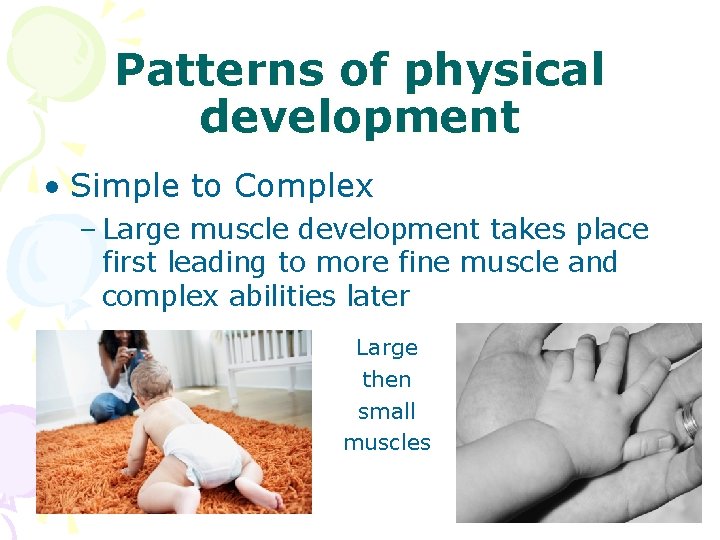
Patterns of physical development • Simple to Complex – Large muscle development takes place first leading to more fine muscle and complex abilities later Large then small muscles

Growth
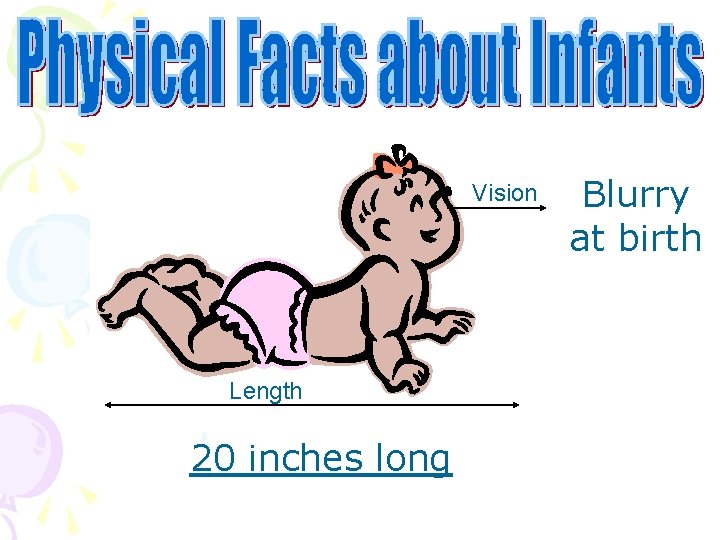
Vision Length 20 inches long Blurry at birth
Weight (Wt. ) • Infant gains 1 -2 lbs per month in the first six months • Wt. gain is one of the best signs of good health • Growth is related to good eating habits and excerise • Most babies lose about 10% of their birth wt. in the 1 st 5 days of life • Afterward, they gain wt. rapidly • Gain 1 -2 pounds (lbs) per month in the 1 st 6 months • Gain 1 lb per month in the next 6 months • Average wt. of a 1 yr. old is 20 -22 lbs.
Length • Measure lying down –Measure length instead of height because they are lying down • Average baby is 20 inches long at birth • Boys are slightly longer than girls • Average baby at 1 yr. is 30 inches long
• Body shape: –Infants hold themselves in a tightly secured position with fists clenched –Skinny arms and legs, large abdomen –Navel cord usually falls off in 3 wks. –Body straightens out during the 1 st 6 mths.
Proportion • Size relationship between different parts of the body –Baby’s head and abdomen are large, and the legs and arms are short and small
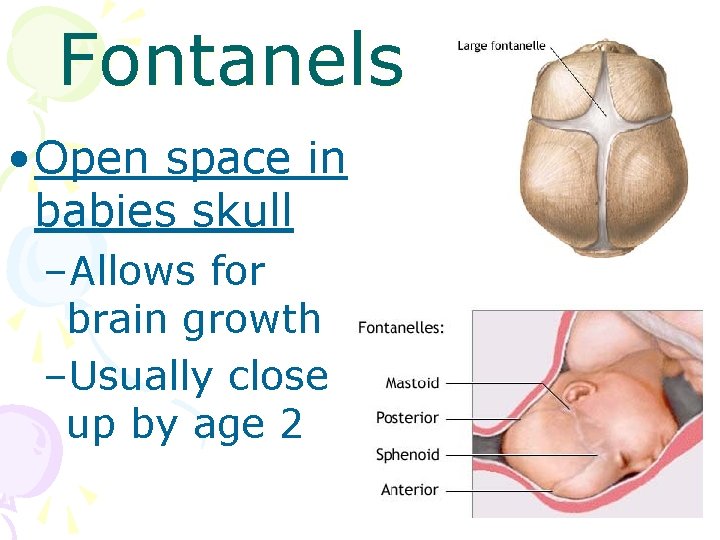
Fontanels • Open space in babies skull –Allows for brain growth –Usually close up by age 2

Infants and their 5 Senses
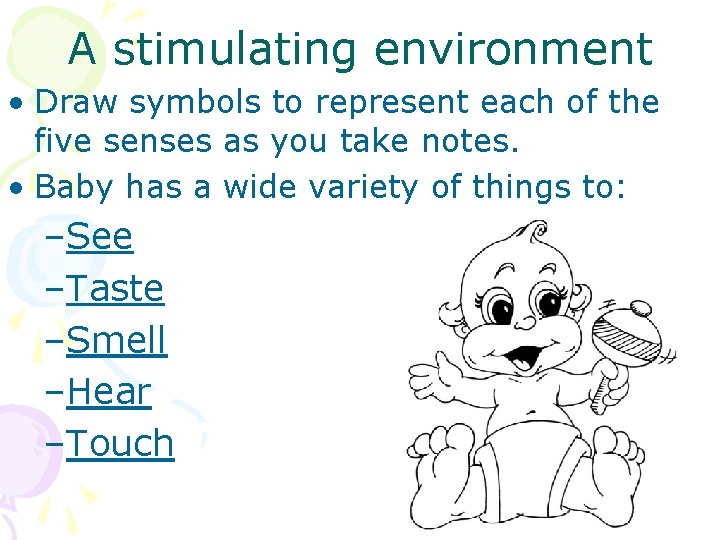
A stimulating environment • Draw symbols to represent each of the five senses as you take notes. • Baby has a wide variety of things to: –See –Taste –Smell –Hear –Touch
Vision - Seeing • Improves rapidly during the 1 st yr. • Blurry at birth – within week or so, infant is aware of surroundings • By 1 mth. – infant can focus on objects as faraway as 3 feet – an infant can not focus on objects across a room • By 6 mths. – eyesight reaches the sharpness of adult vision • Child sees two-dimensionally (see object flat) 1 st and then develops depth perception (three-dimensional) – Distance awareness
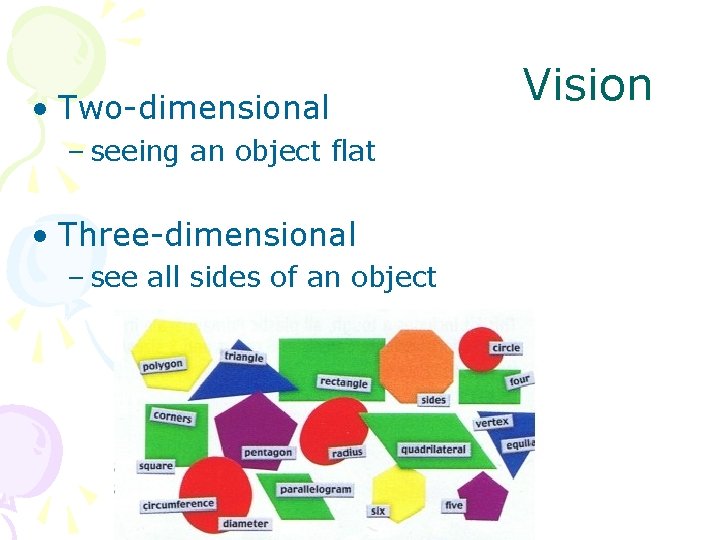
• Two-dimensional – seeing an object flat • Three-dimensional – see all sides of an object Vision
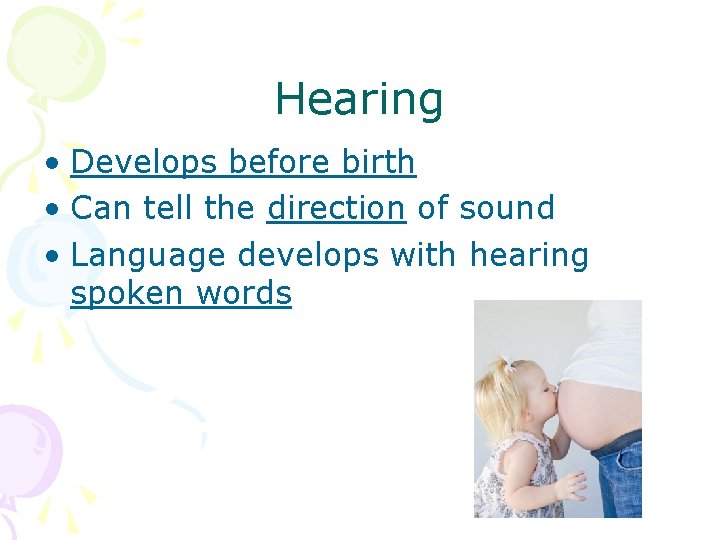
Hearing • Develops before birth • Can tell the direction of sound • Language develops with hearing spoken words
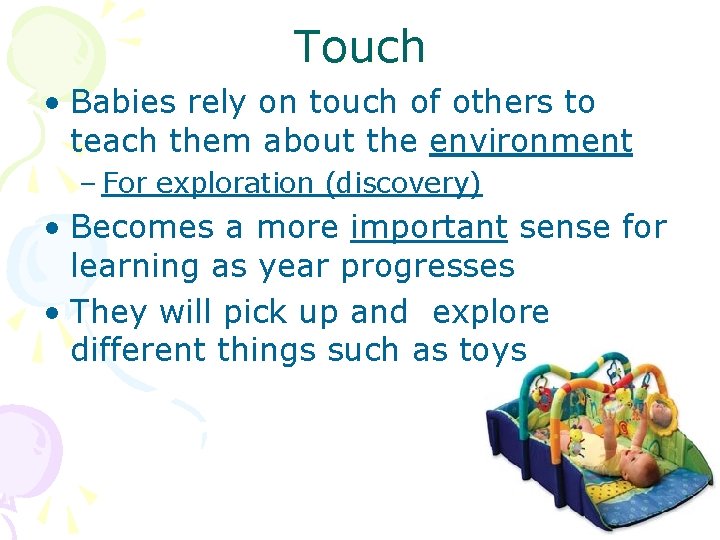
Touch • Babies rely on touch of others to teach them about the environment – For exploration (discovery) • Becomes a more important sense for learning as year progresses • They will pick up and explore different things such as toys
Smell & Taste • Develop after birth • Within 10 days they can distinguish their mother from any other person by smell • Two-week old babies can taste the difference between water, sour, sugar, and salt, and milk

Voice • Their voice is shrill (sharp, harsh), but softens as lungs mature • Change in the voice results from physical growth of the – throat muscles – Tongue – Lips – Teeth – Vocal Cords • Change in tongue and in the shape and proportion of the inside of the mouth during the first months of life leads to speech development
Motor Skills
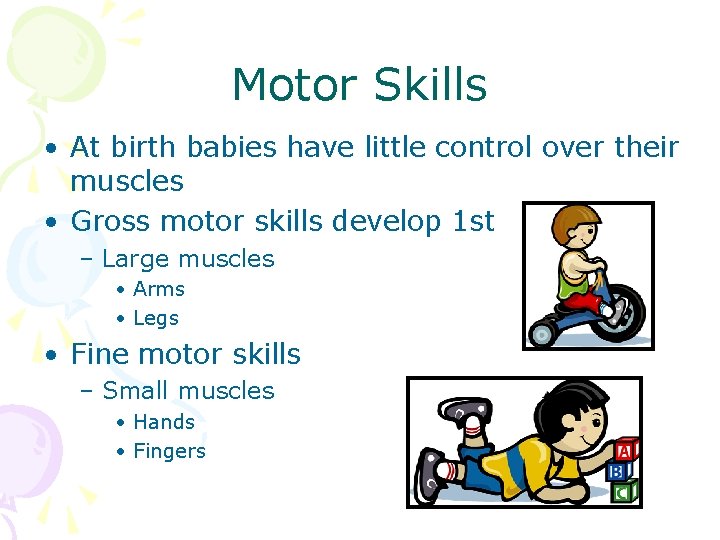
Motor Skills • At birth babies have little control over their muscles • Gross motor skills develop 1 st – Large muscles • Arms • Legs • Fine motor skills – Small muscles • Hands • Fingers

Use Handout • “Know Your Reflexes” –Appendix 4. 01 D
Reflexes • Occurring automatically and involuntarily as a result of the nervous system’s reaction to a stimulus

Reflexes • At birth – Automatic set of reflexes to help them survive
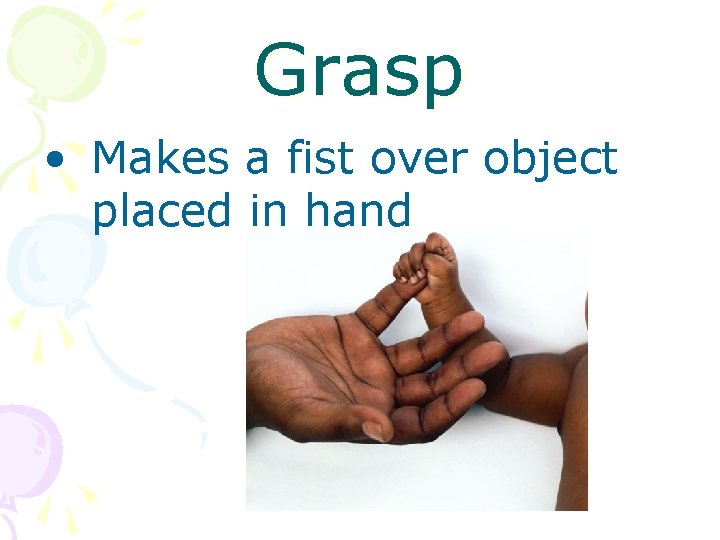
Grasp • Makes a fist over object placed in hand
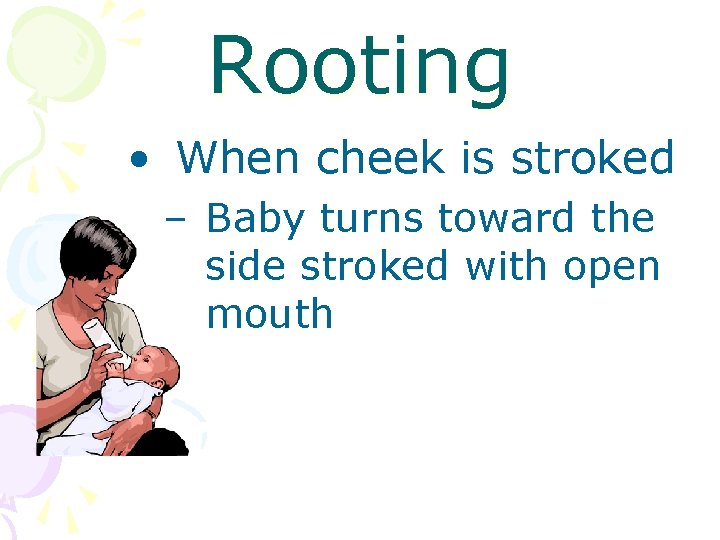
Rooting • When cheek is stroked – Baby turns toward the side stroked with open mouth

Startle • When baby’s position changes quickly or a loud noise occurs baby throws head back, arms out and arches back
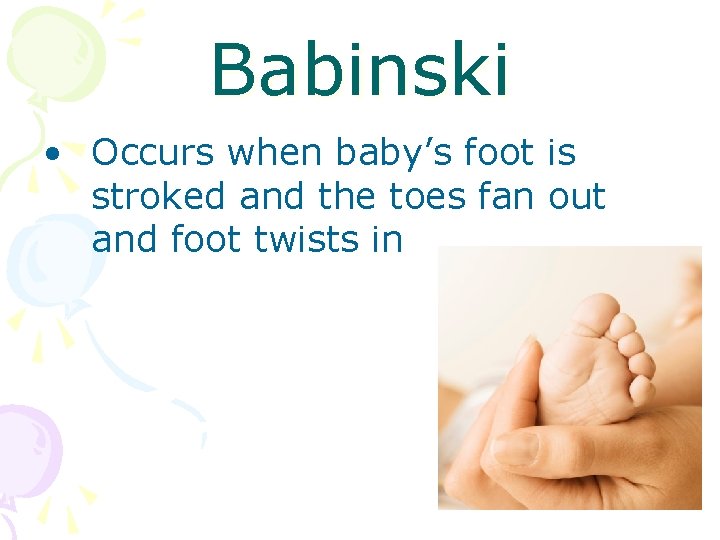
Babinski • Occurs when baby’s foot is stroked and the toes fan out and foot twists in
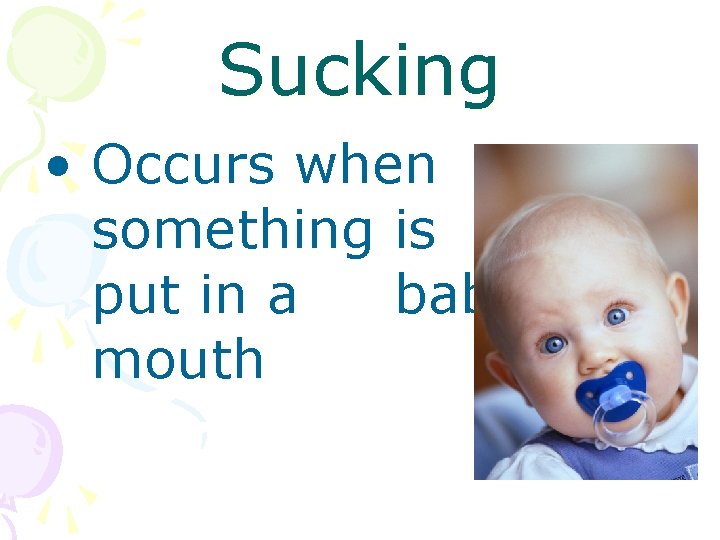
Sucking • Occurs when something is put in a baby’s mouth
Physical Care of an Infant

Handling • ALWAYS Support head/neck CPSC to Warn of Deadly Baby Sling Dangers http: //bit. ly/b 36 h. XB CBS Early Show
Breastfeeding vs. Bottle Feeding • Mother will need to decide which one – Breastfeeding is free & more nutritious – Bottle feeding can be done by anybody anywhere, but is very expensive • Burp/get air out of lungs after baby eats • Warning: What mom eats – Baby eats • When baby seems ready for solid foods, make sure you introduction one at a time. – This way you can determine if baby is allergic to that food.
Teeth • Will appear during their first year – Teething will hurt, may cry and need numbing medicine • See Dr. for advice • Take good care of your babies teeth and gums – Brush gums with warm, wet wash cloth

Bathing • Sponge bath –Before naval heals • Tub bath –After naval heals
Dressing • Dress babies comfortably • Weather/climate appropriate – Keep baby from being cold while dressing and undressing – They don’t need too many layers of clothing, they tend to get hot easy.
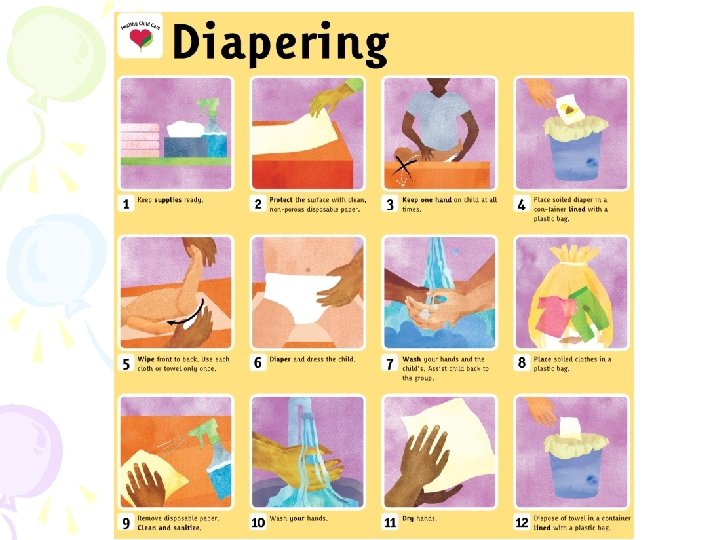
Diapering • Decide whether to use: – Disposable diapers • (Expensive, easier) – Cloth diapers • (FREE, but messier) Newborns will need to be changed 10+ times a day • If diaper rash occurs – change baby more often and apply diaper rash ointment
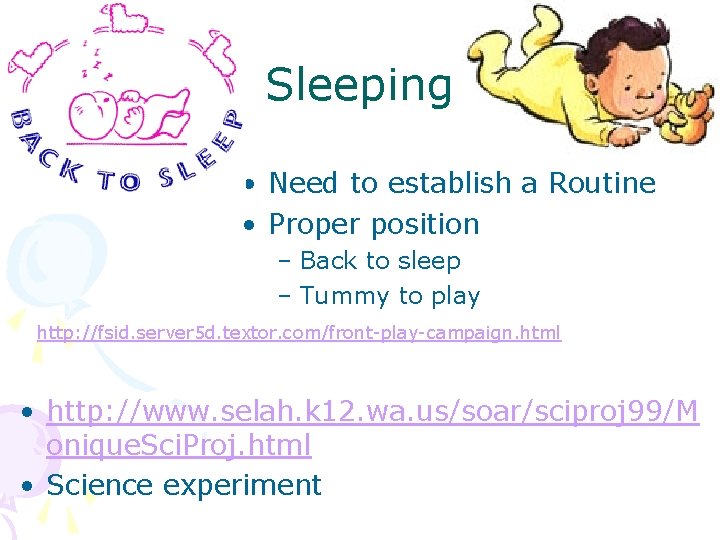
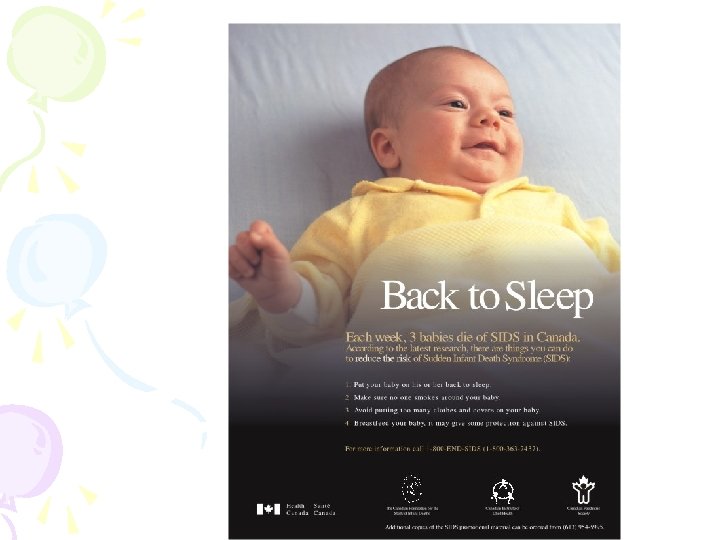
Sleeping • Need to establish a Routine • Proper position – Back to sleep – Tummy to play http: //fsid. server 5 d. textor. com/front-play-campaign. html • http: //www. selah. k 12. wa. us/soar/sciproj 99/M onique. Sci. Proj. html • Science experiment


Medical care • Wellness checkups –Make sure baby goes to their regular Dr. visits –Will need to get shots, etc.

Wellness checkup • Routine visits to the doctor to maintain good health
Which illustrates the early pattern of physical development near to far? A. An infant can crawl across the floor for a toy. B. An infant can lift his head before he sits up. C. And infant can lift up the leg and wiggle his toes. D. An infant can reach out for his mother with both arms. (B)
The infant’s head was much bigger than the rest of his body. What category of growth during the first year is this? A. Body shape B. Proportion C. Vision D. Weight (B)
Which is correct about infant physical development? A. Eating and exercising are not necessary for the health of an infant. B. Infants are too young to be stimulated by going places with parents. C. Infants can be stimulated by going places with parents. D. Select toys for infants that teach them to press keys. (C)
- Slides: 53