
PCB CONGENER PROFILE OF UNINTENTIONAL FORMATION FROM PIGMENT
PCB CONGENER PROFILE OF UNINTENTIONAL FORMATION FROM PIGMENT MANUFACTURING PROCESS Takeshi Nakano 1 and Katsunori Anezaki 2 1 Osaka University 2 Hokkaido Research Organization
PCB CONGENER PROFILE OF UNINTENTIONAL FORMATION FROM PIGMENT MANUFACTURING PROCESS Fe. Cl 3 3, 3’-dichlorobenzidine Chlorinated Paraffins Diphenyl Silane diol Organic pigment
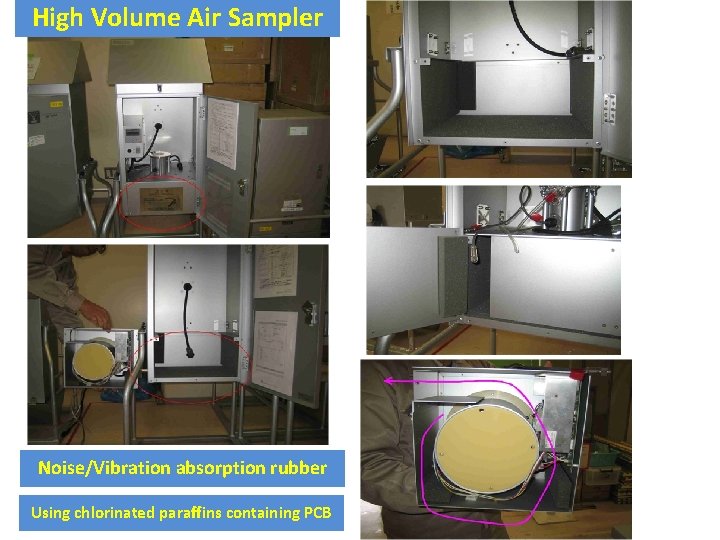
High Volume Air Sampler Noise/Vibration absorption rubber Using chlorinated paraffins containing PCB
PCB CONGENER PROFILE OF UNINTENTIONAL FORMATION FROM PIGMENT MANUFACTURING PROCESS Fe. Cl 3 Chlorinated Paraffins 3, 3’-dichlorobenzidine Diphenyl Silane diol Organic pigment
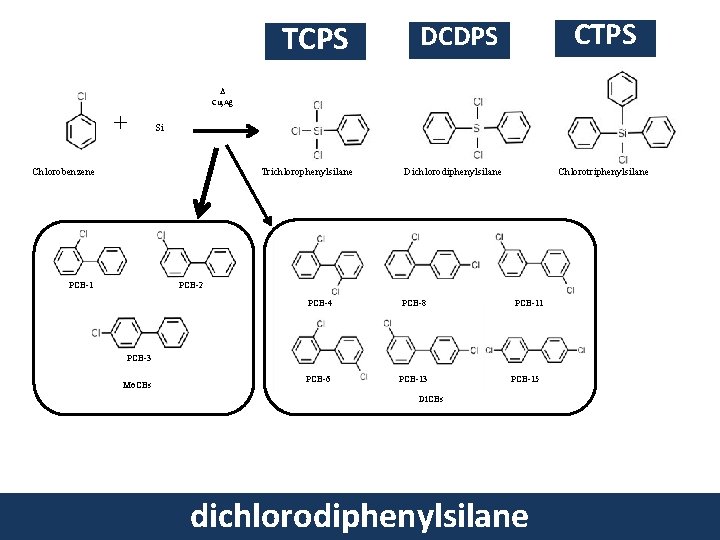
TCPS CTPS DCDPS D Cu, Ag + Si Chlorobenzene Trichlorophenylsilane PCB-1 Dichlorodiphenylsilane Chlorotriphenylsilane PCB-2 PCB-4 PCB-8 PCB-6 PCB-13 PCB-11 PCB-3 Mo. CBs PCB-15 Di. CBs dichlorodiphenylsilane
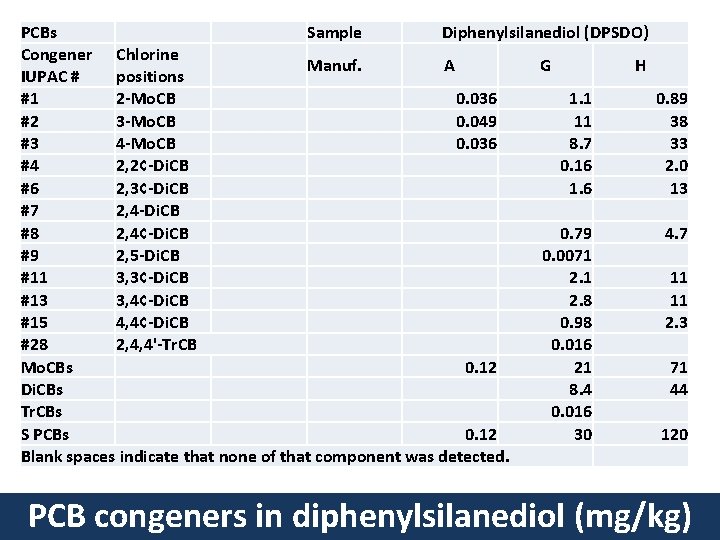
Sample Diphenylsilanediol (DPSDO) PCBs Congener Chlorine Manuf. A G H IUPAC # positions #1 2 -Mo. CB 0. 036 1. 1 #2 3 -Mo. CB 0. 049 11 #3 4 -Mo. CB 0. 036 8. 7 #4 2, 2¢-Di. CB 0. 16 #6 2, 3¢-Di. CB 1. 6 #7 2, 4 -Di. CB #8 2, 4¢-Di. CB 0. 79 #9 2, 5 -Di. CB 0. 0071 #11 3, 3¢-Di. CB 2. 1 #13 3, 4¢-Di. CB 2. 8 #15 4, 4¢-Di. CB 0. 98 #28 2, 4, 4'-Tr. CB 0. 016 Mo. CBs 0. 12 21 Di. CBs 8. 4 Tr. CBs 0. 016 S PCBs 0. 12 30 Blank spaces indicate that none of that component was detected. 0. 89 38 33 2. 0 13 4. 7 11 11 2. 3 71 44 120 PCB congeners in diphenylsilanediol (mg/kg)
UNINTENTIONAL FORMATION OF PCB FROM CHEMICAL MANUFACTURING PROCESS Fe. Cl 3 3, 3’-dichlorobenzidine Chlorinated Paraffins Diphenyl Silane diol Organic pigment
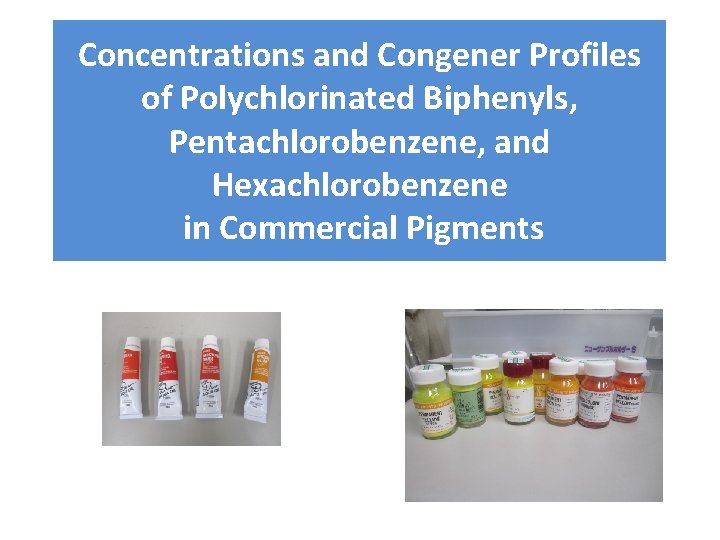
Concentrations and Congener Profiles of Polychlorinated Biphenyls, Pentachlorobenzene, and Hexachlorobenzene in Commercial Pigments
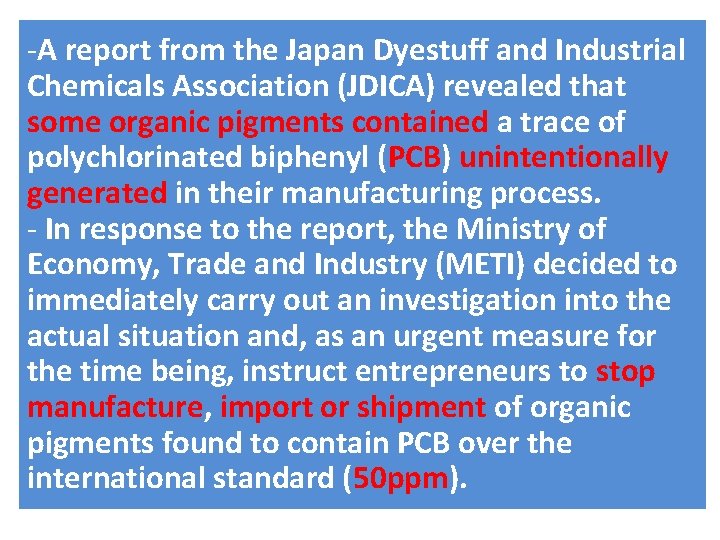
-A report from the Japan Dyestuff and Industrial Chemicals Association (JDICA) revealed that some organic pigments contained a trace of polychlorinated biphenyl (PCB) unintentionally generated in their manufacturing process. - In response to the report, the Ministry of Economy, Trade and Industry (METI) decided to immediately carry out an investigation into the actual situation and, as an urgent measure for the time being, instruct entrepreneurs to stop manufacture, import or shipment of organic pigments found to contain PCB over the international standard (50 ppm).
Results PCB congener profiles of azo pigment
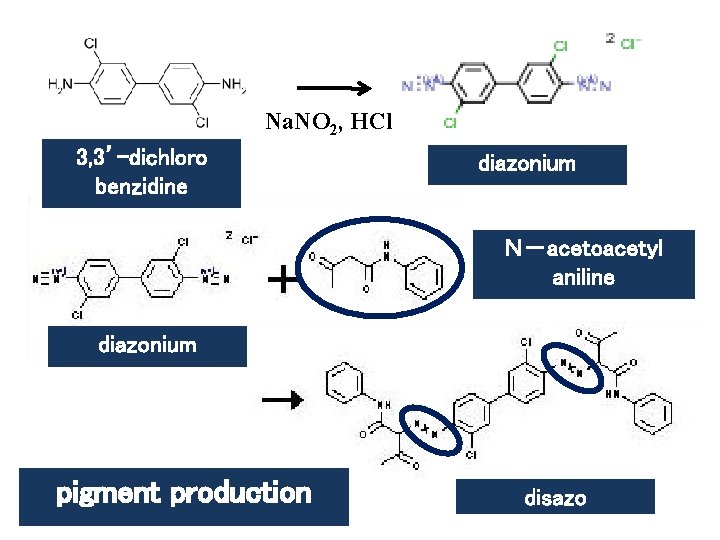
Na. NO 2, HCl 3, 3’-dichloro benzidine diazonium N-acetoacetyl aniline diazonium pigment production disazo
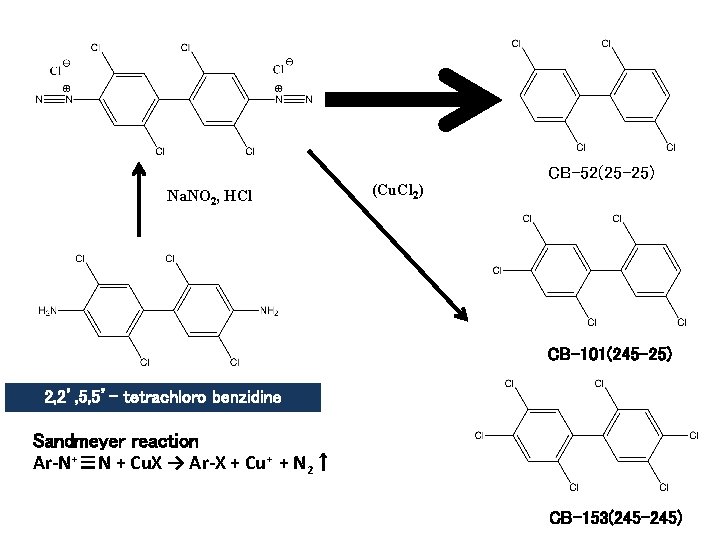
Na. NO 2, HCl (Cu. Cl 2) CB-52(25 -25) CB-101(245 -25) 2, 2’, 5, 5’- tetrachloro benzidine Sandmeyer reaction Ar-N+≡N + Cu. X → Ar-X + Cu+ + N 2↑ CB-153(245 -245)
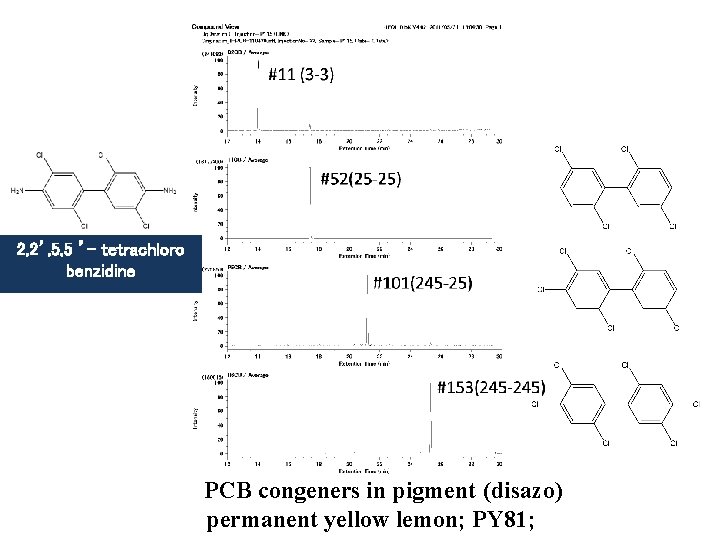
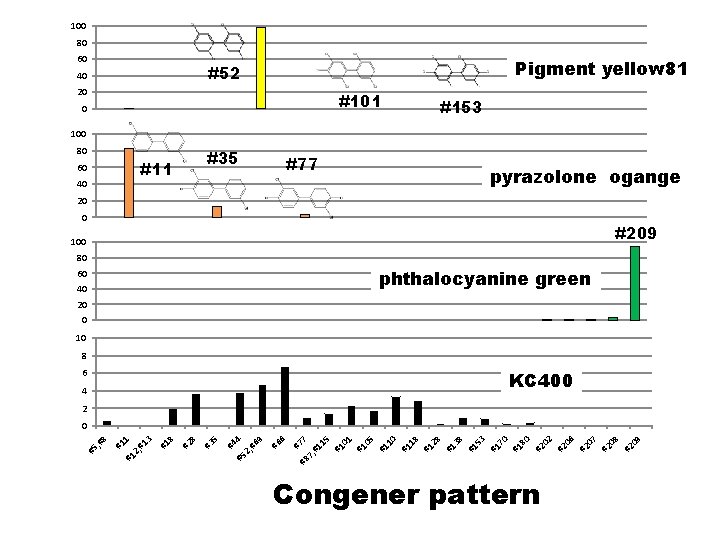
2, 2’, 5, 5 ’- tetrachloro benzidine PCB congeners in pigment (disazo) permanent yellow lemon; PY 81;
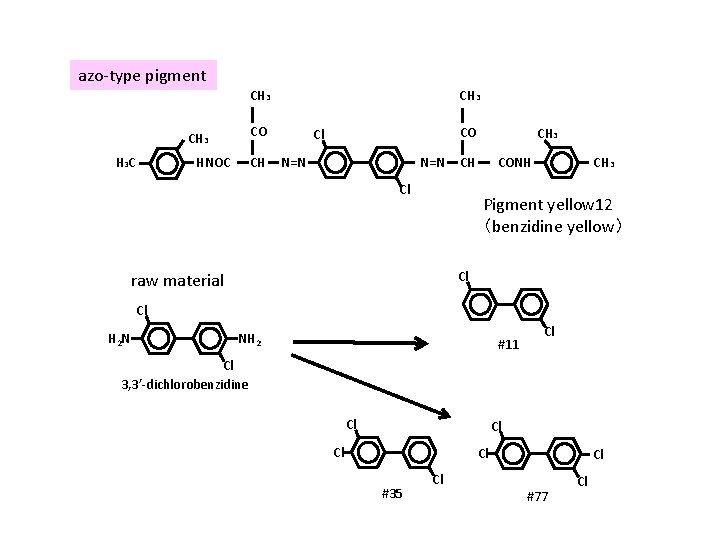
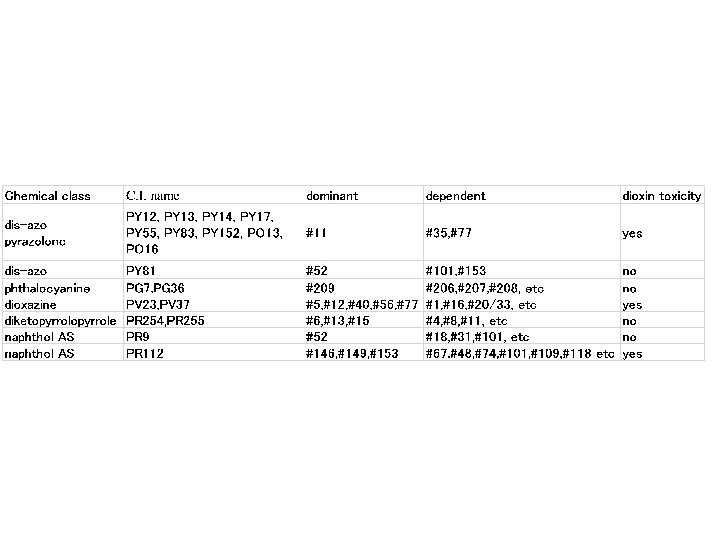
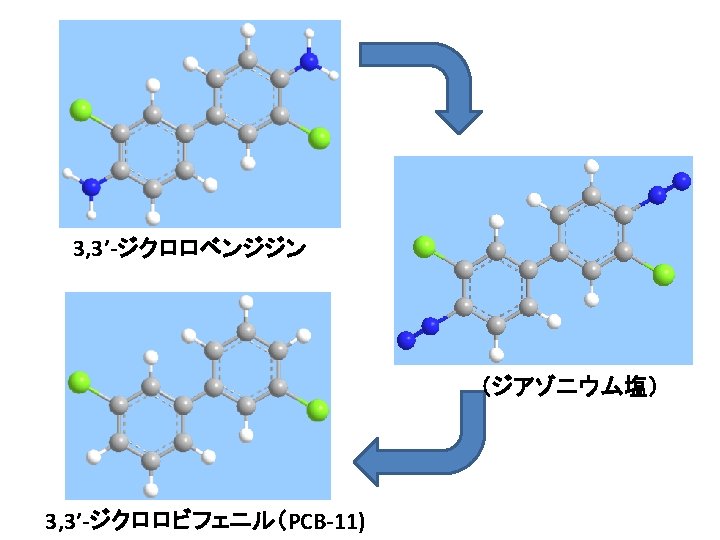
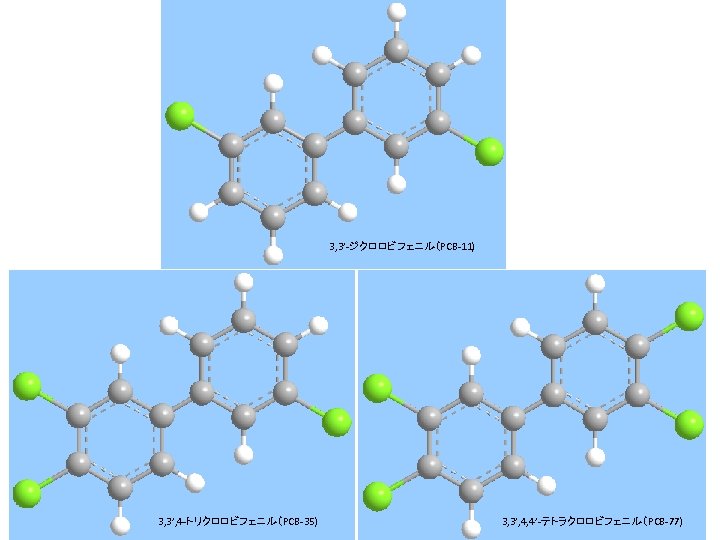
azo-type pigment CH 3 CO CH 3 CH HNOC H 3 C CH 3 CO Cl N=N CH 3 Cl CH 3 CONH CH Pigment yellow 12 (benzidine yellow) Cl raw material Cl H 2 N NH 2 #11 Cl Cl 3, 3’-dichlorobenzidine Cl Cl #35 Cl Cl #77 Cl
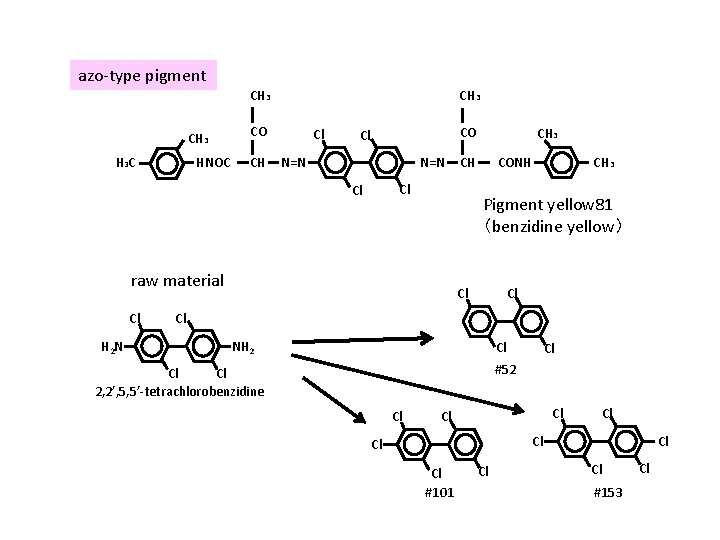
azo-type pigment CH 3 HNOC H 3 C CH 3 CO CH Cl CO Cl N=N Pigment yellow 81 (benzidine yellow) raw material Cl H 2 N CH 3 CONH CH Cl Cl CH 3 Cl Cl Cl NH 2 Cl Cl #52 Cl Cl 2, 2’, 5, 5’-tetrachlorobenzidine Cl Cl #101 Cl Cl #153 Cl
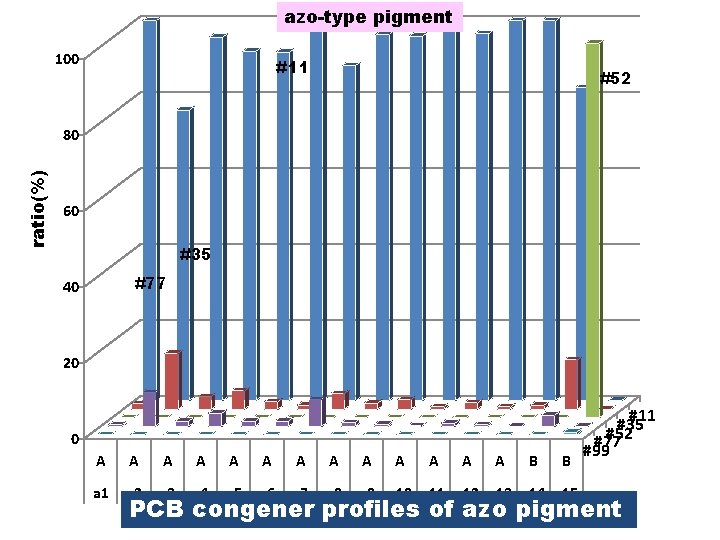
azo-type pigment 100 #11 #52 ratio(%) 80 60 #35 #77 40 20 0 A A A A B B a 1 a 2 a 3 a 4 a 5 a 6 a 7 a 8 a 9 a 10 a 11 a 12 a 13 a 14 a 15 #11 #35 #52 #77 #99 PCB congener profiles of azo pigment
Results PCB congener profiles of phthalocyanine pigment
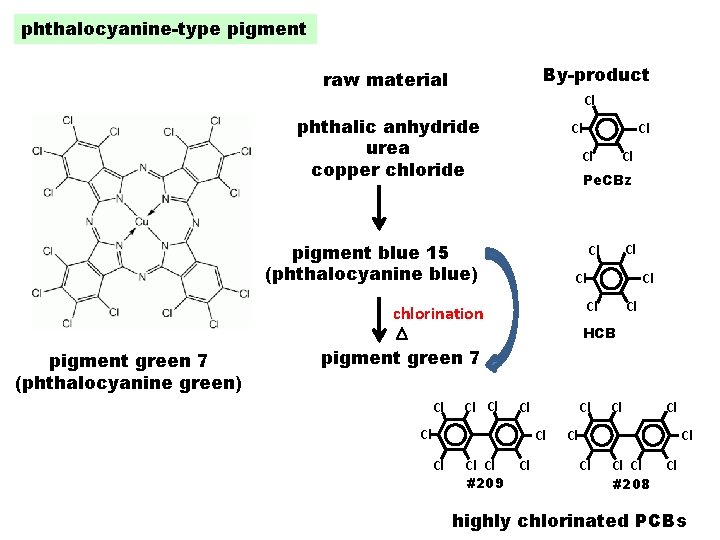
phthalocyanine-type pigment By-product raw material Cl phthalic anhydride urea copper chloride Cl Cl Cl HCB Cl Cl Cl #209 Cl Cl Cl chlorination D pigment green 7 Cl Cl Pe. CBz pigment blue 15 (phthalocyanine blue) pigment green 7 (phthalocyanine green) Cl Cl Cl #208 Cl highly chlorinated PCBs
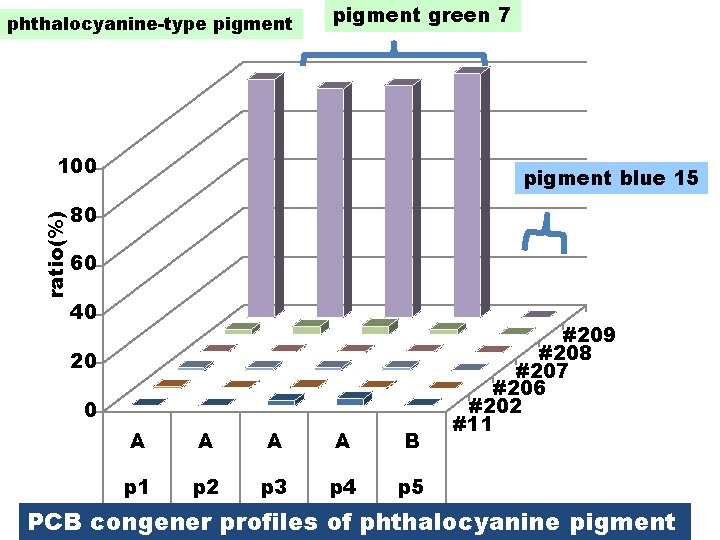
phthalocyanine-type pigment green 7 ratio(%) 100 pigment blue 15 80 60 40 20 0 A A B p 1 p 2 p 3 p 4 p 5 #209 #208 #207 #206 #202 #11 PCB congener profiles of phthalocyanine pigment
100 80 60 Pigment yellow 81 #52 40 20 #101 0 #153 100 80 #35 #11 60 40 #77 pyrazolone ogange 20 0 #209 100 80 phthalocyanine green 60 40 20 0 10 8 6 KC 400 4 2 Congener pattern 09 08 #2 #2 07 #2 06 #2 02 #2 80 #1 70 #1 53 38 #1 #1 28 18 #1 #1 10 #1 05 #1 01 #1 # #8 77 7, #1 15 6 #6 #4 #5 4 2, #6 9 5 #3 8 #2 8 #1 #1 1 2, #1 3 #1 #5 , # 8 0
PCB congener profiles of diketopyrrolo-pyrrole pigments
PCB congener profiles of dioxazine violet pigments
PV 23 o-DCB + Chloranil o-DCB + 3 -amino N-ethyl-carbazole o-DCB only o-DCB + Chloranil + 3 -amino Nethylcarbazole trace PCB- 40 PCB- 56 PCB- 77 23 - 23 23 - 34 34 - 34
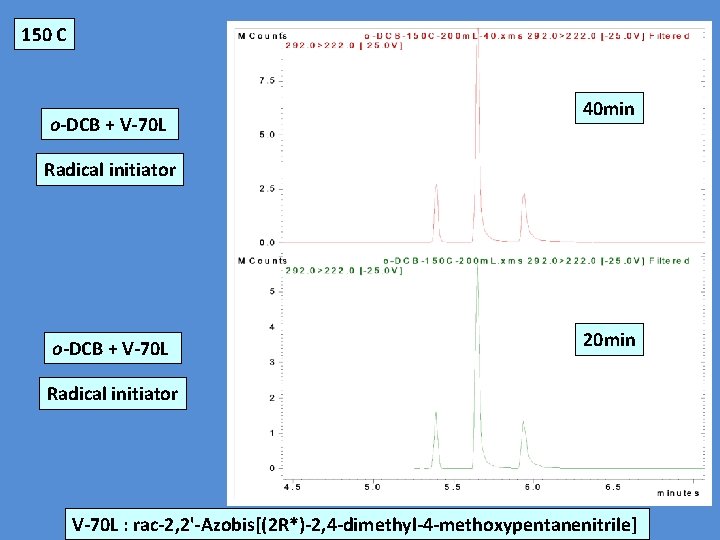
150 C o-DCB + V-70 L 40 min Radical initiator o-DCB + V-70 L 20 min Radical initiator V-70 L : rac-2, 2'-Azobis[(2 R*)-2, 4 -dimethyl-4 -methoxypentanenitrile]
PCB FORMATION FROM PCBz via different PCBz radicals
Only one PCB isomer Formation from one PCBz radical
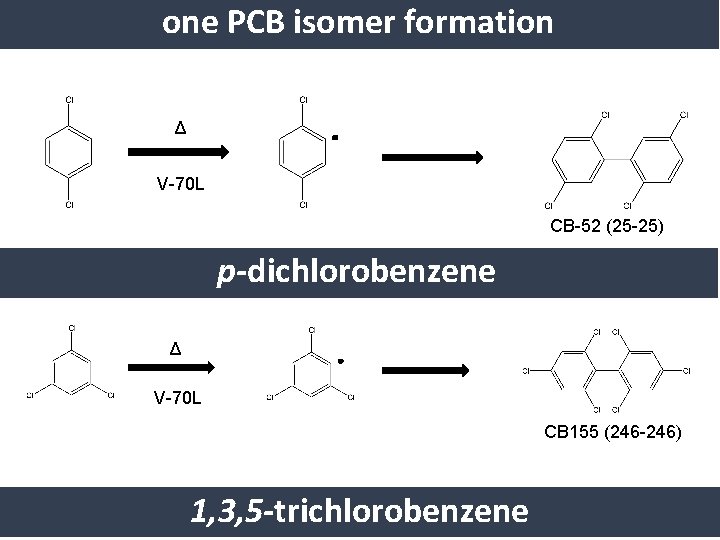
one PCB isomer formation Δ V-70 L CB-52 (25 -25) p-dichlorobenzene Δ V-70 L CB 155 (246 -246) 1, 3, 5 -trichlorobenzene
3 PCB isomers Formation from 2 PCBz radicals
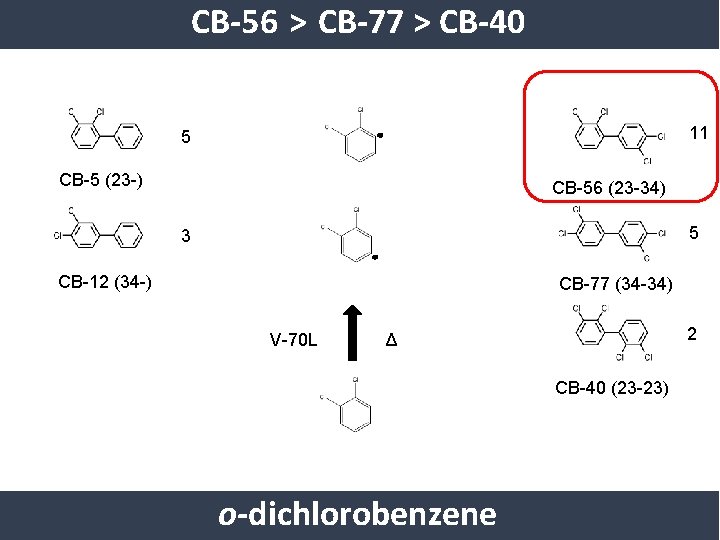
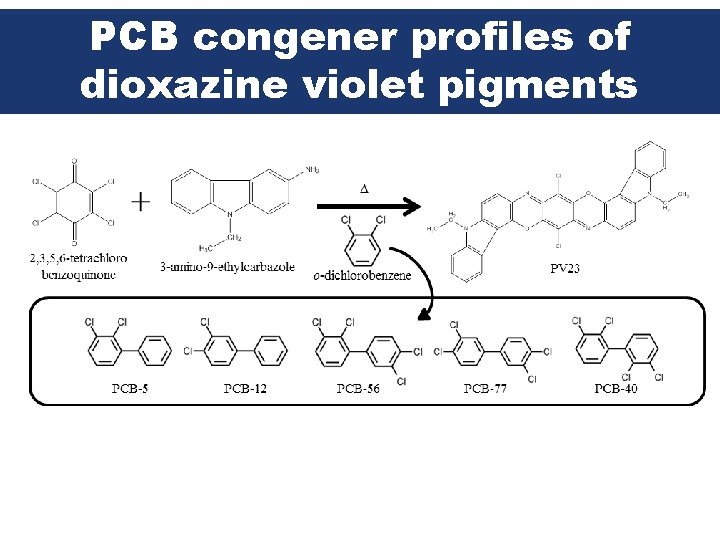
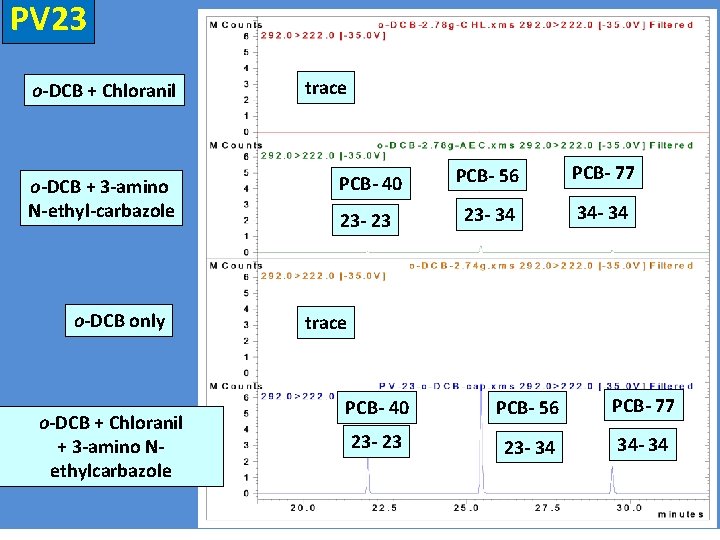
CB-56 > CB-77 > CB-40 11 5 CB-5 (23 -) CB-56 (23 -34) 5 3 CB-12 (34 -) CB-77 (34 -34) V-70 L 2 Δ CB-40 (23 -23) o-dichlorobenzene
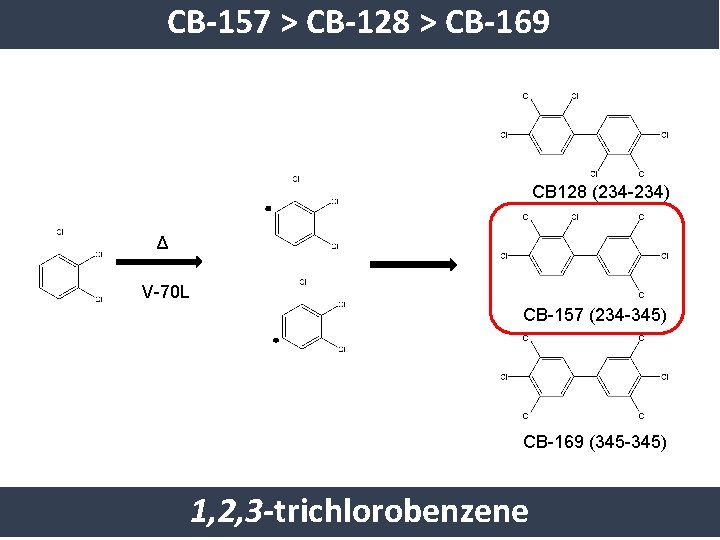
CB-157 > CB-128 > CB-169 CB 128 (234 -234) Δ V-70 L CB-157 (234 -345) CB-169 (345 -345) 1, 2, 3 -trichlorobenzene
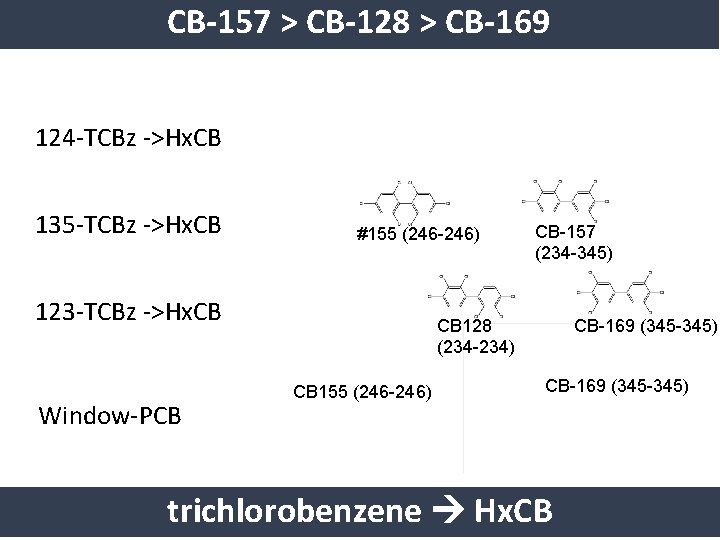
CB-157 > CB-128 > CB-169 124 -TCBz ->Hx. CB 135 -TCBz ->Hx. CB #155 (246 -246) 123 -TCBz ->Hx. CB Window-PCB CB-157 (234 -345) CB-169 (345 -345) CB 128 (234 -234) CB 155 (246 -246) CB-169 (345 -345) trichlorobenzene Hx. CB
6 PCB isomers Formation from 3 PCBz radicals
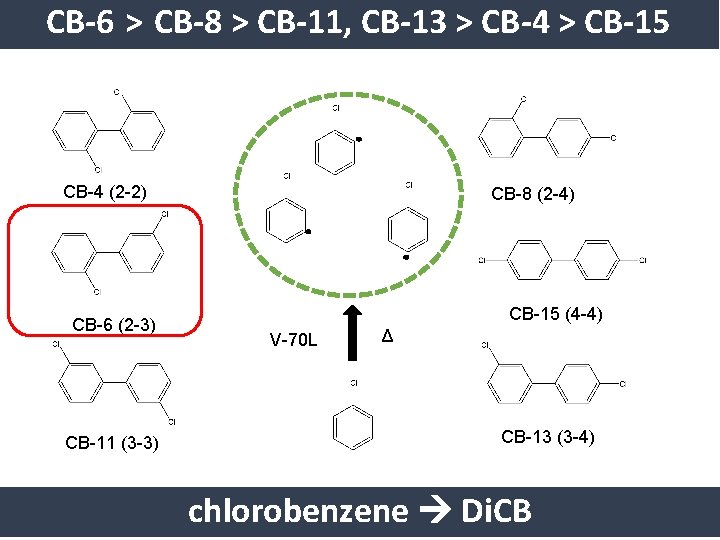
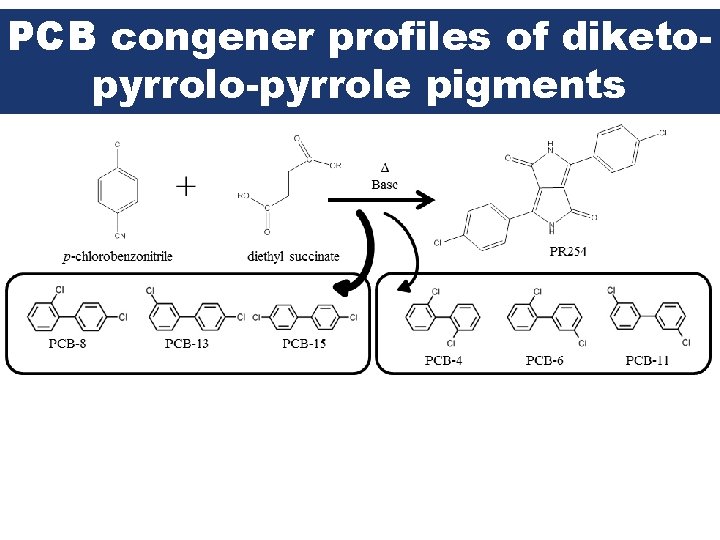
CB-6 > CB-8 > CB-11, CB-13 > CB-4 > CB-15 CB-4 (2 -2) CB-6 (2 -3) CB-11 (3 -3) CB-8 (2 -4) CB-15 (4 -4) V-70 L Δ CB-13 (3 -4) chlorobenzene Di. CB
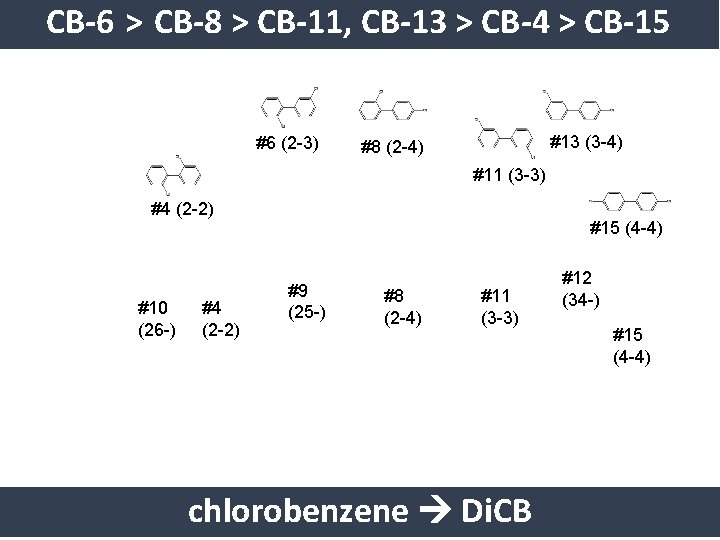
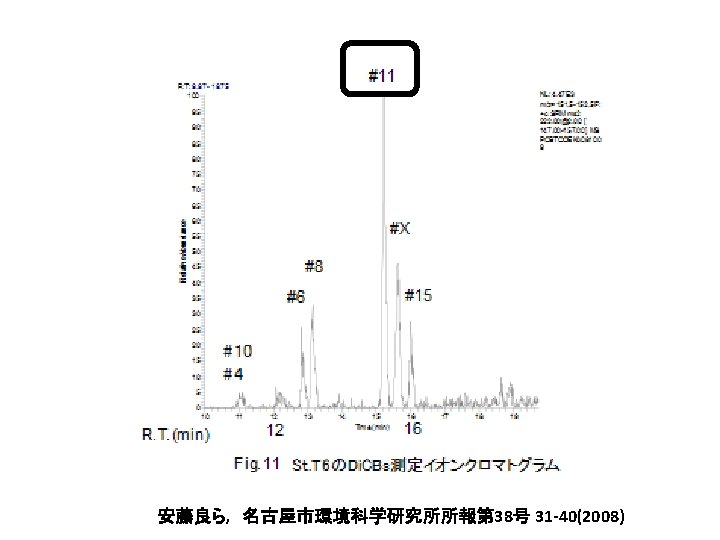
CB-6 > CB-8 > CB-11, CB-13 > CB-4 > CB-15 #6 (2 -3) #13 (3 -4) #8 (2 -4) #11 (3 -3) #4 (2 -2) #10 (26 -) #4 (2 -2) #15 (4 -4) #9 (25 -) #8 (2 -4) #11 (3 -3) chlorobenzene Di. CB #12 (34 -) #15 (4 -4)
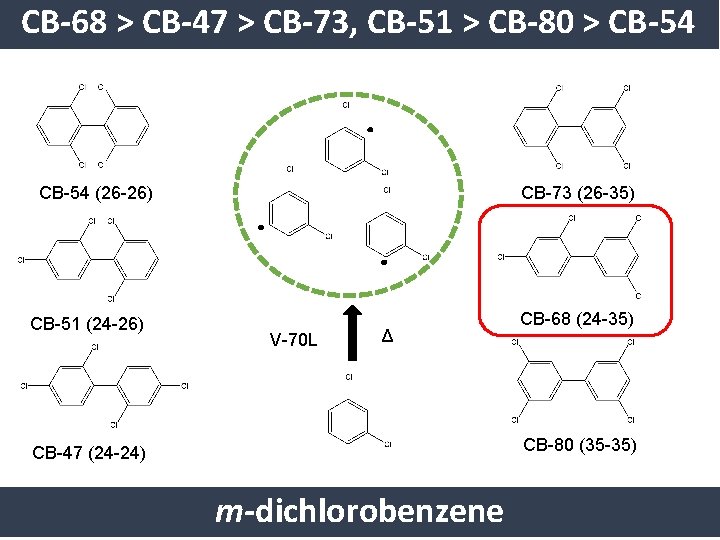
CB-68 > CB-47 > CB-73, CB-51 > CB-80 > CB-54 (26 -26) CB-51 (24 -26) CB-73 (26 -35) V-70 L Δ CB-68 (24 -35) CB-80 (35 -35) CB-47 (24 -24) m-dichlorobenzene
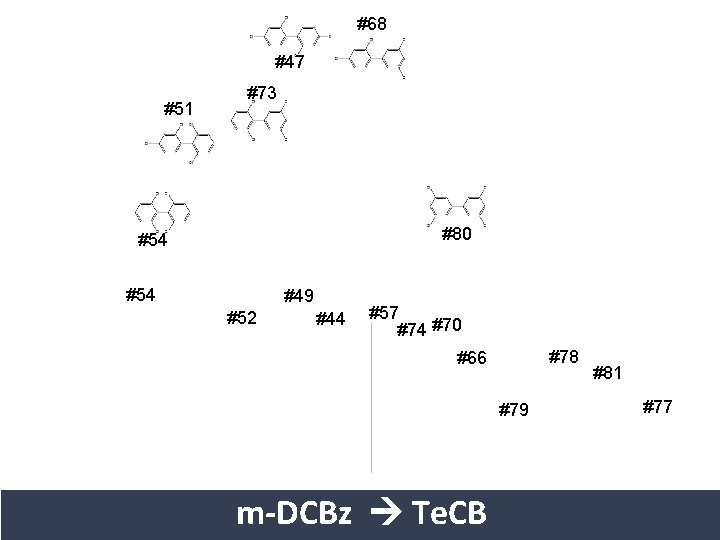
#68 #47 #51 #73 #80 #54 #49 #52 #44 #57 #74 #70 #78 #66 #79 m-DCBz Te. CB #81 #77
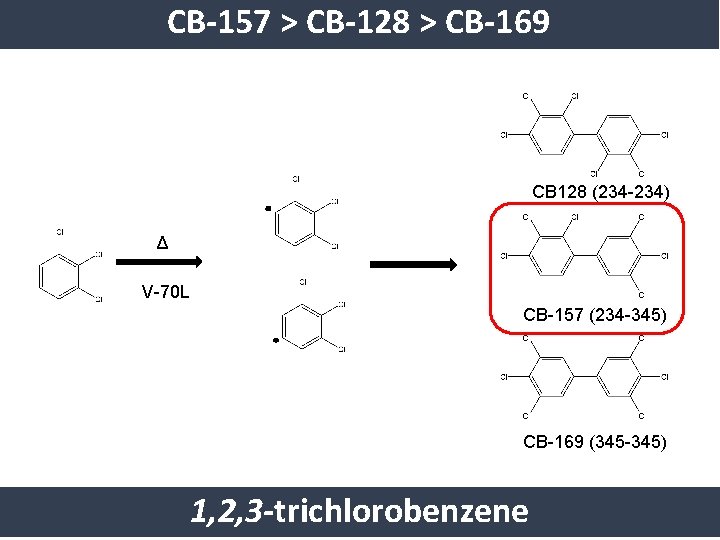
CB-157 > CB-128 > CB-169 CB 128 (234 -234) Δ V-70 L CB-157 (234 -345) CB-169 (345 -345) 1, 2, 3 -trichlorobenzene
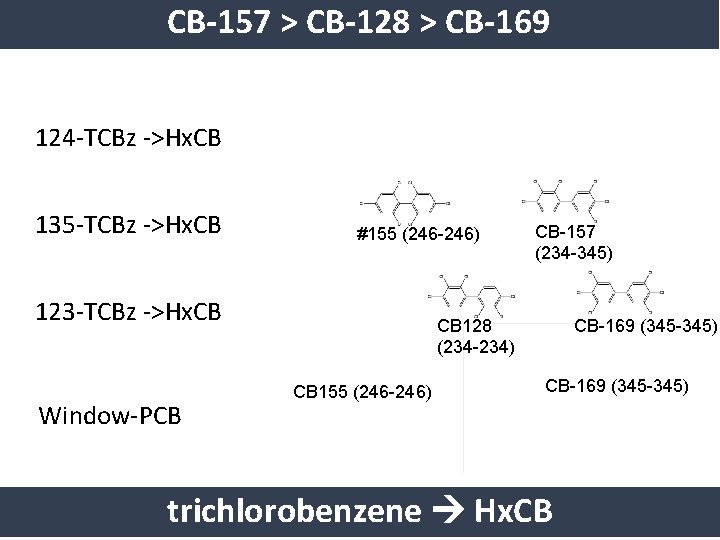
CB-157 > CB-128 > CB-169 124 -TCBz ->Hx. CB 135 -TCBz ->Hx. CB #155 (246 -246) 123 -TCBz ->Hx. CB Window-PCB CB-157 (234 -345) CB-169 (345 -345) CB 128 (234 -234) CB 155 (246 -246) CB-169 (345 -345) trichlorobenzene Hx. CB
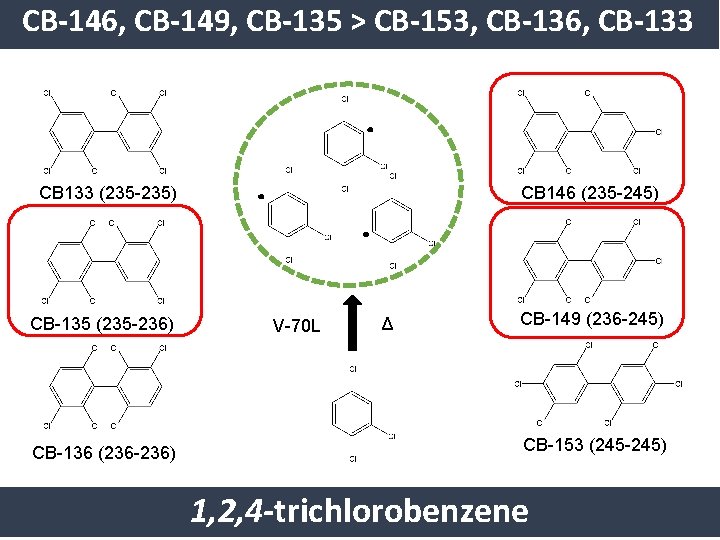
CB-146, CB-149, CB-135 > CB-153, CB-136, CB-133 CB 133 (235 -235) CB-135 (235 -236) CB-136 (236 -236) CB 146 (235 -245) V-70 L Δ CB-149 (236 -245) CB-153 (245 -245) 1, 2, 4 -trichlorobenzene
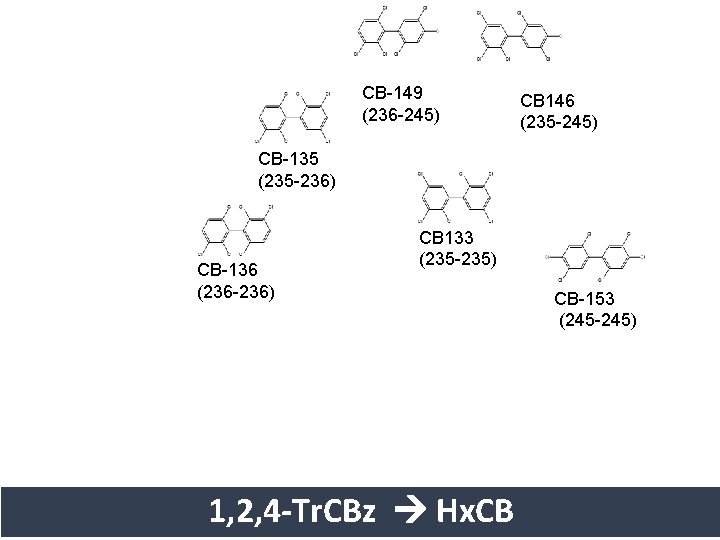
CB-149 (236 -245) CB 146 (235 -245) CB-135 (235 -236) CB-136 (236 -236) CB 133 (235 -235) 1, 2, 4 -Tr. CBz Hx. CB CB-153 (245 -245)
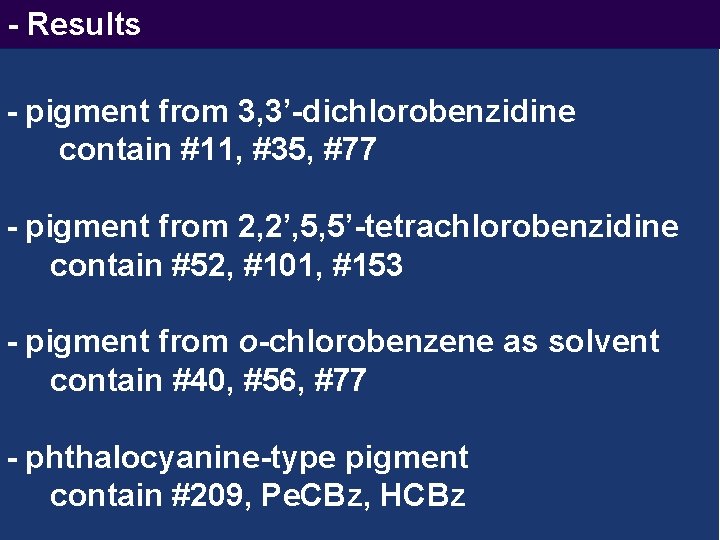
- Results - pigment from 3, 3’-dichlorobenzidine contain #11, #35, #77 - pigment from 2, 2’, 5, 5’-tetrachlorobenzidine contain #52, #101, #153 - pigment from o-chlorobenzene as solvent contain #40, #56, #77 - phthalocyanine-type pigment contain #209, Pe. CBz, HCBz
- Results Seasonal variations of PCBs, Di. CBs, and #11 in ambient air ( Sapporo city, Japan) April 2005 ~ March 2011
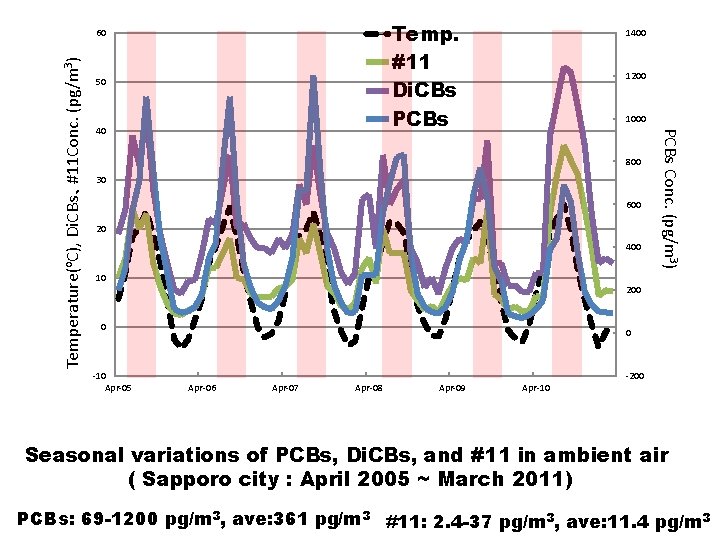
Temp. #11 Di. CBs PCBs 50 40 1400 1200 1000 800 30 600 20 400 PCBs Conc. (pg/m 3) Temperature(o. C), Di. CBs、#11 Conc. (pg/m 3) 60 10 200 0 -10 Apr-05 0 -200 Apr-06 Apr-07 Apr-08 Apr-09 Apr-10 Seasonal variations of PCBs, Di. CBs, and #11 in ambient air ( Sapporo city : April 2005 ~ March 2011) PCBs: 69 -1200 pg/m 3, ave: 361 pg/m 3 #11: 2. 4 -37 pg/m 3, ave: 11. 4 pg/m 3
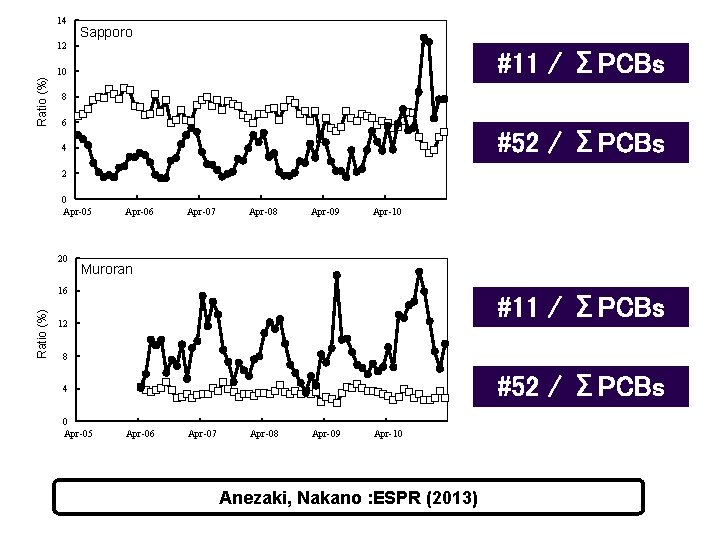
14 Sapporo Ratio (%) 12 #11 / ΣPCBs 10 8 6 #52 / ΣPCBs 4 2 0 Apr-05 20 Apr-06 Apr-07 Apr-08 Apr-09 Apr-10 Muroran Ratio (%) 16 #11 / ΣPCBs 12 8 #52 / ΣPCBs 4 0 Apr-05 Apr-06 Apr-07 Apr-08 Apr-09 Apr-10 Anezaki, Nakano : ESPR (2013)
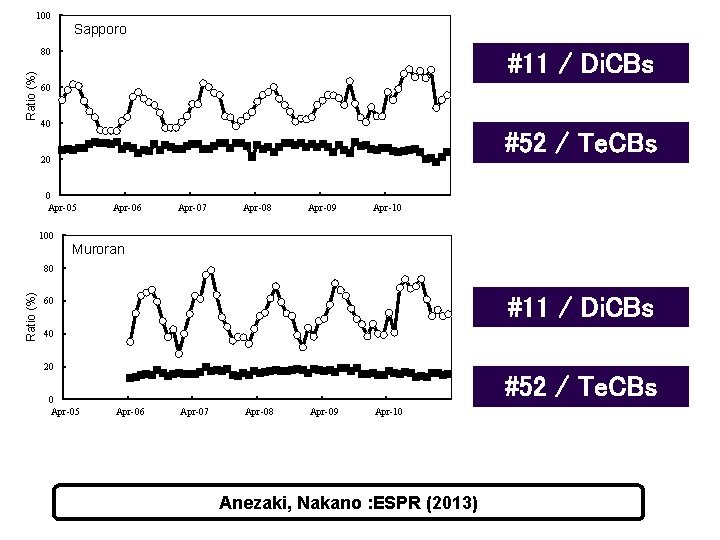
100 Sapporo Ratio (%) 80 #11 / Di. CBs 60 40 #52 / Te. CBs 20 0 Apr-05 Apr-06 Apr-07 Apr-08 Apr-09 Apr-10 100 Muroran Ratio (%) 80 #11 / Di. CBs 60 40 20 0 Apr-05 #52 / Te. CBs Apr-06 Apr-07 Apr-08 Apr-09 Apr-10 Anezaki, Nakano : ESPR (2013)
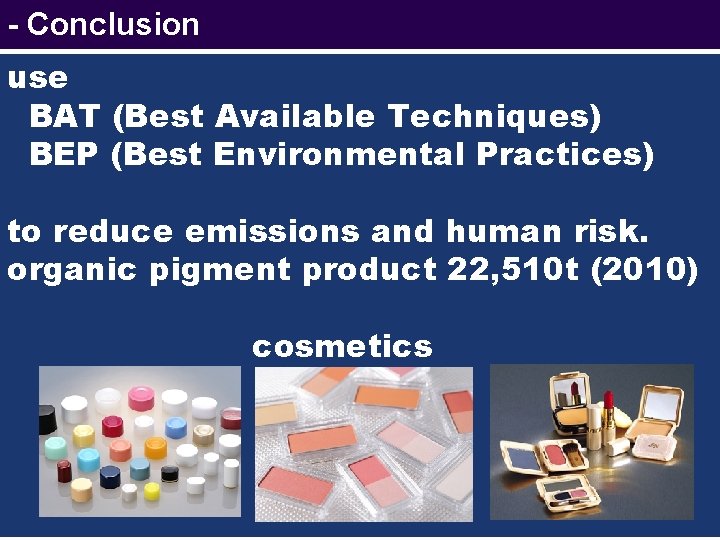
- Conclusion use BAT (Best Available Techniques) BEP (Best Environmental Practices) to reduce emissions and human risk. organic pigment product 22, 510 t (2010) cosmetics
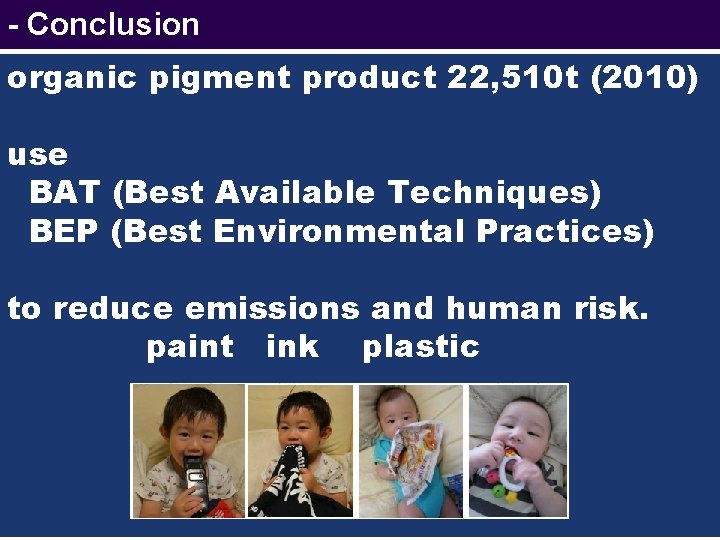
- Conclusion organic pigment product 22, 510 t (2010) use BAT (Best Available Techniques) BEP (Best Environmental Practices) to reduce emissions and human risk. paint ink plastic
ICAEC 2014 Nov. 24 -26, 2014 Chulabhorn Institute Bangkok http: //www. j-ec. or. jp/icaec/ http: //ee-net. ne. jp/dioxin/

感� 您的关注 Thank you for your attention
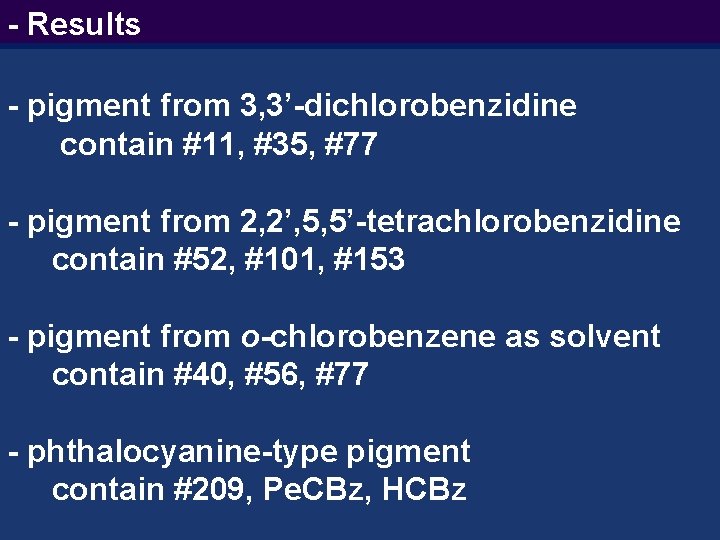
- Results - pigment from 3, 3’-dichlorobenzidine contain #11, #35, #77 - pigment from 2, 2’, 5, 5’-tetrachlorobenzidine contain #52, #101, #153 - pigment from o-chlorobenzene as solvent contain #40, #56, #77 - phthalocyanine-type pigment contain #209, Pe. CBz, HCBz
- Conclusion use BAT (Best Available Techniques) BEP (Best Environmental Practices) to reduce POPs emissions.
中野武 50才 Simon Litten
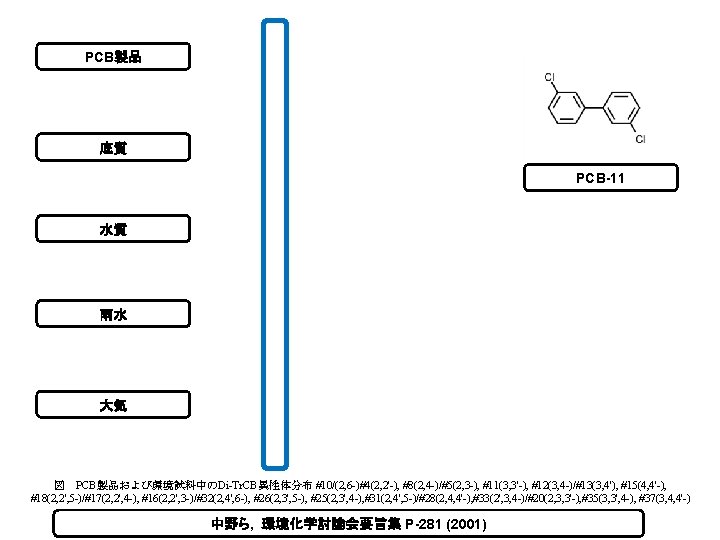
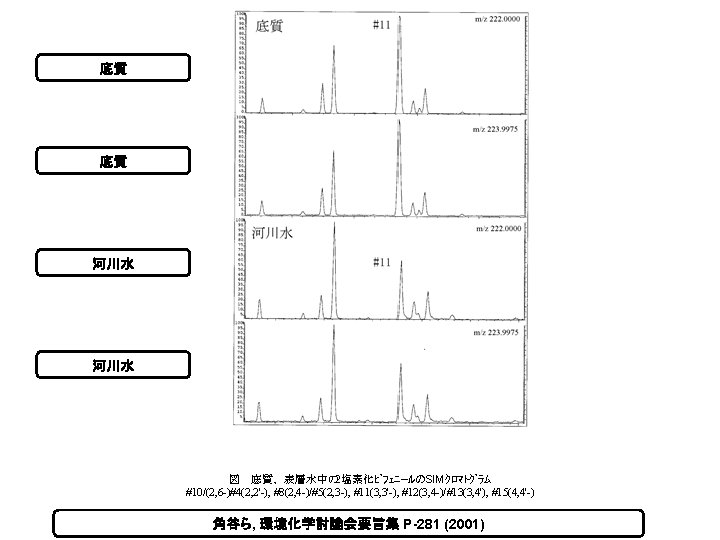
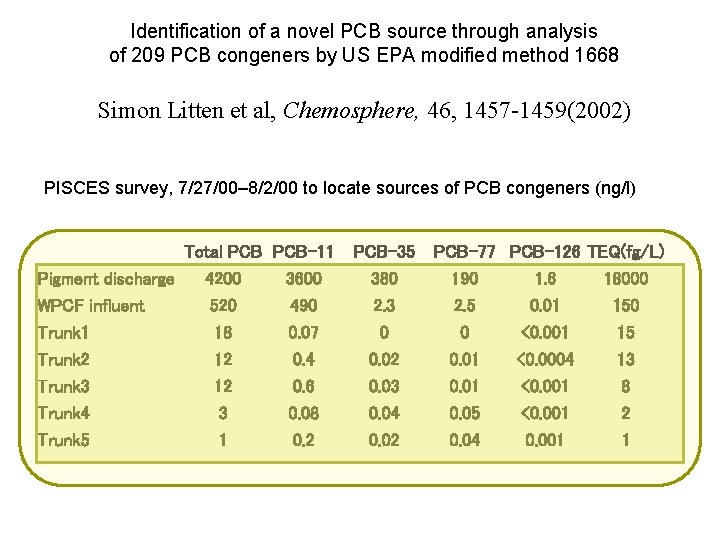
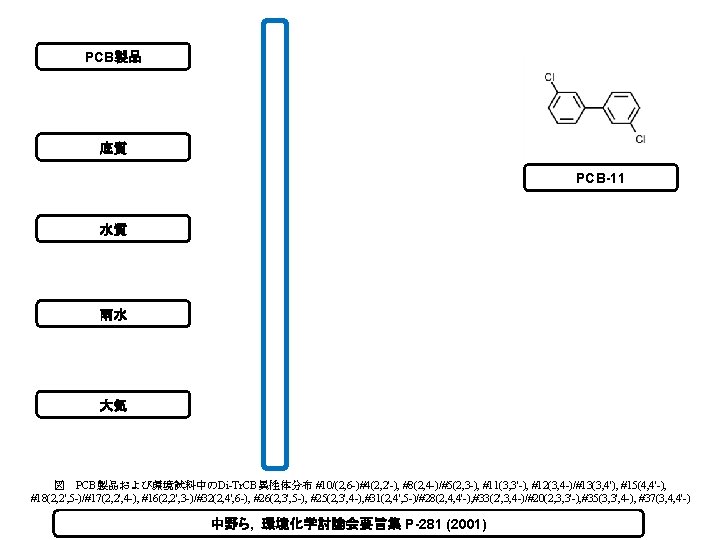
Identification of a novel PCB source through analysis of 209 PCB congeners by US EPA modified method 1668 Simon Litten et al, Chemosphere, 46, 1457 -1459(2002) PISCES survey, 7/27/00– 8/2/00 to locate sources of PCB congeners (ng/l) Total PCB-11 Pigment discharge 4200 3600 WPCF influent 520 490 Trunk 1 18 0. 07 Trunk 2 12 0. 4 Trunk 3 12 0. 6 Trunk 4 3 0. 08 Trunk 5 1 0. 2 PCB-35 380 2. 3 0 0. 02 0. 03 0. 04 0. 02 PCB-77 PCB-126 TEQ(fg/L) 190 1. 6 18000 2. 5 0. 01 150 0 <0. 001 15 0. 01 <0. 0004 13 0. 01 <0. 001 8 0. 05 <0. 001 2 0. 04 0. 001 1
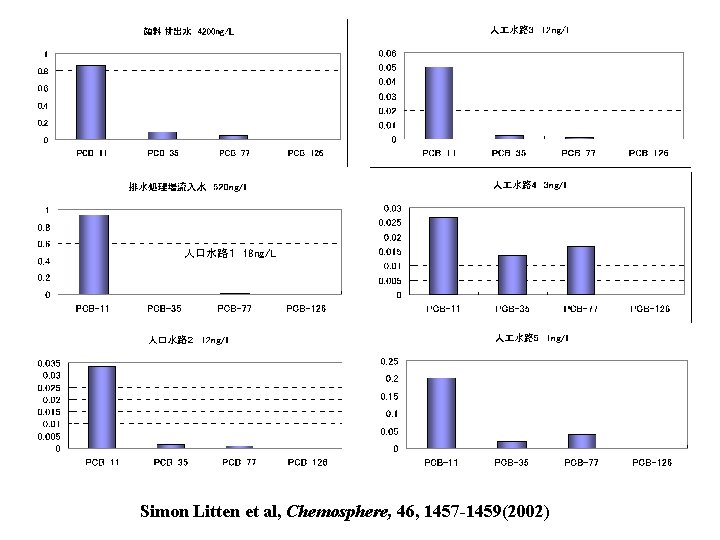
人口水路1 18 ng/L Simon Litten et al, Chemosphere, 46, 1457 -1459(2002)
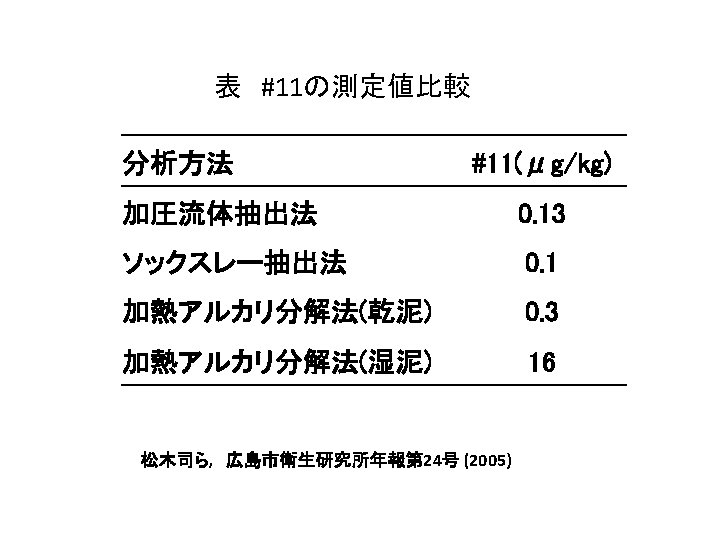
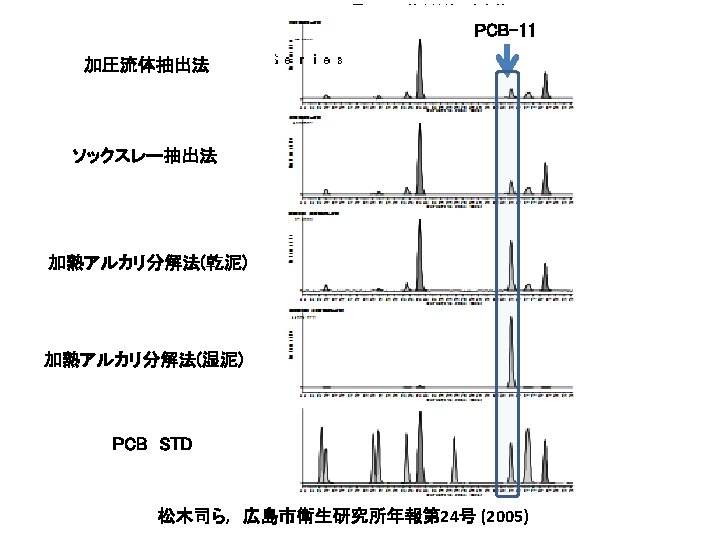
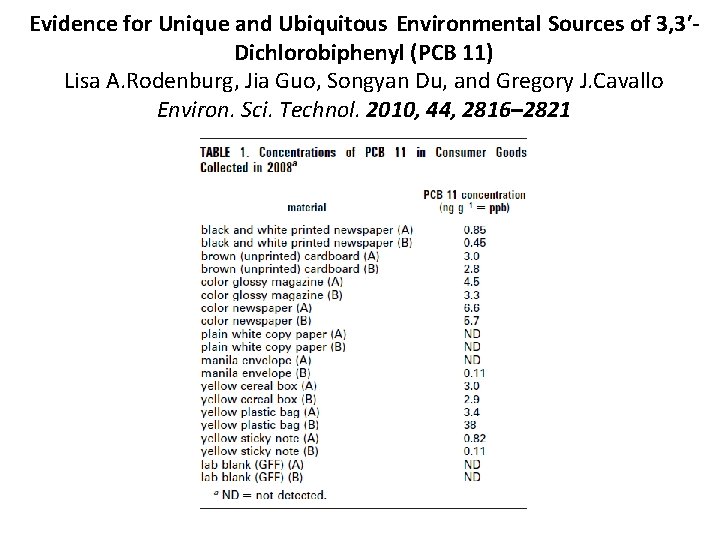
Evidence for Unique and Ubiquitous Environmental Sources of 3, 3′Dichlorobiphenyl (PCB 11) Lisa A. Rodenburg, Jia Guo, Songyan Du, and Gregory J. Cavallo Environ. Sci. Technol. 2010, 44, 2816– 2821
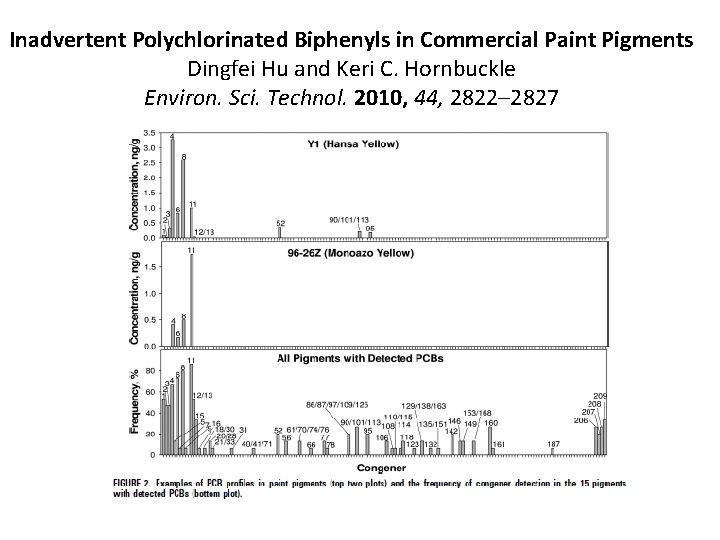
Inadvertent Polychlorinated Biphenyls in Commercial Paint Pigments Dingfei Hu and Keri C. Hornbuckle Environ. Sci. Technol. 2010, 44, 2822– 2827
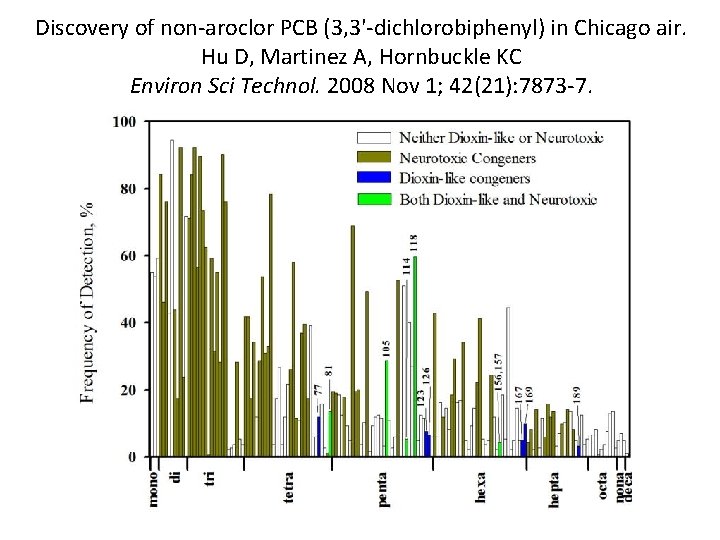
Discovery of non-aroclor PCB (3, 3'-dichlorobiphenyl) in Chicago air. Hu D, Martinez A, Hornbuckle KC Environ Sci Technol. 2008 Nov 1; 42(21): 7873 -7.
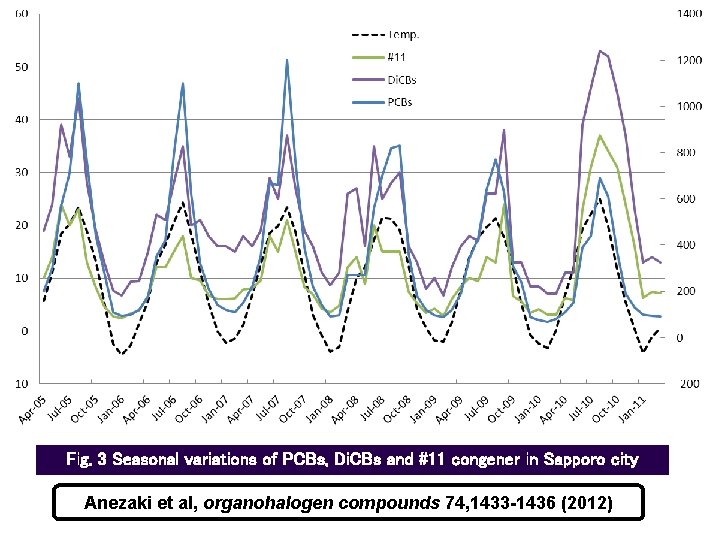
Fig. 3 Seasonal variations of PCBs, Di. CBs and #11 congener in Sapporo city Anezaki et al, organohalogen compounds 74, 1433 -1436 (2012)
- Slides: 72