
PCA for Population Genetics Nikolay Oskolkov NBIS Sci
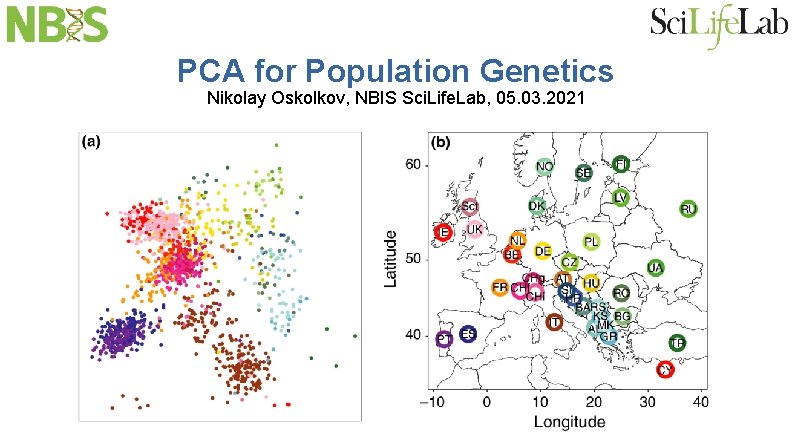
PCA for Population Genetics Nikolay Oskolkov, NBIS Sci. Life. Lab, 05. 03. 2021

PCA Introduction
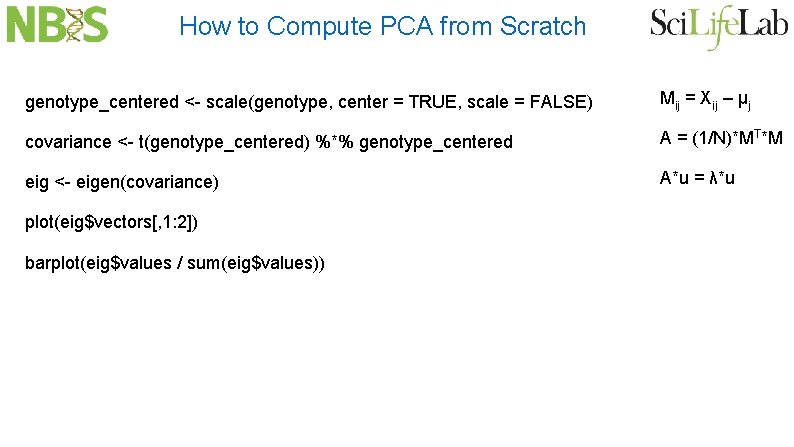
How to Compute PCA from Scratch genotype_centered <- scale(genotype, center = TRUE, scale = FALSE) Mij = Xij – μj covariance <- t(genotype_centered) %*% genotype_centered A = (1/N)*MT*M eig <- eigen(covariance) A*u = λ*u plot(eig$vectors[, 1: 2]) barplot(eig$values / sum(eig$values))
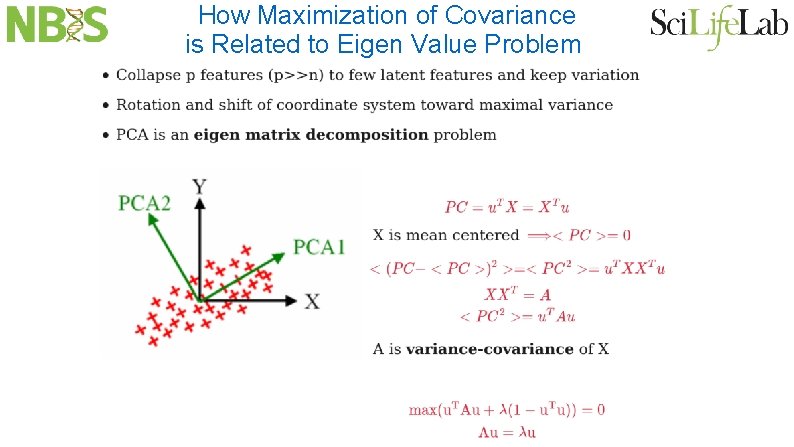
How Maximization of Covariance is Related to Eigen Value Problem
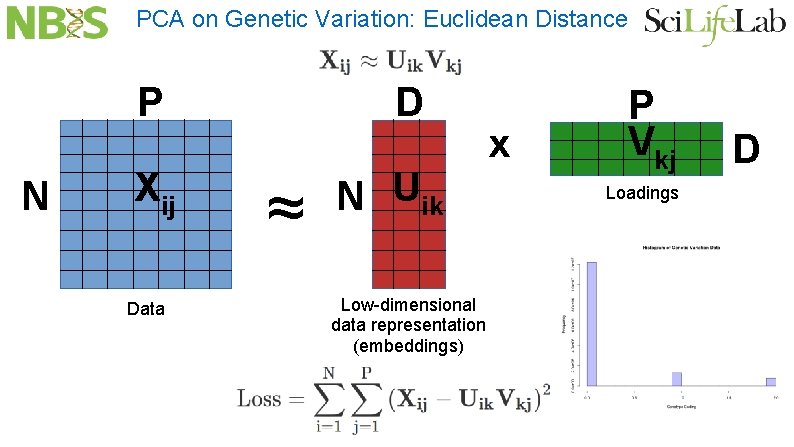
PCA on Genetic Variation: Euclidean Distance P N Xij Data D ≈ N Uik Low-dimensional data representation (embeddings) x P Vkj Loadings D
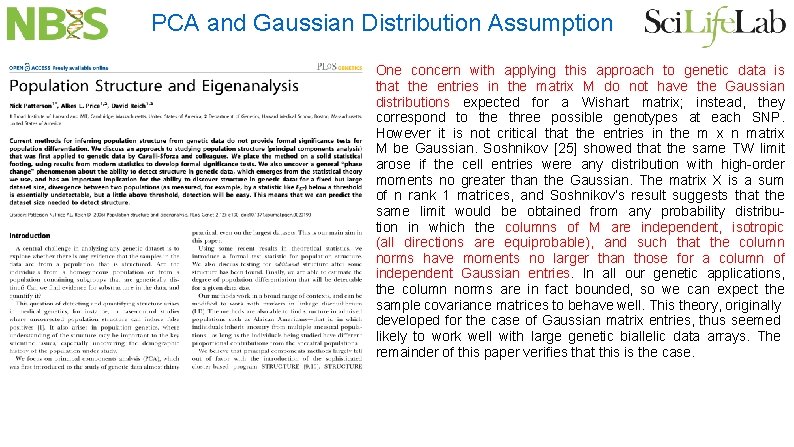
PCA and Gaussian Distribution Assumption One concern with applying this approach to genetic data is that the entries in the matrix M do not have the Gaussian distributions expected for a Wishart matrix; instead, they correspond to the three possible genotypes at each SNP. However it is not critical that the entries in the m x n matrix M be Gaussian. Soshnikov [25] showed that the same TW limit arose if the cell entries were any distribution with high-order moments no greater than the Gaussian. The matrix X is a sum of n rank 1 matrices, and Soshnikov’s result suggests that the same limit would be obtained from any probability distribution in which the columns of M are independent, isotropic (all directions are equiprobable), and such that the column norms have moments no larger than those for a column of independent Gaussian entries. In all our genetic applications, the column norms are in fact bounded, so we can expect the sample covariance matrices to behave well. This theory, originally developed for the case of Gaussian matrix entries, thus seemed likely to work well with large genetic biallelic data arrays. The remainder of this paper verifies that this is the case.
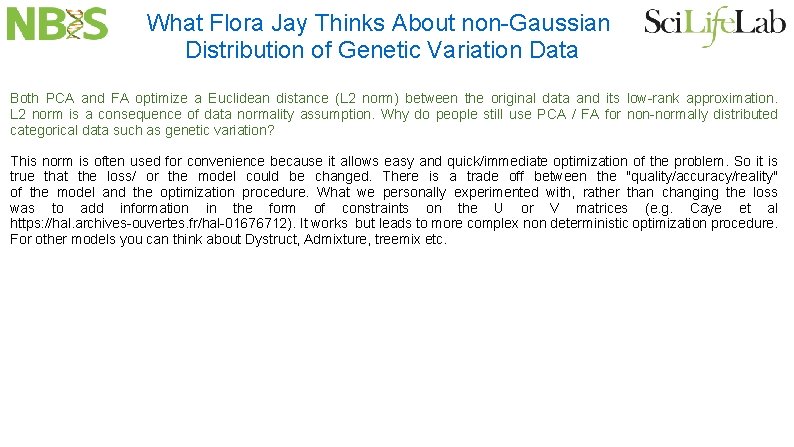
What Flora Jay Thinks About non-Gaussian Distribution of Genetic Variation Data Both PCA and FA optimize a Euclidean distance (L 2 norm) between the original data and its low-rank approximation. L 2 norm is a consequence of data normality assumption. Why do people still use PCA / FA for non-normally distributed categorical data such as genetic variation? This norm is often used for convenience because it allows easy and quick/immediate optimization of the problem. So it is true that the loss/ or the model could be changed. There is a trade off between the "quality/accuracy/reality" of the model and the optimization procedure. What we personally experimented with, rather than changing the loss was to add information in the form of constraints on the U or V matrices (e. g. Caye et al https: //hal. archives-ouvertes. fr/hal-01676712). It works but leads to more complex non deterministic optimization procedure. For other models you can think about Dystruct, Admixture, treemix etc.

Significant Principal Components
Patterson, Price and Reich: Plos Genetics 2006 Largest eignevalues follow Tracy-Widom distribution Therefore we can implement a formal statistical test for detecting population structure in genetic variation data PCA dimensionality reduction is directly related to cluster analysis Number of largest PCA eigenvalues is approximately the number of clusters There is some sort of “phase transition” when population structure becomes visible
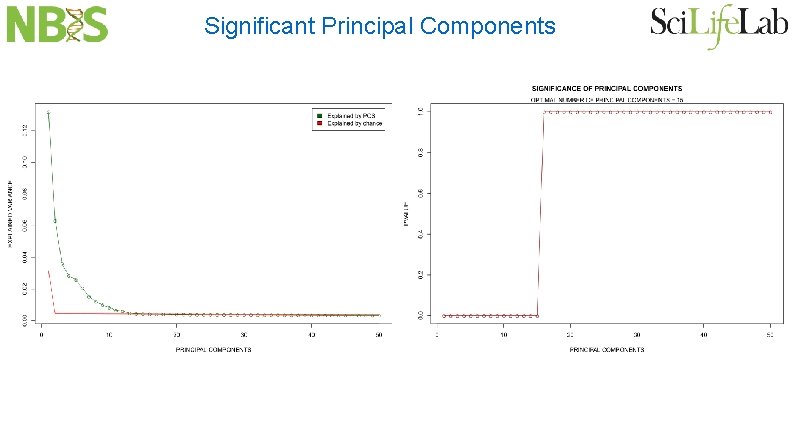
Significant Principal Components
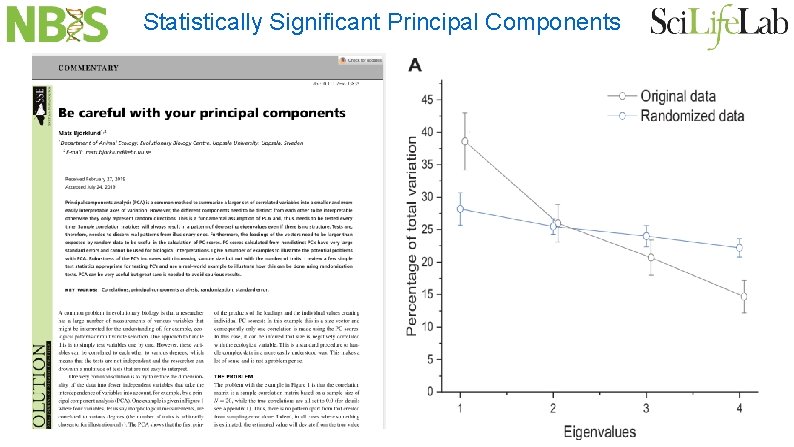
Statistically Significant Principal Components
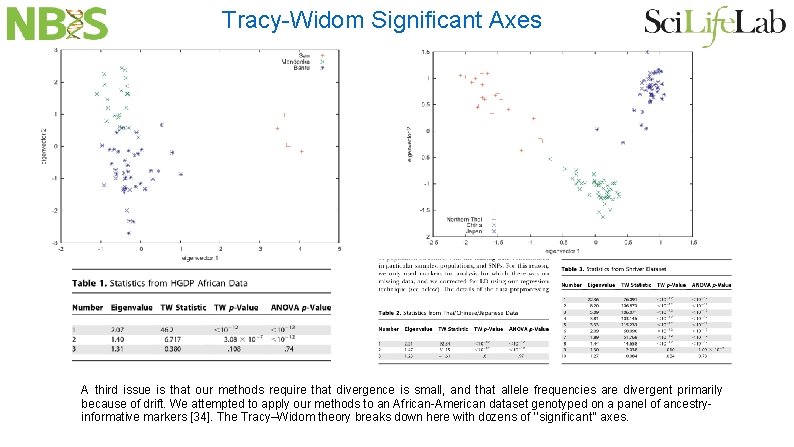
Tracy-Widom Significant Axes A third issue is that our methods require that divergence is small, and that allele frequencies are divergent primarily because of drift. We attempted to apply our methods to an African-American dataset genotyped on a panel of ancestryinformative markers [34]. The Tracy–Widom theory breaks down here with dozens of ‘‘significant’’ axes.
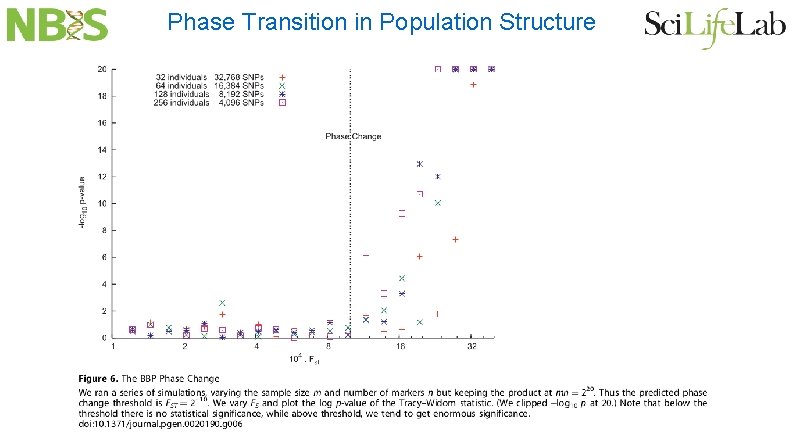
Phase Transition in Population Structure
PCA in Population Genetics: Literature Review
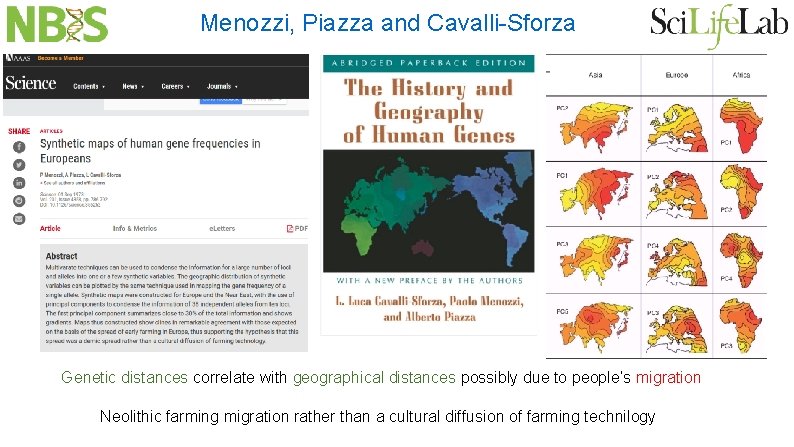
Menozzi, Piazza and Cavalli-Sforza Genetic distances correlate with geographical distances possibly due to people’s migration Neolithic farming migration rather than a cultural diffusion of farming technilogy
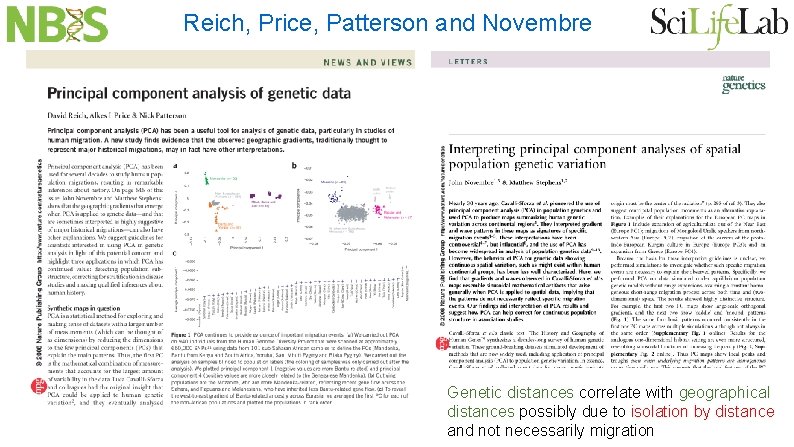
Reich, Price, Patterson and Novembre Genetic distances correlate with geographical distances possibly due to isolation by distance and not necessarily migration
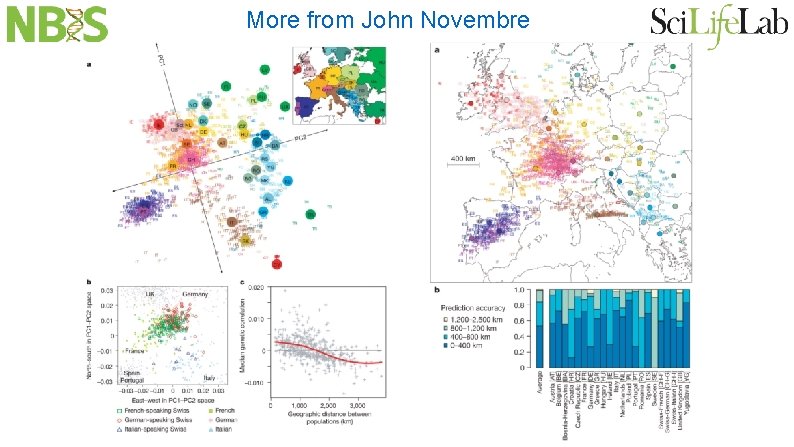
More from John Novembre
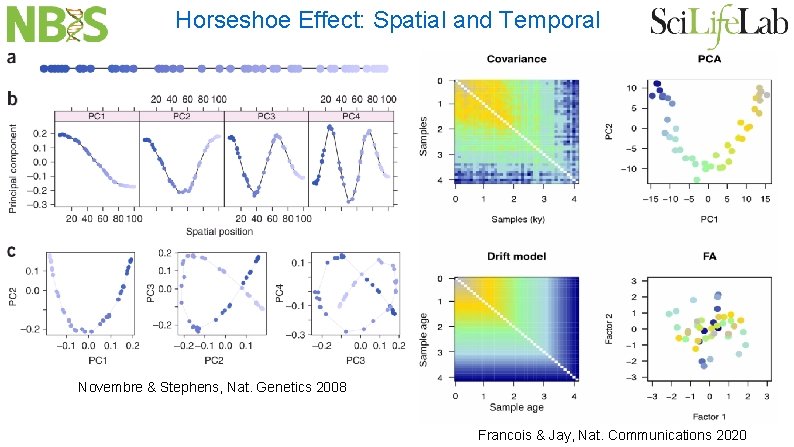
Horseshoe Effect: Spatial and Temporal Novembre & Stephens, Nat. Genetics 2008 Francois & Jay, Nat. Communications 2020
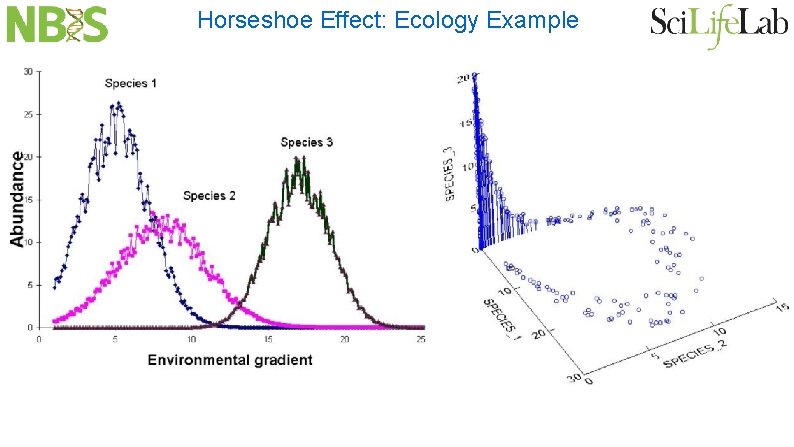
Horseshoe Effect: Ecology Example
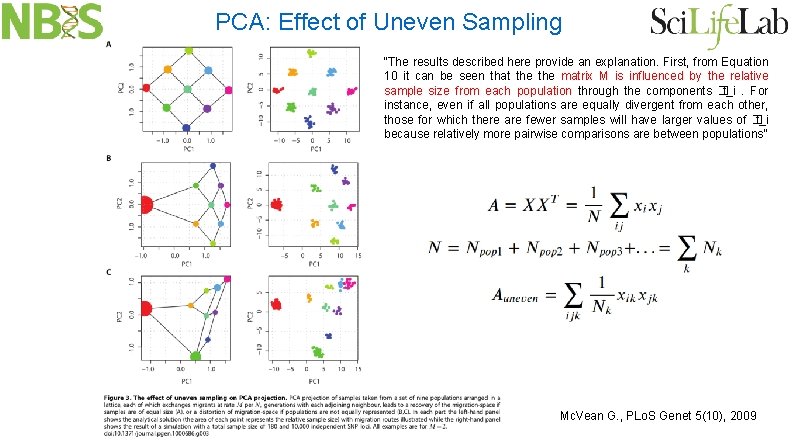
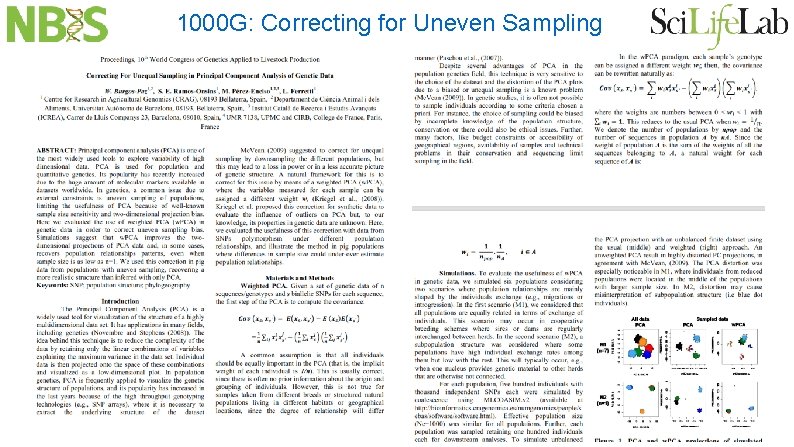
PCA: Effect of Uneven Sampling “The results described here provide an explanation. First, from Equation 10 it can be seen that the matrix M is influenced by the relative sample size from each population through the components � t_i. For instance, even if all populations are equally divergent from each other, those for which there are fewer samples will have larger values of � t_i because relatively more pairwise comparisons are between populations” Mc. Vean G. , PLo. S Genet 5(10), 2009
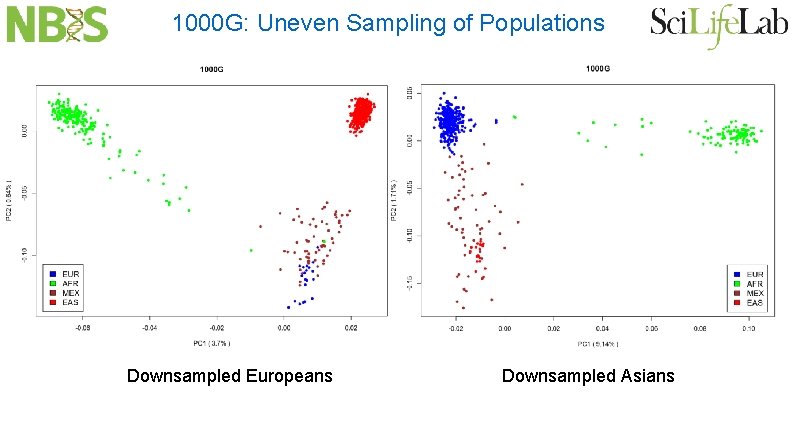
1000 G: Uneven Sampling of Populations Downsampled Europeans Downsampled Asians
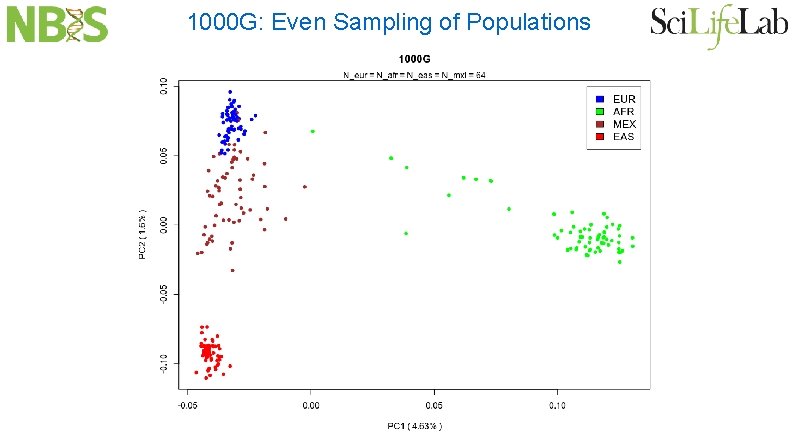
1000 G: Even Sampling of Populations
1000 G: Correcting for Uneven Sampling
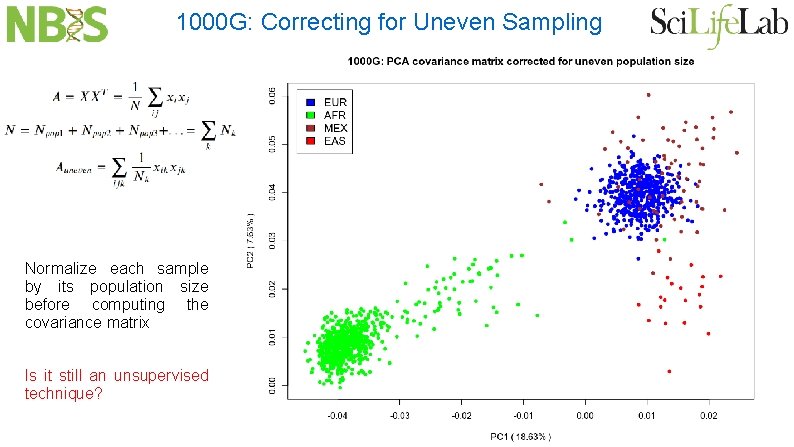
1000 G: Correcting for Uneven Sampling Normalize each sample by its population size before computing the covariance matrix Is it still an unsupervised technique?
National Bioinformatics Infrastricture Sweden (NBIS)
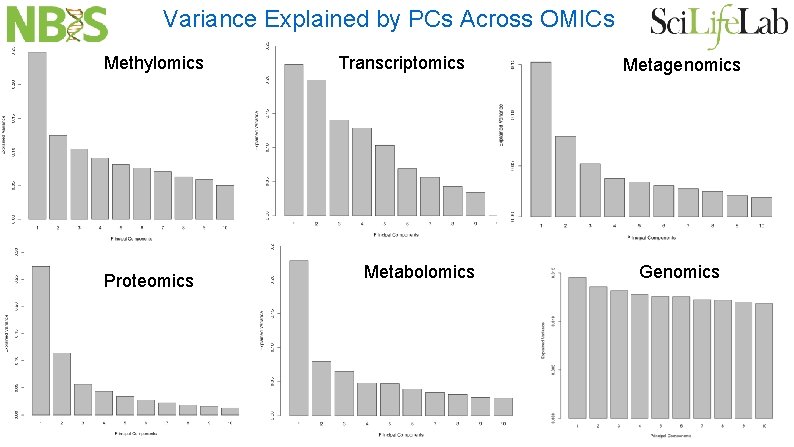
Variance Explained by PCs Across OMICs Methylomics Proteomics Transcriptomics Metabolomics Metagenomics Genomics
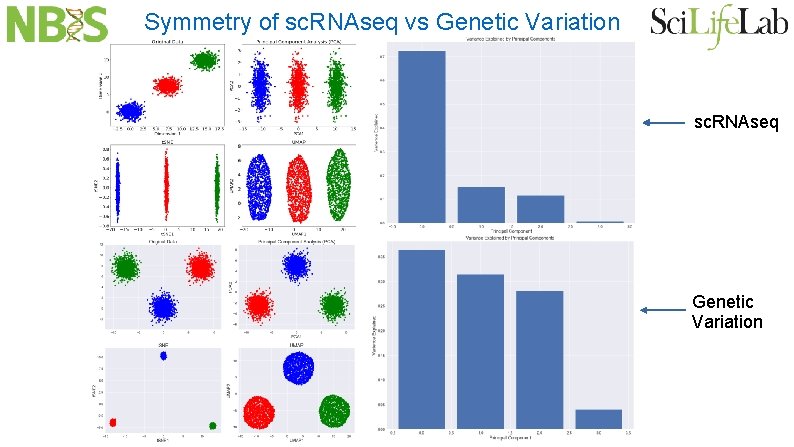
Symmetry of sc. RNAseq vs Genetic Variation sc. RNAseq Genetic Variation
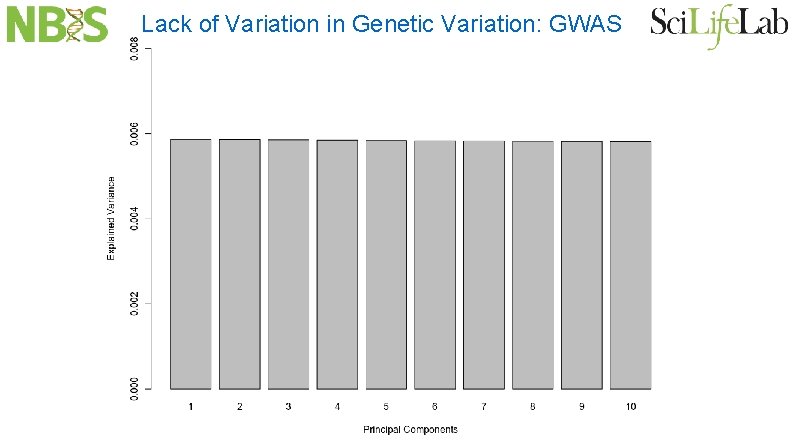
Lack of Variation in Genetic Variation: GWAS
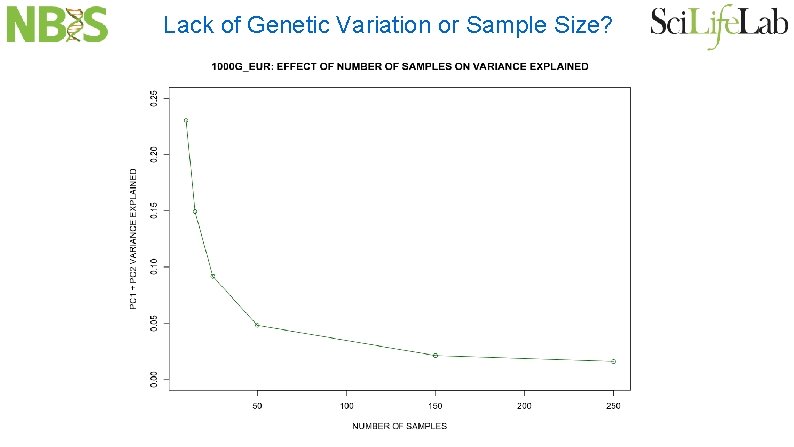
Lack of Genetic Variation or Sample Size?
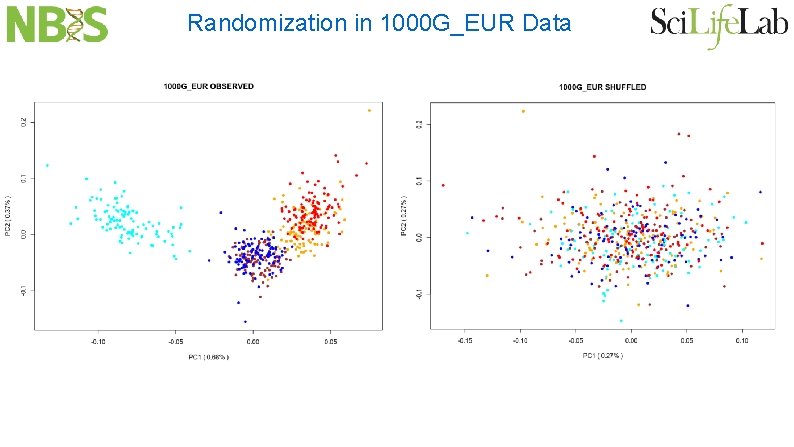
Randomization in 1000 G_EUR Data
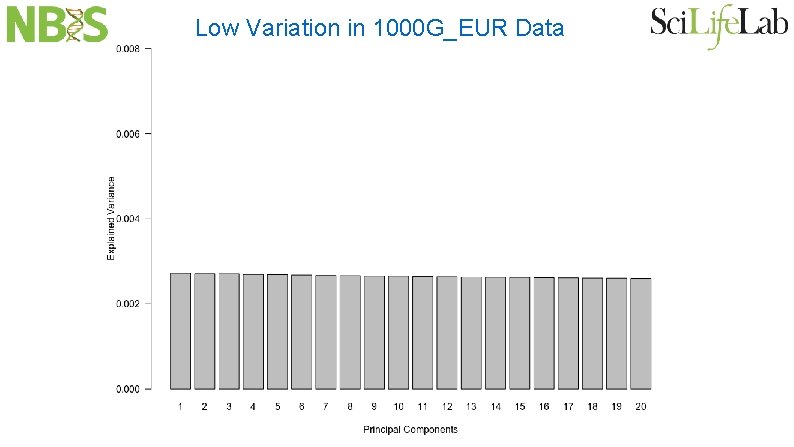
Low Variation in 1000 G_EUR Data
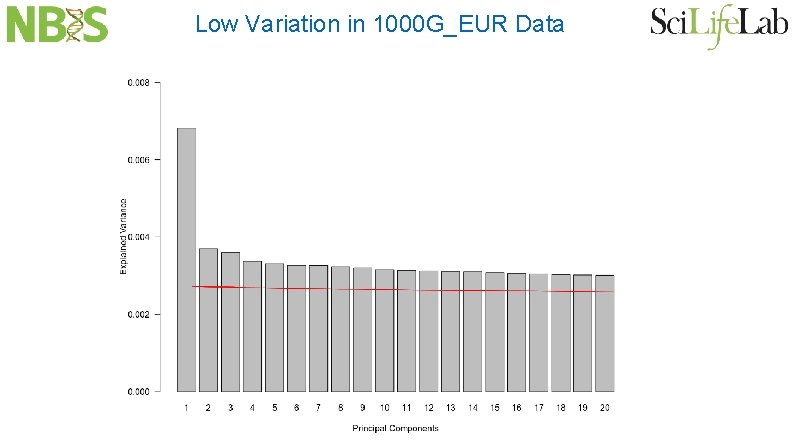
Low Variation in 1000 G_EUR Data
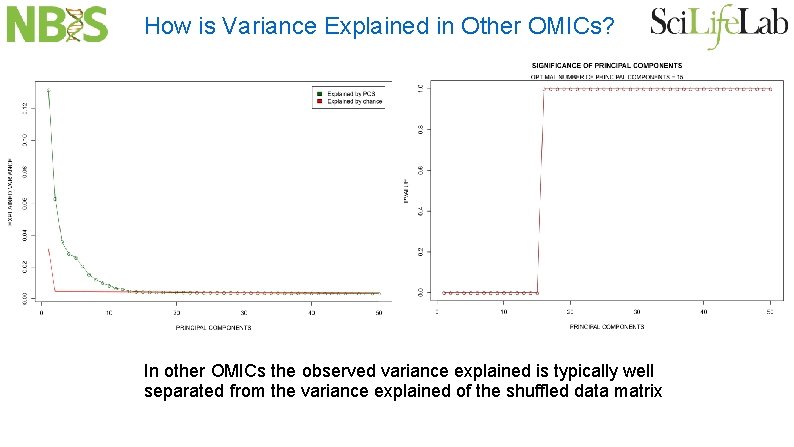
How is Variance Explained in Other OMICs? In other OMICs the observed variance explained is typically well separated from the variance explained of the shuffled data matrix
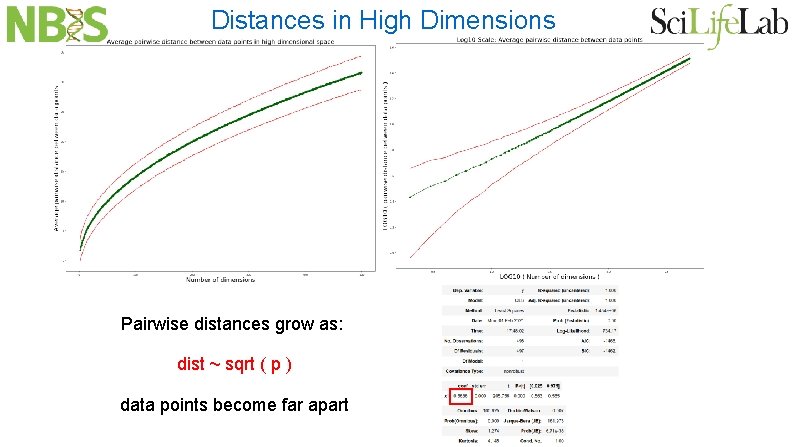
Distances in High Dimensions Pairwise distances grow as: dist ~ sqrt ( p ) data points become far apart
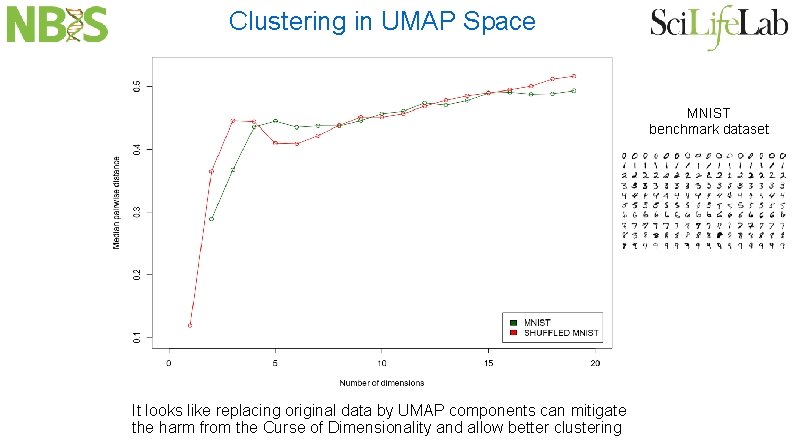
Clustering in UMAP Space MNIST benchmark dataset It looks like replacing original data by UMAP components can mitigate the harm from the Curse of Dimensionality and allow better clustering
- Slides: 35