
PBS PBS Quality of life Proactive and preventative
PBS
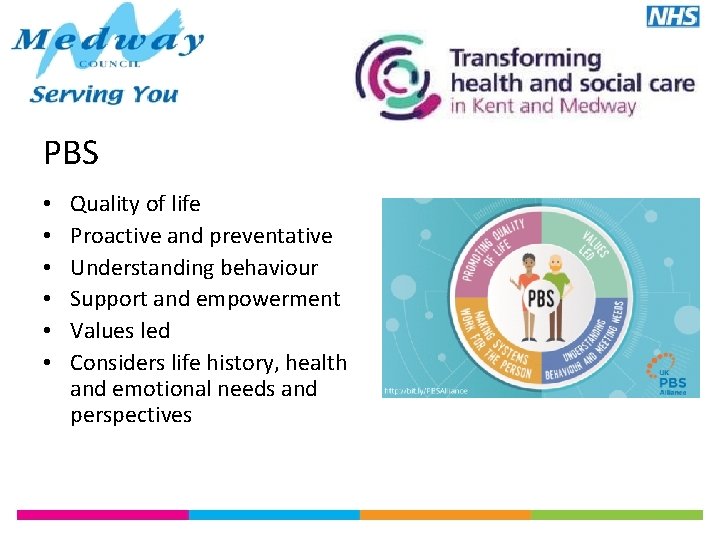
PBS • • • Quality of life Proactive and preventative Understanding behaviour Support and empowerment Values led Considers life history, health and emotional needs and perspectives
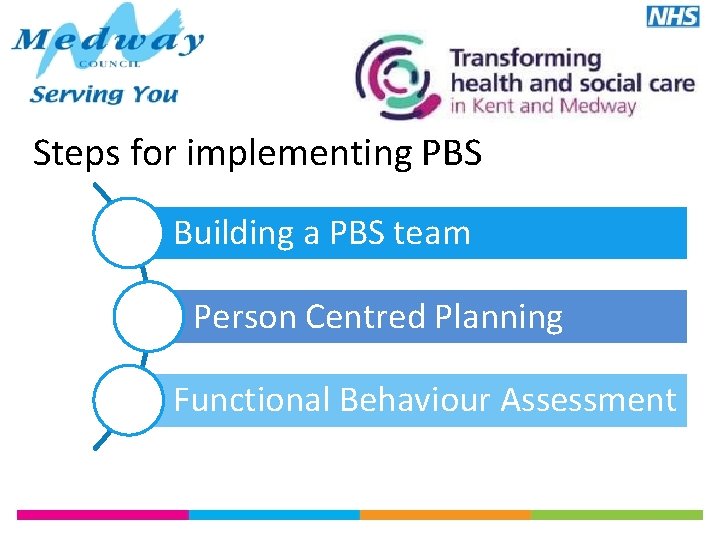
Steps for implementing PBS Building a PBS team Person Centred Planning Functional Behaviour Assessment
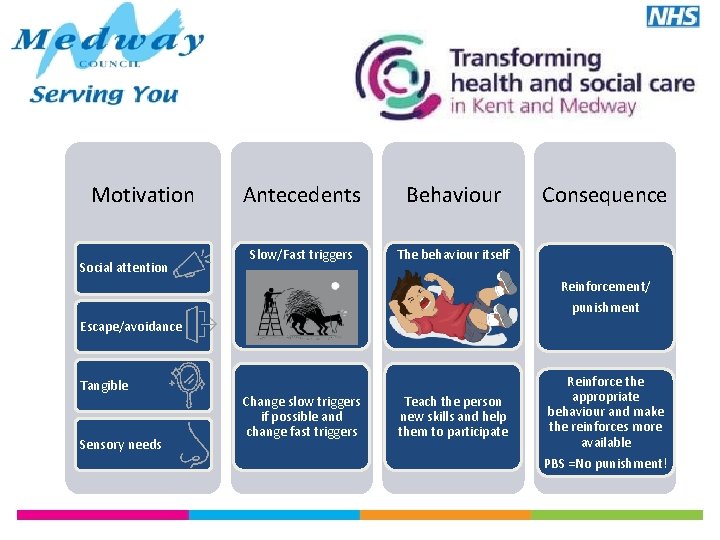
Motivation Social attention Antecedents Behaviour Slow/Fast triggers The behaviour itself Consequence Reinforcement/ punishment Escape/avoidance Tangible Sensory needs Change slow triggers if possible and change fast triggers Teach the person new skills and help them to participate Reinforce the appropriate behaviour and make the reinforces more available PBS =No punishment!
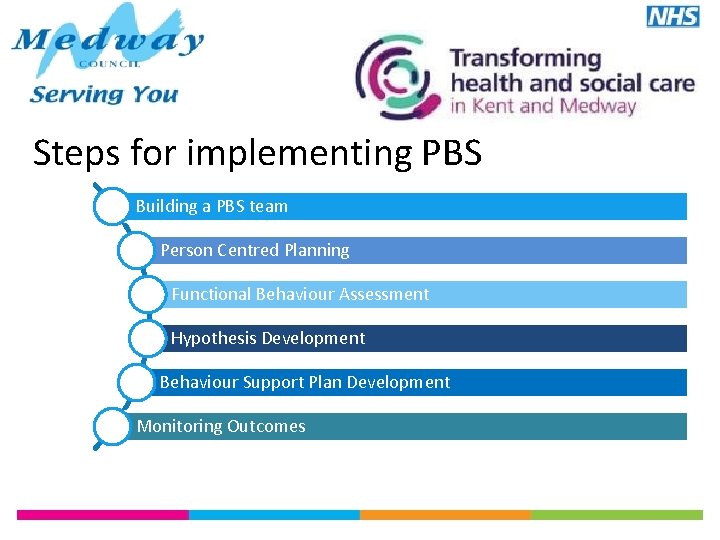
Steps for implementing PBS Building a PBS team Person Centred Planning Functional Behaviour Assessment Hypothesis Development Behaviour Support Plan Development Monitoring Outcomes
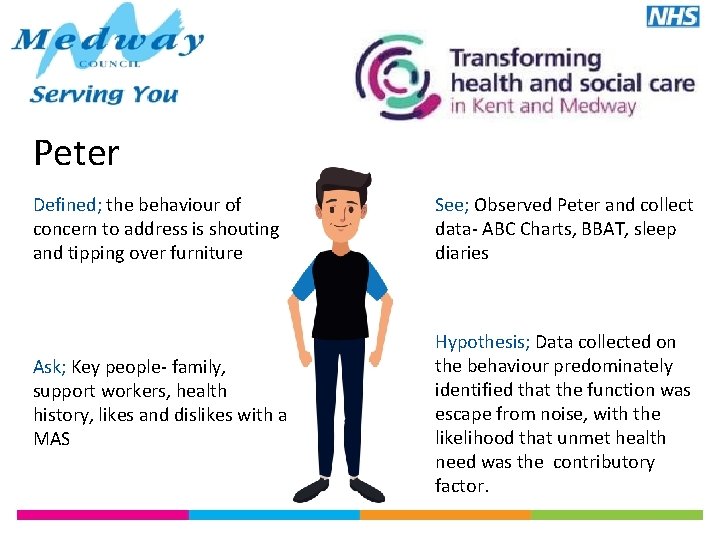
Peter Defined; the behaviour of concern to address is shouting and tipping over furniture Ask; Key people- family, support workers, health history, likes and dislikes with a MAS See; Observed Peter and collect data- ABC Charts, BBAT, sleep diaries Hypothesis; Data collected on the behaviour predominately identified that the function was escape from noise, with the likelihood that unmet health need was the contributory factor.
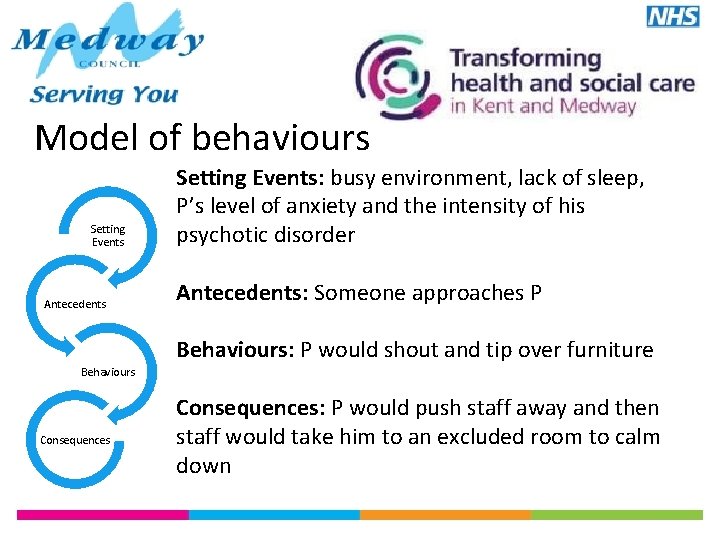
Model of behaviours Setting Events Antecedents Setting Events: busy environment, lack of sleep, P’s level of anxiety and the intensity of his psychotic disorder Antecedents: Someone approaches P Behaviours: P would shout and tip over furniture Behaviours Consequences: P would push staff away and then staff would take him to an excluded room to calm down
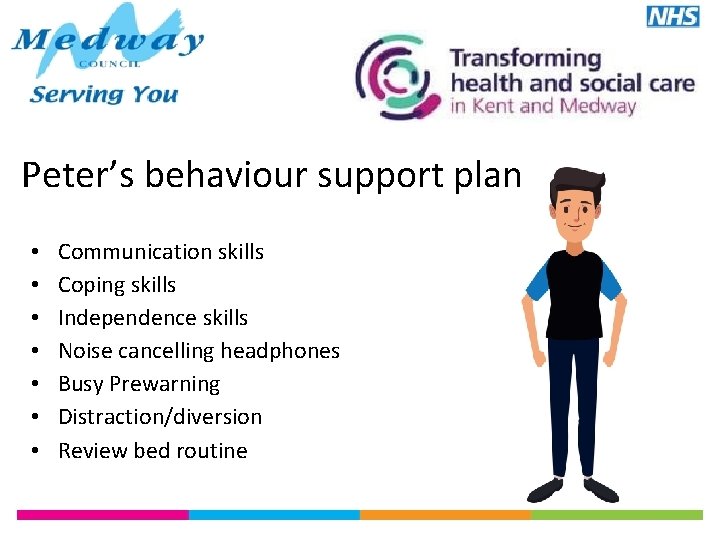
Peter’s behaviour support plan • • Communication skills Coping skills Independence skills Noise cancelling headphones Busy Prewarning Distraction/diversion Review bed routine
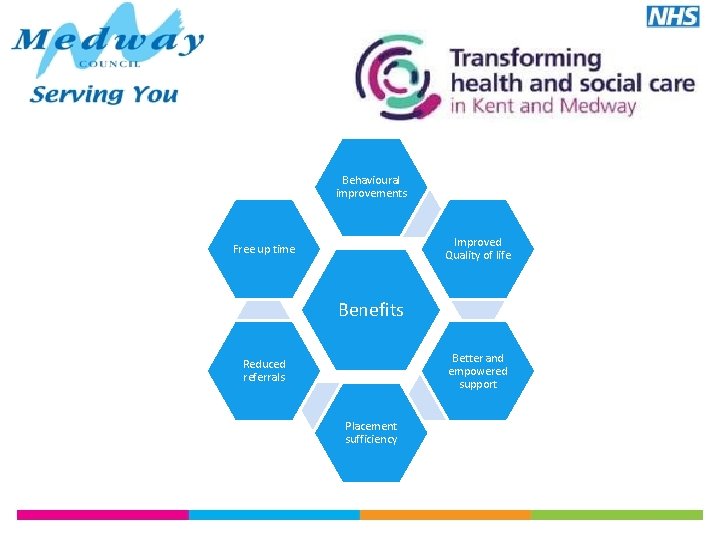
Behavioural improvements Improved Quality of life Free up time Benefits Better and empowered support Reduced referrals Placement sufficiency
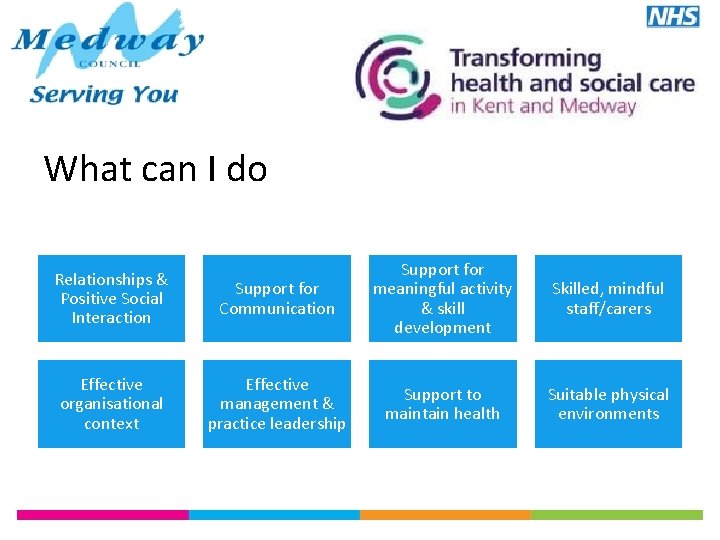
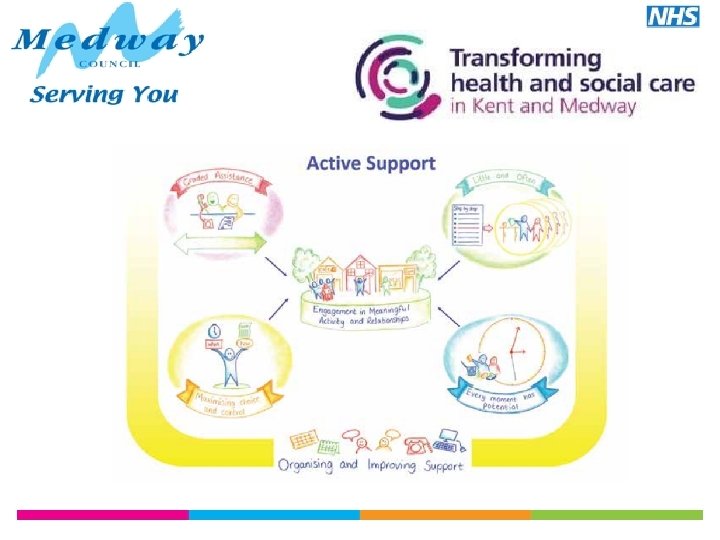
What can I do Relationships & Positive Social Interaction Effective organisational context Support for Communication Support for meaningful activity & skill development Skilled, mindful staff/carers Effective management & practice leadership Support to maintain health Suitable physical environments
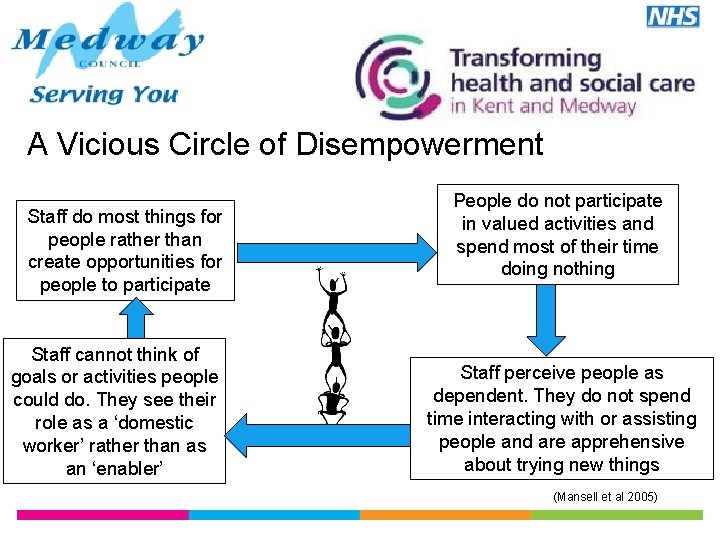
A Vicious Circle of Disempowerment Staff do most things for people rather than create opportunities for people to participate Staff cannot think of goals or activities people could do. They see their role as a ‘domestic worker’ rather than as an ‘enabler’ People do not participate in valued activities and spend most of their time doing nothing Staff perceive people as dependent. They do not spend time interacting with or assisting people and are apprehensive about trying new things (Mansell et al 2005)
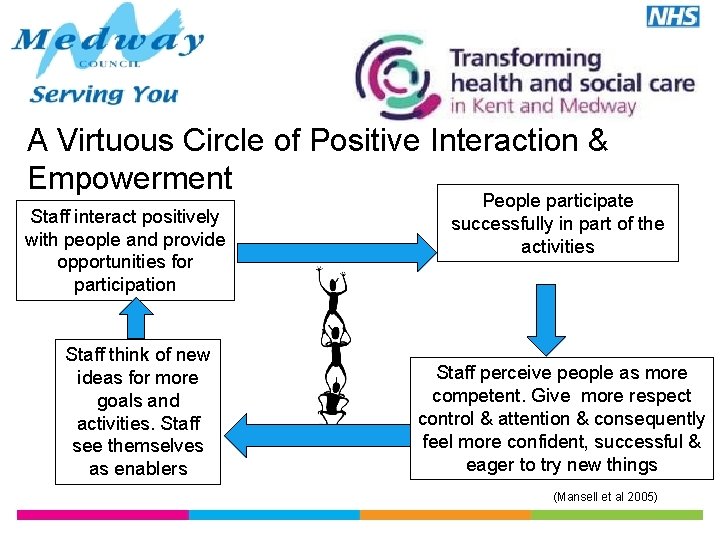
A Virtuous Circle of Positive Interaction & Empowerment Staff interact positively with people and provide opportunities for participation Staff think of new ideas for more goals and activities. Staff see themselves as enablers People participate successfully in part of the activities Staff perceive people as more competent. Give more respect control & attention & consequently feel more confident, successful & eager to try new things (Mansell et al 2005)
Keep involved • PBS Event on the 10 th December Email mcsc@medway. gov. uk • Community of Practice 10 -12 the first Thursday of February, May, August & November email diane. weekes@medway. gov. uk
Reading and Information Behaviours which challenge (skillsforcare. org. uk) Free E-learning Course; https: //www. bild. org. uk/free-online-pbs-awareness-course/ Active support; https: //www. unitedresponse. org. uk/resource/active-support/ Key questions; https: //www. england. nhs. uk/6 cs/wp-content/uploads/sites/25/2016/07/bild -key-questions. pdf Videos; https: //www. youtube. com/watch? v=epjud 2 Of 610 https: //www. youtube. com/watch? v=zuo. PZk. Fc. LVs
- Slides: 16