
PBM An Integrated Model for Behavioral Health Care


PBM+ An Integrated Model for Behavioral Health Care Kiran Taylor, MD Chief, Division of Psychiatry and Behavioral Medicine Spectrum Health Medical Group 2
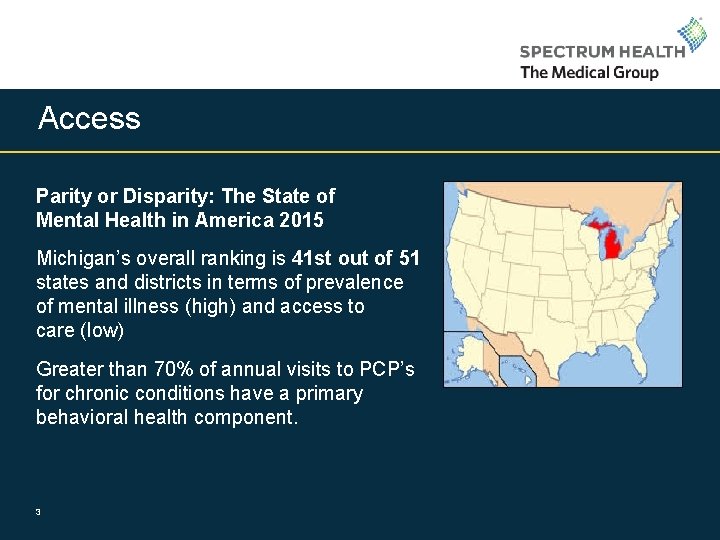
Access Parity or Disparity: The State of Mental Health in America 2015 Michigan’s overall ranking is 41 st out of 51 states and districts in terms of prevalence of mental illness (high) and access to care (low) Greater than 70% of annual visits to PCP’s for chronic conditions have a primary behavioral health component. 3
Medical Health Systems are the Gateway for PBM needs of patients • Depression is the 3 rd most common reason for a visit to a medical health center after diabetes and hypertension • 75% of patients with depression indicate a physical complaint as the reason they seek health care 4
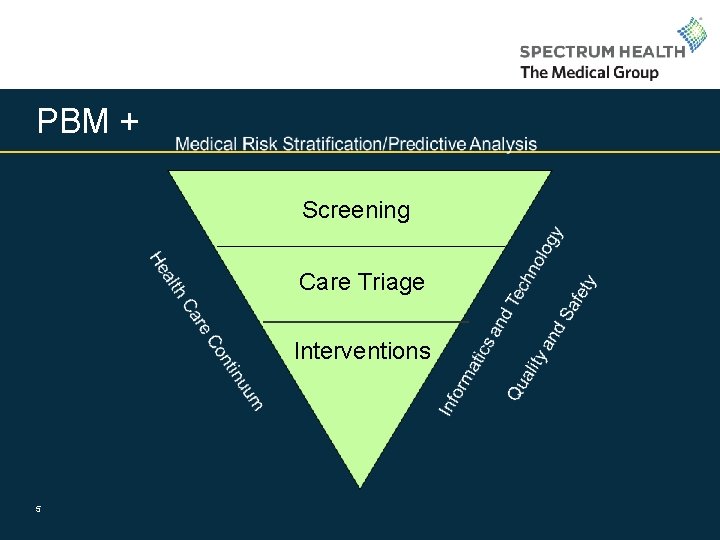
PBM + Screening Care Triage Interventions 5
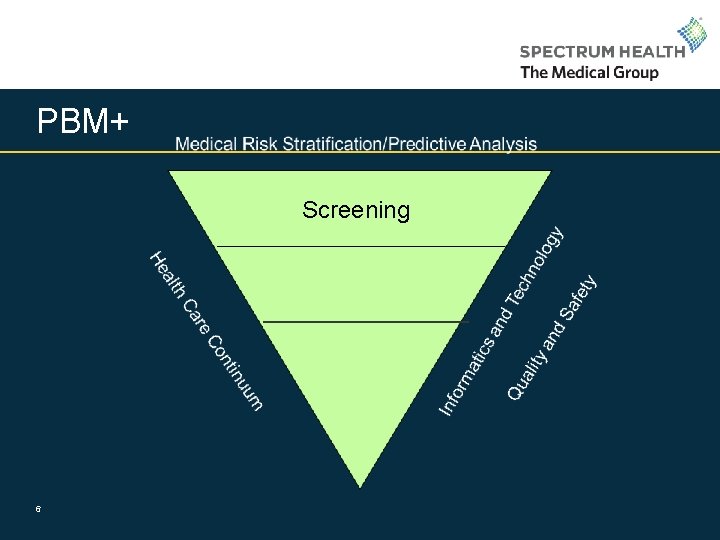
PBM+ Screening 6
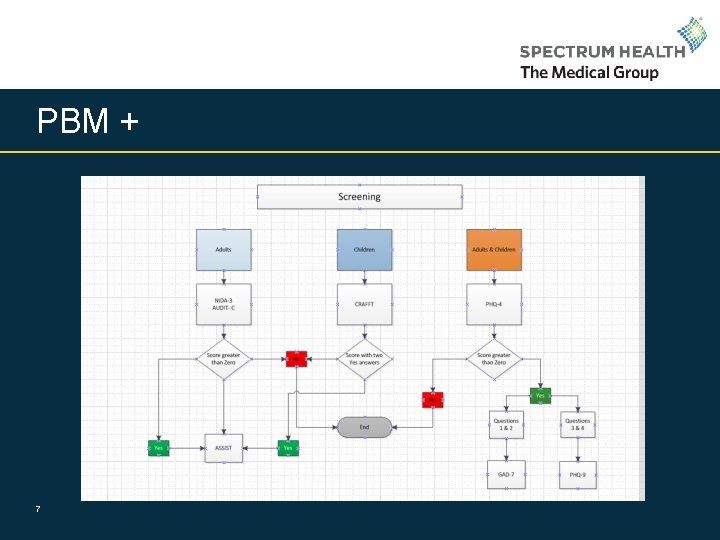
PBM + 7
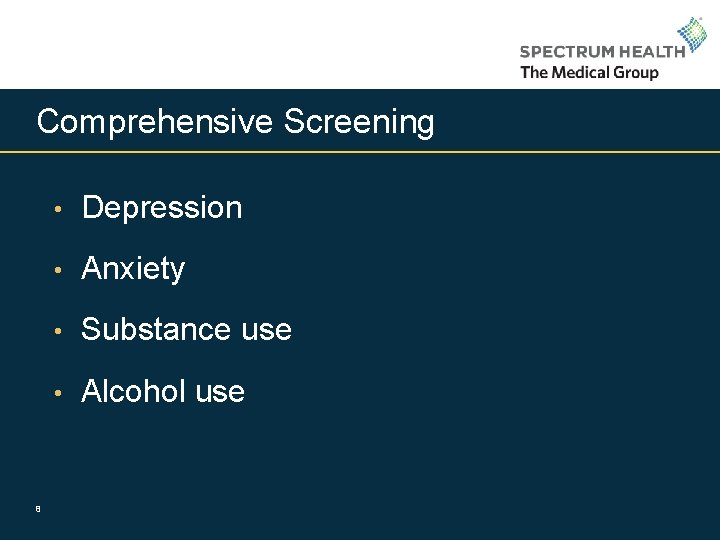
Comprehensive Screening 8 • Depression • Anxiety • Substance use • Alcohol use
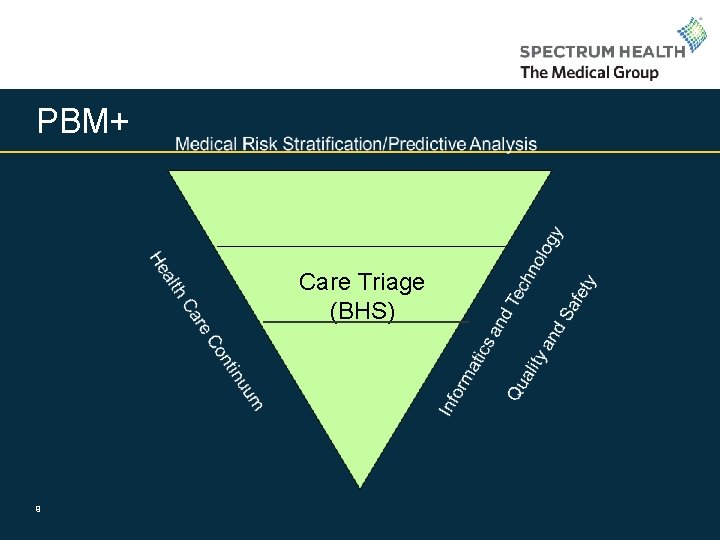
PBM+ Care Triage (BHS) 9
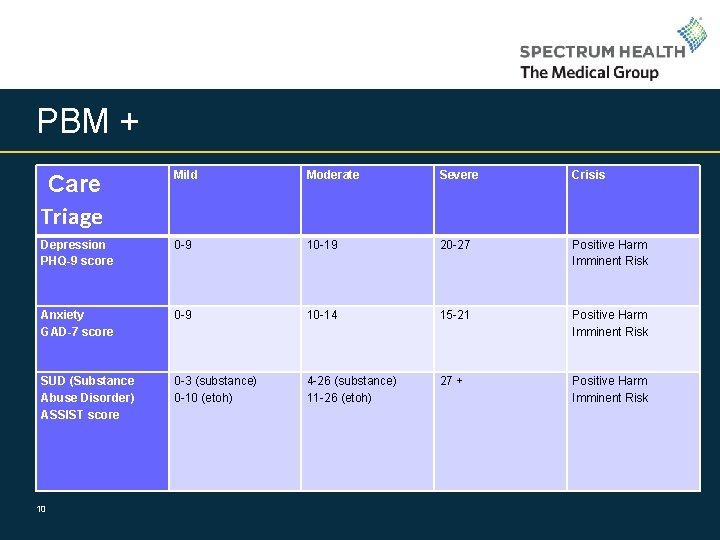
PBM + Care Triage Mild Moderate Severe Crisis Depression PHQ-9 score 0 -9 10 -19 20 -27 Positive Harm Imminent Risk Anxiety GAD-7 score 0 -9 10 -14 15 -21 Positive Harm Imminent Risk SUD (Substance Abuse Disorder) ASSIST score 0 -3 (substance) 0 -10 (etoh) 4 -26 (substance) 11 -26 (etoh) 27 + Positive Harm Imminent Risk 10
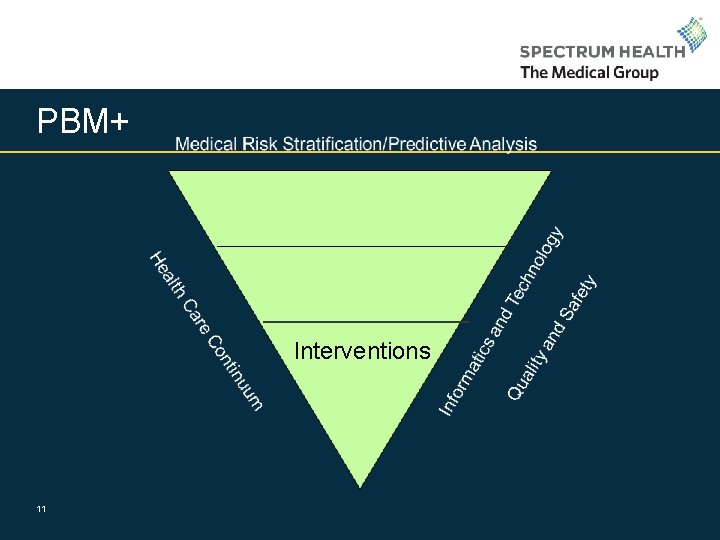
PBM+ Interventions 11
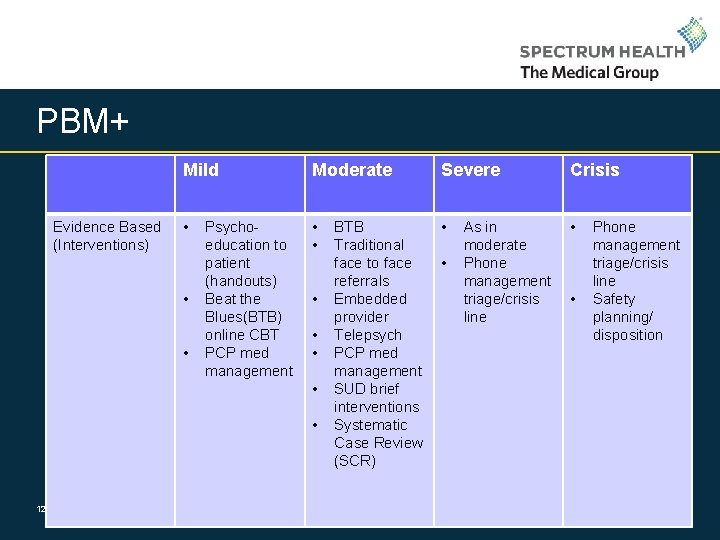
PBM+ Evidence Based (Interventions) Mild Moderate Severe Crisis • • Psychoeducation to patient (handouts) Beat the Blues(BTB) online CBT PCP med management • • • 12 BTB Traditional face to face referrals Embedded provider Telepsych PCP med management SUD brief interventions Systematic Case Review (SCR) • As in moderate Phone management triage/crisis line • Phone management triage/crisis line Safety planning/ disposition

Customized PBM + Care High Needs Screening Rising Needs Low Needs Screening Care Triage Interventions 13
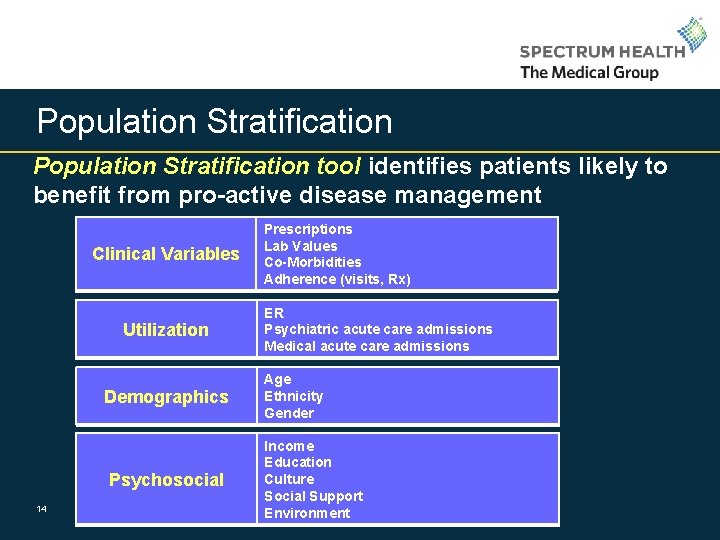
Population Stratification tool identifies patients likely to benefit from pro-active disease management Clinical Variables Utilization Demographics Psychosocial 14 Prescriptions Lab Values Co-Morbidities Adherence (visits, Rx) ER Psychiatric acute care admissions Medical acute care admissions Age Ethnicity Gender Income Education Culture Social Support Environment
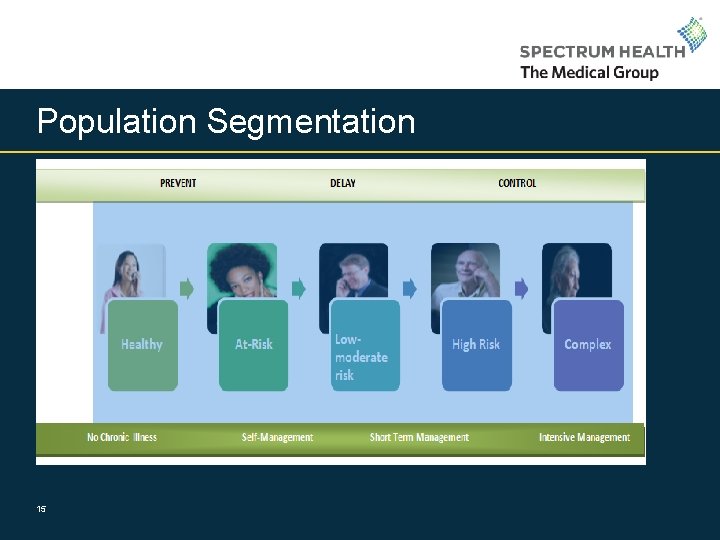
Population Segmentation 15

Population Segmentation Clinical risk 16 Other risks (determinants of health) Patient Activation Impactful Intervention
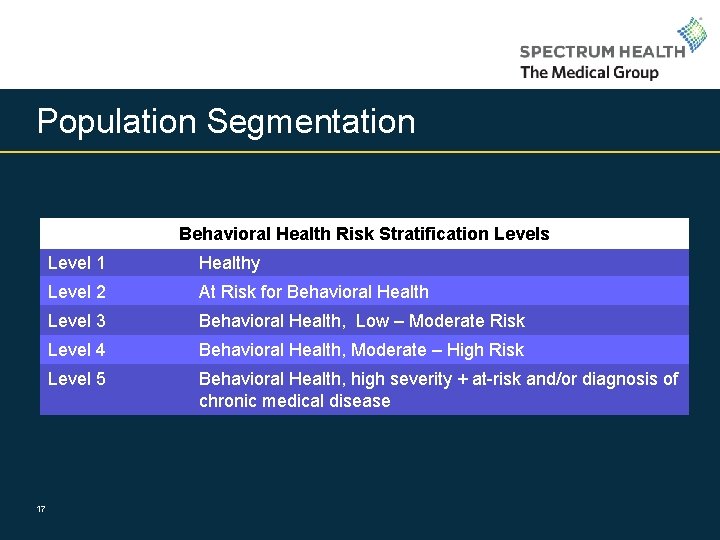
Population Segmentation Behavioral Health Risk Stratification Levels 17 Level 1 Healthy Level 2 At Risk for Behavioral Health Level 3 Behavioral Health, Low – Moderate Risk Level 4 Behavioral Health, Moderate – High Risk Level 5 Behavioral Health, high severity + at-risk and/or diagnosis of chronic medical disease
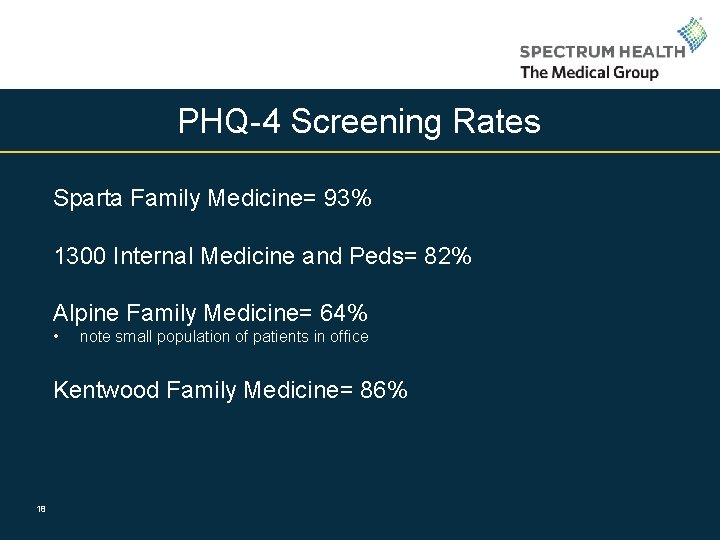
PHQ-4 Screening Rates Sparta Family Medicine= 93% 1300 Internal Medicine and Peds= 82% Alpine Family Medicine= 64% • note small population of patients in office Kentwood Family Medicine= 86% 18
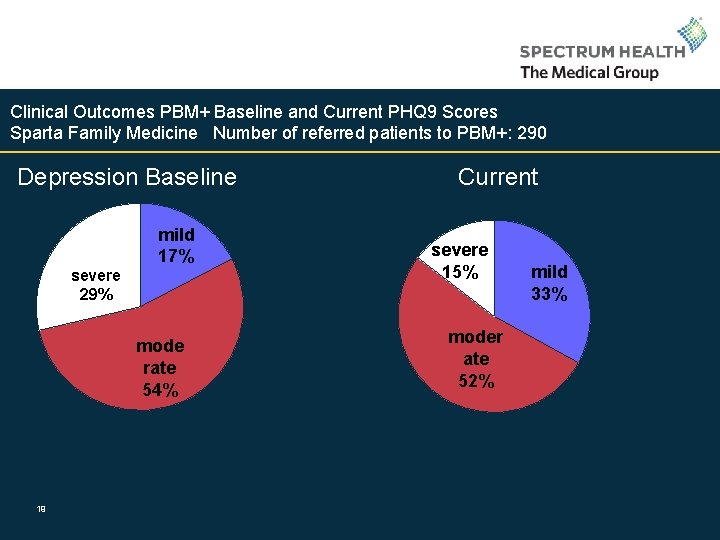
Clinical Outcomes PBM+ Baseline and Current PHQ 9 Scores Sparta Family Medicine Number of referred patients to PBM+: 290 Depression Baseline mild 17% severe 29% mode rate 54% 19 Current severe 15% moder ate 52% mild 33%
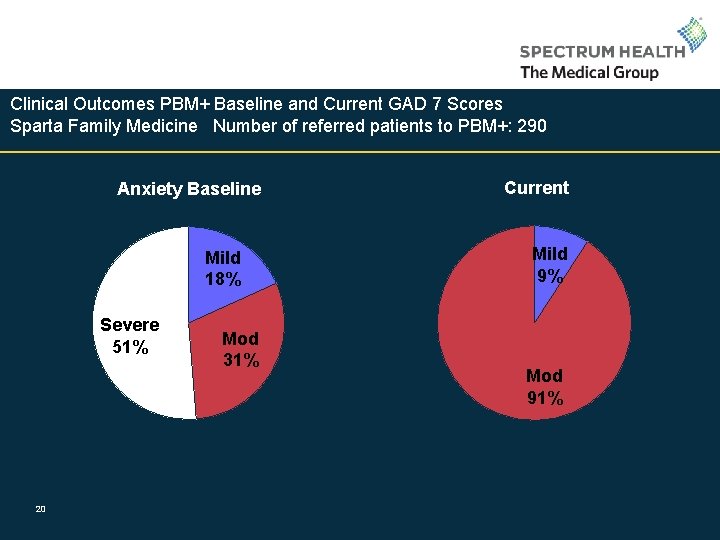
Clinical Outcomes PBM+ Baseline and Current GAD 7 Scores Sparta Family Medicine Number of referred patients to PBM+: 290 Anxiety Baseline Mild 18% Severe 51% 20 Mod 31% Current Mild 9% Mod 91%
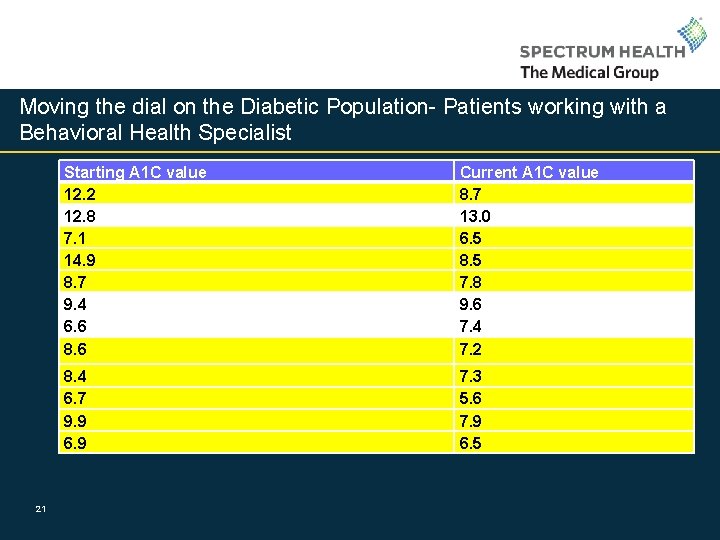
Moving the dial on the Diabetic Population- Patients working with a Behavioral Health Specialist 21 Starting A 1 C value 12. 2 12. 8 7. 1 14. 9 8. 7 9. 4 6. 6 8. 6 Current A 1 C value 8. 7 13. 0 6. 5 8. 5 7. 8 9. 6 7. 4 7. 2 8. 4 6. 7 9. 9 6. 9 7. 3 5. 6 7. 9 6. 5
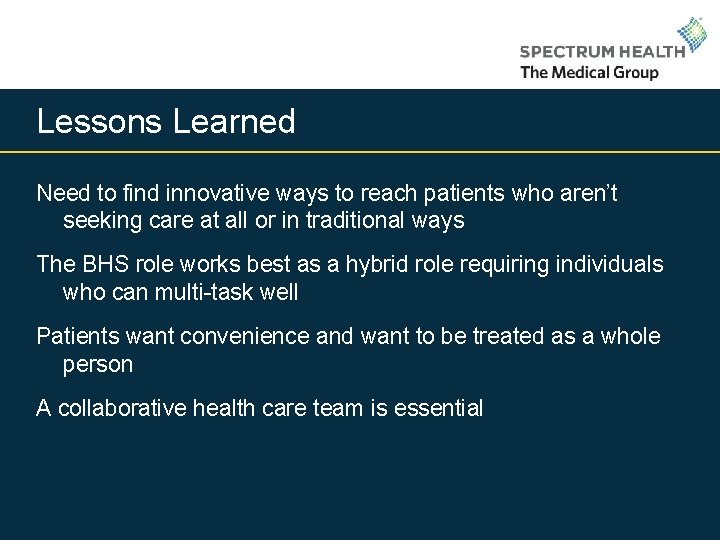
Lessons Learned Need to find innovative ways to reach patients who aren’t seeking care at all or in traditional ways The BHS role works best as a hybrid role requiring individuals who can multi-task well Patients want convenience and want to be treated as a whole person A collaborative health care team is essential
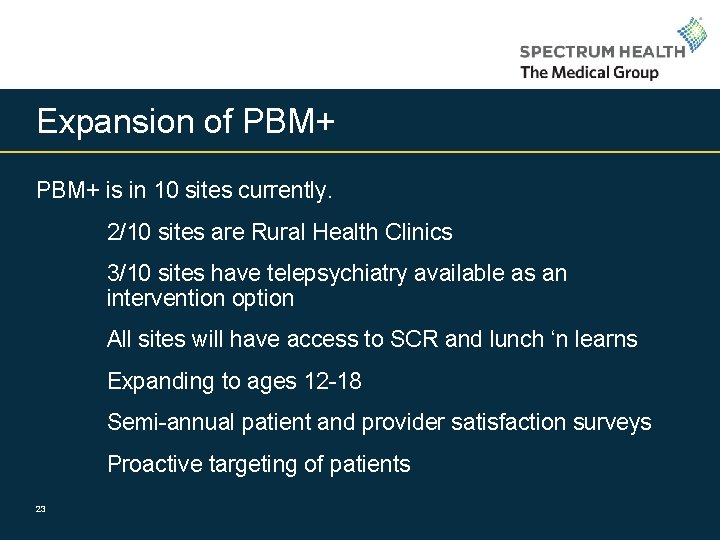
Expansion of PBM+ is in 10 sites currently. 2/10 sites are Rural Health Clinics 3/10 sites have telepsychiatry available as an intervention option All sites will have access to SCR and lunch ‘n learns Expanding to ages 12 -18 Semi-annual patient and provider satisfaction surveys Proactive targeting of patients 23
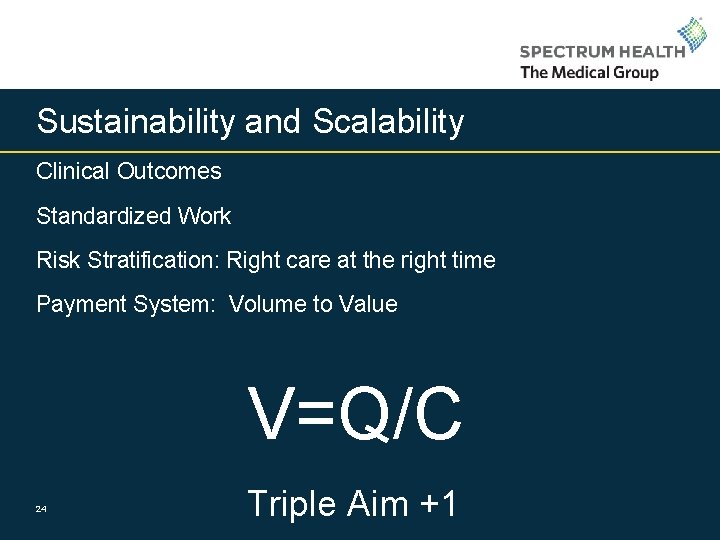
Sustainability and Scalability Clinical Outcomes Standardized Work Risk Stratification: Right care at the right time Payment System: Volume to Value V=Q/C 24 Triple Aim +1

- Slides: 25