
PBL Problem Based Learning Vida Zorko Adapted from
PBL Problem Based Learning Vida Zorko Adapted from Nada Vukadinović’s ‘PBL – What it is’, with kind permission of the author
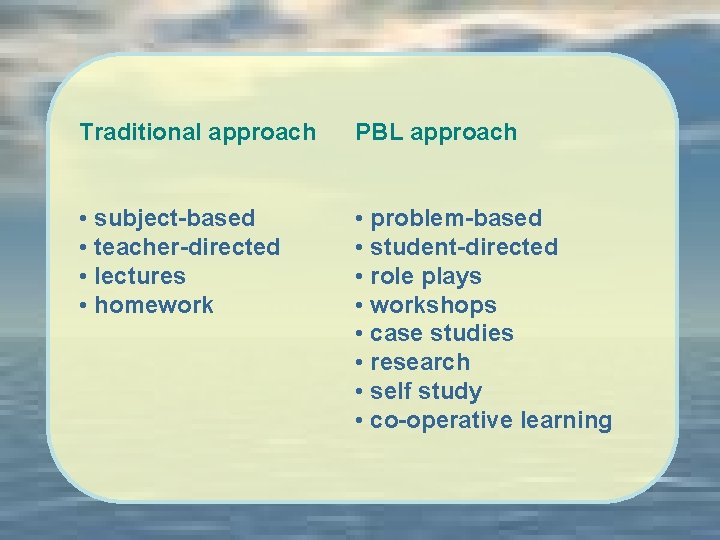
Traditional approach PBL approach • subject-based • teacher-directed • lectures • homework • problem-based • student-directed • role plays • workshops • case studies • research • self study • co-operative learning

5 students PBL subject teacher language teacher
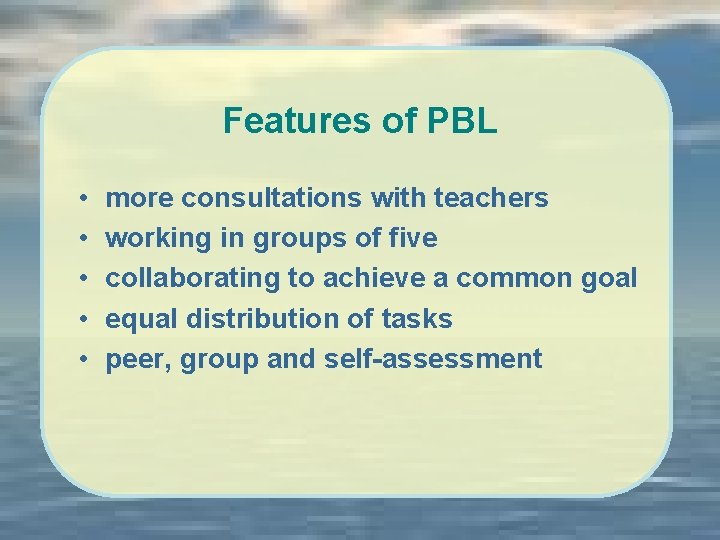
Features of PBL • • • more consultations with teachers working in groups of five collaborating to achieve a common goal equal distribution of tasks peer, group and self-assessment
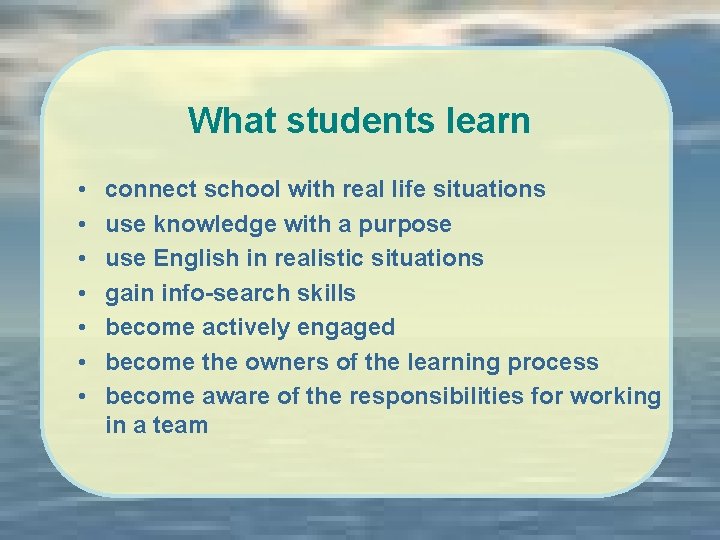
What students learn • • connect school with real life situations use knowledge with a purpose use English in realistic situations gain info-search skills become actively engaged become the owners of the learning process become aware of the responsibilities for working in a team
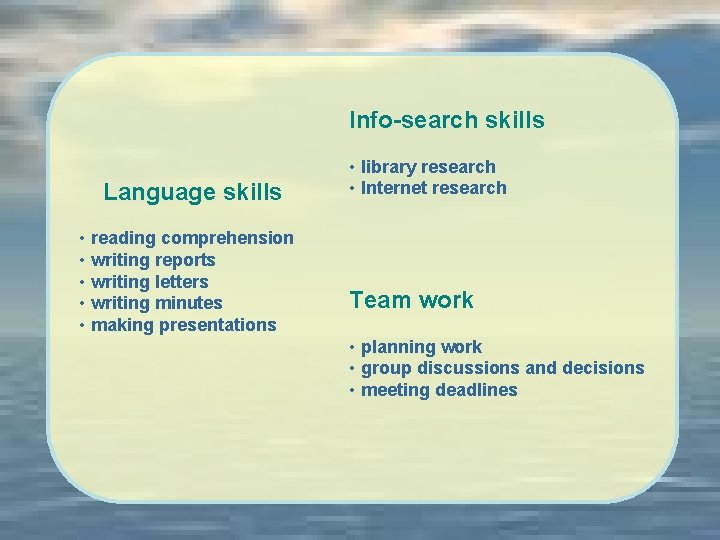
Info-search skills Language skills • reading comprehension • writing reports • writing letters • writing minutes • making presentations • library research • Internet research Team work • planning work • group discussions and decisions • meeting deadlines
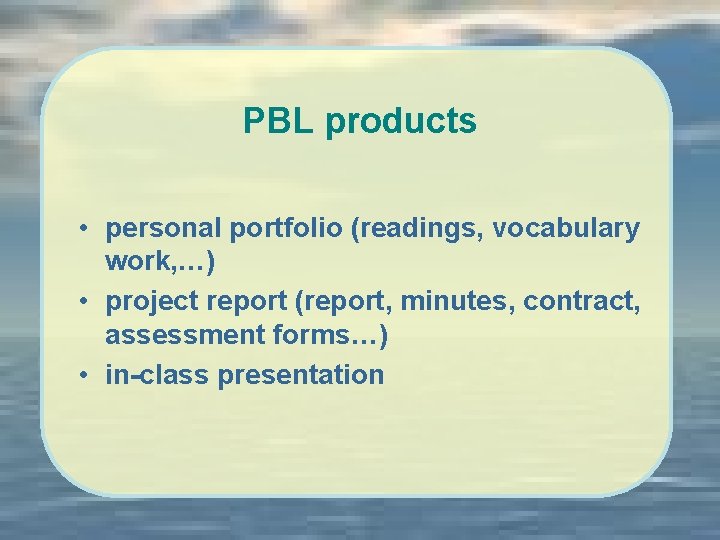
PBL products • personal portfolio (readings, vocabulary work, …) • project report (report, minutes, contract, assessment forms…) • in-class presentation
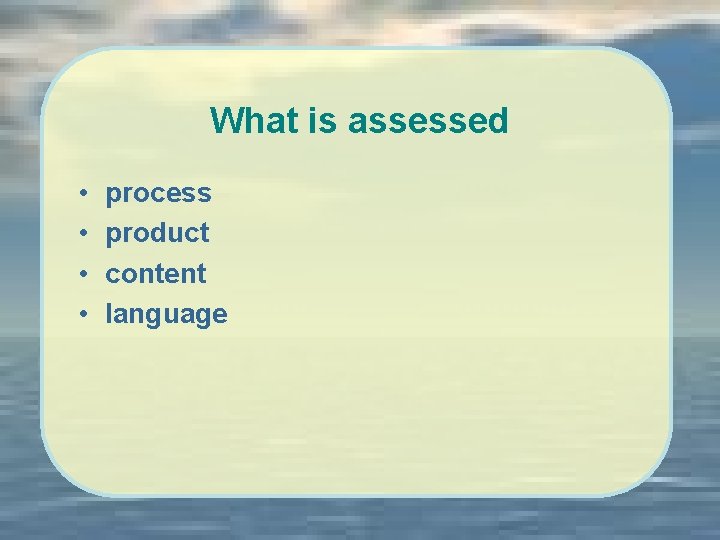
What is assessed • • process product content language
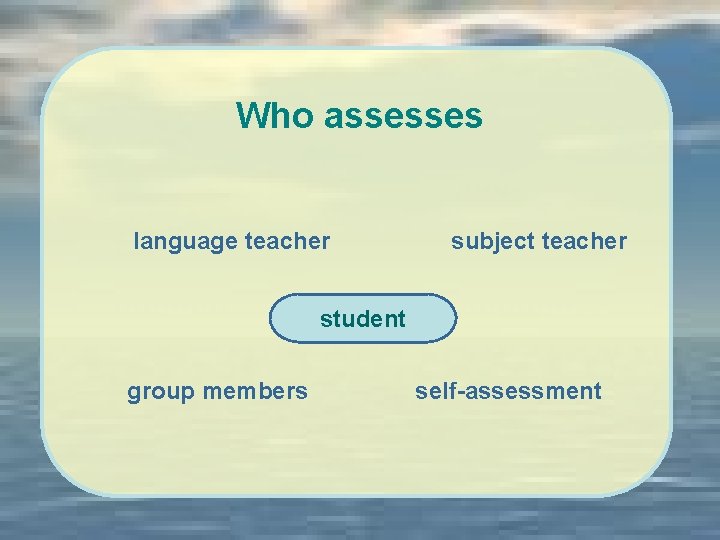
Who assesses language teacher subject teacher student group members self-assessment

No problem is insurmountable. With a little courage, teamwork and determination a person can overcome anything. B. Dodge
- Slides: 10