
PBIS and SEL Challenge Parent Overview November 12
PBIS and SEL Challenge Parent Overview November 12, 2019
Agenda • What is the Intervention Triangle? • What is PBIS and what are examples at Challenge • What is SEL, and why teach it? • Overview of the Second Step K– 8 Program • Implementation at Challenge • Other initiatives • Q&A
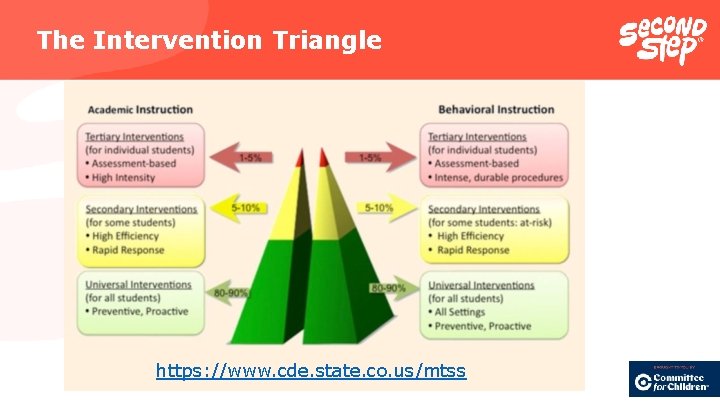
The Intervention Triangle https: //www. cde. state. co. us/mtss
PBIS
What is PBIS? Positive Behavior Interventions and Supports Implementation framework for maximizing the selection and use of evidence-based prevention and intervention practices along a multi-tiered continuum that supports the academic, social, emotional, and behavioral competence of all students. Examples of PBIS activities at CHL: PACK Language PACK Awards PACK Assemblies Redefining Teacher and Office Managed Behaviors Wonder Project Common Sense Media Lesson Implementation Mental Health and Wellness Summit No Place for Hate
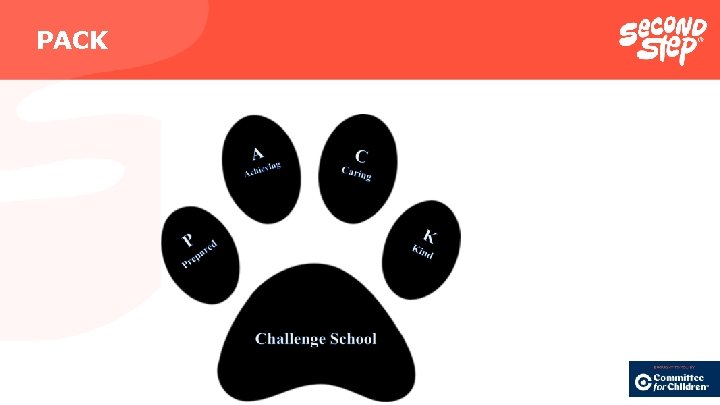
PACK
Who is on the CHL PBIS Team? Matt K (Team A/B) Dave Beck (Team C) Carrie Beattie (Team D) John Wiley (Team E) Dan Smith (Team Encore) Dave Strohfus (Administration) April Hrovat (Administration) Mindy Hartley (Mental Health) www. pbis. org
Why teach SEL?
Think About It. . . Challenges Kids Face Skills They Need Video What is SEL and Why It Matter
Trusted Partner in SEL The Collaborative for Academic, Social, and Emotional Learning is a nonprofit collaborative with the mission to: • Advance the science of SEL • Expand effective practices • Improve policies • Provide guidance https: //casel. org/
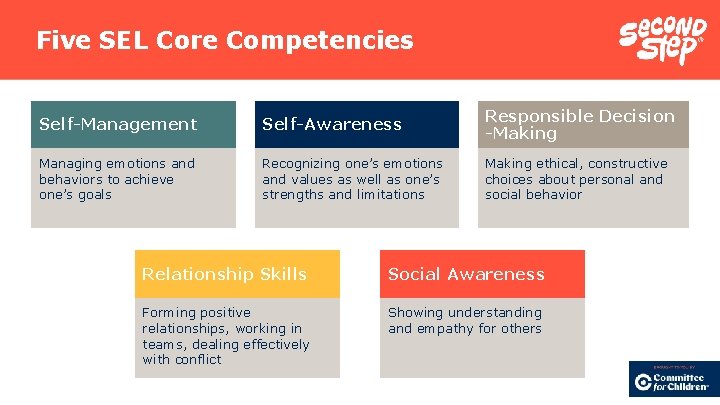
Five SEL Core Competencies Self-Management Self-Awareness Responsible Decision -Making Managing emotions and behaviors to achieve one’s goals Recognizing one’s emotions and values as well as one’s strengths and limitations Making ethical, constructive choices about personal and social behavior Relationship Skills Social Awareness Forming positive relationships, working in teams, dealing effectively with conflict Showing understanding and empathy for others
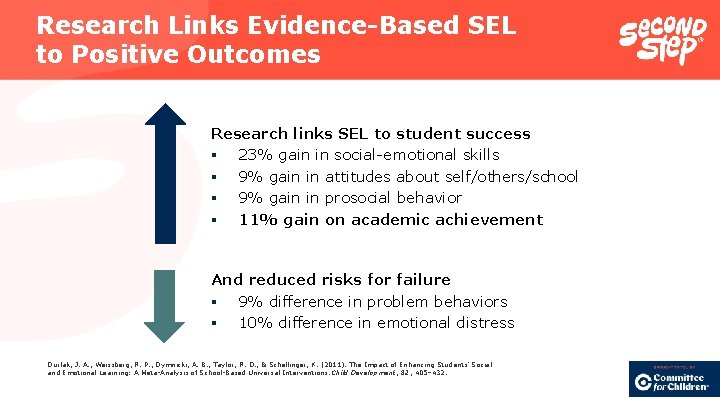
Research Links Evidence-Based SEL to Positive Outcomes Research links SEL to student success § 23% gain in social-emotional skills § 9% gain in attitudes about self/others/school § 9% gain in prosocial behavior § 11% gain on academic achievement And reduced risks for failure § 9% difference in problem behaviors § 10% difference in emotional distress Durlak, J. A. , Weissberg, R. P. , Dymnicki, A. B. , Taylor, R. D. , & Schellinger, K. (2011). The Impact of Enhancing Students’ Social and Emotional Learning: A Meta-Analysis of School-Based Universal Interventions. Child Development, 82, 405– 432.
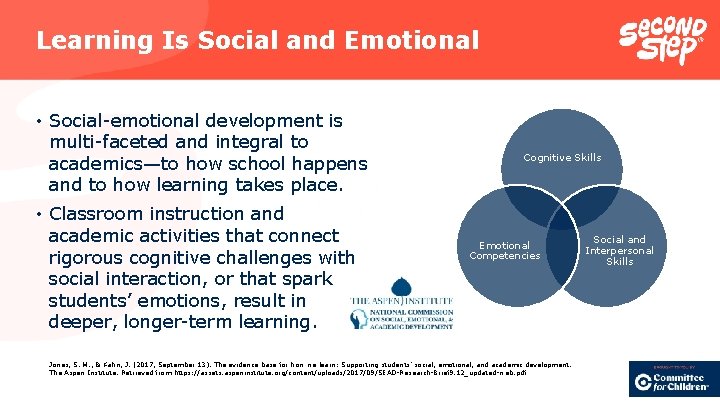
Learning Is Social and Emotional • Social-emotional development is multi-faceted and integral to academics—to how school happens and to how learning takes place. • Classroom instruction and academic activities that connect rigorous cognitive challenges with social interaction, or that spark students’ emotions, result in deeper, longer-term learning. Cognitive Skills Emotional Competencies Jones, S. M. , & Kahn, J. (2017, September 13). The evidence base for how we learn: Supporting students’ social, emotional, and academic development. The Aspen Institute. Retrieved from https: //assets. aspeninstitute. org/content/uploads/2017/09/SEAD-Research-Brief 9. 12_updated-web. pdf Social and Interpersonal Skills

SEL and Workforce Readiness The Top 10 skills identified by the World Economic Forum for employment success in 2020: 1. Complex Problem Solving 2. Critical thinking 3. Creativity 4. People management 5. Coordinating with others 6. Emotional intelligence 7. Judgment and decision-making 8. Service orientation 9. Negotiation 10. Cognitive flexibility Source: Future of Jobs Report, 2015
The Second Step K-8 Program Overview
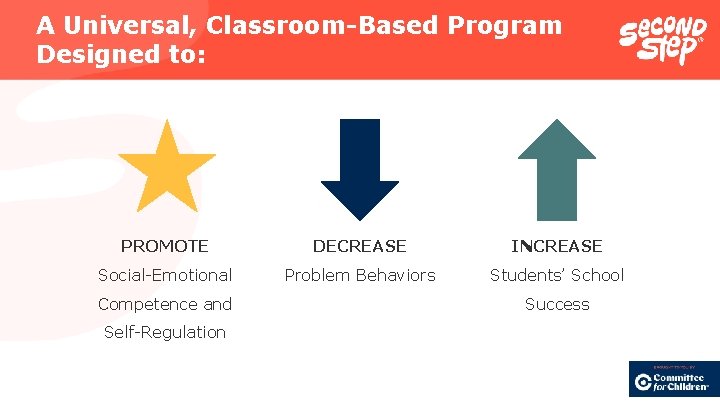
A Universal, Classroom-Based Program Designed to: PROMOTE DECREASE INCREASE Social-Emotional Problem Behaviors Students’ School Competence and Self-Regulation Success
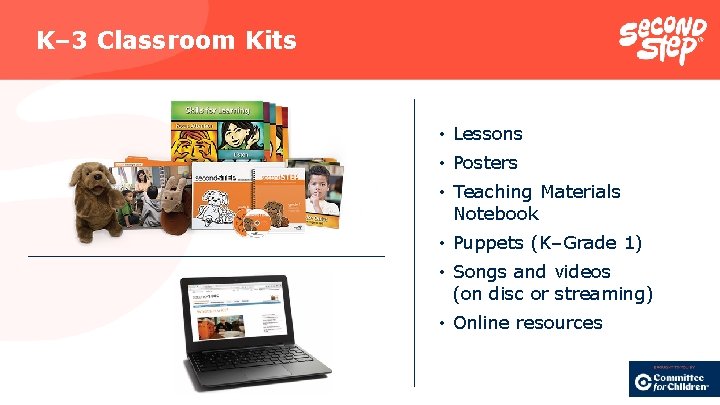
K– 3 Classroom Kits • Lessons • Posters • Teaching Materials Notebook • Puppets (K–Grade 1) • Songs and videos (on disc or streaming) • Online resources
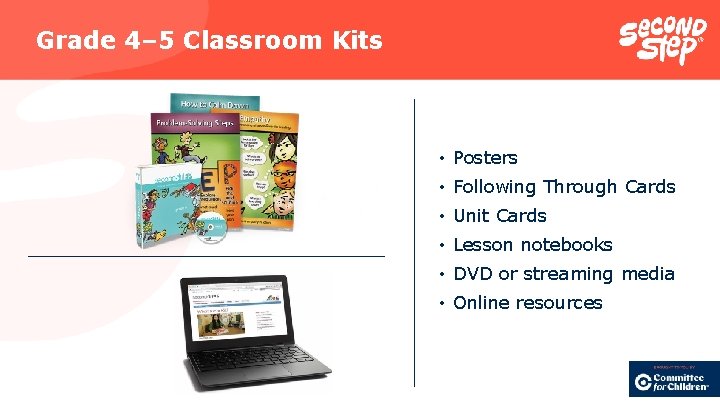
Grade 4– 5 Classroom Kits • Posters • Following Through Cards • Unit Cards • Lesson notebooks • DVD or streaming media • Online resources
Program Skills and Topics K– 5 • Skills for Learning • Empathy • Emotion Management • Problem Solving Add-On Units: • Bullying Prevention (K– 5) • Child Protection (EL– 5)
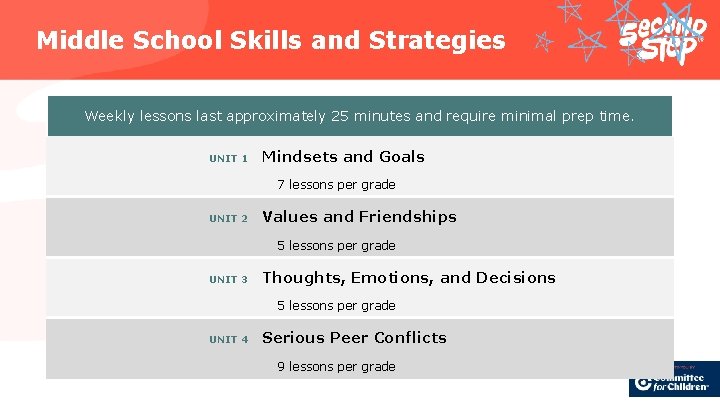
Middle School Skills and Strategies Weekly lessons last approximately 25 minutes and require minimal prep time. UNIT 1 Mindsets and Goals 7 lessons per grade UNIT 2 Values and Friendships 5 lessons per grade UNIT 3 Thoughts, Emotions, and Decisions 5 lessons per grade UNIT 4 Serious Peer Conflicts 9 lessons per grade
Implentation at CHL
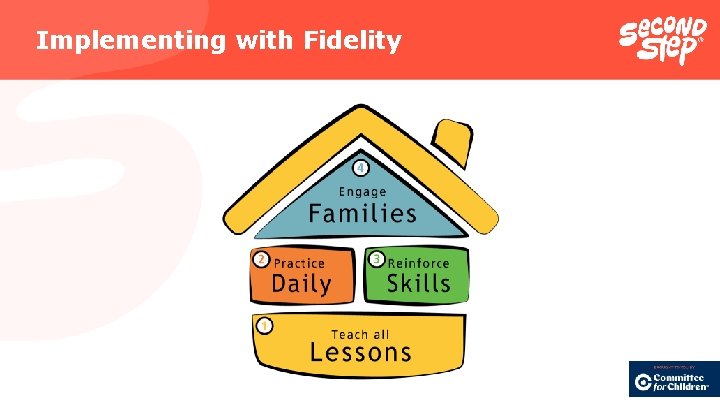
Implementing with Fidelity
Elementary Implementation • Elementary Curriculum: • Kindergarten taught to all kindergarten students by Mr. Mc. Comber • 1 st Grade Team – Mr. K and Ms. Graeve • 2 nd Grade Team – Ms. D’Amico and Ms. Padilla • 3 rd Grade Team – Mrs. Krenz(Mc. Gahey) and Ms. Lamb • 4 th Grade Team – Mr. Beck, Mrs. Casner, Mrs. Macey
Middle School Implentation • Second Step is taught every Wednesday during Connections on Wednesdays is referred to as “Den Meetings” and reads Advisory on Powerschool. • Connections teachers will be assigned to teams of four, each teacher becoming a grade level expert in 5 th, 6 th, 7 th, or 8 th curriculum. • Students attend Connections on Wednesday with their assigned grade level expert.
Middle School Connections Team 5 th Grade– Beattie, Draper, Nagle, Voreis Team 6 th Grade – Blythe, Bartlett, King, Lackey Team 7 th Grade – Harmon, Bennett, Wright, Wiley Team 8 th Grade – Erixon, De La Cruz, Smith, Kessler
Other programs • Trusted Adult Training • Signs of Suicide 7 th and 8 th Grades • Warning Signs When Friends Need Adult Help 5 th and 6 th Grades • These trainings are provided by Dr. Hartley (School Psychologist) and Ms. Thomas (Counselor)
Thank you!
- Slides: 27