
Pb edge detection Supervised Learning of edges and
Pb edge detection Supervised Learning of edges and object boundaries

Why edges? • Reduce dimensionality of data • Preserve content information • Useful in applications such as: – object detection – structure from motion – tracking

Why not edges? But, not that useful, why? Difficulties: 1. Modeling assumptions 2. Parameters 3. Multiple sources of information (brightness, color, texture, …) 4. Real world conditions Is edge detection even well defined?

Canny edge detection 1. smooth 2. gradient 3. thresh, suppress, link Canny is optimal w. r. t. some model.
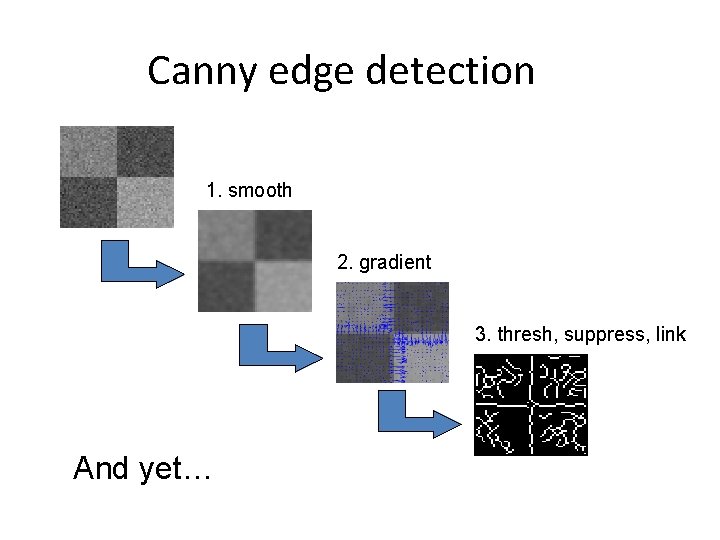
Canny edge detection 1. smooth 2. gradient 3. thresh, suppress, link And yet…
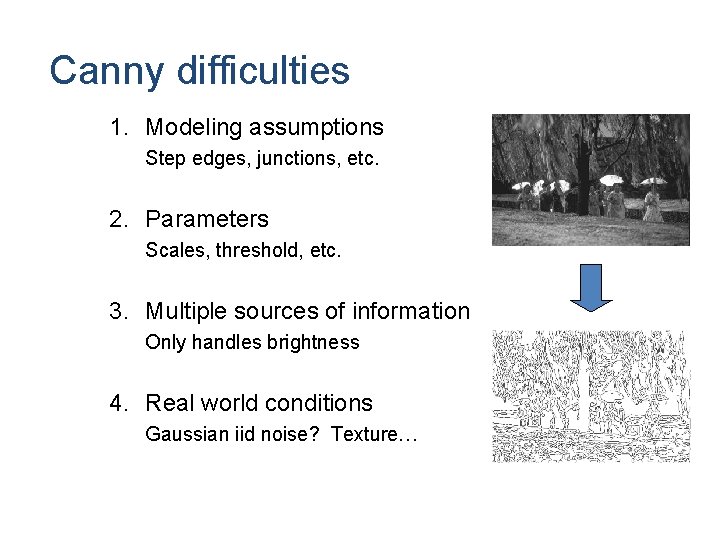
Canny difficulties 1. Modeling assumptions Step edges, junctions, etc. 2. Parameters Scales, threshold, etc. 3. Multiple sources of information Only handles brightness 4. Real world conditions Gaussian iid noise? Texture…
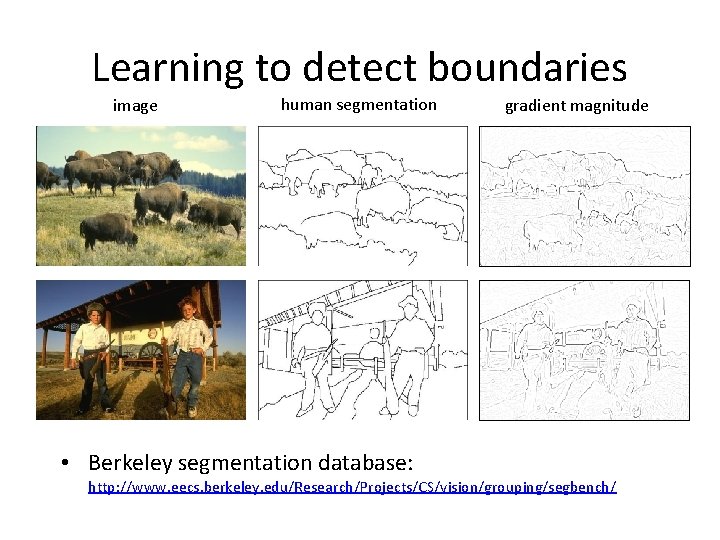
Learning to detect boundaries image human segmentation • Berkeley segmentation database: gradient magnitude http: //www. eecs. berkeley. edu/Research/Projects/CS/vision/grouping/segbench/
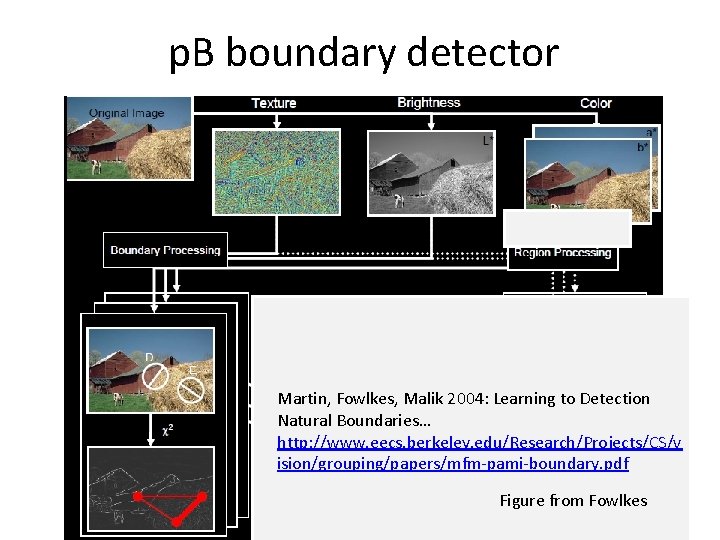
p. B boundary detector Martin, Fowlkes, Malik 2004: Learning to Detection Natural Boundaries… http: //www. eecs. berkeley. edu/Research/Projects/CS/v ision/grouping/papers/mfm-pami-boundary. pdf Figure from Fowlkes
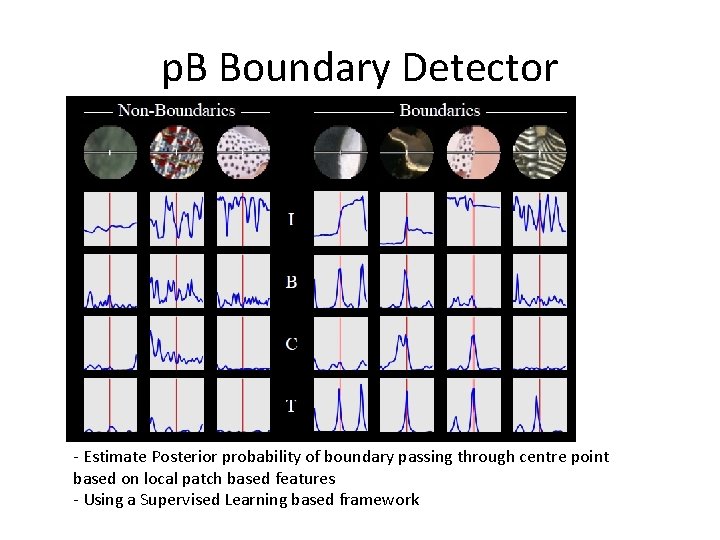
p. B Boundary Detector - Estimate Posterior probability of boundary passing through centre point based on local patch based features - Using a Supervised Learning based framework
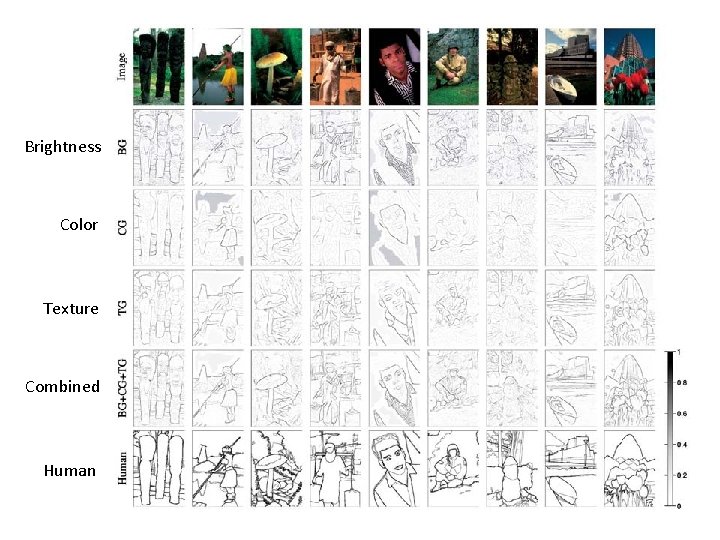
Brightness Color Texture Combined Human
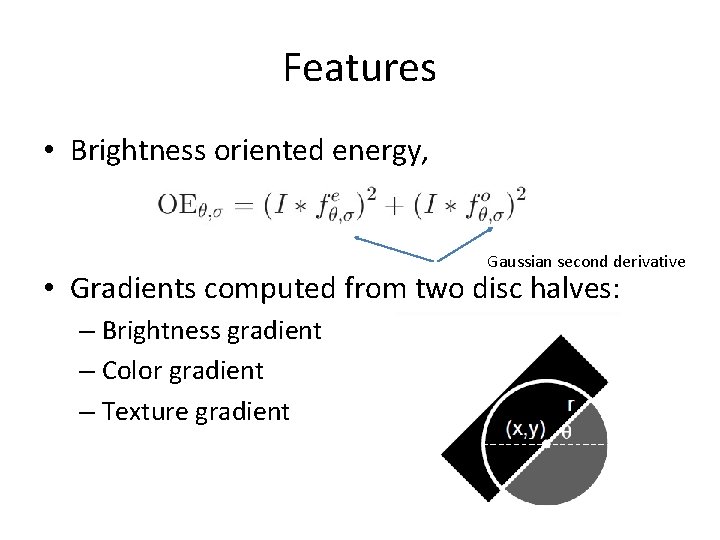
Features • Brightness oriented energy, Gaussian second derivative • Gradients computed from two disc halves: – Brightness gradient – Color gradient – Texture gradient
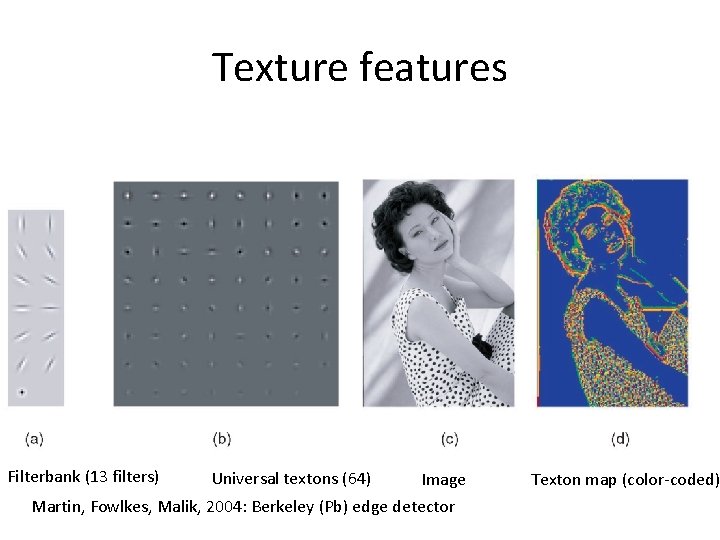
Texture features Filterbank (13 filters) Universal textons (64) Image Martin, Fowlkes, Malik, 2004: Berkeley (Pb) edge detector Texton map (color-coded)
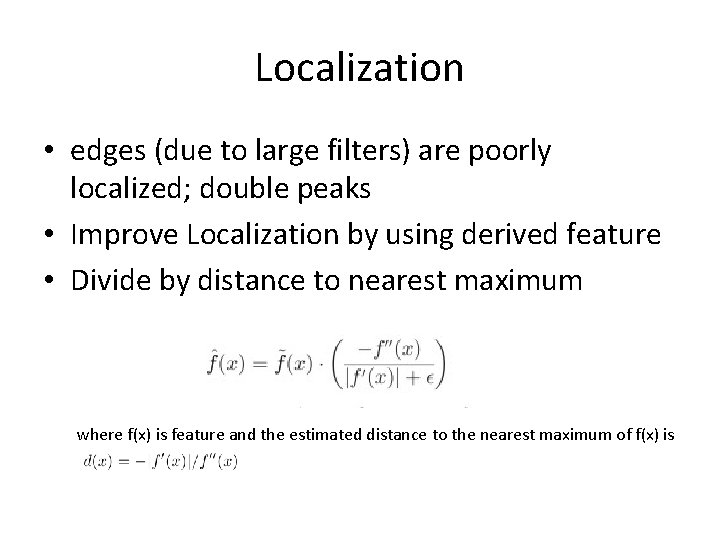
Localization • edges (due to large filters) are poorly localized; double peaks • Improve Localization by using derived feature • Divide by distance to nearest maximum where f(x) is feature and the estimated distance to the nearest maximum of f(x) is
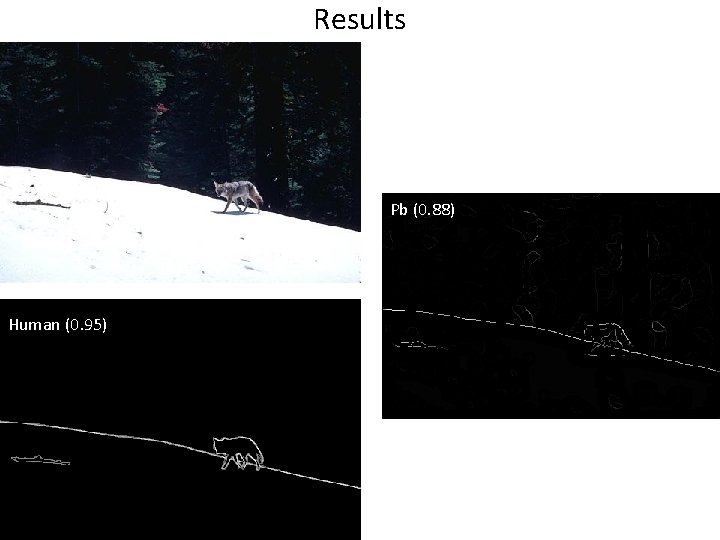
Results Pb (0. 88) Human (0. 95)
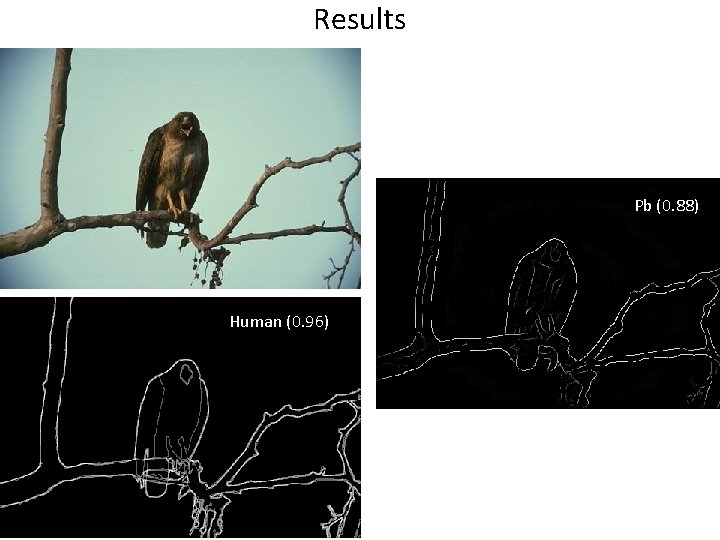
Results Pb Human (0. 96) Pb (0. 88) Global Pb
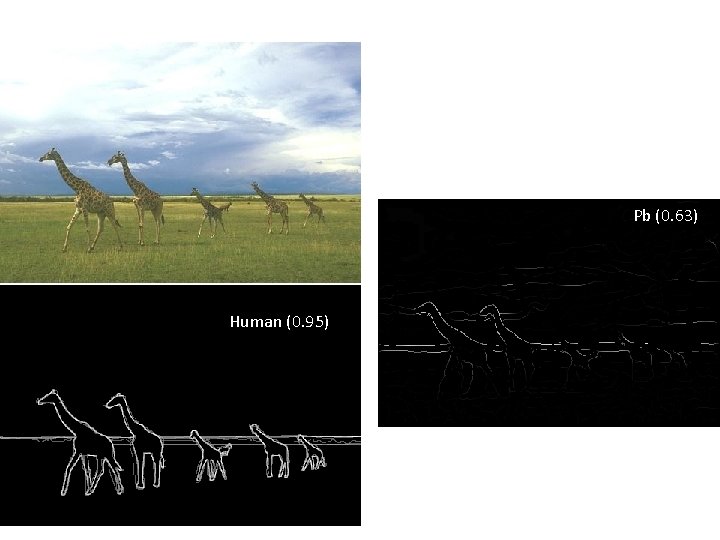
Pb (0. 63) Human (0. 95)
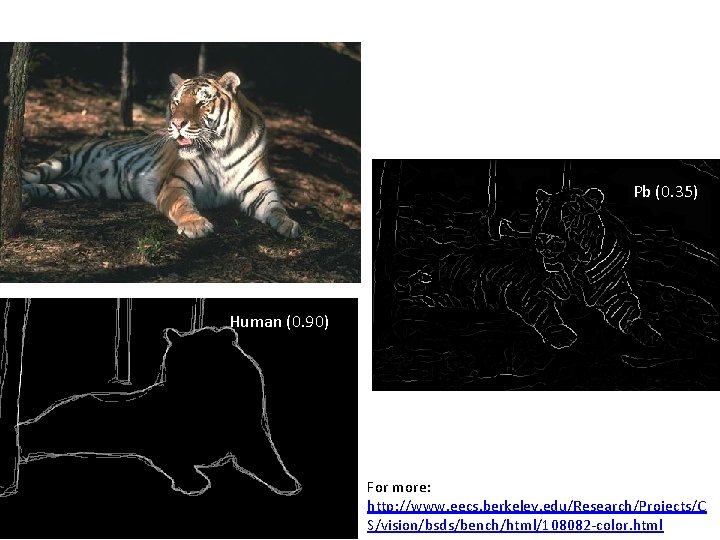
Pb (0. 35) Human (0. 90) For more: http: //www. eecs. berkeley. edu/Research/Projects/C S/vision/bsds/bench/html/108082 -color. html
- Slides: 17