
Paying for College Personal Financial Management Standardized Curriculum





- Slides: 25
Paying for College Personal Financial Management Standardized Curriculum - 2016
Agenda Financial aid Scholarship opportunities College savings plans Tax incentives
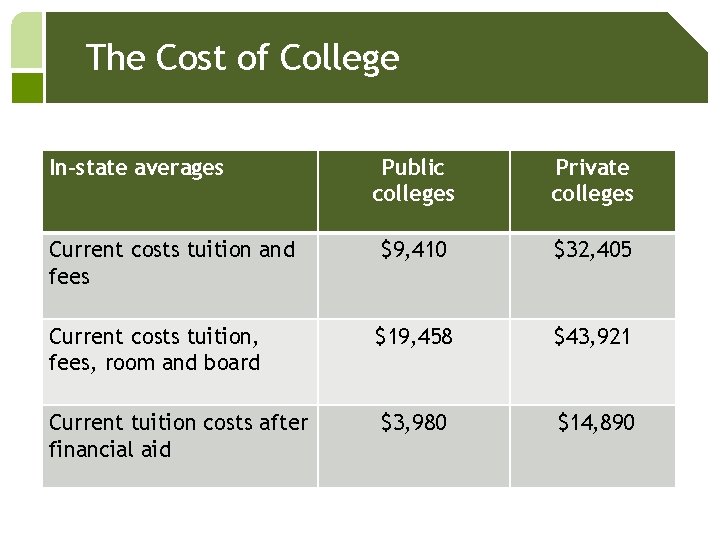
The Cost of College In-state averages Public colleges Private colleges Current costs tuition and fees $9, 410 $32, 405 Current costs tuition, fees, room and board $19, 458 $43, 921 Current tuition costs after financial aid $3, 980 $14, 890
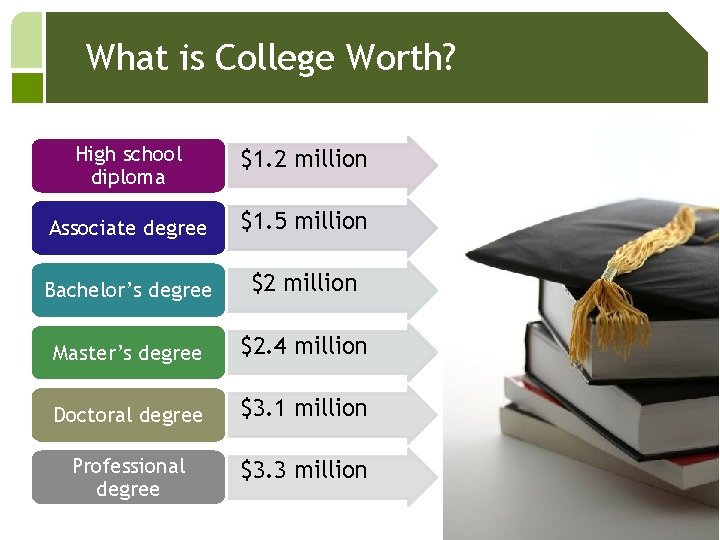
What is College Worth? High school diploma $1. 2 million Associate degree $1. 5 million Bachelor’s degree $2 million Master’s degree $2. 4 million Doctoral degree $3. 1 million Professional degree $3. 3 million
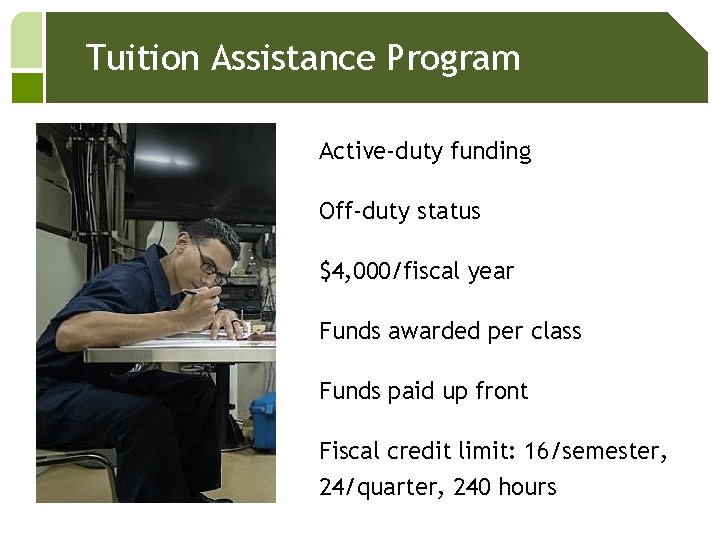
Tuition Assistance Program Active-duty funding Off-duty status $4, 000/fiscal year Funds awarded per class Funds paid up front Fiscal credit limit: 16/semester, 24/quarter, 240 hours
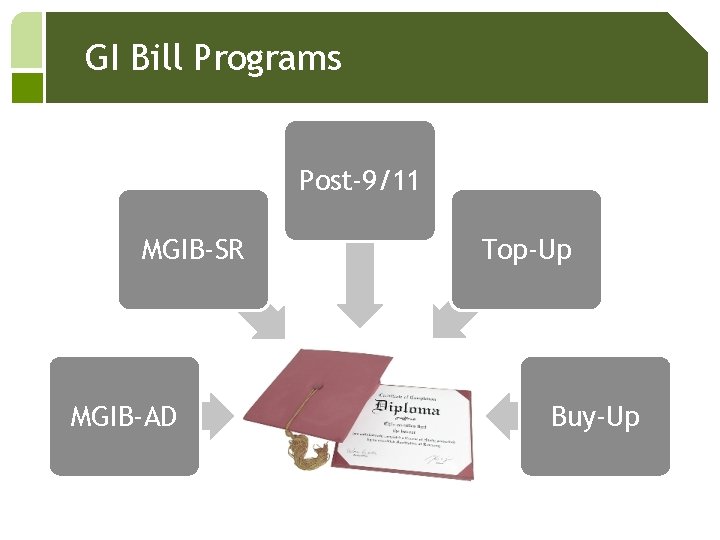
GI Bill Programs Post-9/11 MGIB-SR MGIB-AD Top-Up Buy-Up
The Post-9/11 GI Bill Eligibility Benefits Transferability
Other Military Programs Reserve Educational Assistance Program (REAP) Post Vietnam-Era Educational Assistance Program (VEAP) Survivors’ and Dependents’ Educational Assistance (DEA) Program College Loan Repayment Program (CLRP)
Financial Aid Terminology Grants Work-study program Loans Scholarships
Grant Programs Pell Grant Academic Competitiveness Grant (ACG) National SMART Grant Federal Supplemental Educational Opportunity Grant (FSEOG) Federal Work-Study (FWS) Institutional grants
Federal Loan Programs Perkins Loan Stafford Loan Consolidation loans PLUS loans
Application Tips Start early www. fafsa. ed. gov Check deadlines Apply annually Look at all options
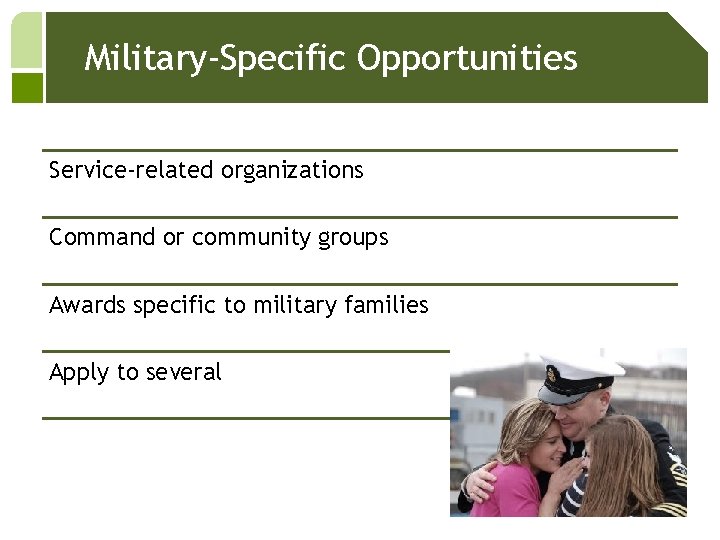
Military-Specific Opportunities Service-related organizations Command or community groups Awards specific to military families Apply to several
Scholarship Scams Be wary of: Solicitations for federal aid Loan conversion promises Application processing fees Giving out your information
Starting Early Time is an asset! $250/month at 5% interest from birth until age 18 = $80, 465 for college 37% comes from interest
Qualified Tuition Programs Prepaid tuition plans Lock in current rates for future college needs College savings plans Invest in an account that grows tax-free until college
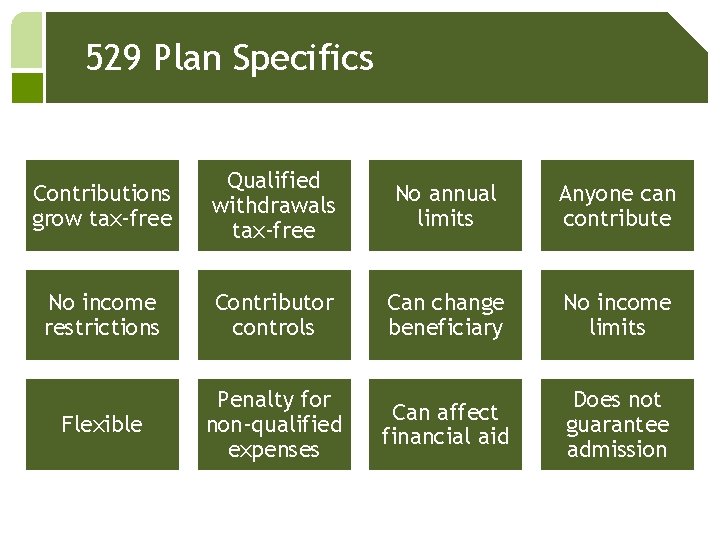
529 Plan Specifics Contributions grow tax-free Qualified withdrawals tax-free No annual limits Anyone can contribute No income restrictions Contributor controls Can change beneficiary No income limits Flexible Penalty for non-qualified expenses Can affect financial aid Does not guarantee admission
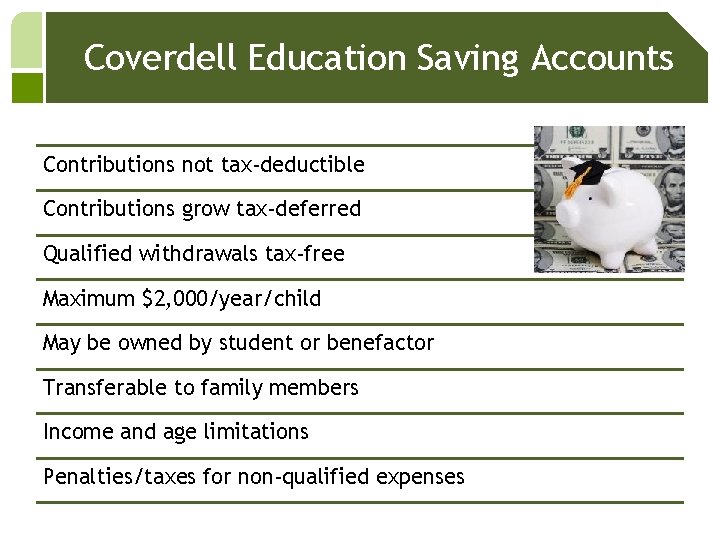
Coverdell Education Saving Accounts Contributions not tax-deductible Contributions grow tax-deferred Qualified withdrawals tax-free Maximum $2, 000/year/child May be owned by student or benefactor Transferable to family members Income and age limitations Penalties/taxes for non-qualified expenses
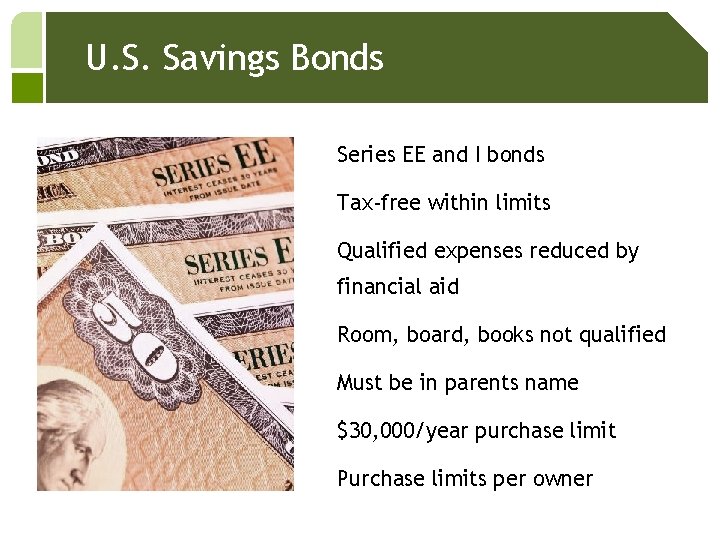
U. S. Savings Bonds Series EE and I bonds Tax-free within limits Qualified expenses reduced by financial aid Room, board, books not qualified Must be in parents name $30, 000/year purchase limit Purchase limits per owner
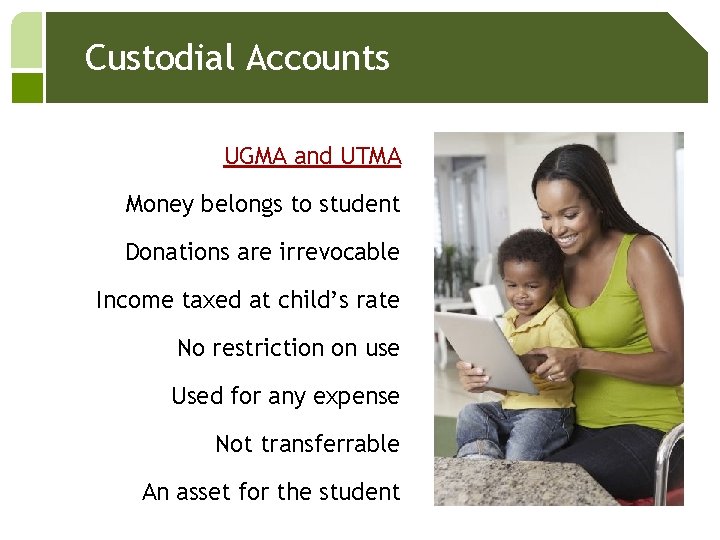
Custodial Accounts UGMA and UTMA Money belongs to student Donations are irrevocable Income taxed at child’s rate No restriction on use Used for any expense Not transferrable An asset for the student
Saving in the Parents’ Names Parental control Low impact on financial aid Flexible investment options Can be used for other purposes No investment limits No tax breaks Tempting to spend
Penalty-Free IRA Withdrawals Qualified expenses Exempt from 10% penalty Must be for you, spouse, children or grandchildren Use with caution!
Effects on Financial Aid Better to have assets in parent’s name Colleges consider: – 35% of a child’s assets – 5. 5% of a parent’s assets
Tax Incentives American Opportunity Credit Lifetime Learning Credit Limited deduction for tuition expenses Student loan interest deduction No double-dipping
Summary Situation and needs determine the plan No “best fit” program Options vary based on situation Start early Explore all options