
Pavlovian or Classical Conditioning Psychology 3306 Introduction Pavlov

- Slides: 20
Pavlovian or Classical Conditioning Psychology 3306
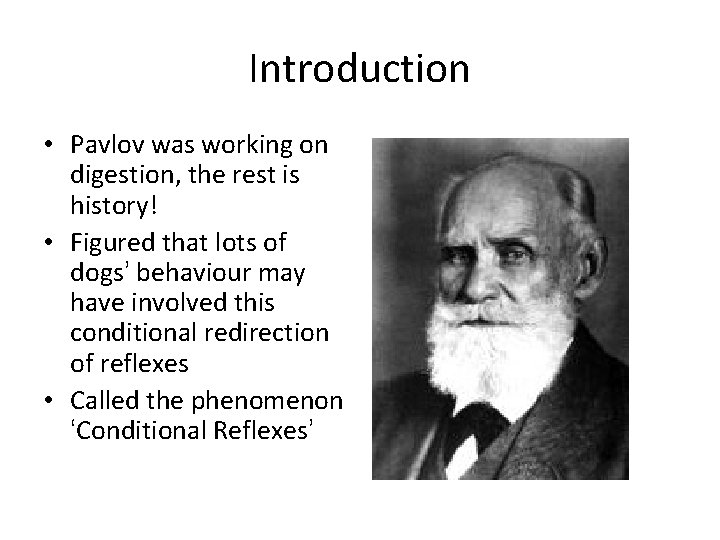
Introduction • Pavlov was working on digestion, the rest is history! • Figured that lots of dogs’ behaviour may have involved this conditional redirection of reflexes • Called the phenomenon ‘Conditional Reflexes’
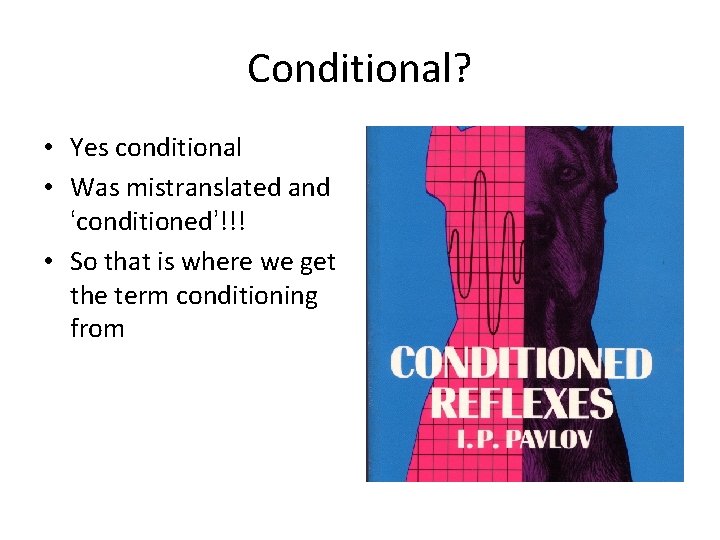
Conditional? • Yes conditional • Was mistranslated and ‘conditioned’!!! • So that is where we get the term conditioning from
Key terms • Unconditioned Stimulus (UCS or US) – Biologically relevant stimulus, that without prior learning elicits an…. • Unconditioned Response (UR or UCR) • Conditioned Stimulus (CS) – Neutral stimulus that with many CS – US pairing elicits a • Conditioned Response (CR)
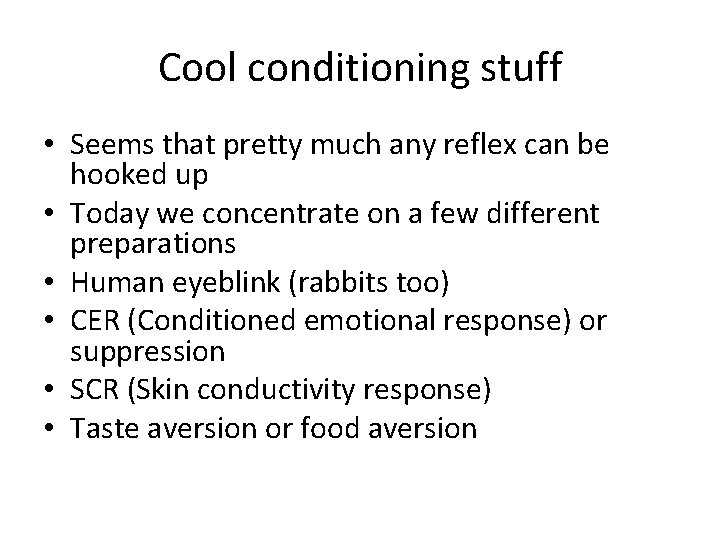
Cool conditioning stuff • Seems that pretty much any reflex can be hooked up • Today we concentrate on a few different preparations • Human eyeblink (rabbits too) • CER (Conditioned emotional response) or suppression • SCR (Skin conductivity response) • Taste aversion or food aversion
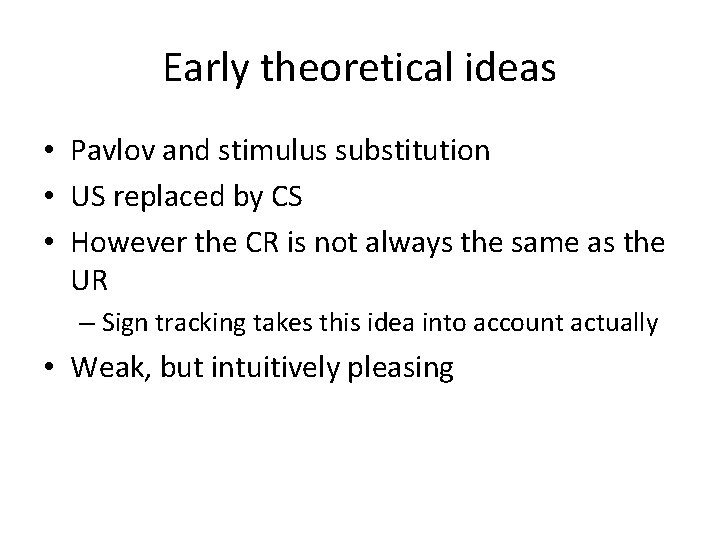
Early theoretical ideas • Pavlov and stimulus substitution • US replaced by CS • However the CR is not always the same as the UR – Sign tracking takes this idea into account actually • Weak, but intuitively pleasing
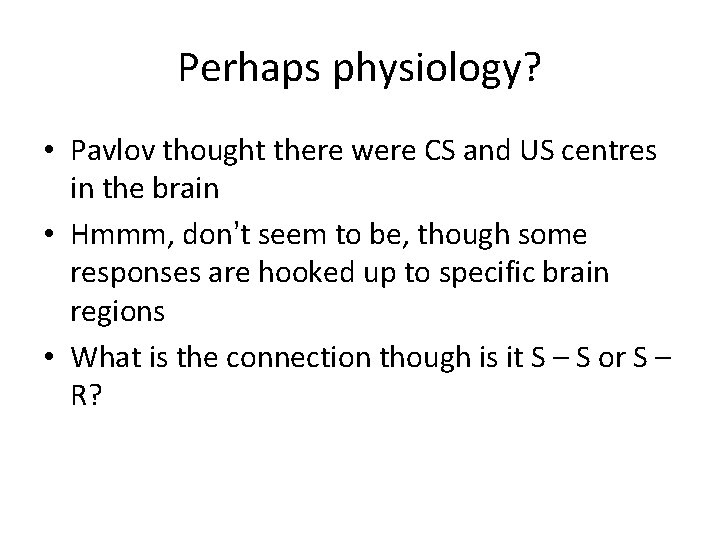
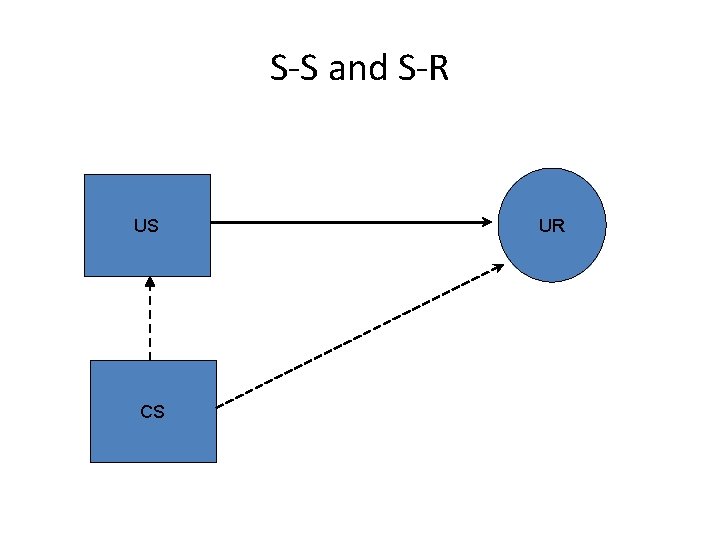
Perhaps physiology? • Pavlov thought there were CS and US centres in the brain • Hmmm, don’t seem to be, though some responses are hooked up to specific brain regions • What is the connection though is it S – S or S – R?
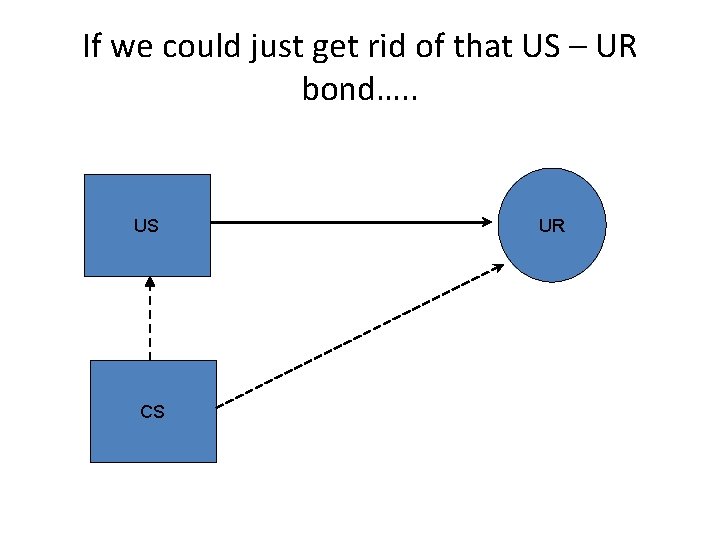
S-S and S-R US CS UR
If we could just get rid of that US – UR bond…. . US CS UR
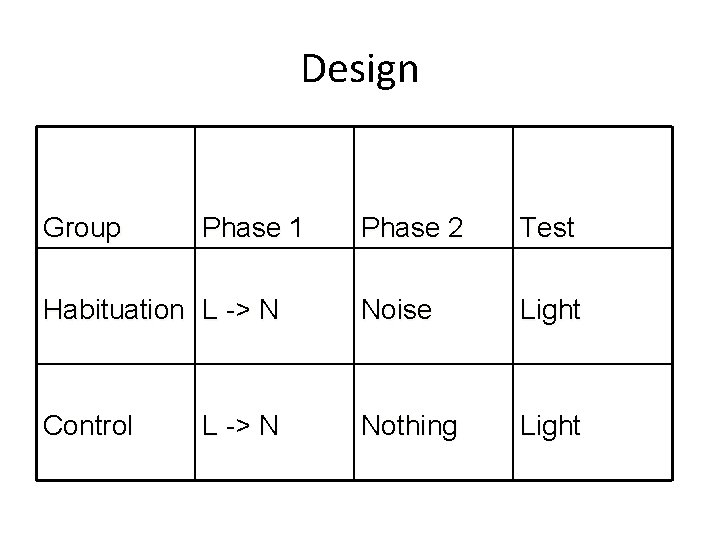
Rescrola (1973) • So, how do you get rid of a response that is hard wired to a stimulus? • Well, if you use CER, then your response is startle right? • How do you get rid of a startle reflex? • Habituation!! • (Bob is a smart man)
Design Group Phase 1 Phase 2 Test Habituation L -> N Noise Light Control Nothing Light L -> N
Results • • Less suppression in Habituation group (In other words, more responding) Therefore, the connection MUST be S – S WOW!
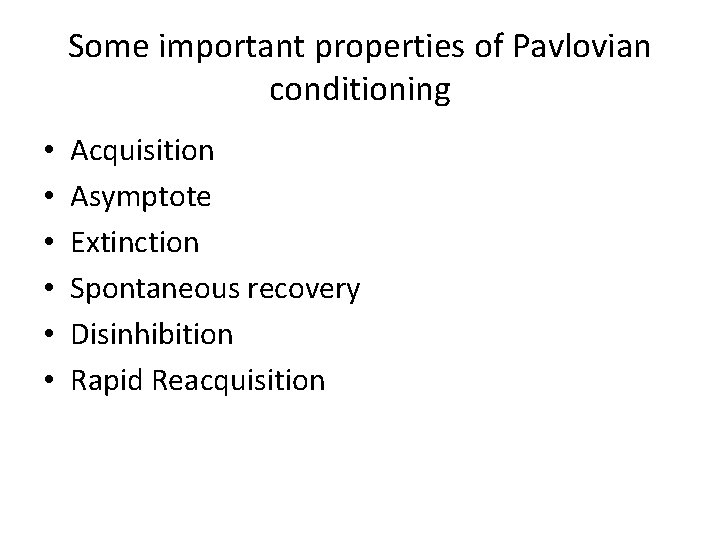
Some important properties of Pavlovian conditioning • • • Acquisition Asymptote Extinction Spontaneous recovery Disinhibition Rapid Reacquisition
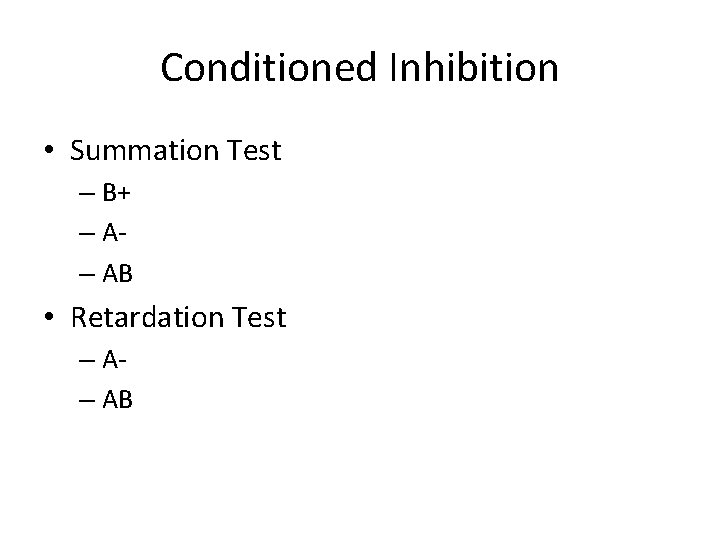
Conditioned Inhibition • Summation Test – B+ – A– AB • Retardation Test – A– AB
Generalization • So you will get a response (CR) to a given CS. • Just like with habituation, you will get generalization • Just like with habituation the less similar the new CS is to the original, the less CR you get
Discrimination • • Sort of the opposite of Generalization CS+ and CSAnimal responds (CR) to S+ not to SDiscrimination gets too hard you get ‘neuroses’
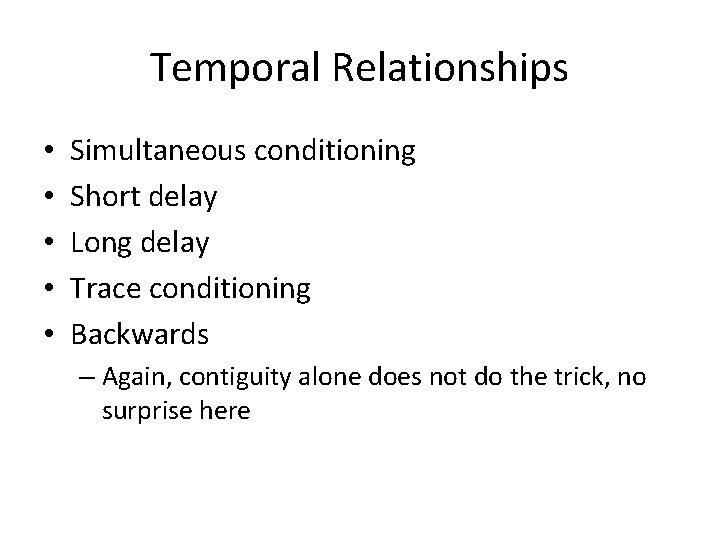
Temporal Relationships • • • Simultaneous conditioning Short delay Long delay Trace conditioning Backwards – Again, contiguity alone does not do the trick, no surprise here
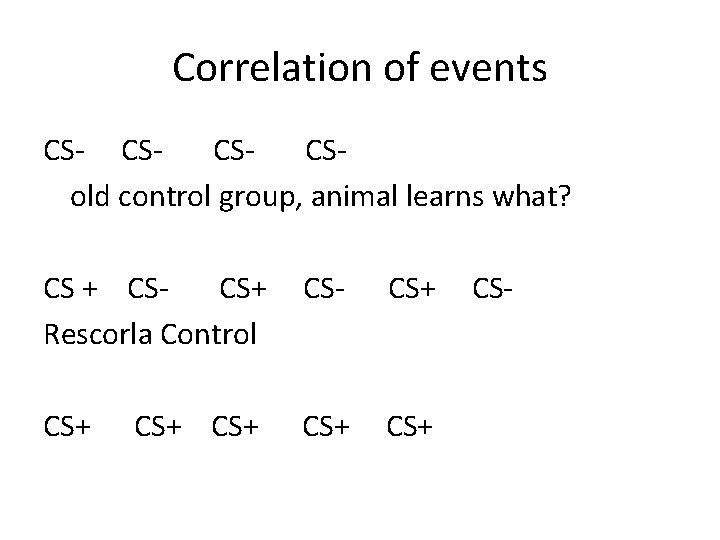
Correlation of events CS- CSCSCSold control group, animal learns what? CS + CSCS+ Rescorla Control CS- CS+ CS+ CS+ CS-
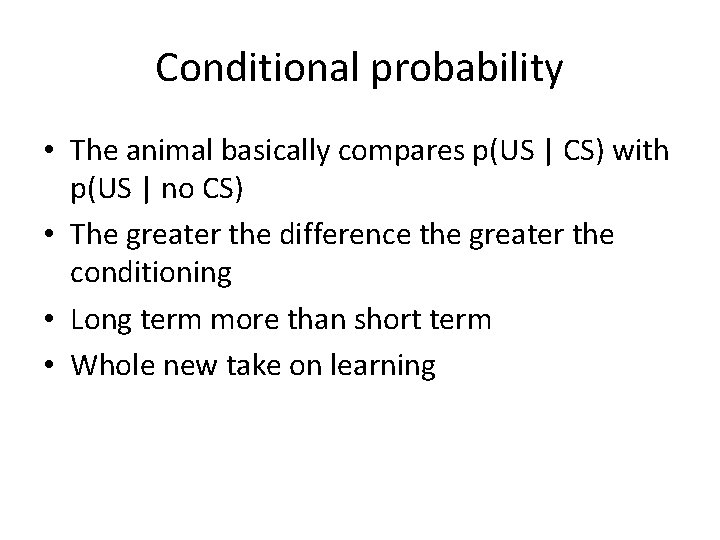
Conditional probability • The animal basically compares p(US | CS) with p(US | no CS) • The greater the difference the greater the conditioning • Long term more than short term • Whole new take on learning
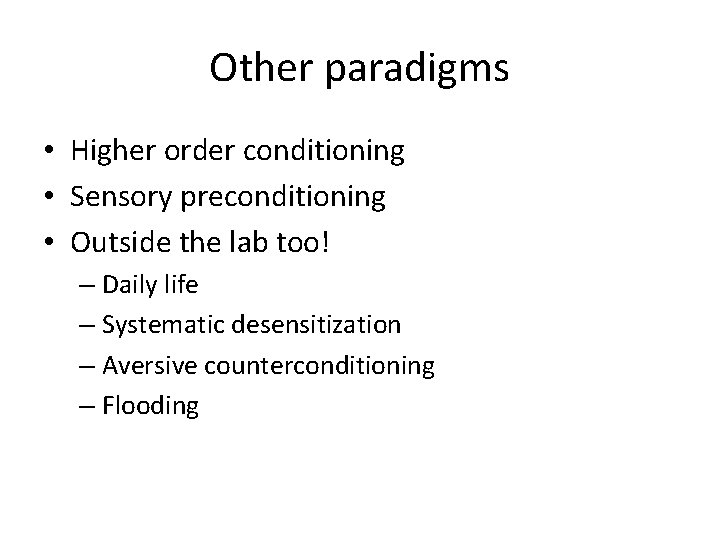
Other paradigms • Higher order conditioning • Sensory preconditioning • Outside the lab too! – Daily life – Systematic desensitization – Aversive counterconditioning – Flooding