
PAVEMENT TYPE SELECTION Hesham Mahgoub Ph D PE

PAVEMENT TYPE SELECTION Hesham Mahgoub, Ph. D, PE. South Dakota State University South Dakota Department of Transportation, Office of Road Design
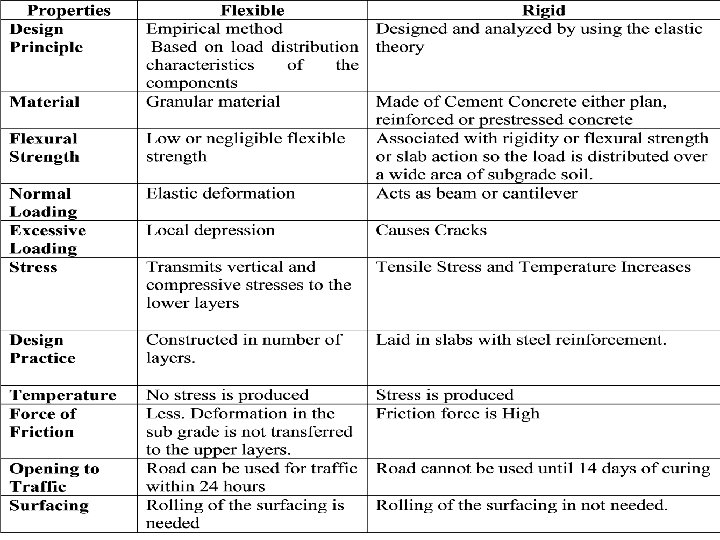
Flexible Pavement Hot mix asphalt (HMA) pavements Called "flexible" since the total pavement structure bends (or flexes) to accommodate traffic loads About 82. 2% of paved U. S. roads use flexible pavement About 95. 7% of paved U. S. roads are surfaced with HMA Rigid Pavement Portland cement concrete (PCC) pavements Called “rigid” since PCC’s high modulus of elasticity does not allow them to flex appreciably About 6. 5% of paved U. S. roads use rigid pavement PAVEMENT TYPES
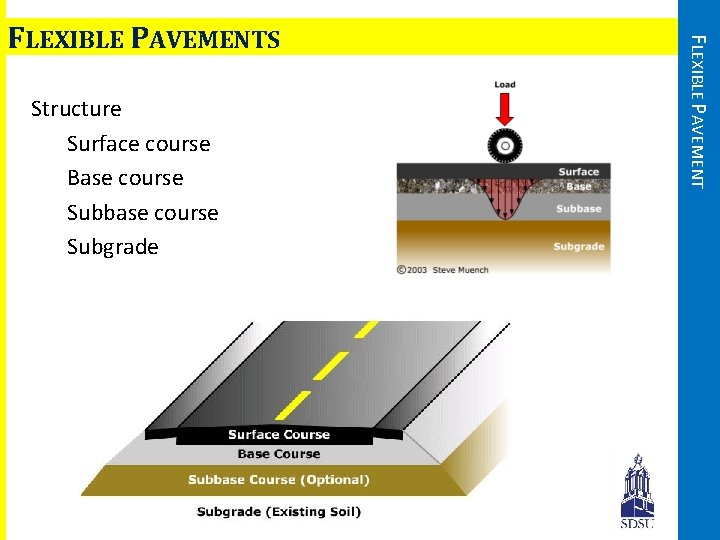
Structure Surface course Base course Subbase course Subgrade FLEXIBLE PAVEMENTS
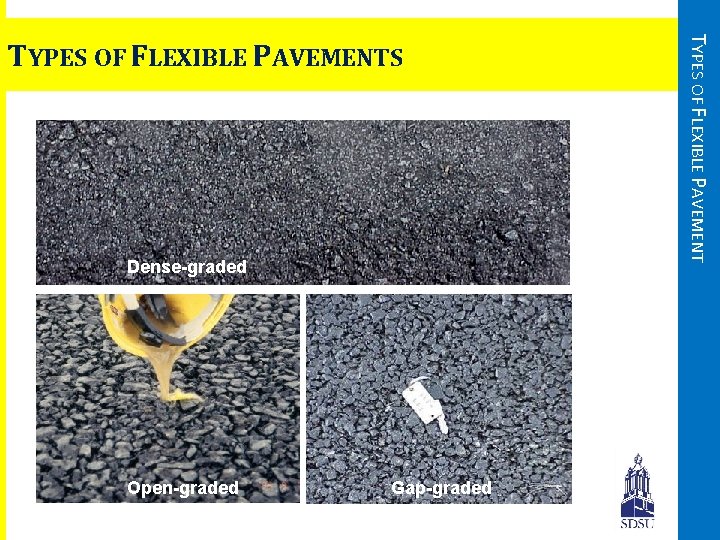
Dense-graded Open-graded Gap-graded TYPES OF FLEXIBLE PAVEMENTS

FLEXIBLE PAVEMENT – CONSTRUCTION FLEXIBLE PAVEMENTS - CONSTRUCTION
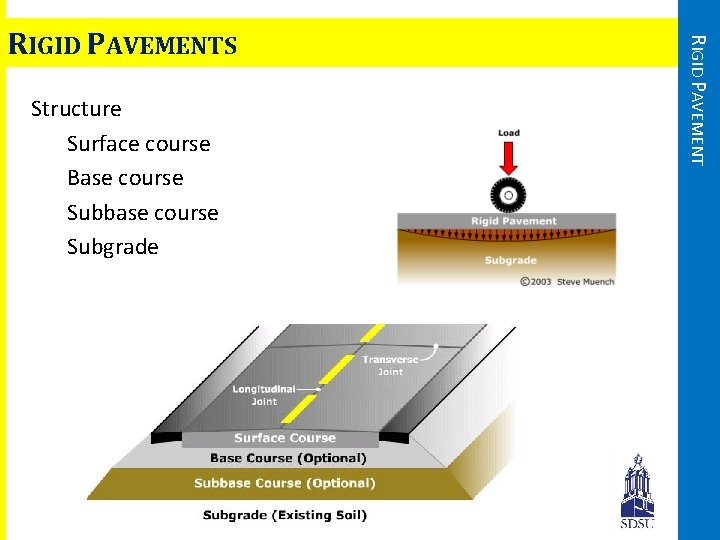
Structure Surface course Base course Subbase course Subgrade RIGID PAVEMENTS
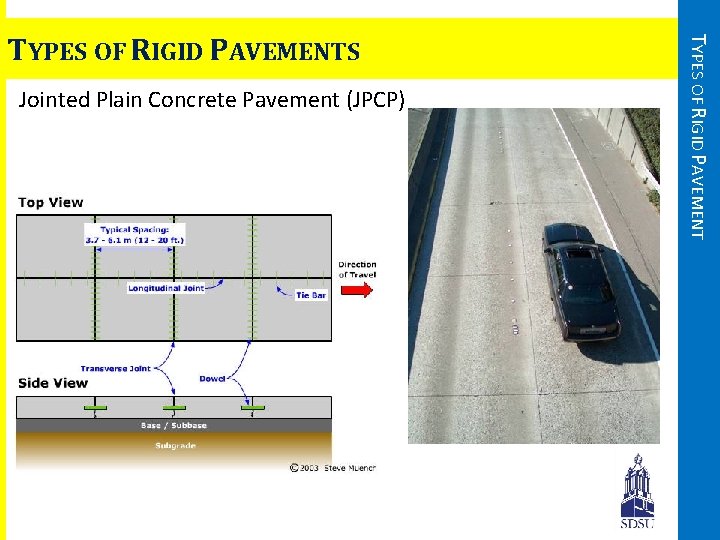
Jointed Plain Concrete Pavement (JPCP) TYPES OF RIGID PAVEMENTS
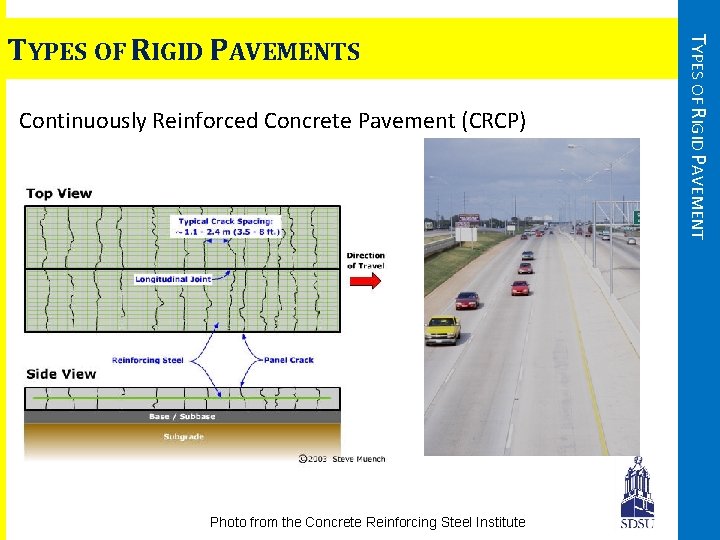
Continuously Reinforced Concrete Pavement (CRCP) Photo from the Concrete Reinforcing Steel Institute TYPES OF RIGID PAVEMENTS
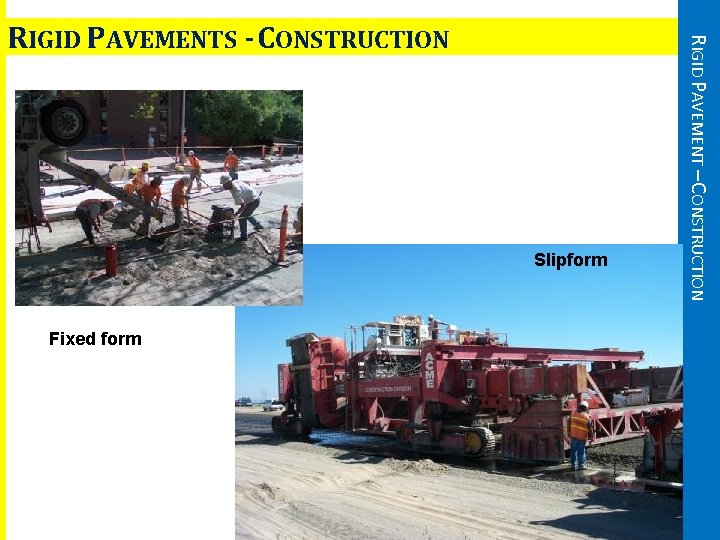
Slipform Fixed form RIGID PAVEMENT – CONSTRUCTION RIGID PAVEMENTS - CONSTRUCTION
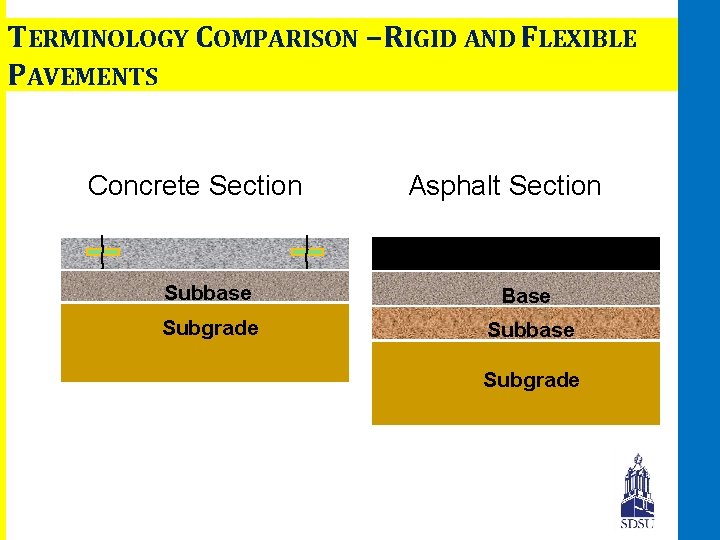
TERMINOLOGY COMPARISON – RIGID AND FLEXIBLE PAVEMENTS Concrete Section Asphalt Layer Subbase Base Subgrade Subbase Subgrade
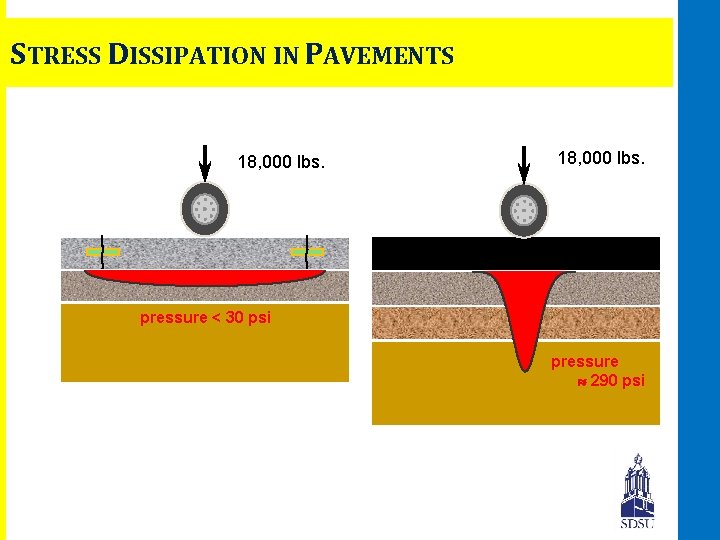
STRESS DISSIPATION IN PAVEMENTS 18, 000 lbs. Asphalt Layer pressure < 30 psi pressure » 290 psi
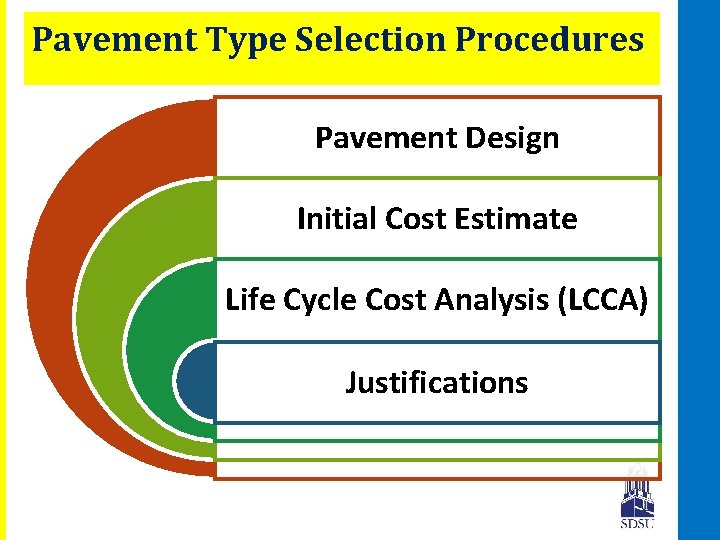
Pavement Type Selection Procedures Pavement Design Initial Cost Estimate Life Cycle Cost Analysis (LCCA) Justifications
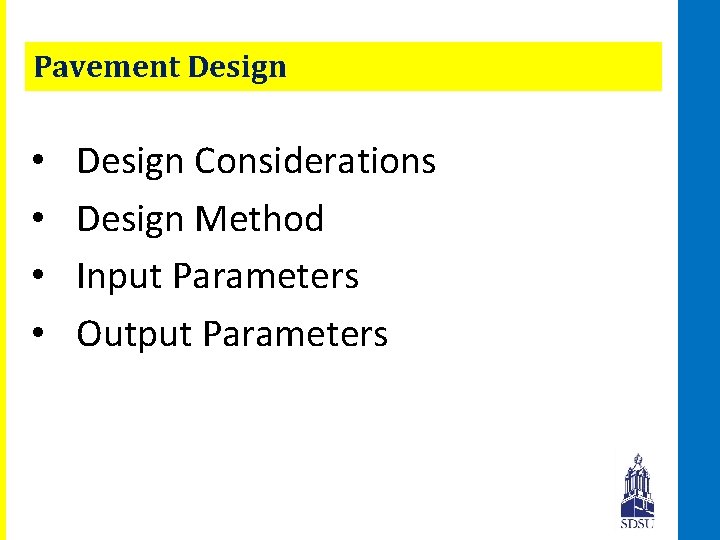
Pavement Design • • Design Considerations Design Method Input Parameters Output Parameters
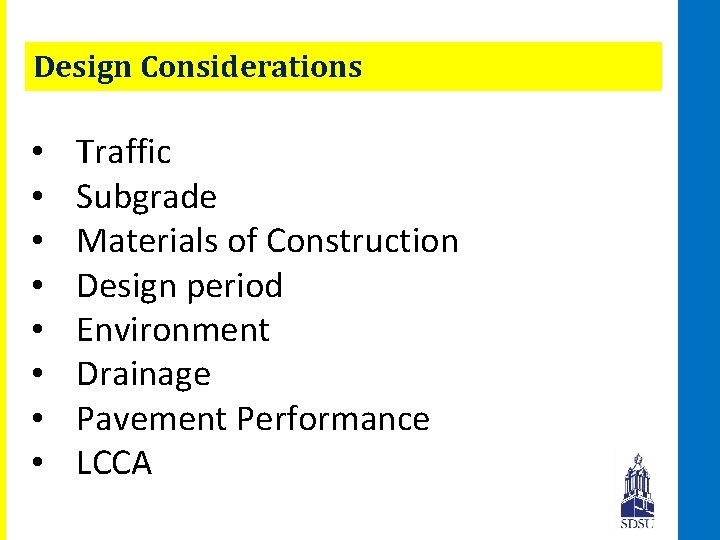
Design Considerations • • Traffic Subgrade Materials of Construction Design period Environment Drainage Pavement Performance LCCA
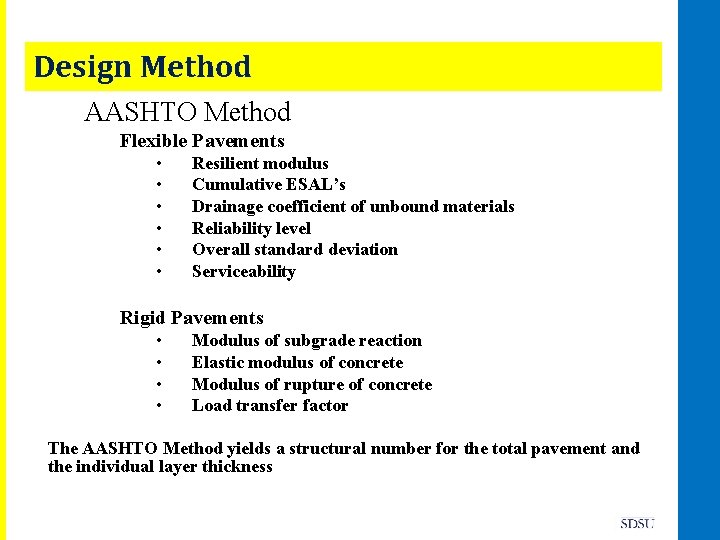
Design Method AASHTO Method Flexible Pavements • • • Resilient modulus Cumulative ESAL’s Drainage coefficient of unbound materials Reliability level Overall standard deviation Serviceability Rigid Pavements • • Modulus of subgrade reaction Elastic modulus of concrete Modulus of rupture of concrete Load transfer factor The AASHTO Method yields a structural number for the total pavement and the individual layer thickness
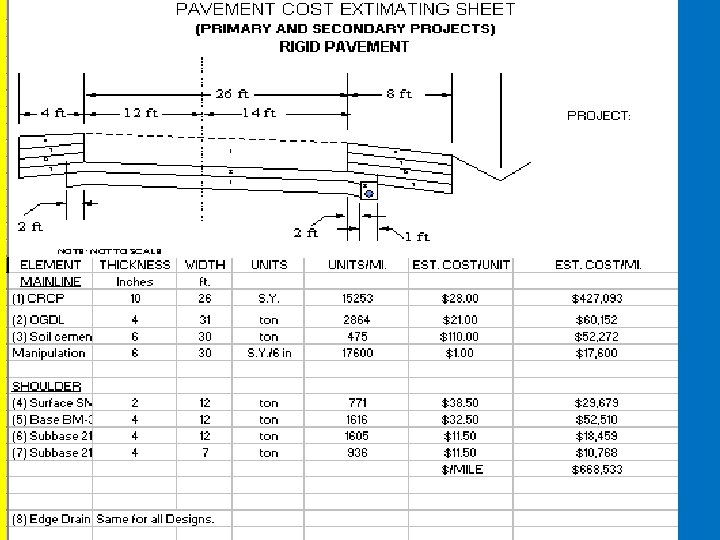
INITIAL COST ESTIMATES OF PAVING MATERIALS Planning Estimating System (PES) • Quantity • Location • Production Rate
LIFE CYCLE COST ANALYSIS • LCCA is an economic method used to compare alternatives that satisfy a need in order to determine the lowest cost. • Factors include the following: • Initial cost • Analysis period • Maintenance • Rehab • User cost • Reconstruction cost
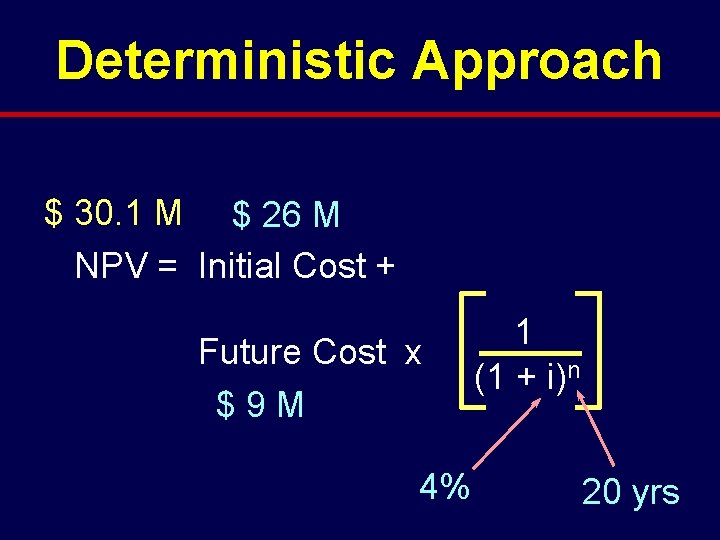
Deterministic Approach $ 30. 1 M $ 26 M NPV = Initial Cost + Future Cost x $9 M 4% 1 (1 + i)n 20 yrs

Monte Carlo Simulation Inputs $ % Results M O D E L Net Present Value

Combine variability of inputs generate probability distribution for results NPV = Initial Cost + Future Cost x 1 (1 + i)n
JUSTIFICATIONS A combination of LCCA and engineering judgment are documented to finalize the pavement type selection. When the net present worth of both types of pavements is within 10%, other factors are examined such as:
Traffic Soil characteristics Weather Construction consideration Recycling Cost comparison Performance of similar pavements in the area Adjacent existing pavement Conservation of materials and energy Municipal preference Local government preference Local industry
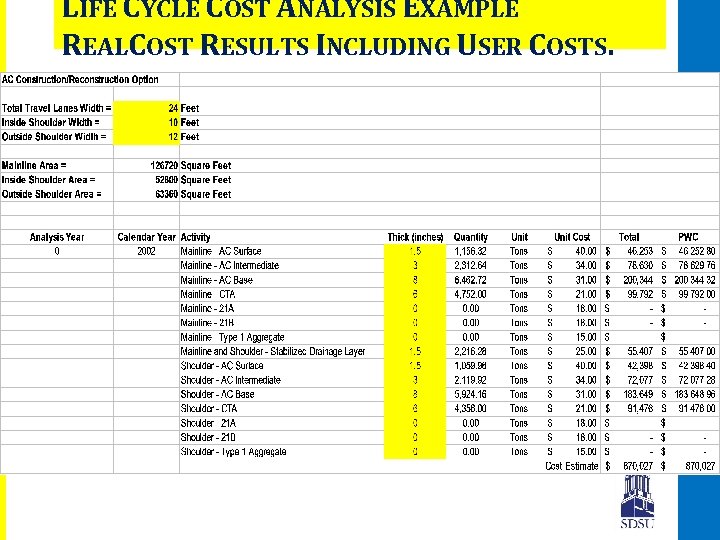
LIFE CYCLE COST ANALYSIS EXAMPLE REALCOST RESULTS INCLUDING USER COSTS.
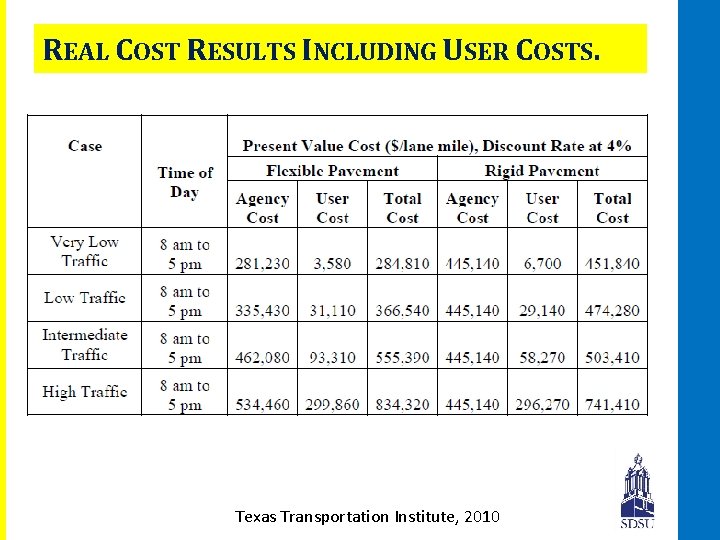
REAL COST RESULTS INCLUDING USER COSTS. Texas Transportation Institute, 2010
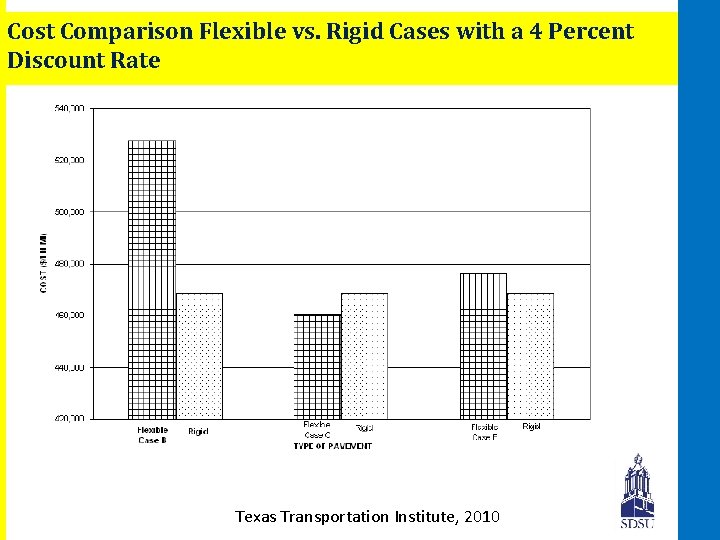
Cost Comparison Flexible vs. Rigid Cases with a 4 Percent Discount Rate Texas Transportation Institute, 2010
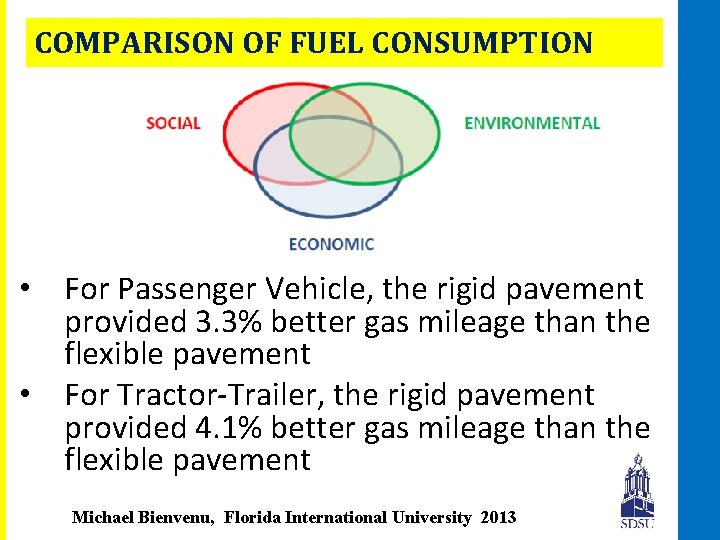
COMPARISON OF FUEL CONSUMPTION • For Passenger Vehicle, the rigid pavement provided 3. 3% better gas mileage than the flexible pavement • For Tractor-Trailer, the rigid pavement provided 4. 1% better gas mileage than the flexible pavement Michael Bienvenu, Florida International University 2013
Conclusion • Heavy Duty Flexible and Rigid pavements are all suitable for long life and low maintenance pavements. • Rigid pavements have a 40 year Design Life compared to 20 years for Flexible. This means that in the cost analysis, a major rehabilitation has to be included in Year 20 for the Flexible. • For pavement type selection, assessments should be carried out on technical, financial and economic factors. • When the net present worth of both types of pavements is within 10%, other factors are examined.

ANY QUESTIONS?
- Slides: 30