
Pavement Thickness Evaluation Using Ground Penetrating Radar Dwayne

![Related Work on Thickness Evaluation § § § [Berge et al, 1986] initial pavement](https://slidetodoc.com/presentation_image/03b1bbf9bf1affef2dd4e0c03df0a27f/image-7.jpg "Related Work on Thickness Evaluation § § § [Berge et al, 1986] initial pavement")






- Slides: 57
Pavement Thickness Evaluation Using Ground Penetrating Radar Dwayne Harris Presented for Final Exam
OUTLINE § § § Introduction Fundamentals of GPR Interpretation of GPR data Methodologies for Thickness Evaluation GPR Data Quality Validation of Methodologies
Introduction § Background on pavement thickness evaluation § Literature review
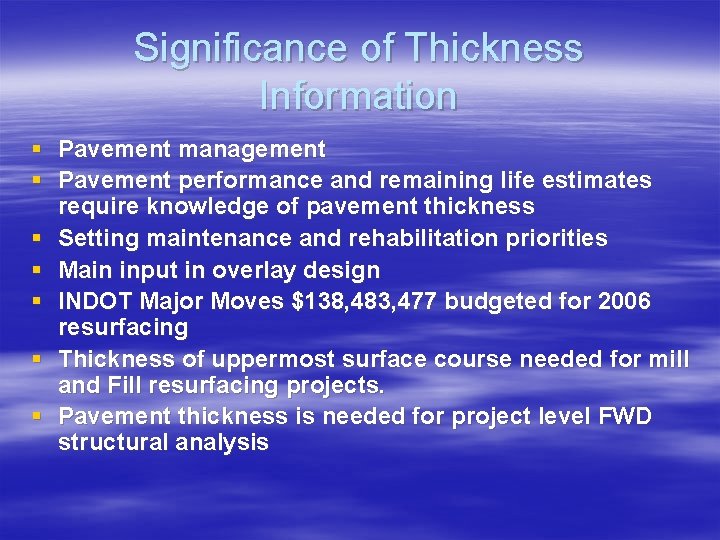
Significance of Thickness Information § Pavement management § Pavement performance and remaining life estimates require knowledge of pavement thickness § Setting maintenance and rehabilitation priorities § Main input in overlay design § INDOT Major Moves $138, 483, 477 budgeted for 2006 resurfacing § Thickness of uppermost surface course needed for mill and Fill resurfacing projects. § Pavement thickness is needed for project level FWD structural analysis
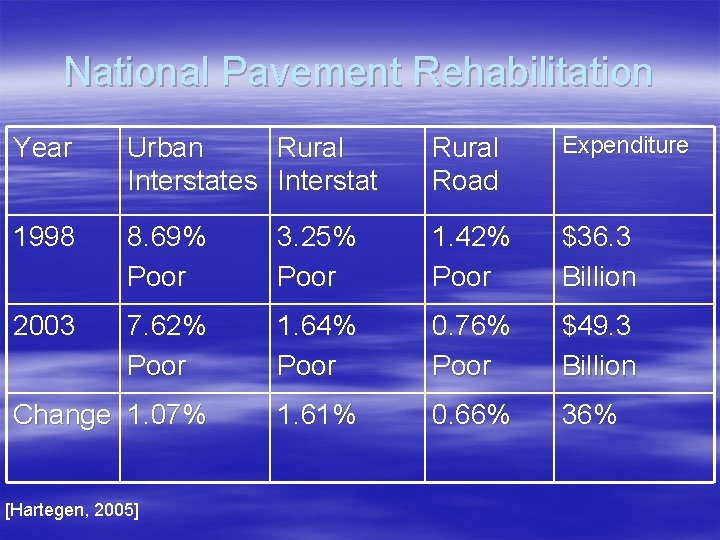
National Pavement Rehabilitation Year Urban Rural Interstates Interstat Rural Road Expenditure 1998 8. 69% Poor 3. 25% Poor 1. 42% Poor $36. 3 Billion 2003 7. 62% Poor 1. 64% Poor 0. 76% Poor $49. 3 Billion Change 1. 07% 1. 61% 0. 66% 36% [Hartegen, 2005]
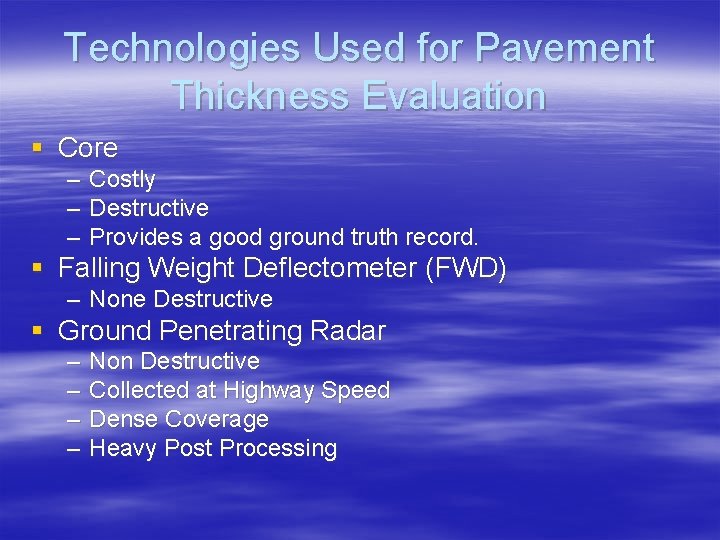
Technologies Used for Pavement Thickness Evaluation § Core – – – Costly Destructive Provides a good ground truth record. § Falling Weight Deflectometer (FWD) – None Destructive § Ground Penetrating Radar – – Non Destructive Collected at Highway Speed Dense Coverage Heavy Post Processing
Related Work on Thickness Evaluation § § § [Berge et al, 1986] initial pavement thickness studies [Livneh and Siddiqui, 1992] mathematical model [Fernando, 2000; Scullion and Saarenketo, 2002] automated interface identification § [Al-Quadi et al, 2005] model expanded to three or more layers Summary § There are multiple models available for pavement thickness evaluation – The model selected for this study is utilized for a large majority of the studies § Current literature suggests using semi-automatic data interpretation methodologies
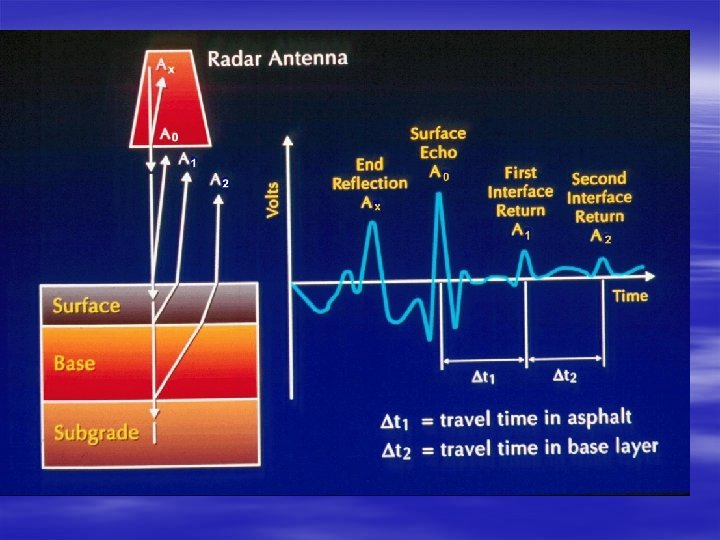
Fundamentals § GPR trace and waveforms and data presentations § Mathematical model
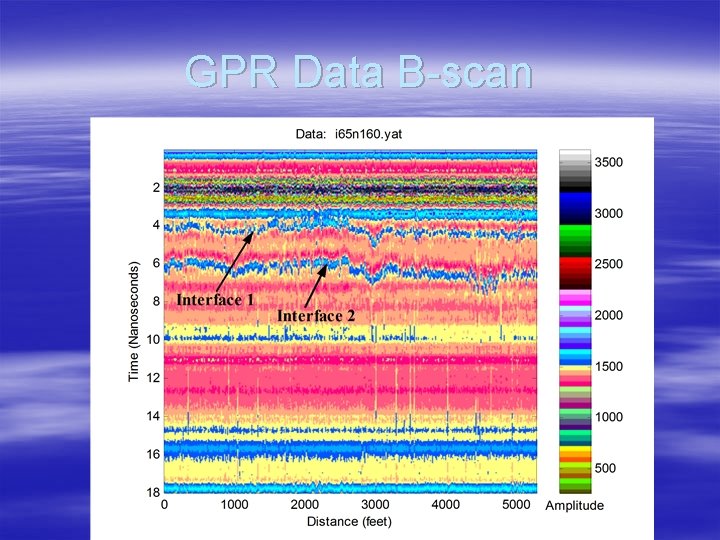
GPR Data B-scan
EM Wave Propagation Velocity
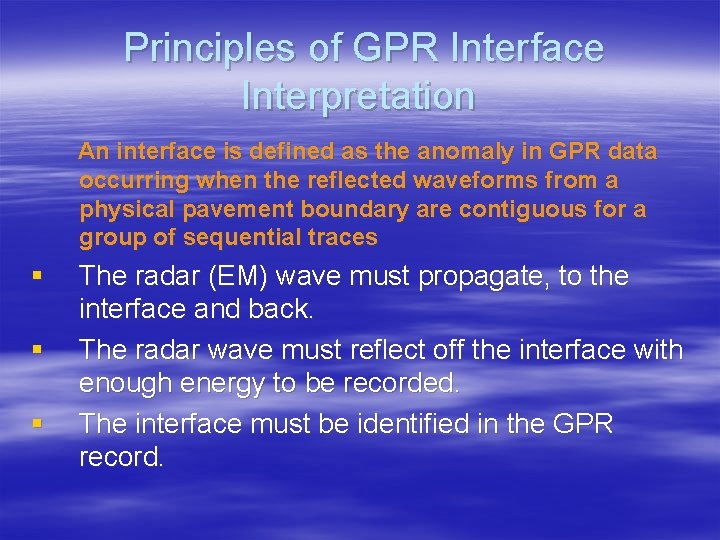
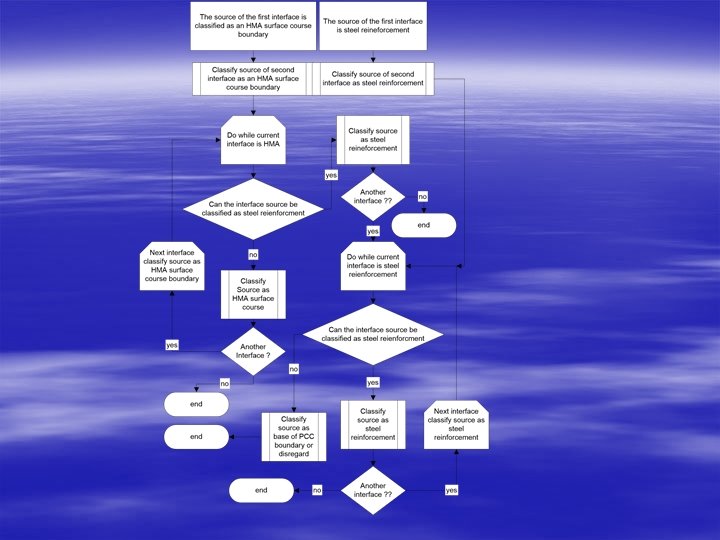
Principles of GPR Interface Interpretation An interface is defined as the anomaly in GPR data occurring when the reflected waveforms from a physical pavement boundary are contiguous for a group of sequential traces § § § The radar (EM) wave must propagate, to the interface and back. The radar wave must reflect off the interface with enough energy to be recorded. The interface must be identified in the GPR record.
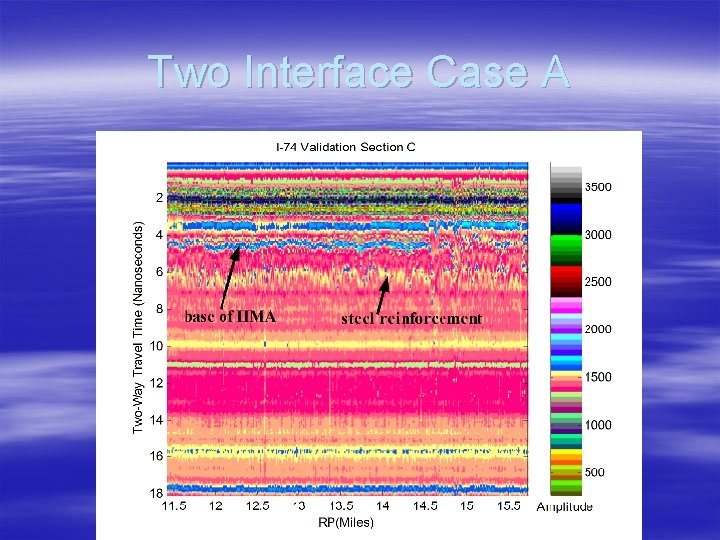
Two Interface Case A
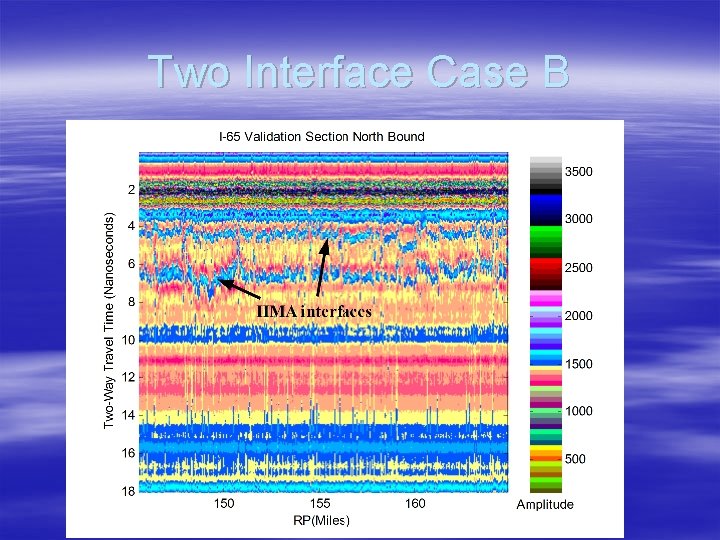
Two Interface Case B
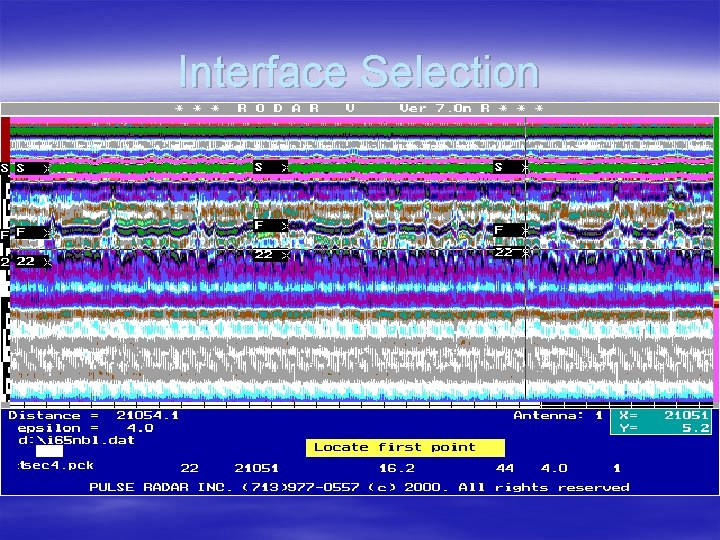
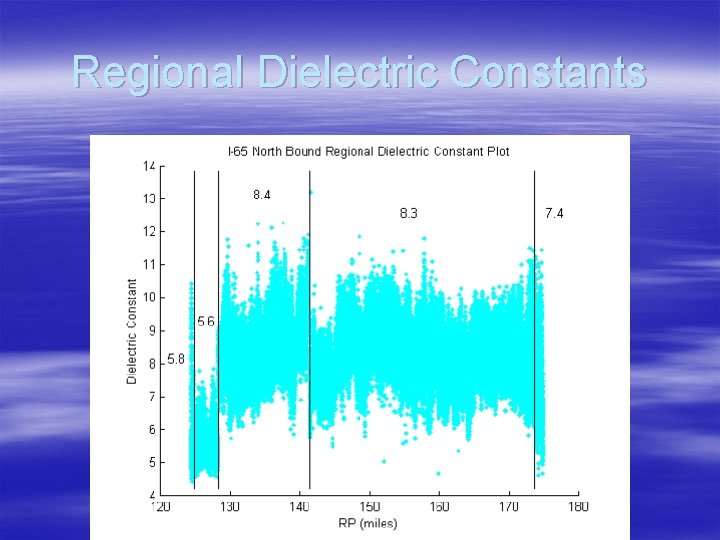
Methodologies for Thickness Evaluation (regional M 1) § Top layer methodology – Discontinuities are located in data – Interfaces are identified in the data – Regional dielectric constants are determined – Thickness values are calculated for each mile – Enhanced to calculate thickness using dielectric constants from individual traces
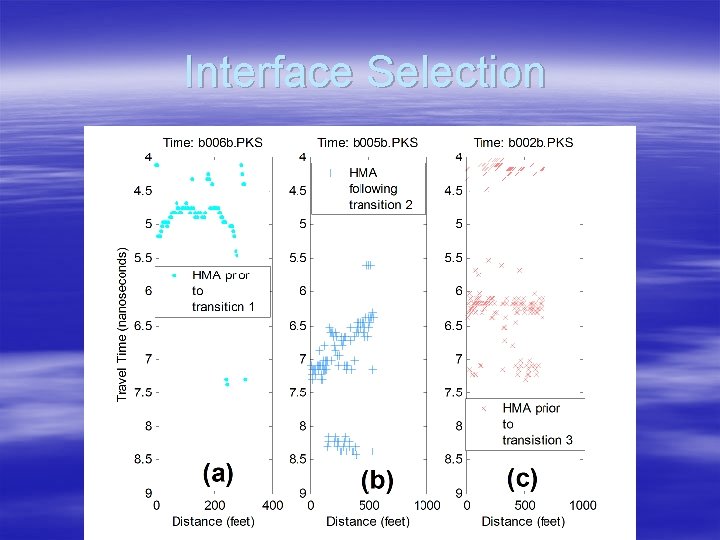
Interface Selection
Regional Dielectric Constants
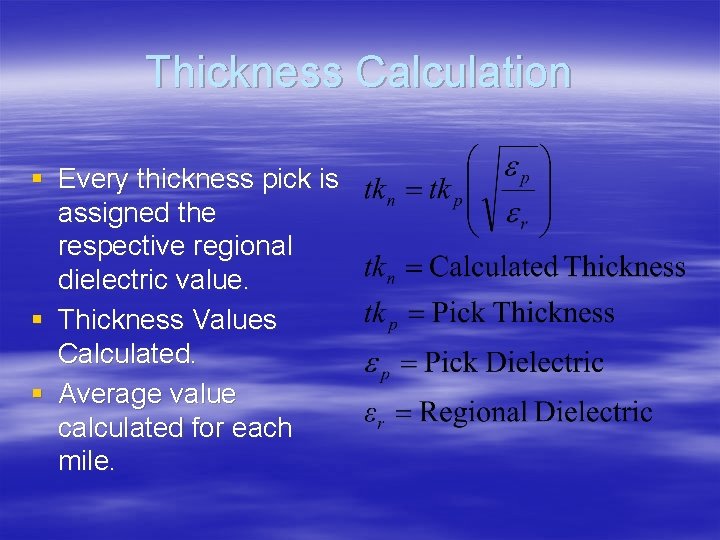
Thickness Calculation § Every thickness pick is assigned the respective regional dielectric value. § Thickness Values Calculated. § Average value calculated for each mile.
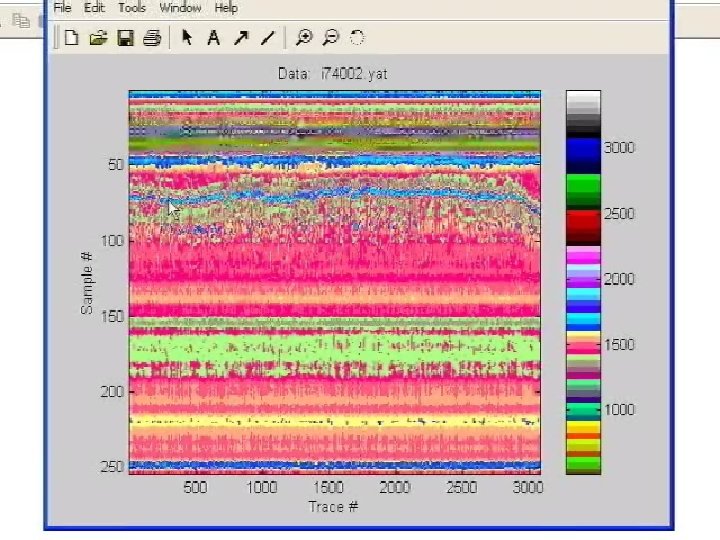
Multiple Layer Methodology (M 2) § § § Determine the layers to be modeled Form data set of possible interfaces Select interfaces to be modeled Calculate thickness values Present the thicknesses in a visually acute format allowing for proper interpretation
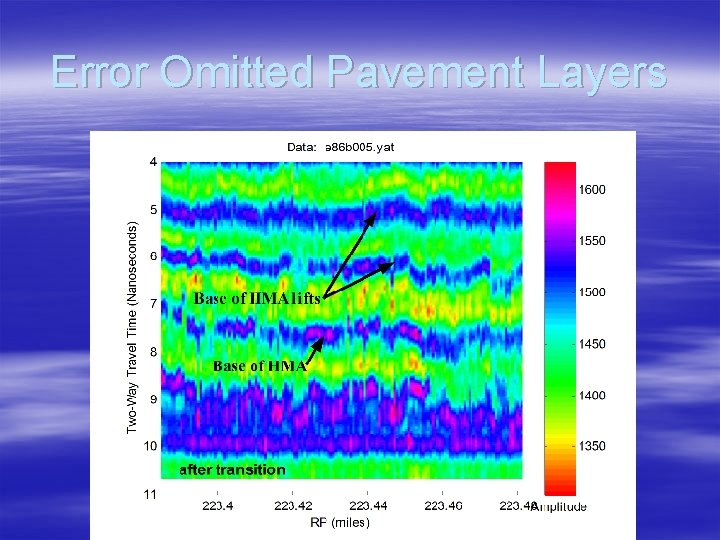
Quality of GPR Data § Blunders – Improper waveform selection – Omitted pavement layers § Systematic errors – Travel time systematic error – Velocity systematic error § Random errors – Error propagation
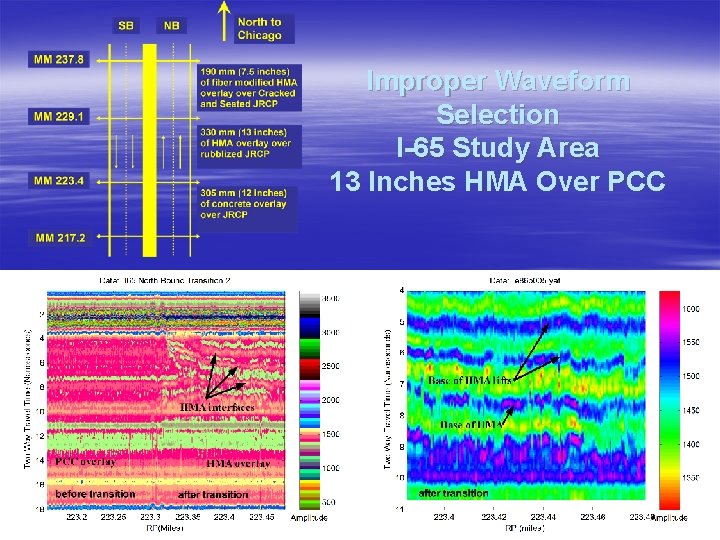
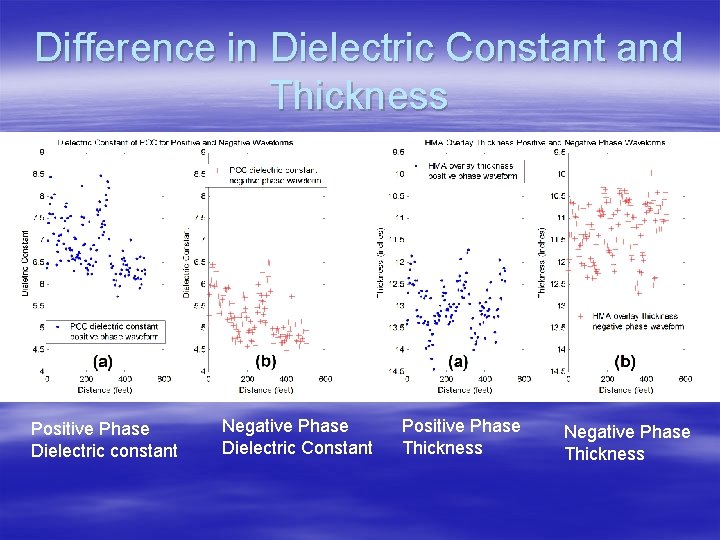
Improper Waveform Selection I-65 Study Area 13 Inches HMA Over PCC
Interface Selection
Difference in Dielectric Constant and Thickness Positive Phase Dielectric constant Negative Phase Dielectric Constant Positive Phase Thickness Negative Phase Thickness
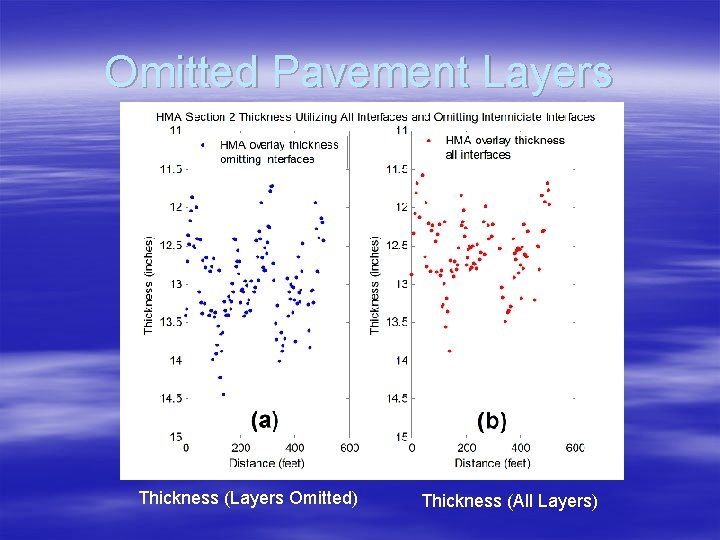
Error Omitted Pavement Layers
Omitted Pavement Layers Thickness (Layers Omitted) Thickness (All Layers)
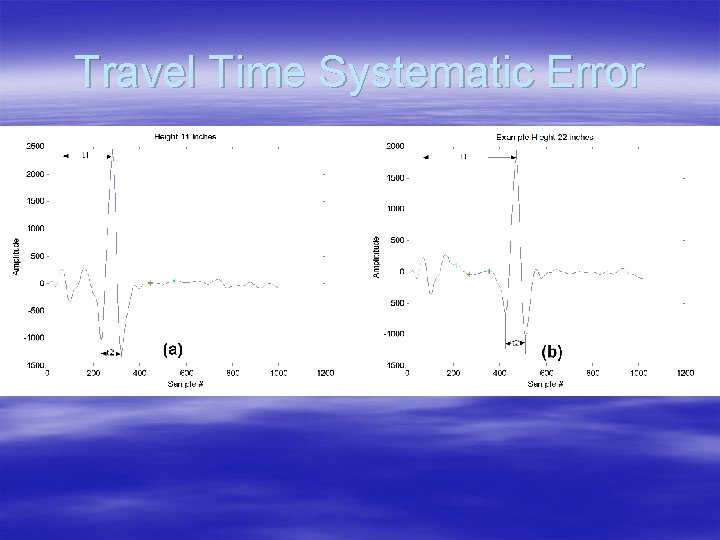
Travel Time Systematic Error
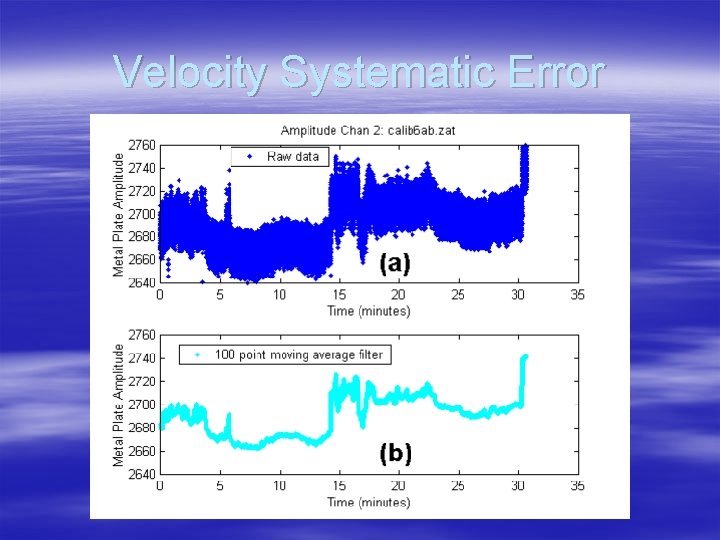
Velocity Systematic Error
Random Error
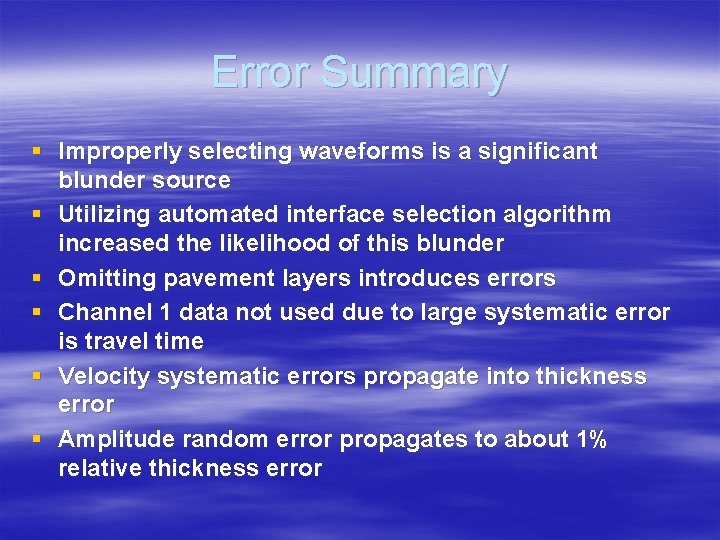
Error Summary § Improperly selecting waveforms is a significant blunder source § Utilizing automated interface selection algorithm increased the likelihood of this blunder § Omitting pavement layers introduces errors § Channel 1 data not used due to large systematic error is travel time § Velocity systematic errors propagate into thickness error § Amplitude random error propagates to about 1% relative thickness error
Validation of Methodologies § § § Comparison with 3 rd party Software Comparison of methodologies developed Thickness variation Network thickness study GPR thickness evaluation accuracy
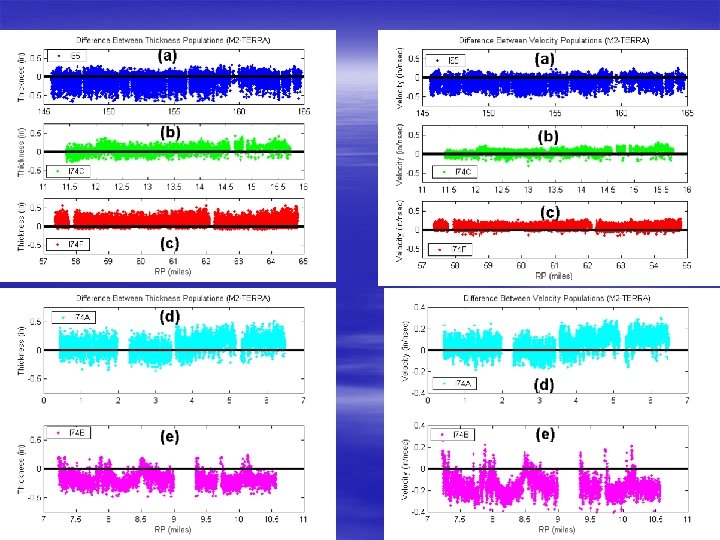
Thickness Comparisons § Seven pavement sections of three interstates. § Pavement sections of three state roads § Five pavement sections of two interstates used for 3 rd party comparison
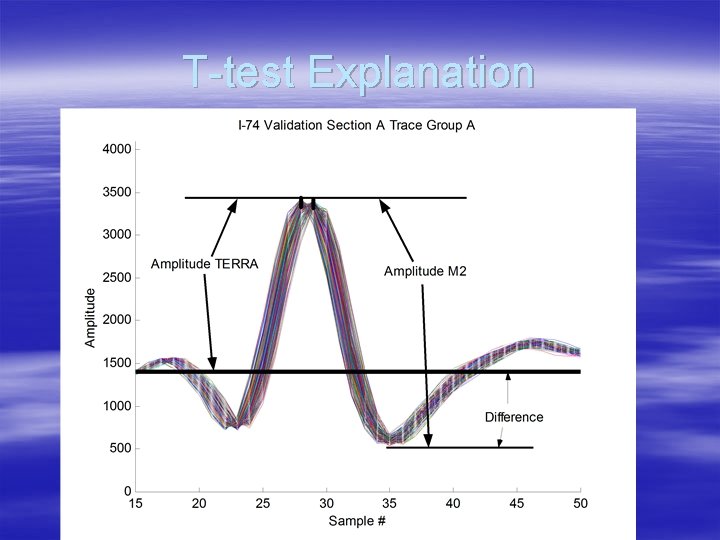
Statistical Analysis (M 2 vs TERRA) § § Population Intersection Split into 50 or 25 foot subsections Normality, F test, and T-test analysis Explanation of T-test results
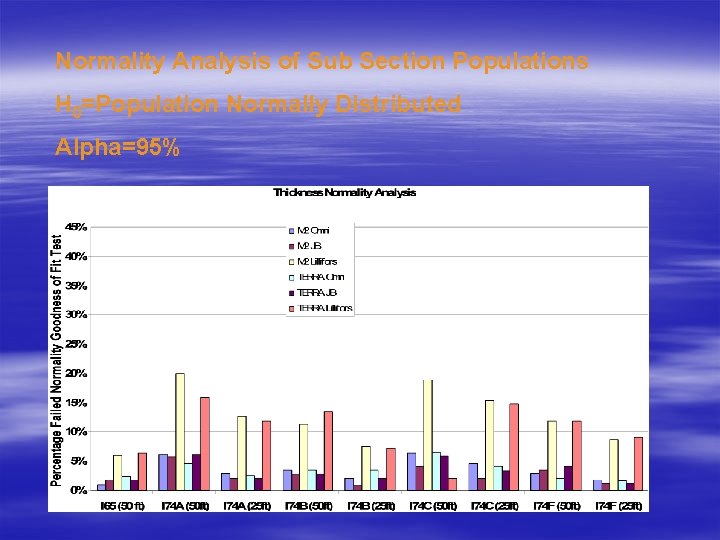
Normality Analysis of Sub Section Populations H 0=Population Normally Distributed Alpha=95%
Equality of Means and Variance Analysis of Sub Section Populations H 0=Populations Have Same Variance Alpha=95% H 0=Populations Have Same Means Alpha=99%
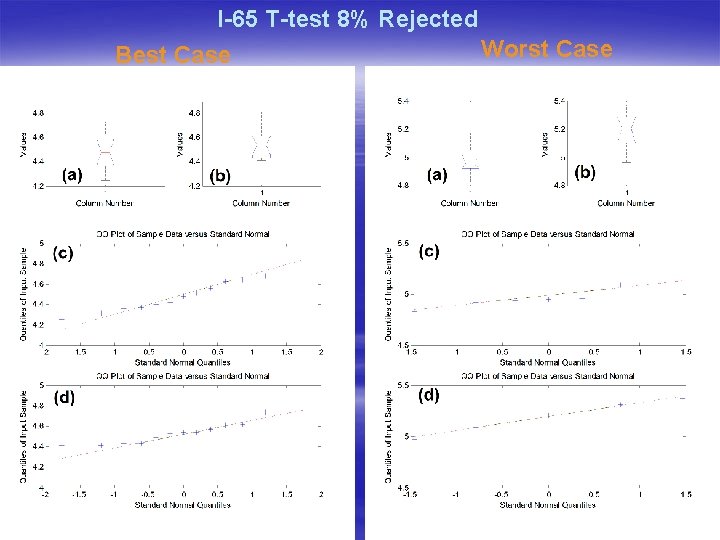
I-65 T-test 8% Rejected Worst Case Best Case
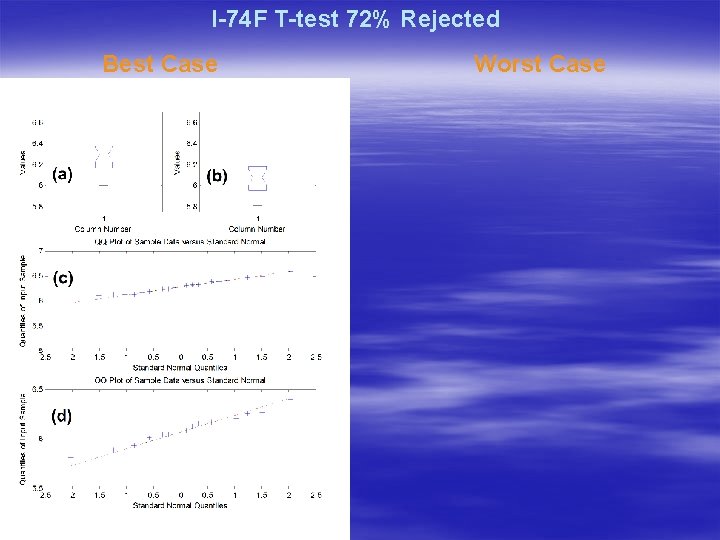
I-74 F T-test 72% Rejected Best Case Worst Case
T-test Explanation
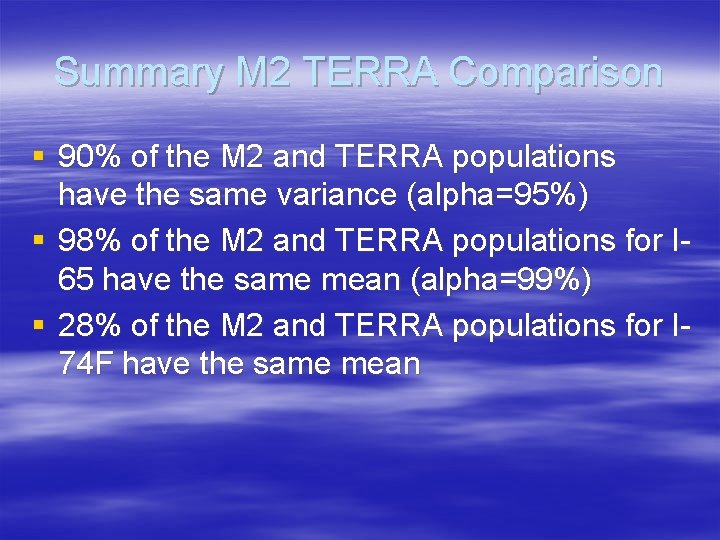
Summary M 2 TERRA Comparison § 90% of the M 2 and TERRA populations have the same variance (alpha=95%) § 98% of the M 2 and TERRA populations for I 65 have the same mean (alpha=99%) § 28% of the M 2 and TERRA populations for I 74 F have the same mean
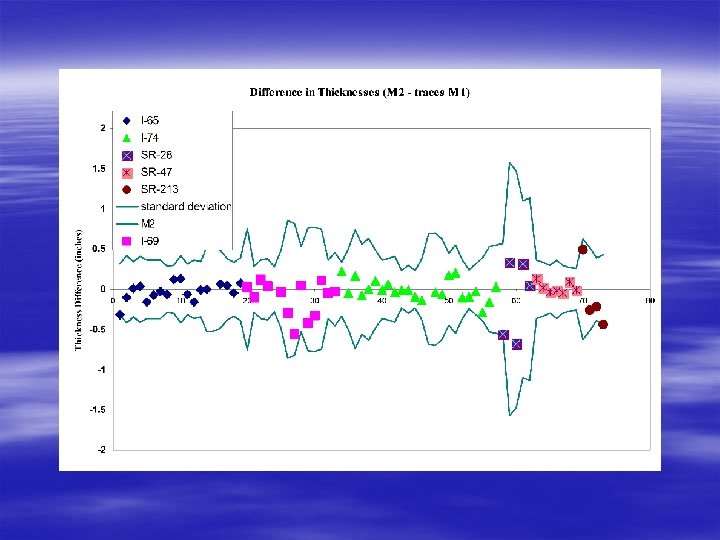
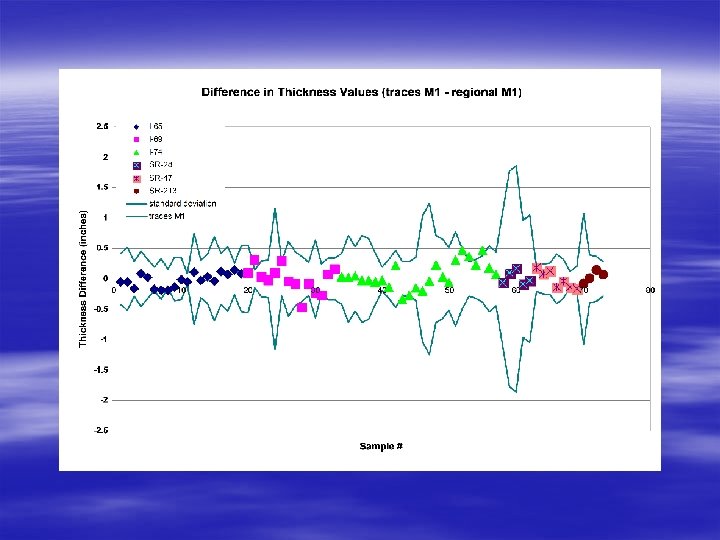
Methodology Comparisons § Effect of sample size § Effect of using regional dielectric constant
Network Thickness Evaluation Over 1, 600 Miles Evaluated Uppermost Surface Course Thickness Evaluated with GPR Using Regional M 1 Method Pavement Structure Thickness Evaluated with FWD
Network Thickness Evaluation § A majority of the INDOT interstate system is 25 inches thick with an uppermost surface course thickness of 5 to 7 inches of HMA. § GPR provided reasonable estimates of the uppermost surface course thickness § FWD provided reasonable estimates of the pavement structure thickness
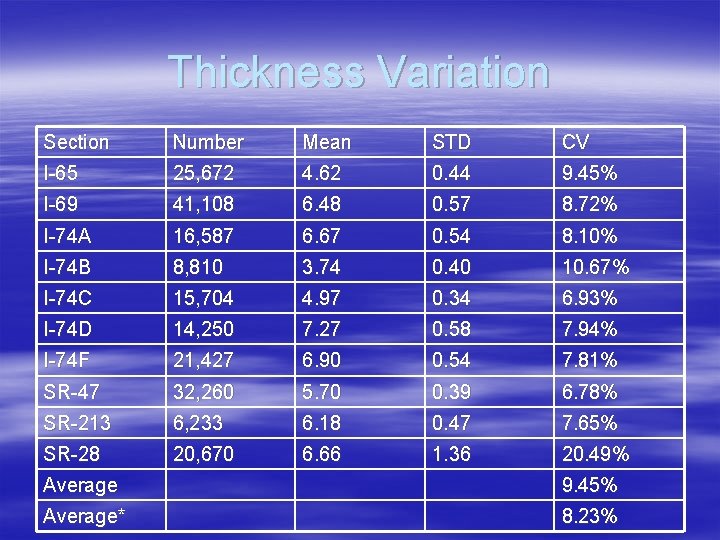
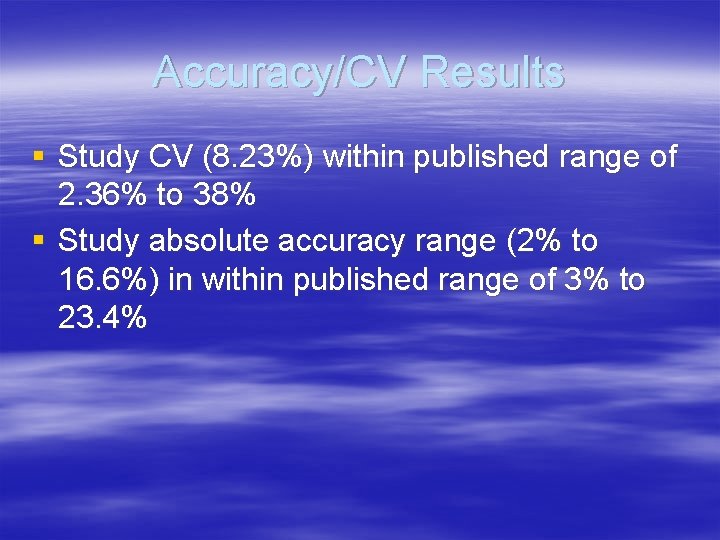
Thickness Variation Section Number Mean STD CV I-65 25, 672 4. 62 0. 44 9. 45% I-69 41, 108 6. 48 0. 57 8. 72% I-74 A 16, 587 6. 67 0. 54 8. 10% I-74 B 8, 810 3. 74 0. 40 10. 67% I-74 C 15, 704 4. 97 0. 34 6. 93% I-74 D 14, 250 7. 27 0. 58 7. 94% I-74 F 21, 427 6. 90 0. 54 7. 81% SR-47 32, 260 5. 70 0. 39 6. 78% SR-213 6, 233 6. 18 0. 47 7. 65% SR-28 20, 670 6. 66 1. 36 20. 49% Average 9. 45% Average* 8. 23%
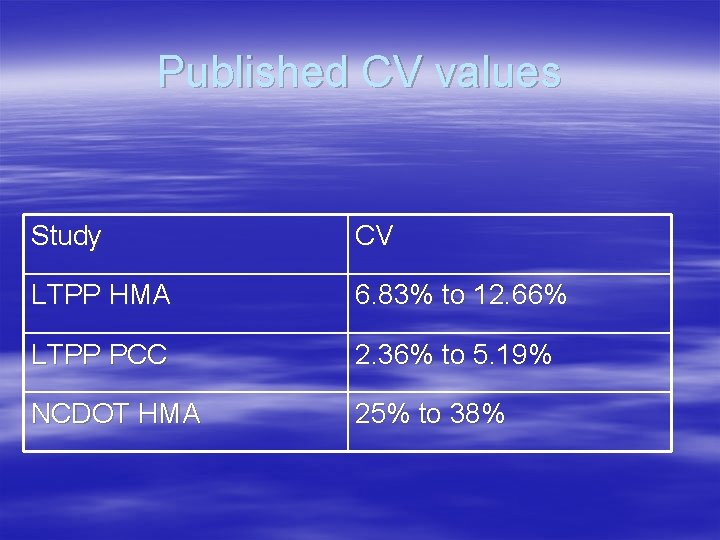
Published CV values Study CV LTPP HMA 6. 83% to 12. 66% LTPP PCC 2. 36% to 5. 19% NCDOT HMA 25% to 38%
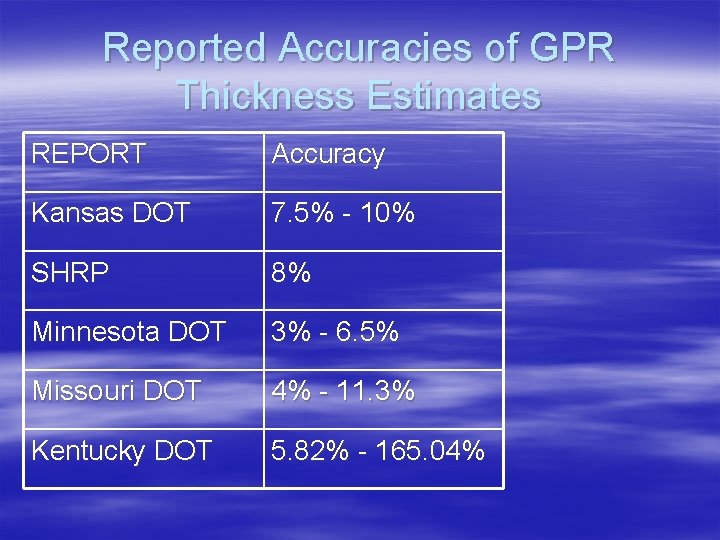
Reported Accuracies of GPR Thickness Estimates REPORT Accuracy Kansas DOT 7. 5% - 10% SHRP 8% Minnesota DOT 3% - 6. 5% Missouri DOT 4% - 11. 3% Kentucky DOT 5. 82% - 165. 04%
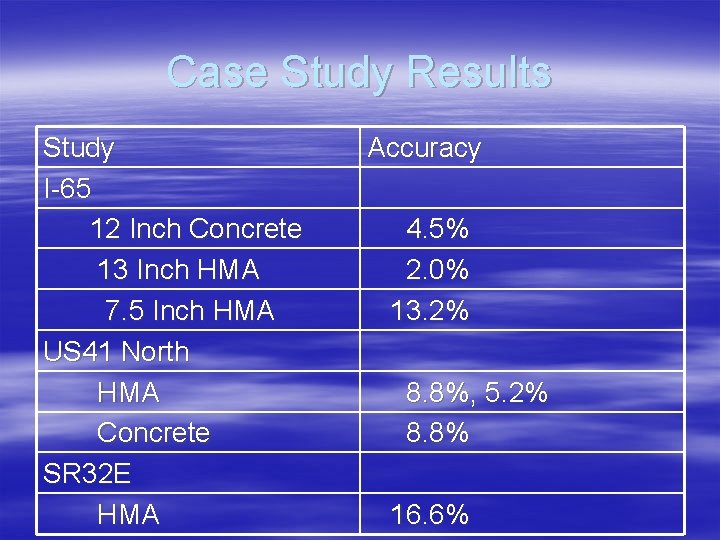
Case Study Results Study I-65 12 Inch Concrete 13 Inch HMA 7. 5 Inch HMA US 41 North HMA Concrete SR 32 E HMA Accuracy 4. 5% 2. 0% 13. 2% 8. 8%, 5. 2% 8. 8% 16. 6%
Accuracy/CV Results § Study CV (8. 23%) within published range of 2. 36% to 38% § Study absolute accuracy range (2% to 16. 6%) in within published range of 3% to 23. 4%
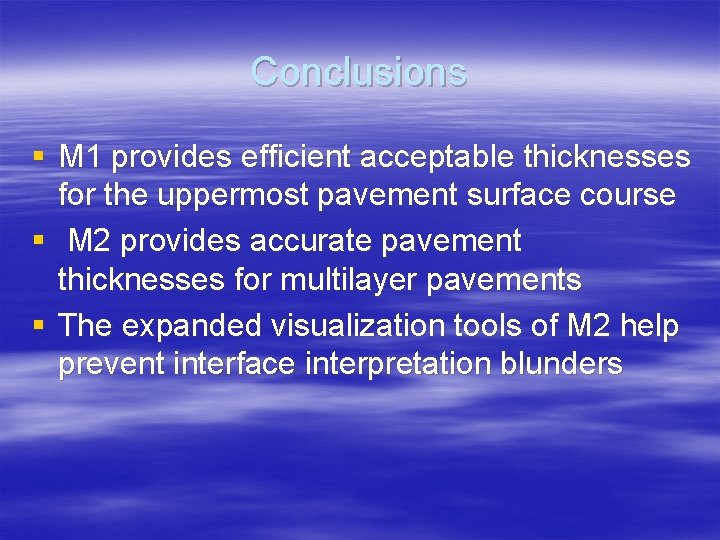
Conclusions § M 1 provides efficient acceptable thicknesses for the uppermost pavement surface course § M 2 provides accurate pavement thicknesses for multilayer pavements § The expanded visualization tools of M 2 help prevent interface interpretation blunders
Conclusions Continued § Likelihood of interface interpretation blunders increases when automated interface selection and tracking algorithm § The process of evaluating pavement thickness with GPR has not progressed to the point of eliminating a trained GPR interpreter § Study absolute accuracy range (2% to 16. 6%) within published range of 3% to 23. 4%