
PAVEMENT AND CURB MARKINGS Done by Abdullah Eawada
PAVEMENT AND CURB MARKINGS Done by: Abdullah Eawada Mohammed Habboub Presented to: Dr. Esam Almasri
Why Using Pavement Markings?
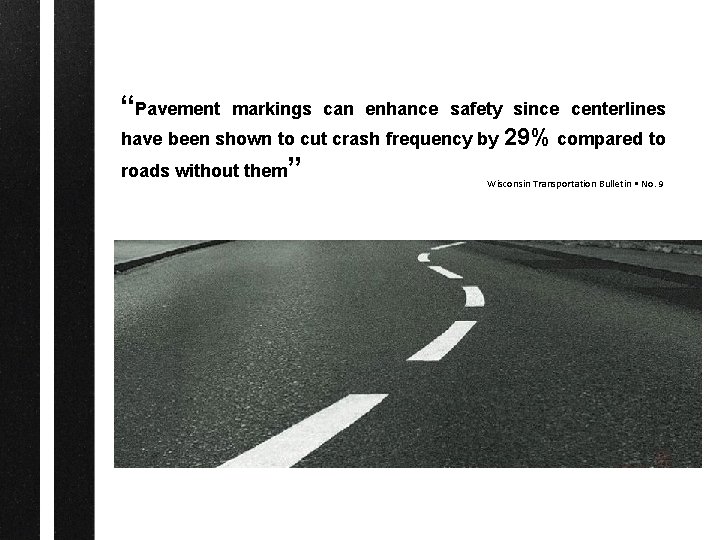
“Pavement markings can enhance safety since centerlines have been shown to cut crash frequency by roads without them” 29% compared to Wisconsin Transportation Bulletin • No. 9
Limitation VS. Advantages
Limitations: 1. Obliterated by snow 2. Not clearly visible when wet 3. Not very durable under heavy traffic 4. Need refreshment every year or more Advantages: 1. conveying information to drivers without diverting their attention from the road. 2. Inexpensive
Markings Standards:
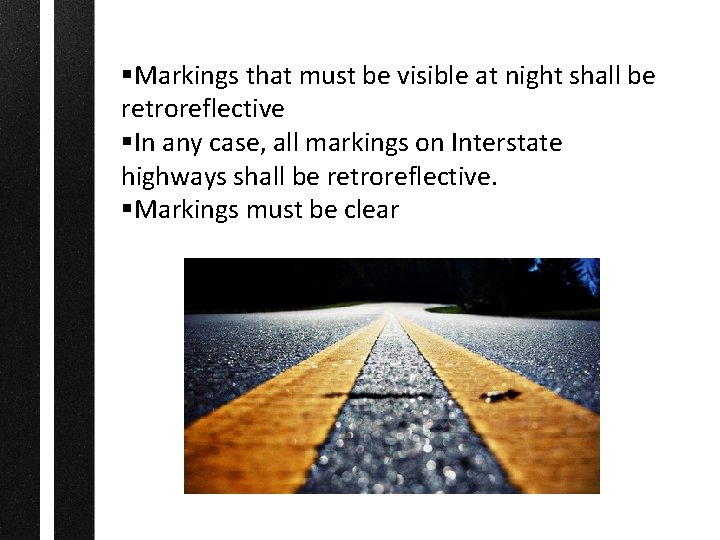
§Markings that must be visible at night shall be retroreflective §In any case, all markings on Interstate highways shall be retroreflective. §Markings must be clear
Markings Colors:
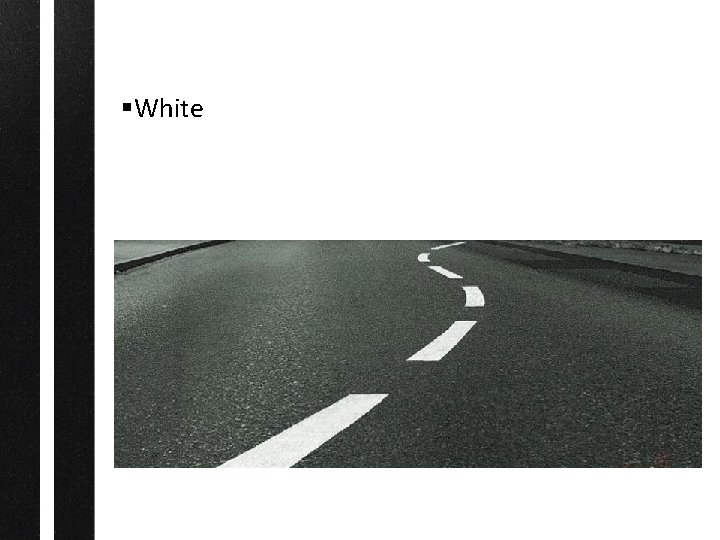
§White
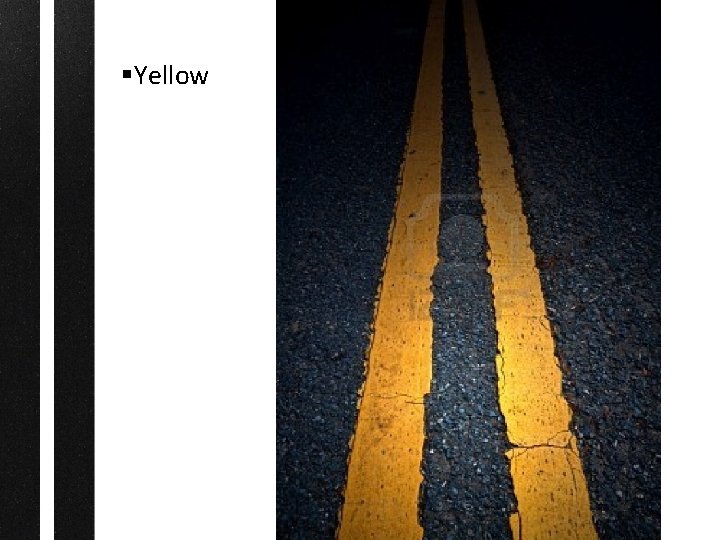
§Yellow
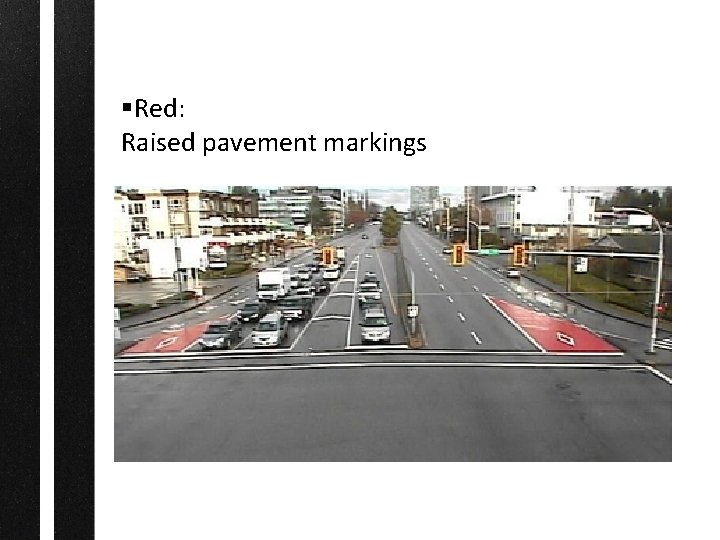
§Red: Raised pavement markings
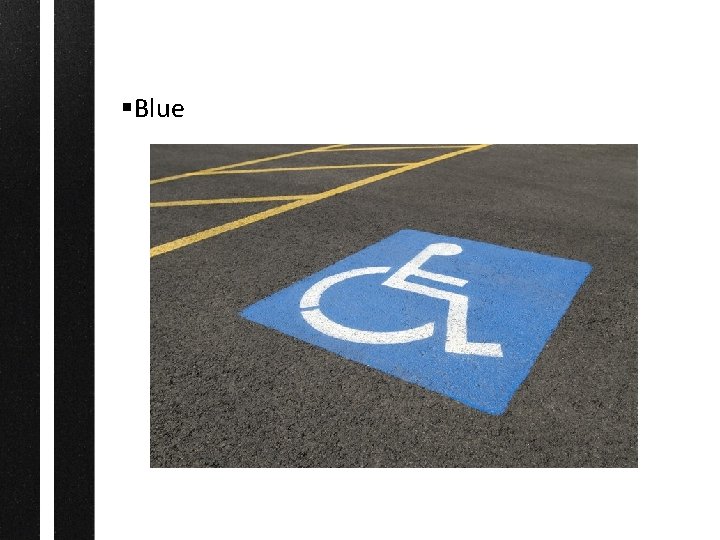
§Blue
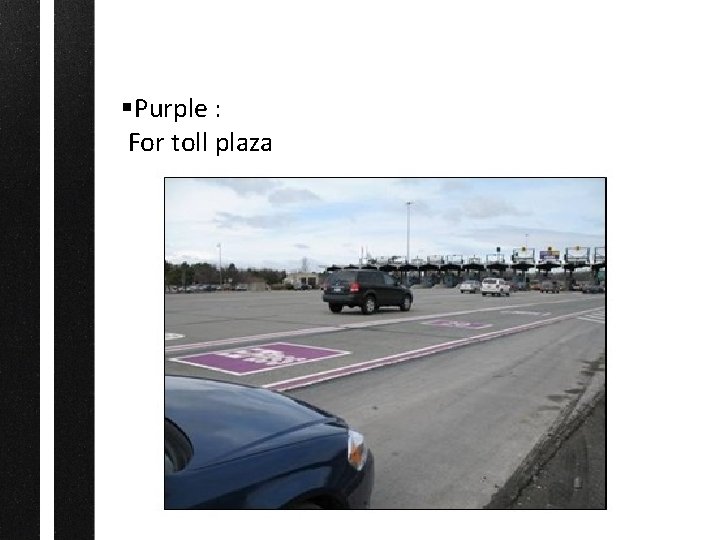
§Purple : For toll plaza
Markings Categories: §Longitudinal §Transverse
I) Longitudinal Lines: A. Yellow B. White
A. § § § Yellow Lines: Center Line No-Passing Zone Other
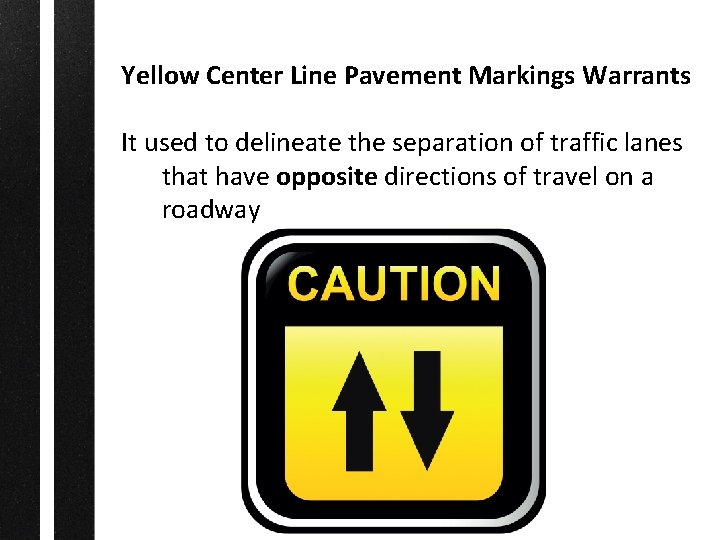
Yellow Center Line Pavement Markings Warrants It used to delineate the separation of traffic lanes that have opposite directions of travel on a roadway
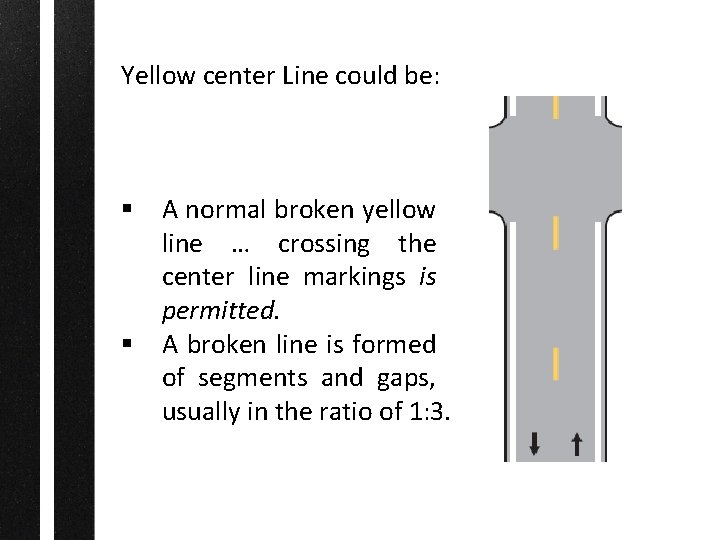
Yellow center Line could be: § A normal broken yellow line … crossing the center line markings is permitted. § A broken line is formed of segments and gaps, usually in the ratio of 1: 3.
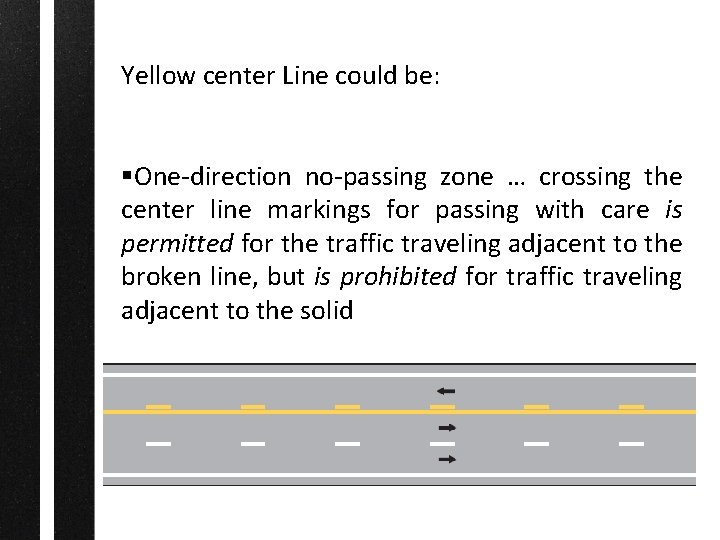
Yellow center Line could be: §One-direction no-passing zone … crossing the center line markings for passing with care is permitted for the traffic traveling adjacent to the broken line, but is prohibited for traffic traveling adjacent to the solid
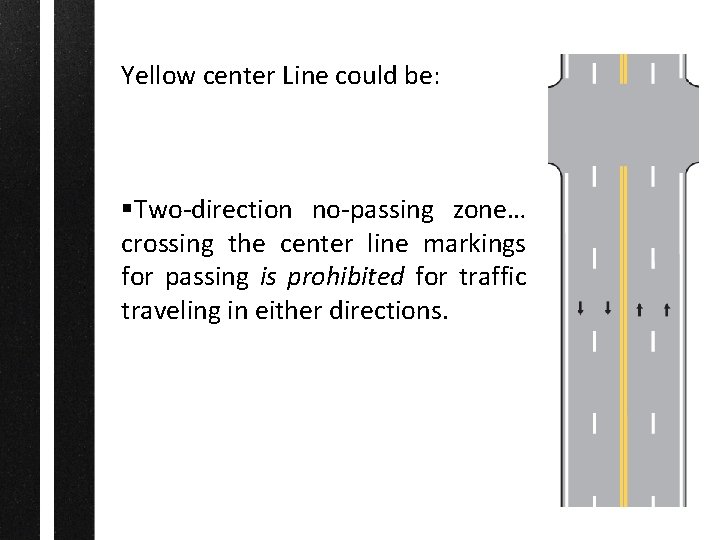
Yellow center Line could be: §Two-direction no-passing zone… crossing the center line markings for passing is prohibited for traffic traveling in either directions.
§ Yellow center Line should be placed in: § Urban arterials and collectors that is: § 20 feet or more in width and § ADT of 6, 000 vehicles per day or greater. § All rural arterials and collectors that is: § 18 feet or more in width and § ADT of 3, 000 vehicles per day or greater. § All two-way streets or highways that have three or more lanes.
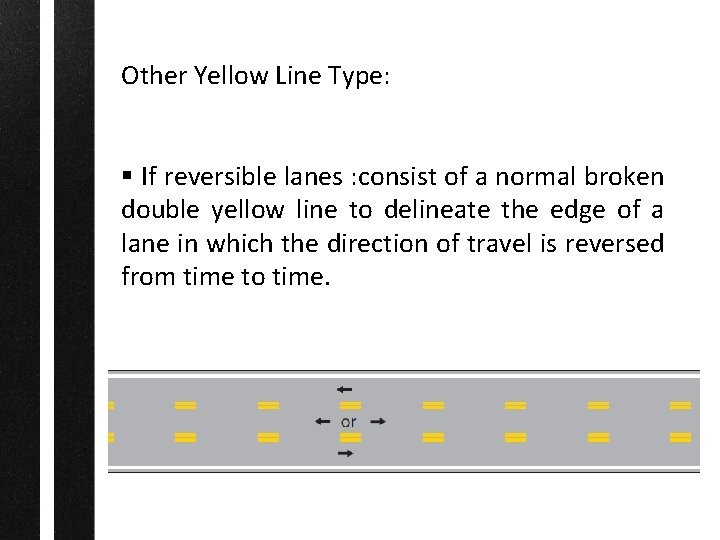
Other Yellow Line Type: § If reversible lanes : consist of a normal broken double yellow line to delineate the edge of a lane in which the direction of travel is reversed from time to time.
B. White Lines:
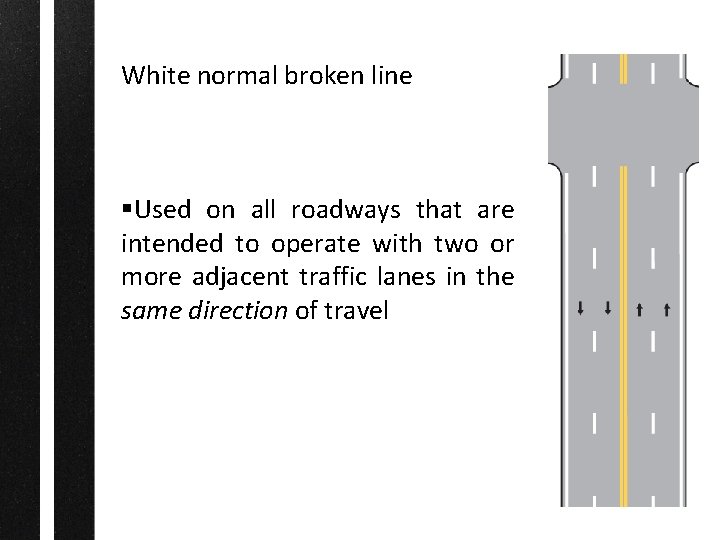
White normal broken line §Used on all roadways that are intended to operate with two or more adjacent traffic lanes in the same direction of travel
White dotted line Used to separate a through lane that is : 1. A deceleration or acceleration lane. 2. A through lane that becomes a mandatory exit or turn lane. They have noticeably shorter segments: for example, a 2’ line and a 2’ to 6’ gap.
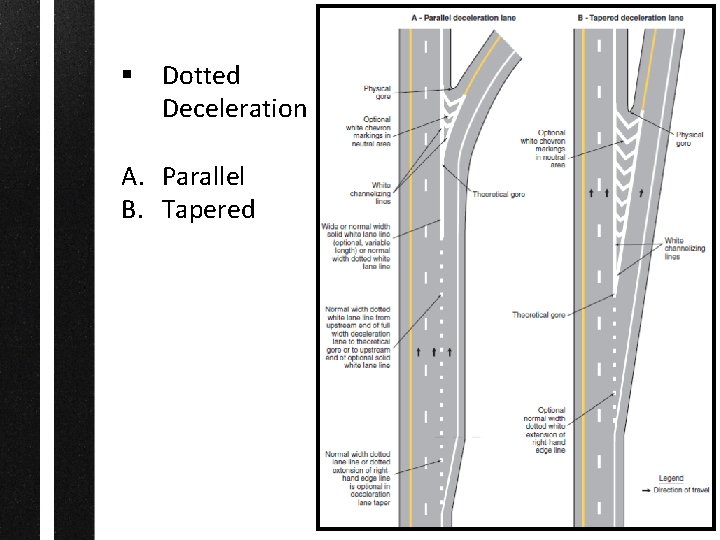
§ Dotted Deceleration A. Parallel B. Tapered
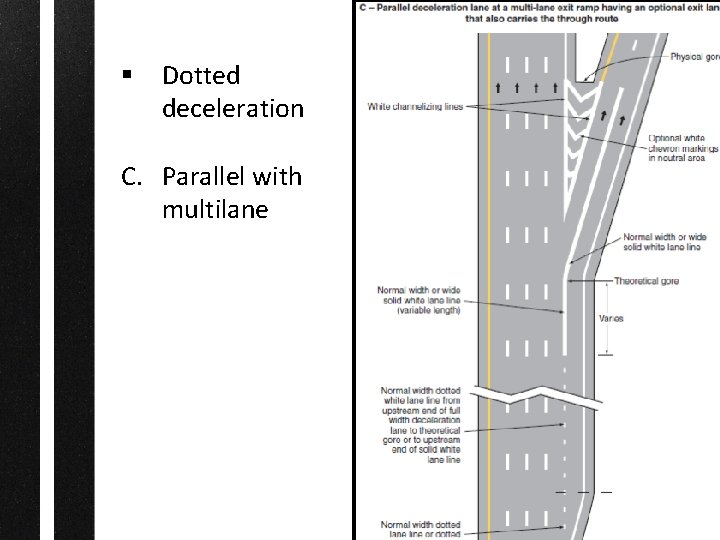
§ Dotted deceleration C. Parallel with multilane
§ Dotted Acceleration A. Parallel B. Tapered
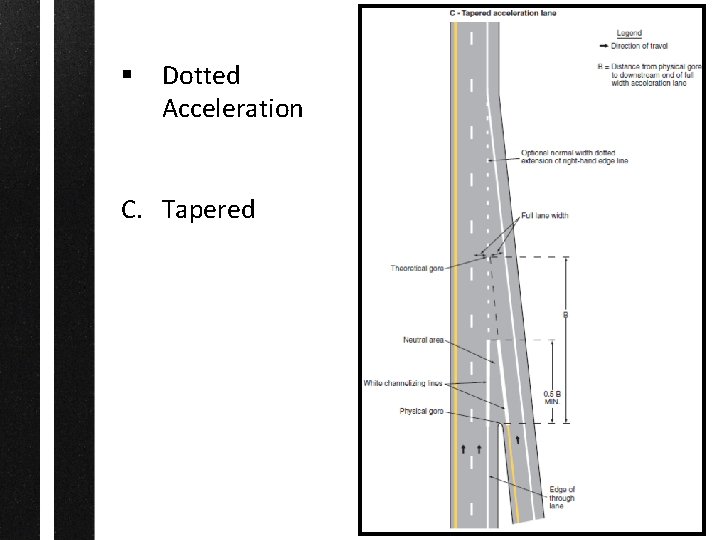
§ Dotted Acceleration C. Tapered
§ Wide dotted white lane line § It is used: 1. As a lane drop marking in advance of lane drops at exit ramps to distinguish a lane drop from a normal exit ramp.
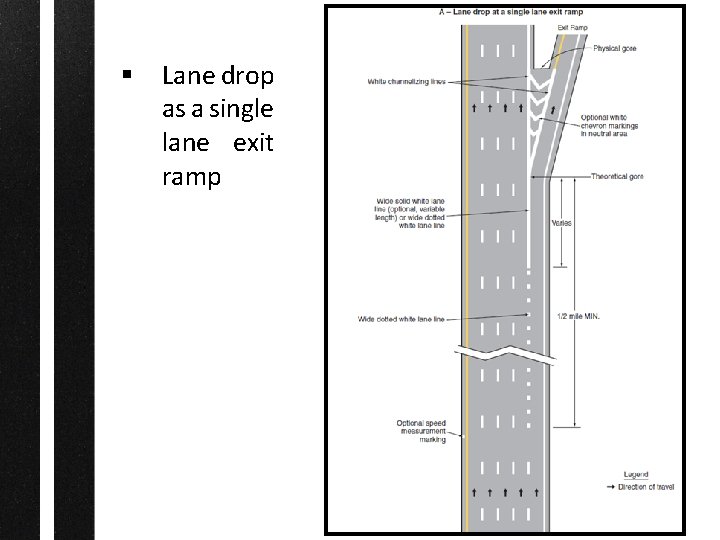
§ Lane drop as a single lane exit ramp
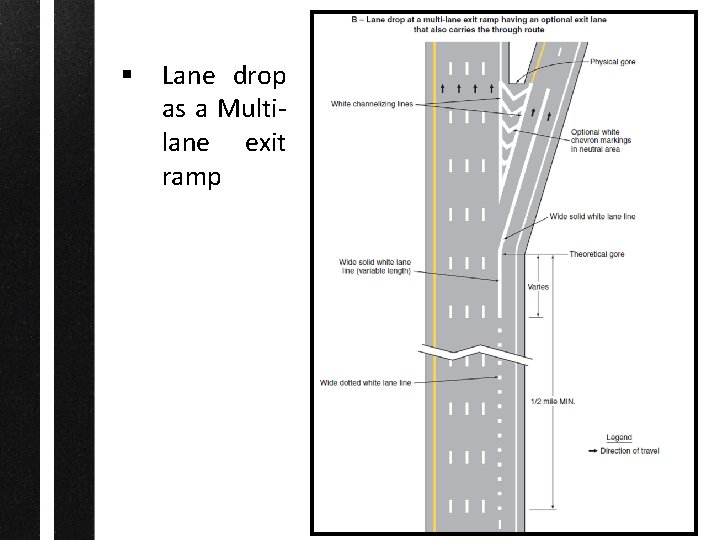
§ Lane drop as a Multilane exit ramp
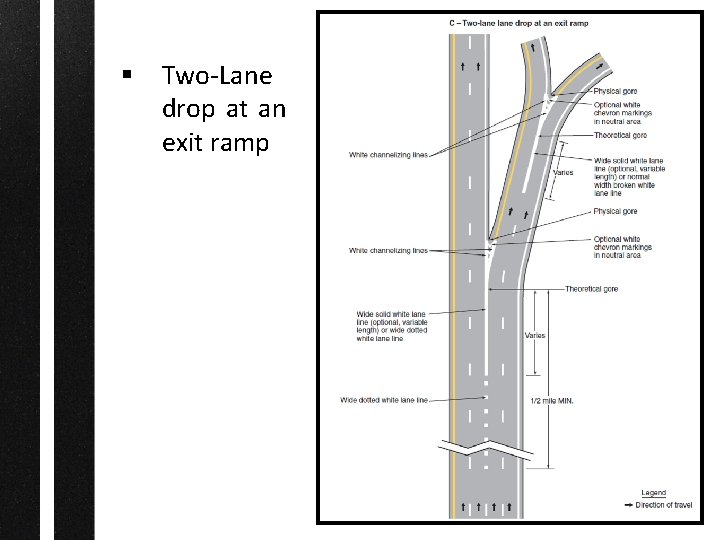
§ Two-Lane drop at an exit ramp
§ Wide dotted white lane line § It is used: 2. In advance of freeway route splits with dedicated lanes
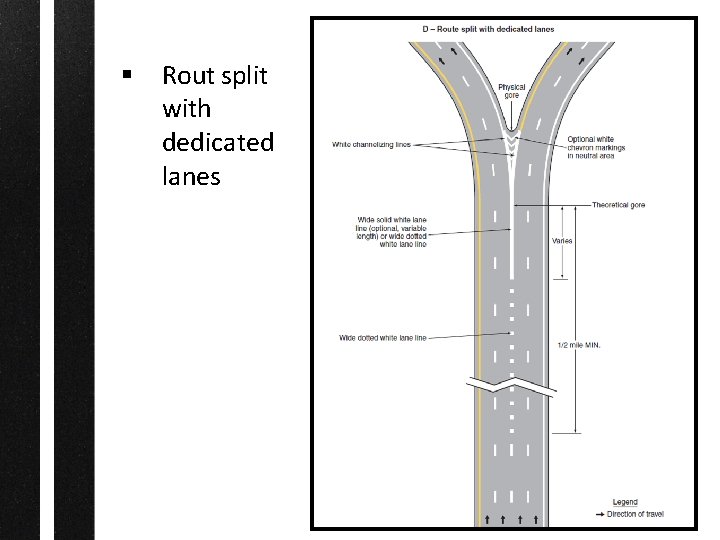
§ Rout split with dedicated lanes
§ Wide dotted white lane line § It is used: 3. To separate a through lane that continues beyond an interchange from an adjacent. Or An Auxiliary lane between an entrance ramp and an exit ramp
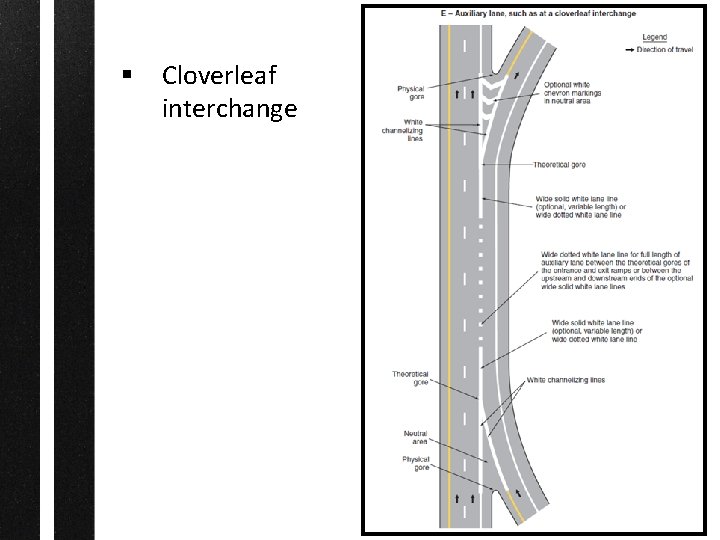
§ Cloverleaf interchange
§ Wide dotted white lane line § It is used: 4. As a lane drop marking in advance of lane drops at intersections to distinguish a lane drop from an intersection through lane
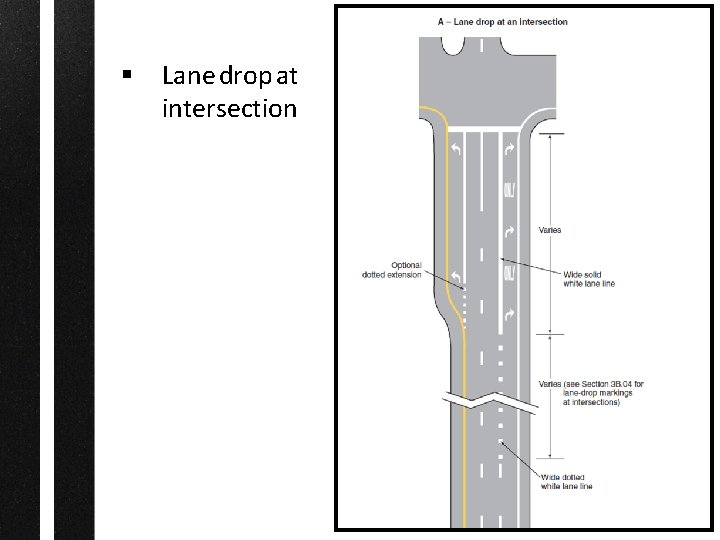
§ Lane drop at intersection
§ Wide dotted white lane line § It is used: 5. To separate a through lane that continues beyond an intersection from an adjacent auxiliary lane between two intersections
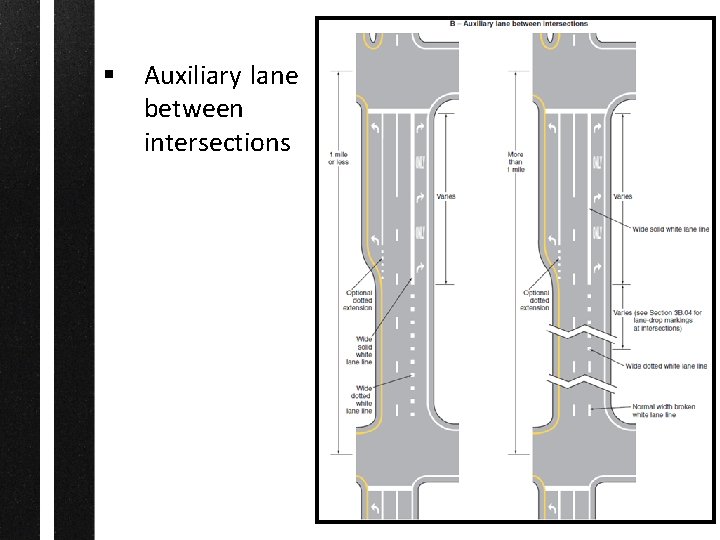
§ Auxiliary lane between intersections
Through Intersections Markings A. White B. Yellow
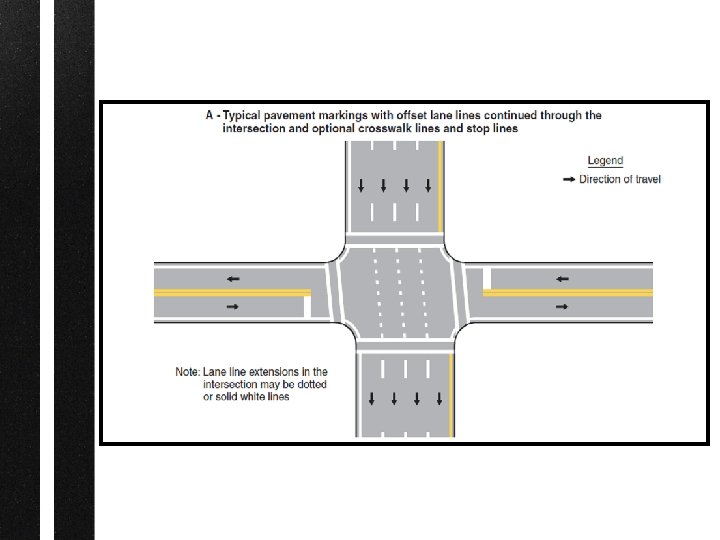
§ Wide dotted white lane line § It may be used: 6. Through intersections. Where greater restriction is required, solid lane lines or channelizing lines should be extended into or continued through intersections or major driveways.


Lane-Reduction Transition Markings A. White B. Yellow
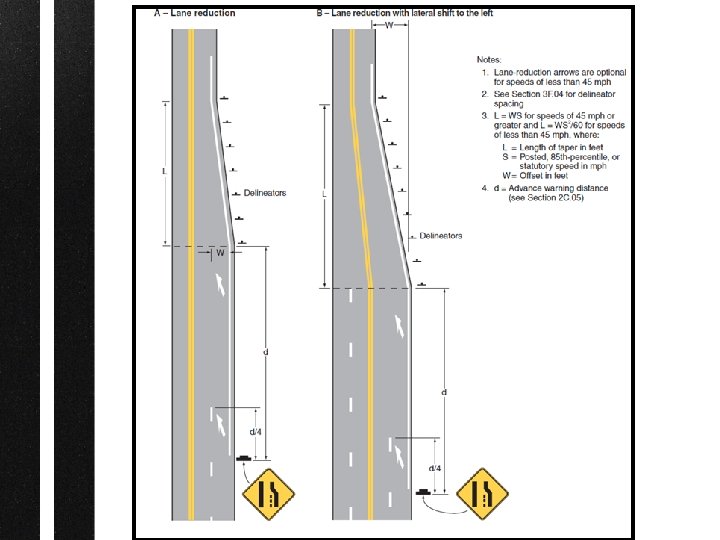
Lane-Reduction Transition Markings § Used to guide traffic through transition areas where the number of through lanes is reduced
Approach Markings for Obstructions A. White B. Yellow
§ Approach Markings for Obstructions § Used to guide traffic away from fixed obstructions within a paved roadway.
A. Center of two-Lane Road B. Center of a four road
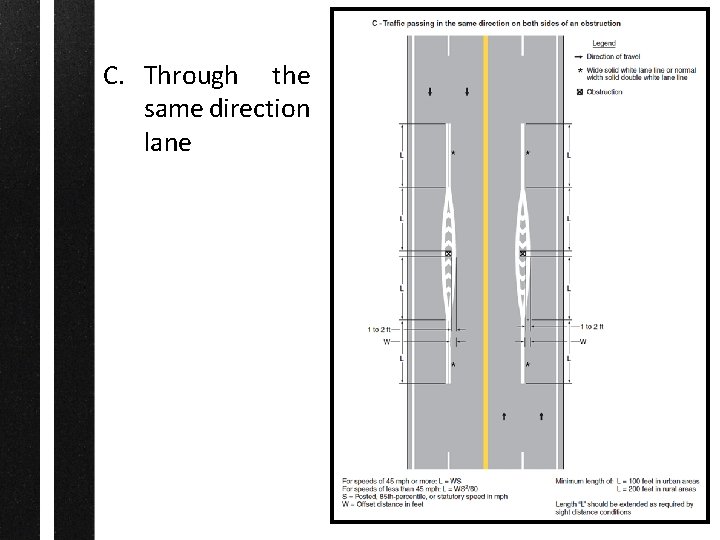
C. Through the same direction lane
II) Transverse Markings
§ § Stop and Yield Lines Crosswalk Markings Parking Space Markings Pavement Word, Symbol, and Arrow Markings
Because of the low approach angle at which pavement markings are viewed, transverse lines should be proportioned to provide visibility at least equal to that of longitudinal lines.
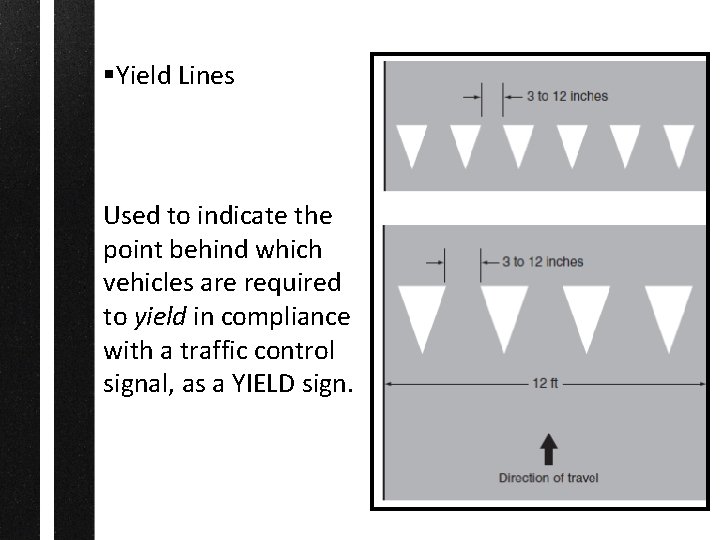
§Yield Lines Used to indicate the point behind which vehicles are required to yield in compliance with a traffic control signal, as a YIELD sign.
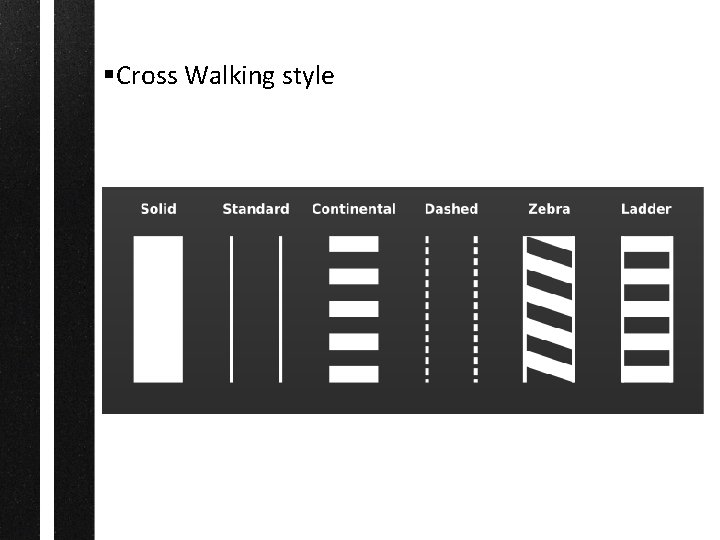
§Cross Walking style
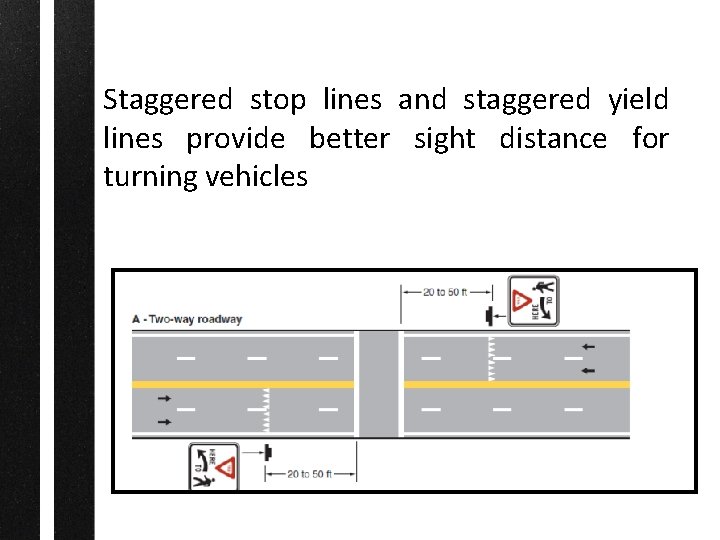
Staggered stop lines and staggered yield lines provide better sight distance for turning vehicles
§Cross Walking in One-Way Road
§Parking Space Markings In general, Parking space markings shall be white but Blue lines may supplement white parking space markings of each parking space designated for use only by persons with disabilities.
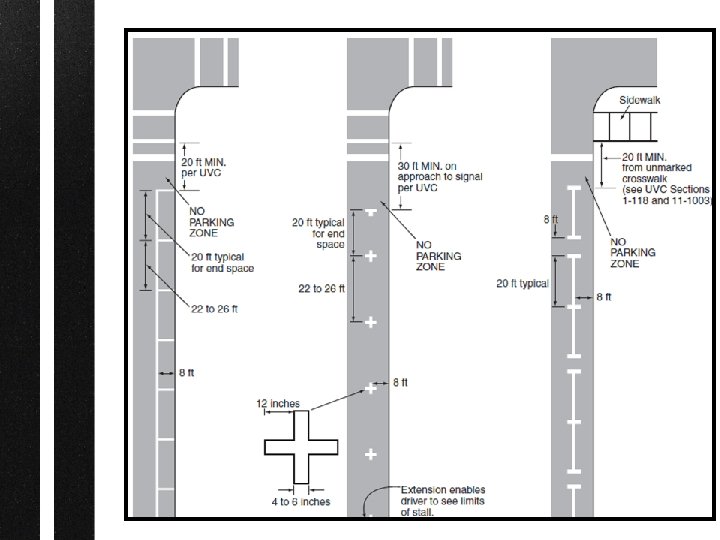
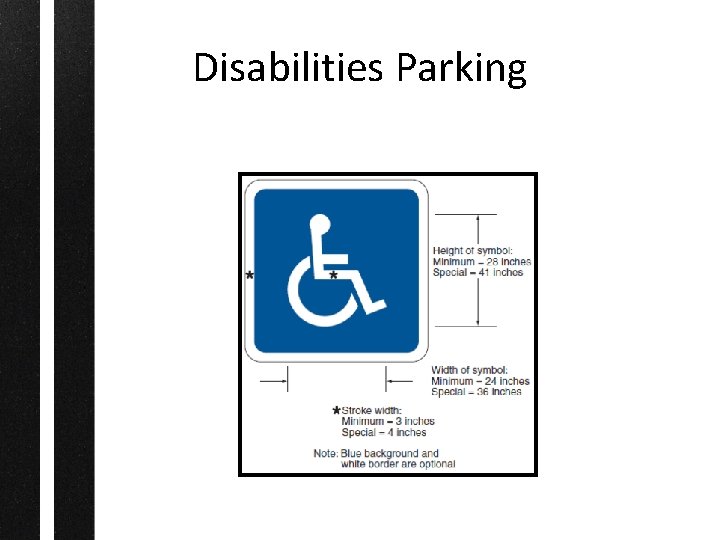
Disabilities Parking
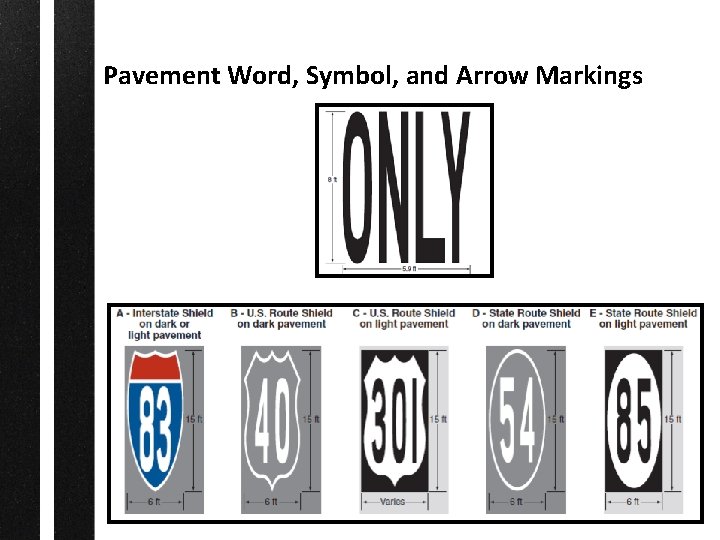
Pavement Word, Symbol, and Arrow Markings Are used for the purpose of guiding, warning, or regulating traffic.
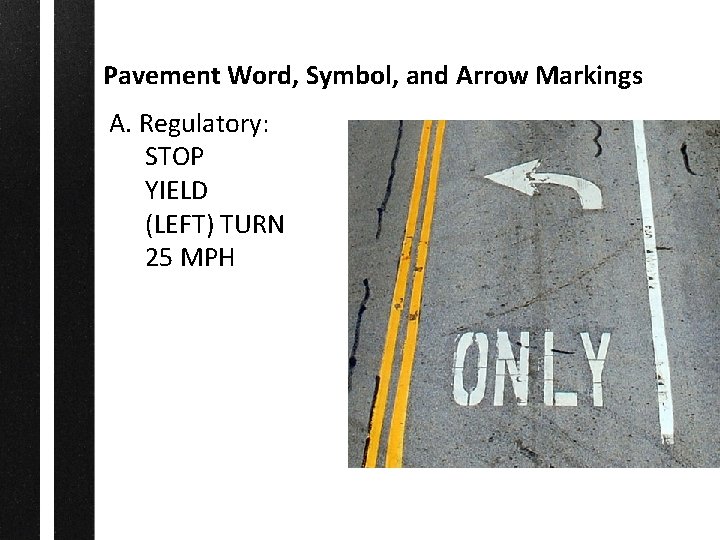
Pavement Word, Symbol, and Arrow Markings A. Regulatory: STOP YIELD (LEFT) TURN 25 MPH
Pavement Word, Symbol, and Arrow Markings B. Warning: STOP AHEAD YIELD AHEAD Lane-reduction arrows C. Guide: Route numbers Cardinal directions
Pavement Word, Symbol, and Arrow Markings
Pavement Word, Symbol, and Arrow Markings
- Slides: 68