
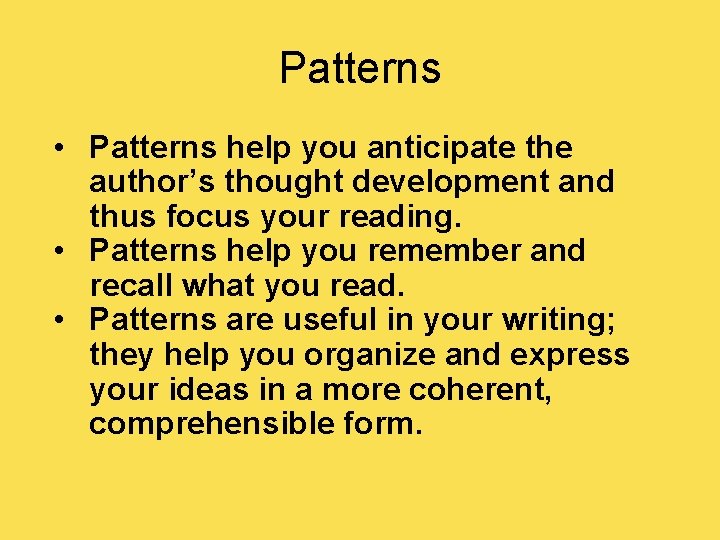
Patterns Patterns help you anticipate the authors thought


- Slides: 28
Patterns • Patterns help you anticipate the author’s thought development and thus focus your reading. • Patterns help you remember and recall what you read. • Patterns are useful in your writing; they help you organize and express your ideas in a more coherent, comprehensible form.
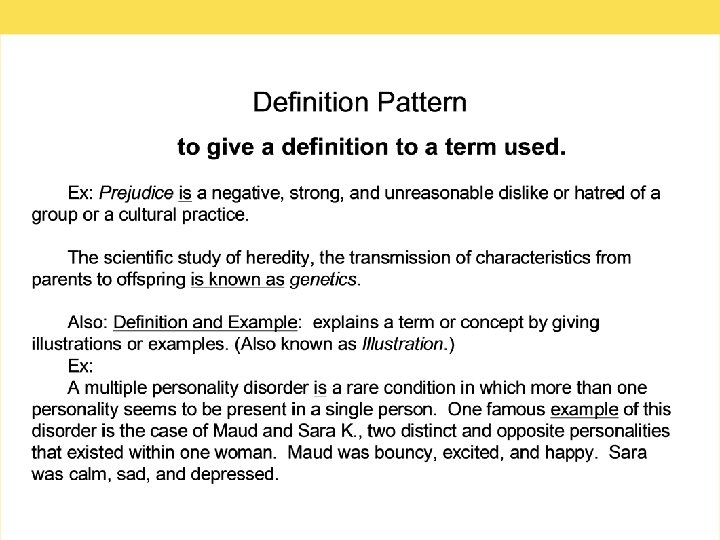
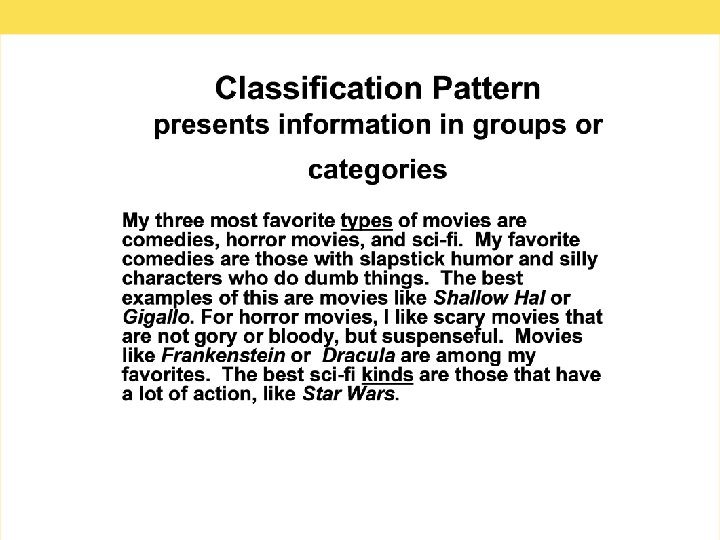
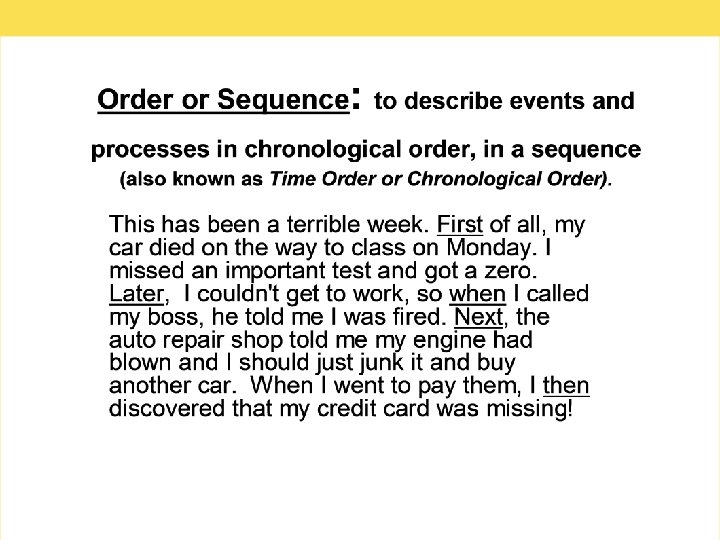
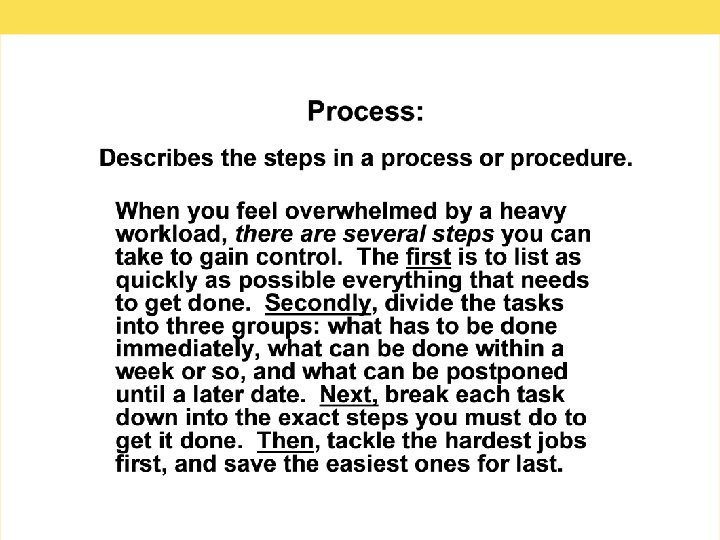
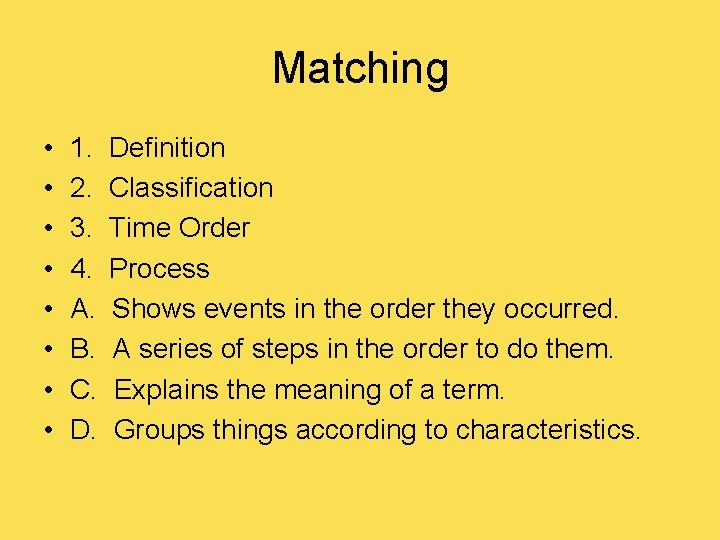
Matching • • 1. 2. 3. 4. A. B. C. D. Definition Classification Time Order Process Shows events in the order they occurred. A series of steps in the order to do them. Explains the meaning of a term. Groups things according to characteristics.
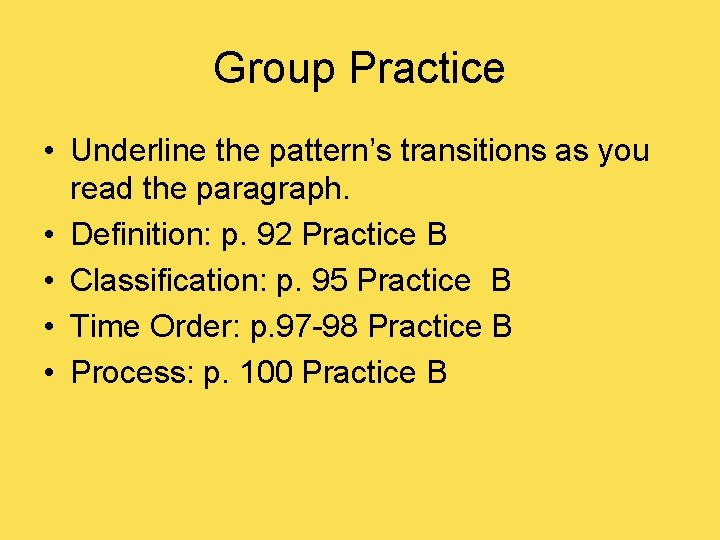
Group Practice • Underline the pattern’s transitions as you read the paragraph. • Definition: p. 92 Practice B • Classification: p. 95 Practice B • Time Order: p. 97 -98 Practice B • Process: p. 100 Practice B
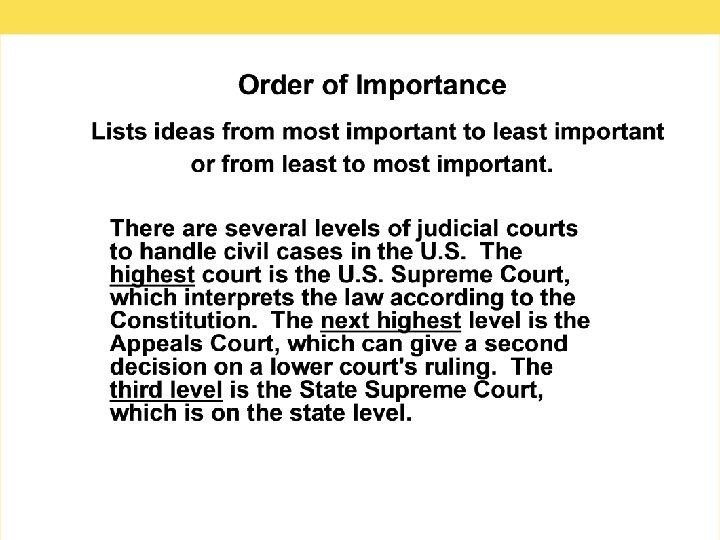
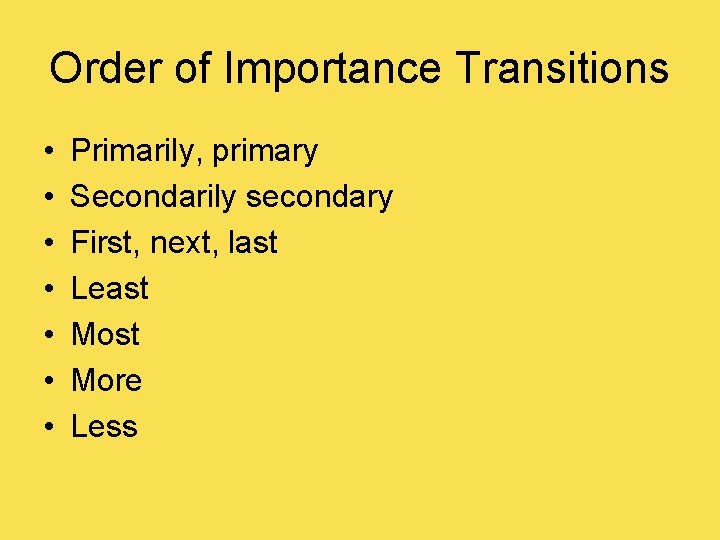
Order of Importance Transitions • • Primarily, primary Secondarily secondary First, next, last Least More Less
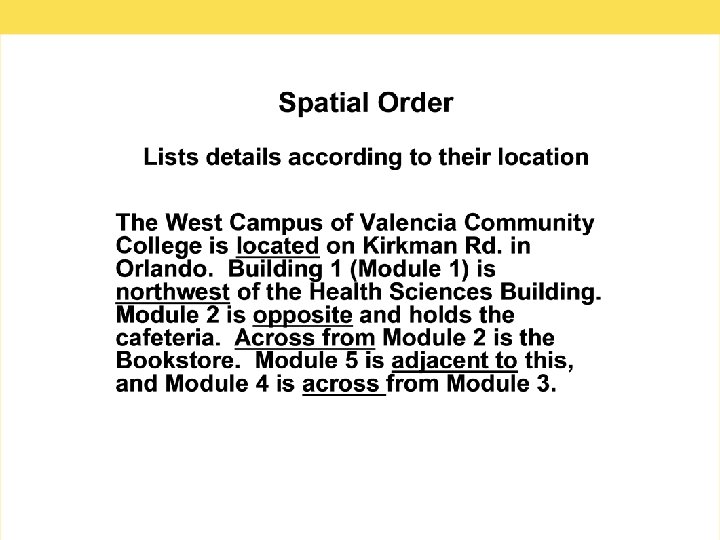
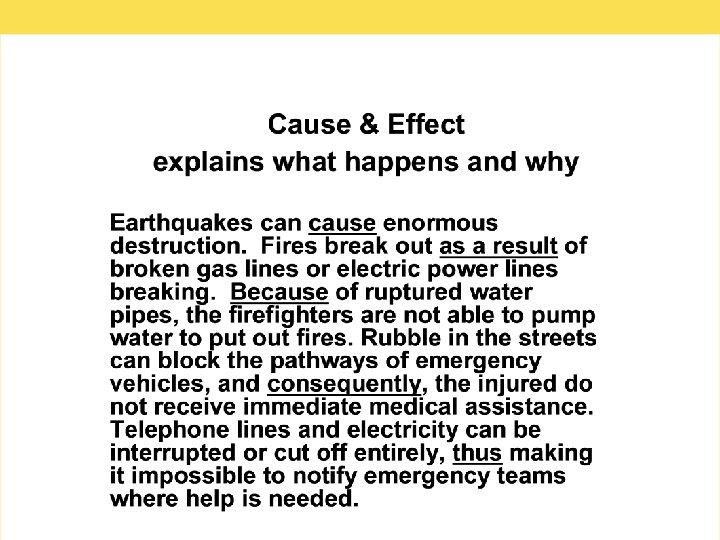
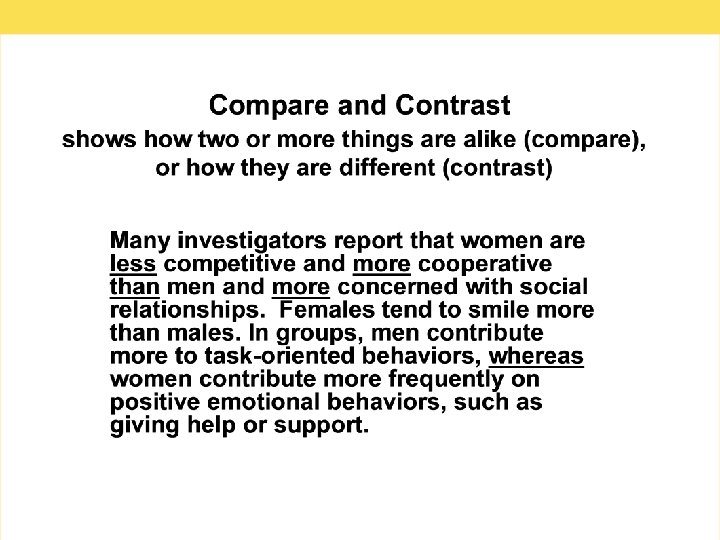
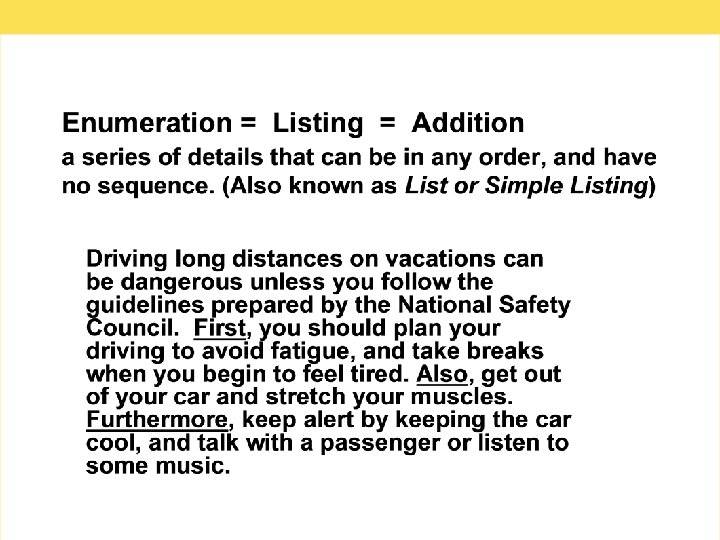
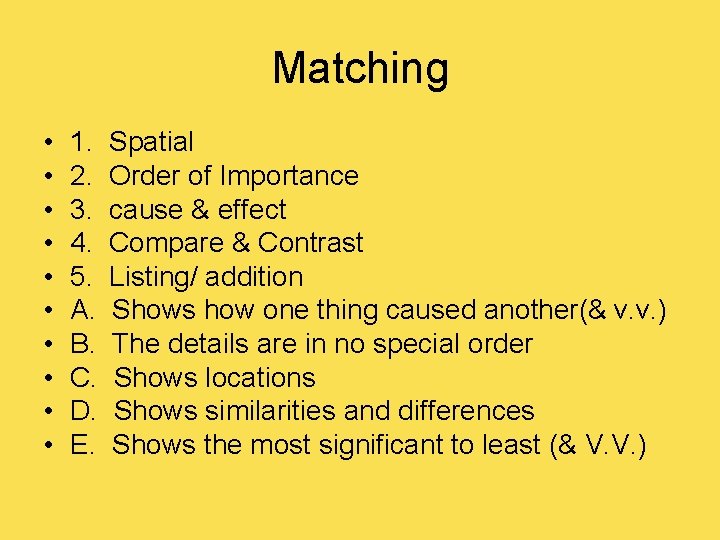
Matching • • • 1. 2. 3. 4. 5. A. B. C. D. E. Spatial Order of Importance cause & effect Compare & Contrast Listing/ addition Shows how one thing caused another(& v. v. ) The details are in no special order Shows locations Shows similarities and differences Shows the most significant to least (& V. V. )
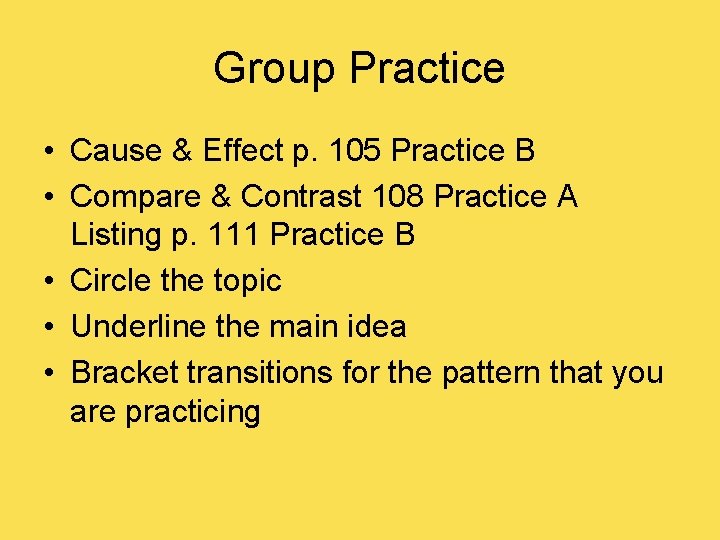
Group Practice • Cause & Effect p. 105 Practice B • Compare & Contrast 108 Practice A Listing p. 111 Practice B • Circle the topic • Underline the main idea • Bracket transitions for the pattern that you are practicing
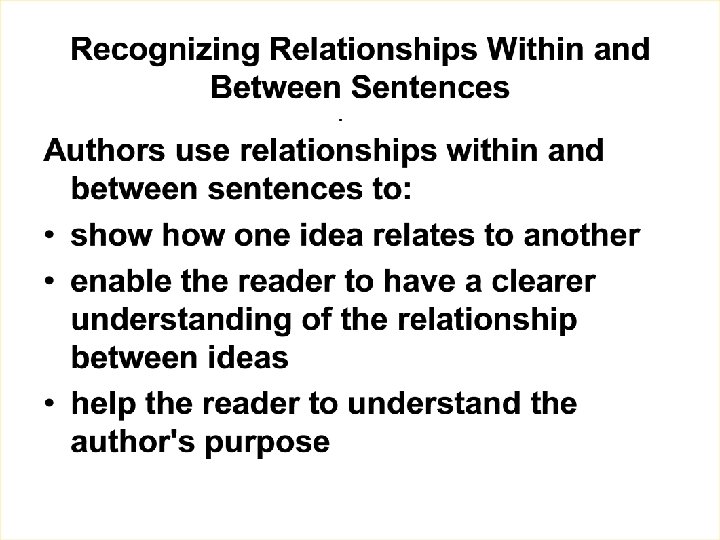
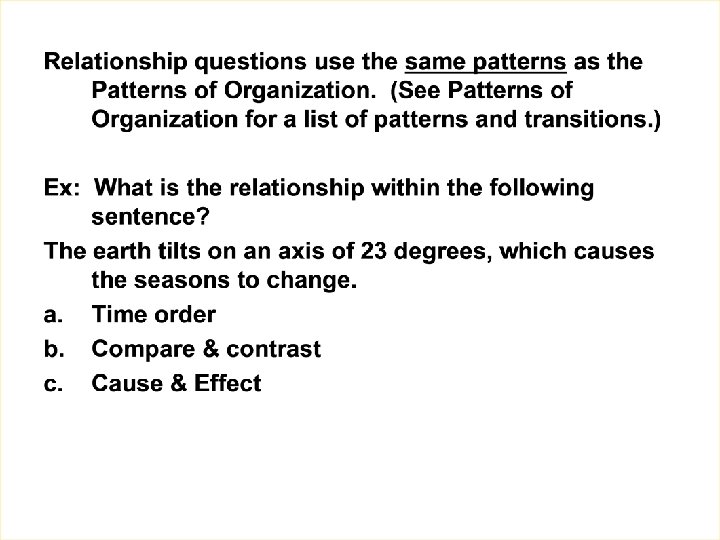
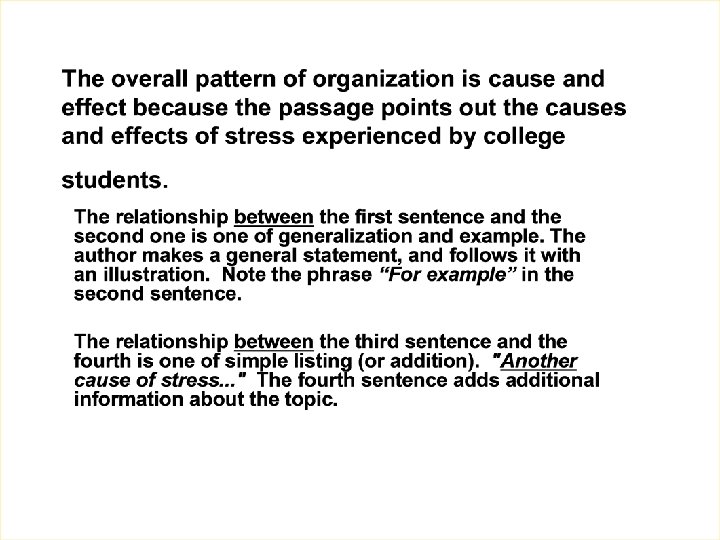
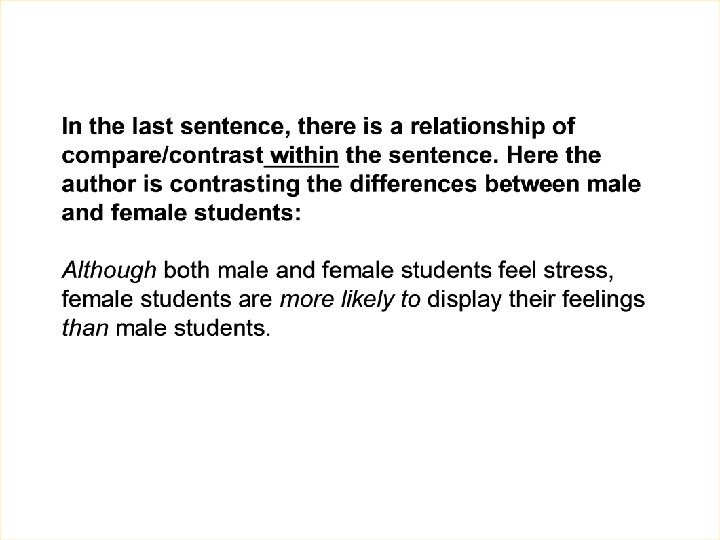
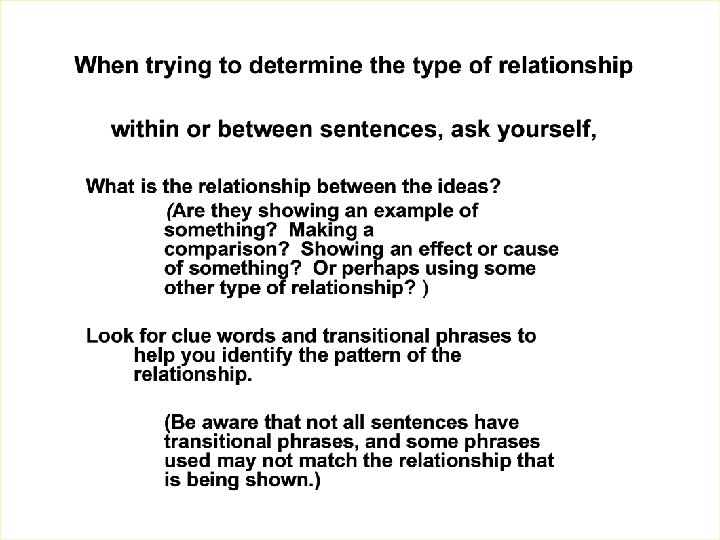
U-Review • Why do we look at relationships within and between sentences? • How do you determine the relationship within a sentence? • How do you determine the relationship between sentences?
Group Practice • Other Patterns • Practice 3 p. 88 – 89.