
Patterns of Inheritance Why study genetics A Human
- Slides: 51
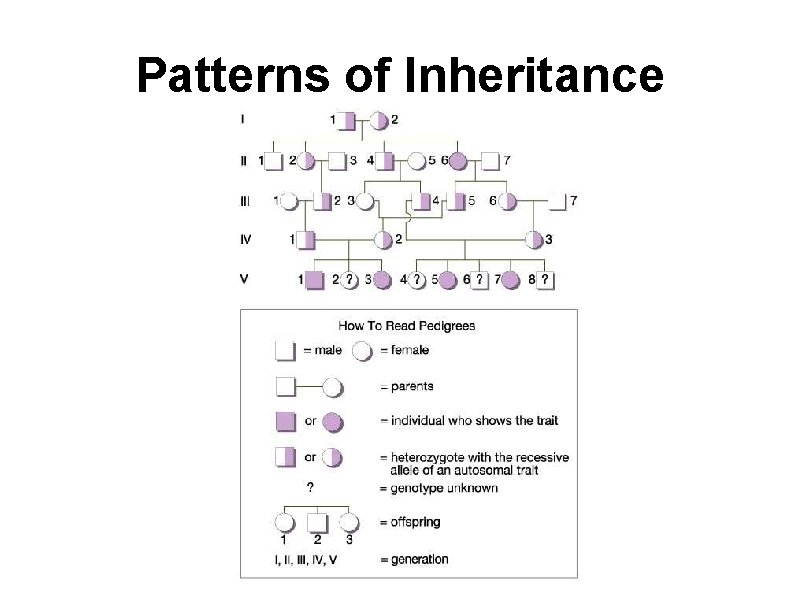
Patterns of Inheritance
Why study genetics? • • A. Human genetic disorders B. Gene therapy, the future of medicine • • • 1. Locate the problem gene on a chromosome 2. Isolate the gene to study its protein structure and function 3. Design a biomolecule to correct for the defect
Gregor Mendel • “Father” of modern genetics • First developed rules now used to predict inheritance • Chose to study the pea – Easily manipulated in breeding experiments
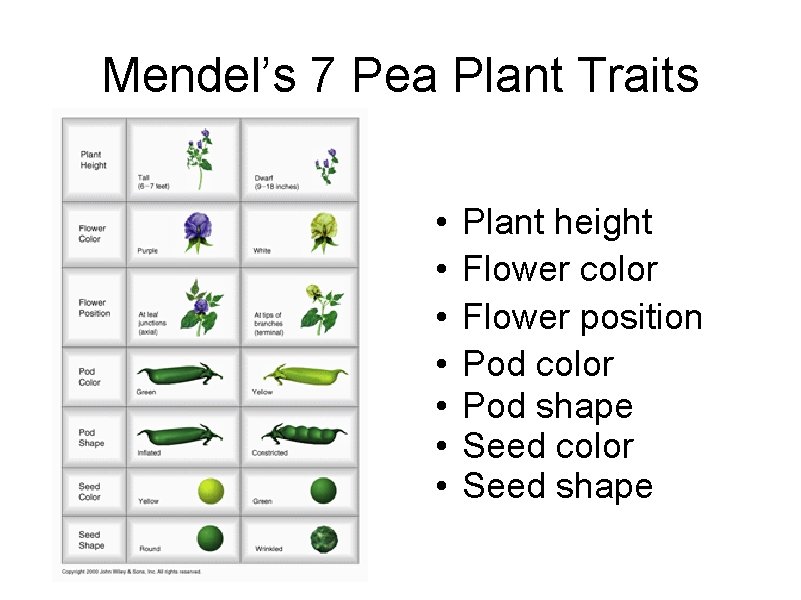
Mendel’s 7 Pea Plant Traits • • Plant height Flower color Flower position Pod color Pod shape Seed color Seed shape
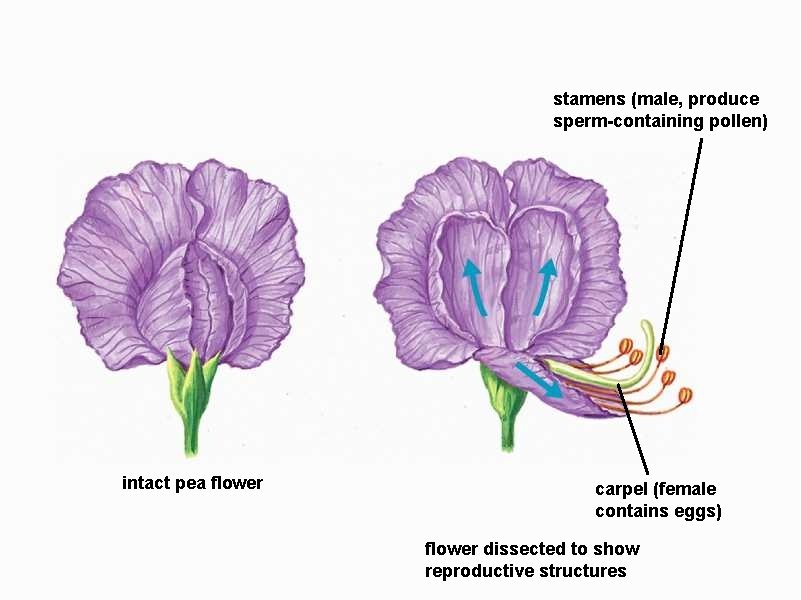
stamens (male, produce sperm-containing pollen) intact pea flower carpel (female contains eggs) flower dissected to show reproductive structures
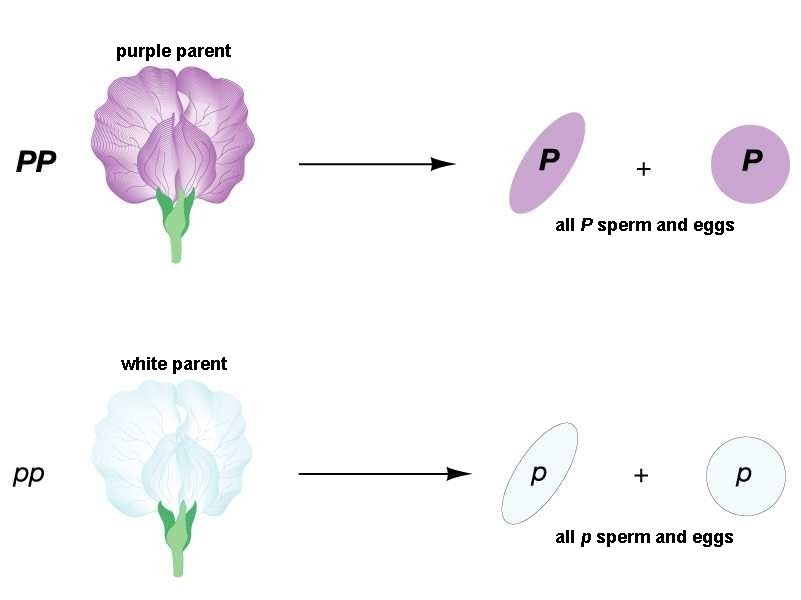
purple parent all P sperm and eggs white parent all p sperm and eggs
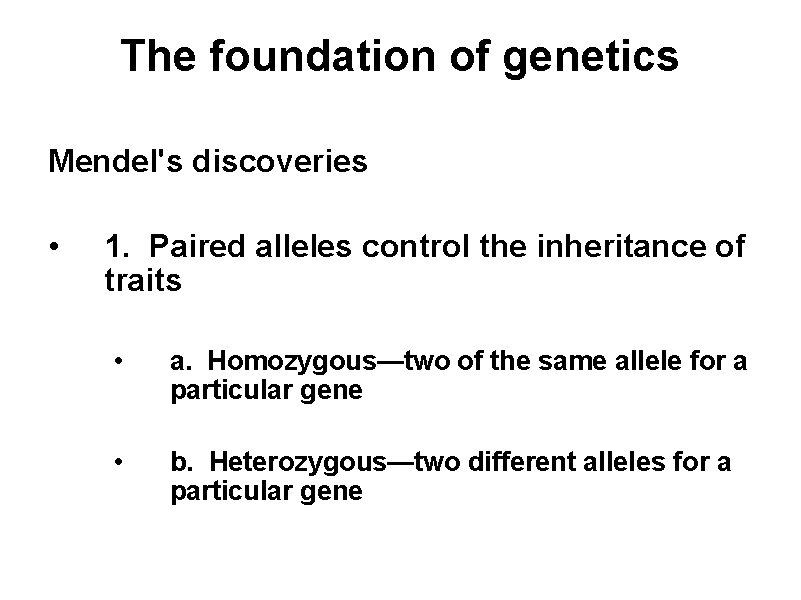
The foundation of genetics Mendel's discoveries • 1. Paired alleles control the inheritance of traits • a. Homozygous—two of the same allele for a particular gene • b. Heterozygous—two different alleles for a particular gene
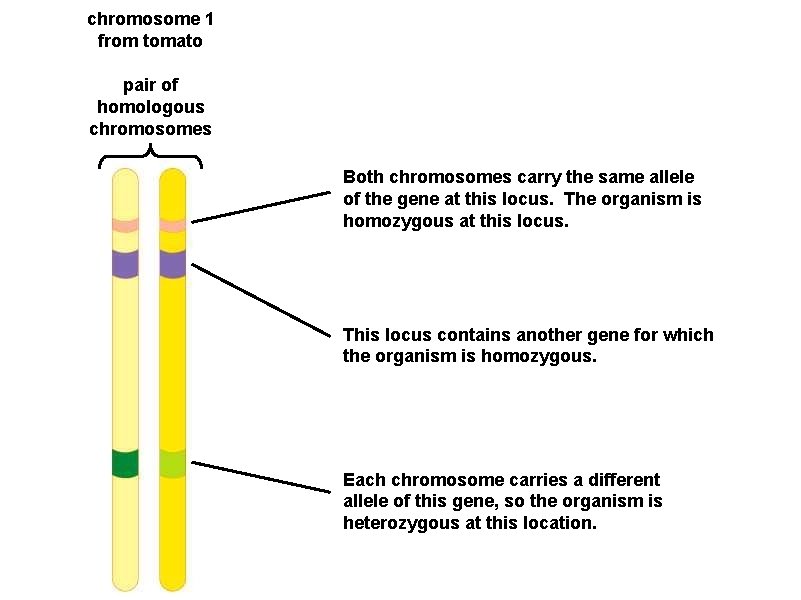
chromosome 1 from tomato pair of homologous chromosomes Both chromosomes carry the same allele of the gene at this locus. The organism is homozygous at this locus. This locus contains another gene for which the organism is homozygous. Each chromosome carries a different allele of this gene, so the organism is heterozygous at this location.
Mendel’s First Law • Law of segregation – Alleles are randomly donated from parents to offspring – Key points of theory • All traits determined by two factors • Factors (alleles) segregate during the formation of gametes • Two factors – joined together in offspring
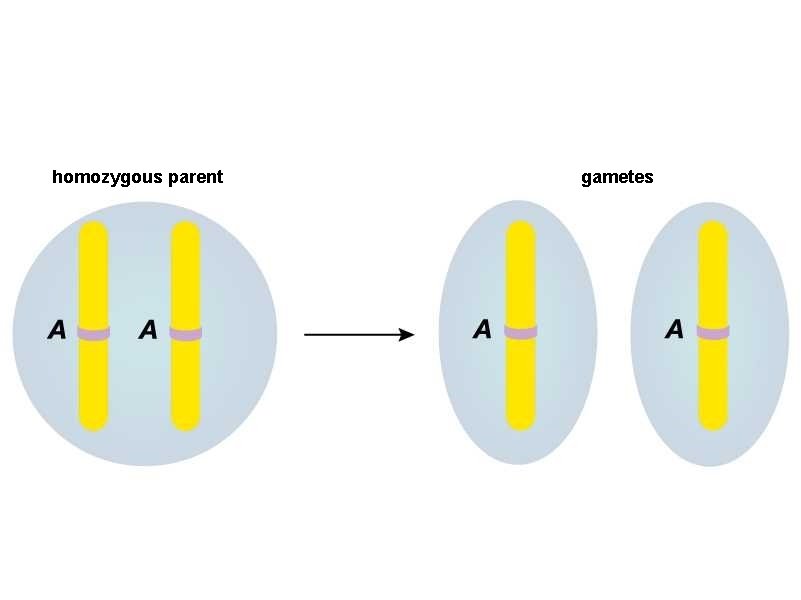
homozygous parent gametes
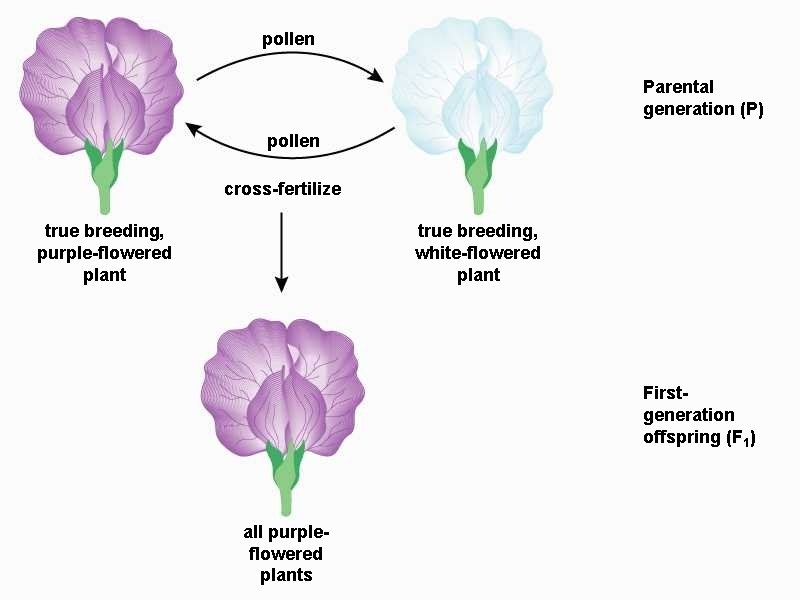
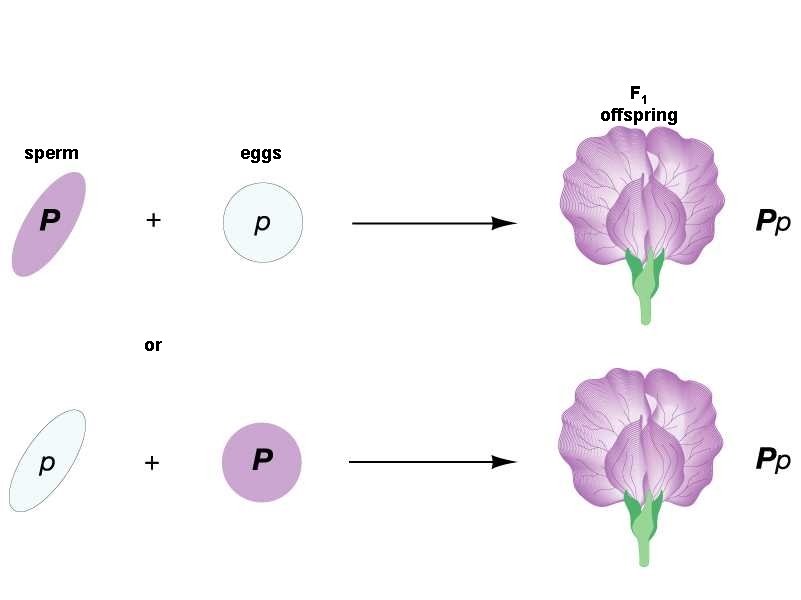
pollen Parental generation (P) pollen cross-fertilize true breeding, purple-flowered plant true breeding, white-flowered plant Firstgeneration offspring (F 1) all purpleflowered plants
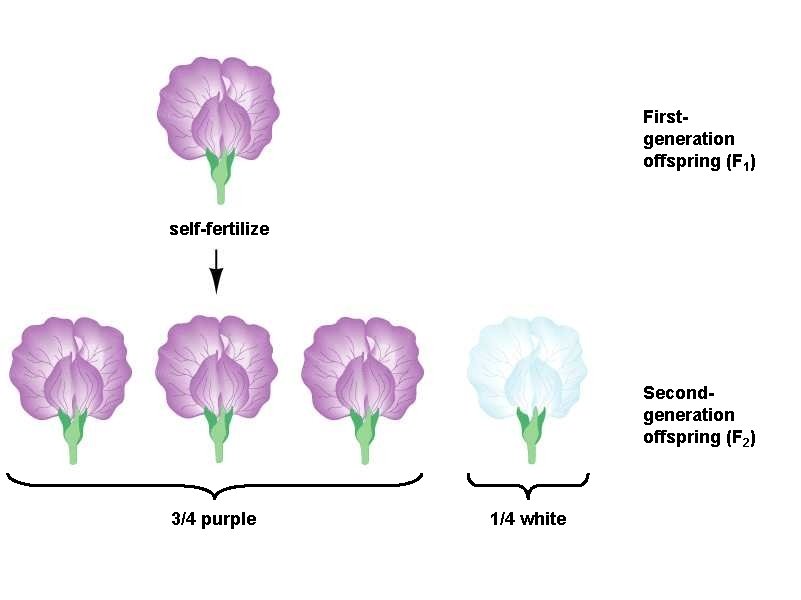
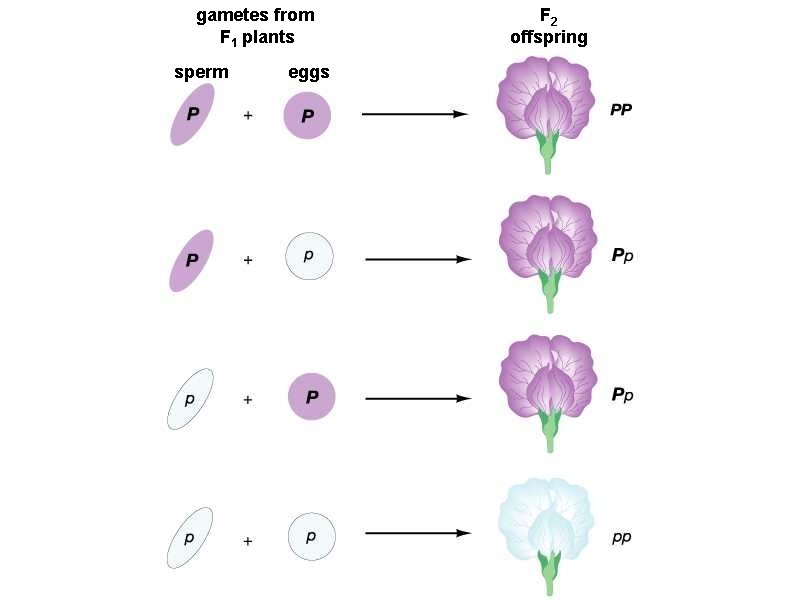
Firstgeneration offspring (F 1) self-fertilize Secondgeneration offspring (F 2) 3/4 purple 1/4 white
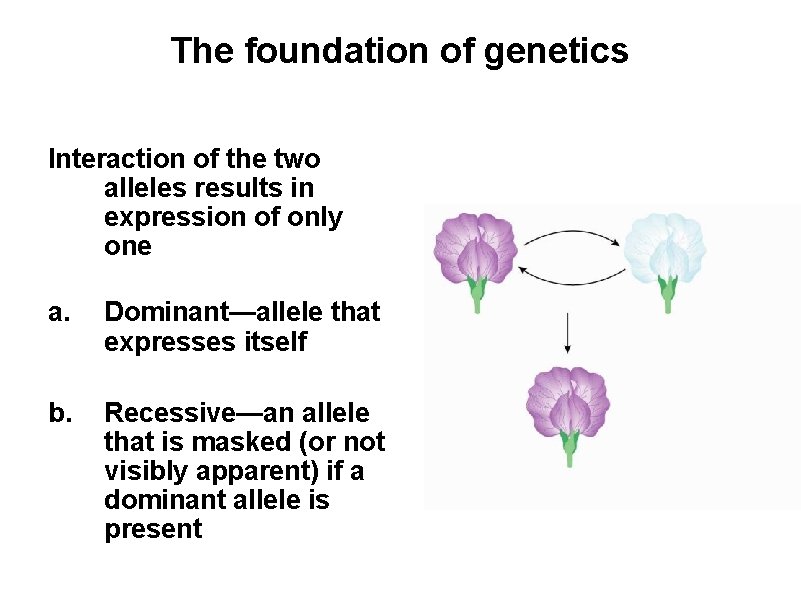
The foundation of genetics Interaction of the two alleles results in expression of only one a. Dominant—allele that expresses itself b. Recessive—an allele that is masked (or not visibly apparent) if a dominant allele is present
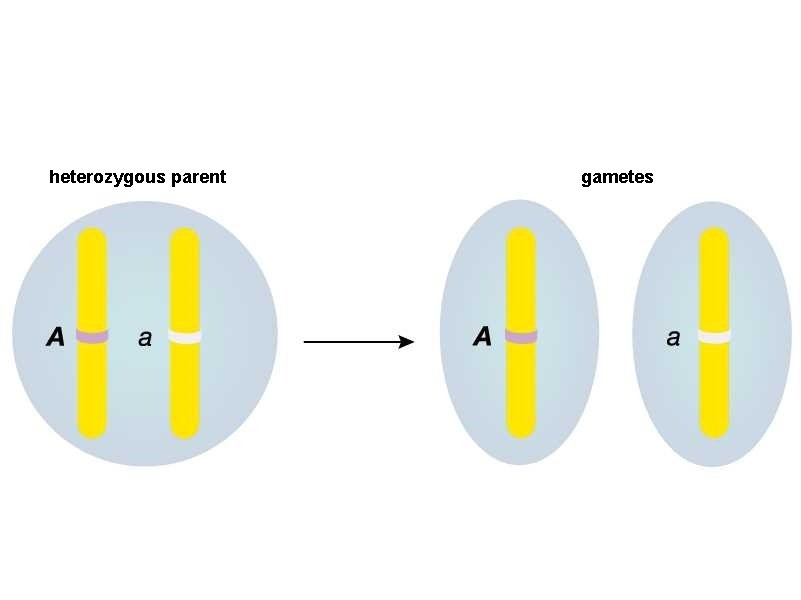
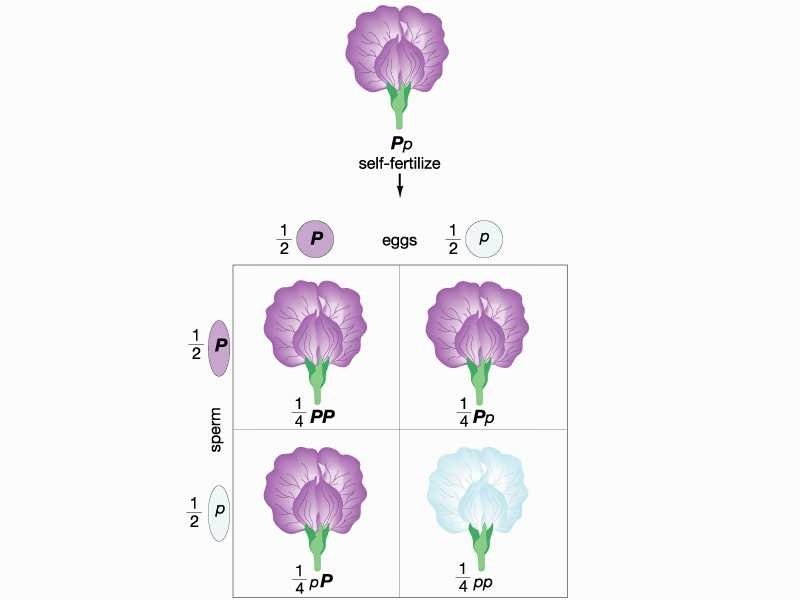
heterozygous parent gametes
F 1 offspring sperm eggs or
gametes from F 1 plants sperm eggs F 2 offspring
Mendel’s Interpretation • Assumed that each form of trait – Was controlled by a hereditary factor • Dominant traits (R) mask presence of recessive (r) alleles – Phenotype – apparent traits in individuals – Genotype – the genetic complement to phenotype
The foundation of genetics Law of segregation • a. Paired alleles of a gene separate during meiosis, resulting in gametes that contain only a single allele for each gene present in an organism • b. Monohybrid cross is a cross of two parents differing by a single genetic trait • 1) Genotype is the genetic makeup of an individual (the alleles present for particular genes) • 2) Phenotype is the expressed trait or characteristic (may or may not be visible) resulting from gene expression
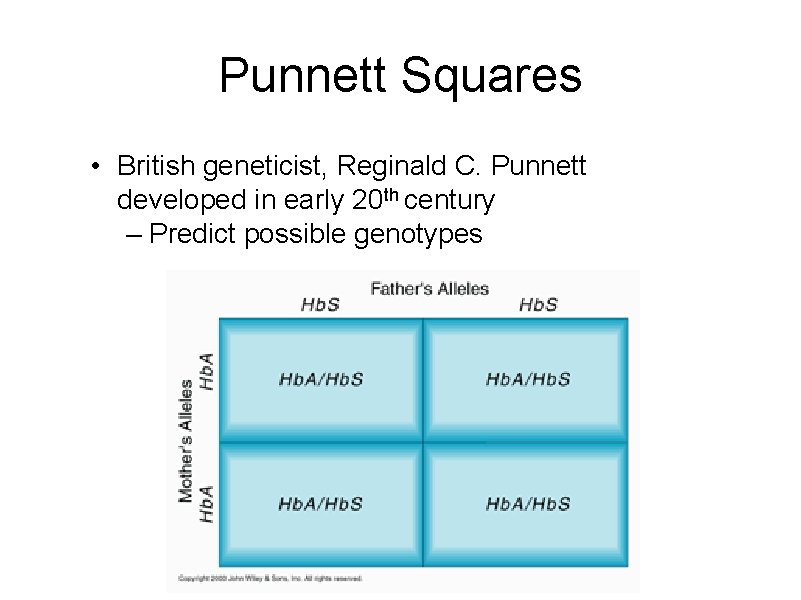
Punnett Squares • British geneticist, Reginald C. Punnett developed in early 20 th century – Predict possible genotypes
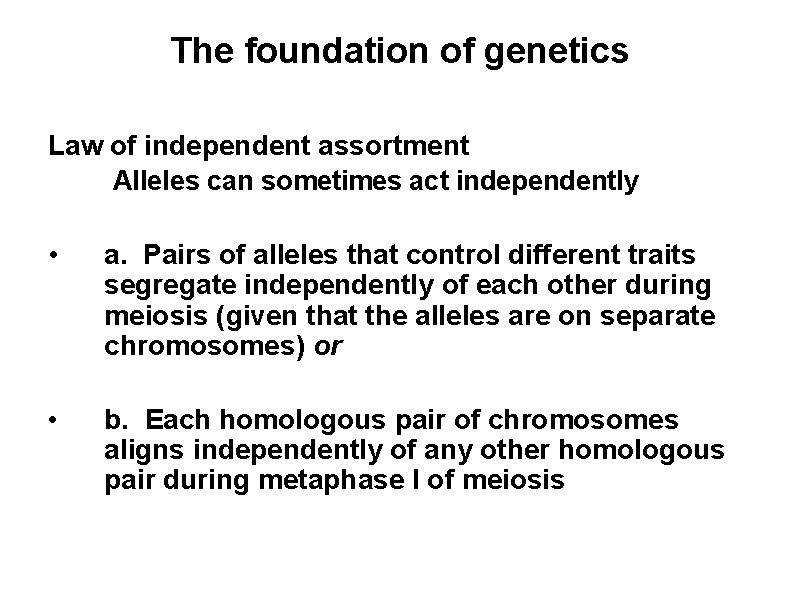
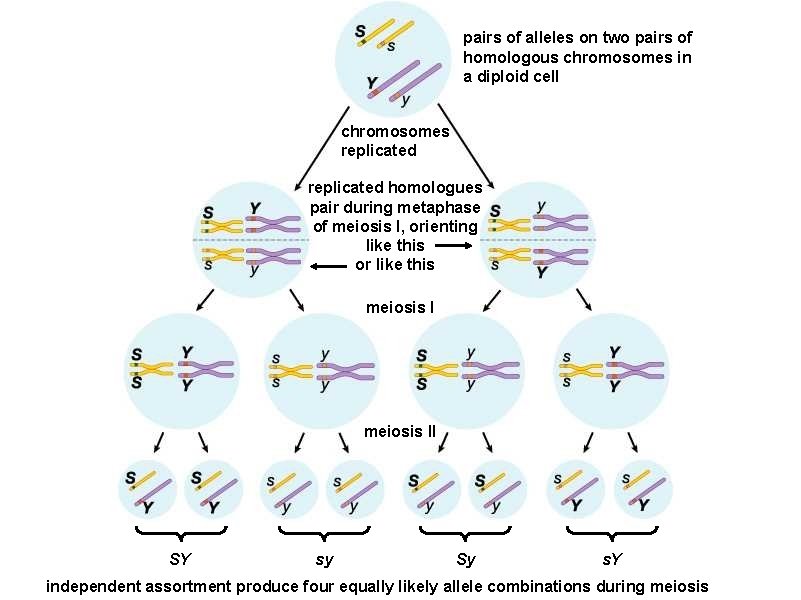
The foundation of genetics Law of independent assortment Alleles can sometimes act independently • a. Pairs of alleles that control different traits segregate independently of each other during meiosis (given that the alleles are on separate chromosomes) or • b. Each homologous pair of chromosomes aligns independently of any other homologous pair during metaphase I of meiosis
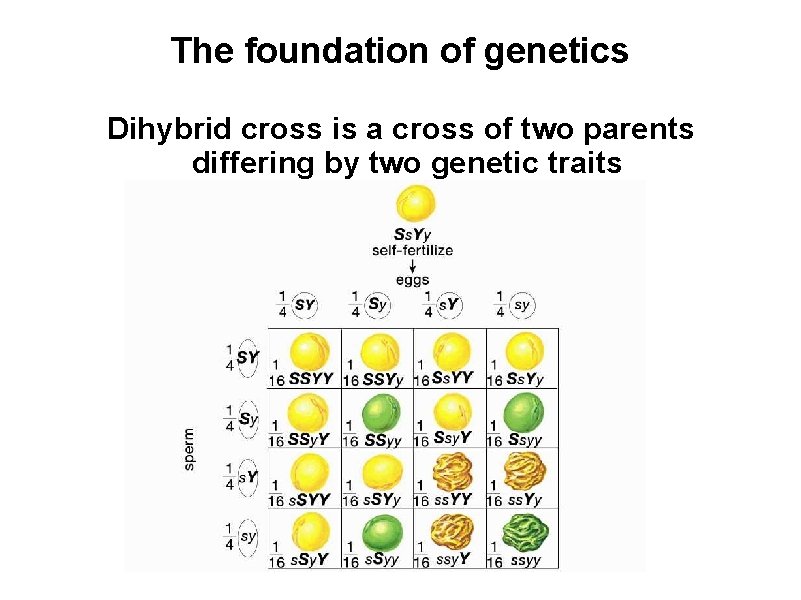
The foundation of genetics Dihybrid cross is a cross of two parents differing by two genetic traits
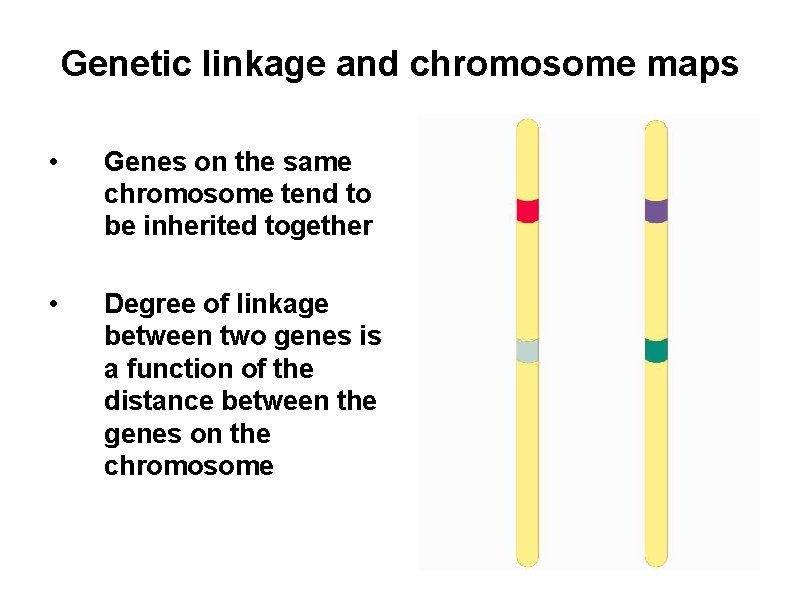
Genetic linkage and chromosome maps • Genes on the same chromosome tend to be inherited together • Degree of linkage between two genes is a function of the distance between the genes on the chromosome
pairs of alleles on two pairs of homologous chromosomes in a diploid cell chromosomes replicated homologues pair during metaphase of meiosis I, orienting like this or like this meiosis II SY sy Sy s. Y independent assortment produce four equally likely allele combinations during meiosis
Genetic linkage and chromosome maps • Crossing over (during meiosis) rearranges alleles of different genes that were previously linked, creating recombinants • Recombinants are combinations of genes not found in either of the parents • Genes that are closer together on a chromosome are more tightly linked than genes farther apart on a chromosome
Genetic linkage and chromosome maps • Linkage maps estimate relative distances between genes on a chromosome by observing the percentage of recombinant offspring resulting from experimental crosses • Locating a gene on a chromosome is the first step to being able to clone the gene
Why aren’t members of same species identical? – Almost every organism is the result of thousands of genes working together – There may be many different alleles for a trait in a population – A combination of traits gives an organism a competitive advantage – Mutations are another source of variety
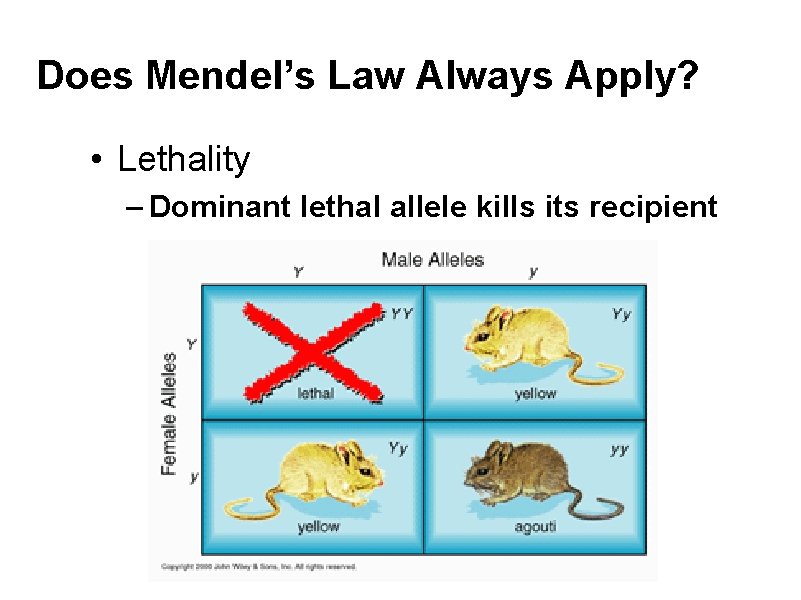
Does Mendel’s Law Always Apply? • Lethality – If particular combination of alleles is deadly to new embryo • The embryo dies & phenotype is not represented in next generation at all • One gene can influence two or more traits
Does Mendel’s Law Always Apply? • Lethality – Dominant lethal allele kills its recipient
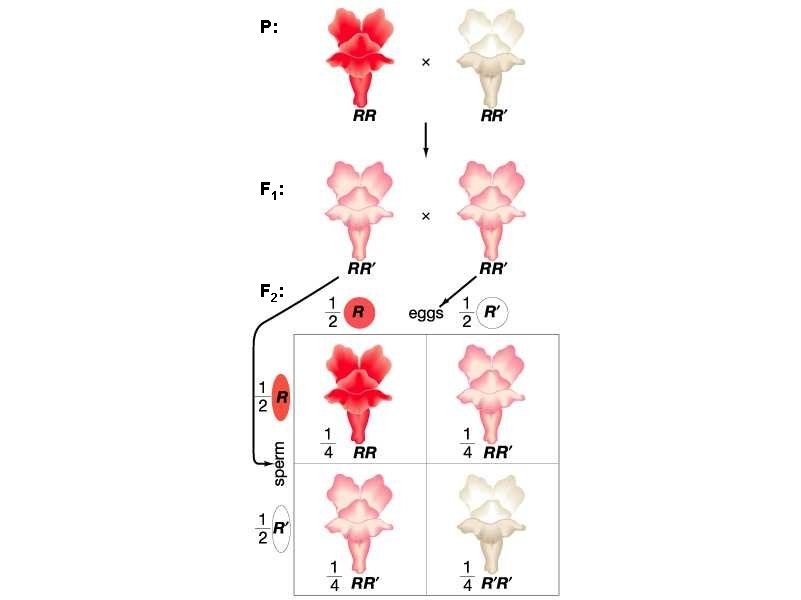
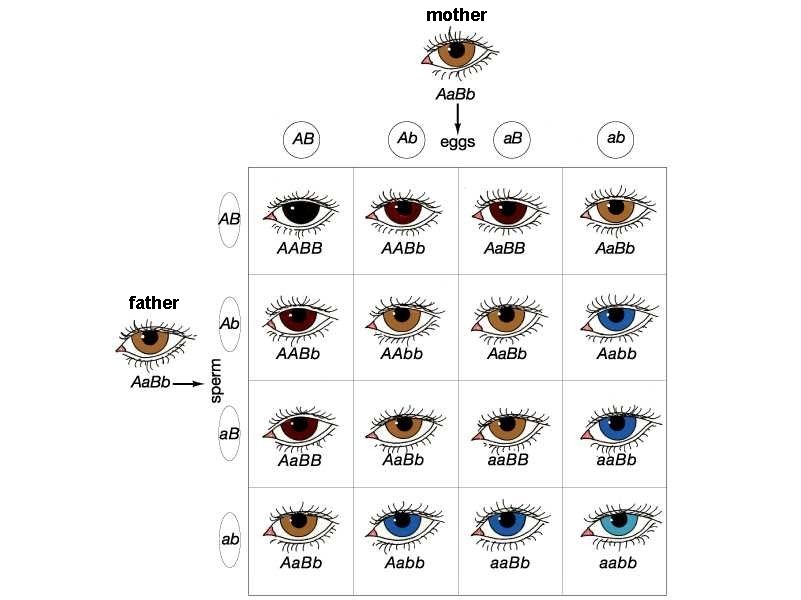
Variations on the Mendelian theme • A. Incomplete dominance • B. Polygenic inheritance • C. Gene interactions • D. Multiple effects of a single gene – Pleiotropy—one gene having multiple effects
P: F 1 : F 2 :
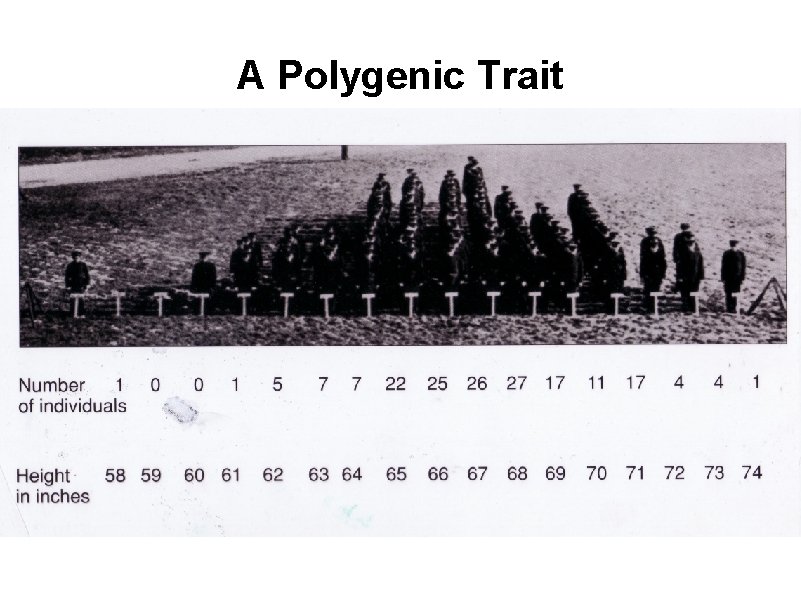
Does Mendel’s Law Always Apply? • Two or more genes can influence a single trait – Human height is controlled by many traits • Termed “Polygenic”
A Polygenic Trait
mother father
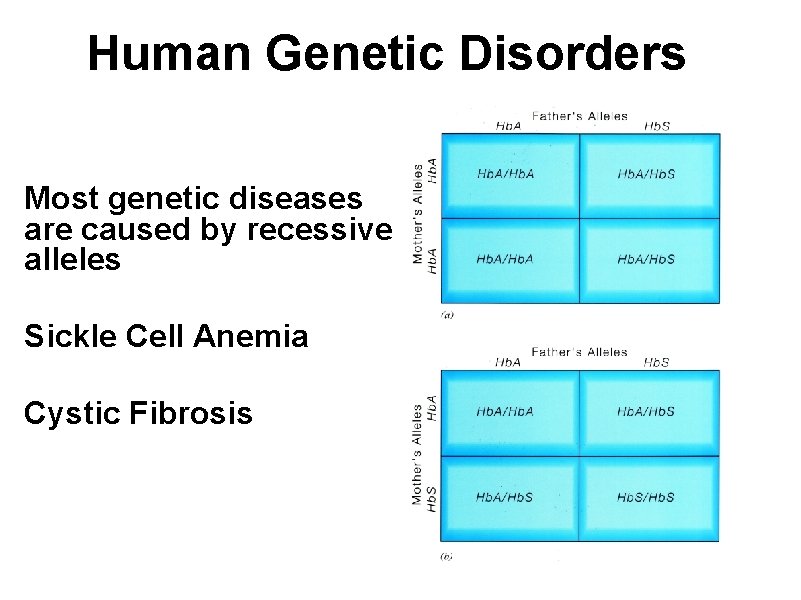
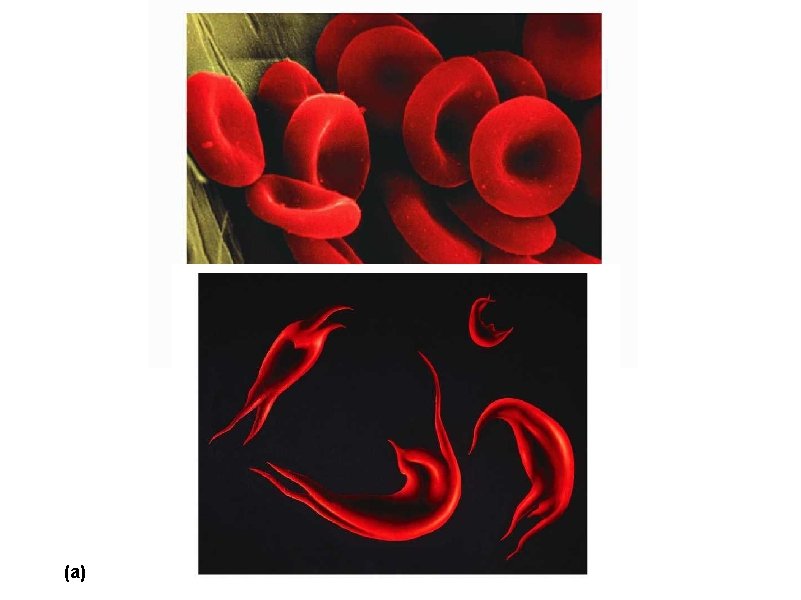
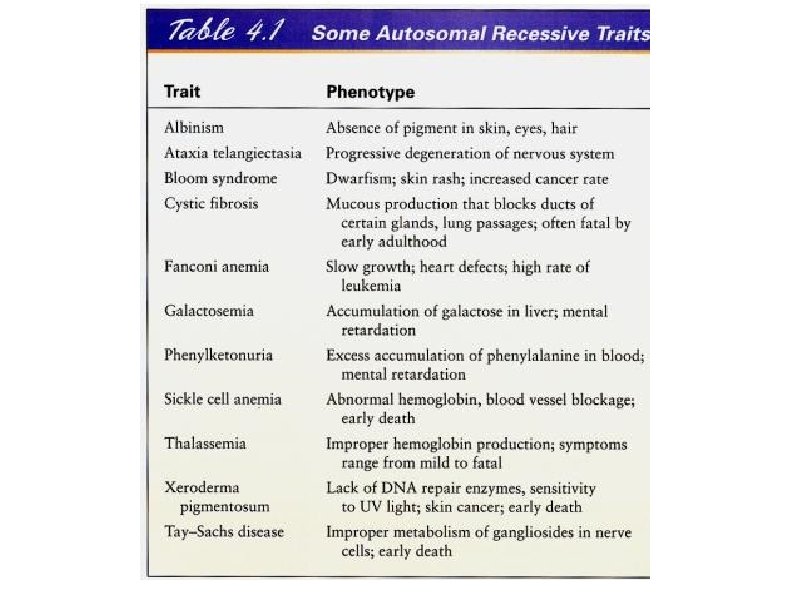
Human Genetic Disorders Most genetic diseases are caused by recessive alleles Sickle Cell Anemia Cystic Fibrosis
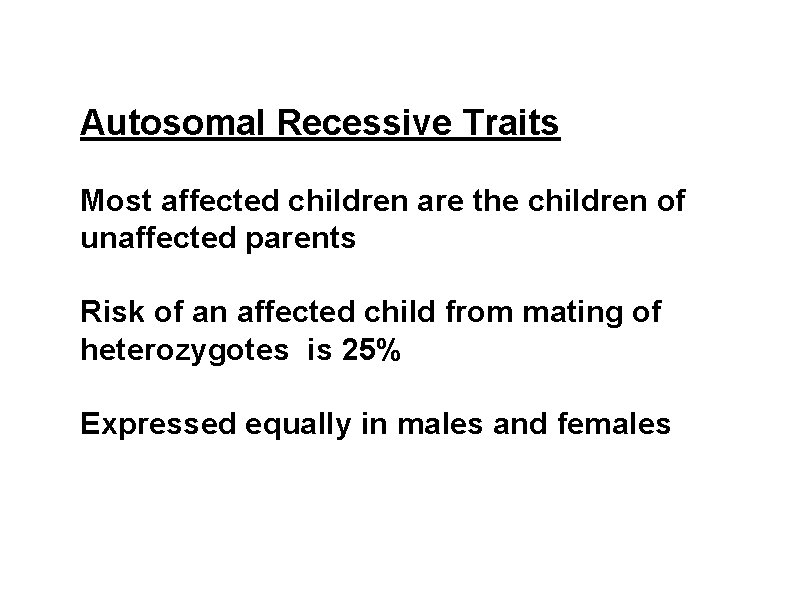
Autosomal Recessive Traits Most affected children are the children of unaffected parents Risk of an affected child from mating of heterozygotes is 25% Expressed equally in males and females
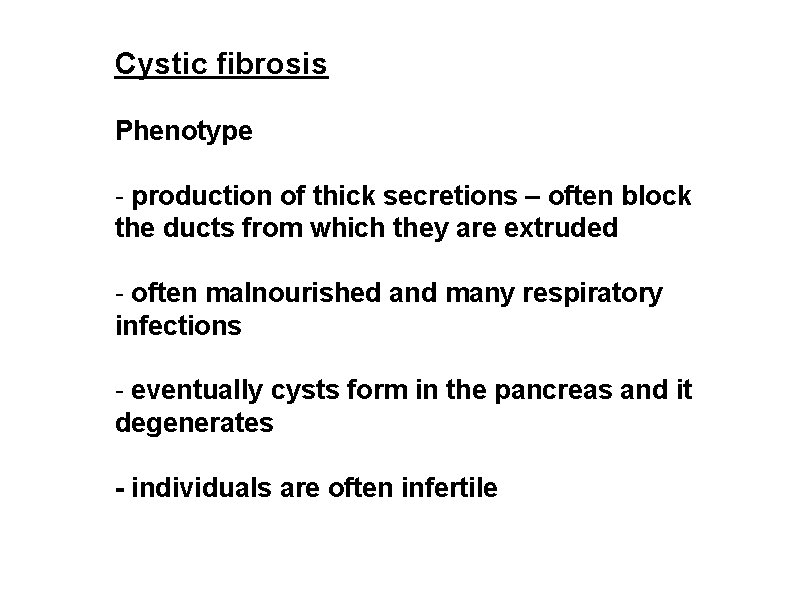
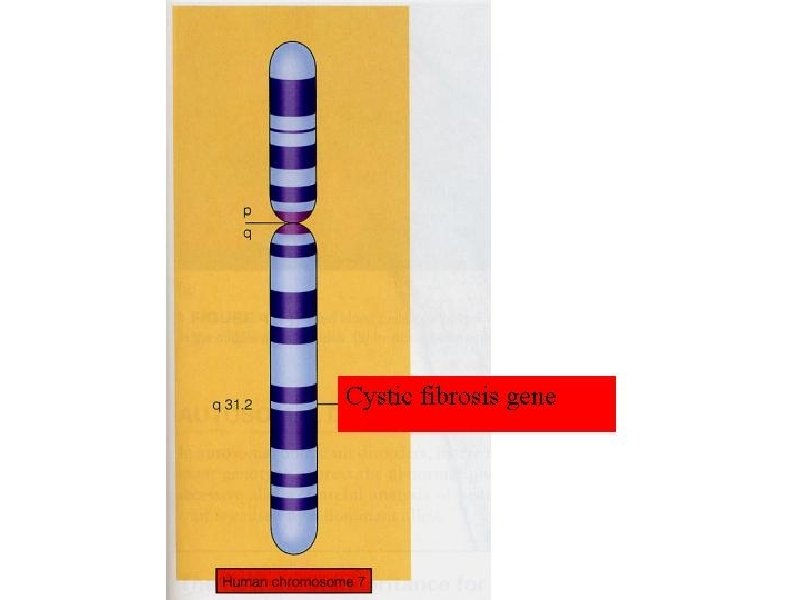
Cystic fibrosis Phenotype - production of thick secretions – often block the ducts from which they are extruded - often malnourished and many respiratory infections - eventually cysts form in the pancreas and it degenerates - individuals are often infertile
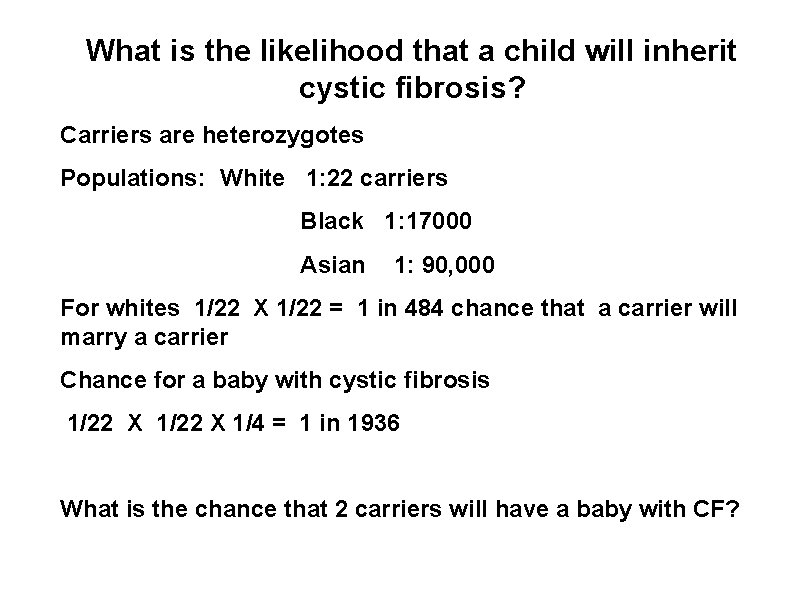
What is the likelihood that a child will inherit cystic fibrosis? Carriers are heterozygotes Populations: White 1: 22 carriers Black 1: 17000 Asian 1: 90, 000 For whites 1/22 X 1/22 = 1 in 484 chance that a carrier will marry a carrier Chance for a baby with cystic fibrosis 1/22 X 1/4 = 1 in 1936 What is the chance that 2 carriers will have a baby with CF?
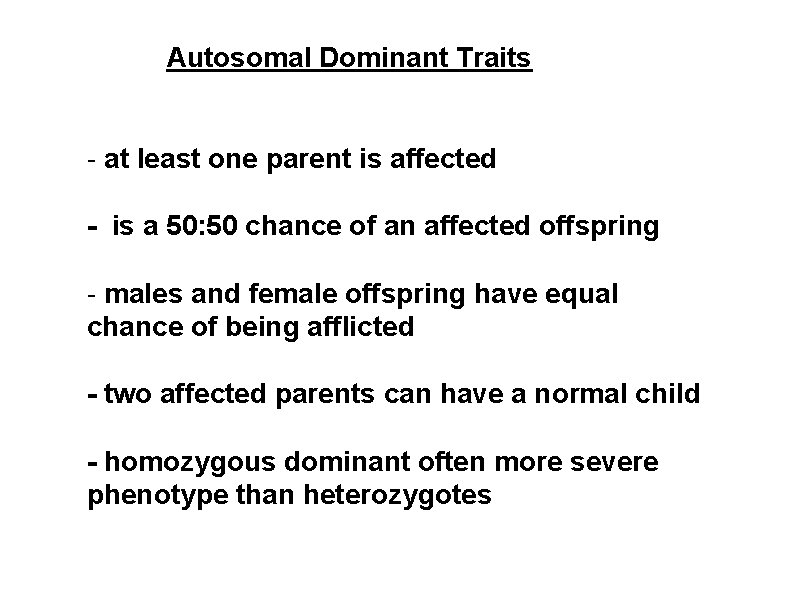
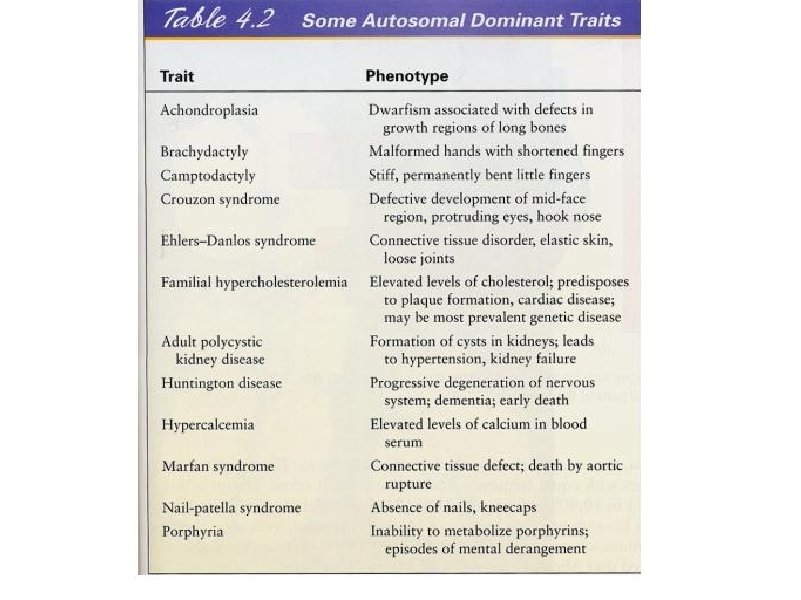
Autosomal Dominant Traits - at least one parent is affected - is a 50: 50 chance of an affected offspring - males and female offspring have equal chance of being afflicted - two affected parents can have a normal child - homozygous dominant often more severe phenotype than heterozygotes
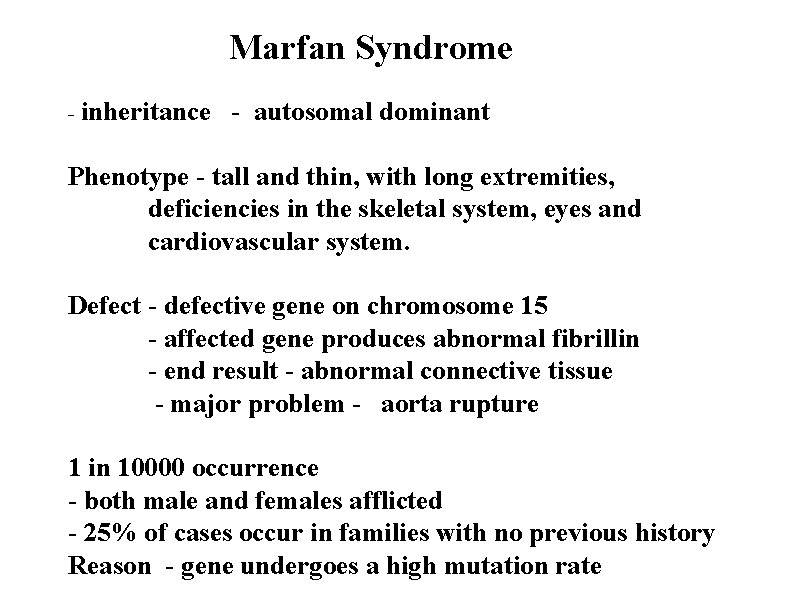
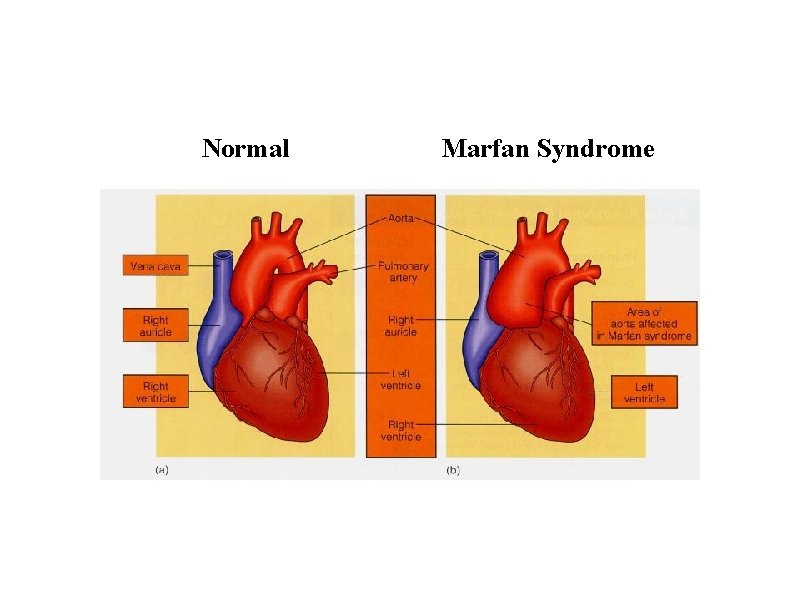
Marfan Syndrome - inheritance - autosomal dominant Phenotype - tall and thin, with long extremities, deficiencies in the skeletal system, eyes and cardiovascular system. Defect - defective gene on chromosome 15 - affected gene produces abnormal fibrillin - end result - abnormal connective tissue - major problem - aorta rupture 1 in 10000 occurrence - both male and females afflicted - 25% of cases occur in families with no previous history Reason - gene undergoes a high mutation rate
Normal Marfan Syndrome
Human Genetic Disorders A few human genetic disorders are caused by dominant alleles • 1. Normally die before reproducing — usually no phenotypic carriers • 2. Exception is Huntington's disease
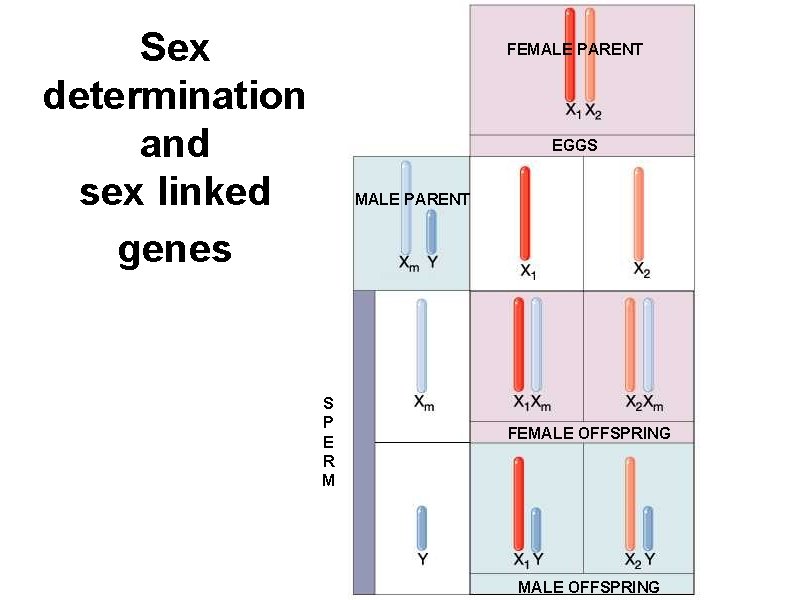
Sex determination and sex linked genes FEMALE PARENT EGGS MALE PARENT S P E R M FEMALE OFFSPRING
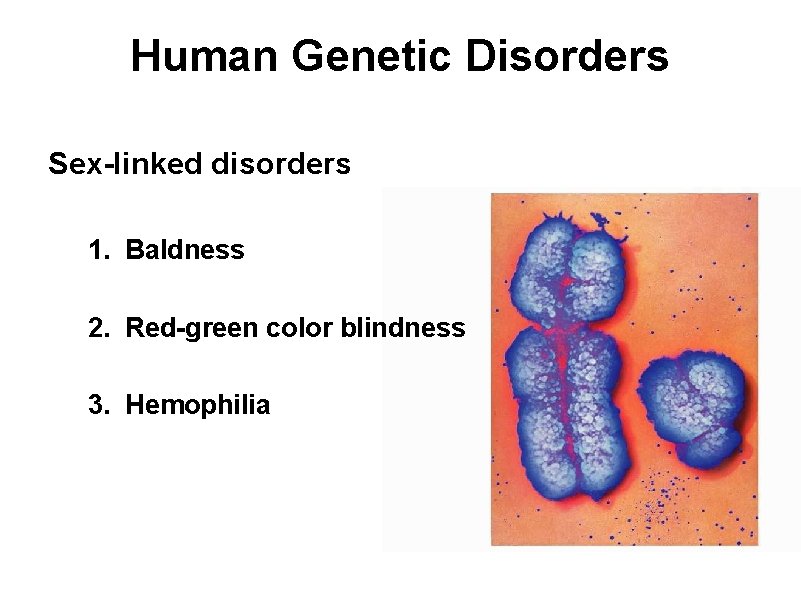
Human Genetic Disorders Sex-linked disorders 1. Baldness 2. Red-green color blindness 3. Hemophilia
Human Genetic Disorders resulting from nondisjunction during meiosis • 1. Abnormal number of sex chromosomes • a. Turner's syndrome (XO): sterile, short female; lacks Barr bodies • b. Trisomy X (XXX): fertile female; no detectable defects; decreased intelligence • c. Klinefelter's syndrome (XXY): mixed secondary sex characteristics; sterile male • d. XYY males: decreased intelligence; increased height, increased predisposition for violence
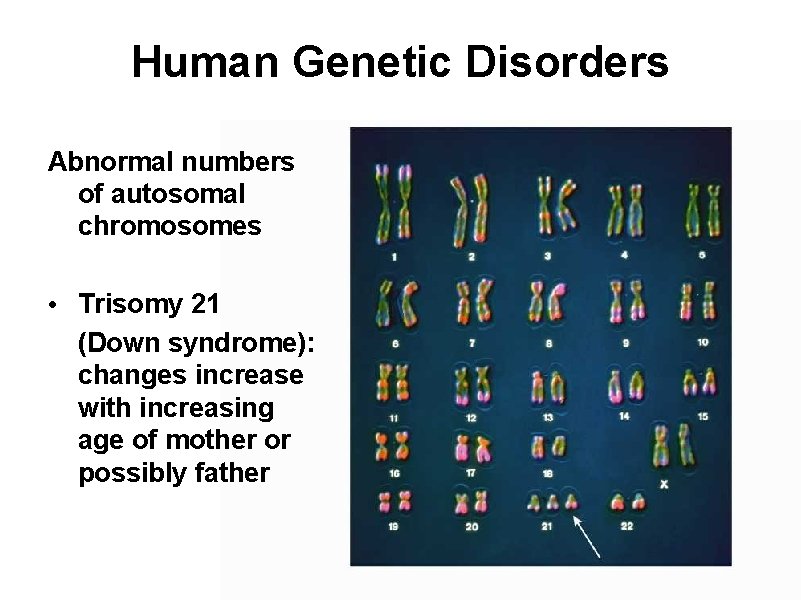
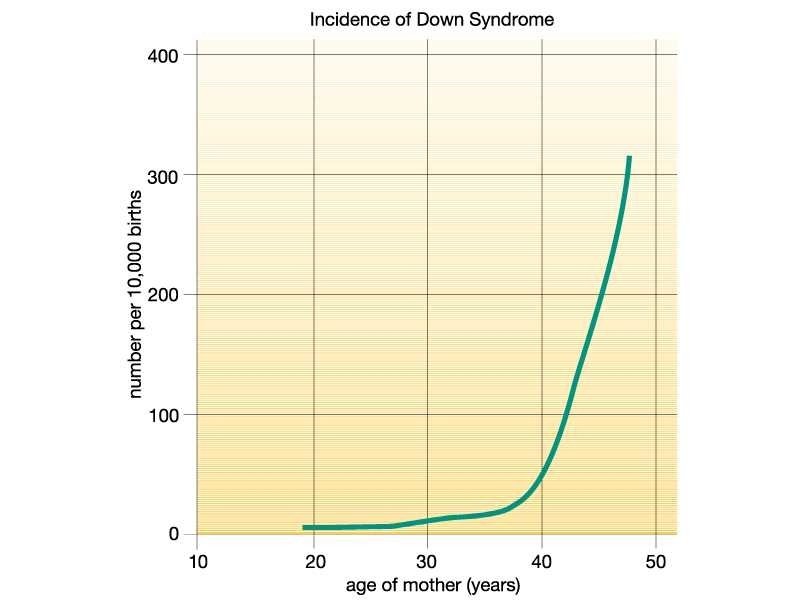
Human Genetic Disorders Abnormal numbers of autosomal chromosomes • Trisomy 21 (Down syndrome): changes increase with increasing age of mother or possibly father