
PATTERNS OF INHERITANCE Mendels Law of Independent Assortment
- Slides: 11
PATTERNS OF INHERITANCE
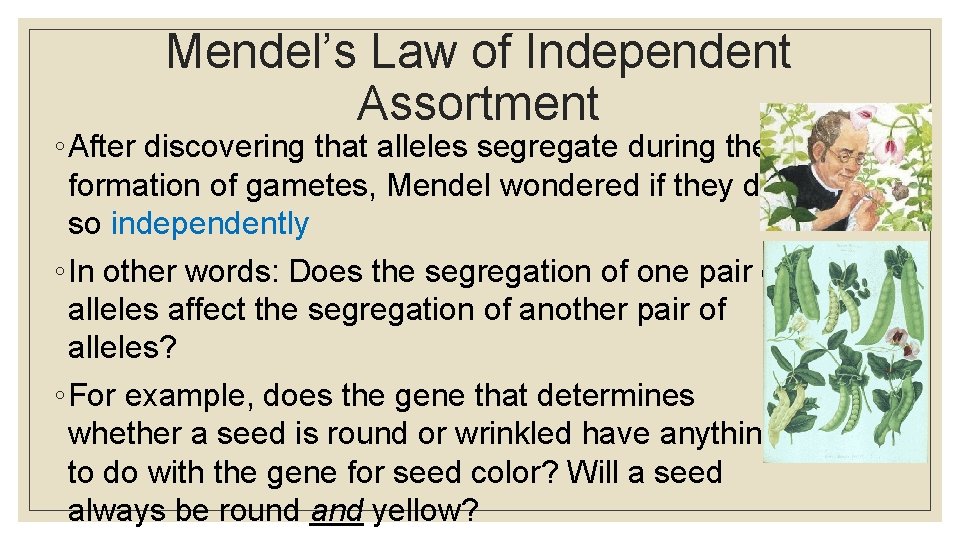
Mendel’s Law of Independent Assortment ◦ After discovering that alleles segregate during the formation of gametes, Mendel wondered if they did so independently ◦ In other words: Does the segregation of one pair of alleles affect the segregation of another pair of alleles? ◦ For example, does the gene that determines whether a seed is round or wrinkled have anything to do with the gene for seed color? Will a seed always be round and yellow?
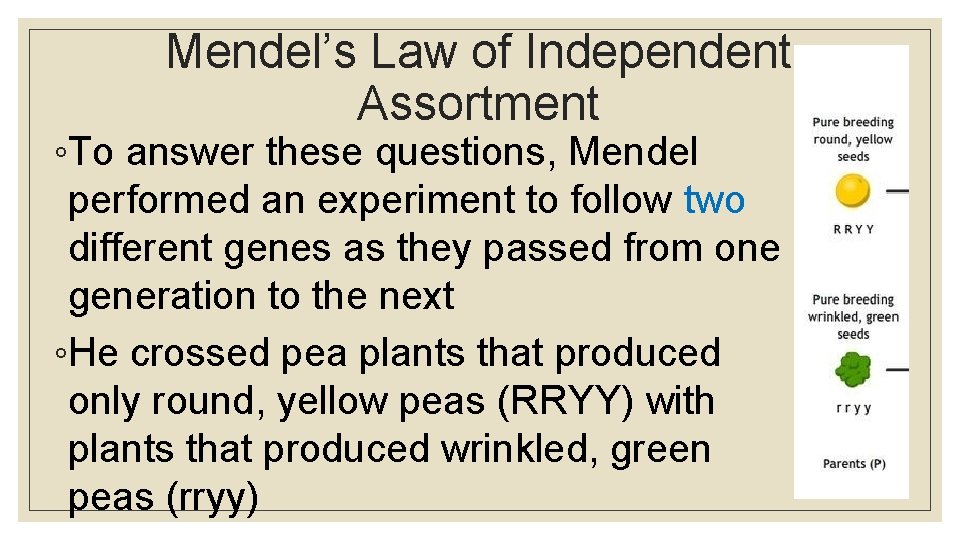
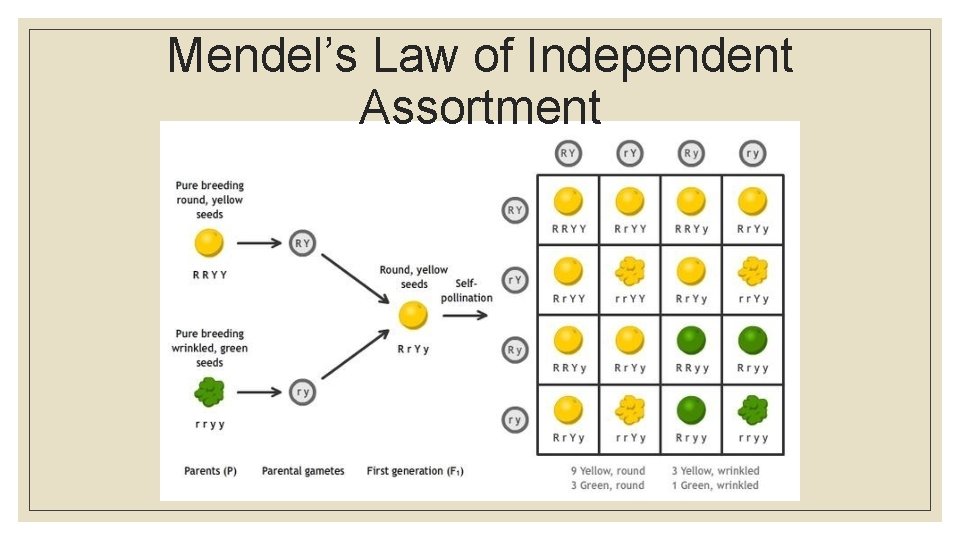
Mendel’s Law of Independent Assortment ◦To answer these questions, Mendel performed an experiment to follow two different genes as they passed from one generation to the next ◦He crossed pea plants that produced only round, yellow peas (RRYY) with plants that produced wrinkled, green peas (rryy)
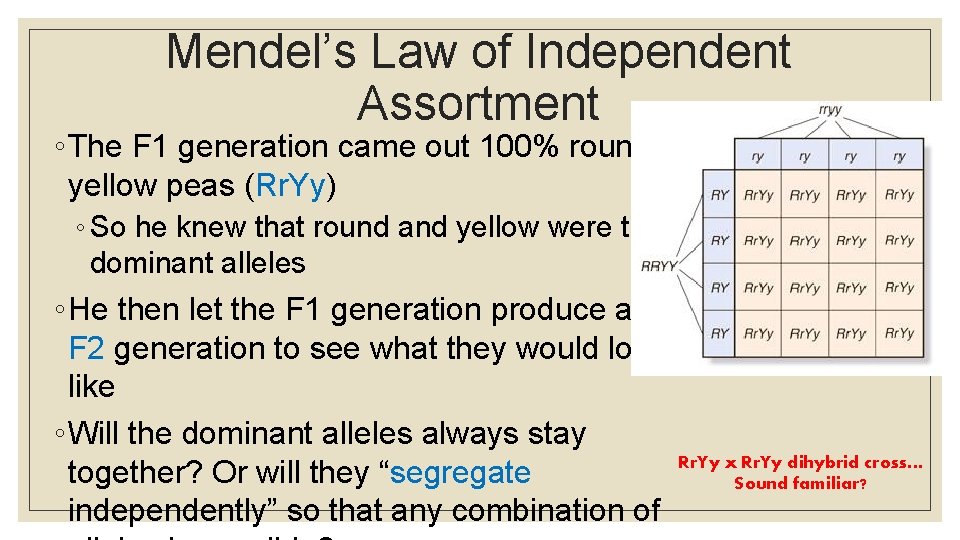
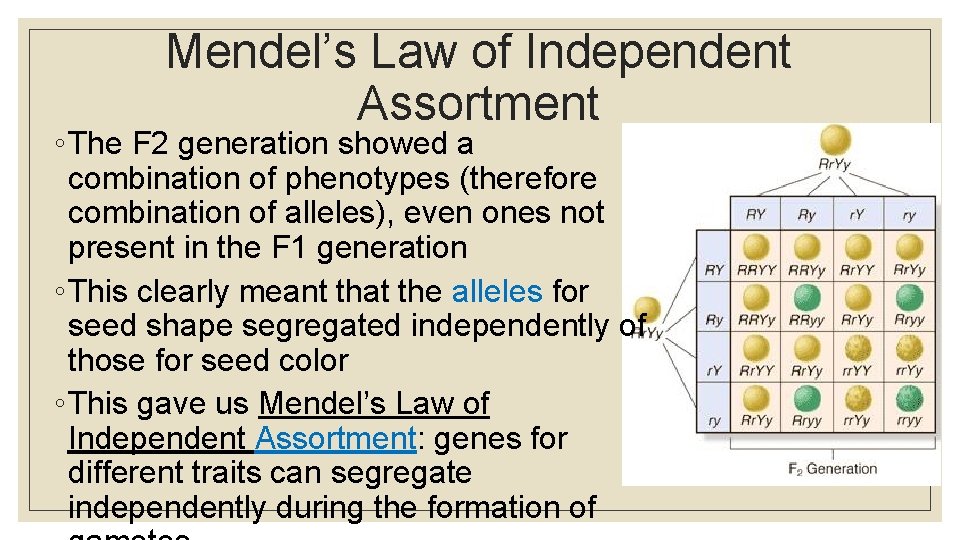
Mendel’s Law of Independent Assortment ◦ The F 1 generation came out 100% round, yellow peas (Rr. Yy) ◦ So he knew that round and yellow were the dominant alleles ◦ He then let the F 1 generation produce an F 2 generation to see what they would look like ◦ Will the dominant alleles always stay together? Or will they “segregate independently” so that any combination of Rr. Yy x Rr. Yy dihybrid cross… Sound familiar?
Mendel’s Law of Independent Assortment ◦ The F 2 generation showed a combination of phenotypes (therefore combination of alleles), even ones not present in the F 1 generation ◦ This clearly meant that the alleles for seed shape segregated independently of those for seed color ◦ This gave us Mendel’s Law of Independent Assortment: genes for different traits can segregate independently during the formation of
Mendel’s Law of Independent Assortment
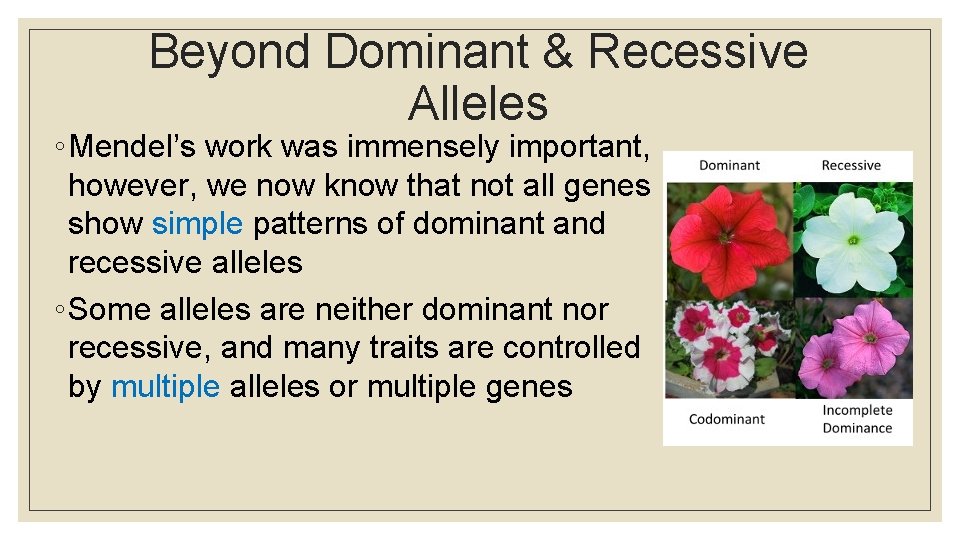
Beyond Dominant & Recessive Alleles ◦ Mendel’s work was immensely important, however, we now know that not all genes show simple patterns of dominant and recessive alleles ◦ Some alleles are neither dominant nor recessive, and many traits are controlled by multiple alleles or multiple genes
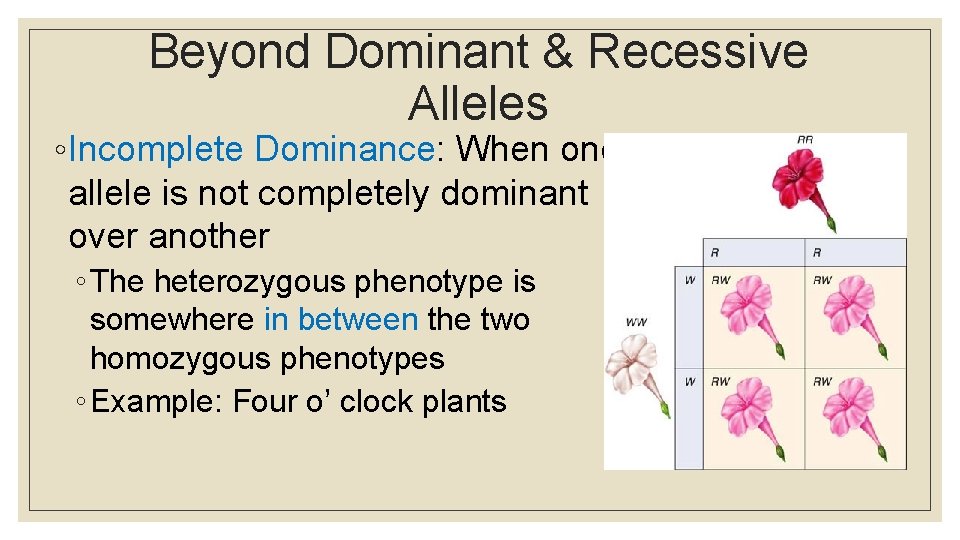
Beyond Dominant & Recessive Alleles ◦ Incomplete Dominance: When one allele is not completely dominant over another ◦ The heterozygous phenotype is somewhere in between the two homozygous phenotypes ◦ Example: Four o’ clock plants
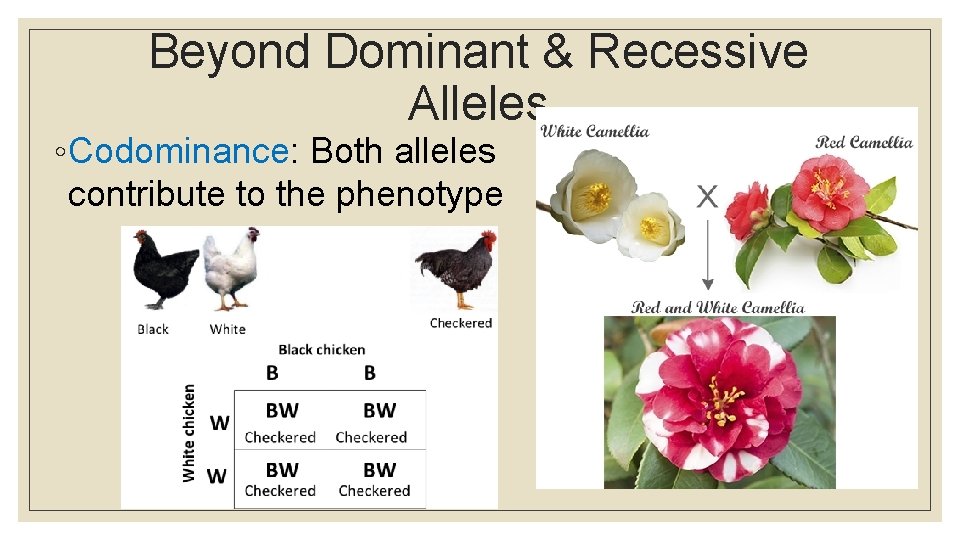
Beyond Dominant & Recessive Alleles ◦ Codominance: Both alleles contribute to the phenotype
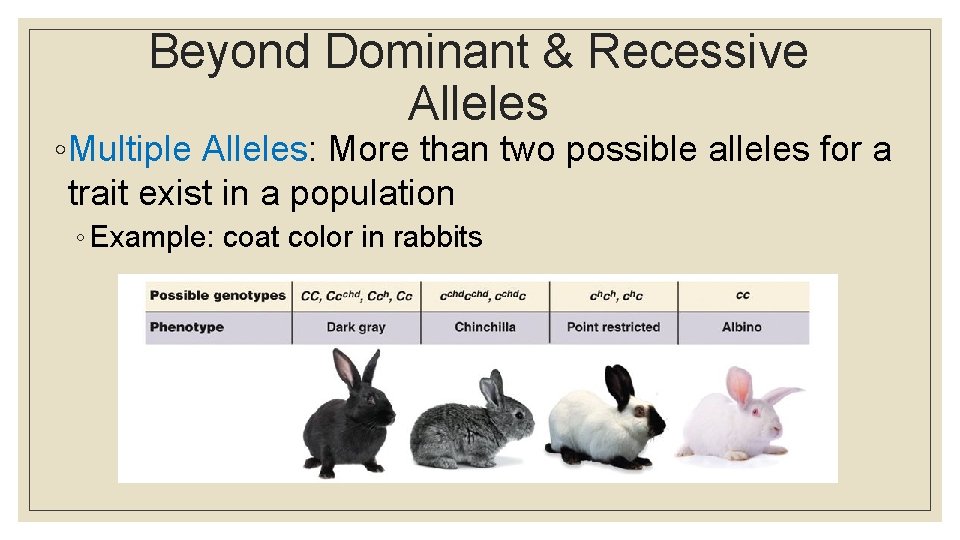
Beyond Dominant & Recessive Alleles ◦ Multiple Alleles: More than two possible alleles for a trait exist in a population ◦ Example: coat color in rabbits
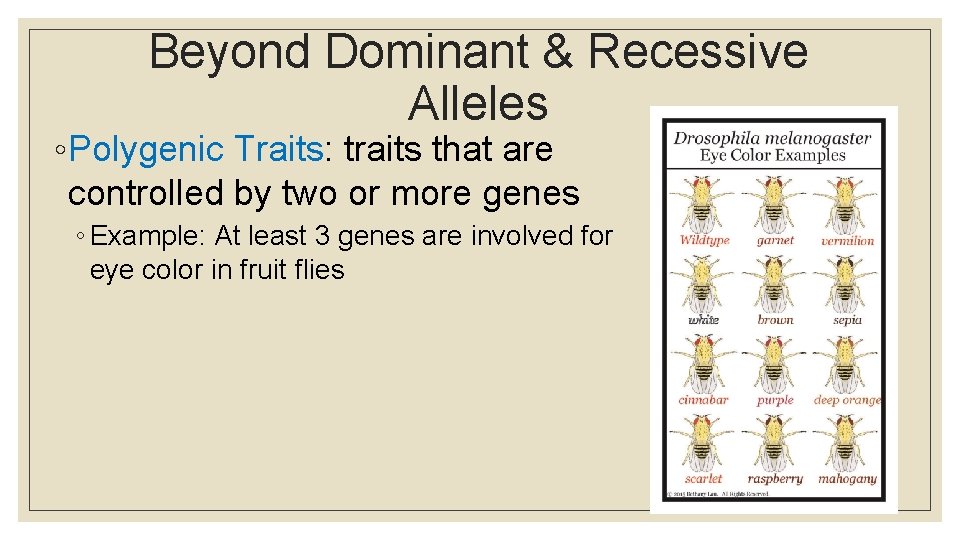
Beyond Dominant & Recessive Alleles ◦ Polygenic Traits: traits that are controlled by two or more genes ◦ Example: At least 3 genes are involved for eye color in fruit flies