
Patterns of Inheritance Early Ideas of Heredity Before
Patterns of Inheritance
Early Ideas of Heredity Before the 20 th century, 2 concepts were the basis for ideas about heredity: -heredity occurs within species -traits are transmitted directly from parent to offspring This led to the belief that inheritance is a matter of blending traits from the parents. 2
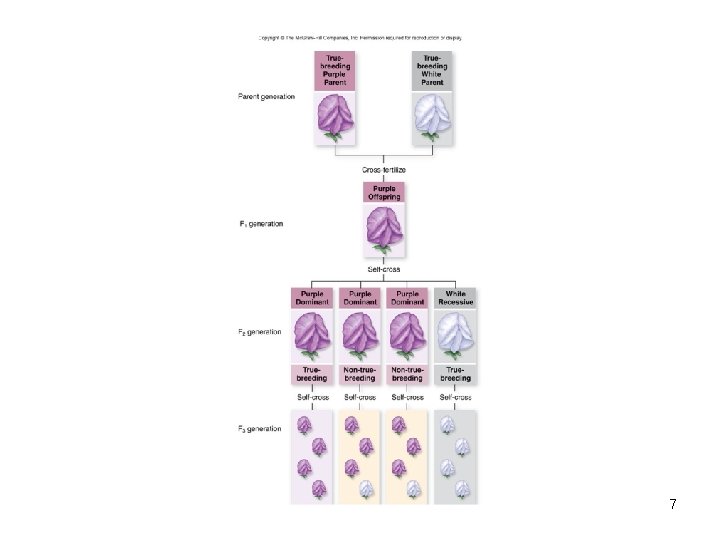
Monohybrid Crosses Monohybrid cross: a cross to study only 2 variations of a single trait Mendel produced true-breeding pea strains for 7 different traits -each trait had 2 alternate forms (variations) -Mendel cross-fertilized the 2 true-breeding strains for each trait 3
Monohybrid Crosses F 1 generation (1 st filial generation): offspring produced by crossing 2 truebreeding strains For every trait Mendel studied, all F 1 plants resembled only 1 parent -no plants with characteristics intermediate between the 2 parents were produced 4
Monohybrid Crosses F 1 generation: offspring resulting from a cross of true-breeding parents F 2 generation: offspring resulting from the self-fertilization of F 1 plants dominant: the form of each trait expressed in the F 1 plants recessive: the form of the trait not seen in the F 1 plants 5
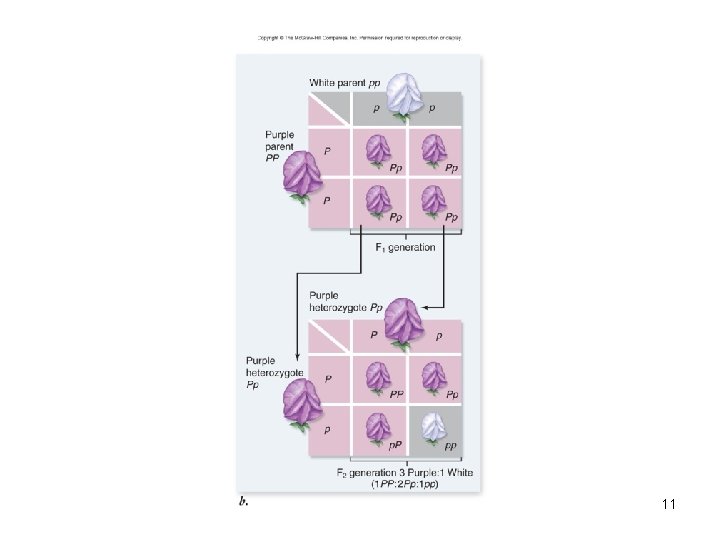
Monohybrid Crosses F 2 plants exhibited both forms of the trait in a very specific pattern: ¾ plants with the dominant form ¼ plant with the recessive form The dominant to recessive ratio was 3 : 1. Mendel discovered the ratio is actually: 1 true-breeding dominant plant 2 not-true-breeding dominant plants 1 true-breeding recessive plant 6
7
Monohybrid Crosses gene: information for a trait passed from parent to offspring alleles: alternate forms of a gene homozygous: having 2 of the same allele heterozygous: having 2 different alleles 8
Monohybrid Crosses genotype: total set of alleles of an individual PP = homozygous dominant Pp = heterozygous pp = homozygous recessive phenotype: outward appearance of an individual 9
Monohybrid Crosses Principle of Segregation Two alleles for a gene segregate during gamete formation and are rejoined at random, one from each parent, during fertilization. 10
11
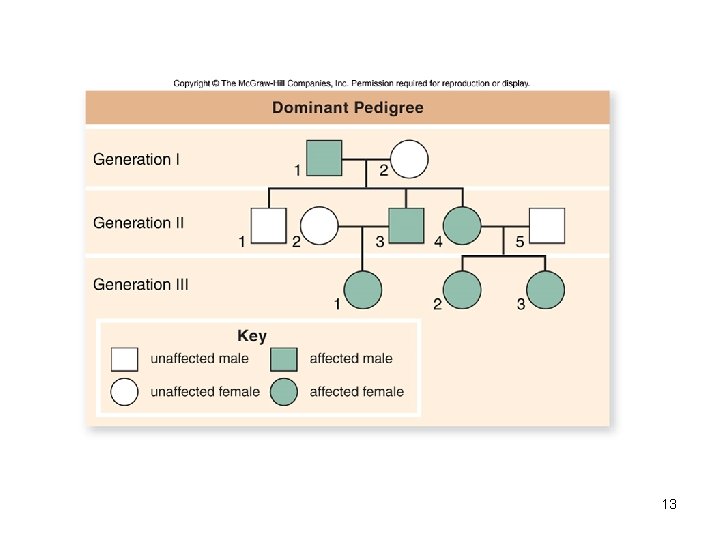
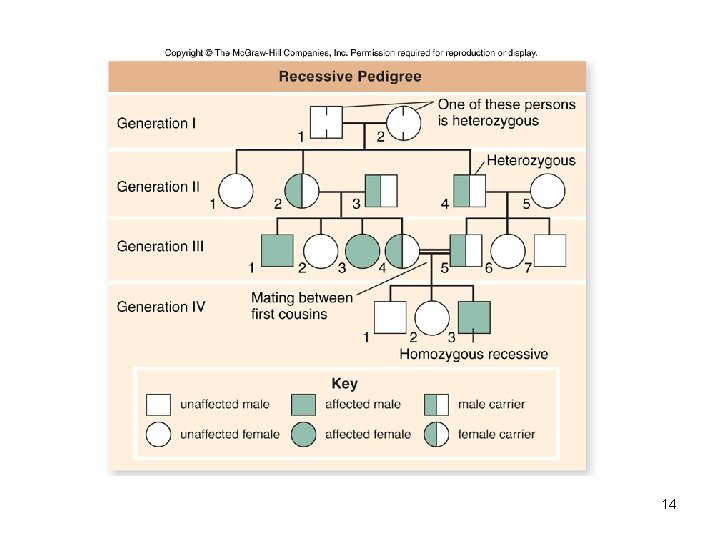
Monohybrid Crosses Some human traits are controlled by a single gene. -some of these exhibit dominant inheritance -some of these exhibit recessive inheritance Pedigree analysis is used to track inheritance patterns in families. 12
13
14
Extensions to Mendel’s model of inheritance assumes that: -each trait is controlled by a single gene -each gene has only 2 alleles -there is a clear dominant-recessive relationship between the alleles Most genes do not meet these criteria. 15
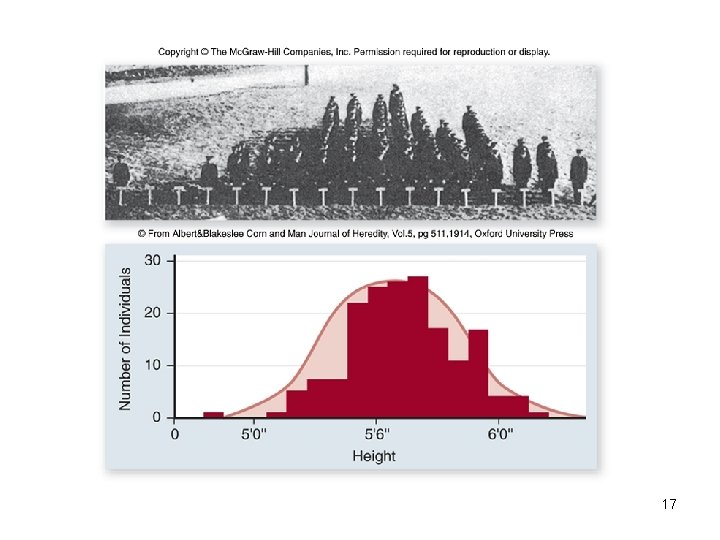
Extensions to Mendel Polygenic inheritance occurs when multiple genes are involved in controlling the phenotype of a trait. The phenotype is an accumulation of contributions by multiple genes. These traits show continuous variation and are referred to as quantitative traits. For example – human height 16
17
Extensions to Mendel Pleiotropy refers to an allele which has more than one effect on the phenotype. This can be seen in human diseases such as cystic fibrosis or sickle cell anemia. In these diseases, multiple symptoms can be traced back to one defective allele. 18
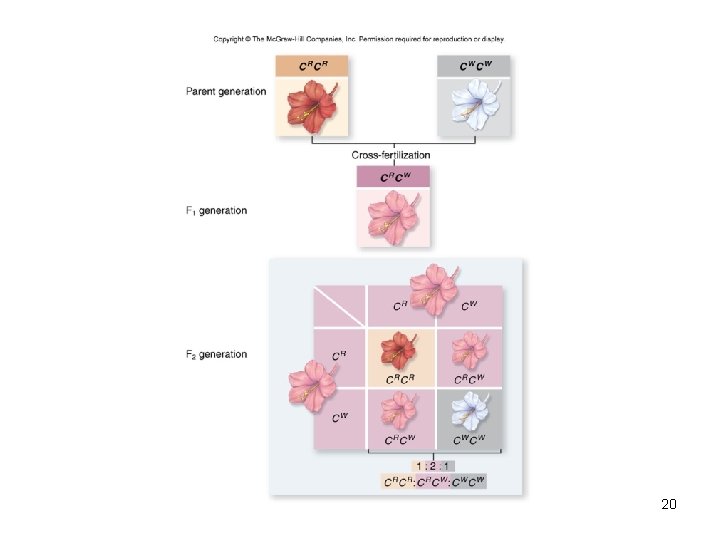
Extensions to Mendel Incomplete dominance: the heterozygote is intermediate in phenotype between the 2 homozygotes. Codominance: the heterozygote shows some aspect of the phenotypes of both homozygotes. 19
20
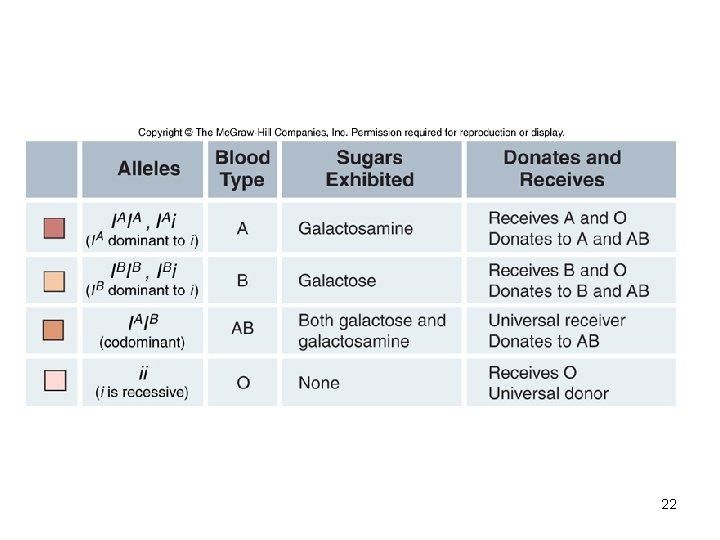
Extensions to Mendel The human ABO blood group system demonstrates: -multiple alleles: there are 3 alleles of the I gene (IA, IB, and i) -codominance: IA and IB are dominant to i but codominant to each other 21
22
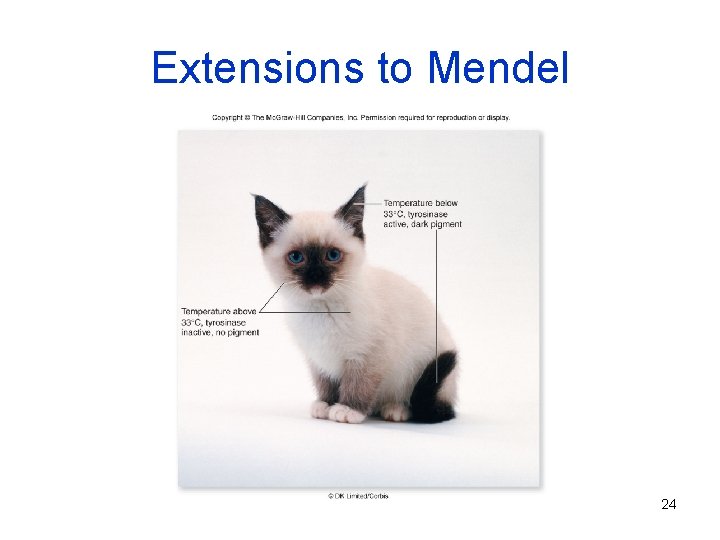
Extensions to Mendel The expression of some genes can be influenced by the environment. for example: coat color in Himalayan rabbits and Siamese cats -an allele produces an enzyme that allows pigment production only at temperatures below 30 o. C 23
Extensions to Mendel 24
- Slides: 24