
Patterns of Industrial Innovation 1 Outline l l


- Slides: 13
Patterns of Industrial Innovation 1
Outline l l l 2 Introduction A spectrum of innovators Patterns of innovation Managing technological innovation Consistency of management action Conclusion
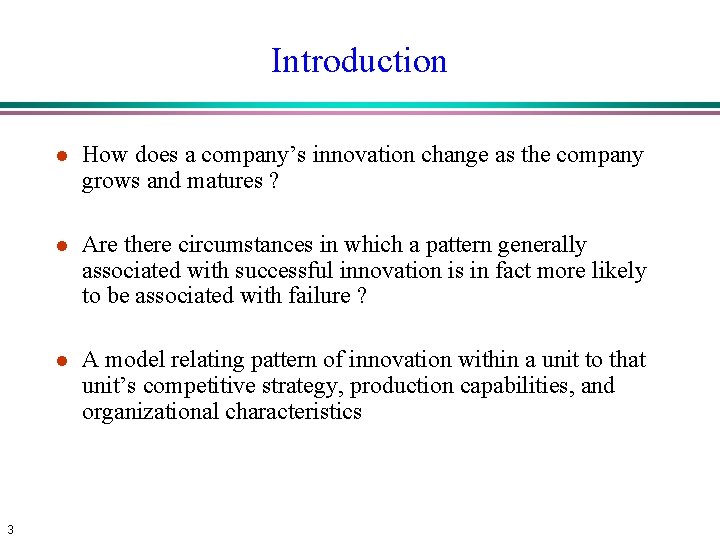
Introduction 3 l How does a company’s innovation change as the company grows and matures ? l Are there circumstances in which a pattern generally associated with successful innovation is in fact more likely to be associated with failure ? l A model relating pattern of innovation within a unit to that unit’s competitive strategy, production capabilities, and organizational characteristics
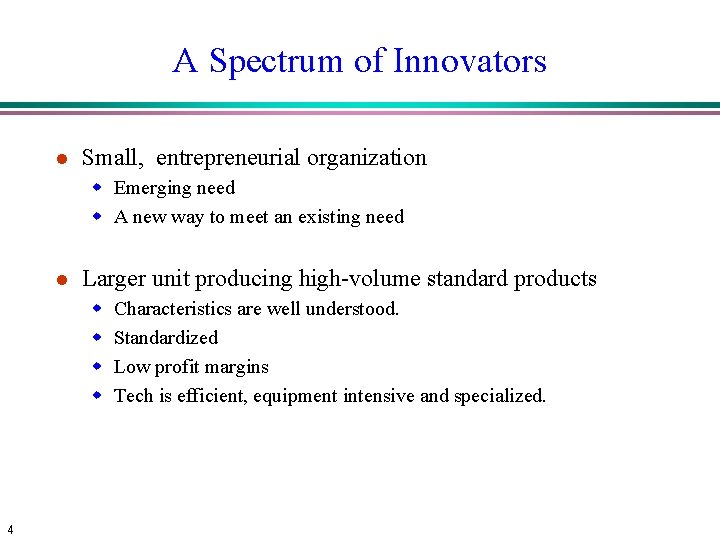
A Spectrum of Innovators l Small, entrepreneurial organization w Emerging need w A new way to meet an existing need l Larger unit producing high-volume standard products w w 4 Characteristics are well understood. Standardized Low profit margins Tech is efficient, equipment intensive and specialized.
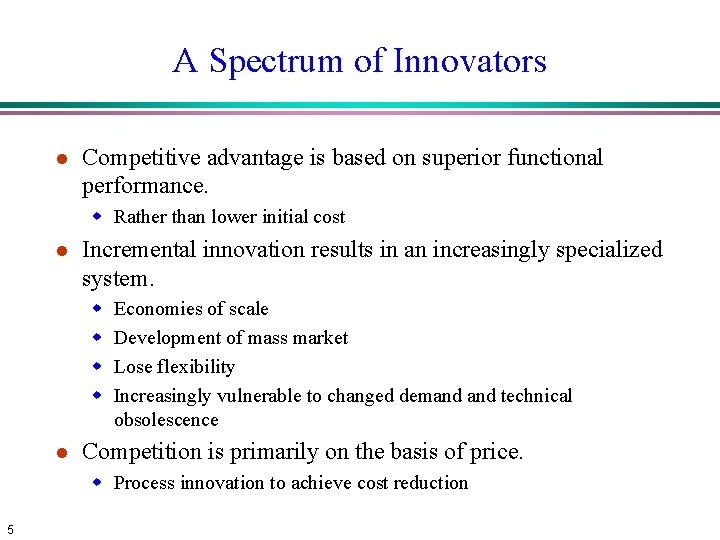
A Spectrum of Innovators l Competitive advantage is based on superior functional performance. w Rather than lower initial cost l Incremental innovation results in an increasingly specialized system. w w l Economies of scale Development of mass market Lose flexibility Increasingly vulnerable to changed demand technical obsolescence Competition is primarily on the basis of price. w Process innovation to achieve cost reduction 5
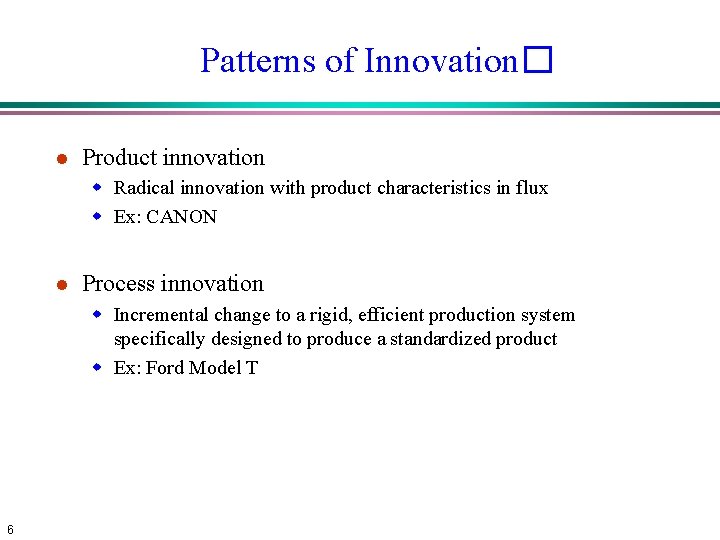
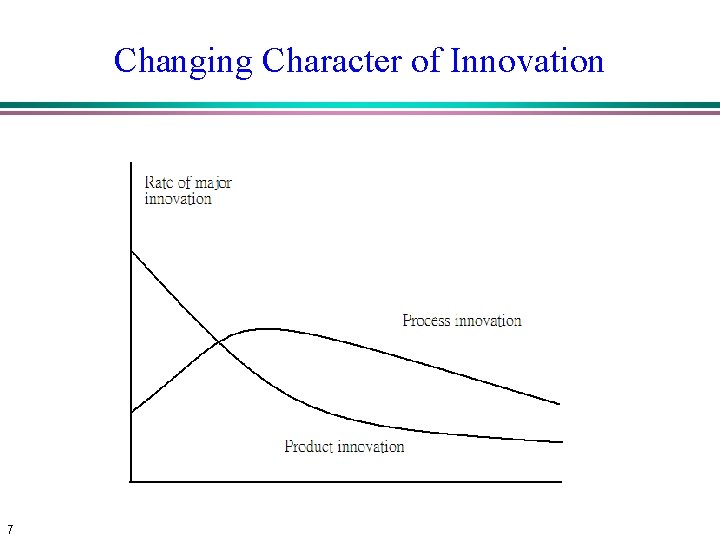
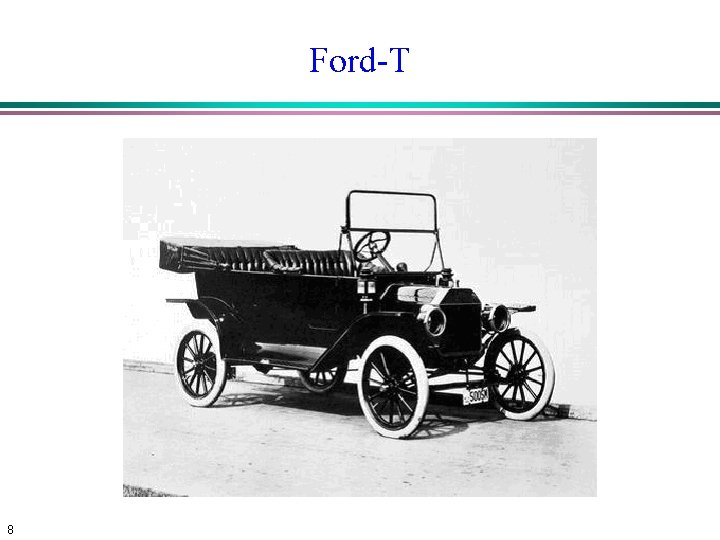
Patterns of Innovation� l Product innovation w Radical innovation with product characteristics in flux w Ex: CANON l Process innovation w Incremental change to a rigid, efficient production system specifically designed to produce a standardized product w Ex: Ford Model T 6
Changing Character of Innovation 7
Ford-T 8
Characteristic of Innovation 9 l Changes in innovative pattern, production process, and scale and kind of production capacity all occur together in a consistent, predictable way. l High rate of productivity improvement is associated with process improvement in every case we have studied.
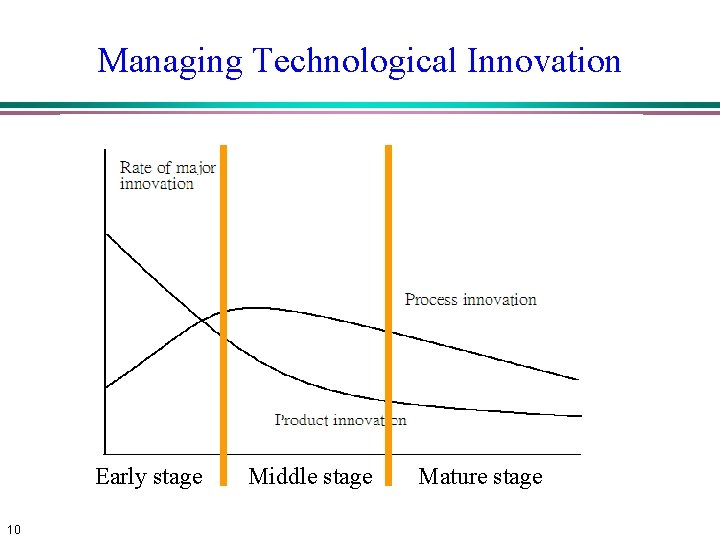
Managing Technological Innovation Early stage 10 Middle stage Mature stage
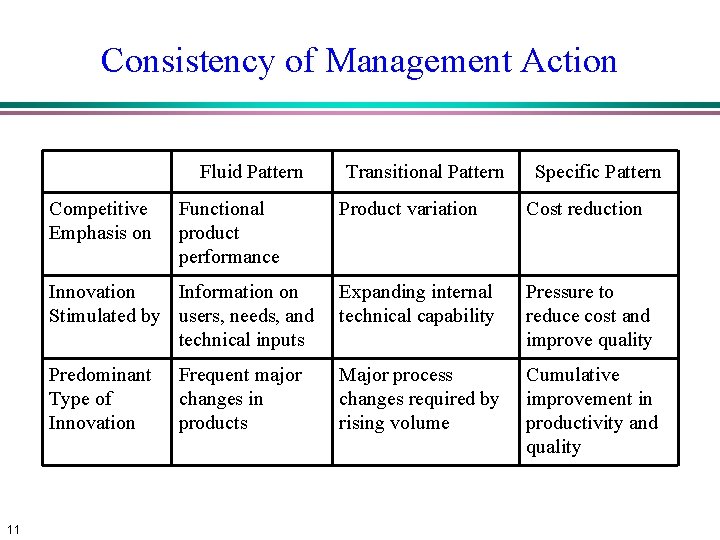
Consistency of Management Action Fluid Pattern Competitive Emphasis on 11 Functional product performance Transitional Pattern Specific Pattern Product variation Cost reduction Innovation Information on Stimulated by users, needs, and technical inputs Expanding internal technical capability Pressure to reduce cost and improve quality Predominant Type of Innovation Major process changes required by rising volume Cumulative improvement in productivity and quality Frequent major changes in products
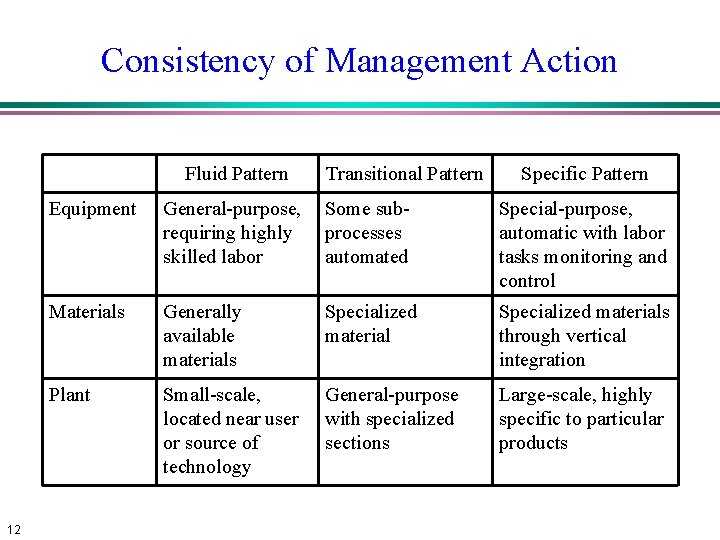
Consistency of Management Action Fluid Pattern 12 Transitional Pattern Specific Pattern Equipment General-purpose, requiring highly skilled labor Some subprocesses automated Special-purpose, automatic with labor tasks monitoring and control Materials Generally available materials Specialized materials through vertical integration Plant Small-scale, located near user or source of technology General-purpose with specialized sections Large-scale, highly specific to particular products
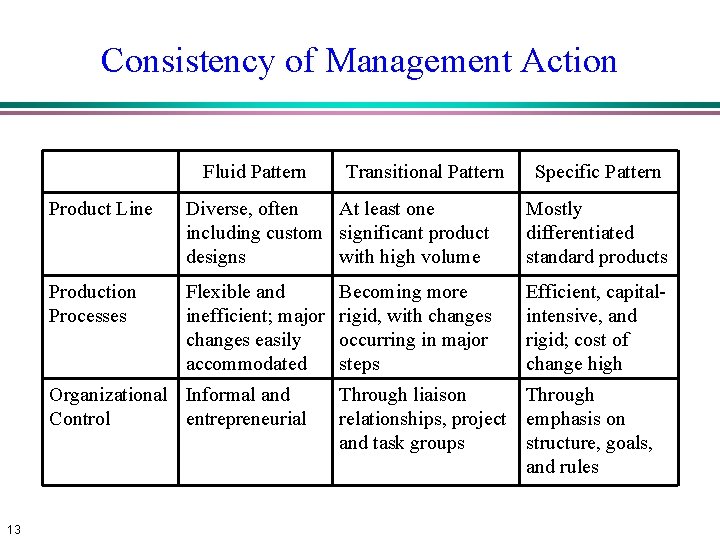
Consistency of Management Action Fluid Pattern Specific Pattern Product Line Diverse, often At least one including custom significant product designs with high volume Mostly differentiated standard products Production Processes Flexible and inefficient; major changes easily accommodated Efficient, capitalintensive, and rigid; cost of change high Organizational Informal and Control entrepreneurial 13 Transitional Pattern Becoming more rigid, with changes occurring in major steps Through liaison Through relationships, project emphasis on and task groups structure, goals, and rules