
PATTERNS OF HEREDITY AND HUMAN GENETICS Chapter 12
- Slides: 26
PATTERNS OF HEREDITY AND HUMAN GENETICS Chapter 12
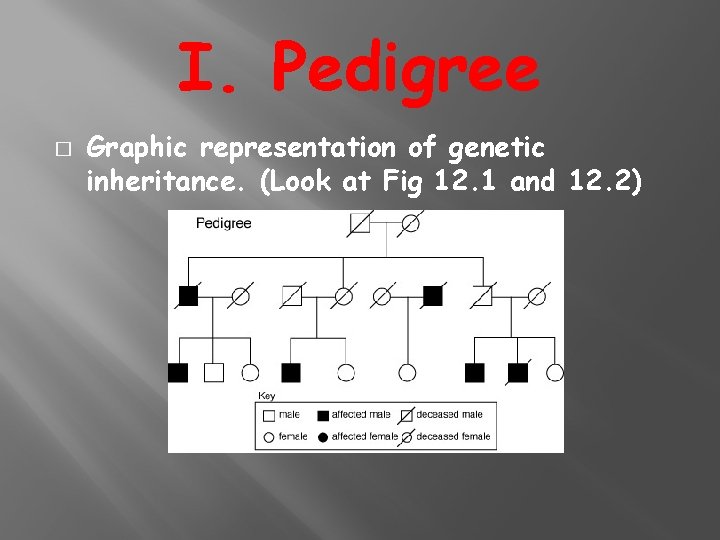
I. Pedigree � Graphic representation of genetic inheritance. (Look at Fig 12. 1 and 12. 2)
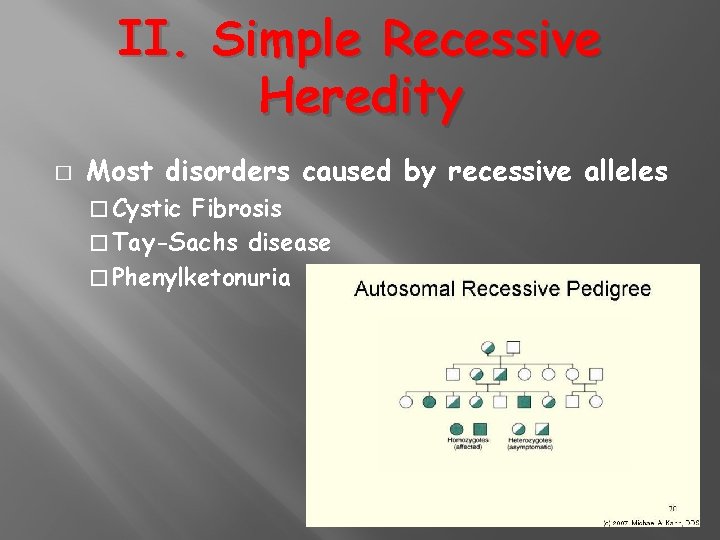
I. Pedigree Circle = female Square = male Shaded = shows trait being studied Half Shaded = Carrier – heterozygous individual
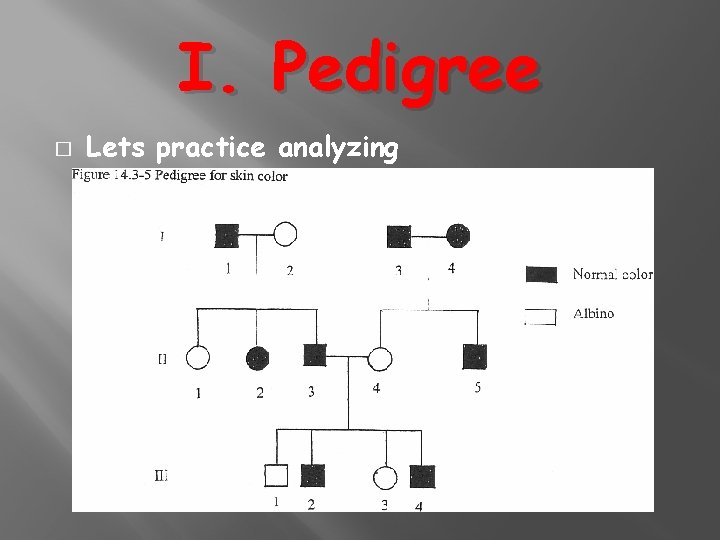
I. Pedigree � Lets practice analyzing � What � II-3 do we know about I-1 and III-4? and IV-2 and 4 are what? � Which � Is couples are parents? II-1 and/or II-2 carriers? Why or why not?
II. Simple Recessive Heredity � Most disorders caused by recessive alleles � Cystic Fibrosis � Tay-Sachs disease � Phenylketonuria
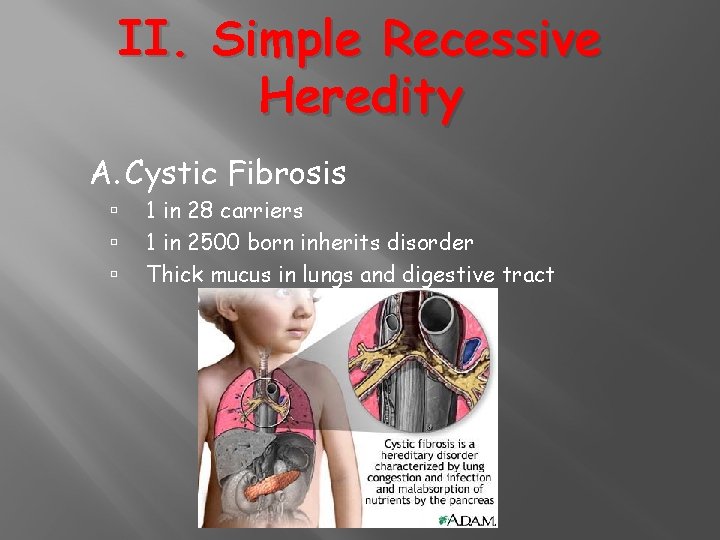
II. Simple Recessive Heredity A. Cystic Fibrosis 1 in 28 carriers 1 in 2500 born inherits disorder Thick mucus in lungs and digestive tract
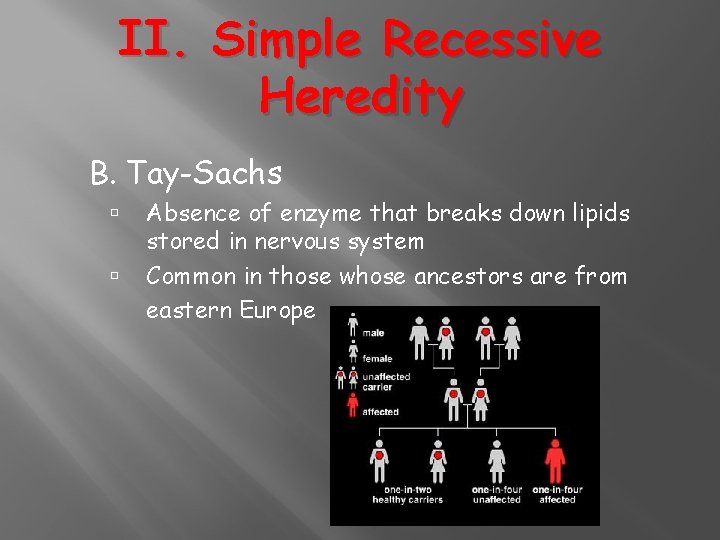
II. Simple Recessive Heredity B. Tay-Sachs Absence of enzyme that breaks down lipids stored in nervous system Common in those whose ancestors are from eastern Europe
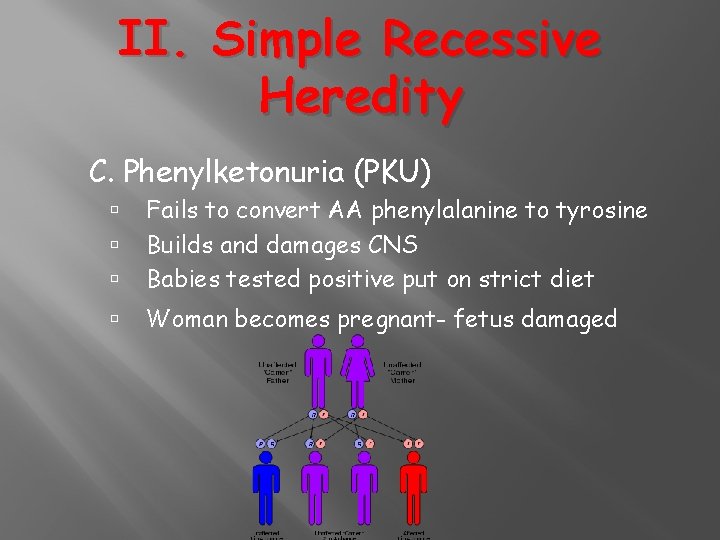
II. Simple Recessive Heredity C. Phenylketonuria (PKU) Fails to convert AA phenylalanine to tyrosine Builds and damages CNS Babies tested positive put on strict diet Woman becomes pregnant- fetus damaged
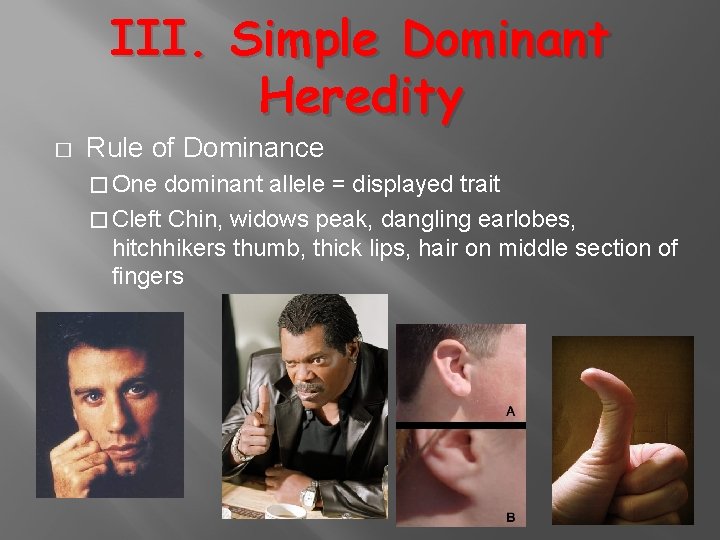
III. Simple Dominant Heredity � Rule of Dominance � One dominant allele = displayed trait � Cleft Chin, widows peak, dangling earlobes, hitchhikers thumb, thick lips, hair on middle section of fingers
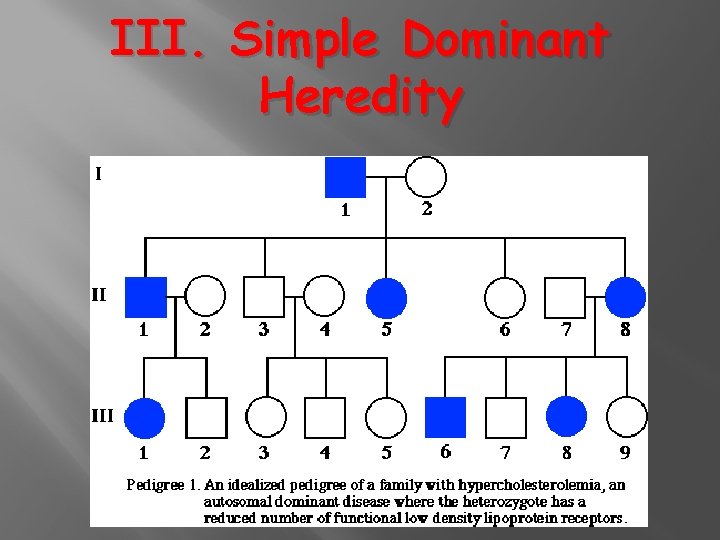
III. Simple Dominant Heredity
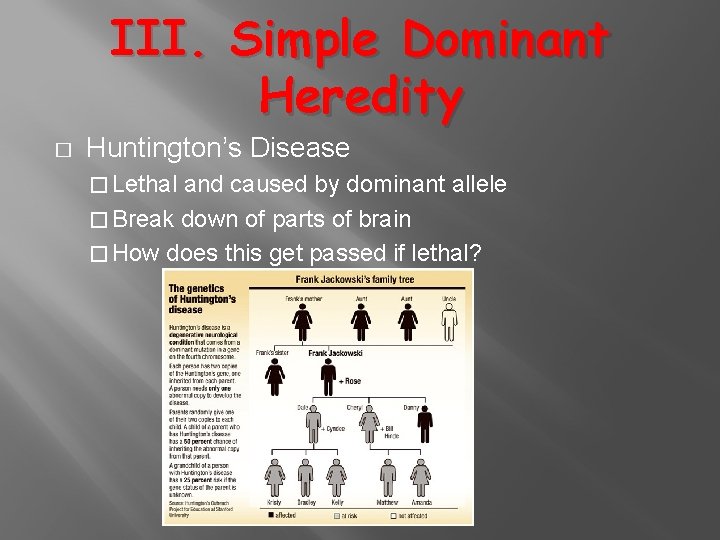
III. Simple Dominant Heredity � Huntington’s Disease � Lethal and caused by dominant allele � Break down of parts of brain � How does this get passed if lethal?
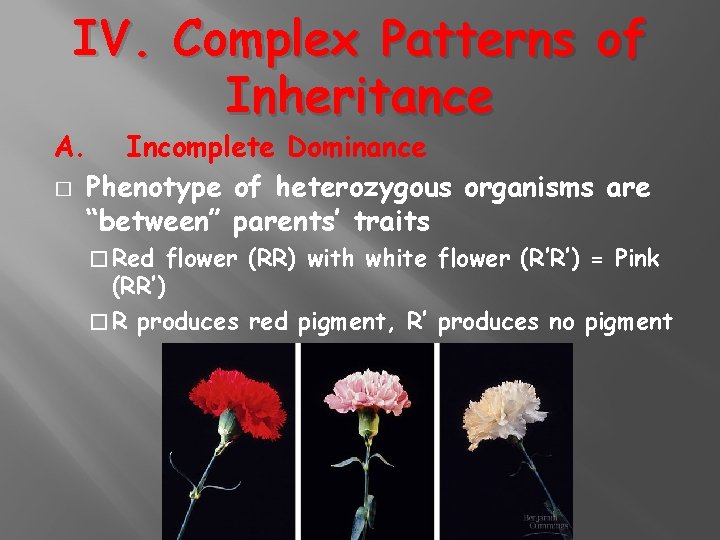
IV. Complex Patterns of Inheritance A. Incomplete Dominance � Phenotype of heterozygous organisms are “between” parents’ traits � Red flower (RR) with white flower (R’R’) = Pink (RR’) � R produces red pigment, R’ produces no pigment
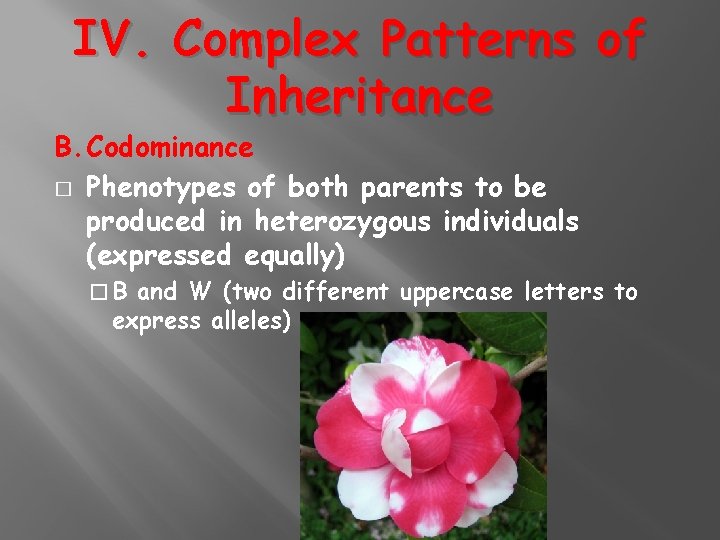
IV. Complex Patterns of Inheritance B. Codominance � Phenotypes of both parents to be produced in heterozygous individuals (expressed equally) �B and W (two different uppercase letters to express alleles)
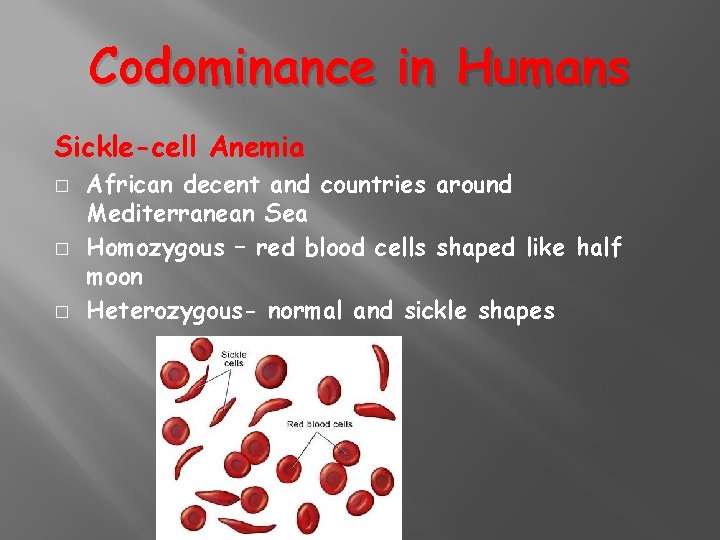
Codominance in Humans Sickle-cell Anemia � � � African decent and countries around Mediterranean Sea Homozygous – red blood cells shaped like half moon Heterozygous- normal and sickle shapes
IV. Complex Patterns of Inheritance C. Sex Determination � Humans = 46 chromosomes (23 pairs) � 22 pairs = Autosomes � Sex chromosomes – male or female (XY, XX) � Abnormal numbers of sex chromosomes � XO, XXX or XXY, XYY
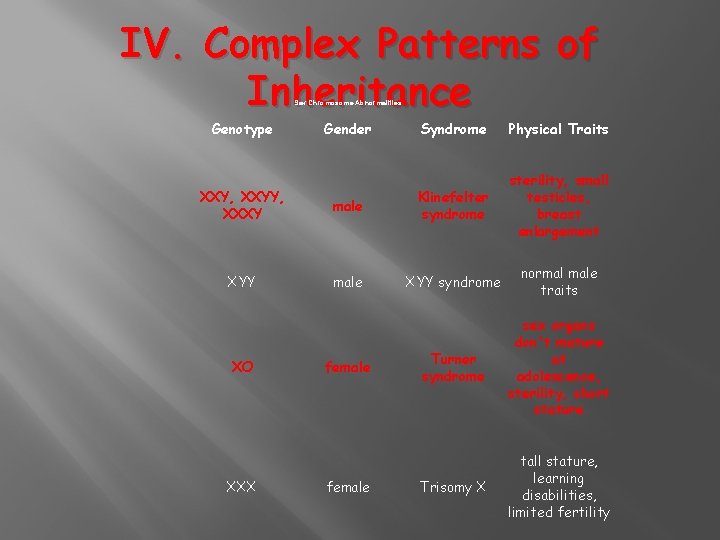
IV. Complex Patterns of Inheritance Sex Chromosome Abnormalities Genotype Gender Syndrome Physical Traits XXY, XXYY, XXXY male Klinefelter syndrome sterility, small testicles, breast enlargement XYY male XYY syndrome normal male traits Turner syndrome sex organs don't mature at adolescence, sterility, short stature Trisomy X tall stature, learning disabilities, limited fertility XO XXX female
IV. Complex Patterns of Inheritance D. Sex Linked Inheritance � � � Traits controlled by genes located on sex chromosomes Y has no corresponding allele Y linked only passed from male to male Females must have both recessive (xx) All X-linked are expressed in Males � No corresponding X to mask trait
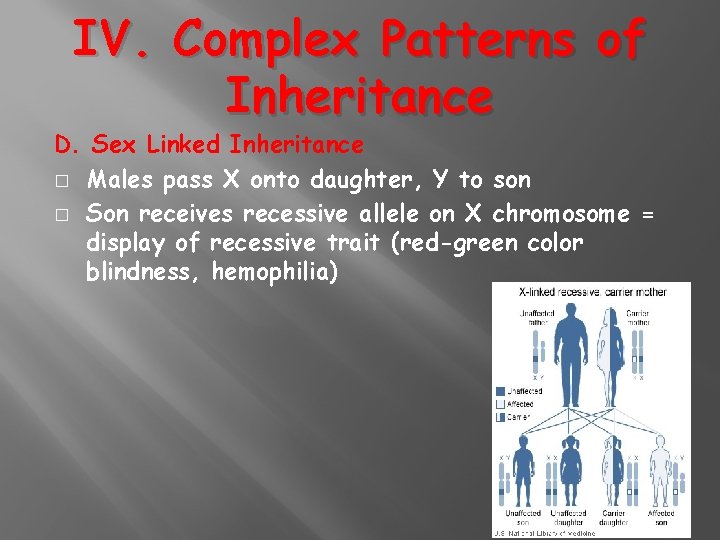
IV. Complex Patterns of Inheritance D. Sex Linked Inheritance � Males pass X onto daughter, Y to son � Son receives recessive allele on X chromosome = display of recessive trait (red-green color blindness, hemophilia)
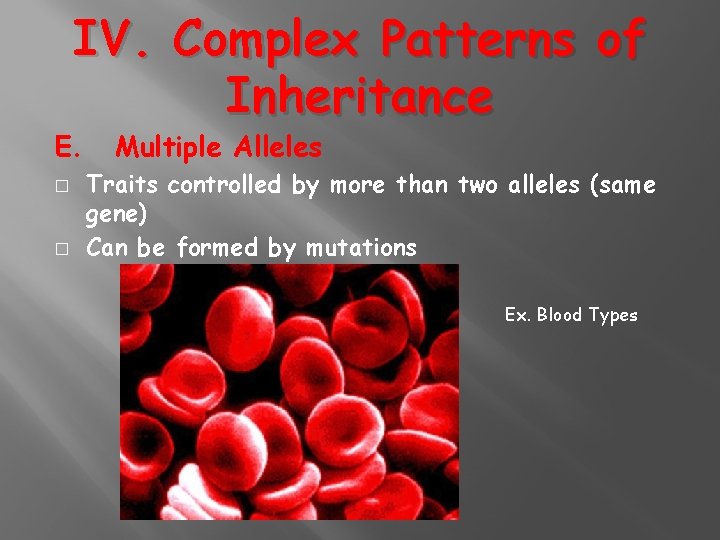
IV. Complex Patterns of Inheritance E. � � Multiple Alleles Traits controlled by more than two alleles (same gene) Can be formed by mutations Ex. Blood Types
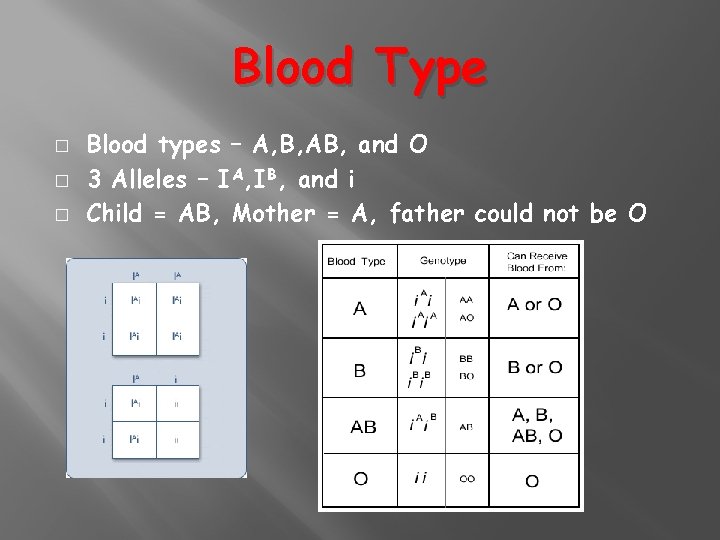
Blood Type � � � Blood types – A, B, AB, and O 3 Alleles – IA, IB, and i Child = AB, Mother = A, father could not be O
Blood Type � � Universal Donor – O; can give blood to any individual Universal receiver – AB; can receive blood from any individual
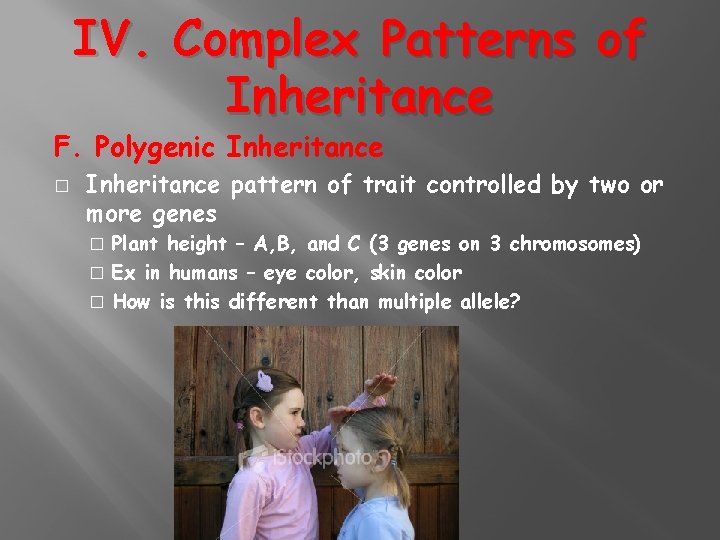
IV. Complex Patterns of Inheritance F. Polygenic Inheritance � Inheritance pattern of trait controlled by two or more genes Plant height – A, B, and C (3 genes on 3 chromosomes) � Ex in humans – eye color, skin color � How is this different than multiple allele? �
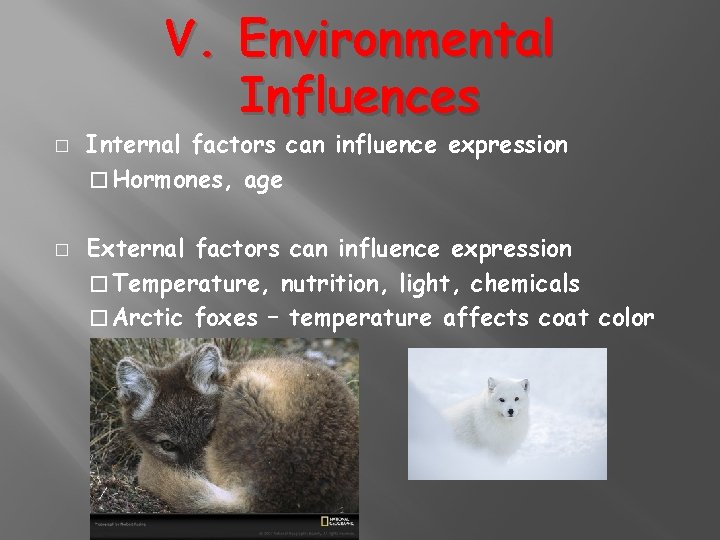
V. Environmental Influences � � Internal factors can influence expression � Hormones, age External factors can influence expression � Temperature, nutrition, light, chemicals � Arctic foxes – temperature affects coat color
V. Environmental Influences � Identical twins – � Same DNA � May look different because of environment Nutrition Exercise Accidents (scars, etc)
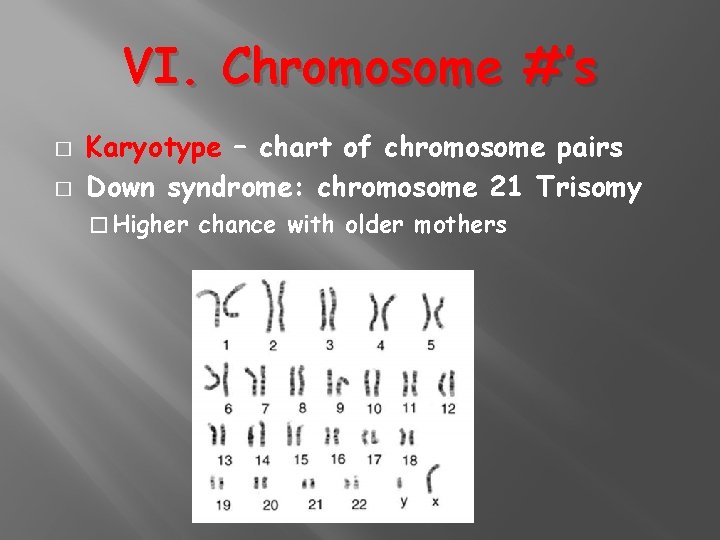
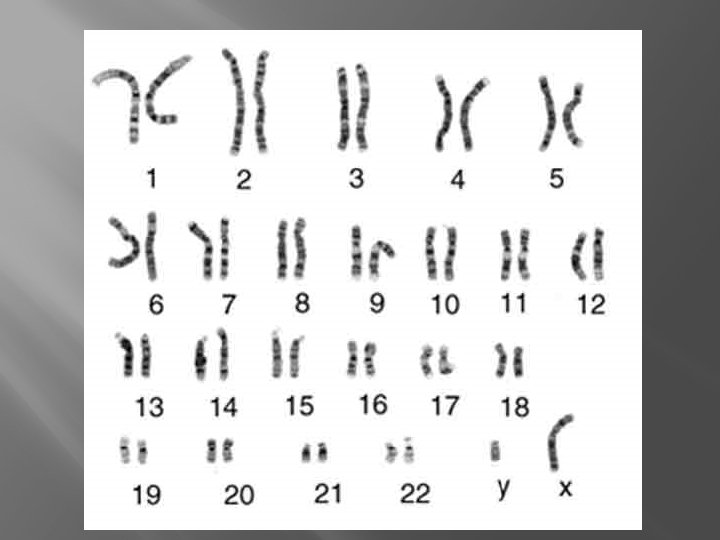
VI. Chromosome #’s � � Karyotype – chart of chromosome pairs Down syndrome: chromosome 21 Trisomy � Higher chance with older mothers