
Patterns of distribution and biology of the North
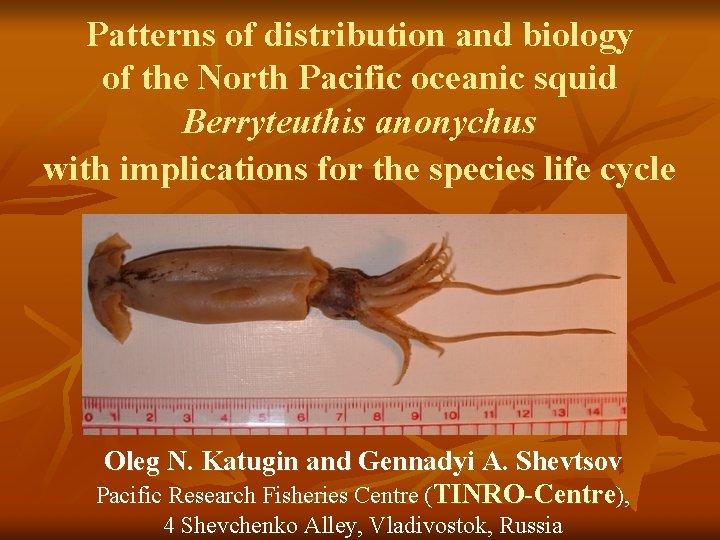
Patterns of distribution and biology of the North Pacific oceanic squid Berryteuthis anonychus with implications for the species life cycle Oleg N. Katugin and Gennadyi A. Shevtsov Pacific Research Fisheries Centre (TINRO-Centre), 4 Shevchenko Alley, Vladivostok, Russia
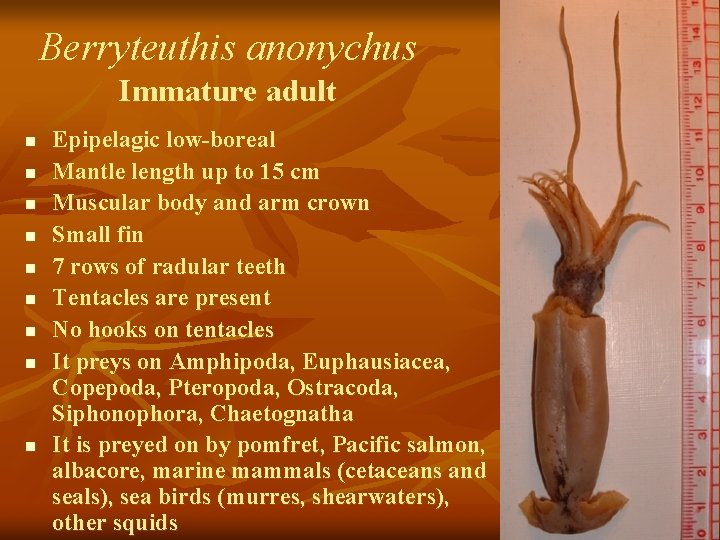
Berryteuthis anonychus Immature adult n n n n n Epipelagic low-boreal Mantle length up to 15 cm Muscular body and arm crown Small fin 7 rows of radular teeth Tentacles are present No hooks on tentacles It preys on Amphipoda, Euphausiacea, Copepoda, Pteropoda, Ostracoda, Siphonophora, Chaetognatha It is preyed on by pomfret, Pacific salmon, albacore, marine mammals (cetaceans and seals), sea birds (murres, shearwaters), other squids
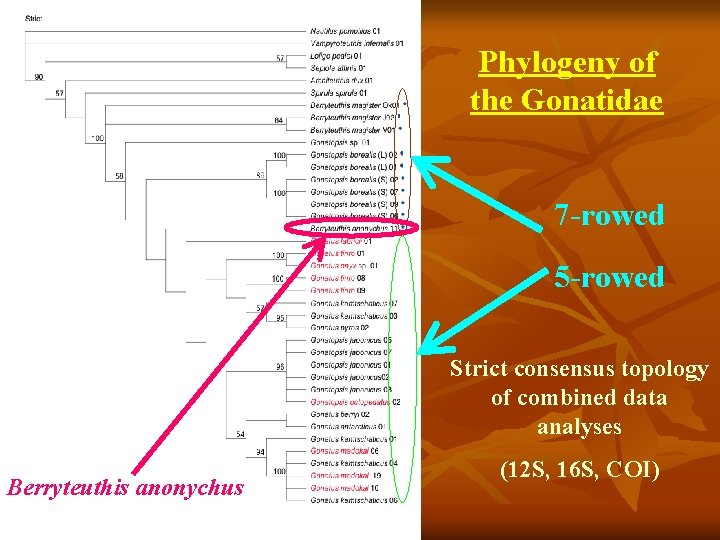
Phylogeny of the Gonatidae 7 -rowed 5 -rowed Strict consensus topology of combined data analyses Berryteuthis anonychus (12 S, 16 S, COI)
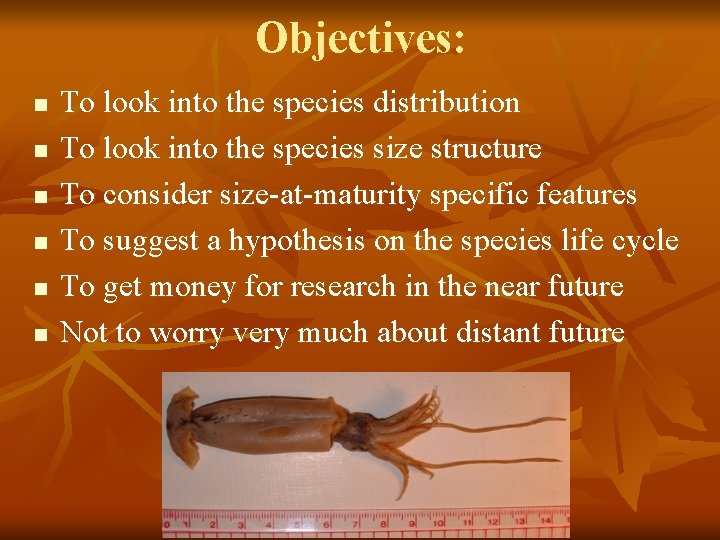
Objectives: n n n To look into the species distribution To look into the species size structure To consider size-at-maturity specific features To suggest a hypothesis on the species life cycle To get money for research in the near future Not to worry very much about distant future
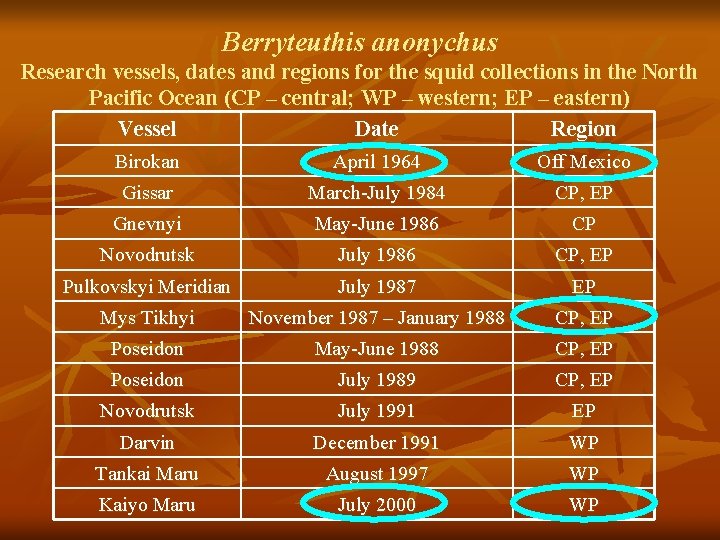
Berryteuthis anonychus Research vessels, dates and regions for the squid collections in the North Pacific Ocean (CP – central; WP – western; EP – eastern) Vessel Date Region Birokan April 1964 Off Mexico Gissar March-July 1984 CP, EP Gnevnyi May-June 1986 CP Novodrutsk July 1986 CP, EP Pulkovskyi Meridian July 1987 EP Mys Tikhyi November 1987 – January 1988 CP, EP Poseidon May-June 1988 CP, EP Poseidon July 1989 CP, EP Novodrutsk July 1991 EP Darvin December 1991 WP Tankai Maru August 1997 WP Kaiyo Maru July 2000 WP
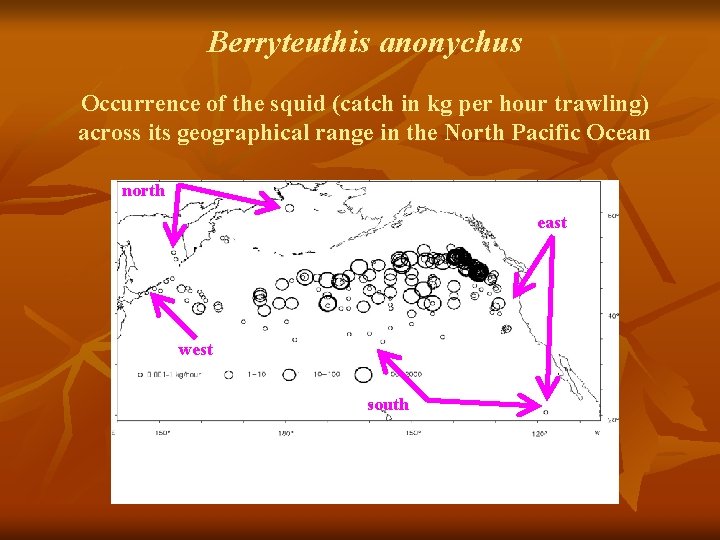
Berryteuthis anonychus Occurrence of the squid (catch in kg per hour trawling) across its geographical range in the North Pacific Ocean north east west south
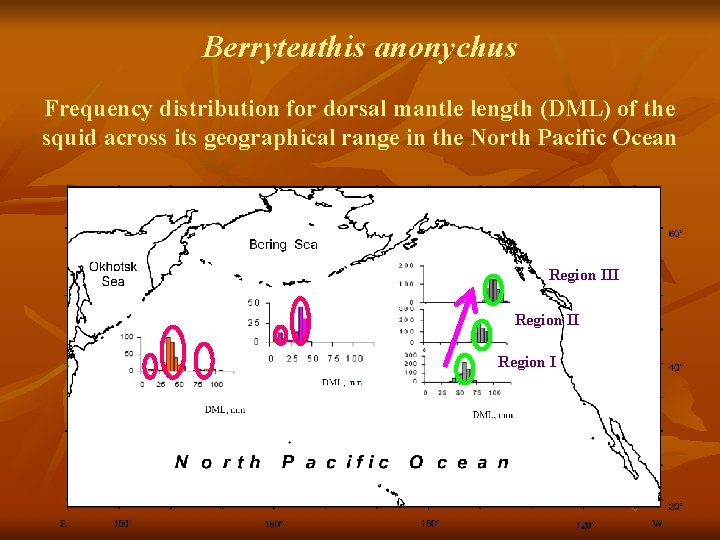
Berryteuthis anonychus Frequency distribution for dorsal mantle length (DML) of the squid across its geographical range in the North Pacific Ocean Region III Region I
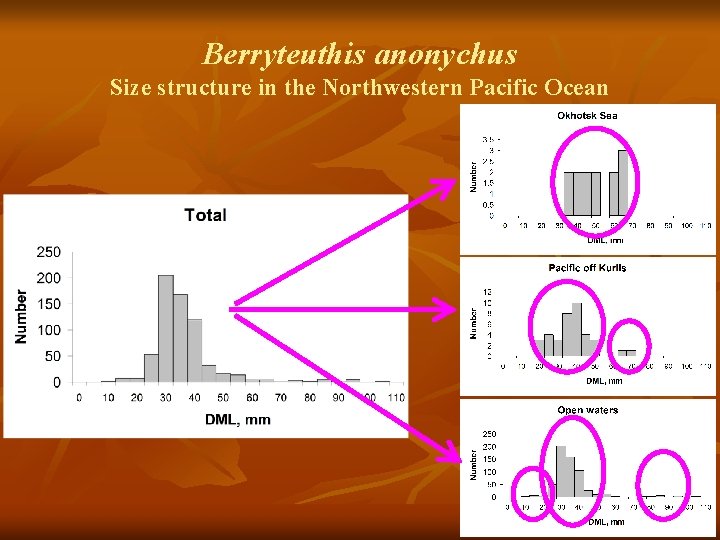
Berryteuthis anonychus Size structure in the Northwestern Pacific Ocean
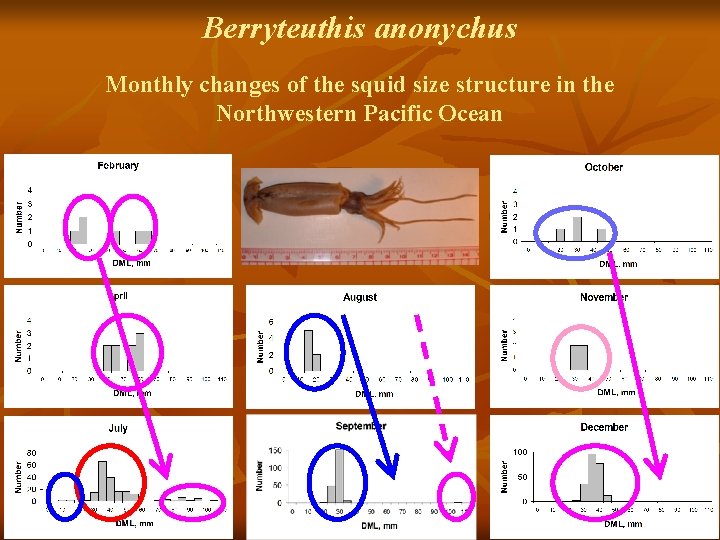
Berryteuthis anonychus Monthly changes of the squid size structure in the Northwestern Pacific Ocean
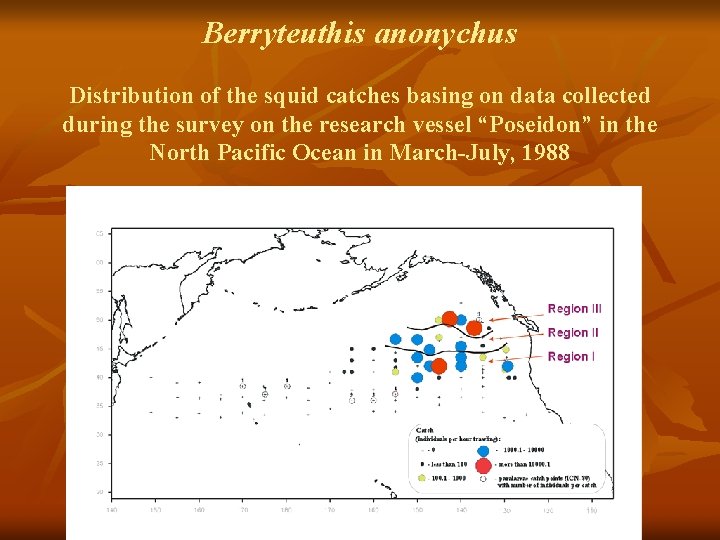
Berryteuthis anonychus Distribution of the squid catches basing on data collected during the survey on the research vessel “Poseidon” in the North Pacific Ocean in March-July, 1988
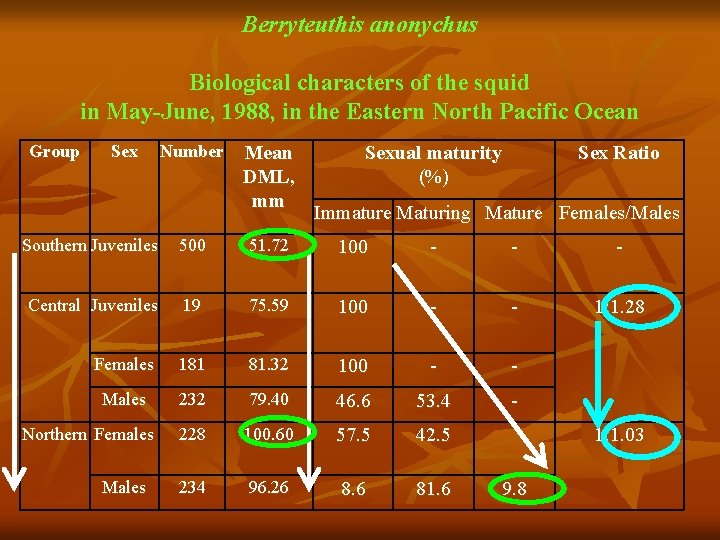
Berryteuthis anonychus Biological characters of the squid in May-June, 1988, in the Eastern North Pacific Ocean Group Sex Number Mean DML, mm Sexual maturity (%) Sex Ratio Immature Maturing Mature Females/Males Southern Juveniles 500 51. 72 100 - - - Central Juveniles 19 75. 59 100 - - 1: 1. 28 Females 181 81. 32 100 - - Males 232 79. 40 46. 6 53. 4 - 228 100. 60 57. 5 42. 5 234 96. 26 8. 6 81. 6 Northern Females Males 1: 1. 03 9. 8
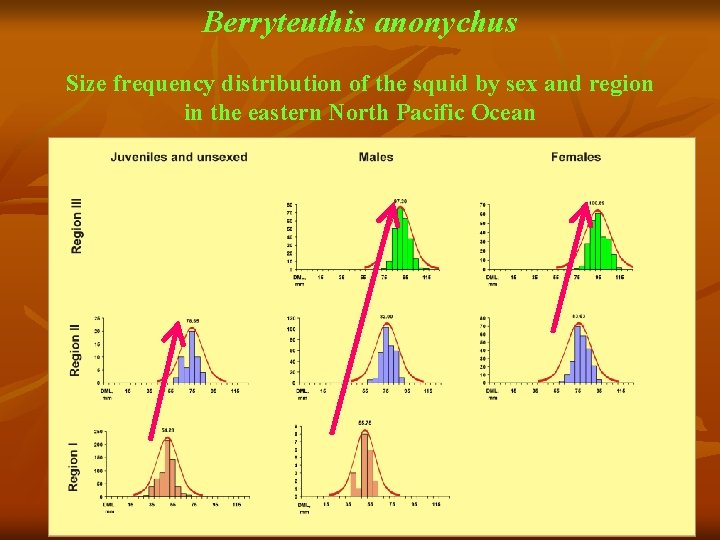
Berryteuthis anonychus Size frequency distribution of the squid by sex and region in the eastern North Pacific Ocean
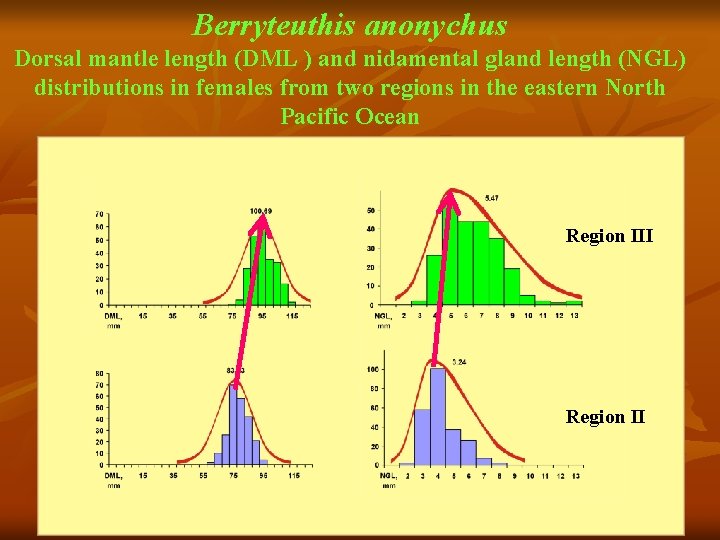
Berryteuthis anonychus Dorsal mantle length (DML ) and nidamental gland length (NGL) distributions in females from two regions in the eastern North Pacific Ocean Region III Region II
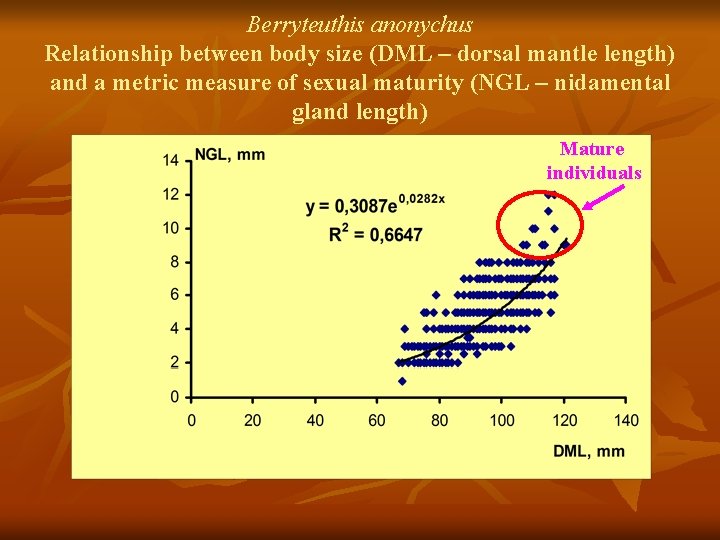
Berryteuthis anonychus Relationship between body size (DML – dorsal mantle length) and a metric measure of sexual maturity (NGL – nidamental gland length) Mature individuals
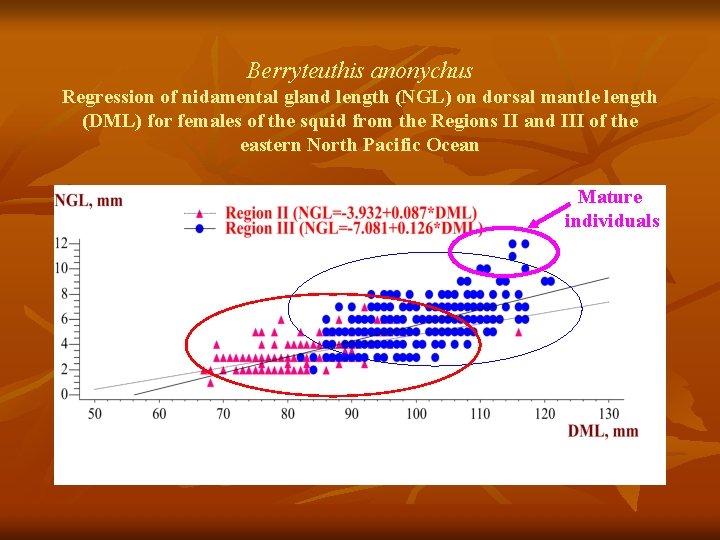
Berryteuthis anonychus Regression of nidamental gland length (NGL) on dorsal mantle length (DML) for females of the squid from the Regions II and III of the eastern North Pacific Ocean Mature individuals

Berryteuthis anonychus Distribution of the squid successive ontogenetic stages across the species geographical range in the North Pacific Ocean (paralarvae)
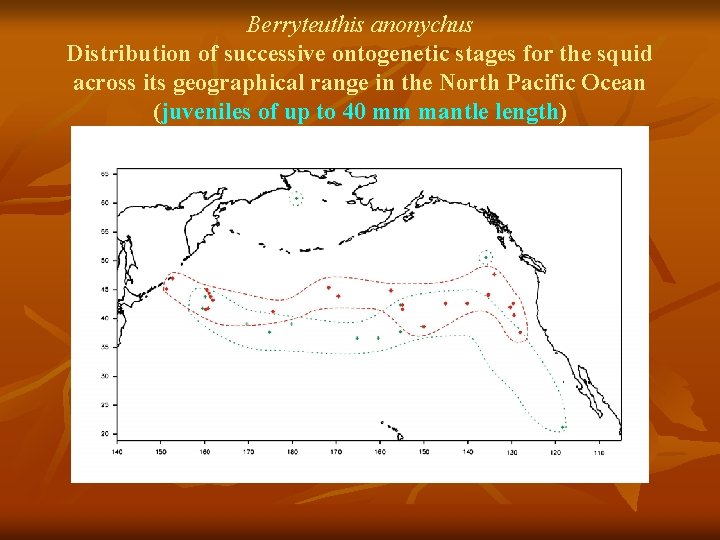
Berryteuthis anonychus Distribution of successive ontogenetic stages for the squid across its geographical range in the North Pacific Ocean (juveniles of up to 40 mm mantle length)
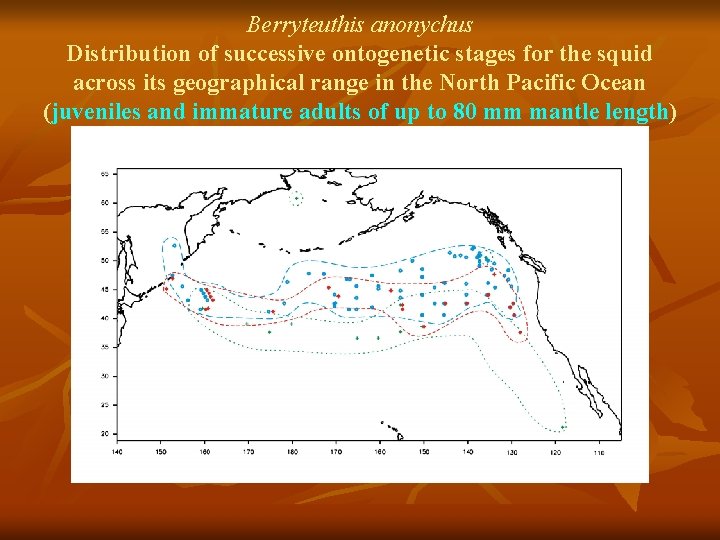
Berryteuthis anonychus Distribution of successive ontogenetic stages for the squid across its geographical range in the North Pacific Ocean (juveniles and immature adults of up to 80 mm mantle length)
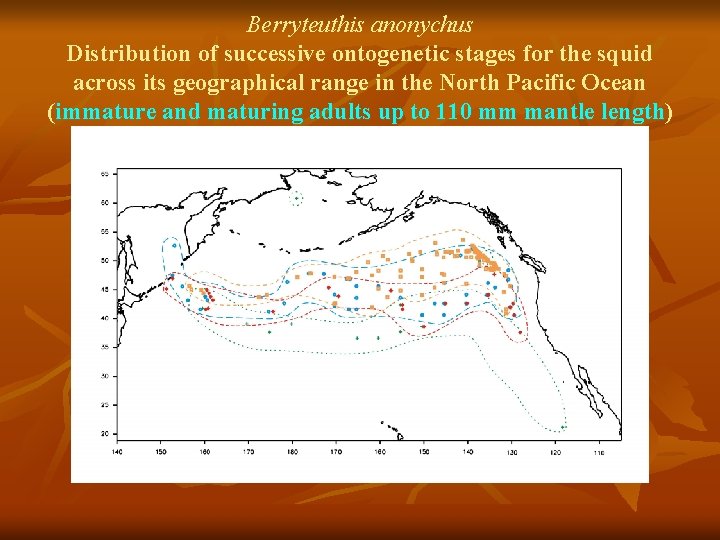
Berryteuthis anonychus Distribution of successive ontogenetic stages for the squid across its geographical range in the North Pacific Ocean (immature and maturing adults up to 110 mm mantle length)
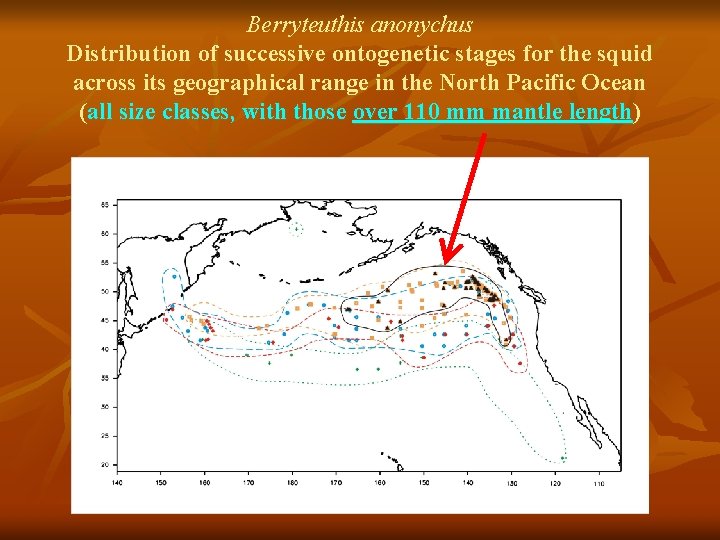
Berryteuthis anonychus Distribution of successive ontogenetic stages for the squid across its geographical range in the North Pacific Ocean (all size classes, with those over 110 mm mantle length)
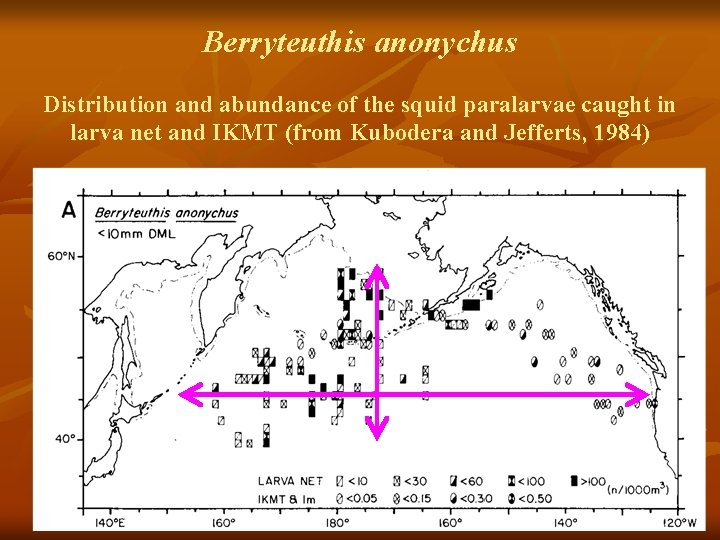
Berryteuthis anonychus Distribution and abundance of the squid paralarvae caught in larva net and IKMT (from Kubodera and Jefferts, 1984)
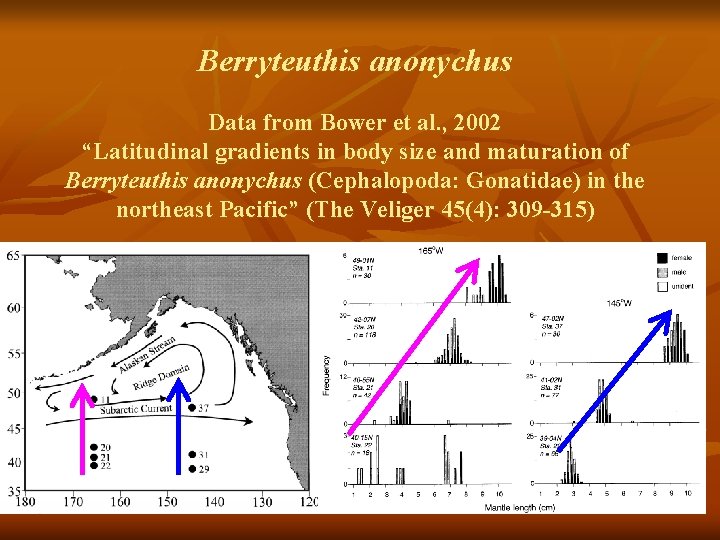
Berryteuthis anonychus Data from Bower et al. , 2002 “Latitudinal gradients in body size and maturation of Berryteuthis anonychus (Cephalopoda: Gonatidae) in the northeast Pacific” (The Veliger 45(4): 309 -315)
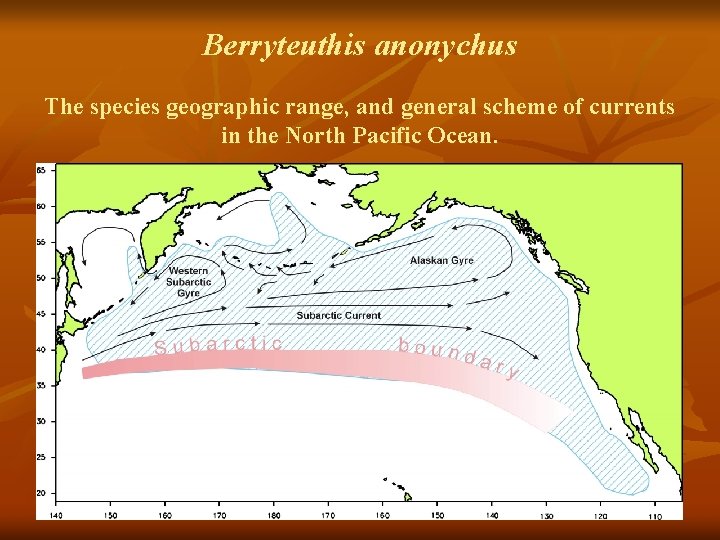
Berryteuthis anonychus The species geographic range, and general scheme of currents in the North Pacific Ocean.
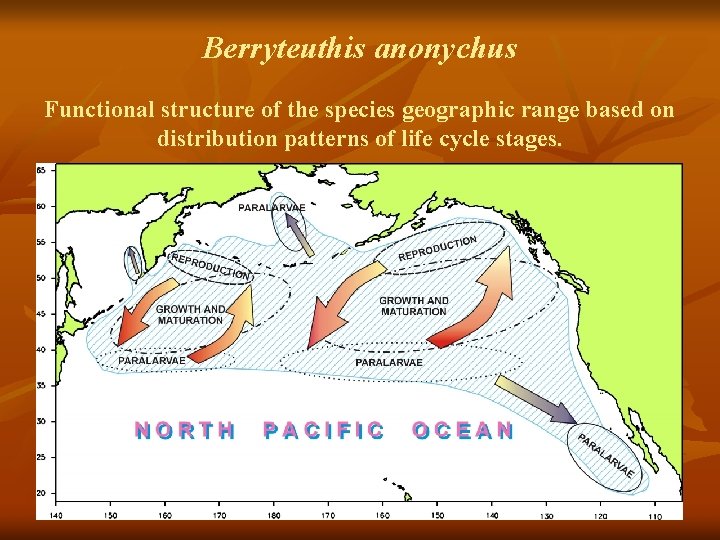
Berryteuthis anonychus Functional structure of the species geographic range based on distribution patterns of life cycle stages.
Results: n n the species range covers almost entire North Pacific Ocean to the north of the Subarctic Boundary, and also includes marginal basins (Bering and Okhotsk seas) polymodal size structure is related to size-at-maturity features and is observed in the western and centraleastern parts of the species range; certain seasonal changes in size structure have also been observed a hypothetic scheme of the species life cycle has been suggested Joint efforts of PICES countries should be applied in order to improve our understanding of this highly abundant species
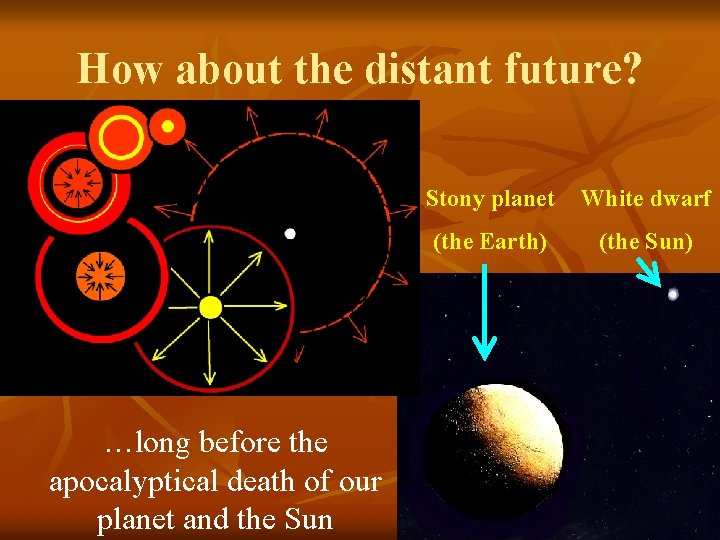
How about the distant future? …long before the apocalyptical death of our planet and the Sun Stony planet White dwarf (the Earth) (the Sun)
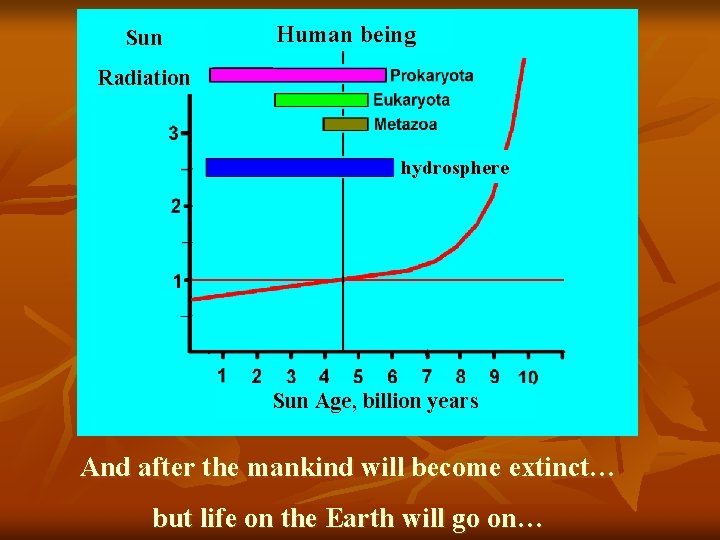
Sun Human being Radiation hydrosphere Sun Age, billion years And after the mankind will become extinct… but life on the Earth will go on…
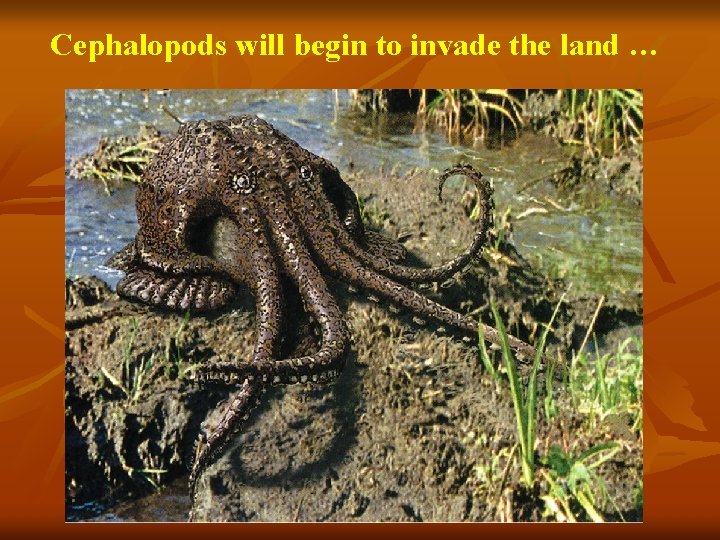
Cephalopods will begin to invade the land …
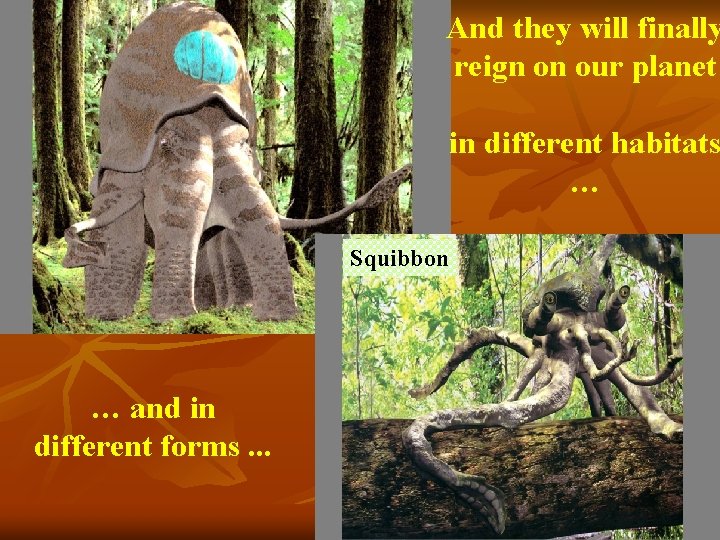
And they will finally reign on our planet in different habitats … Squibbon … and in different forms. . .
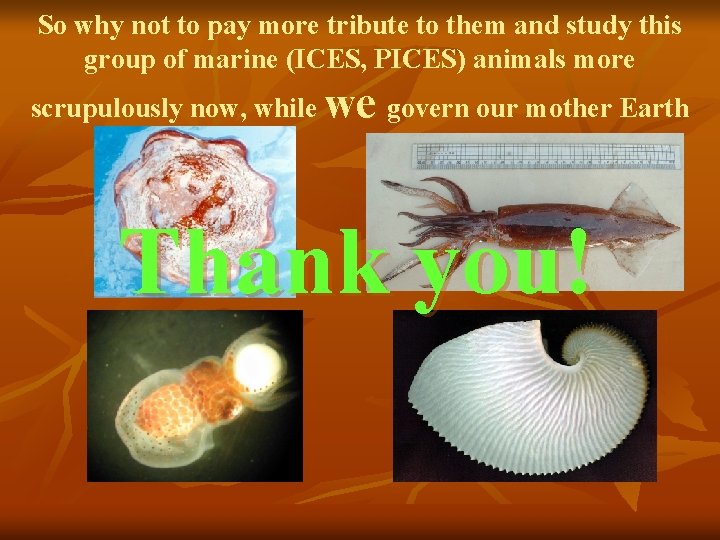
So why not to pay more tribute to them and study this group of marine (ICES, PICES) animals more scrupulously now, while we govern our mother Earth Thank you!
- Slides: 30