
Patterns in the Addition Table MAFS 3 OA

Patterns in the Addition Table MAFS. 3. OA. 4. 9
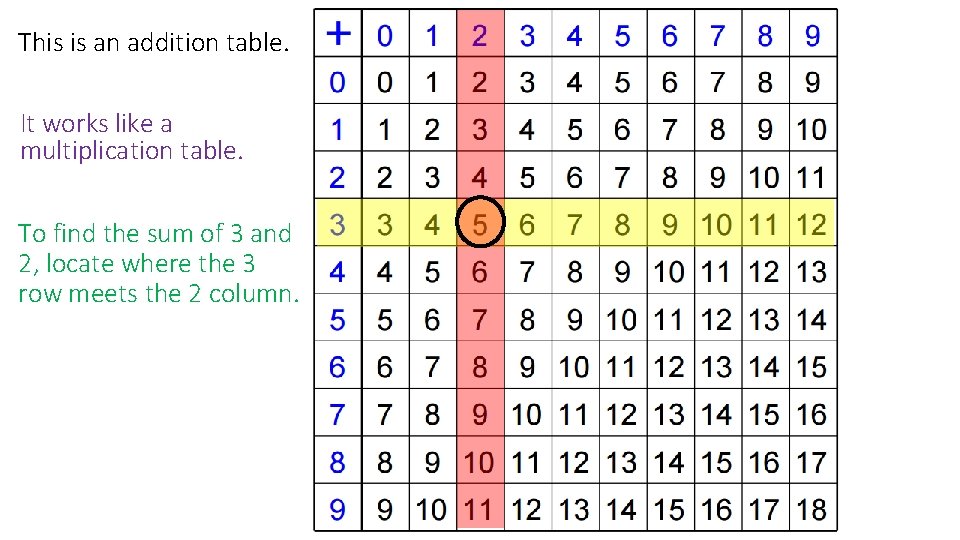
This is an addition table. It works like a multiplication table. To find the sum of 3 and 2, locate where the 3 row meets the 2 column.
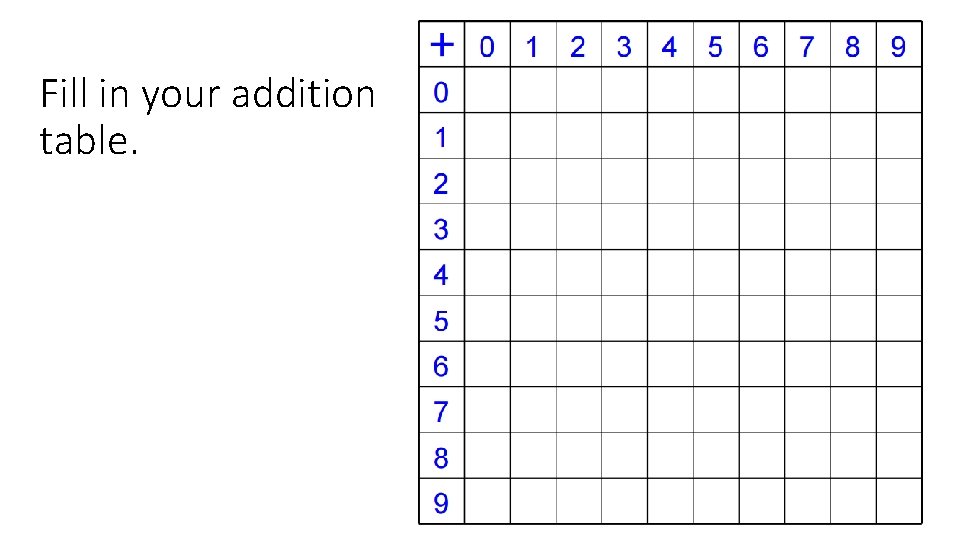
Fill in your addition table.
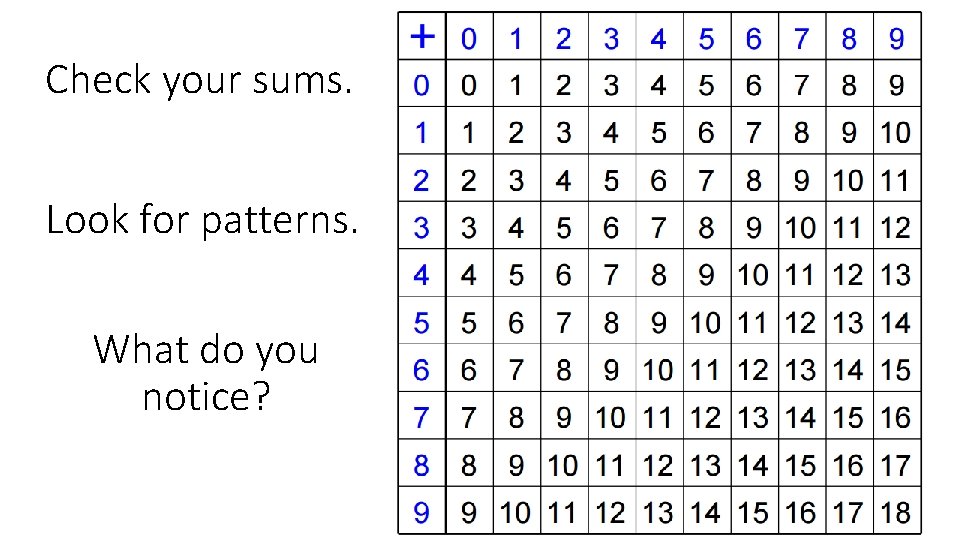
Check your sums. Look for patterns. What do you notice?
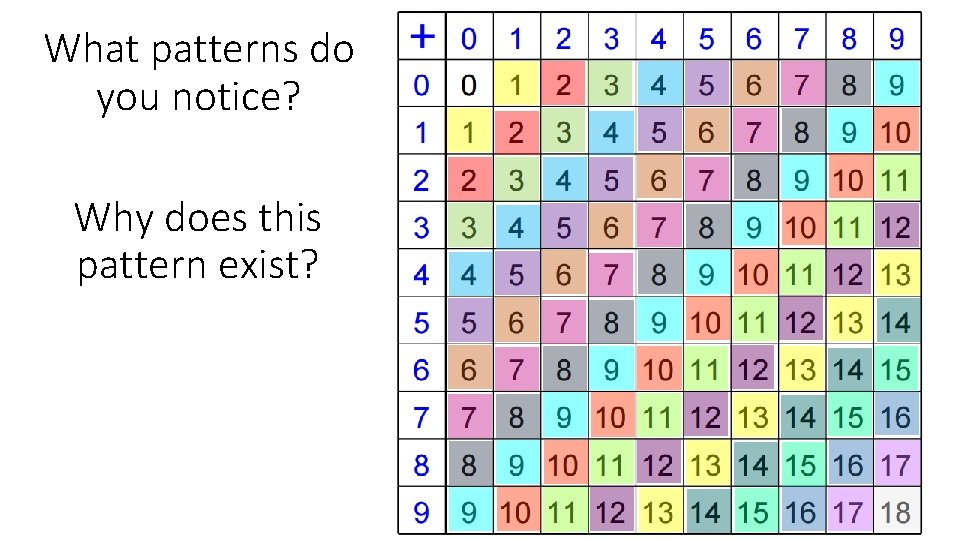
What patterns do you notice? Why does this pattern exist?

Why does this pattern exist? Look at the diagonals of 5. What addends create the sum of 5? 5+0=5 4+1=5 3+2=5 2+3=5 1+4=5 5+0=5 When one addend gets smaller by one, the other addend gets bigger by one, so the sum stays the same.
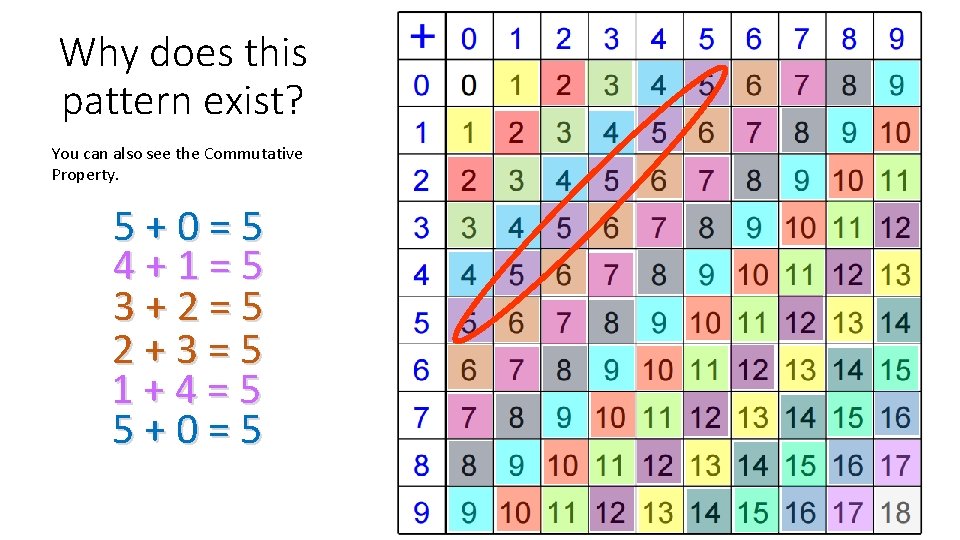
Why does this pattern exist? You can also see the Commutative Property. 5+0=5 4+1=5 3+2=5 2+3=5 1+4=5 5+0=5
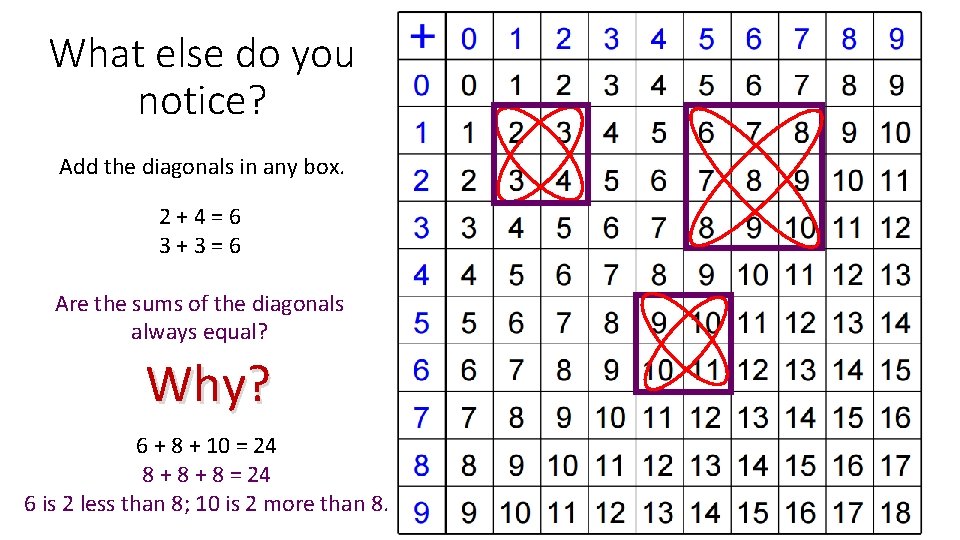
What else do you notice? Add the diagonals in any box. 2+4=6 3+3=6 Are the sums of the diagonals always equal? Why? 6 + 8 + 10 = 24 8 + 8 = 24 6 is 2 less than 8; 10 is 2 more than 8.
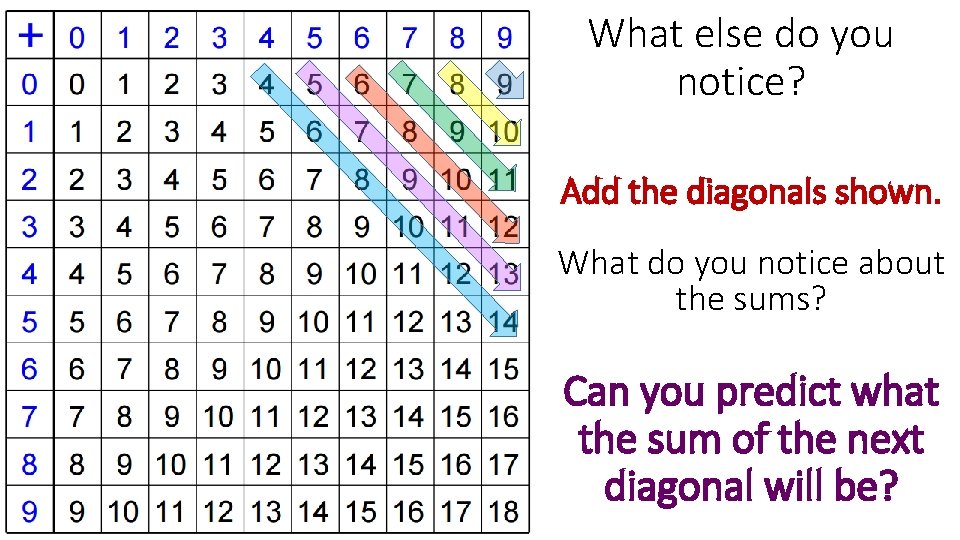
What else do you notice? Add the diagonals shown. What do you notice about the sums? Can you predict what the sum of the next diagonal will be?
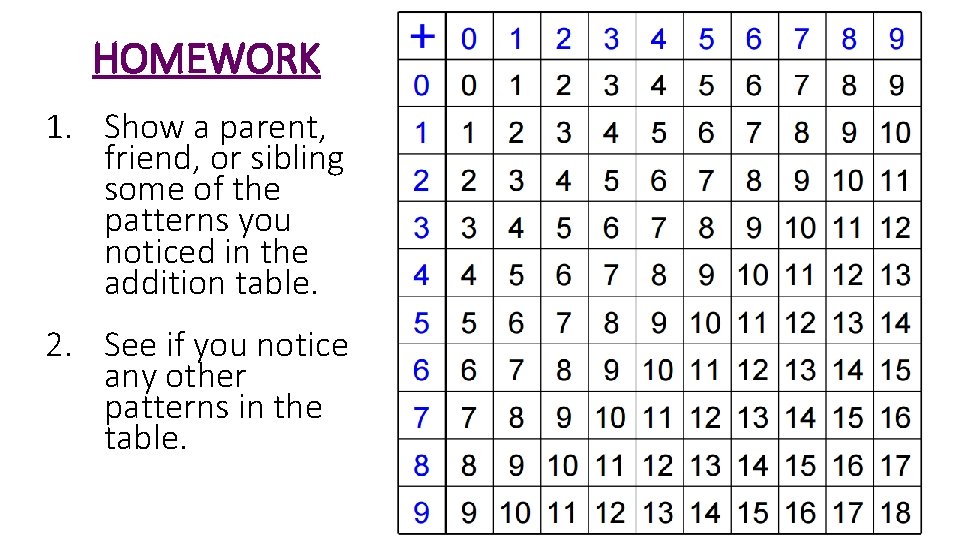
HOMEWORK 1. Show a parent, friend, or sibling some of the patterns you noticed in the addition table. 2. See if you notice any other patterns in the table.
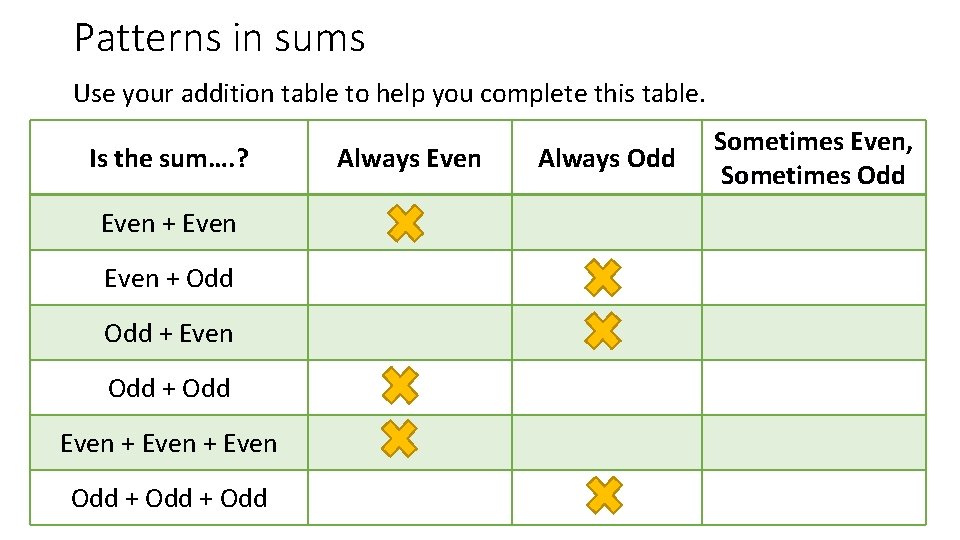
Patterns in sums Use your addition table to help you complete this table. Is the sum…. ? Even + Odd + Even Odd + Odd Even + Even Odd + Odd Always Even Always Odd Sometimes Even, Sometimes Odd
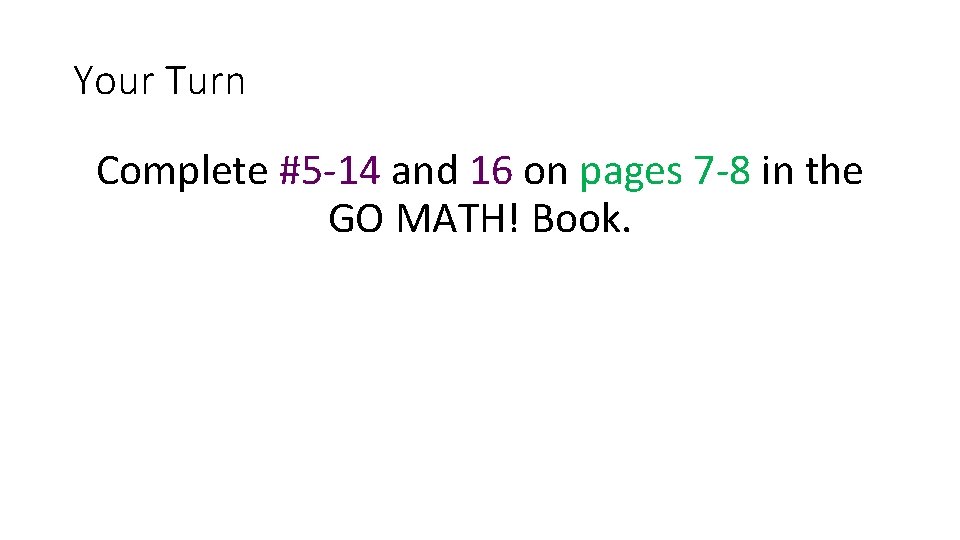
Your Turn Complete #5 -14 and 16 on pages 7 -8 in the GO MATH! Book.
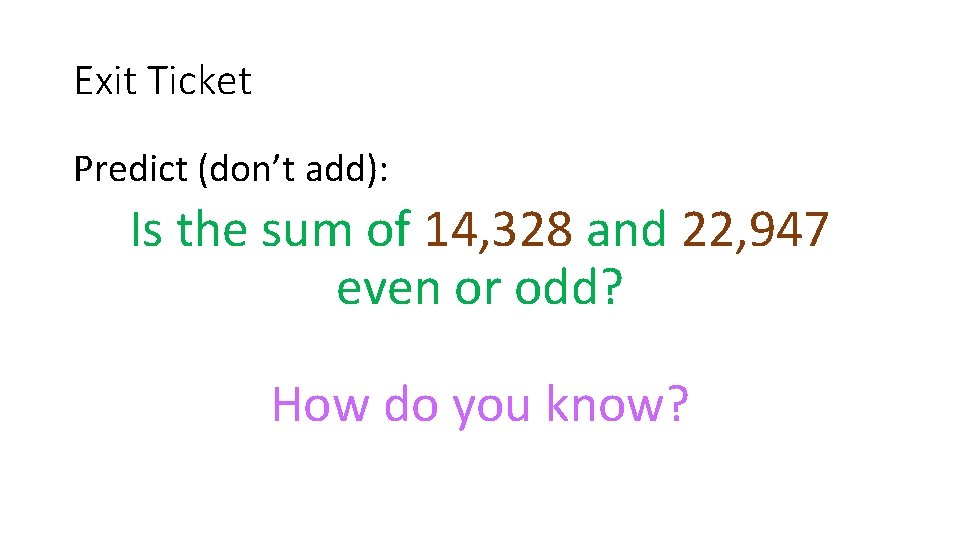
Exit Ticket Predict (don’t add): Is the sum of 14, 328 and 22, 947 even or odd? How do you know?
- Slides: 13