
Patterns in Diversity I Through Time A Geologic
- Slides: 33
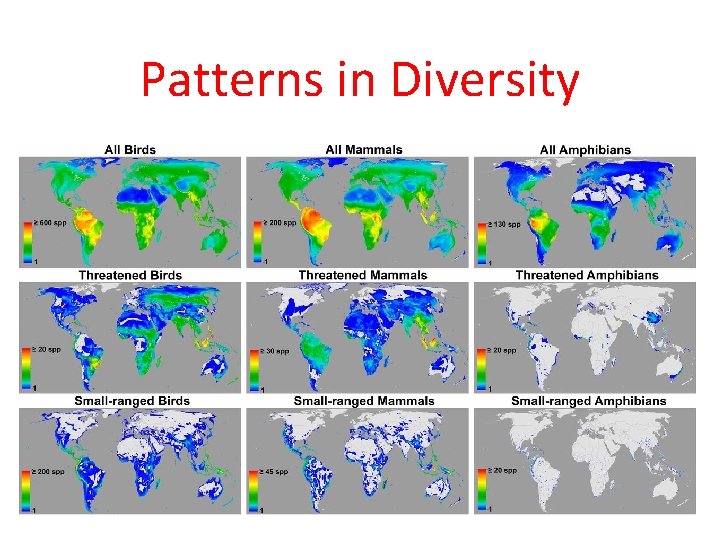
Patterns in Diversity
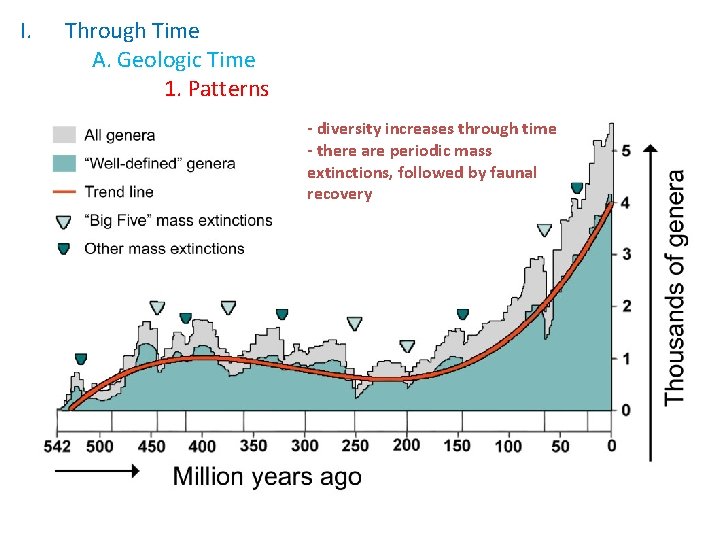
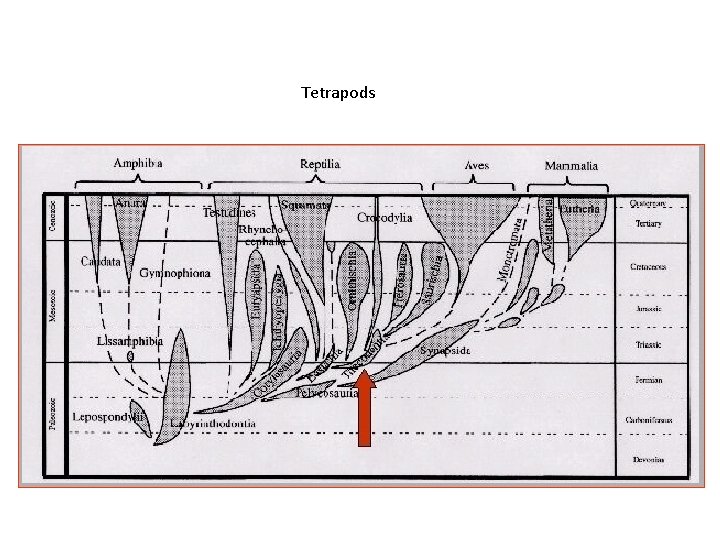
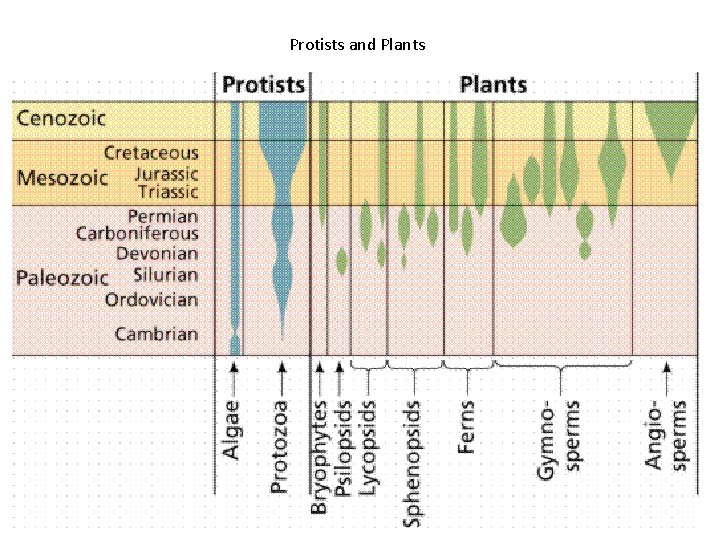
I. Through Time A. Geologic Time 1. Patterns - diversity increases through time - there are periodic mass extinctions, followed by faunal recovery
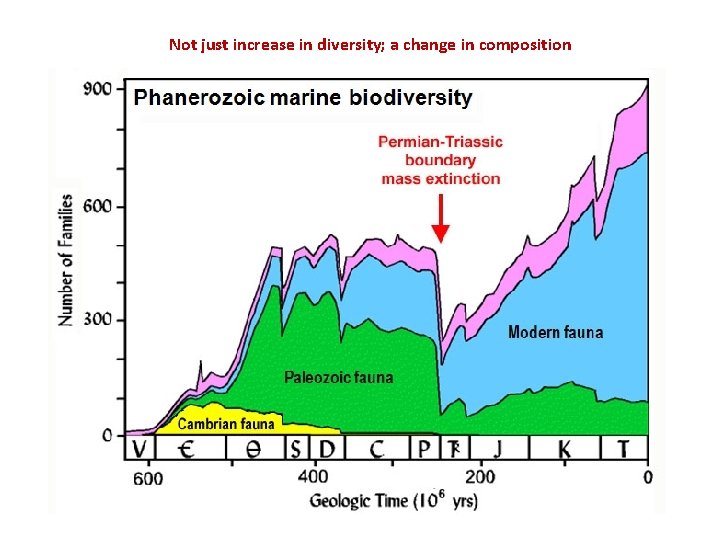
Not just increase in diversity; a change in composition
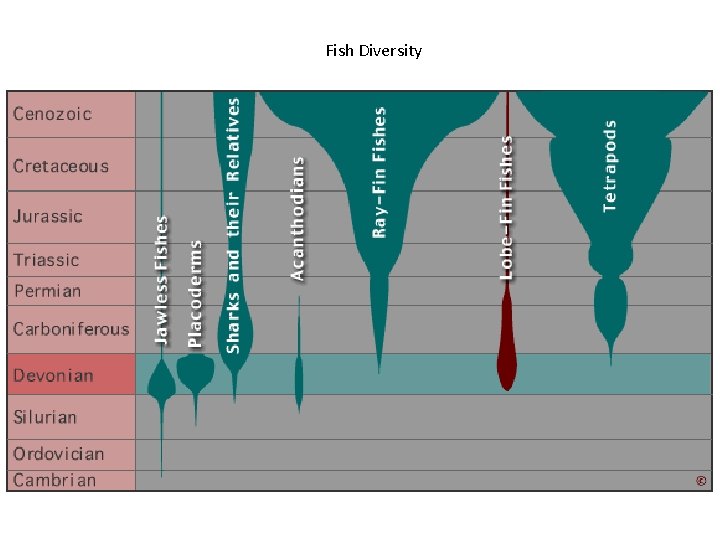
Fish Diversity
Tetrapods
Protists and Plants
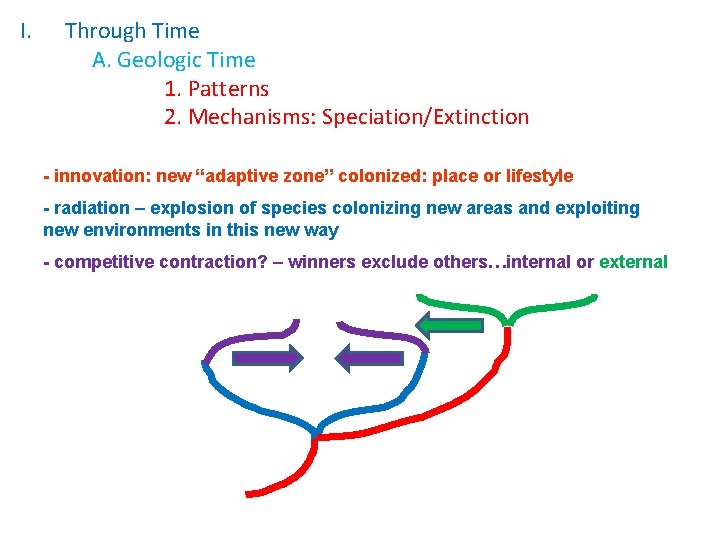
I. Through Time A. Geologic Time 1. Patterns 2. Mechanisms: Speciation/Extinction - innovation: new “adaptive zone” colonized: place or lifestyle - radiation – explosion of species colonizing new areas and exploiting new environments in this new way - competitive contraction? – winners exclude others…internal or external
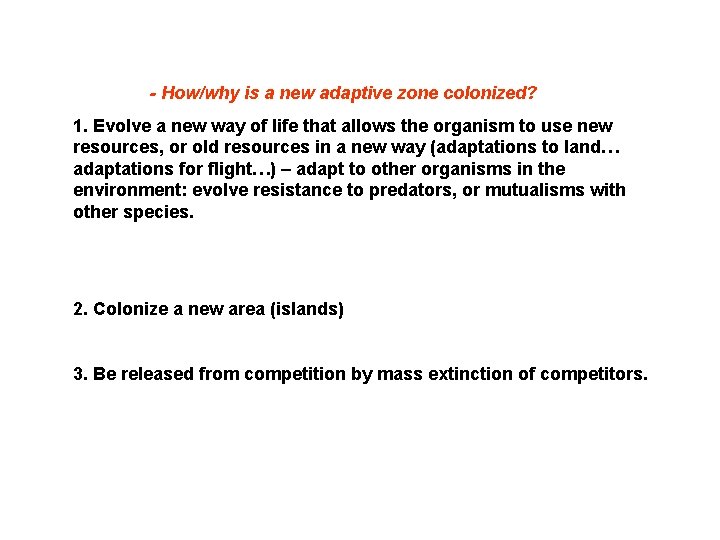
- How/why is a new adaptive zone colonized? 1. Evolve a new way of life that allows the organism to use new resources, or old resources in a new way (adaptations to land… adaptations for flight…) – adapt to other organisms in the environment: evolve resistance to predators, or mutualisms with other species. 2. Colonize a new area (islands) 3. Be released from competition by mass extinction of competitors.
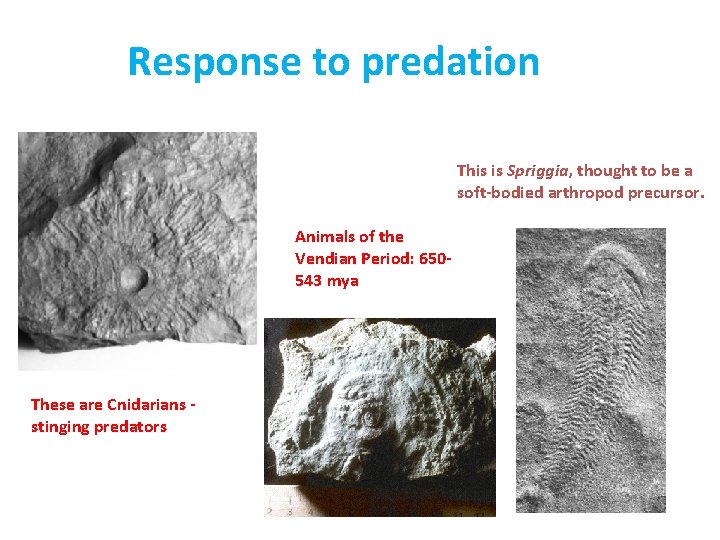
Response to predation This is Spriggia, thought to be a soft-bodied arthropod precursor. Animals of the Vendian Period: 650543 mya These are Cnidarians stinging predators
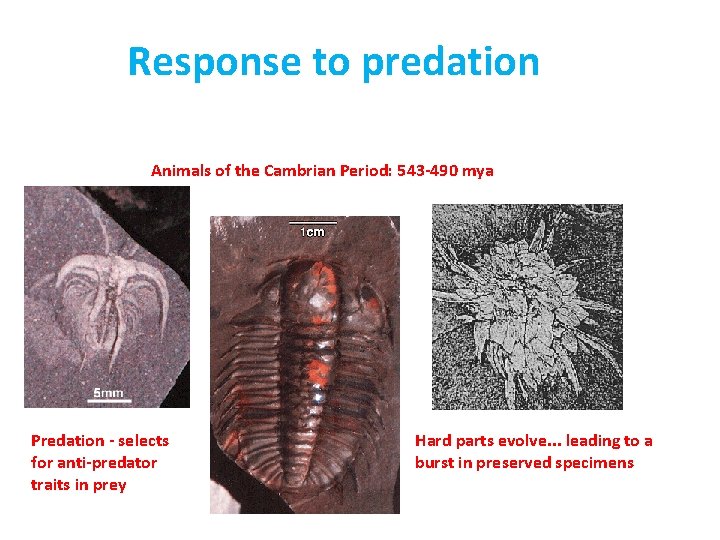
Response to predation Animals of the Cambrian Period: 543 -490 mya Predation - selects for anti-predator traits in prey Hard parts evolve. . . leading to a burst in preserved specimens
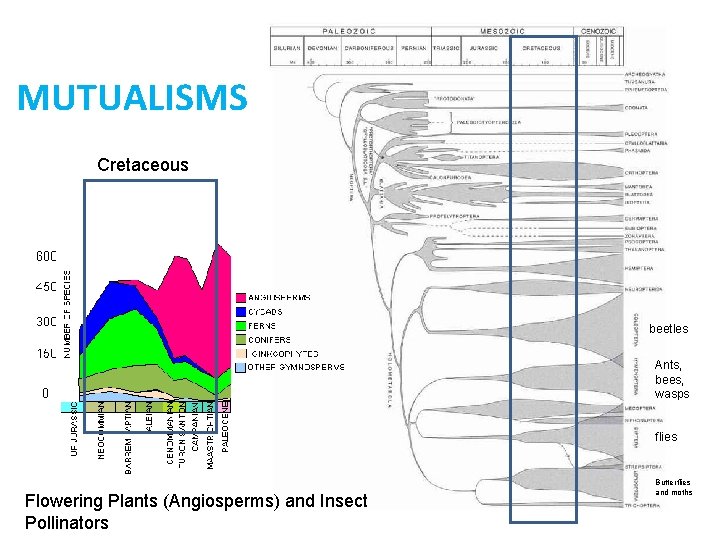
MUTUALISMS Cretaceous beetles Ants, bees, wasps flies Flowering Plants (Angiosperms) and Insect Pollinators Butterflies and moths
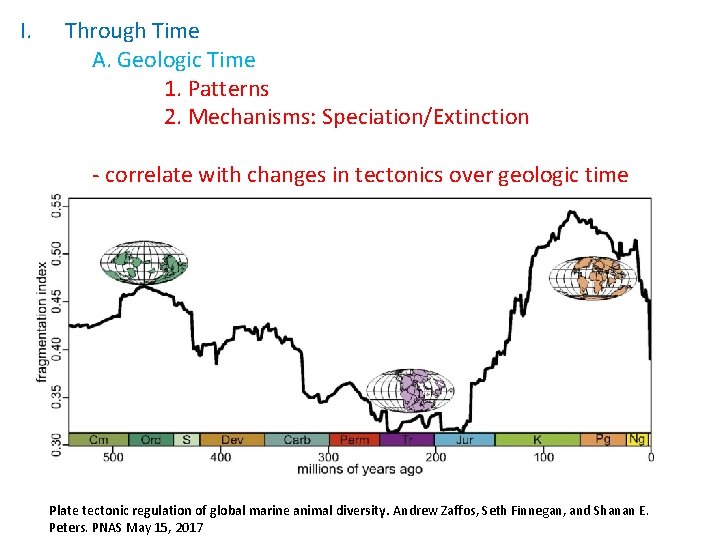
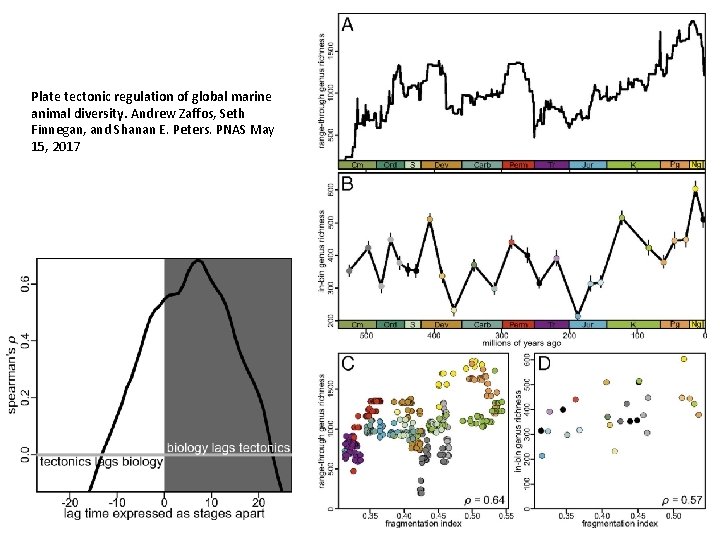
I. Through Time A. Geologic Time 1. Patterns 2. Mechanisms: Speciation/Extinction - correlate with changes in tectonics over geologic time Plate tectonic regulation of global marine animal diversity. Andrew Zaffos, Seth Finnegan, and Shanan E. Peters. PNAS May 15, 2017
Plate tectonic regulation of global marine animal diversity. Andrew Zaffos, Seth Finnegan, and Shanan E. Peters. PNAS May 15, 2017
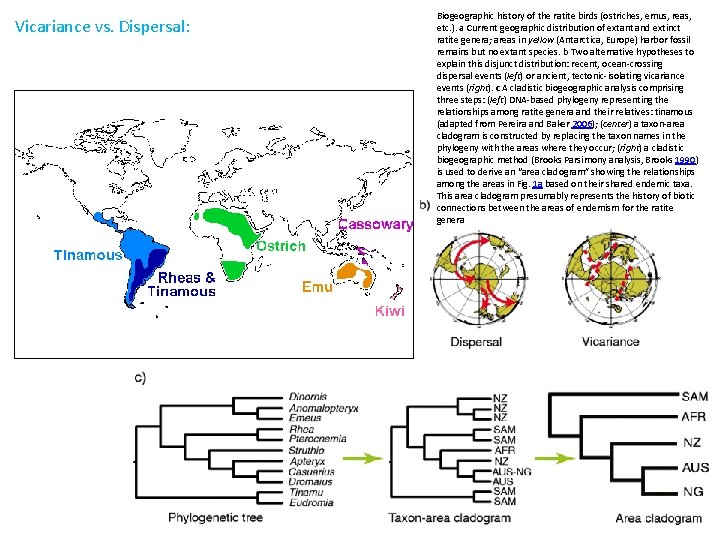
Vicariance vs. Dispersal: Biogeographic history of the ratite birds (ostriches, emus, reas, etc. ). a Current geographic distribution of extant and extinct ratite genera; areas in yellow (Antarctica, Europe) harbor fossil remains but no extant species. b Two alternative hypotheses to explain this disjunct distribution: recent, ocean-crossing dispersal events (left) or ancient, tectonic-isolating vicariance events (right). c A cladistic biogeographic analysis comprising three steps: (left) DNA-based phylogeny representing the relationships among ratite genera and their relatives: tinamous (adapted from Pereira and Baker 2006); (center) a taxon-area cladogram is constructed by replacing the taxon names in the phylogeny with the areas where they occur; (right) a cladistic biogeographic method (Brooks Parsimony analysis, Brooks 1990) is used to derive an “area cladogram” showing the relationships among the areas in Fig. 1 a based on their shared endemic taxa. This area cladogram presumably represents the history of biotic connections between the areas of endemism for the ratite genera
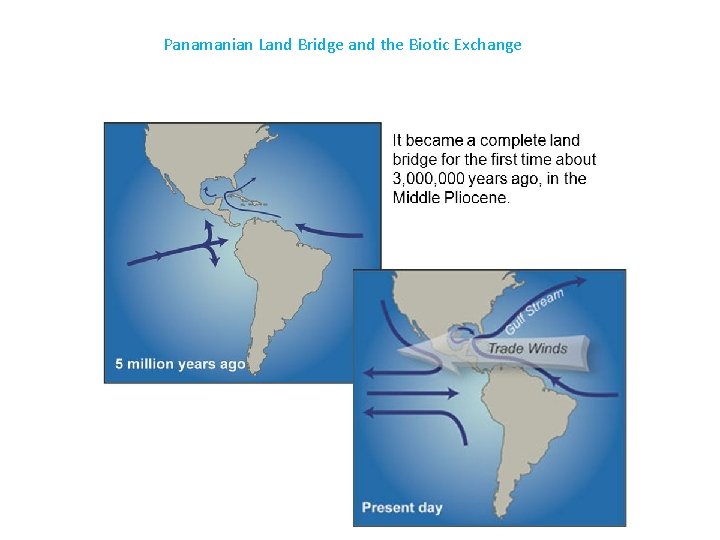
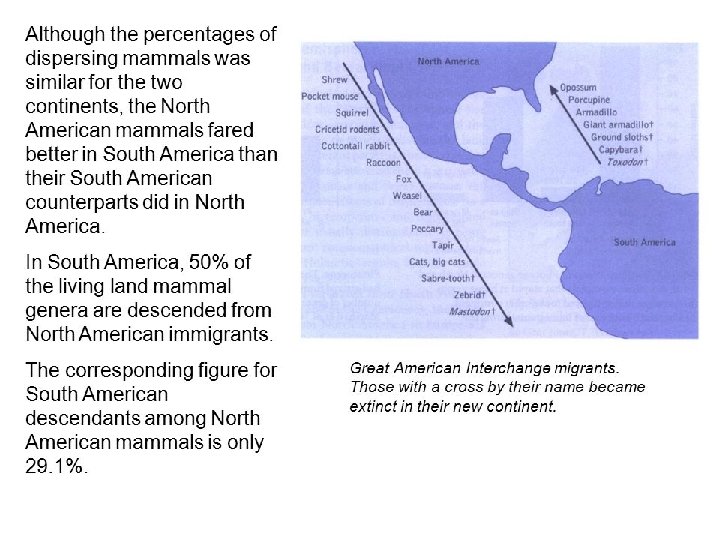
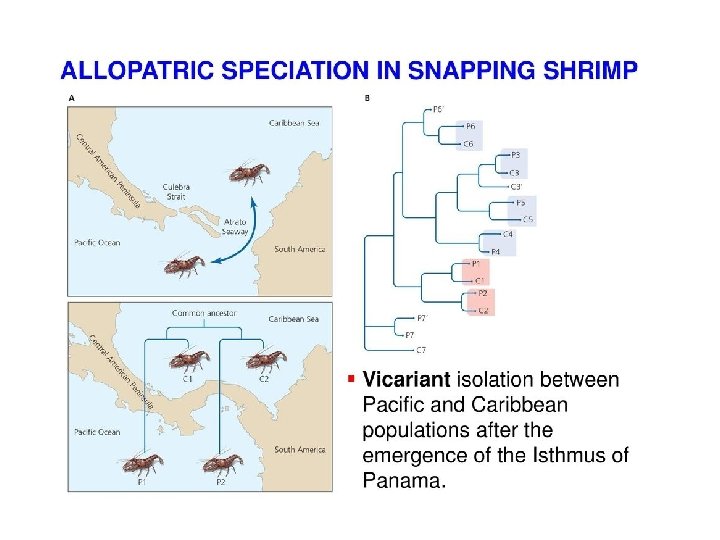
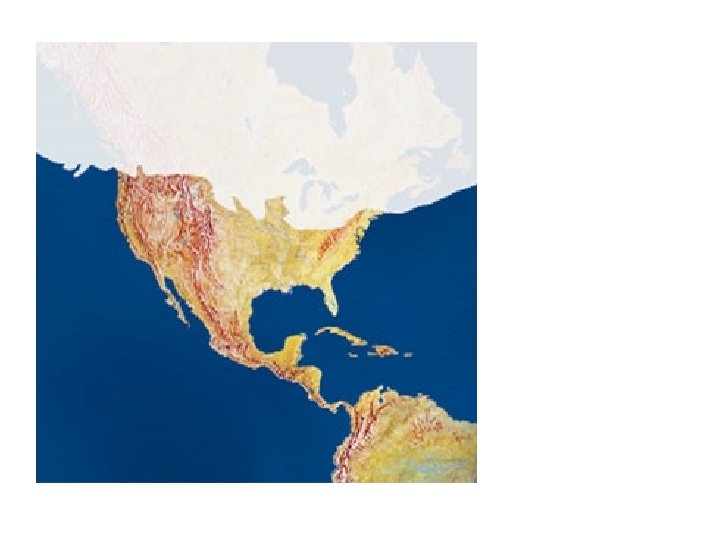
Panamanian Land Bridge and the Biotic Exchange
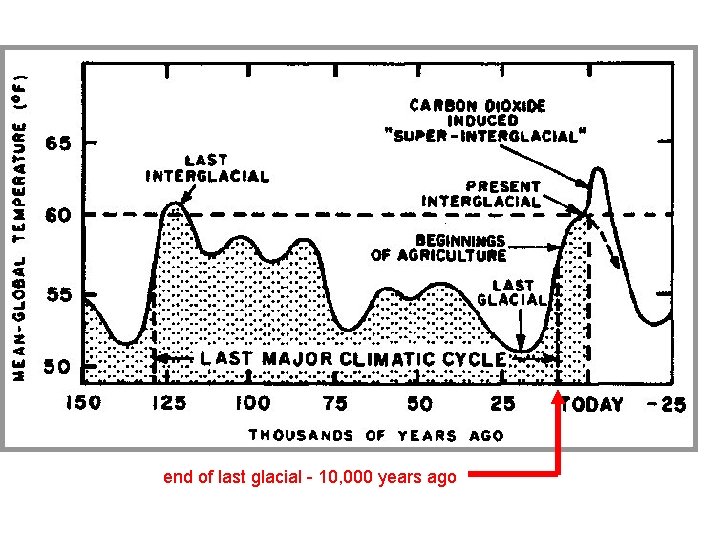
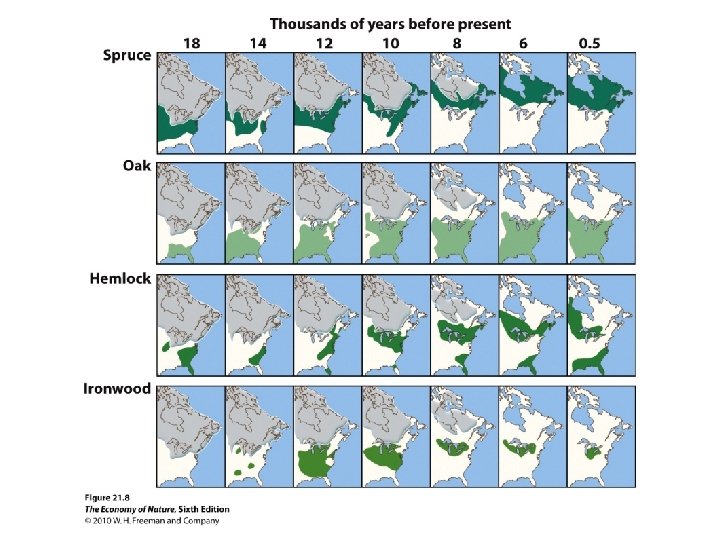
end of last glacial - 10, 000 years ago
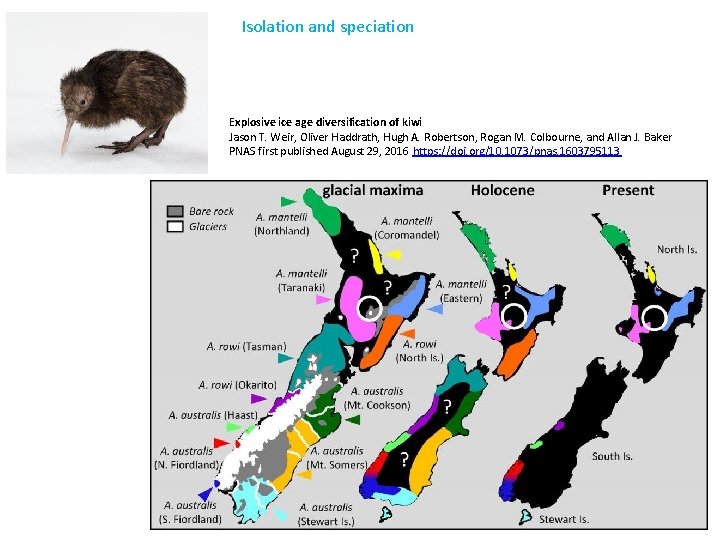
Isolation and speciation Explosive ice age diversification of kiwi Jason T. Weir, Oliver Haddrath, Hugh A. Robertson, Rogan M. Colbourne, and Allan J. Baker PNAS first published August 29, 2016 https: //doi. org/10. 1073/pnas. 1603795113
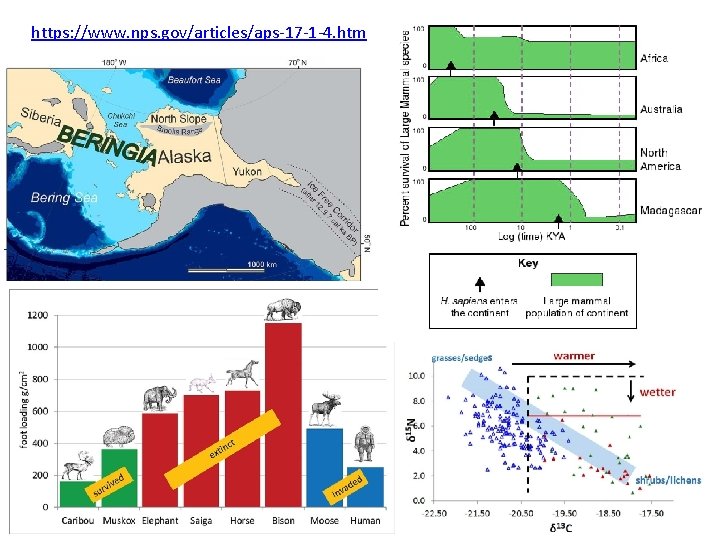
https: //www. nps. gov/articles/aps-17 -1 -4. htm
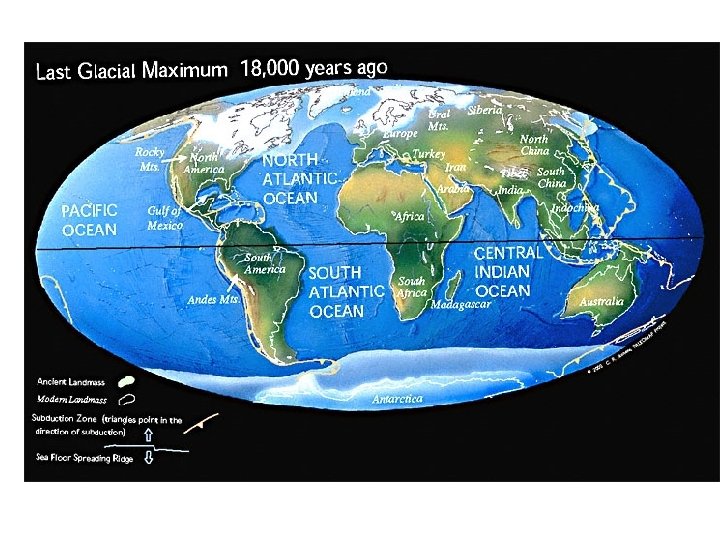
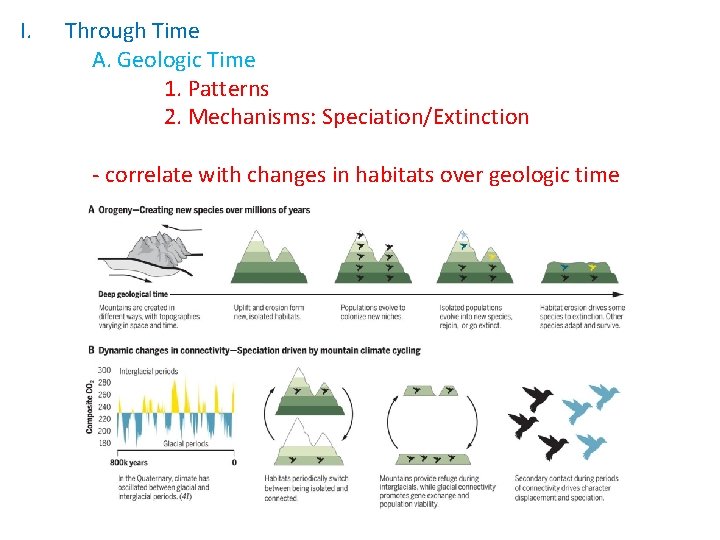
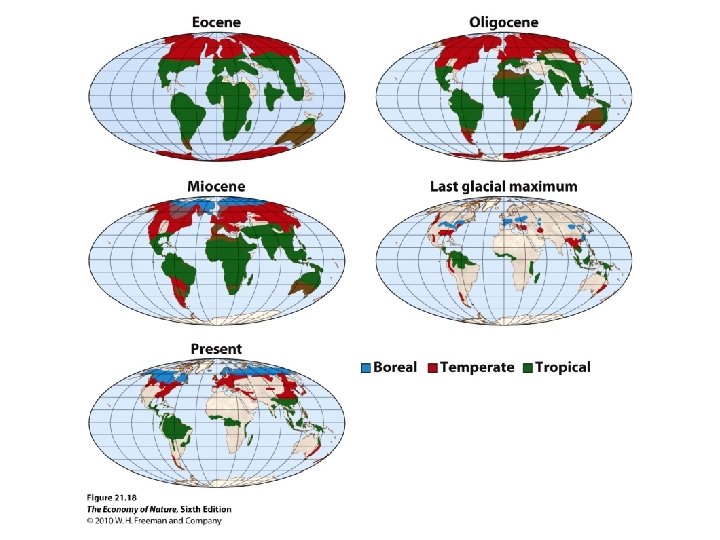
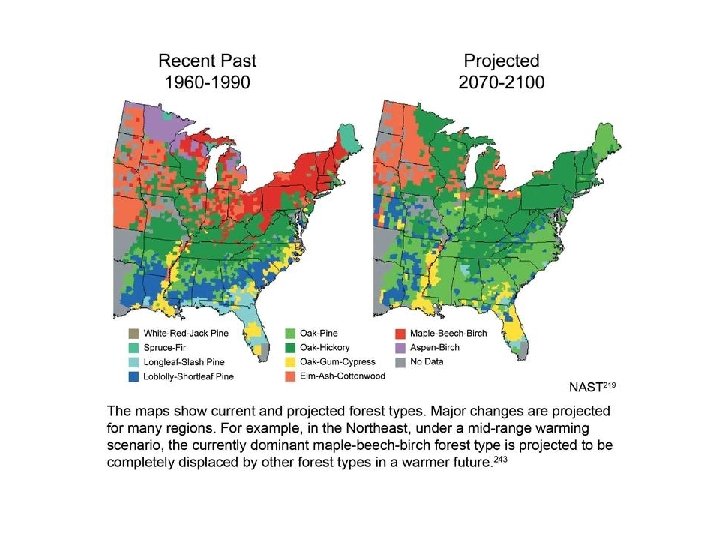
I. Through Time A. Geologic Time 1. Patterns 2. Mechanisms: Speciation/Extinction - correlate with changes in habitats over geologic time
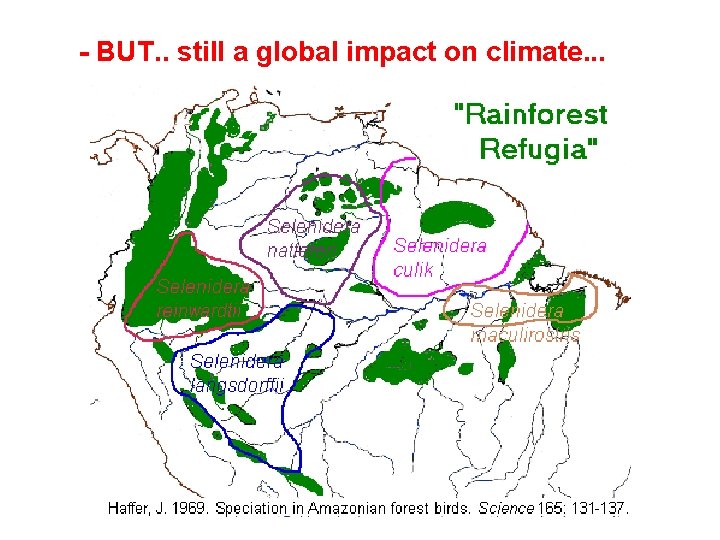
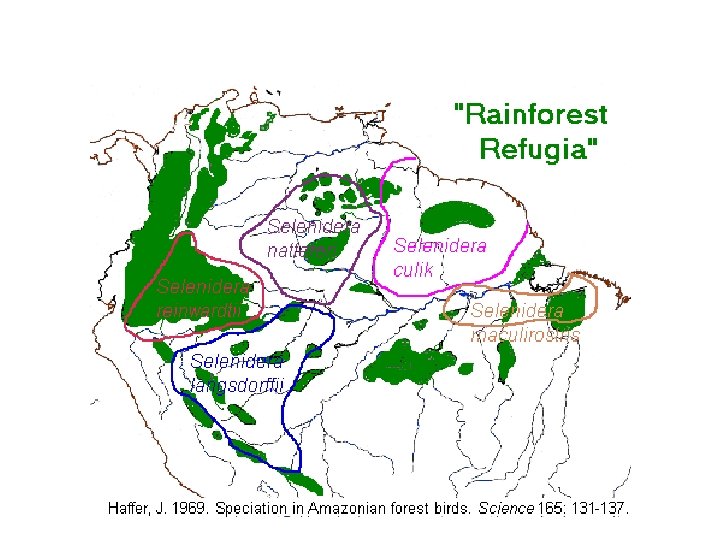
- BUT. . still a global impact on climate. . .
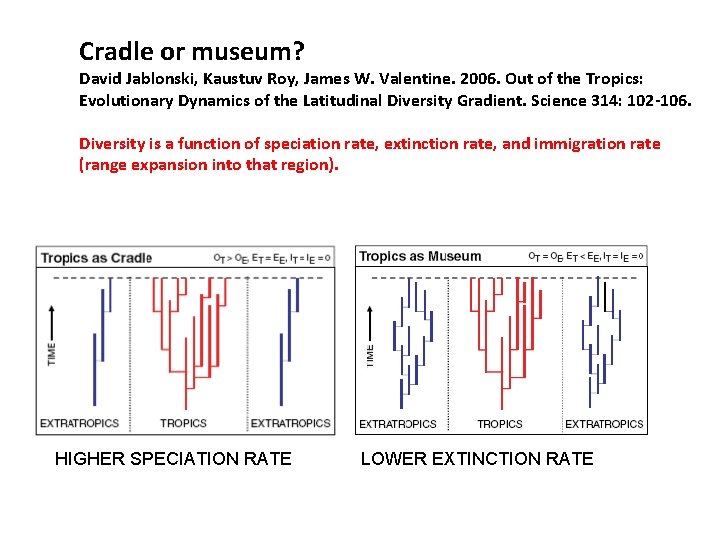
Cradle or museum? David Jablonski, Kaustuv Roy, James W. Valentine. 2006. Out of the Tropics: Evolutionary Dynamics of the Latitudinal Diversity Gradient. Science 314: 102 -106. Diversity is a function of speciation rate, extinction rate, and immigration rate (range expansion into that region). HIGHER SPECIATION RATE LOWER EXTINCTION RATE
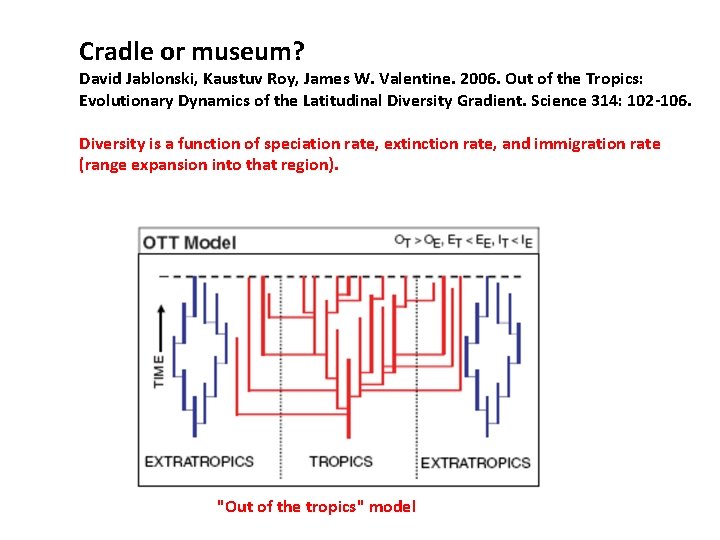
Cradle or museum? David Jablonski, Kaustuv Roy, James W. Valentine. 2006. Out of the Tropics: Evolutionary Dynamics of the Latitudinal Diversity Gradient. Science 314: 102 -106. Diversity is a function of speciation rate, extinction rate, and immigration rate (range expansion into that region). "Out of the tropics" model
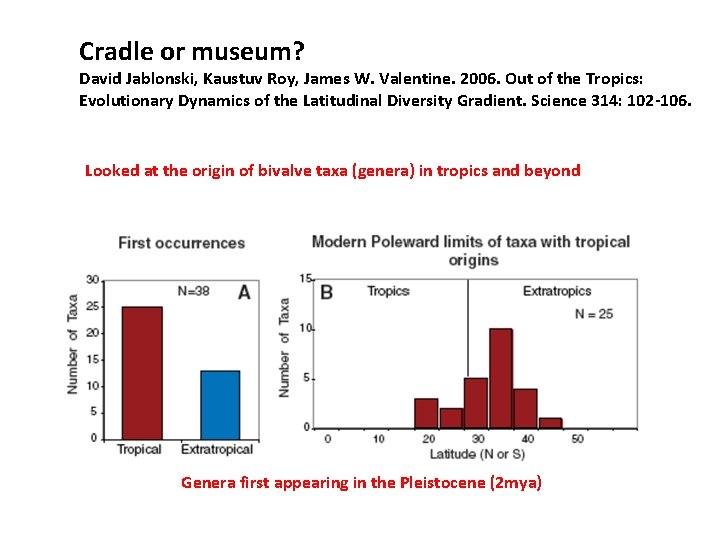
Cradle or museum? David Jablonski, Kaustuv Roy, James W. Valentine. 2006. Out of the Tropics: Evolutionary Dynamics of the Latitudinal Diversity Gradient. Science 314: 102 -106. Looked at the origin of bivalve taxa (genera) in tropics and beyond Genera first appearing in the Pleistocene (2 mya)
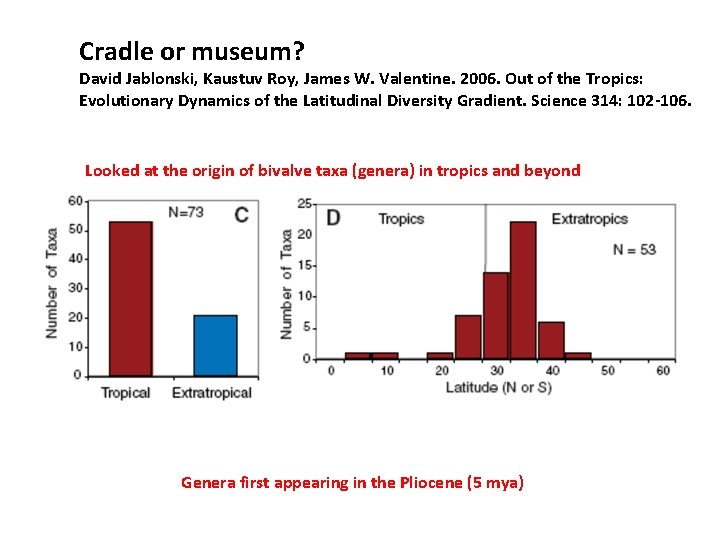
Cradle or museum? David Jablonski, Kaustuv Roy, James W. Valentine. 2006. Out of the Tropics: Evolutionary Dynamics of the Latitudinal Diversity Gradient. Science 314: 102 -106. Looked at the origin of bivalve taxa (genera) in tropics and beyond Genera first appearing in the Pliocene (5 mya)
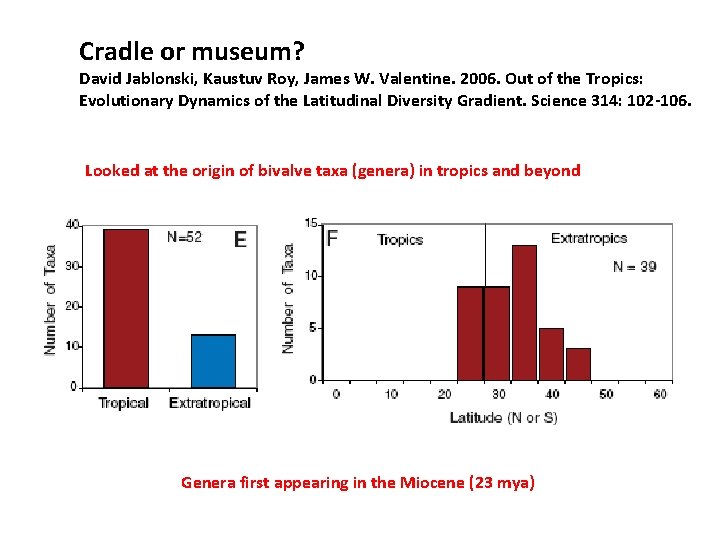
Cradle or museum? David Jablonski, Kaustuv Roy, James W. Valentine. 2006. Out of the Tropics: Evolutionary Dynamics of the Latitudinal Diversity Gradient. Science 314: 102 -106. Looked at the origin of bivalve taxa (genera) in tropics and beyond Genera first appearing in the Miocene (23 mya)