
Patterns in Aquatic Ecosystems Shallow vs Deep Fresh

- Slides: 34
Patterns in Aquatic Ecosystems Shallow vs Deep Fresh vs Salt Swift vs Stagnant Changing vs Constant Ephemeral vs Permanent Limnology vs Oceanography
Patterns of Aquatic Ecosystems • • • Important Properties of Water Types of Organisms Freshwater Ecosystems Marine Ecosystems Transition Areas
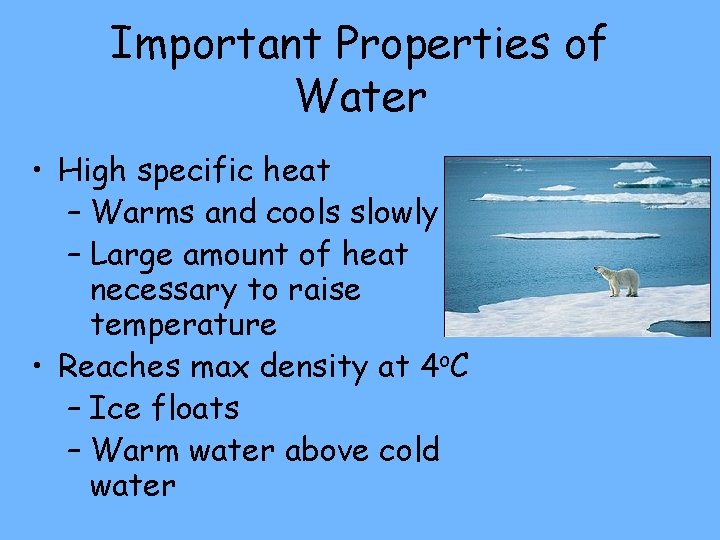
Important Properties of Water • High specific heat – Warms and cools slowly – Large amount of heat necessary to raise temperature • Reaches max density at 4 o. C – Ice floats – Warm water above cold water
Properties of Water • 800 x more dense than air – Organisms still more dense – Need buoyancy
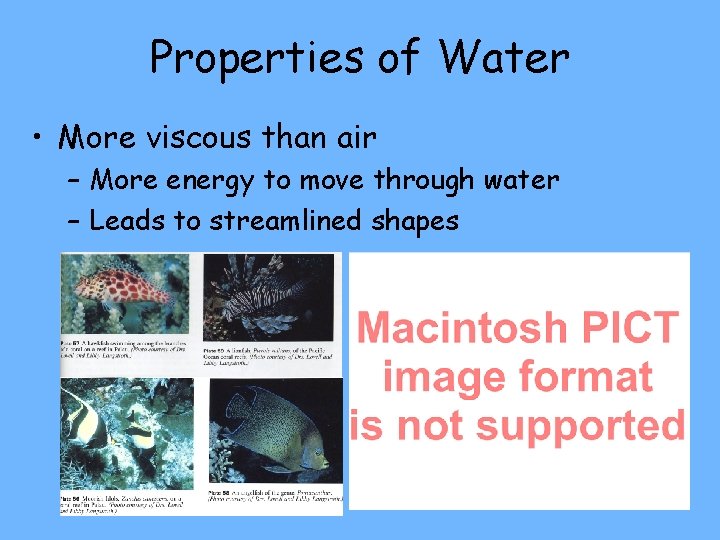
Properties of Water • More viscous than air – More energy to move through water – Leads to streamlined shapes
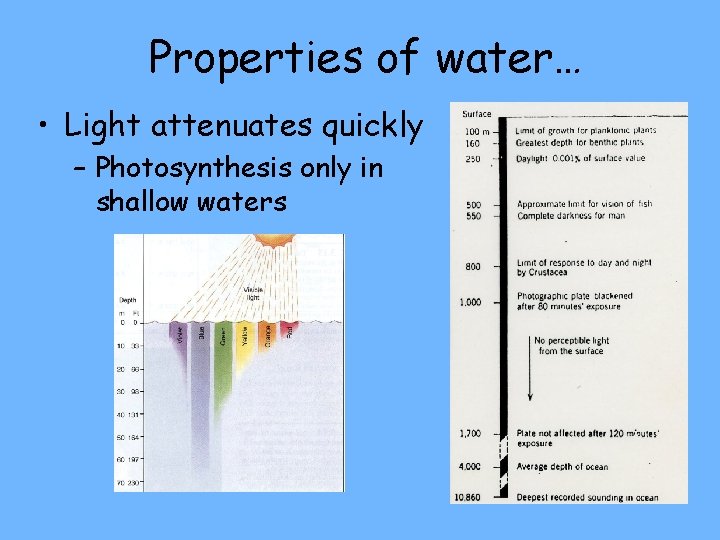
Properties of water… • Light attenuates quickly – Photosynthesis only in shallow waters
Properties of Water • Phosphorus and Nitrogen limiting nutrients • Less oxygen than air – Enters at surface and via photosynthesis – Cold water holds more • Carbon dioxide and buffering
Properties of Water • High surface tension – Can have organisms on surface
Types of Organisms • Can classify based on mode of life/location • Can classify based on trophic mode
Mode of life • Benthos - attached or resting on bottom – Epifauna: live on bottom (crabs, scallops) – Periphyton: attach to stems & leaves of rooted plants – Infauna: buried in sediment (clams, worms)
Mode of life • Plankton – Floating, weak swimmers • Phytoplankton: photosynthesize • Zooplankton: herbivores & carnivores
Mode of life • Nekton – Swimming organisms – Go where they want – Fish, squid, frogs, turtles, seals, octopus http: //www. berkeley. edu/news/media/releases/20 05/03/images/aculeatus_walk. mov
Mode of life • Neuston – Rest or swim on surface
Trophic Mode • Decomposers – Many insects, bacteria – Break down organic matter – Bacteria, fungi • Photsynthesizers (primary producers) – Derive energy from sunlight
Trophic Mode • Deposit feeders – Eat organic material on bottom – Worms, some snails and clams • Filter feeders – Remove food from water – Clams, mussels, baleen whales…
Trophic Mode • Grazers – Eat living plant material – Insects, sea urchins. . • Carnivores – Eat animals
Types of Aquatic Ecosystems • Freshwater • Marine • Transitions between land & sea
Freshwater Ecosystems • Lentic – Standing water – Lakes, ponds, bogs • Lotic – Running water – Streams, rivers
Lentic Zonation • Limnetic: to depth of light penetration • Profundal zone: beyond depth of light penetration – Usually absent in ponds
Lentic Zones • Littoral zone – Shallow, light penetrates to bottom – Rooted plants – High diversity – Subzones of vegetation • Emergent, floating, submergent
Lentic Zonation • Limnetic zone – Depth of effective light penetration compensation point – No benthos and few if any neuston
Lentic Zonation • Profundal zone – Bottom and deep water region – Fewer plankton and no neuston – Absent in ponds
Physical Factors • Transparency – Turbidity – Secchi Disk • Alkalinity (buffering capacity)
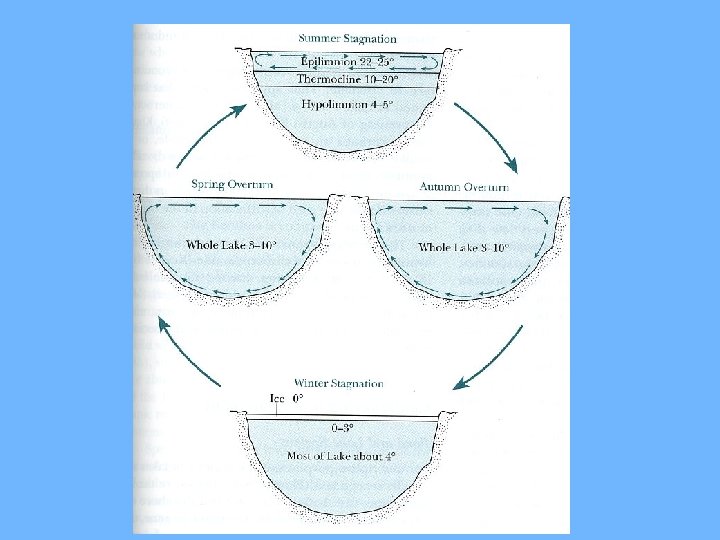
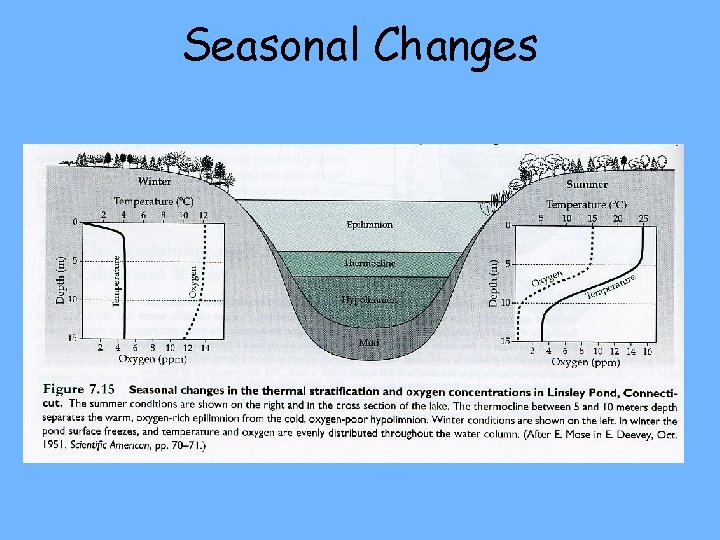
Thermal Stratification • Epilimnion: warm surface water • Metalimnion: 0 C changes with depth • Hypolimnion: cold deeper waters • Changes with season
Thermal Stratification
Seasonal Changes
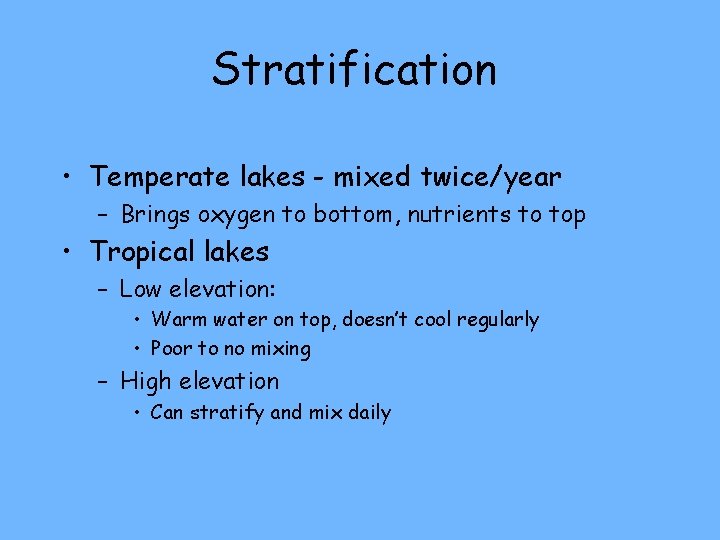
Stratification • Temperate lakes - mixed twice/year – Brings oxygen to bottom, nutrients to top • Tropical lakes – Low elevation: • Warm water on top, doesn’t cool regularly • Poor to no mixing – High elevation • Can stratify and mix daily
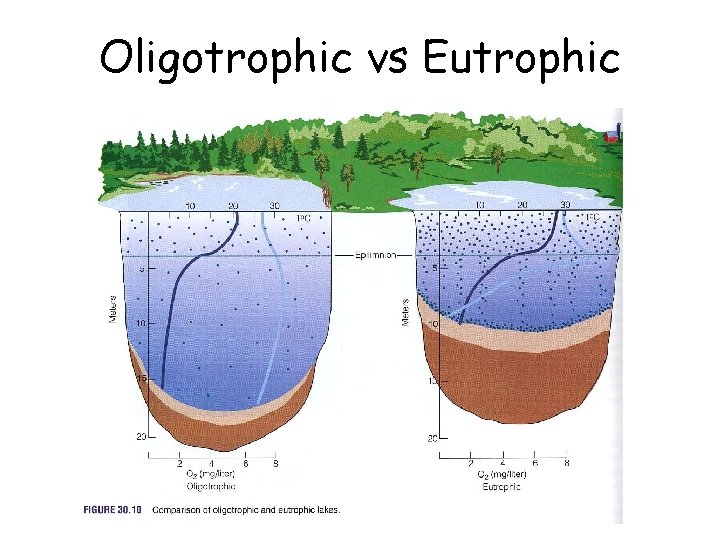
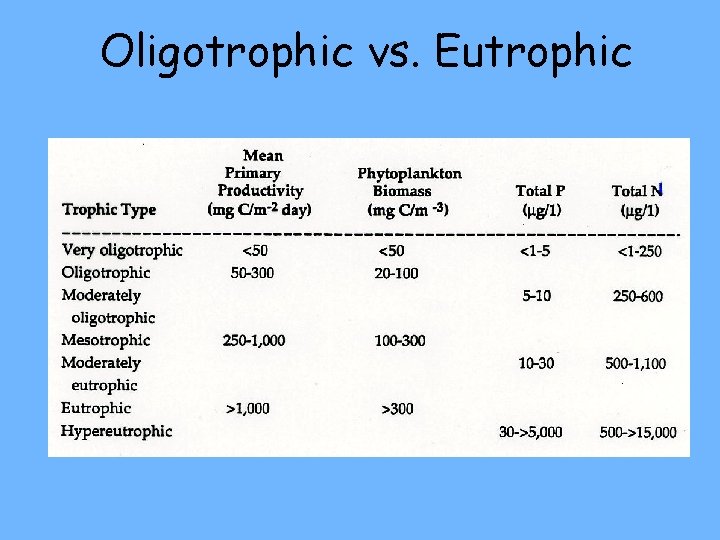
Lake Productivity • Oligotrophic – Deep, sandy or gravel bottom – Low nutrients – low plant growth • low productivity – Low decomp at bottom • oxygen not depleted�
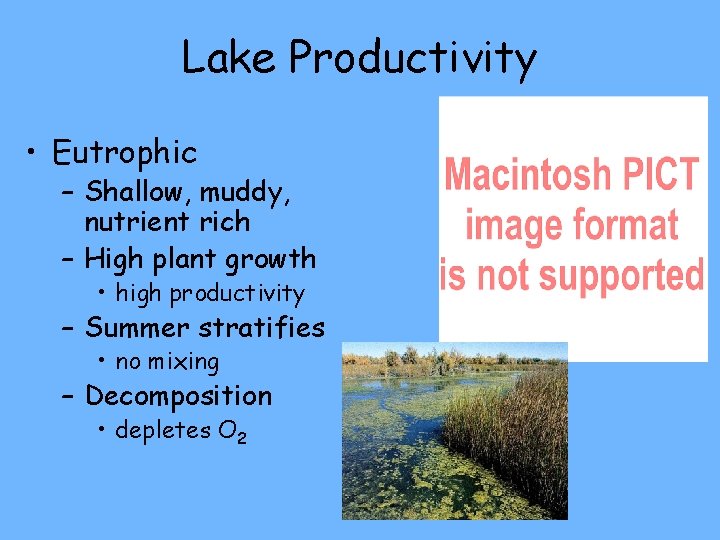
Lake Productivity • Eutrophic – Shallow, muddy, nutrient rich – High plant growth • high productivity – Summer stratifies • no mixing – Decomposition • depletes O 2
Oligotrophic vs Eutrophic
Oligotrophic vs. Eutrophic
Times of Low Oxygen Interesting • Dimictic vs. Meromictic lakes • Hypolimnion in the summer when no oxygen input – Productive lakes – Deep water fishery disappears • Heavy Snow Cover – No algal photosynthesis
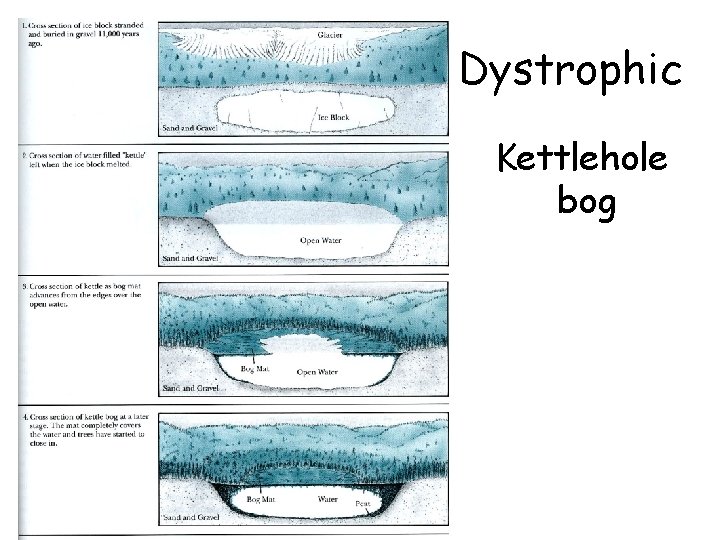
Dystrophic Kettlehole bog