
Pattern Symbols Pattern symbols are an important part
Pattern Symbols
Pattern symbols are an important part of sewing. Learning how to read and use pattern symbols will help you to create a professional looking project, save you time and also make sewing it together much easier. Pattern symbols should be transferred from the paper pattern piece to the fabric AFTER the fabric has been cut out, but BEFORE the paper pattern is removed.
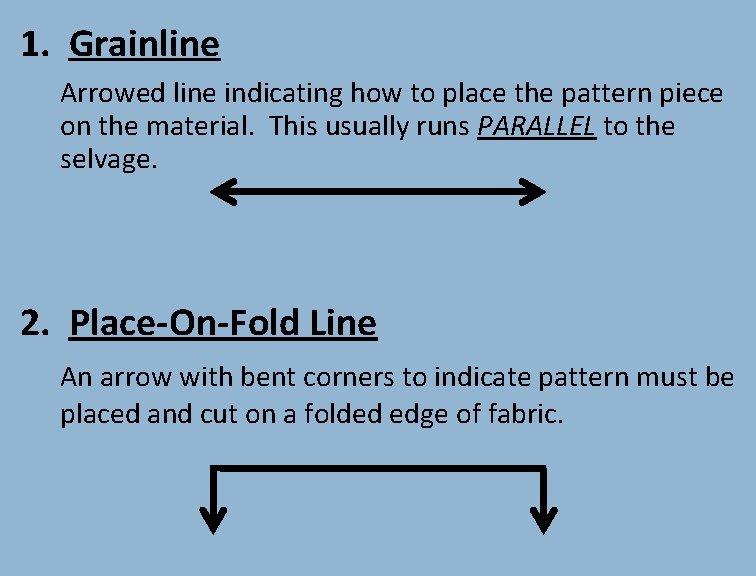
1. Grainline Arrowed line indicating how to place the pattern piece on the material. This usually runs PARALLEL to the selvage. 2. Place-On-Fold Line An arrow with bent corners to indicate pattern must be placed and cut on a folded edge of fabric.
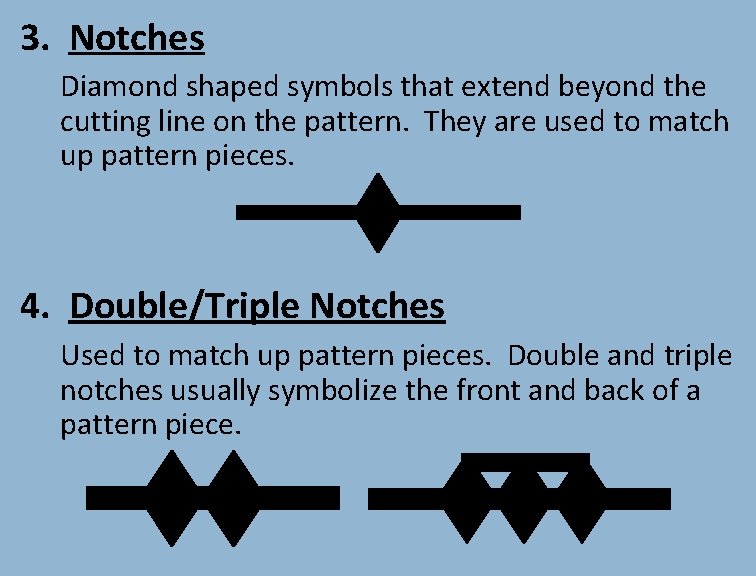
3. Notches Diamond shaped symbols that extend beyond the cutting line on the pattern. They are used to match up pattern pieces. 4. Double/Triple Notches Used to match up pattern pieces. Double and triple notches usually symbolize the front and back of a pattern piece.

5. Dart Folds sewn into fabric to help provide a threedimentional shape to a garment. Single Dart Double-Ended Dart
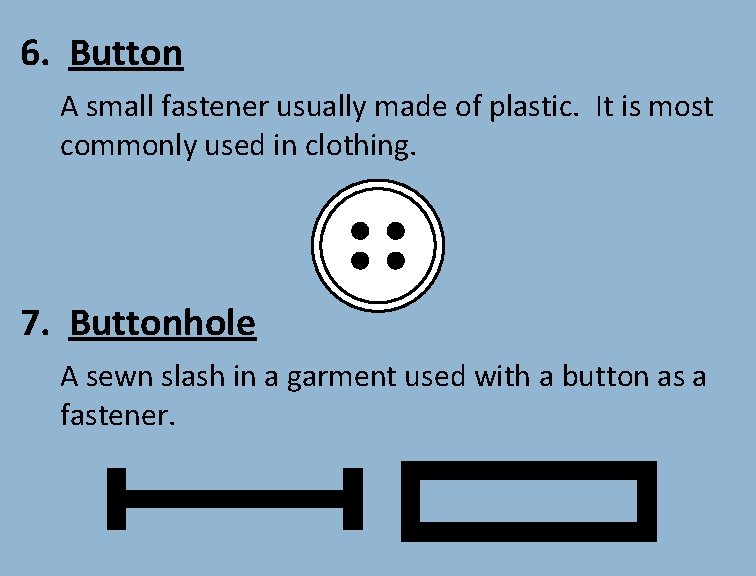
6. Button A small fastener usually made of plastic. It is most commonly used in clothing. 7. Buttonhole A sewn slash in a garment used with a button as a fastener.
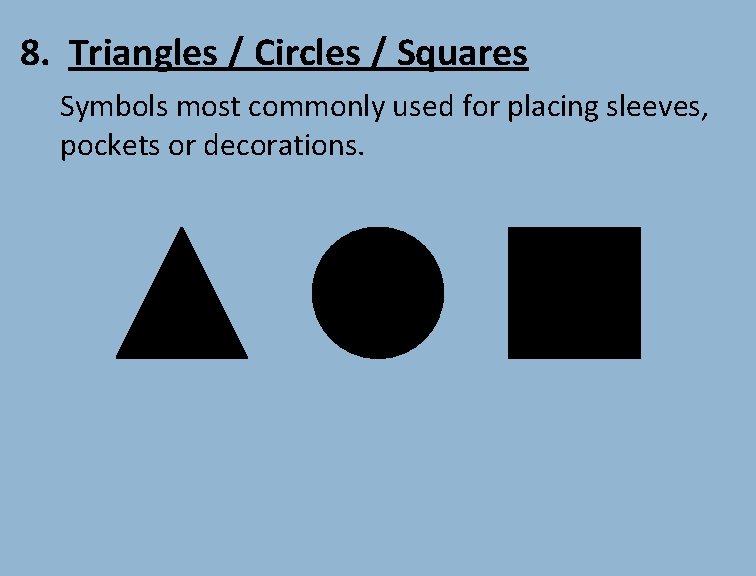
8. Triangles / Circles / Squares Symbols most commonly used for placing sleeves, pockets or decorations.
Grainlines
Grainlines in woven fabric are important to understand because they can affect the final outcome of your project. Grainlines can affect the stretch and fit of clothing and the lining up of printed designs. The direction of the grainline arrow will show you how to place your pattern pieces.
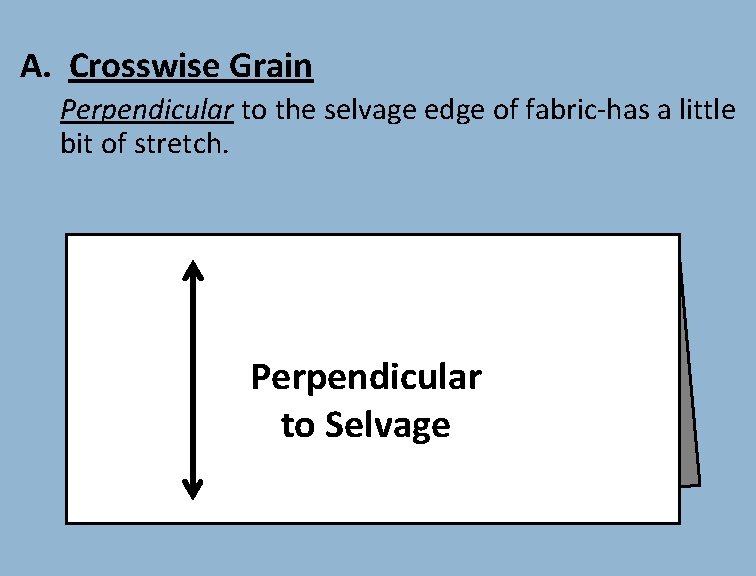
A. Crosswise Grain Perpendicular to the selvage edge of fabric-has a little bit of stretch. Perpendicular to Selvage
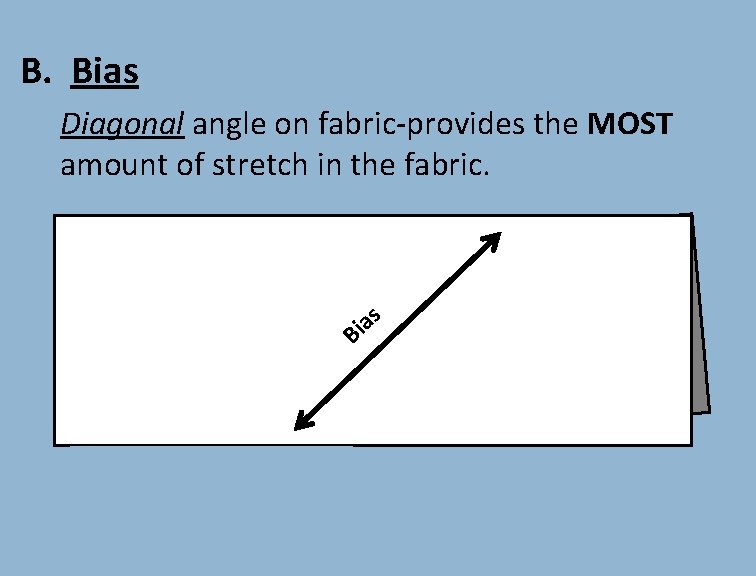
B. Bias Diagonal angle on fabric-provides the MOST amount of stretch in the fabric. as i B
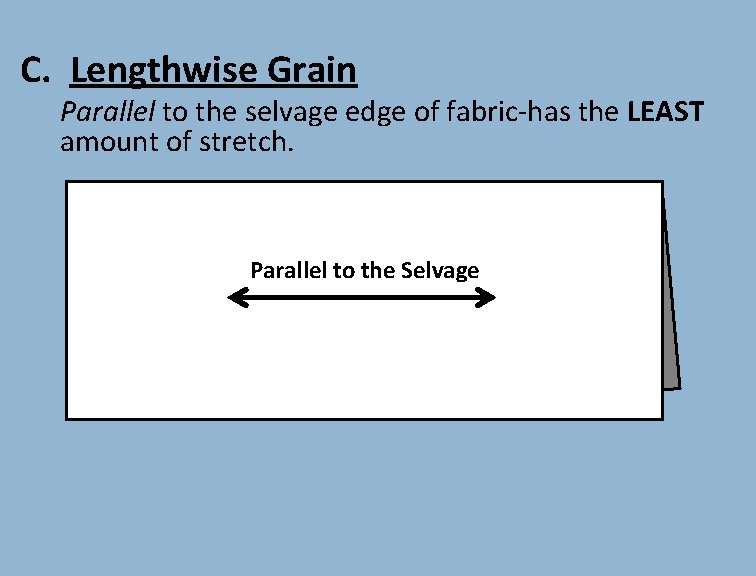
C. Lengthwise Grain Parallel to the selvage edge of fabric-has the LEAST amount of stretch. Parallel to the Selvage
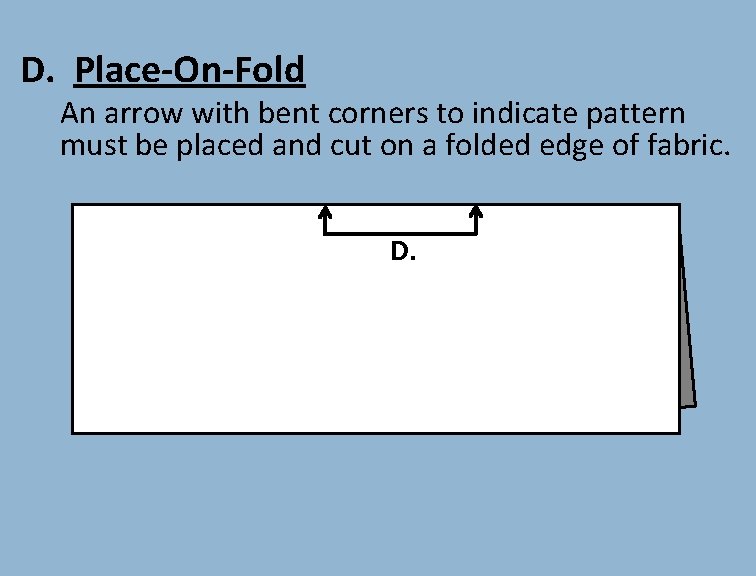
D. Place-On-Fold An arrow with bent corners to indicate pattern must be placed and cut on a folded edge of fabric. D.
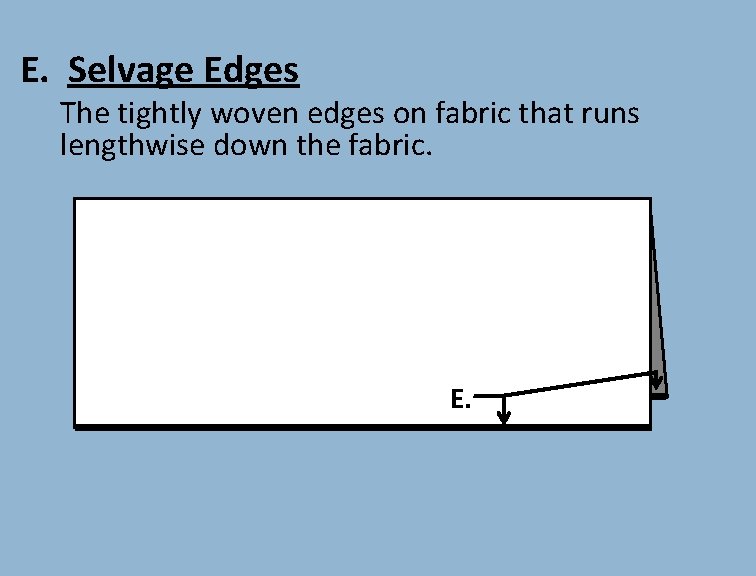
E. Selvage Edges The tightly woven edges on fabric that runs lengthwise down the fabric. E.
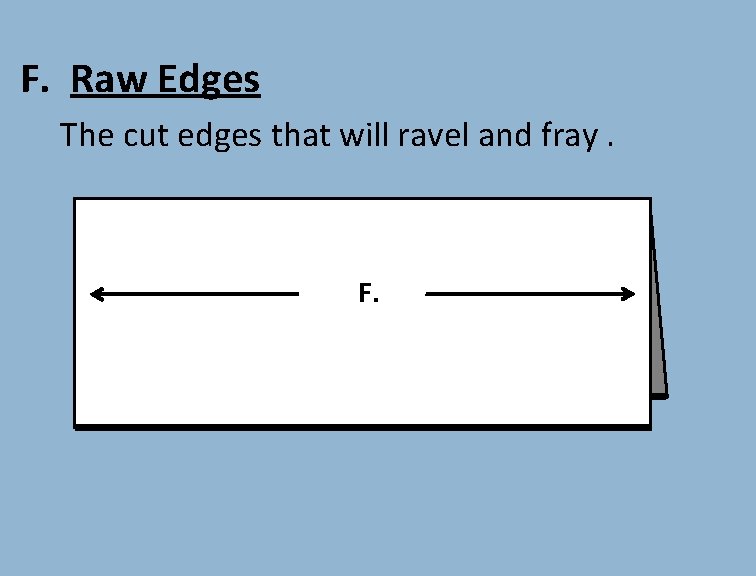
F. Raw Edges The cut edges that will ravel and fray. F.
- Slides: 15