
Patriots vs Redcoats Comparing the two sides Following
- Slides: 9
Patriots vs. Redcoats Comparing the two sides
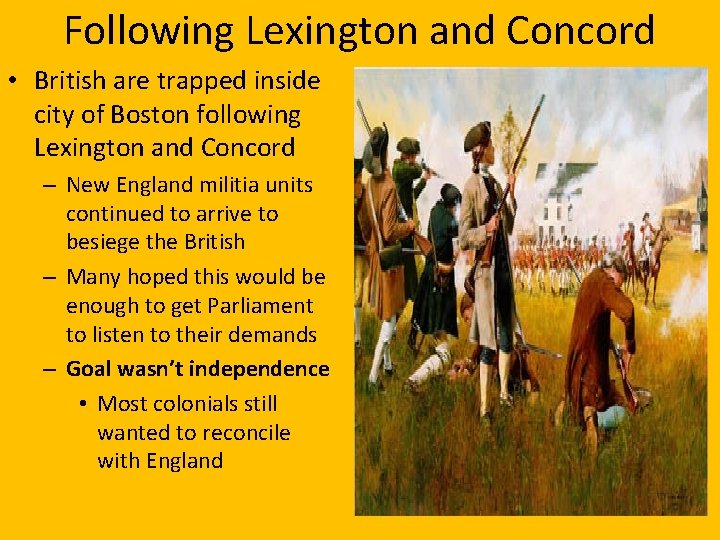
Following Lexington and Concord • British are trapped inside city of Boston following Lexington and Concord – New England militia units continued to arrive to besiege the British – Many hoped this would be enough to get Parliament to listen to their demands – Goal wasn’t independence • Most colonials still wanted to reconcile with England
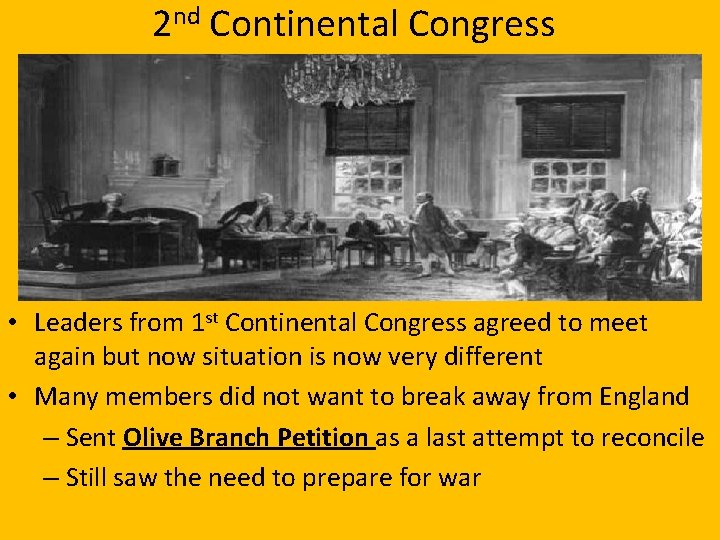
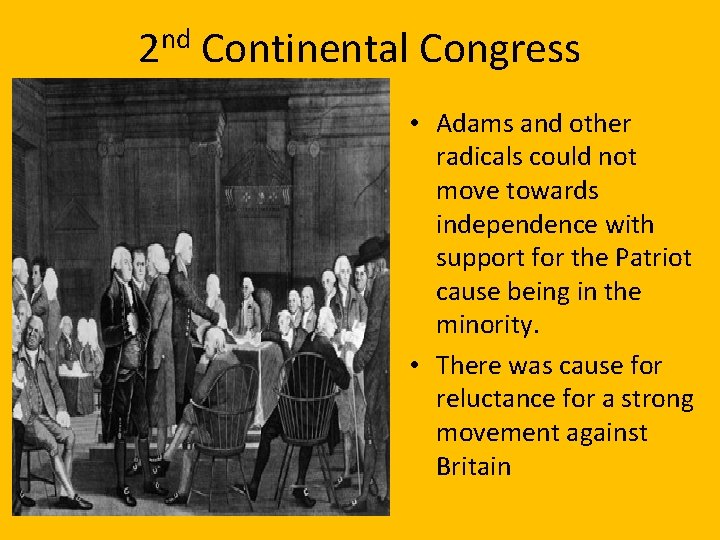
2 nd Continental Congress • Leaders from 1 st Continental Congress agreed to meet again but now situation is now very different • Many members did not want to break away from England – Sent Olive Branch Petition as a last attempt to reconcile – Still saw the need to prepare for war
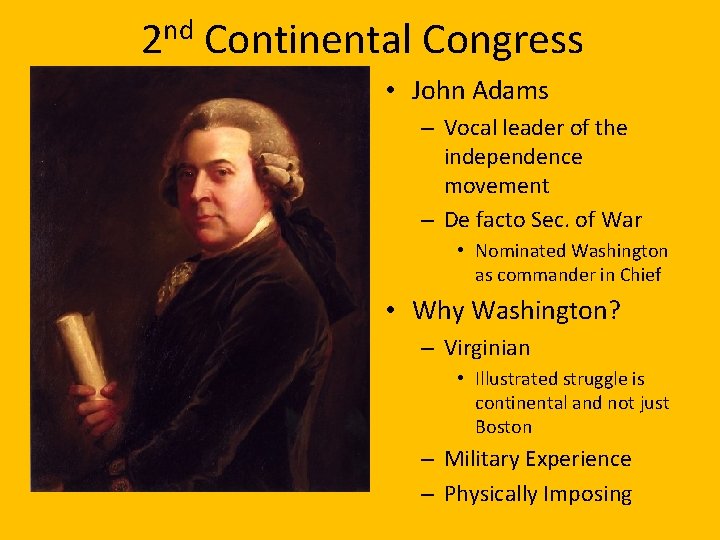
nd 2 Continental Congress • John Adams – Vocal leader of the independence movement – De facto Sec. of War • Nominated Washington as commander in Chief • Why Washington? – Virginian • Illustrated struggle is continental and not just Boston – Military Experience – Physically Imposing
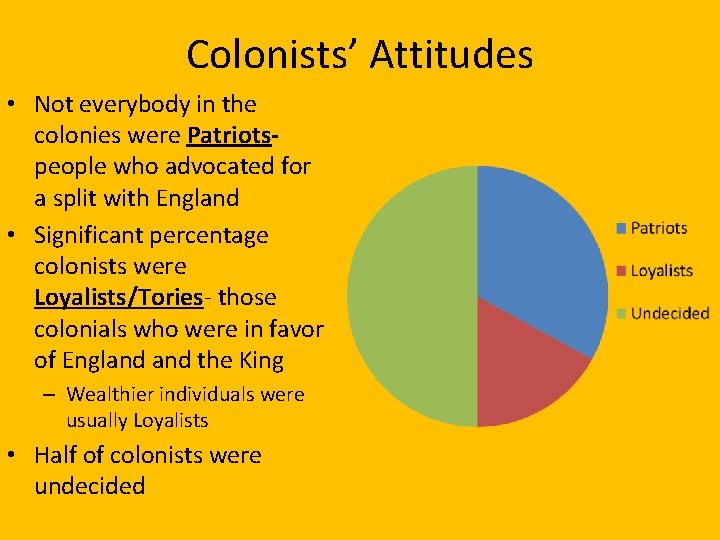
Colonists’ Attitudes • Not everybody in the colonies were Patriotspeople who advocated for a split with England • Significant percentage colonists were Loyalists/Tories- those colonials who were in favor of England the King – Wealthier individuals were usually Loyalists • Half of colonists were undecided
2 nd Continental Congress • Adams and other radicals could not move towards independence with support for the Patriot cause being in the minority. • There was cause for reluctance for a strong movement against Britain
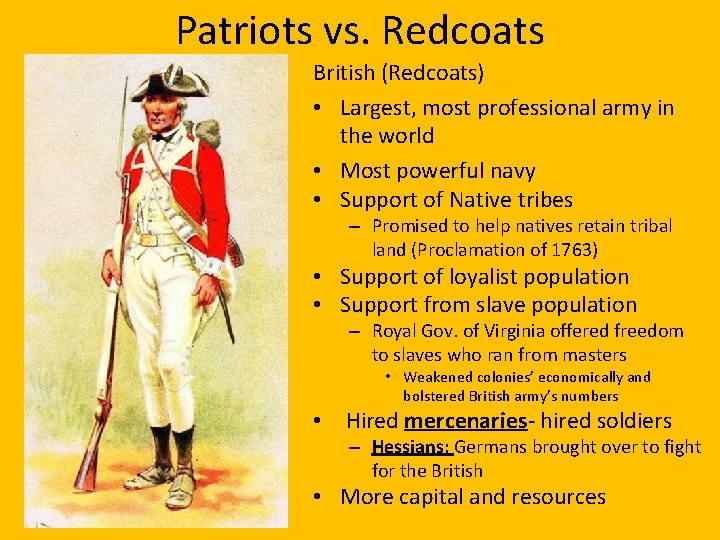
Patriots vs. Redcoats British (Redcoats) • Largest, most professional army in the world • Most powerful navy • Support of Native tribes – Promised to help natives retain tribal land (Proclamation of 1763) • Support of loyalist population • Support from slave population – Royal Gov. of Virginia offered freedom to slaves who ran from masters • Weakened colonies’ economically and bolstered British army’s numbers • Hired mercenaries- hired soldiers – Hessians: Germans brought over to fight for the British • More capital and resources
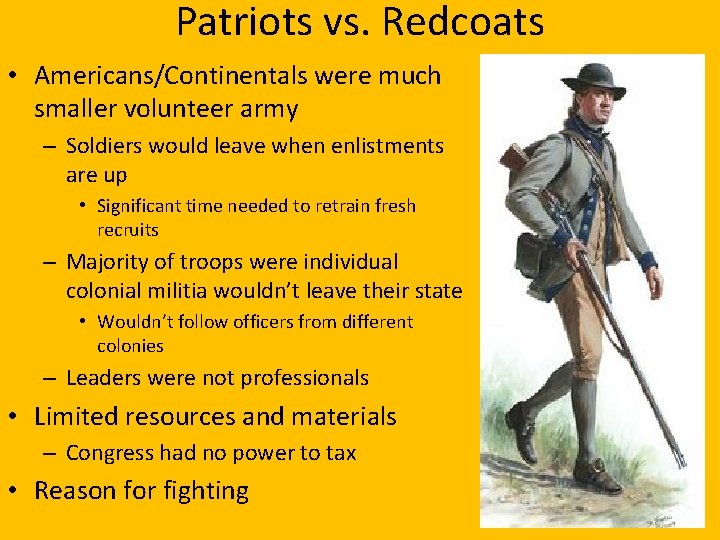
Patriots vs. Redcoats • Americans/Continentals were much smaller volunteer army – Soldiers would leave when enlistments are up • Significant time needed to retrain fresh recruits – Majority of troops were individual colonial militia wouldn’t leave their state • Wouldn’t follow officers from different colonies – Leaders were not professionals • Limited resources and materials – Congress had no power to tax • Reason for fighting
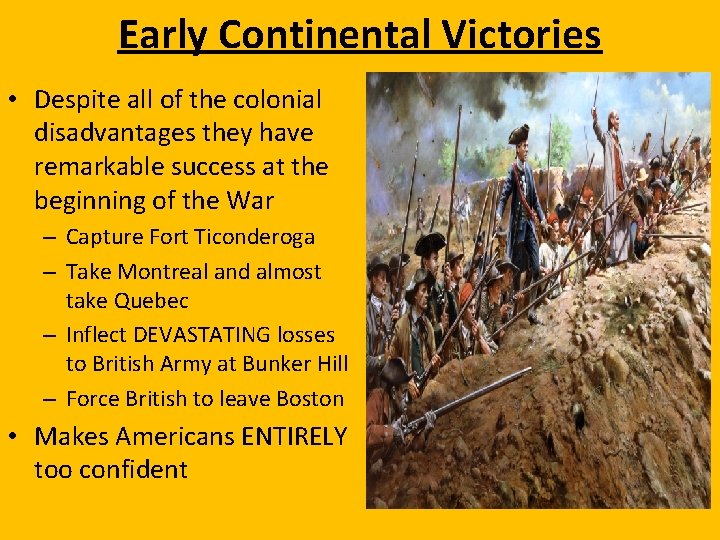
Early Continental Victories • Despite all of the colonial disadvantages they have remarkable success at the beginning of the War – Capture Fort Ticonderoga – Take Montreal and almost take Quebec – Inflect DEVASTATING losses to British Army at Bunker Hill – Force British to leave Boston • Makes Americans ENTIRELY too confident