
PATRICIA BENNERS NOVICE TO EXPERT MODEL Rey Omar
PATRICIA BENNER’S NOVICE TO EXPERT MODEL Rey Omar Mina – ID#3371184 NURS 608 Submitted to: Dr. Margie Kennedy
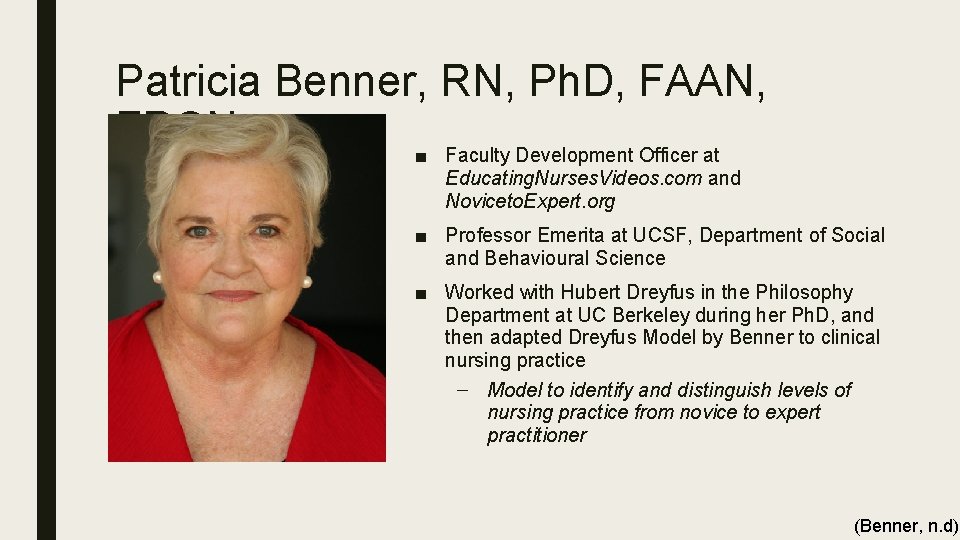
Patricia Benner, RN, Ph. D, FAAN, FRCN ■ Faculty Development Officer at Educating. Nurses. Videos. com and Noviceto. Expert. org ■ Professor Emerita at UCSF, Department of Social and Behavioural Science ■ Worked with Hubert Dreyfus in the Philosophy Department at UC Berkeley during her Ph. D, and then adapted Dreyfus Model by Benner to clinical nursing practice – Model to identify and distinguish levels of nursing practice from novice to expert practitioner (Benner, n. d)
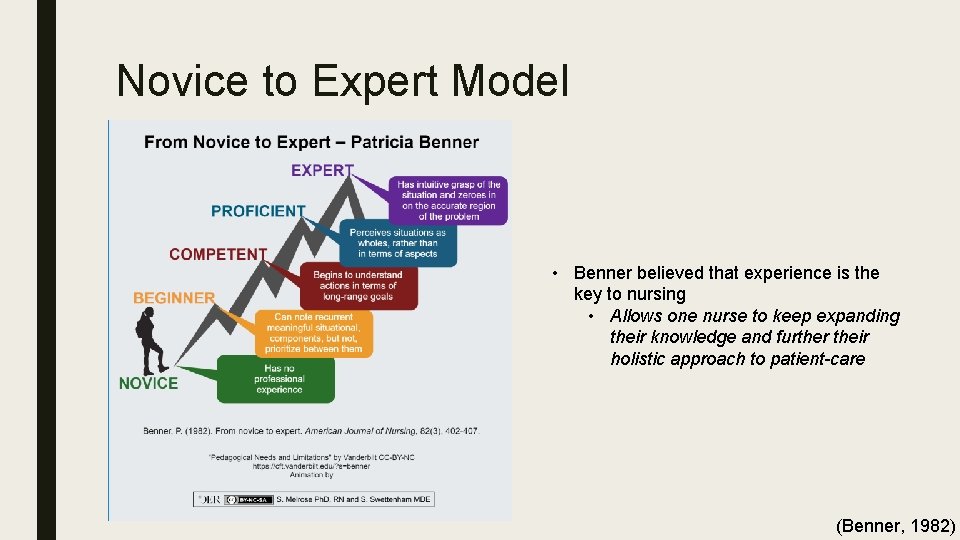
Novice to Expert Model • Benner believed that experience is the key to nursing • Allows one nurse to keep expanding their knowledge and further their holistic approach to patient-care (Benner, 1982)
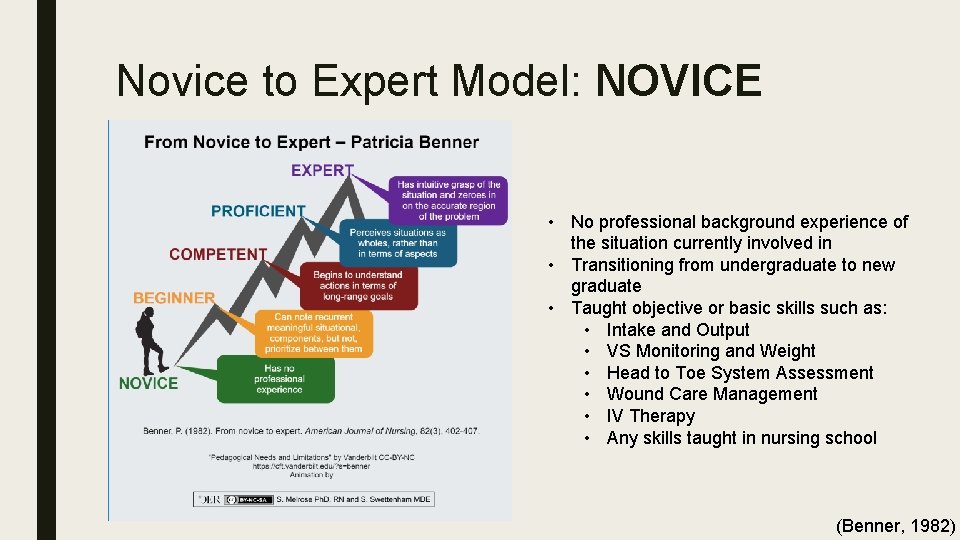
Novice to Expert Model: NOVICE • No professional background experience of the situation currently involved in • Transitioning from undergraduate to new graduate • Taught objective or basic skills such as: • Intake and Output • VS Monitoring and Weight • Head to Toe System Assessment • Wound Care Management • IV Therapy • Any skills taught in nursing school (Benner, 1982)
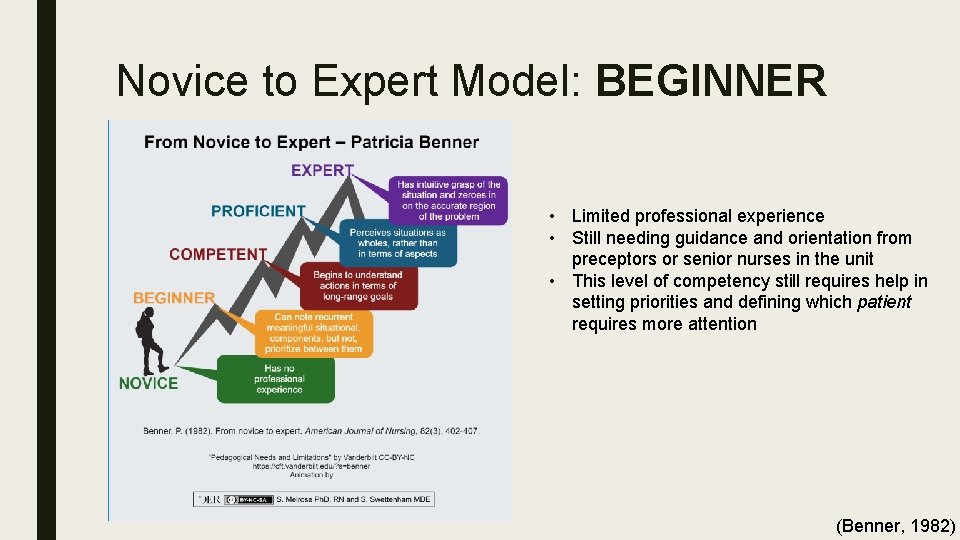
Novice to Expert Model: BEGINNER • Limited professional experience • Still needing guidance and orientation from preceptors or senior nurses in the unit • This level of competency still requires help in setting priorities and defining which patient requires more attention (Benner, 1982)
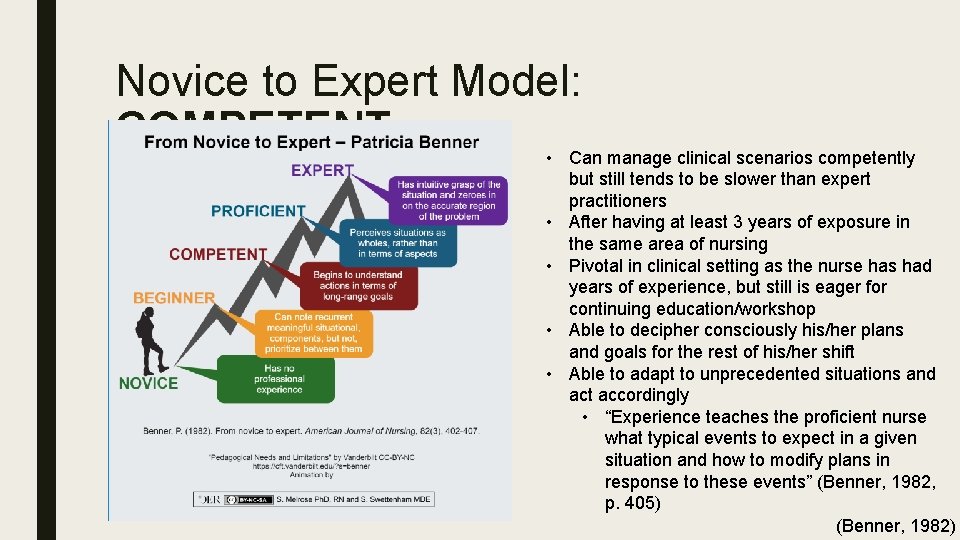
Novice to Expert Model: COMPETENT • Can manage clinical scenarios competently • • but still tends to be slower than expert practitioners After having at least 3 years of exposure in the same area of nursing Pivotal in clinical setting as the nurse has had years of experience, but still is eager for continuing education/workshop Able to decipher consciously his/her plans and goals for the rest of his/her shift Able to adapt to unprecedented situations and act accordingly • “Experience teaches the proficient nurse what typical events to expect in a given situation and how to modify plans in response to these events” (Benner, 1982, p. 405) (Benner, 1982)
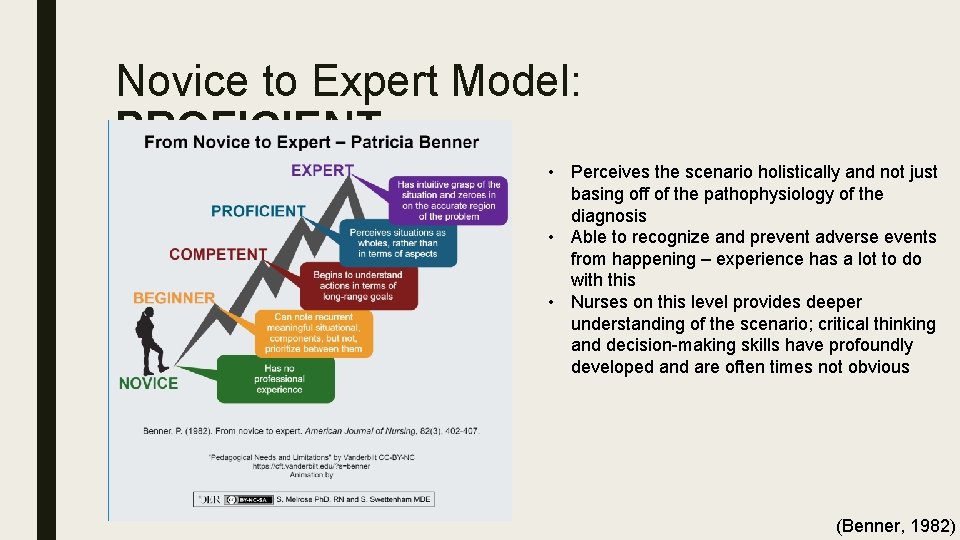
Novice to Expert Model: PROFICIENT • Perceives the scenario holistically and not just basing off of the pathophysiology of the diagnosis • Able to recognize and prevent adverse events from happening – experience has a lot to do with this • Nurses on this level provides deeper understanding of the scenario; critical thinking and decision-making skills have profoundly developed and are often times not obvious (Benner, 1982)
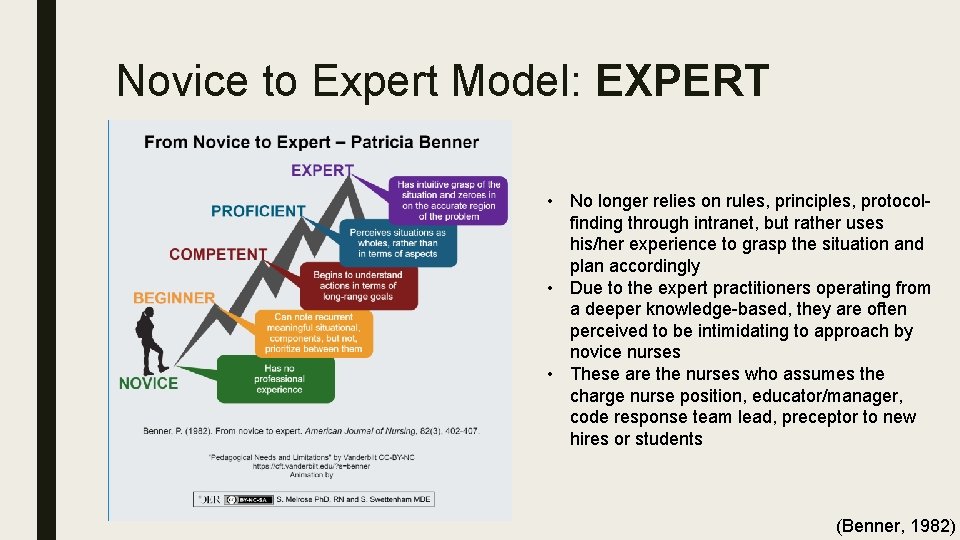
Novice to Expert Model: EXPERT • No longer relies on rules, principles, protocolfinding through intranet, but rather uses his/her experience to grasp the situation and plan accordingly • Due to the expert practitioners operating from a deeper knowledge-based, they are often perceived to be intimidating to approach by novice nurses • These are the nurses who assumes the charge nurse position, educator/manager, code response team lead, preceptor to new hires or students (Benner, 1982)
References Benner, P. (1982). From novice to expert. The American Journal of Nursing, 82(3): 402 -407. Benner, P. (n. d. ). Patricia Benner Linkedin Profile. [website].
- Slides: 9