
Patofisiologi Gizi The Urinary System Pokok Bahasan Sistem
Patofisiologi Gizi The Urinary System
Pokok Bahasan § Sistem Urinarius § Gangguan Ginjal Dan Saluran Kemih
Urinary System : The Functions · Elimination of waste products · Nitrogenous wastes · Toxins · Drugs
Functions of the Urinary System · Regulate aspects of homeostasis · Water balance · Electrolytes · Acid-base balance in the blood · Blood pressure · Red blood cell production · Activation of vitamin D
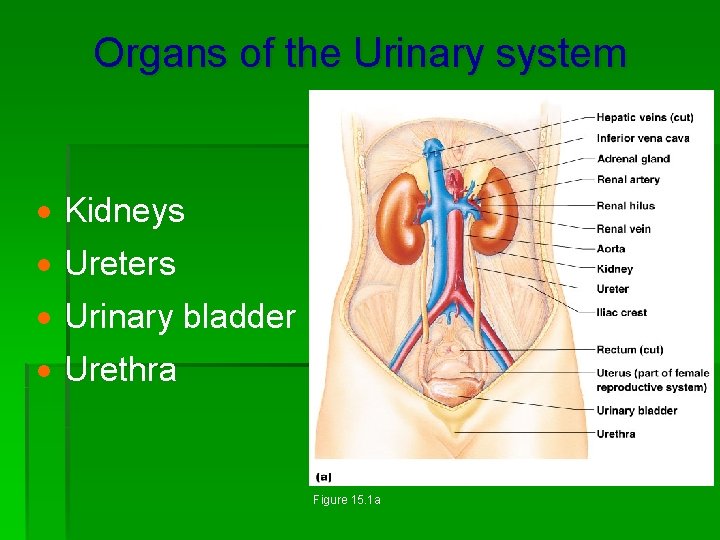
Organs of the Urinary system · Kidneys · Ureters · Urinary bladder · Urethra Figure 15. 1 a
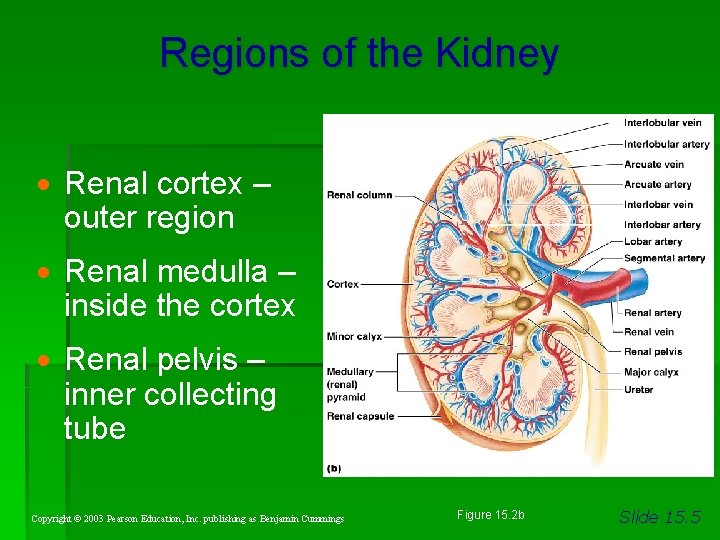
Regions of the Kidney · Renal cortex – outer region · Renal medulla – inside the cortex · Renal pelvis – inner collecting tube Copyright © 2003 Pearson Education, Inc. publishing as Benjamin Cummings Figure 15. 2 b Slide 15. 5
Kidney Structures · Medullary pyramids – triangular regions of tissue in the medulla · Renal columns – extensions of cortexlike material inward · Calyces – cup-shaped structures that funnel urine towards the renal pelvis
Nephrons · The structural and functional units of the kidneys · Responsible forming urine · Main structures of the nephrons · Glomerulus · Renal tubule
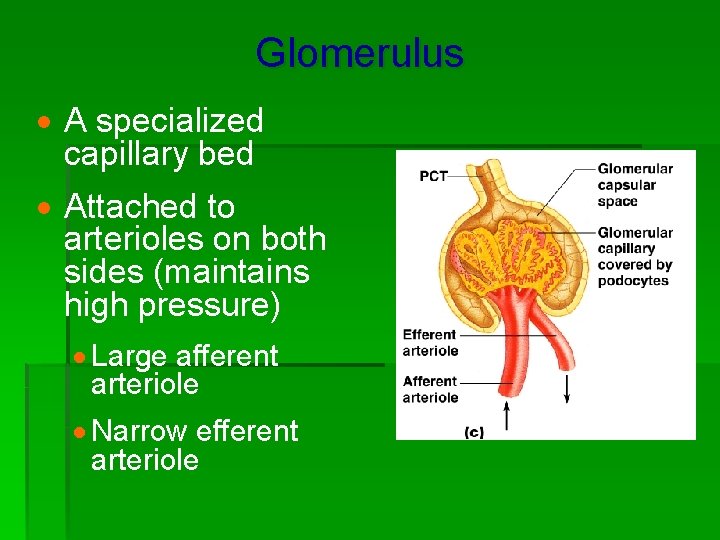
Glomerulus · A specialized capillary bed · Attached to arterioles on both sides (maintains high pressure) · Large afferent arteriole · Narrow efferent arteriole
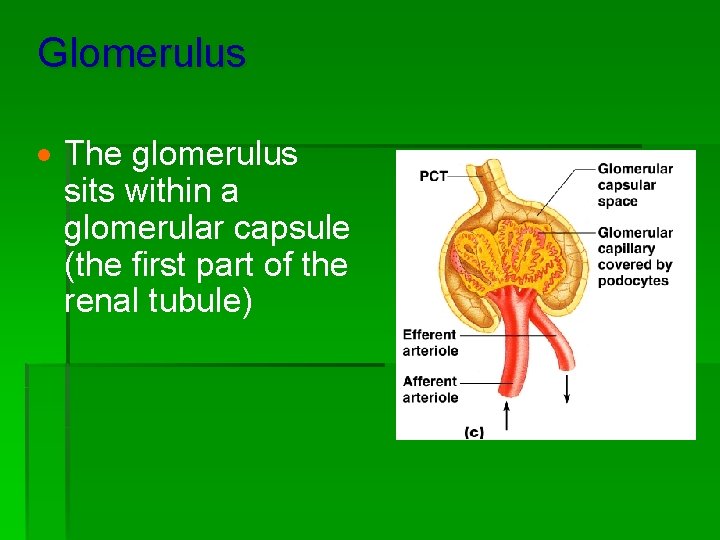
Glomerulus · The glomerulus sits within a glomerular capsule (the first part of the renal tubule)
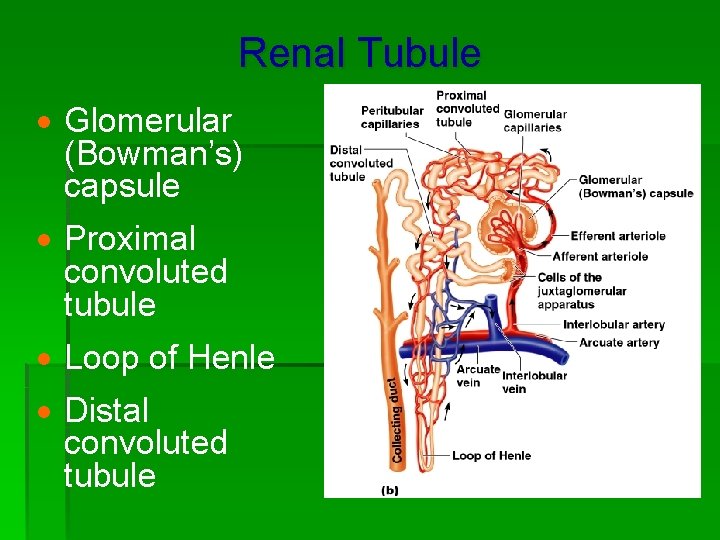
Renal Tubule · Glomerular (Bowman’s) capsule · Proximal convoluted tubule · Loop of Henle · Distal convoluted tubule
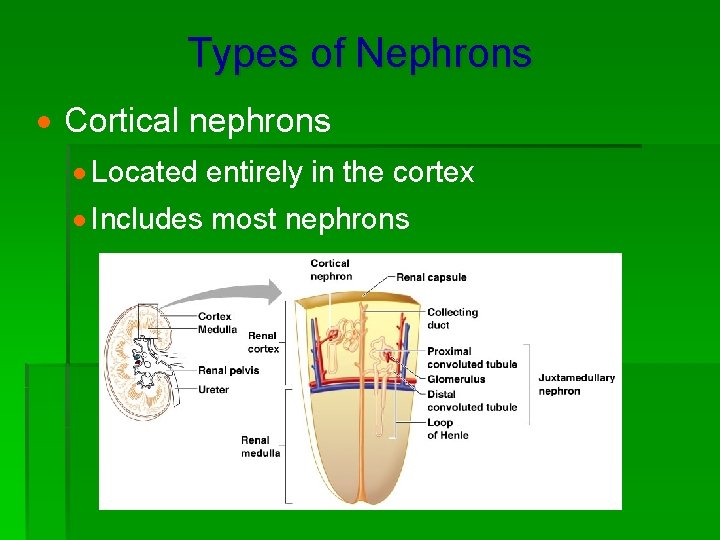
Types of Nephrons · Cortical nephrons · Located entirely in the cortex · Includes most nephrons
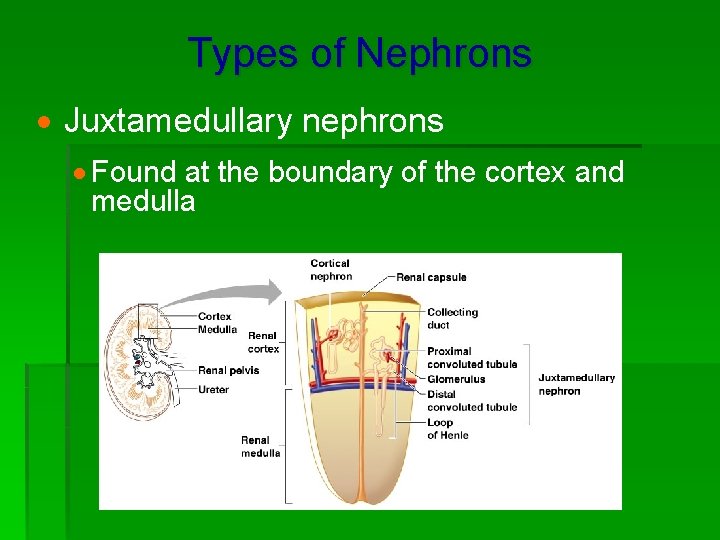
Types of Nephrons · Juxtamedullary nephrons · Found at the boundary of the cortex and medulla
Peritubular Capillaries · Arise from efferent arteriole of the glomerulus · Normal, low pressure capillaries · Attached to a venule · Cling close to the renal tubule · Reabsorb (reclaim) some substances from collecting tubes
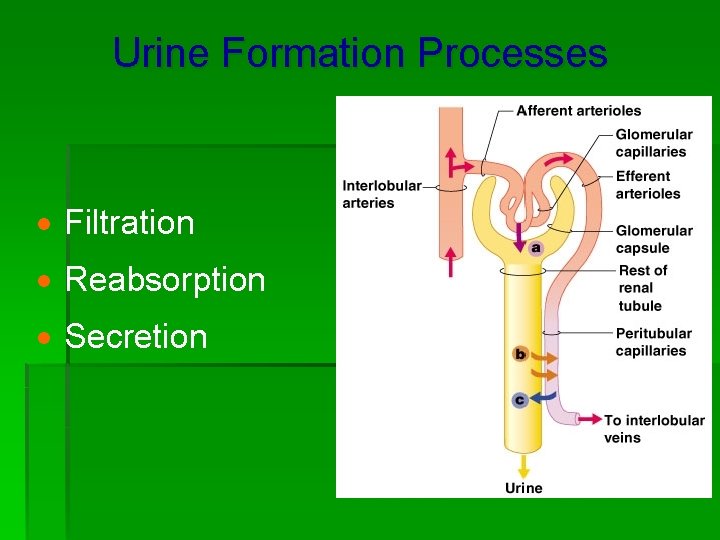
Urine Formation Processes · Filtration · Reabsorption · Secretion
Filtration · Nonselective passive process · Water and solutes smaller than proteins are forced through capillary walls · Blood cells cannot pass out to the capillaries · Filtrate is collected in the glomerular capsule and leaves via the renal tubule
Reabsorption · The peritubular capillaries reabsorb several materials · Some water · Glucose · Amino acids · Ions · Some reabsorption is passive, most is active · Most reabsorption occurs in the proximal convoluted tubule
Materials Not Reabsorbed · Nitrogenous waste products · Urea · Uric acid · Creatinine · Excess water
Secretion – Reabsorption in Reverse · Some materials move from the peritubular capillaries into the renal tubules · Hydrogen and potassium ions · Creatinine · Materials left in the renal tubule move toward the ureter
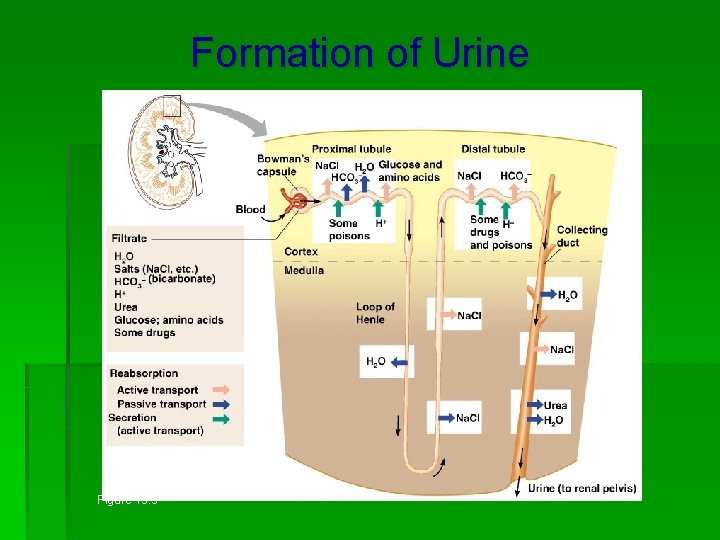
Formation of Urine Figure 15. 5
Characteristics of Urine Used for Medical Diagnosis · Colored somewhat yellow due to the pigment urochrome (from the destruction of hemoglobin) and solutes · Sterile · Slightly aromatic · Normal p. H of around 6 (varies 4. 5 -8) · Specific gravity of 1. 001 to 1. 035
Ureters · Slender tubes attaching the kidney to the bladder · Continuous with the renal pelvis · Enter the posterior aspect of the bladder · Runs behind the peritoneum · Peristalsis aids gravity in urine transport
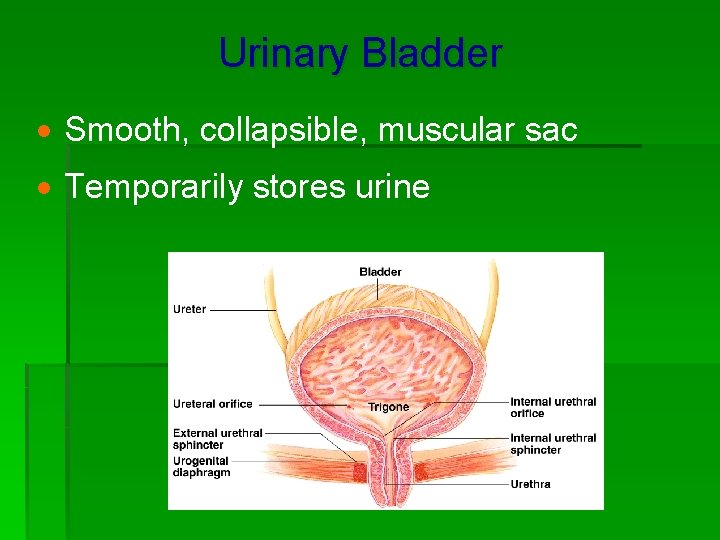
Urinary Bladder · Smooth, collapsible, muscular sac · Temporarily stores urine
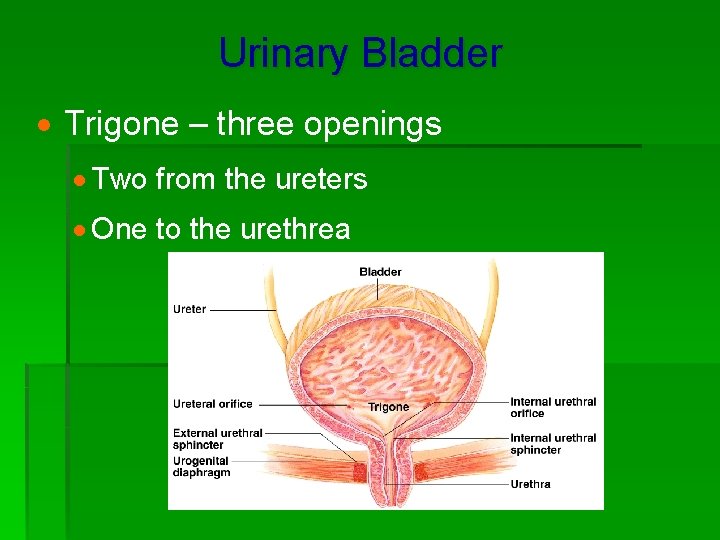
Urinary Bladder · Trigone – three openings · Two from the ureters · One to the urethrea
Urethra · Thin-walled tube that carries urine from the bladder to the outside of the body by peristalsis · Release of urine is controlled by two sphincters · Internal urethral sphincter (involuntary) · External urethral sphincter (voluntary)
Urethra Gender Differences · Length · Females – 3– 4 cm (1 inch) · Males – 20 cm (8 inches) · Location · Females – along wall of the vagina • · Males – through the prostate and penis Function Females – only carries urine Males – carries urine and is a passageway for sperm cells
Micturition (Voiding) · Both sphincter muscles must open to allow voiding · The internal urethral sphincter is relaxed after stretching of the bladder · Activation is from an impulse sent to the spinal cord and then back via the pelvic splanchnic nerves · The external urethral sphincter must be voluntarily relaxed
Maintaining Water Balance · Water intake must equal water output · Sources for water intake · Ingested foods and fluids · Water produced from metabolic processes · Sources for water output · Vaporization out of the lungs · Lost in perspiration · Leaves the body in the feces · Urine production
Maintaining Water Balance · Dilute urine is produced if water intake is excessive · Less urine (concentrated) is produced if large amounts of water are lost · Proper concentrations of various electrolytes must be present
Regulation of Water and Electrolyte Reabsorption · Regulation is primarily by hormones · Antidiuretic hormone (ADH) prevents excessive water loss in urine · Aldosterone regulates sodium ion content of extracellular fluid · Triggered by the rennin-angiotensin mechanism · Cells in the kidneys and hypothalamus are active monitors
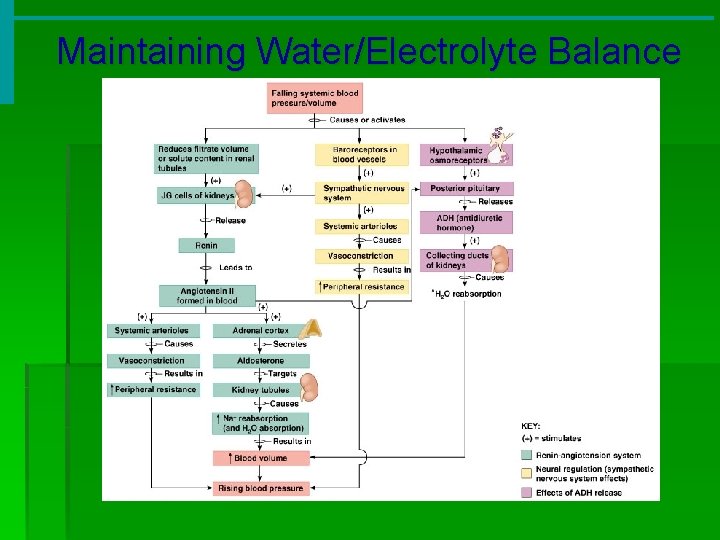
Maintaining Water/Electrolyte Balance
Maintaining Acid-Base Balance in Blood · Blood p. H must remain between 7. 35 and 7. 45 to maintain homeostasis · Alkalosis – p. H above 7. 45 · Acidosis – p. H below 7. 35 · Most ions originate as byproducts of cellular metabolism
Maintaining Acid-Base Balance in Blood · Most acid-base balance is maintained by the kidneys · Other acid-base controlling systems · Blood buffers · Respiration
Blood Buffers · Molecules react to prevent dramatic changes in hydrogen ion (H+) concentrations · Bind to H+ when p. H drops · Release H+ when p. H rises · Three major chemical buffer systems · Bicarbonate buffer system · Phosphate buffer system · Protein buffer system
The Bicarbonate Buffer System · Mixture of carbonic acid (H 2 CO 3) and sodium bicarbonate (Na. HCO 3) · Bicarbonate ions (HCO 3–) react with strong acids to change them to weak acids · Carbonic acid dissociates in the presence of a strong base to form a weak base and water
Renal Mechanisms of Acid-Base Balance · Excrete bicarbonate ions if needed · Conserve or generate new bicarbonate ions if needed · Urine p. H varies from 4. 5 to 8. 0
GANGGUAN SISTEM URINARIUS
Gagal ginjal § Gagal Ginjal § Ginjal kehilangan kemampuan mempertahankan volume dan kompartemen cairan tubuh pada diet normal § Gagal ginjal kronik/ akut
Gagal ginjal akut § renal, nefritis § Sebab postrenal Oliguria (urin <400 ml/ hr), non oliguria § Sebab prarenal (gg. Sirkulasi) § Hipovolemia (perdarahan, dehidrasi, curah jtg , obs. Pemb darah ginjal) § Sebab renal § Iskemia, nefrotoksin, hipertensi § Obs. Muara kd. kemih, obs. Ureter, obs. Duktus koledokus ( as. Urat, sulfa)
Gagal ginjal kronik § § § St. 1: asimptomatik St. 2: insufisiensi ginjal, azotemia ringan St. 3: stadium akhir uremia, GFR 10%, CCT 5 -10 ml/mnt, oliguria § Penyebab: infeksi, gagal jantung, autoimun, kel. Herediter, peny. Metabolik, kel. obstruktif
Sindroma uremik § Stadium akhir gagal ginjal § Gg. Fs pengaturan dan ekskresi § § Kel. Vol. Cairan dan elektrolit Ketidakseimbangan asam basa Retensi metabolit nitrogen anemia § Gg. Organ lain § Kardiovaskular, pernafasan, neuromuskular, kalsium dan rangka, dll
Infeksi Saluran Kemih § § § Bakteriuria Bakteri >= 10 5 /ml urin 80% krn E. coli § ISK bawah: uretritis, sistitis, prostatitis § ISK atas: pielonefritis akut, pielonefritis kronik (infeksi berulang/ menetap)
Infeksi Saluran Kemih § Faktor predisposisi § Obstruksi aliran kemih § Sex, wanita > pria § Umur § Kehamilan § Refluks vesiko-ureter § Kateterisasi § Peny. Ginjal § Gg. Metabolik ( diabetes, gout)
Glomerulonefritis § § Peradangan ginjal, biasanya bilateral Proteinuria, hematuria Etiologi belum jelas Klasifikasi § Distribusi: difus, fokal, lokal § Serangan Klinis: akut, subakut, kronik § Sindroma klinis: sindroma nefritis akut, sindroma nefrotik, kel. Urin persisten, sind. uremik
Nefrolitiasis § Akibat pengendapan substansi yang jumlahnya berlebih dalam air kemih § Faktor lain yang menurunkan daya larut: p. H, bakteri, faktor metabolik § Jenis: § batu kalsium dan alkali § Batu urat, batu sistin
Nefrolitiasis: gejala § Nyeri pinggang, kolik ureter § Hematuria § Gross hematuria, hematuria mikroskopik § Proteinuria § Tanda umum peny. Ginjal § Habis olahraga berat, demam
Nefrolitiasis: pengobatan § Intinya adalah mencapai p. H yang sesuai § Obat-obatan § pengaturan diet
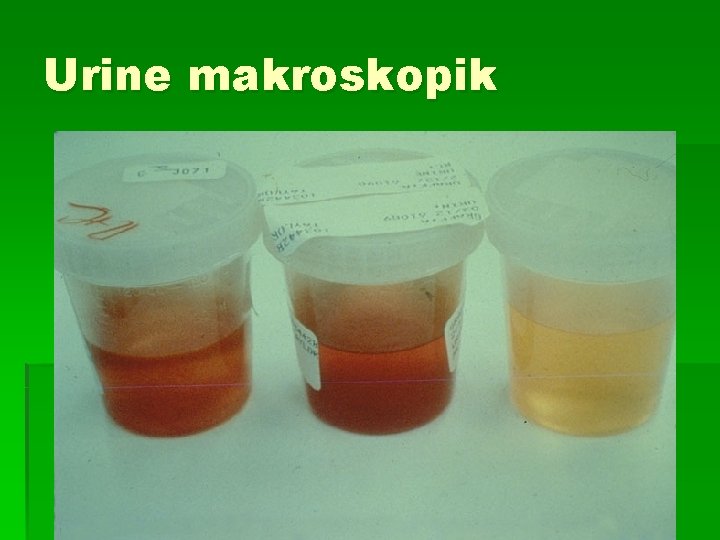
Urine makroskopik
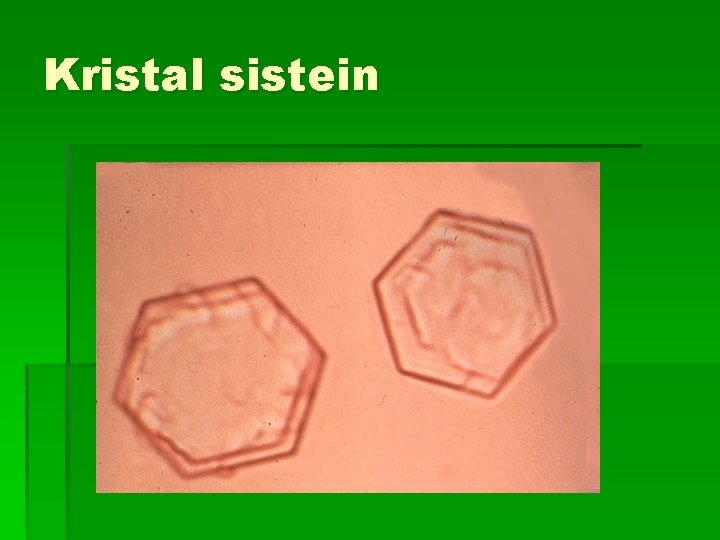
Kristal sistein
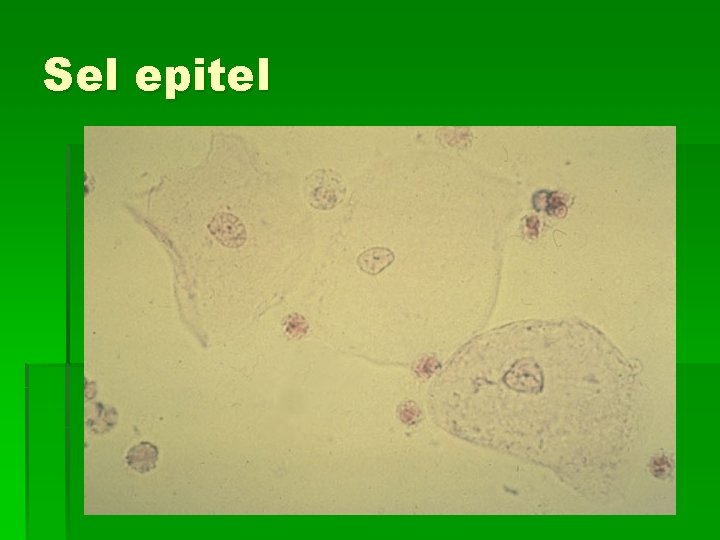
Sel epitel
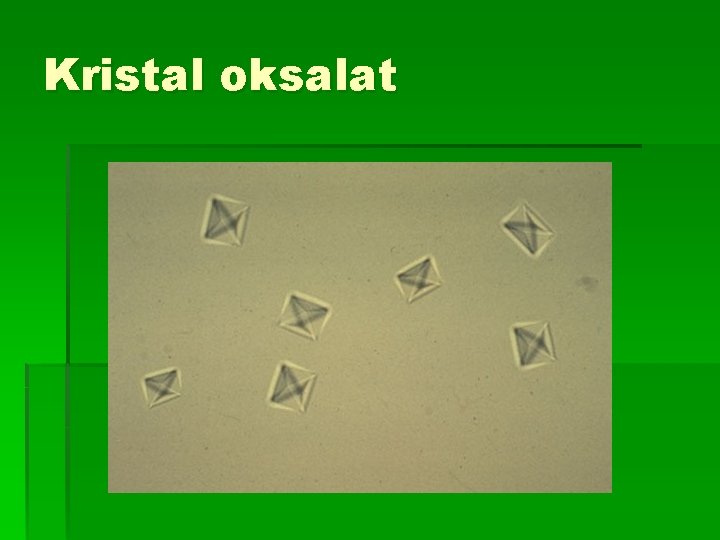
Kristal oksalat
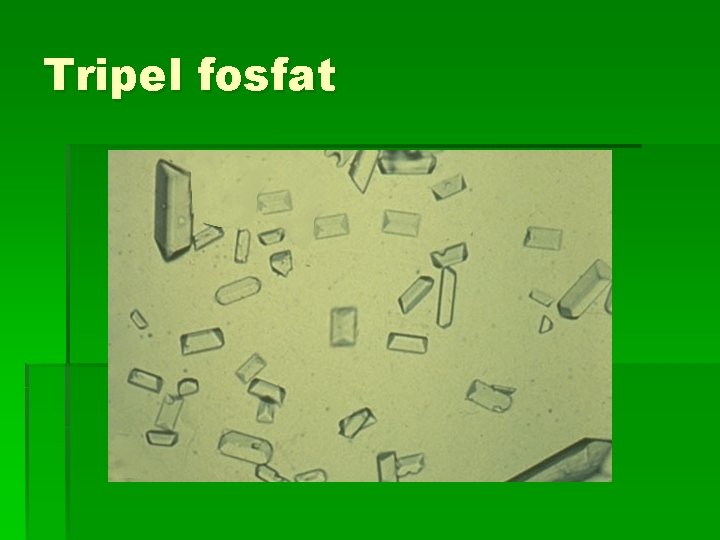
Tripel fosfat

TERIMA KASIH
- Slides: 53