
Patientventilator interaction Roberta Costa MD Istituto di Anestesiologia
Patient-ventilator interaction Roberta Costa MD Istituto di Anestesiologia e Rianimazione Ventil@b, UCSC Rome, Italy

Conflict of Interest Medical advisor of Nihon Kohden Orangemed
GOALS of mechanical ventilation • Adequate gas exchange • Ameliorate ventilatory pattern • Reduce inspiratory effort and work of breathing (WOB)
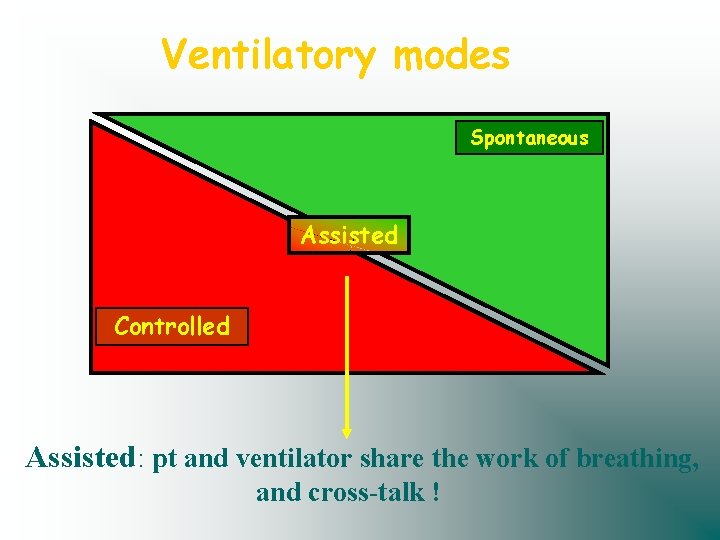
Ventilatory modes Spontaneous Assisted Controlled Assisted: pt and ventilator share the work of breathing, and cross-talk !
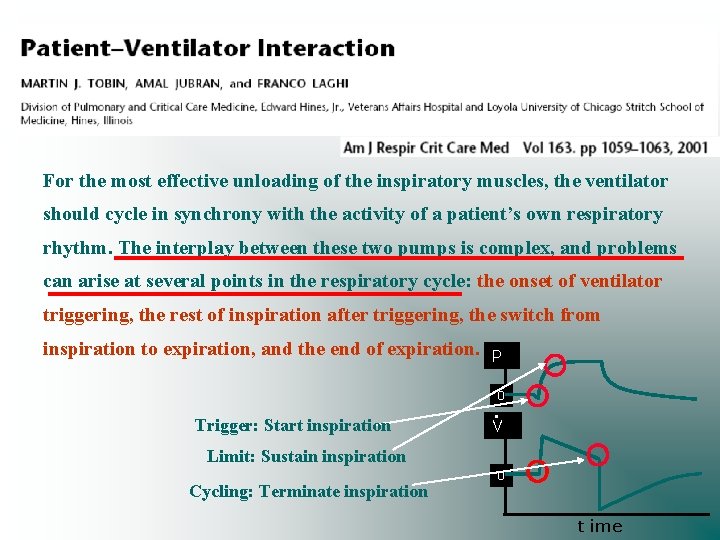
For the most effective unloading of the inspiratory muscles, the ventilator should cycle in synchrony with the activity of a patient’s own respiratory rhythm. The interplay between these two pumps is complex, and problems can arise at several points in the respiratory cycle: the onset of ventilator triggering, the rest of inspiration after triggering, the switch from inspiration to expiration, and the end of expiration. P 0 Trigger: Start inspiration V Limit: Sustain inspiration Cycling: Terminate inspiration 0 t ime
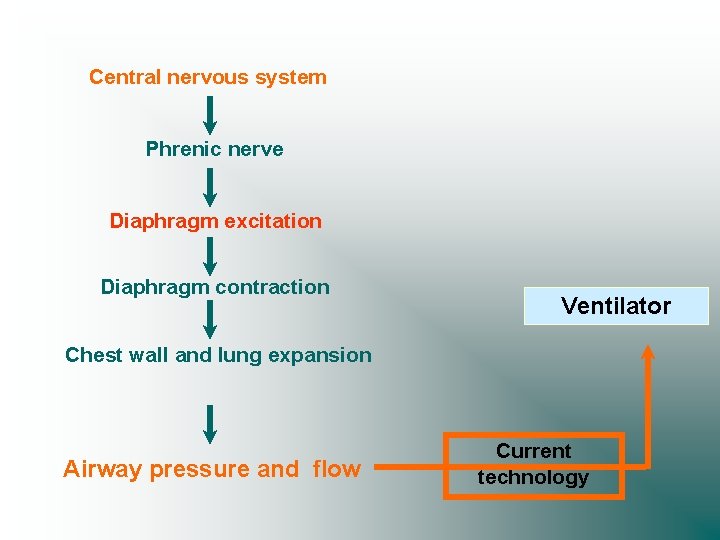
Central nervous system Phrenic nerve Diaphragm excitation Diaphragm contraction Ventilator Chest wall and lung expansion Airway pressure and flow Current technology
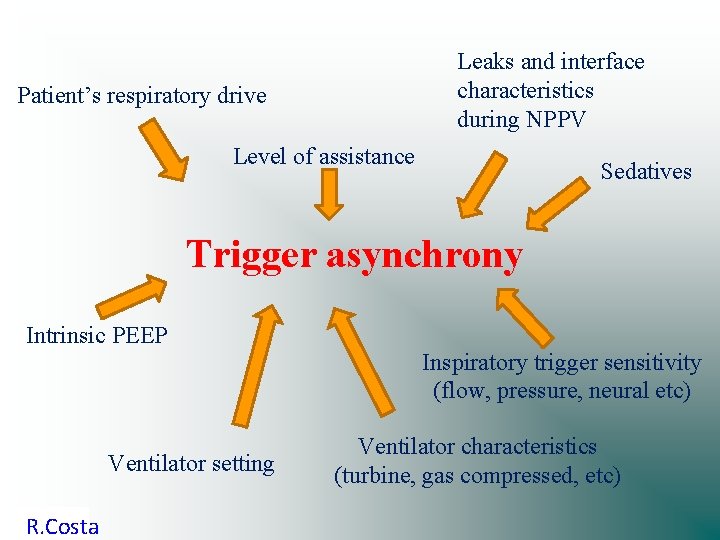
Leaks and interface characteristics during NPPV Patient’s respiratory drive Level of assistance Sedatives Trigger asynchrony Intrinsic PEEP Inspiratory trigger sensitivity (flow, pressure, neural etc) Ventilator setting R. Costa Ventilator characteristics (turbine, gas compressed, etc)
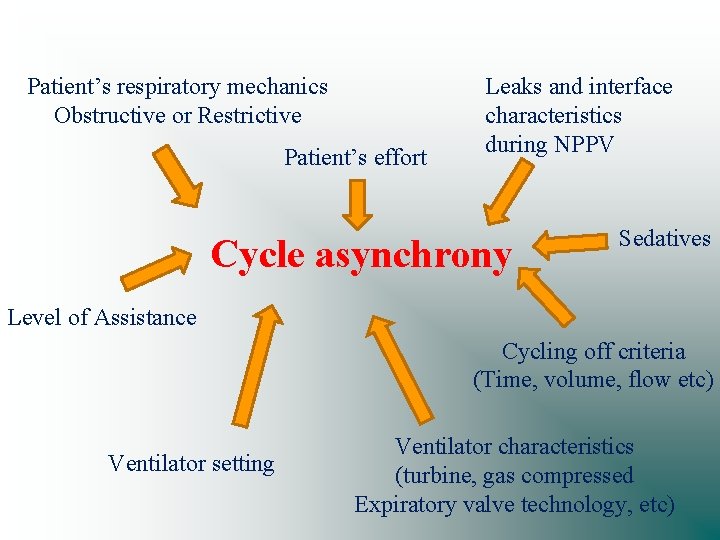
Patient’s respiratory mechanics Obstructive or Restrictive Patient’s effort Leaks and interface characteristics during NPPV Cycle asynchrony Sedatives Level of Assistance Cycling off criteria (Time, volume, flow etc) Ventilator setting Ventilator characteristics (turbine, gas compressed Expiratory valve technology, etc)
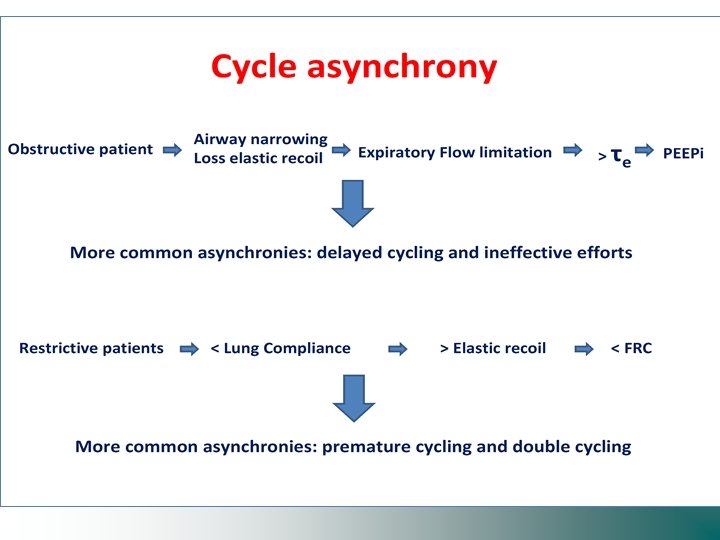
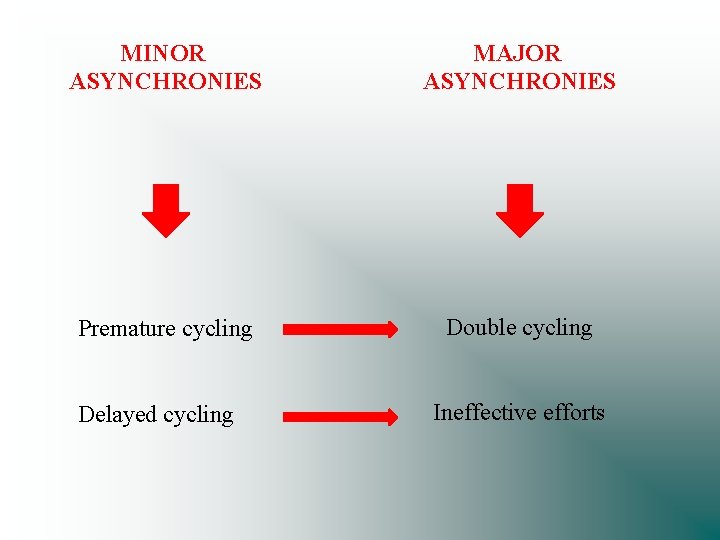
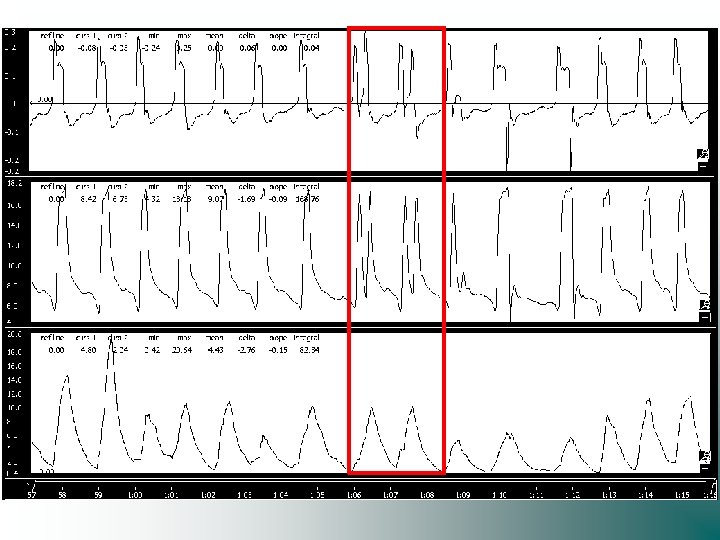
MINOR ASYNCHRONIES MAJOR ASYNCHRONIES Premature cycling Double cycling Delayed cycling Ineffective efforts
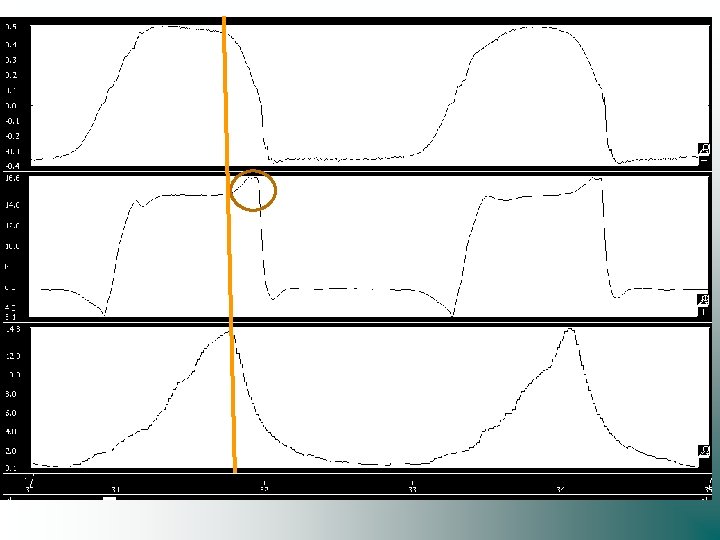
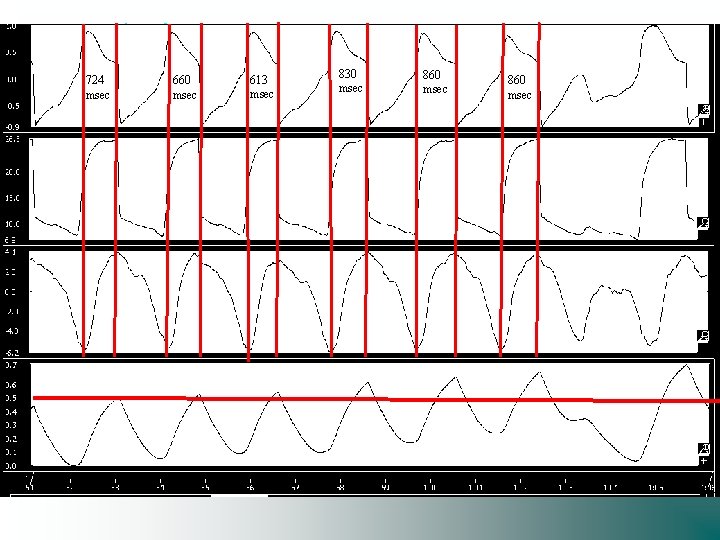
724 msec 860 msec 613 msec 830 msec 860 msec
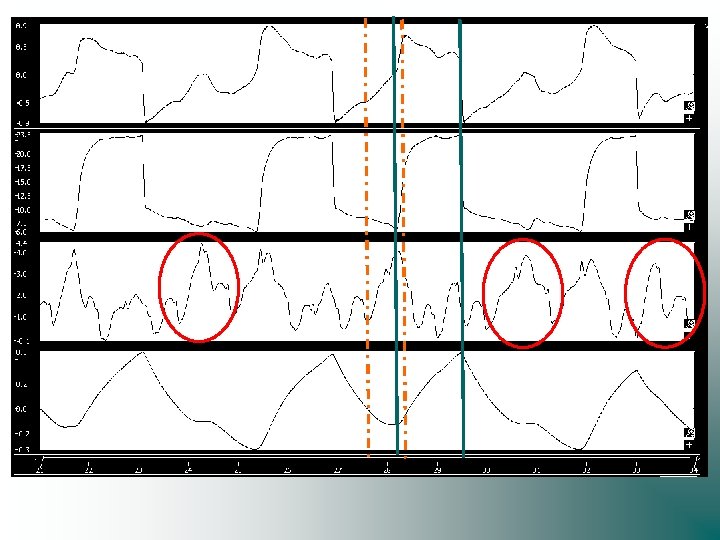
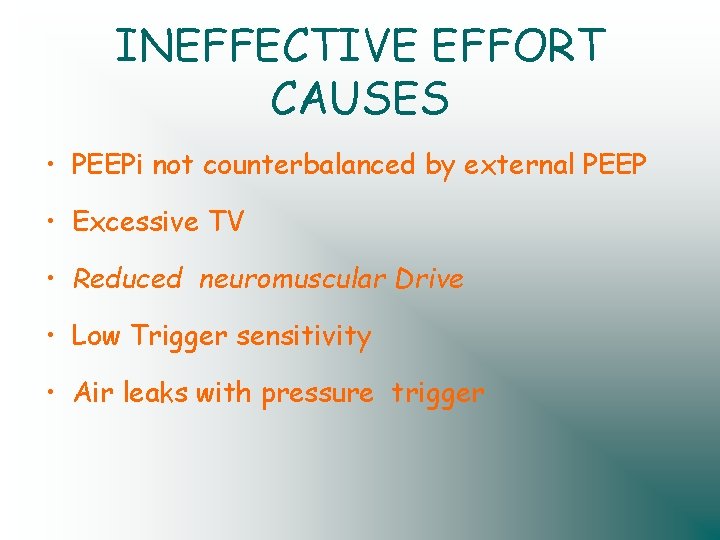
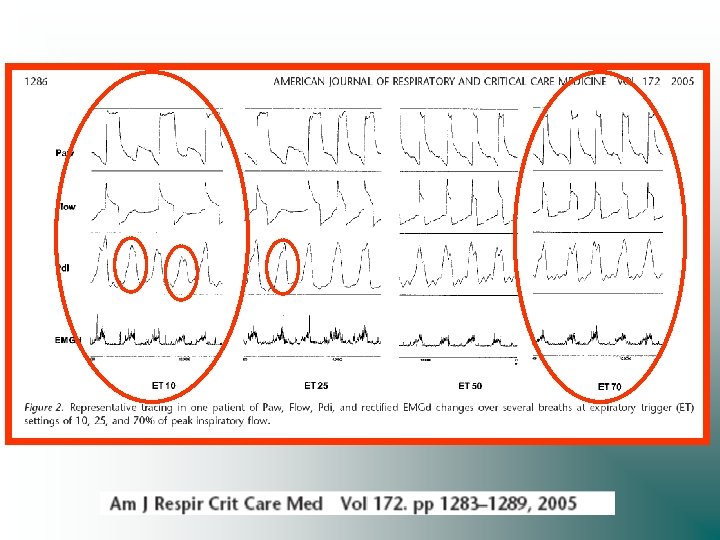
INEFFECTIVE EFFORT CAUSES • PEEPi not counterbalanced by external PEEP • Excessive TV • Reduced neuromuscular Drive • Low Trigger sensitivity • Air leaks with pressure trigger
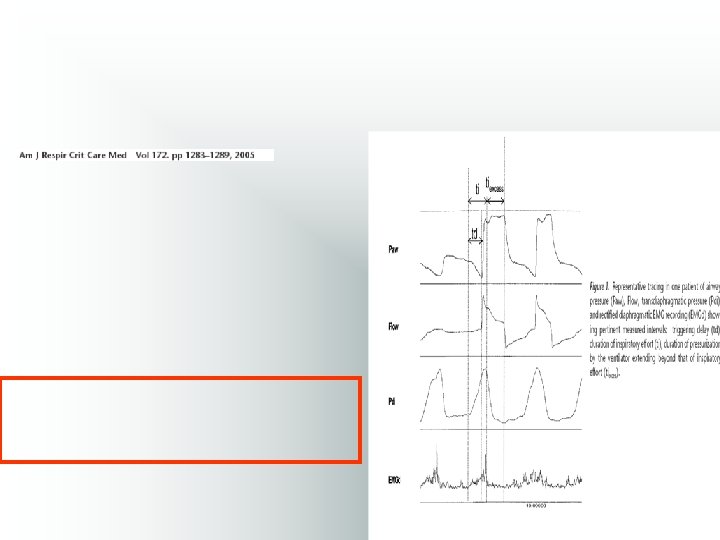
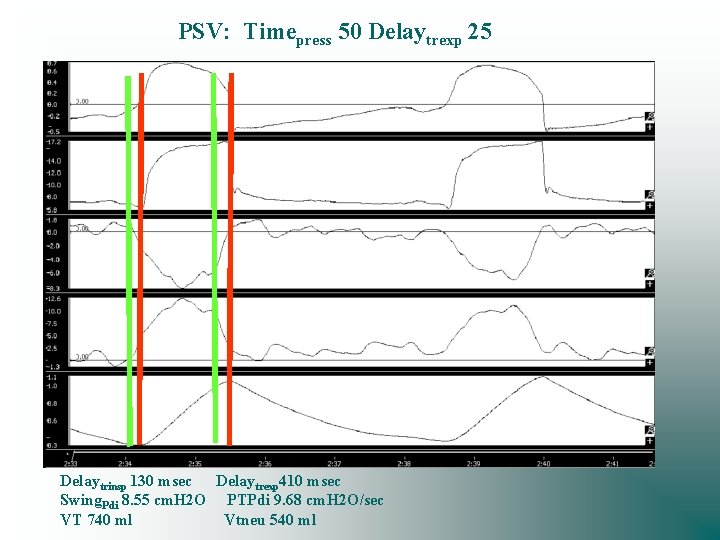
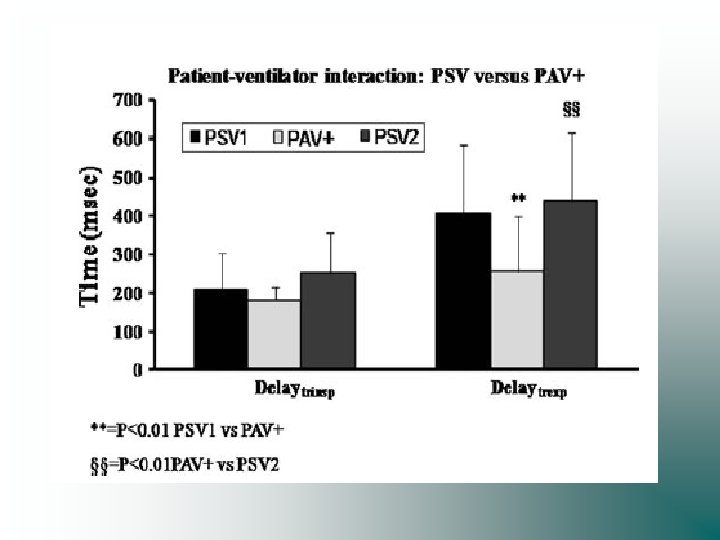
PSV: Timepress 50 Delaytrexp 25 Delaytrinsp 130 msec Delaytrexp 410 msec Swing. Pdi 8. 55 cm. H 2 O PTPdi 9. 68 cm. H 2 O/sec VT 740 ml Vtneu 540 ml
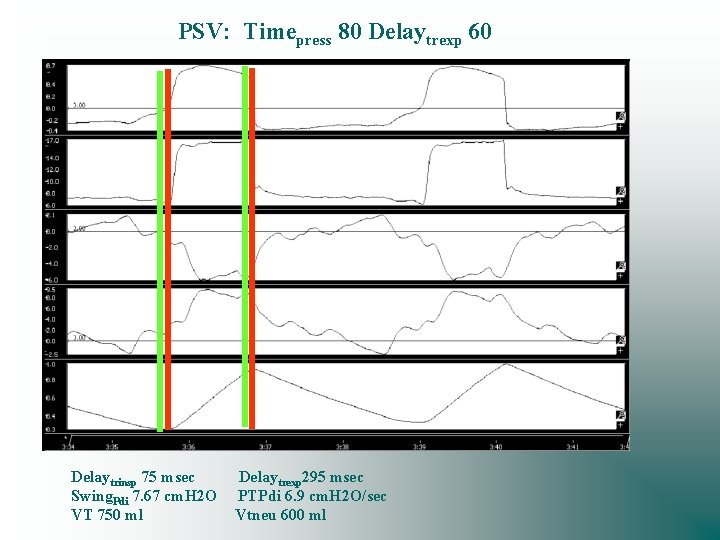
PSV: Timepress 80 Delaytrexp 60 Delaytrinsp 75 msec Swing. Pdi 7. 67 cm. H 2 O VT 750 ml Delaytrexp 295 msec PTPdi 6. 9 cm. H 2 O/sec Vtneu 600 ml
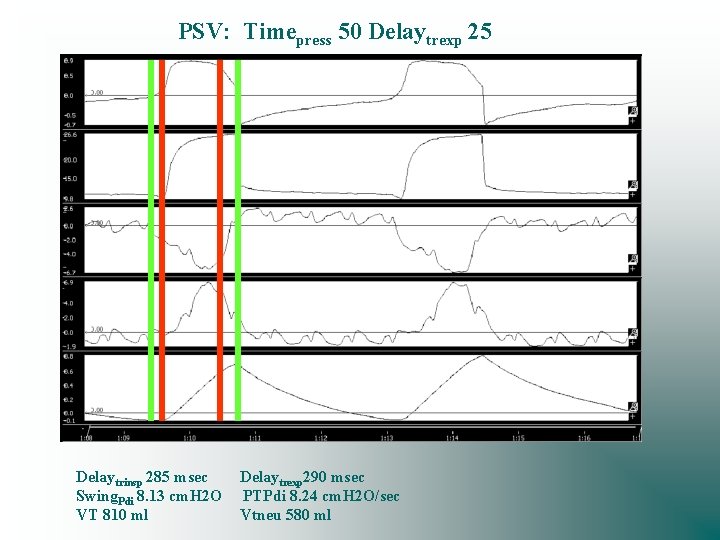
PSV: Timepress 50 Delaytrexp 25 Delaytrinsp 285 msec Swing. Pdi 8. 13 cm. H 2 O VT 810 ml Delaytrexp 290 msec PTPdi 8. 24 cm. H 2 O/sec Vtneu 580 ml
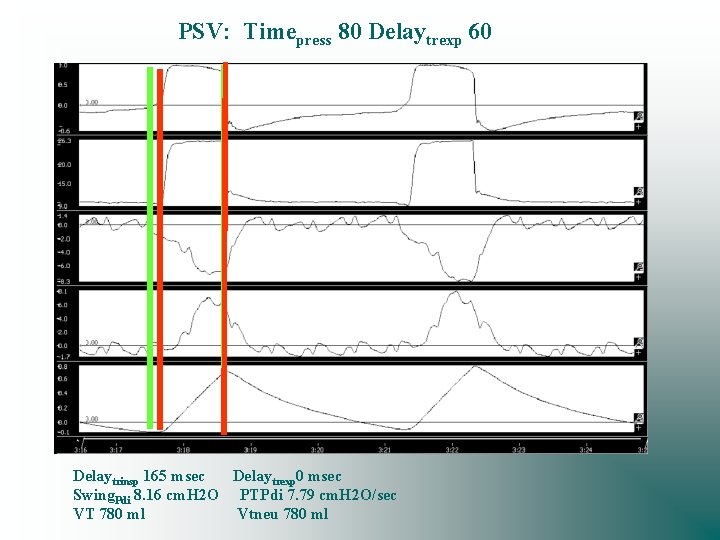
PSV: Timepress 80 Delaytrexp 60 Delaytrinsp 165 msec Delaytrexp 0 msec Swing. Pdi 8. 16 cm. H 2 O PTPdi 7. 79 cm. H 2 O/sec VT 780 ml Vtneu 780 ml
DOUBLE CYCLING CAUSES • High respiratory drive • Too fast expiratory cycling (PSV) • Insufficient respiratory time (A/C)
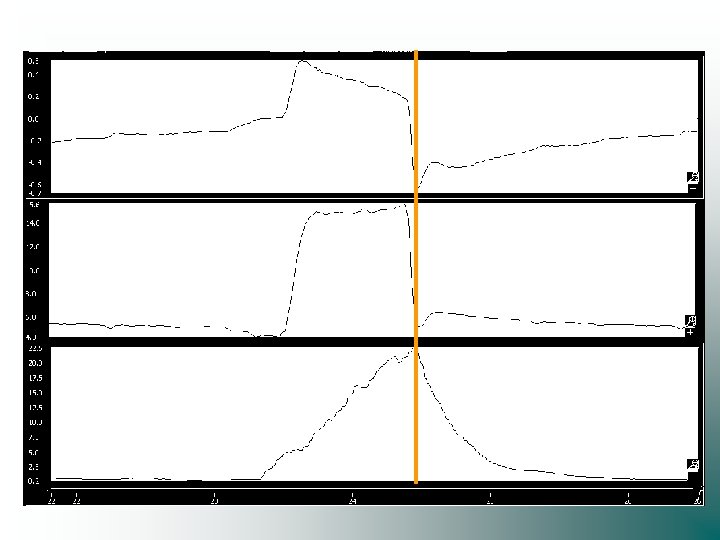
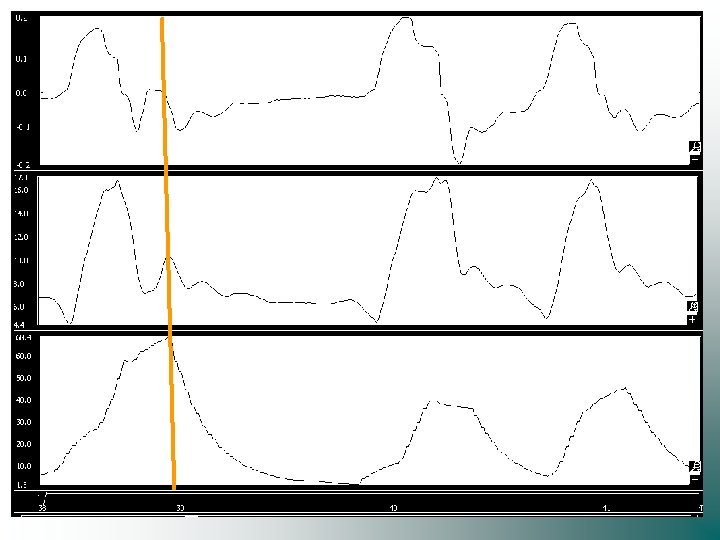
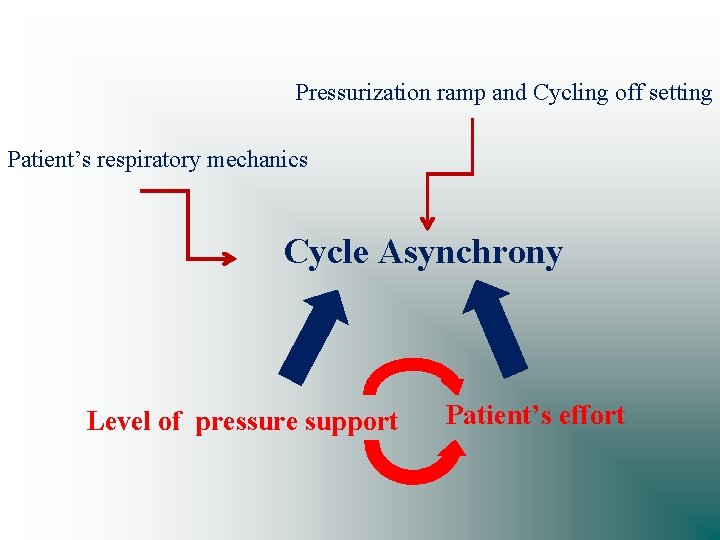
Pressurization ramp and Cycling off setting Patient’s respiratory mechanics Cycle Asynchrony Level of pressure support Patient’s effort
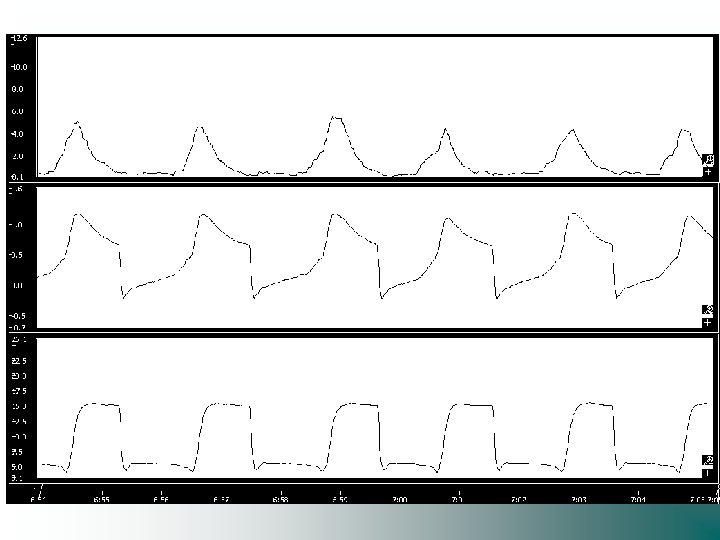
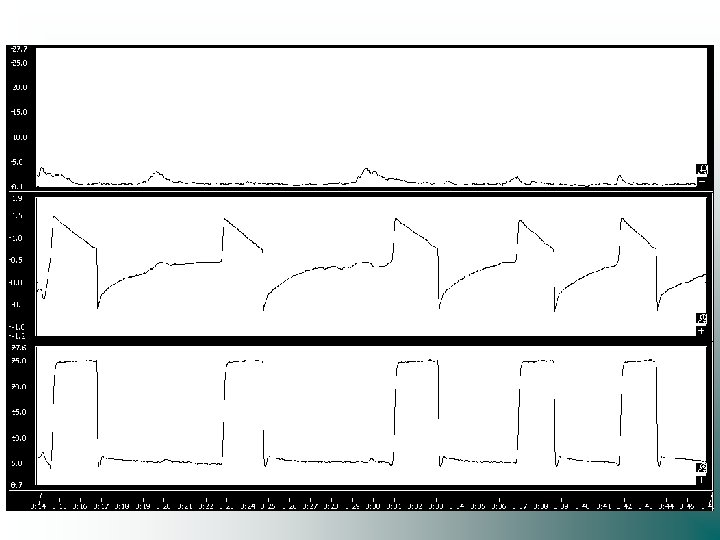
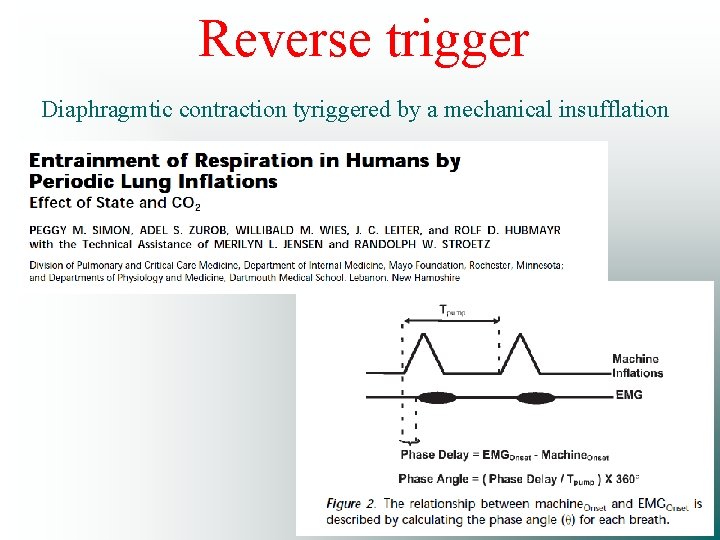
Reverse trigger Diaphragmtic contraction tyriggered by a mechanical insufflation
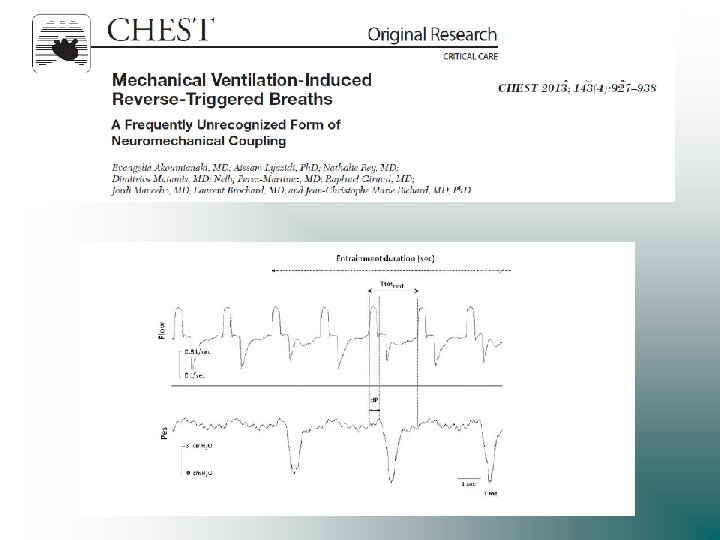
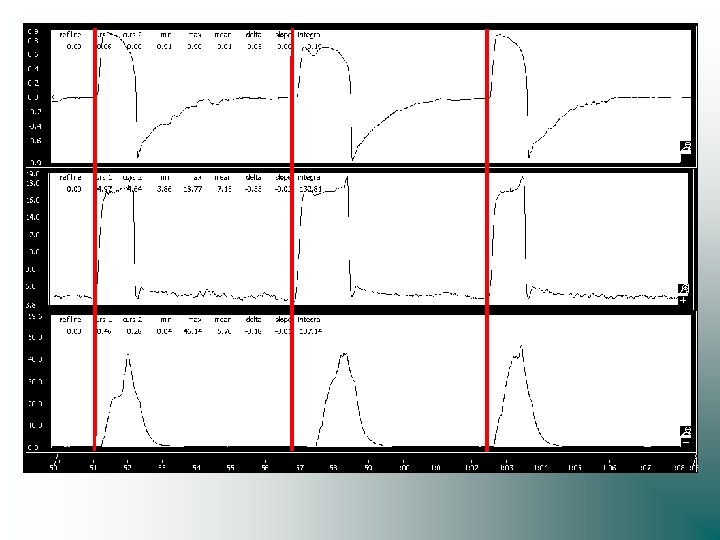
CONSEQUENCES 1) Continuous pliometric contraction of the diaphragm with cytochine release and fiber damage 2) Increase mucles work and oxygen consumption 3) Large Vt and higher transpulmonary pressure
How we can improve patient –ventilator interaction
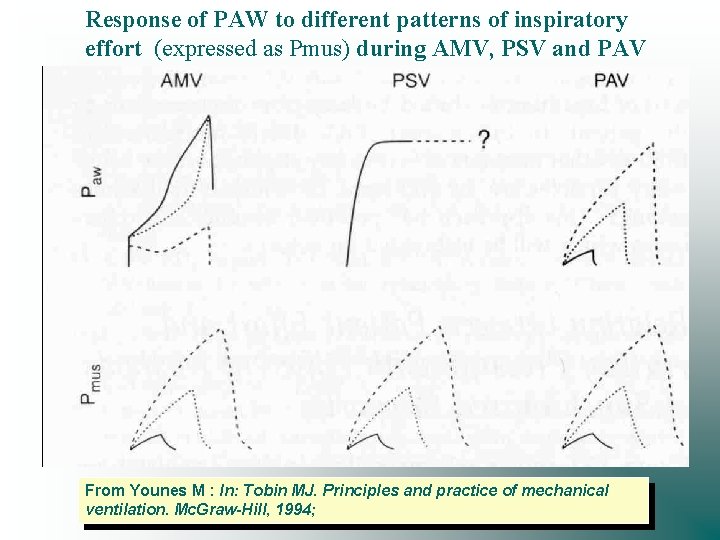
Response of PAW to different patterns of inspiratory effort (expressed as Pmus) during AMV, PSV and PAV From Younes M : In: Tobin MJ. Principles and practice of mechanical ventilation. Mc. Graw-Hill, 1994;
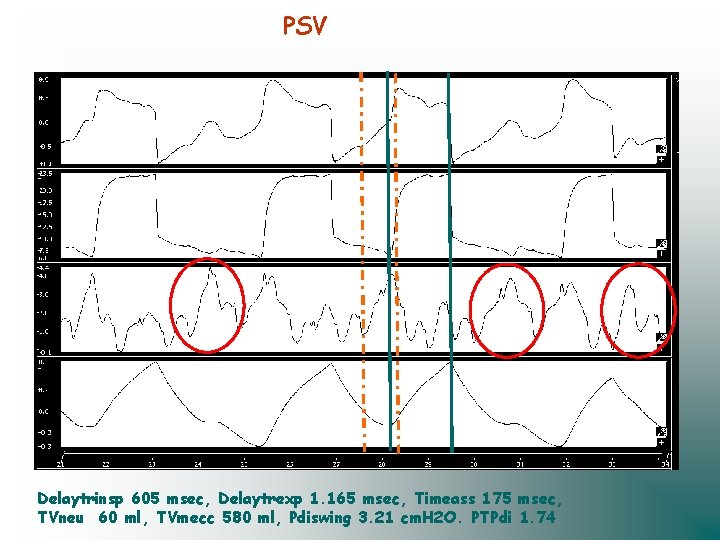
PSV Delaytrinsp 605 msec, Delaytrexp 1. 165 msec, Timeass 175 msec, TVneu 60 ml, TVmecc 580 ml, Pdiswing 3. 21 cm. H 2 O. PTPdi 1. 74
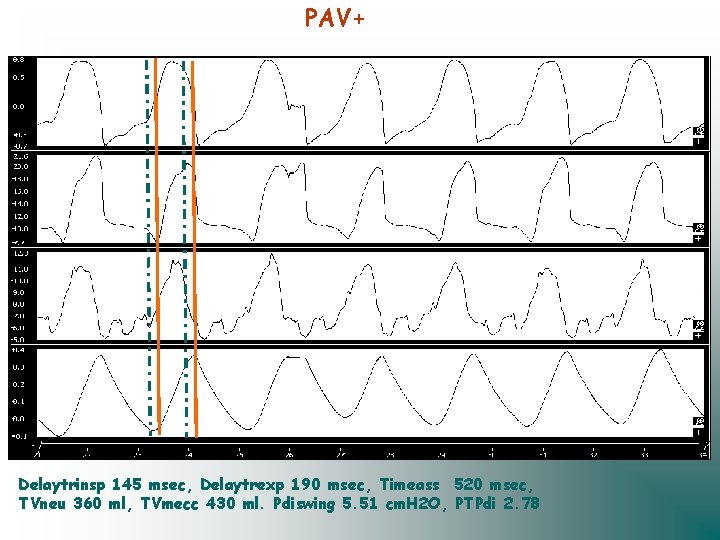
PAV+ Delaytrinsp 145 msec, Delaytrexp 190 msec, Timeass 520 msec, TVneu 360 ml, TVmecc 430 ml. Pdiswing 5. 51 cm. H 2 O, PTPdi 2. 78
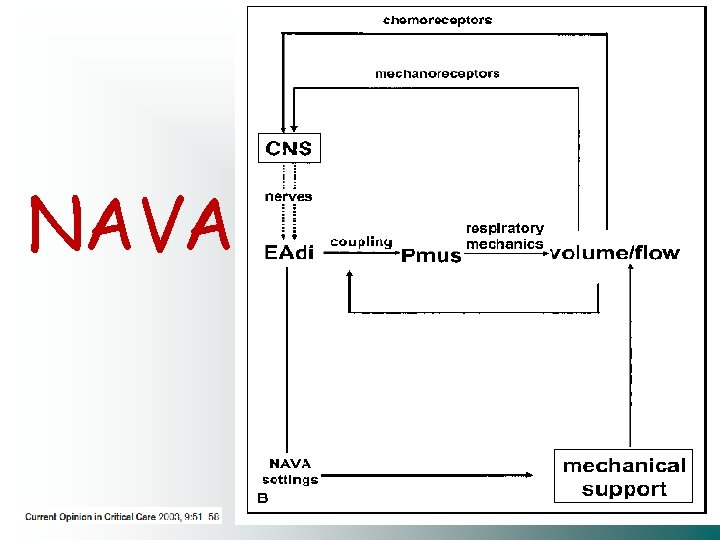
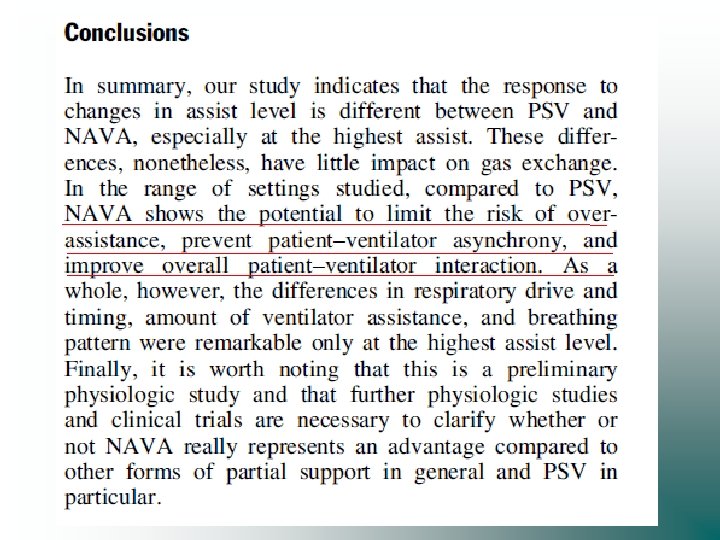
NAVA
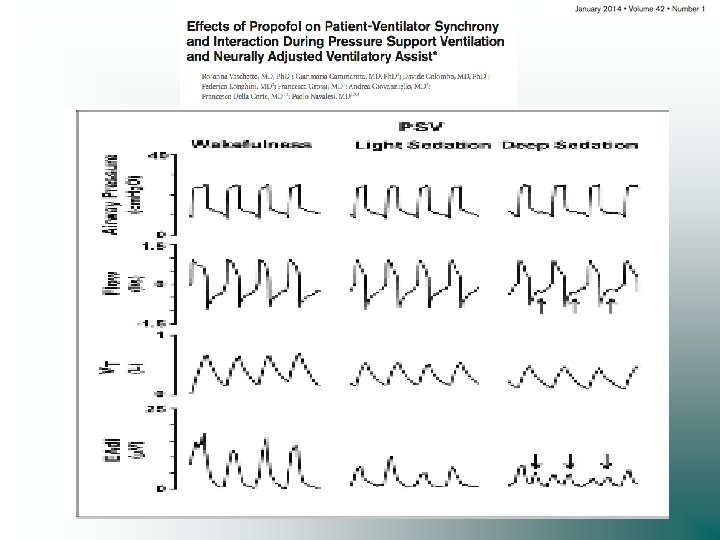
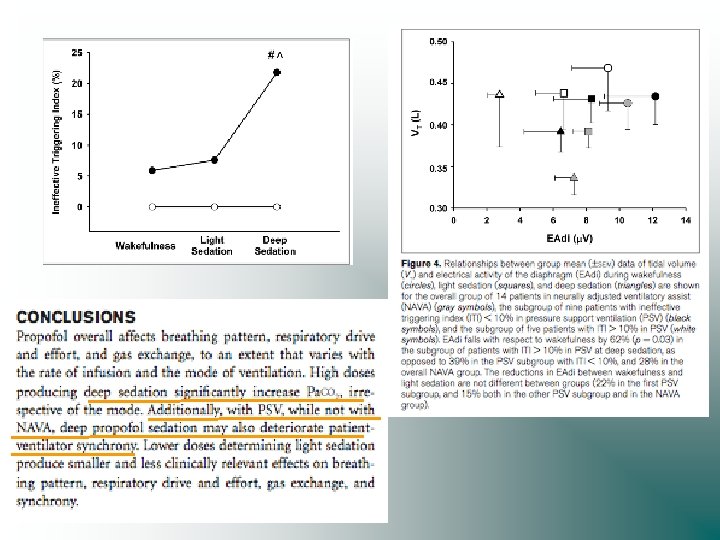
How about sedation to improve patient- ventilator interaction?
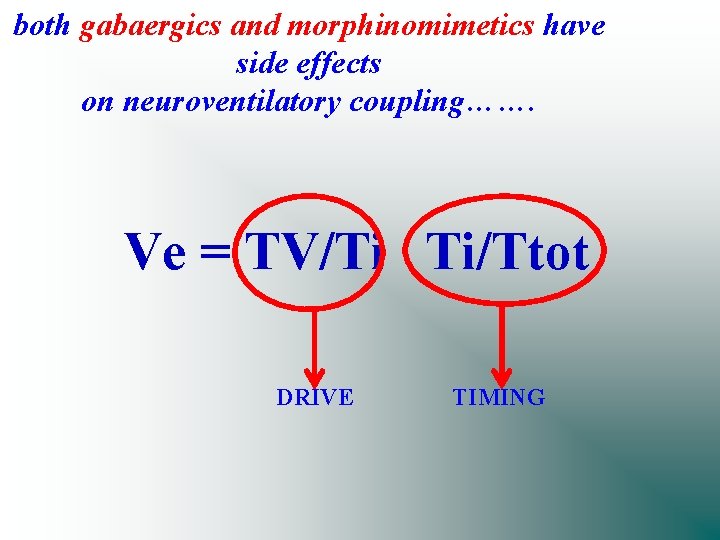
both gabaergics and morphinomimetics have side effects on neuroventilatory coupling……. Ve = TV/Ti Ti/Ttot DRIVE TIMING
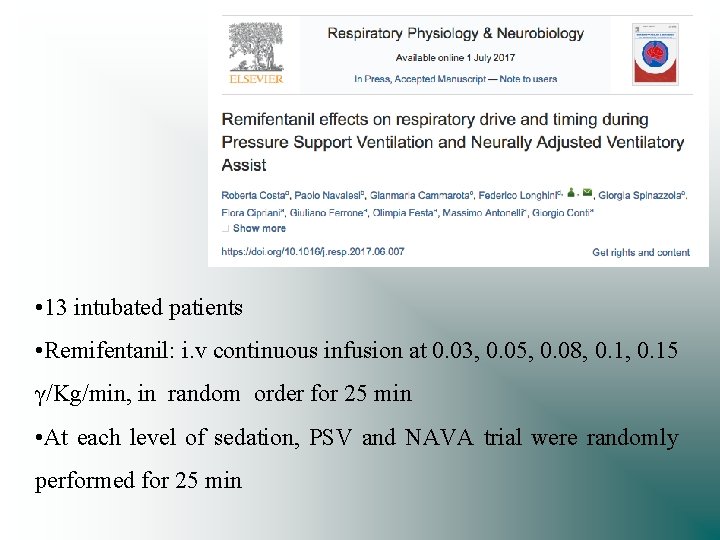
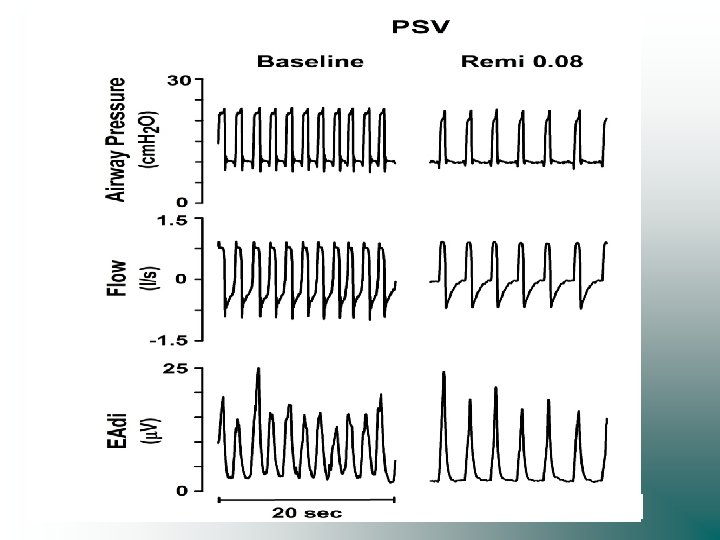
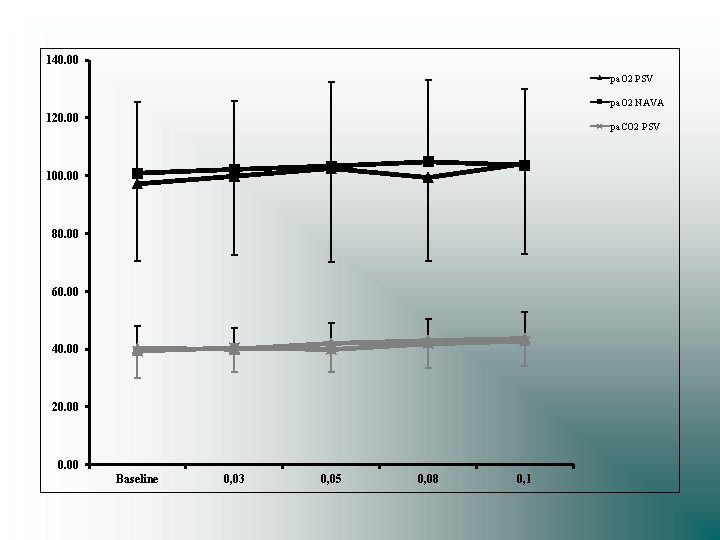
• 13 intubated patients • Remifentanil: i. v continuous infusion at 0. 03, 0. 05, 0. 08, 0. 15 γ/Kg/min, in random order for 25 min • At each level of sedation, PSV and NAVA trial were randomly performed for 25 min
140. 00 pa. O 2 PSV pa. O 2 NAVA 120. 00 pa. CO 2 PSV 100. 00 80. 00 60. 00 40. 00 20. 00 Baseline 0, 03 0, 05 0, 08 0, 1
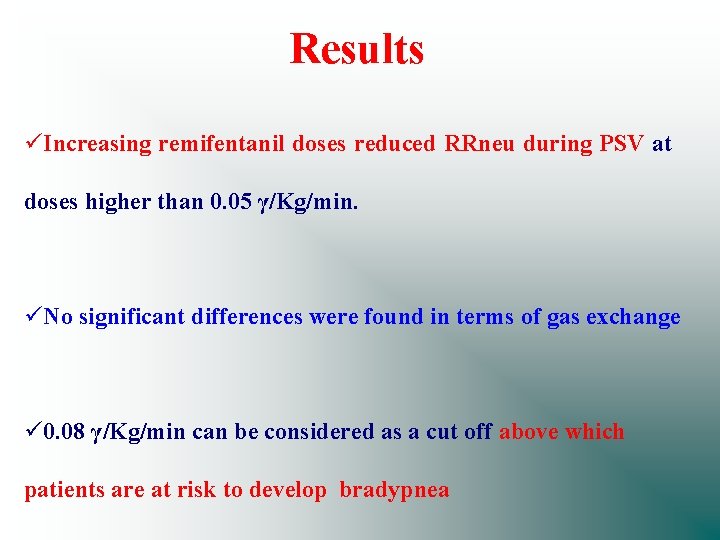
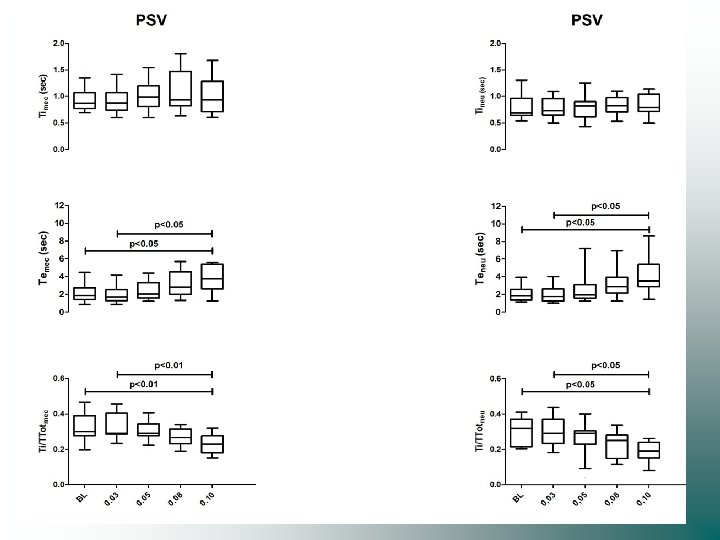
Results üIncreasing remifentanil doses reduced RRneu during PSV at doses higher than 0. 05 γ/Kg/min. üNo significant differences were found in terms of gas exchange ü 0. 08 γ/Kg/min can be considered as a cut off above which patients are at risk to develop bradypnea
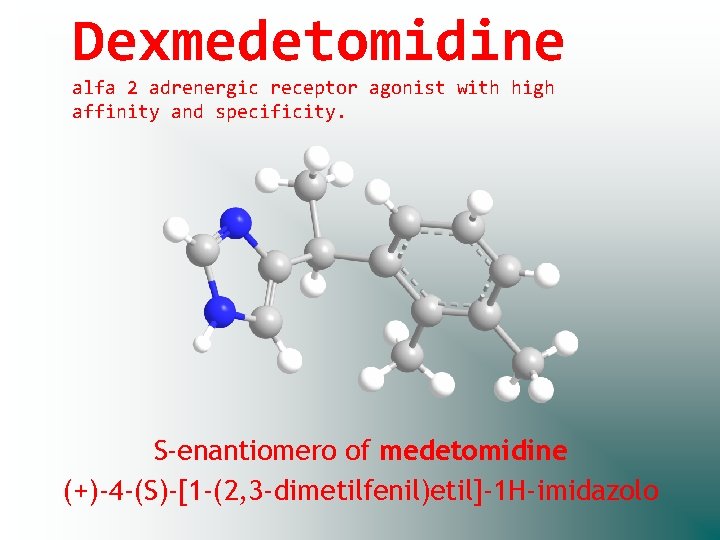
Dexmedetomidine alfa 2 adrenergic receptor agonist with high affinity and specificity. S-enantiomero of medetomidine (+)-4 -(S)-[1 -(2, 3 -dimetilfenil)etil]-1 H-imidazolo
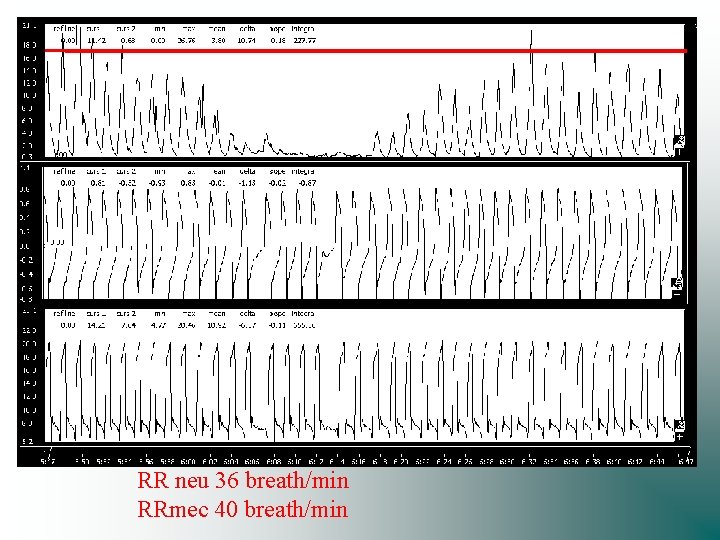
RR neu 36 breath/min RRmec 40 breath/min
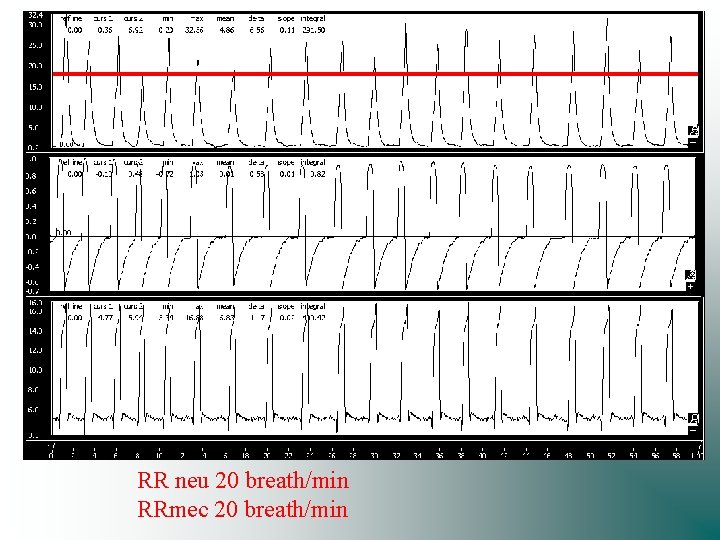
RR neu 20 breath/min RRmec 20 breath/min
Conclusions 1) Patient-ventilator interaction is still a crucial issue during partial ventilatory assist. 2) Technological improvements can significantly increase pts-vent synchrony 3) Always consider sedation side effects on respiratory drive and timing

THANK YOU!!!
- Slides: 57