
Patients with Von Gierkes disease have a deficiency
- Slides: 11
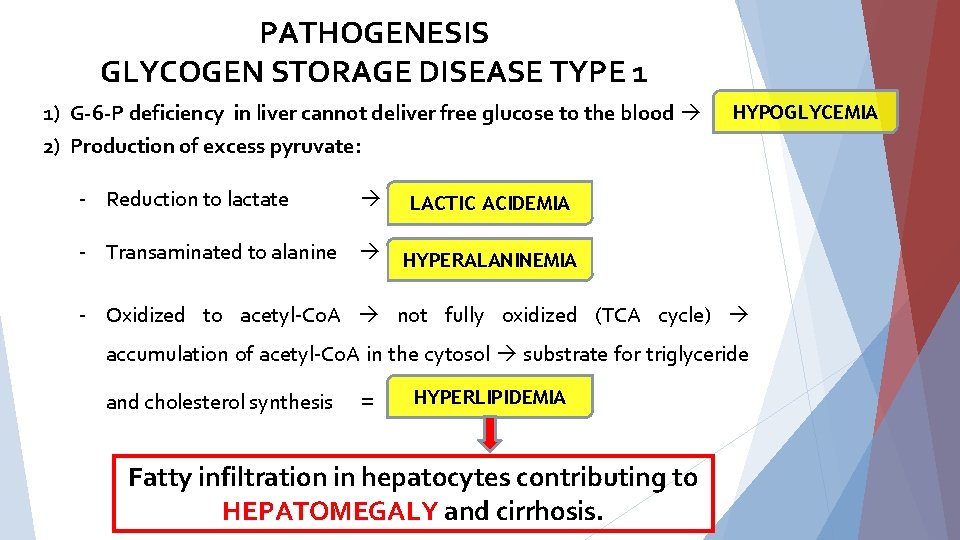
Patients with Von Gierke’s disease have a deficiency of glucose-6 -phosphatase. One of the most prominent symptoms of the disease is the protruding abdomen due to enlarged liver. Why the liver enlarged in Von Gierke’s disease patients? MIMI ATHIRAH SALLEH SITI NADIA DAMIRON AININ FARAH HANNAN ROSLI HANI NADIAH MUNER NURUL FARZANA ISMAIL AMIRA LIYANA ABD MANAP 188177 188229 190662 190423 190381 189955
VON GIERKE DISEASE v. Is a disorder in which stored glycogen cannot be metabolized into glucose to supply energy and maintain steady blood glucose level. v Known as glycogen storage disease type 1. - Glycogen storage disease type 1 A (Deficiency of Glucose-6 phosphatase) - Glycogen storage disease type 1 B (Defects in Glucose-6 Phosphate transporter 1 ) v. Occurs in 100, 000 births and this condition effects males and females in equal number. v. Inherited disease that pass through families.
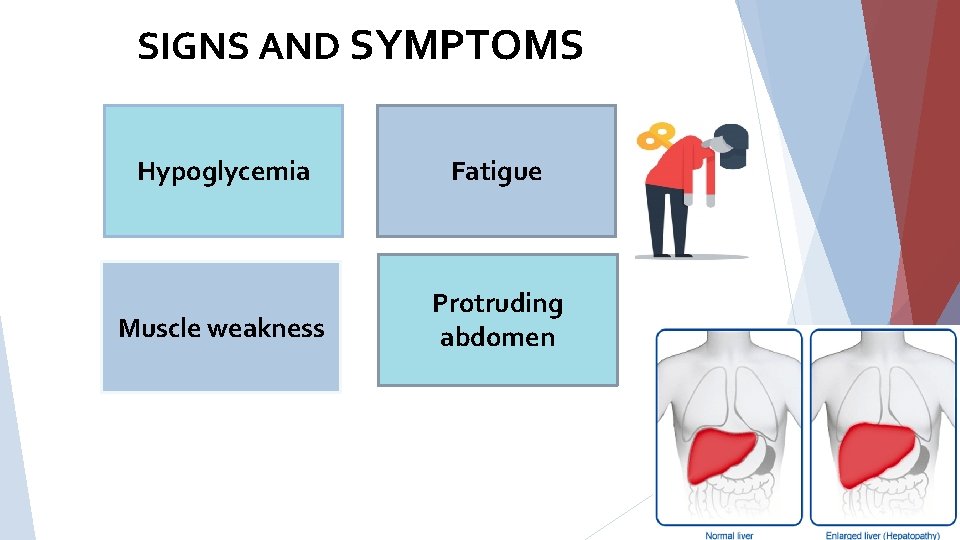
SIGNS AND SYMPTOMS Hypoglycemia Fatigue Muscle weakness Protruding abdomen
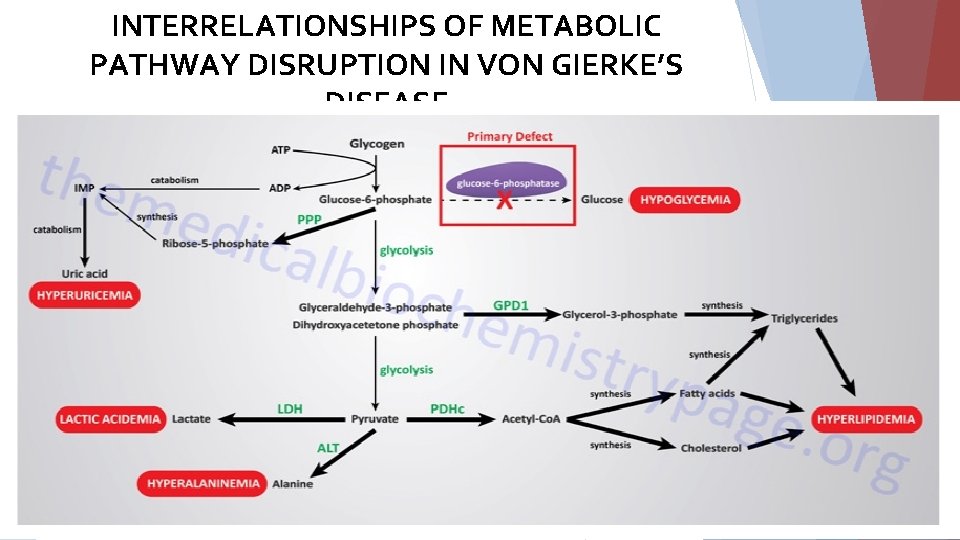
INTERRELATIONSHIPS OF METABOLIC PATHWAY DISRUPTION IN VON GIERKE’S DISEASE
PATHOGENESIS GLYCOGEN STORAGE DISEASE TYPE 1 1) G-6 -P deficiency in liver cannot deliver free glucose to the blood 2) Production of excess pyruvate: - Reduction to lactate HYPOGLYCEMIA LACTIC ACIDEMIA - Transaminated to alanine HYPERALANINEMIA - Oxidized to acetyl-Co. A not fully oxidized (TCA cycle) accumulation of acetyl-Co. A in the cytosol substrate for triglyceride and cholesterol synthesis = HYPERLIPIDEMIA Fatty infiltration in hepatocytes contributing to HEPATOMEGALY and cirrhosis.
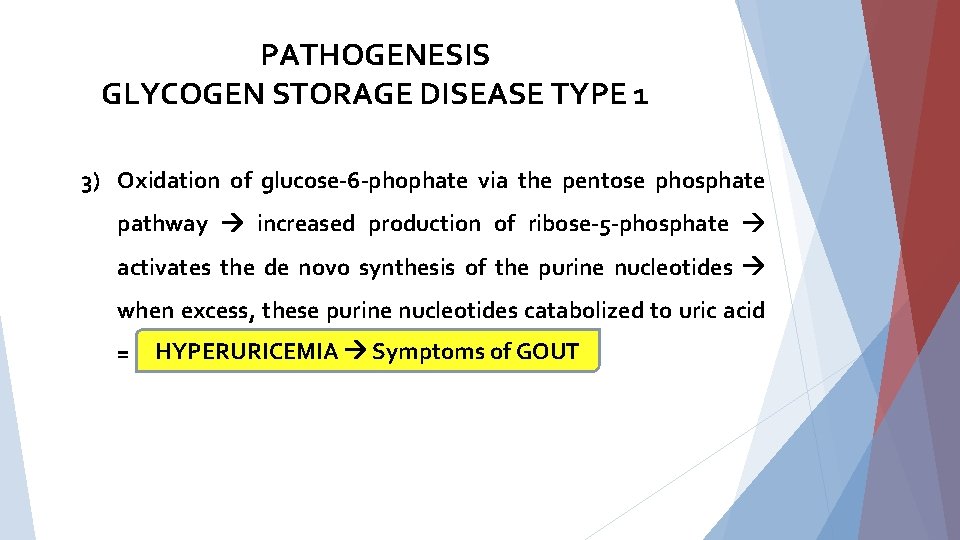
PATHOGENESIS GLYCOGEN STORAGE DISEASE TYPE 1 3) Oxidation of glucose-6 -phophate via the pentose phosphate pathway increased production of ribose-5 -phosphate activates the de novo synthesis of the purine nucleotides when excess, these purine nucleotides catabolized to uric acid = HYPERURICEMIA Symptoms of GOUT
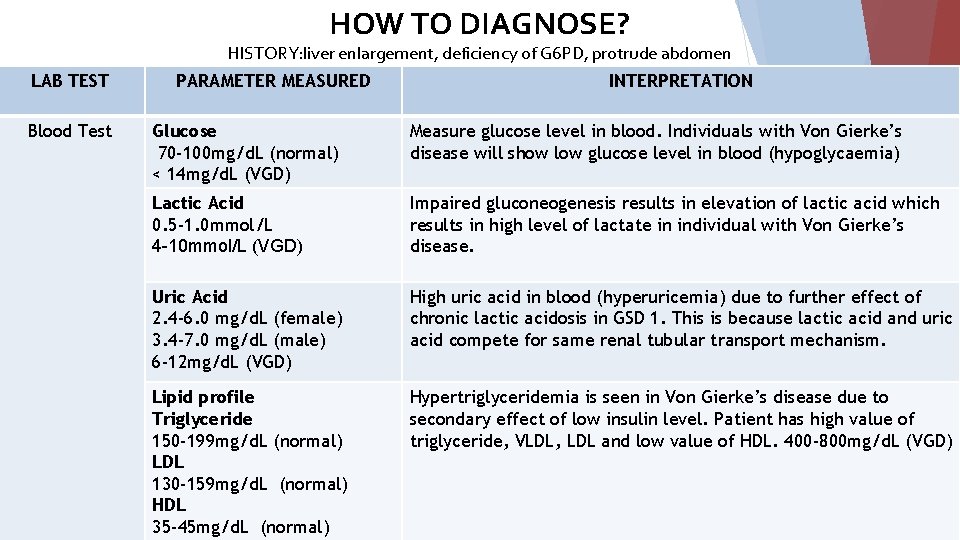
HOW TO DIAGNOSE? HISTORY: liver enlargement, deficiency of G 6 PD, protrude abdomen LAB TEST Blood Test PARAMETER MEASURED INTERPRETATION Glucose 70 -100 mg/d. L (normal) < 14 mg/d. L (VGD) Measure glucose level in blood. Individuals with Von Gierke’s disease will show low glucose level in blood (hypoglycaemia) Lactic Acid 0. 5 -1. 0 mmol/L 4 -10 mmol/L (VGD) Impaired gluconeogenesis results in elevation of lactic acid which results in high level of lactate in individual with Von Gierke’s disease. Uric Acid 2. 4 -6. 0 mg/d. L (female) 3. 4 -7. 0 mg/d. L (male) 6 -12 mg/d. L (VGD) High uric acid in blood (hyperuricemia) due to further effect of chronic lactic acidosis in GSD 1. This is because lactic acid and uric acid compete for same renal tubular transport mechanism. Lipid profile Triglyceride 150 -199 mg/d. L (normal) LDL 130 -159 mg/d. L (normal) HDL 35 -45 mg/d. L (normal) Hypertriglyceridemia is seen in Von Gierke’s disease due to secondary effect of low insulin level. Patient has high value of triglyceride, VLDL, LDL and low value of HDL. 400 -800 mg/d. L (VGD)
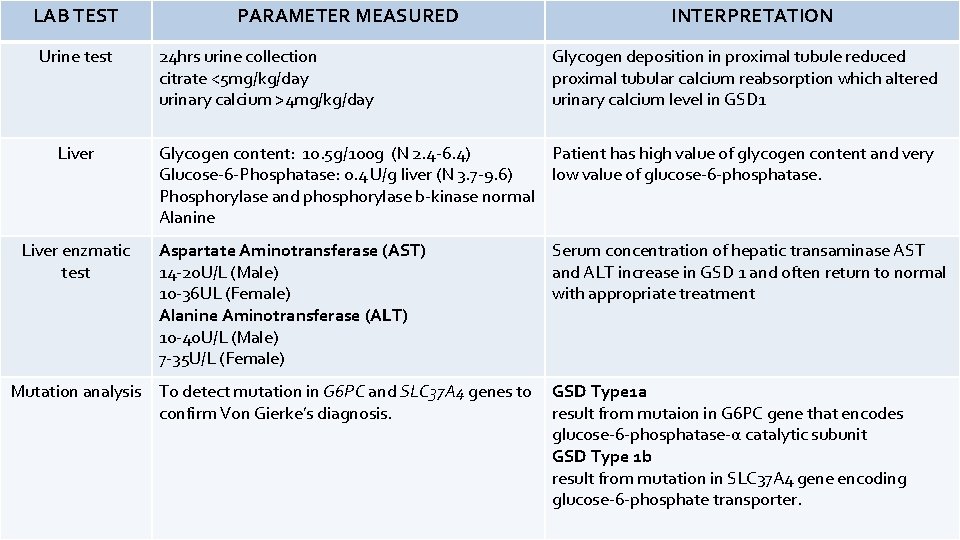
LAB TEST Urine test Liver enzmatic test PARAMETER MEASURED 24 hrs urine collection citrate <5 mg/kg/day urinary calcium >4 mg/kg/day INTERPRETATION Glycogen deposition in proximal tubule reduced proximal tubular calcium reabsorption which altered urinary calcium level in GSD 1 Glycogen content: 10. 5 g/100 g (N 2. 4 -6. 4) Patient has high value of glycogen content and very Glucose-6 -Phosphatase: 0. 4 U/g liver (N 3. 7 -9. 6) low value of glucose-6 -phosphatase. Phosphorylase and phosphorylase b-kinase normal Alanine Aspartate Aminotransferase (AST) 14 -20 U/L (Male) 10 -36 UL (Female) Alanine Aminotransferase (ALT) 10 -40 U/L (Male) 7 -35 U/L (Female) Mutation analysis To detect mutation in G 6 PC and SLC 37 A 4 genes to confirm Von Gierke’s diagnosis. Serum concentration of hepatic transaminase AST and ALT increase in GSD 1 and often return to normal with appropriate treatment GSD Type 1 a result from mutaion in G 6 PC gene that encodes glucose-6 -phosphatase-α catalytic subunit GSD Type 1 b result from mutation in SLC 37 A 4 gene encoding glucose-6 -phosphate transporter.
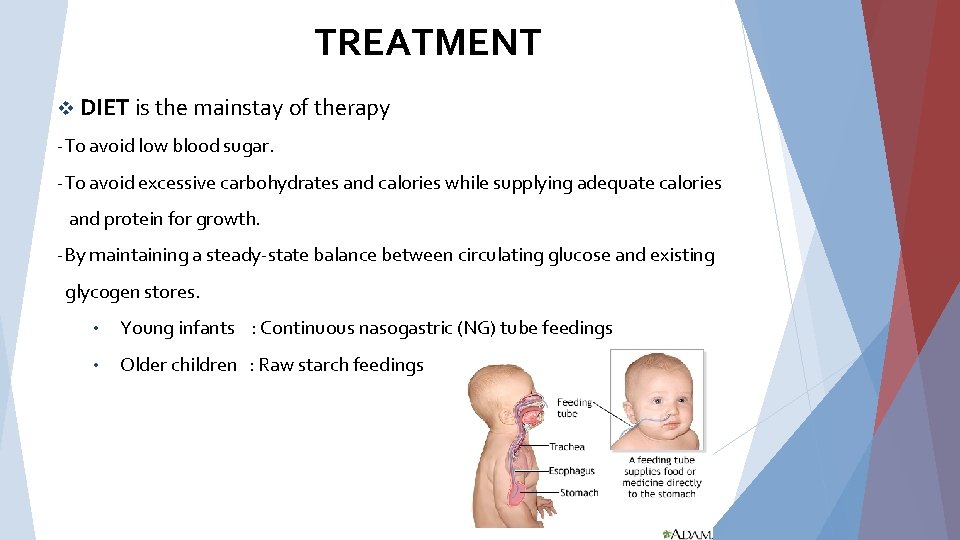
TREATMENT v DIET is the mainstay of therapy -To avoid low blood sugar. -To avoid excessive carbohydrates and calories while supplying adequate calories and protein for growth. -By maintaining a steady-state balance between circulating glucose and existing glycogen stores. • Young infants : Continuous nasogastric (NG) tube feedings • Older children : Raw starch feedings
TREATMENT v ALLOPURINOL is a type of drug -To reduce uric acid level in the blood. -Useful in controlling symptoms of gout-like arthritis during adolescent years. v SURGERY -Is usually unnecessary to a certain extent. -Hepatic transplantation. -Surgical debridement due to deep-tissue extension of skin infection.
CONCLUSION Von Gierke’s Disease – Glycogen Storage Disease Type I Ø Deficiency of Glucose-6 -Phosphatase (G 6 P) in the liver. Ø It is an inherited disease and developed during inborn. Ø Having symptoms like protruding abdomen due to enlarged liver. Lead to: Ø Hypoglycemia, hyperlipidemia, lactic acidemia, hyperuricemia, hyperalaninemia. Diagnogsis: Ø Blood test Ø Urine test Ø Liver biopsy Ø Mutation analysis Treatment: Ø Focusing more on the dietary intake