
Patients Experiencing Delirium Delirium Also known as an


- Slides: 10
Patients Experiencing Delirium
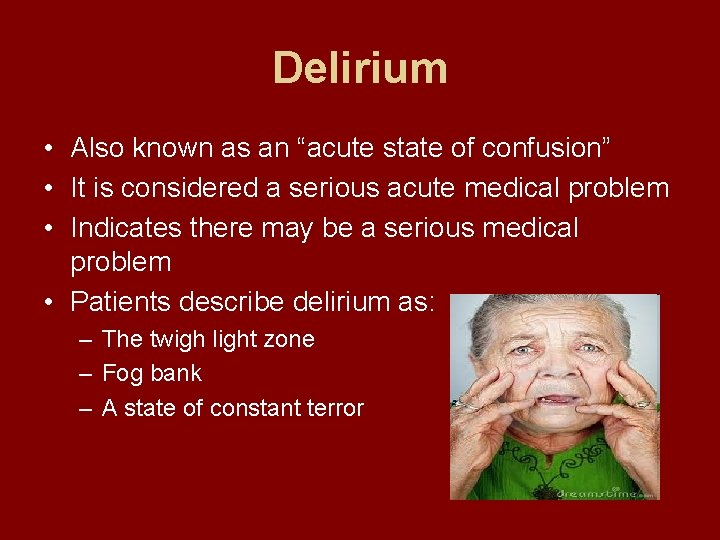
Delirium • Also known as an “acute state of confusion” • It is considered a serious acute medical problem • Indicates there may be a serious medical problem • Patients describe delirium as: – The twigh light zone – Fog bank – A state of constant terror
Delirium can be described as: • Starting and stopping • Their attention is suddenly distracted easily, can not stay on one subject for • Lasting a few hours, a few very long days or a few weeks • They have NO short term • Patient’s alertness memory fluctuates • Patient knows person but • Their thinking is disorganized and they not time and place ramble • They have delusions and visual hallucinations
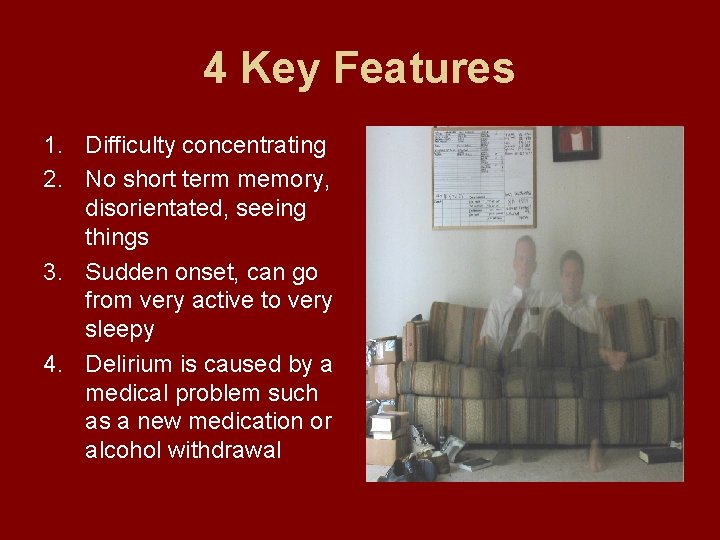
4 Key Features 1. Difficulty concentrating 2. No short term memory, disorientated, seeing things 3. Sudden onset, can go from very active to very sleepy 4. Delirium is caused by a medical problem such as a new medication or alcohol withdrawal
3 Types of Delirium Hyperactive • Agitated state with increase activity and increased verbal behaviors Hypoactive • More comment in elderly. Quietly confused with some anxiety. Tired and withdrawn Mixed • Patients move from hyperactive to hypoactive states
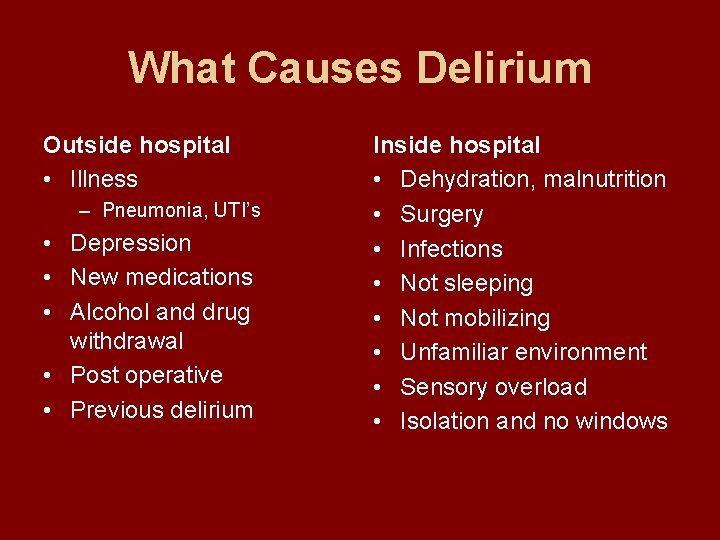
What Causes Delirium Outside hospital • Illness – Pneumonia, UTI’s • Depression • New medications • Alcohol and drug withdrawal • Post operative • Previous delirium Inside hospital • Dehydration, malnutrition • Surgery • Infections • Not sleeping • Not mobilizing • Unfamiliar environment • Sensory overload • Isolation and no windows
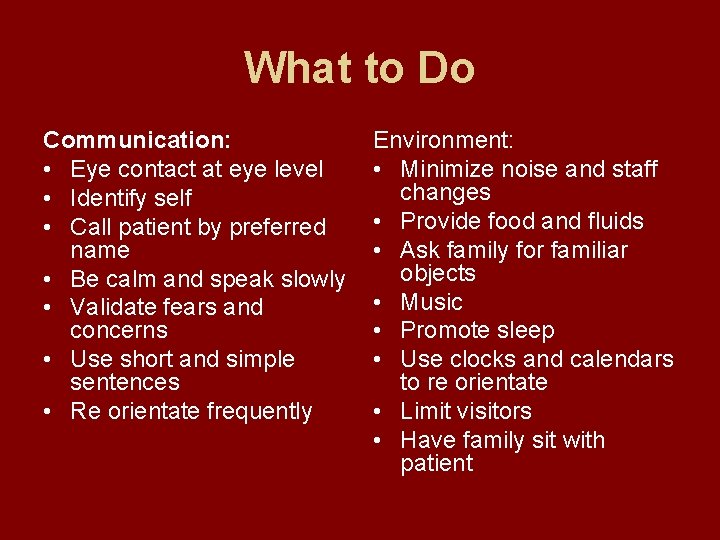
What to Do Communication: • Eye contact at eye level • Identify self • Call patient by preferred name • Be calm and speak slowly • Validate fears and concerns • Use short and simple sentences • Re orientate frequently Environment: • Minimize noise and staff changes • Provide food and fluids • Ask family for familiar objects • Music • Promote sleep • Use clocks and calendars to re orientate • Limit visitors • Have family sit with patient
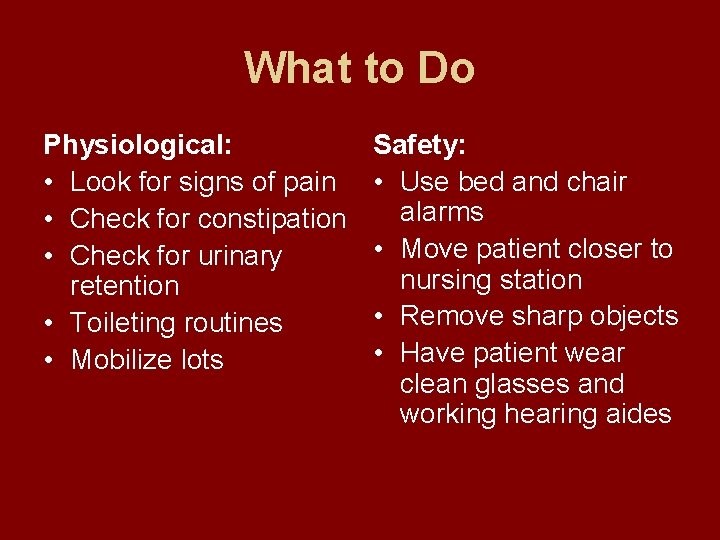
What to Do Physiological: • Look for signs of pain • Check for constipation • Check for urinary retention • Toileting routines • Mobilize lots Safety: • Use bed and chair alarms • Move patient closer to nursing station • Remove sharp objects • Have patient wear clean glasses and working hearing aides
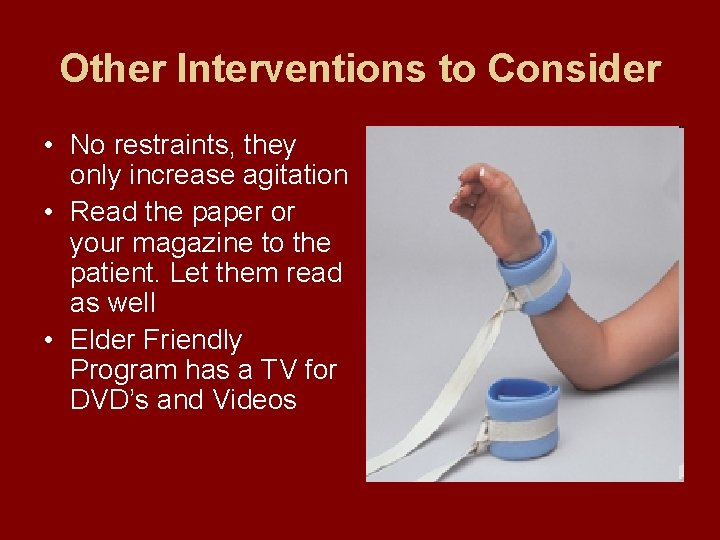
Other Interventions to Consider • No restraints, they only increase agitation • Read the paper or your magazine to the patient. Let them read as well • Elder Friendly Program has a TV for DVD’s and Videos
QUESTIONS?