
PatientProvider Communication Patient Perspective Overview of Class Finish

- Slides: 18
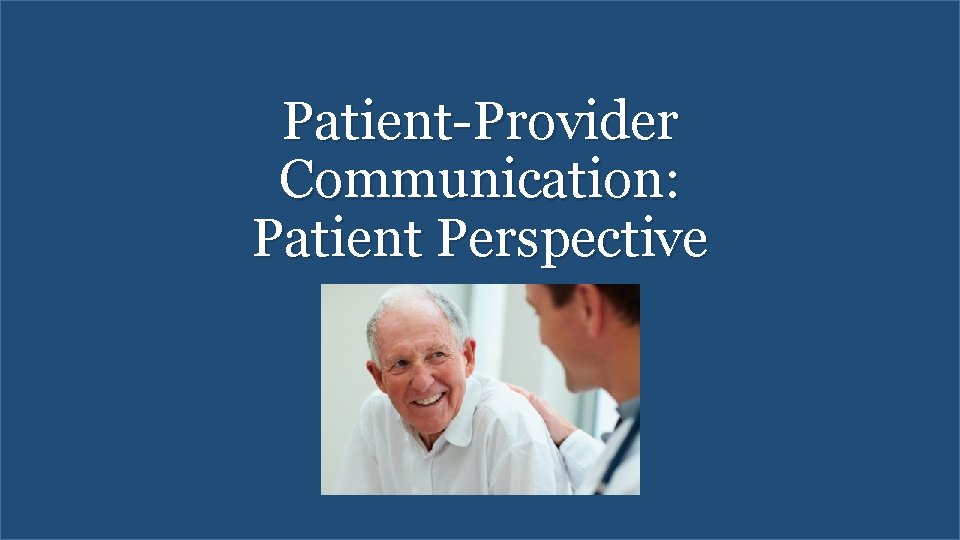
Patient-Provider Communication: Patient Perspective
Overview of Class • Finish hearing about classmates’ current/future occupations • Patient Perspective • History • Micro Influences on Healthcare Interactions • Patient-Centered Care
Take Away Points • How does the history of the patient-provider relationship relate to current health communication between a patient and provider? • What are the four type of interaction goals for a medical visit? Be able to recognize examples and distinguish between each. • How do goals conflict and what problems can that cause in a medical visit? • In which way do the interpersonal influences (i. e. , patient demographics) impact patient-provider communication? • What is the ideal balance of power in the patient-provider relationship? Why? • What is patient centered care (recognize an example of good/bad)? What are the benefits and drawbacks?
History of Doctor-Patient Relationship • Why does a book about health communication talk about the ways in which the doctor-patient relationship has evolved over time? • What is the benefit in understanding the history?
Micro Influences on Health Care Interactions • Patient/provider goals • Interpersonal influences • Cultural influences • Power dynamics
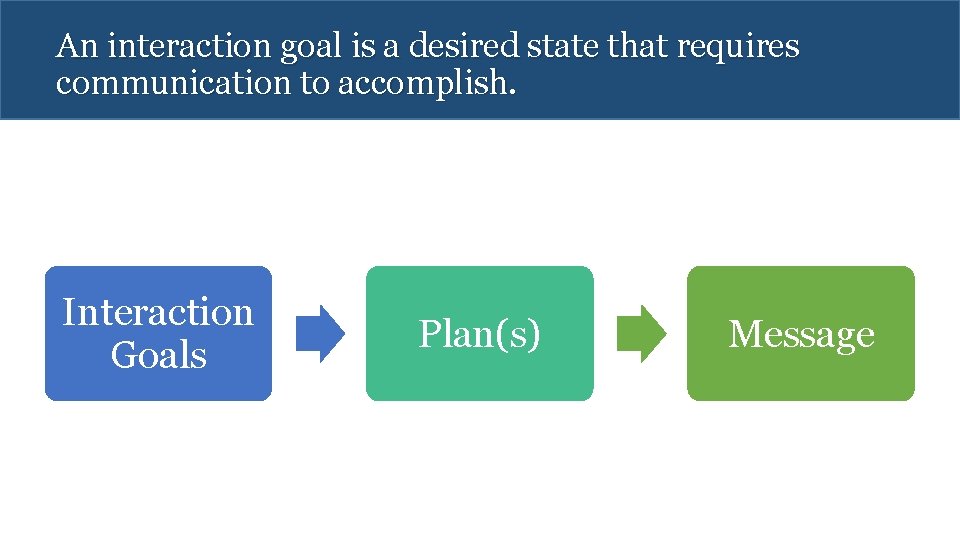
An interaction goal is a desired state that requires communication to accomplish. Interaction Goals Plan(s) Message
Patient/Provider Interaction Goals • Identity goals*** • Relational goals • Educational goals • Medical goals: outcomes to health issue
Patient/Provider Interaction Goals • Identity goals*** • The impression you want to make about yourself • Example: • Alexa is 16. She goes to the doctor for her annual exam. The doctor asks her if she has ever smoked or engaged in sexual activity. Alexa tells the doctor no, even though she has done both.
Patient/Provider Interaction Goals • Relational goals • Creating or maintaining a certain relationship • Example: Health information that you read online • How should you bring it up to your doctor? • Why does it matter how you say it?
Patient/Provider Interaction Goals • Educational goals • Provider: to inform, counsel, educate • Patient: to inform, information acquisition • Medical goals • Getting antibiotics • Healing patient • Selecting surgery, persuade for treatment/surgery date
Goals often conflict, and this creates problems when prioritizing and accomplishing goals. • Alexa told the doctor that she has not engaged in sexual activity because she was embarrassed, and didn’t want the doctor to think poorly of her. However, Alexa thinks that the health issue her doctor is attempting to diagnose may be from an STI, even though she doesn’t say this. • What identity, relational, educational, and medical goals does Alexa have? • Which goal(s) is Alexa prioritizing over others? • Is there a way where Alexa could accomplish all of her goals?
Interpersonal Influences • Education • Age • Health status • Gender • SES
Power dynamics • Between the Patient and Provider… • Who sets the goals and agenda • Role of the patient’s values • Functional role of health care providers (i. e. , how do the providers approach their patients? ) • What is the best power distribution between patient and provider? From Emanuel & Emanuel (1992)
Patient Centered Care • Although patient-centered care recognizes biology/physiology as a primary concern (Babrow & Mattson, 2003), it adopts the position that: • (1) it is necessary to understand (e. g. , diagnose and treat) illness in the contexts of patients’ lives, emotions, and psychology; • (2) patients should be actively involved in their care
Patient Centered Care • Epstein et al. (2005) similarly operationalized patient-centered care as: • (1) eliciting and understanding the patient’s perspective—concerns, ideas, expectations, needs, feelings and functioning, • (2) understanding the patient within his or her unique psychosocial context • (3) reaching a shared understanding of the problem and its treatment with the patient that is concordant with the patient’s values • (4) helping patients to share power and responsibility by involving them in decisions • **You do NOT need to memorize these
Patient Centered Care Benefits • Perception of genuine concern • Increased satisfaction with healthcare encounter • Decreased stress and anxiety • Improved health outcomes Drawbacks • Takes more time • Could involve more effort from medical provider
Example • https: //www. youtube. com/watch? v=4 V-81 fy 4 m. YI
Take Away Points • How does the history of the patient-provider relationship relate to current health communication between a patient and provider? • What are the four type of interaction goals for a medical visit? Be able to recognize examples and distinguish between each. • How do goals conflict and what problems can that cause in a medical visit? • In which way do the interpersonal influences (i. e. , patient demographics) impact patient-provider communication? • What is the ideal balance of power in the patient-provider relationship? Why? • What is patient centered care (recognize an example of good/bad)? What are the benefits and drawbacks?