
Patient safety seminar Hester Wain Head of Patient

- Slides: 18
Patient safety seminar Hester Wain, Head of Patient Safety Anne Mc. Donald, Carl Waldmann, Emma Vaux, Marianne Sampson, Stathis Altanis
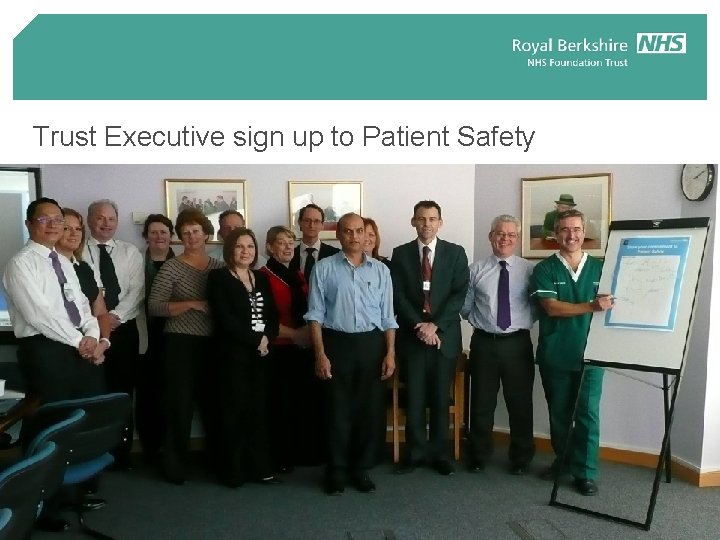
Trust Executive sign up to Patient Safety
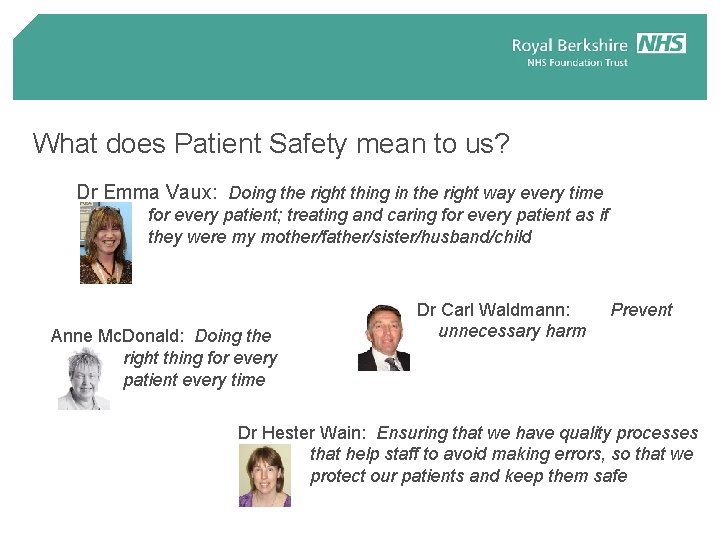
What does Patient Safety mean to us? Dr Emma Vaux: Doing the right thing in the right way every time for every patient; treating and caring for every patient as if they were my mother/father/sister/husband/child Anne Mc. Donald: Doing the right thing for every patient every time Dr Carl Waldmann: unnecessary harm Prevent Dr Hester Wain: Ensuring that we have quality processes that help staff to avoid making errors, so that we protect our patients and keep them safe
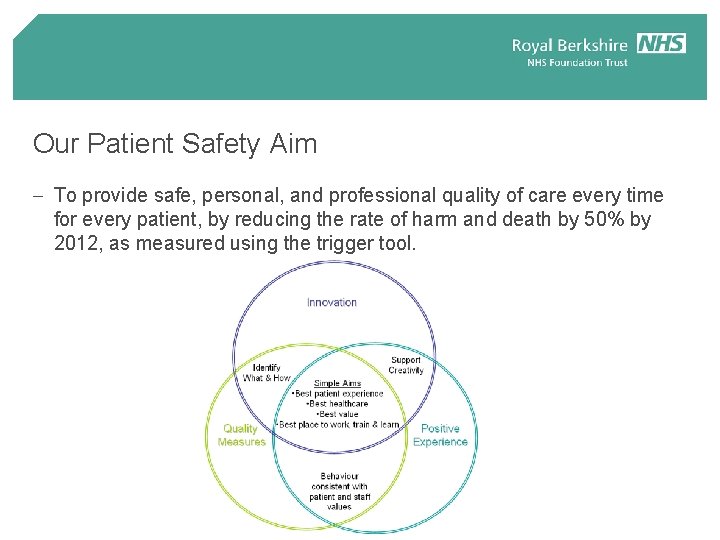
Our Patient Safety Aim - To provide safe, personal, and professional quality of care every time for every patient, by reducing the rate of harm and death by 50% by 2012, as measured using the trigger tool.
How can we do this? - Work harder - Learn more - Do better - Remember everything / Forget nothing Does this work?
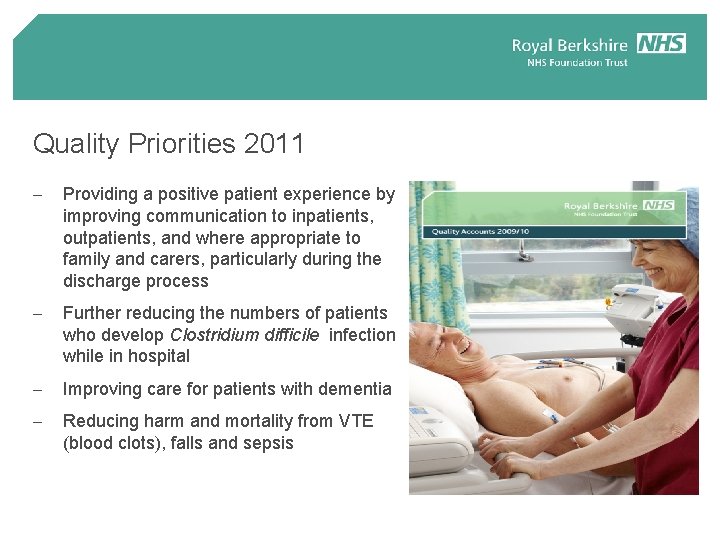
Quality Priorities 2011 - Providing a positive patient experience by improving communication to inpatients, outpatients, and where appropriate to family and carers, particularly during the discharge process - Further reducing the numbers of patients who develop Clostridium difficile infection while in hospital - Improving care for patients with dementia - Reducing harm and mortality from VTE (blood clots), falls and sepsis
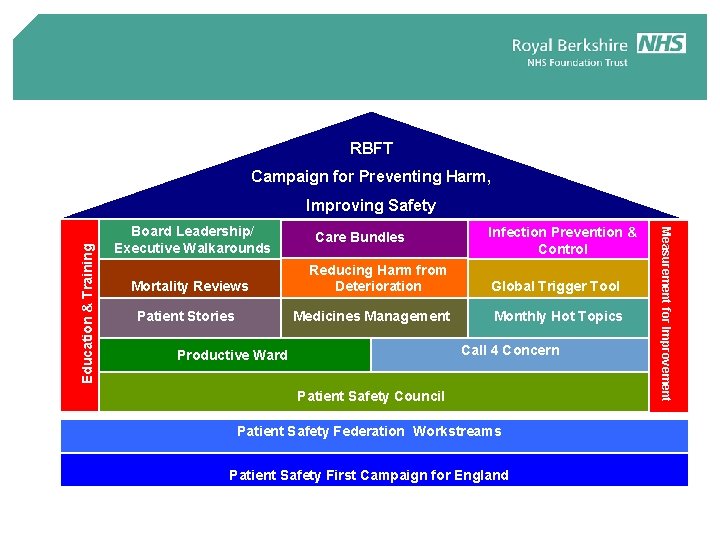
RBFT Campaign for Preventing Harm, Board Leadership/ Executive Walkarounds Mortality Reviews Patient Stories Care Bundles Infection Prevention & Control Reducing Harm from Deterioration Global Trigger Tool Medicines Management Monthly Hot Topics Call 4 Concern Productive Ward Patient Safety Council Patient Safety Federation Workstreams Patient Safety First Campaign for England Measurement for Improvement Education & Training Improving Safety
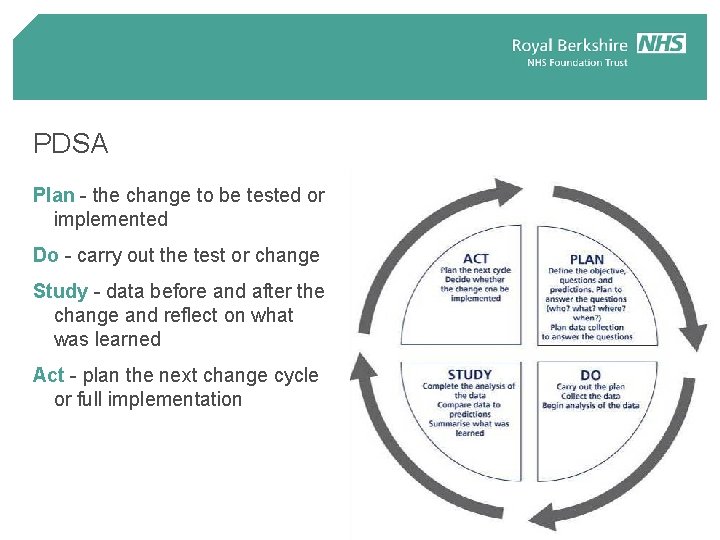
PDSA Plan - the change to be tested or implemented Do - carry out the test or change Study - data before and after the change and reflect on what was learned Act - plan the next change cycle or full implementation
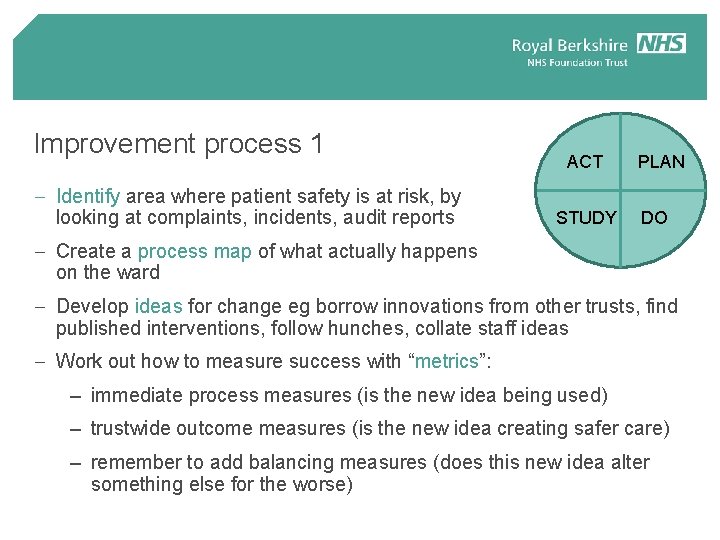
Improvement process 1 - Identify area where patient safety is at risk, by looking at complaints, incidents, audit reports ACT STUDY PLAN DO - Create a process map of what actually happens on the ward - Develop ideas for change eg borrow innovations from other trusts, find published interventions, follow hunches, collate staff ideas - Work out how to measure success with “metrics”: – immediate process measures (is the new idea being used) – trustwide outcome measures (is the new idea creating safer care) – remember to add balancing measures (does this new idea alter something else for the worse)
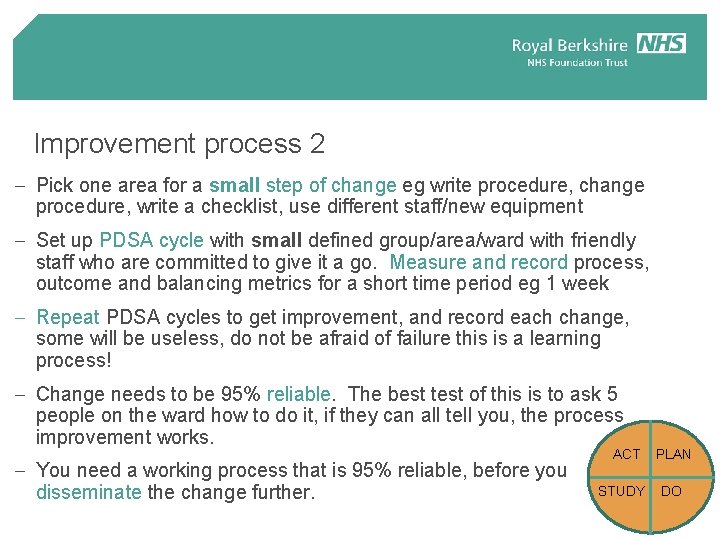
Improvement process 2 - Pick one area for a small step of change eg write procedure, change procedure, write a checklist, use different staff/new equipment - Set up PDSA cycle with small defined group/area/ward with friendly staff who are committed to give it a go. Measure and record process, outcome and balancing metrics for a short time period eg 1 week - Repeat PDSA cycles to get improvement, and record each change, some will be useless, do not be afraid of failure this is a learning process! - Change needs to be 95% reliable. The best test of this is to ask 5 people on the ward how to do it, if they can all tell you, the process improvement works. - You need a working process that is 95% reliable, before you disseminate the change further. ACT STUDY PLAN DO
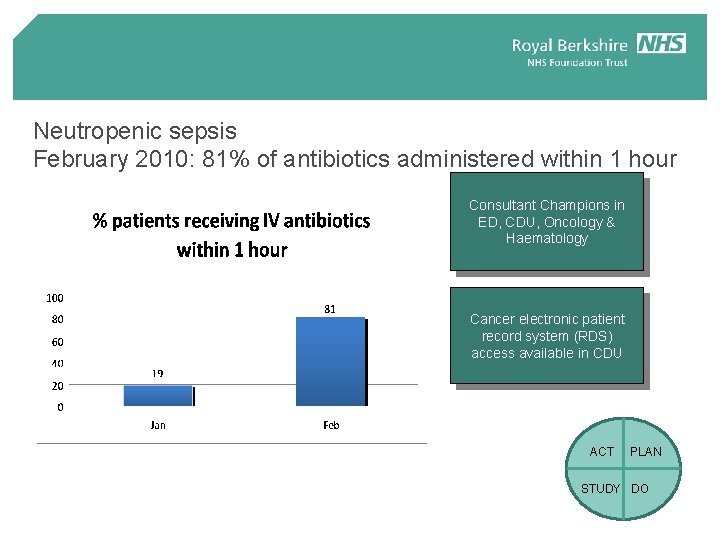
Neutropenic sepsis February 2010: 81% of antibiotics administered within 1 hour Consultant Champions in ED, CDU, Oncology & Haematology Cancer electronic patient record system (RDS) access available in CDU ACT PLAN STUDY DO
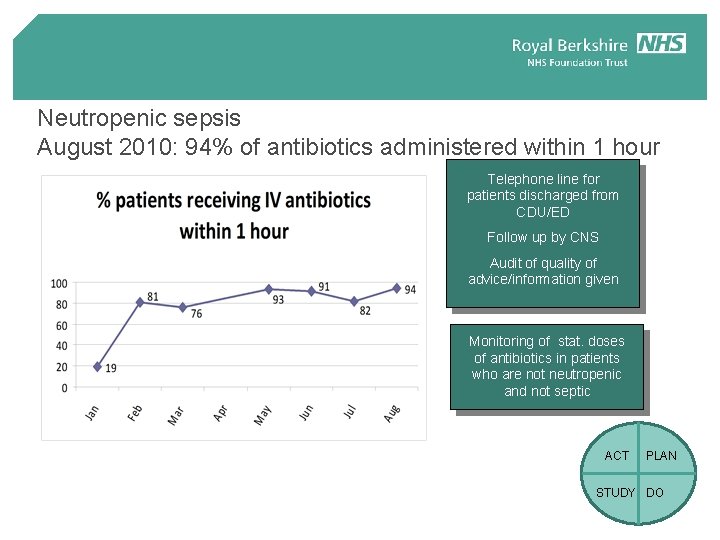
Neutropenic sepsis August 2010: 94% of antibiotics administered within 1 hour Telephone line for patients discharged from CDU/ED Follow up by CNS Audit of quality of advice/information given Monitoring of stat. doses of antibiotics in patients who are not neutropenic and not septic ACT PLAN STUDY DO
PDSA cycle for Walkarounds Plan - Set-up system for weekly Patient Safety Executive Walkarounds Do - Visit ward areas with Executive Team Study - Number of walkarounds – weekly rota maintained but challenging - Actions – resource intensive logging and report write-up - Feedback – all ward staff thanked, positive feedback included in report Act - Weekly rota now coordinated by assistant - Actively delegate actions during walkaround - Include feedback in summary reports to Exec
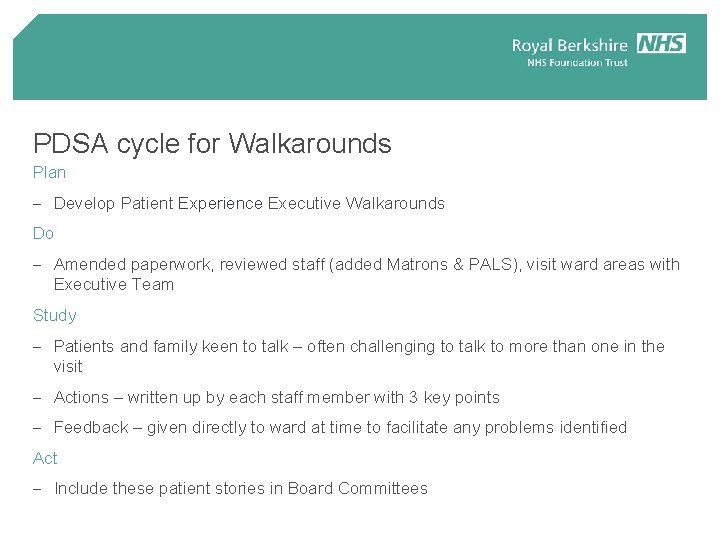
PDSA cycle for Walkarounds Plan - Develop Patient Experience Executive Walkarounds Do - Amended paperwork, reviewed staff (added Matrons & PALS), visit ward areas with Executive Team Study - Patients and family keen to talk – often challenging to talk to more than one in the visit - Actions – written up by each staff member with 3 key points - Feedback – given directly to ward at time to facilitate any problems identified Act - Include these patient stories in Board Committees
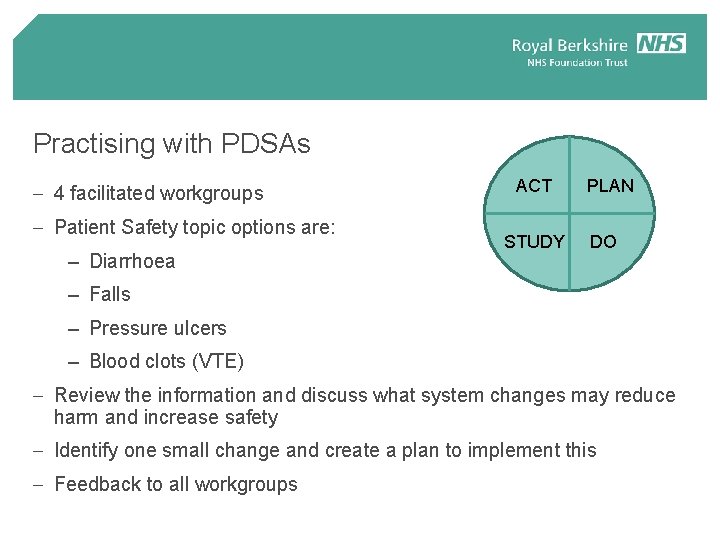
Practising with PDSAs - 4 facilitated workgroups - Patient Safety topic options are: – Diarrhoea ACT STUDY PLAN DO – Falls – Pressure ulcers – Blood clots (VTE) - Review the information and discuss what system changes may reduce harm and increase safety - Identify one small change and create a plan to implement this - Feedback to all workgroups
Our Patient Safety Aim - To provide safe, personal, and professional quality of care every time for every patient, by reducing the rate of harm and death by 50% by 2012, as measured using the trigger tool. How? - Identify the issues - Develop the solutions - Try small steps of change (PDSA) - Measure the success - Disseminate the practice - Monitor sustainability
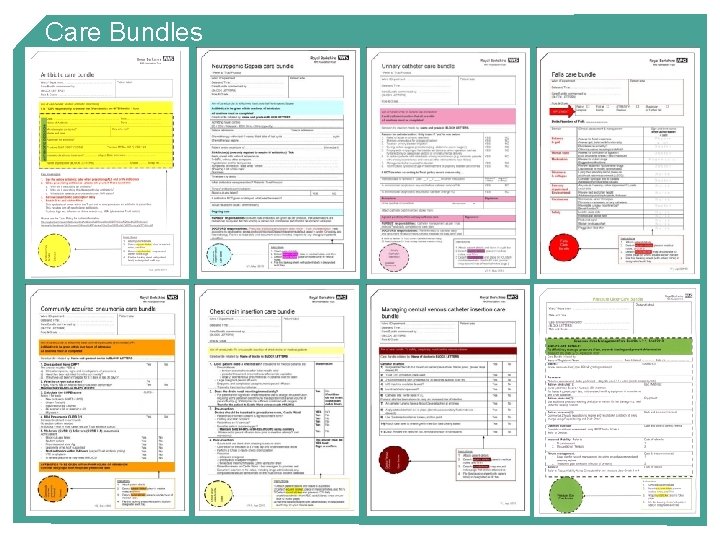
Care Bundles
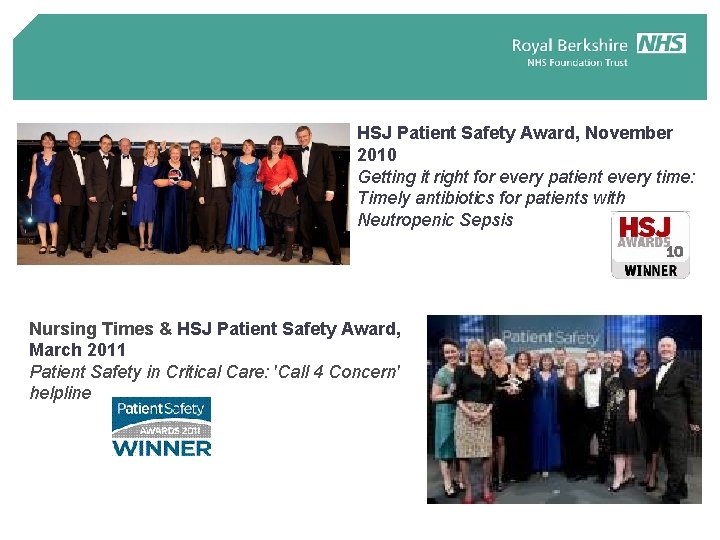
HSJ Patient Safety Award, November 2010 Getting it right for every patient every time: Timely antibiotics for patients with Neutropenic Sepsis Nursing Times & HSJ Patient Safety Award, March 2011 Patient Safety in Critical Care: 'Call 4 Concern' helpline