
Patient Safety Quality improvement Presentation drawn together by
Patient Safety & Quality improvement Presentation drawn together by Dr Fiona Hignett – Paediatric Registrar, Wessex. With thanks to: Kate Pryde (consultant paediatrician, Southampton Children’s Hospital) Matt Smith (consultant anaesthetist Derriford Hospital, Plymouth) The Royal College of Paediatrics and Child Health is a registered charity in England Wales (1057744) and in Scotland (SCO 38299).
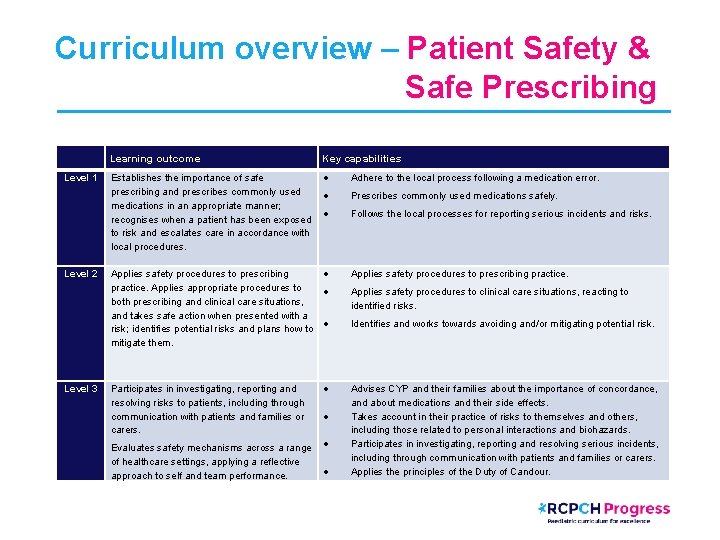
Curriculum overview – Patient Safety & Safe Prescribing Level 1 Level 2 Level 3 Learning outcome Key capabilities Establishes the importance of safe prescribing and prescribes commonly used medications in an appropriate manner; recognises when a patient has been exposed to risk and escalates care in accordance with local procedures. Adhere to the local process following a medication error. Applies safety procedures to prescribing practice. Applies appropriate procedures to both prescribing and clinical care situations, and takes safe action when presented with a risk; identifies potential risks and plans how to mitigate them. Applies safety procedures to prescribing practice. Participates in investigating, reporting and resolving risks to patients, including through communication with patients and families or carers. Evaluates safety mechanisms across a range of healthcare settings, applying a reflective approach to self and team performance. Prescribes commonly used medications safely. Follows the local processes for reporting serious incidents and risks. Applies safety procedures to clinical care situations, reacting to identified risks. Identifies and works towards avoiding and/or mitigating potential risk. Advises CYP and their families about the importance of concordance, and about medications and their side effects. Takes account in their practice of risks to themselves and others, including those related to personal interactions and biohazards. Participates in investigating, reporting and resolving serious incidents, including through communication with patients and families or carers. Applies the principles of the Duty of Candour.
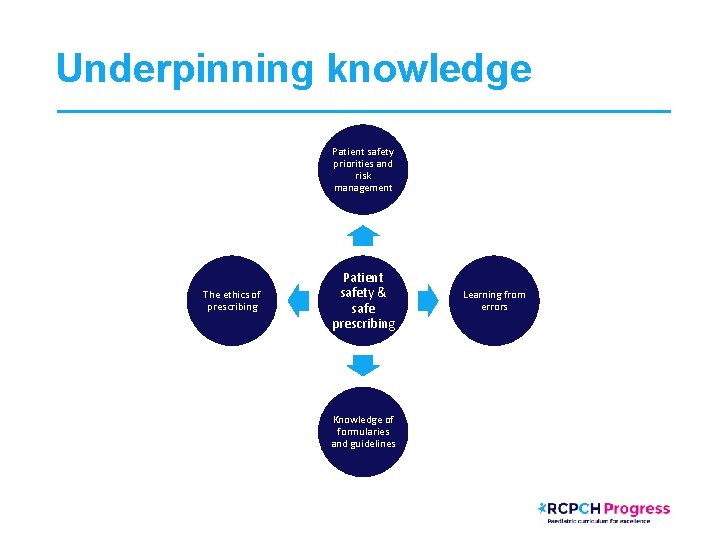
Underpinning knowledge Patient safety priorities and risk management The ethics of prescribing Patient safety & safe prescribing Knowledge of formularies and guidelines Learning from errors
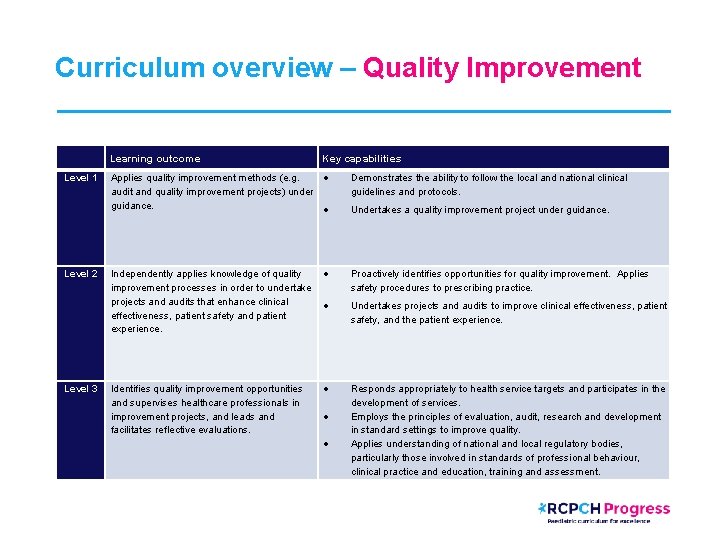
Curriculum overview – Quality Improvement Level 1 Level 2 Level 3 Learning outcome Key capabilities Applies quality improvement methods (e. g. audit and quality improvement projects) under guidance. Demonstrates the ability to follow the local and national clinical guidelines and protocols. Independently applies knowledge of quality improvement processes in order to undertake projects and audits that enhance clinical effectiveness, patient safety and patient experience. Proactively identifies opportunities for quality improvement. Applies safety procedures to prescribing practice. Identifies quality improvement opportunities and supervises healthcare professionals in improvement projects, and leads and facilitates reflective evaluations. Undertakes a quality improvement project under guidance. Undertakes projects and audits to improve clinical effectiveness, patient safety, and the patient experience. Responds appropriately to health service targets and participates in the development of services. Employs the principles of evaluation, audit, research and development in standard settings to improve quality. Applies understanding of national and local regulatory bodies, particularly those involved in standards of professional behaviour, clinical practice and education, training and assessment.
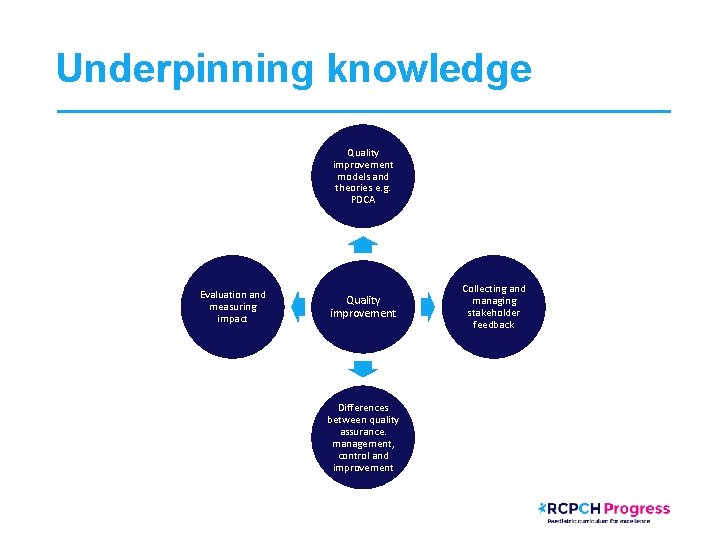
Underpinning knowledge Quality improvement models and theories e. g. PDCA Evaluation and measuring impact Quality improvement Differences between quality assurance. management, control and improvement Collecting and managing stakeholder feedback
Patient Safety • “Patient safety is the avoidance of unintended or unexpected harm to people during the provision of health care” (The WHO & NHS Improvement) Quality Improvement • "The combined and unceasing efforts of everyone to make the changes that will lead to better patient outcomes (health), better system performance (care) and better professional development (learning)“ (Batalden and Davidoff, 2007)
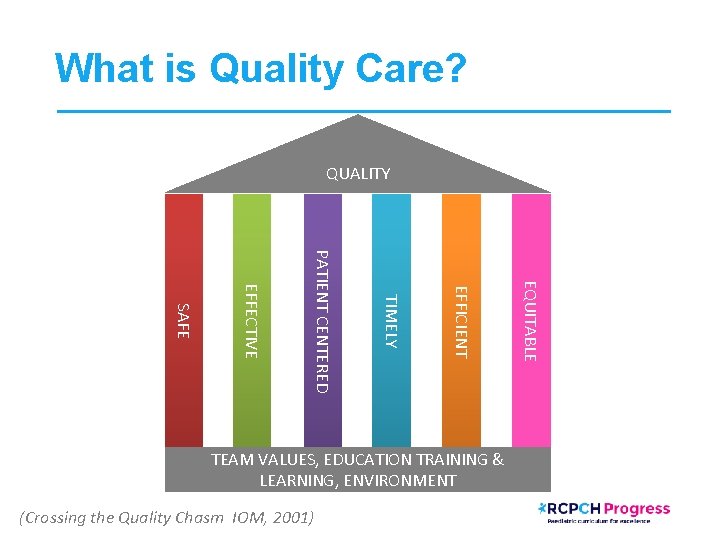
What is Quality Care? QUALITY (Crossing the Quality Chasm IOM, 2001) EQUITABLE EFFICIENT TIMELY PATIENT CENTERED EFFECTIVE SAFE TEAM VALUES, EDUCATION TRAINING & LEARNING, ENVIRONMENT
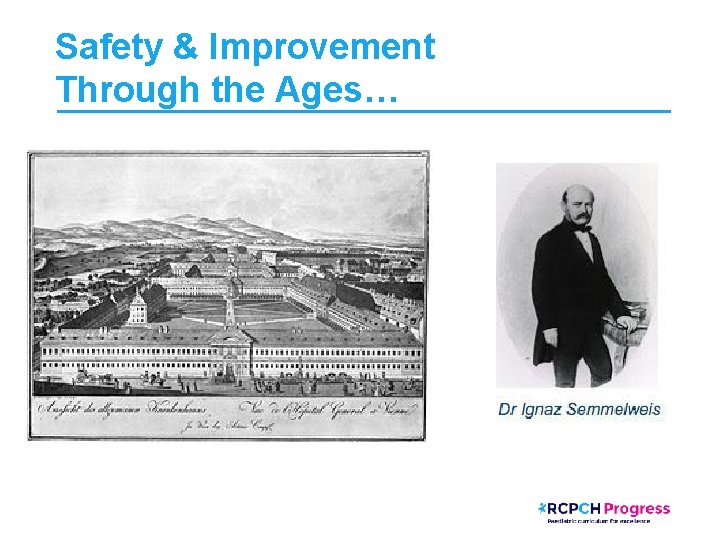
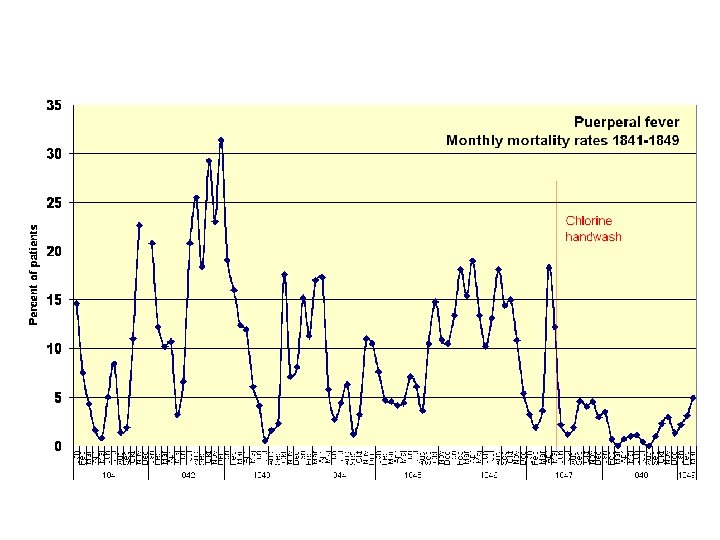
Safety & Improvement Through the Ages…
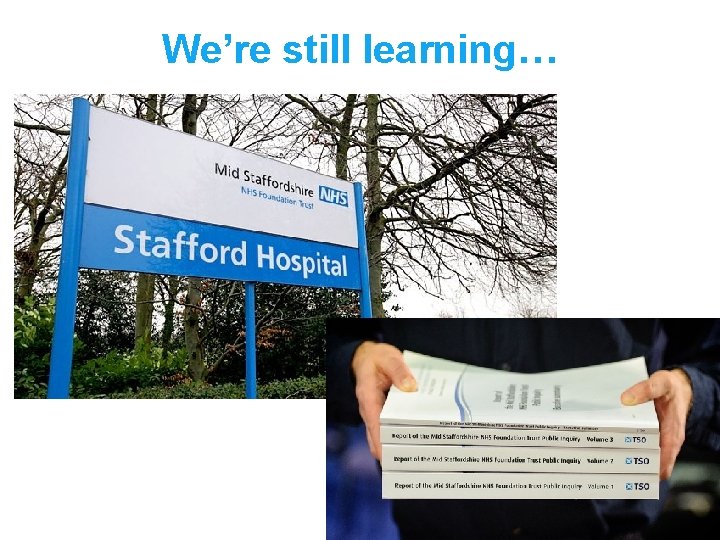
We’re still learning…
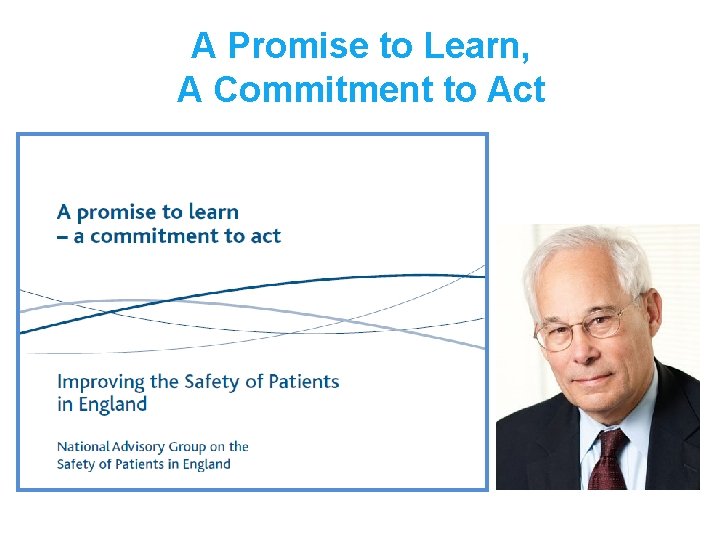
A Promise to Learn, A Commitment to Act
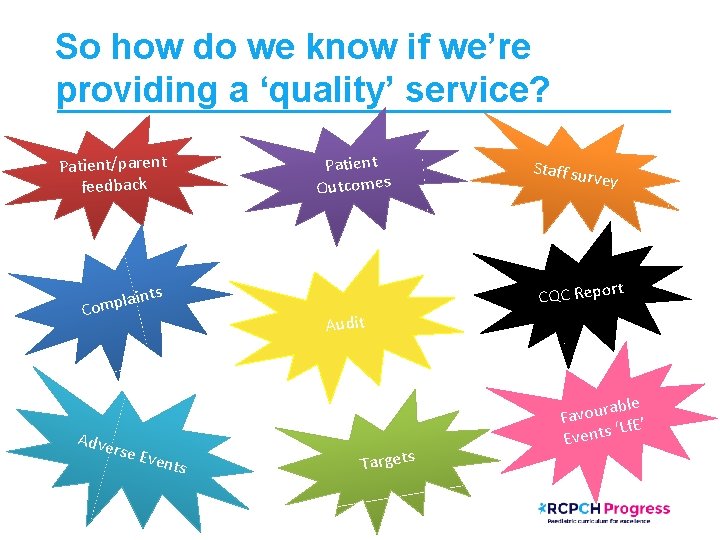
So how do we know if we’re providing a ‘quality’ service? Patient/parent feedback Patient Outcomes Adve rse E vents rvey t CQC Repor s int a l p m Co Staff su Audit Targets rable Favou f. E’ ‘L Events
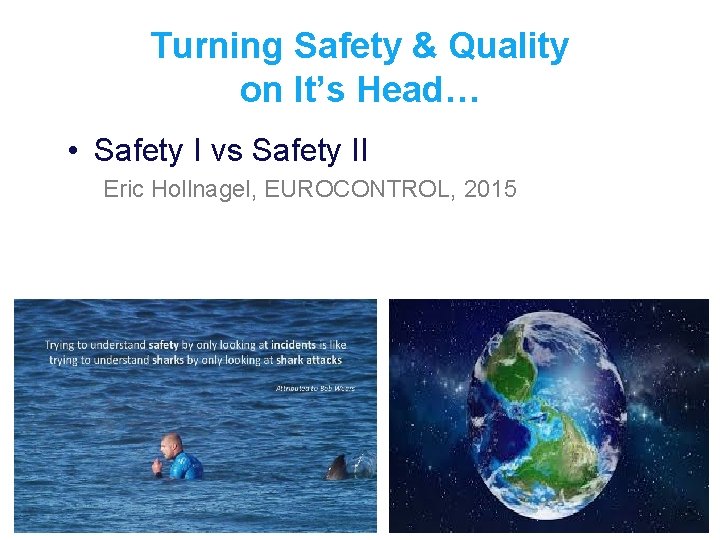
Turning Safety & Quality on It’s Head… • Safety I vs Safety II Eric Hollnagel, EUROCONTROL, 2015
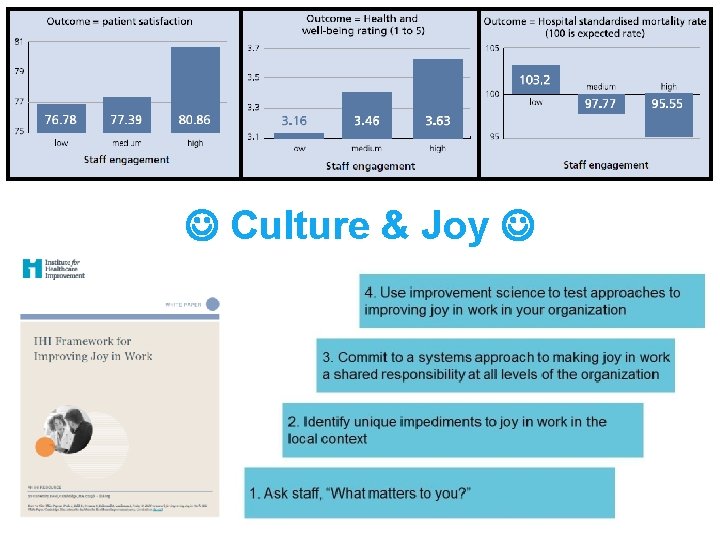
Culture & Joy
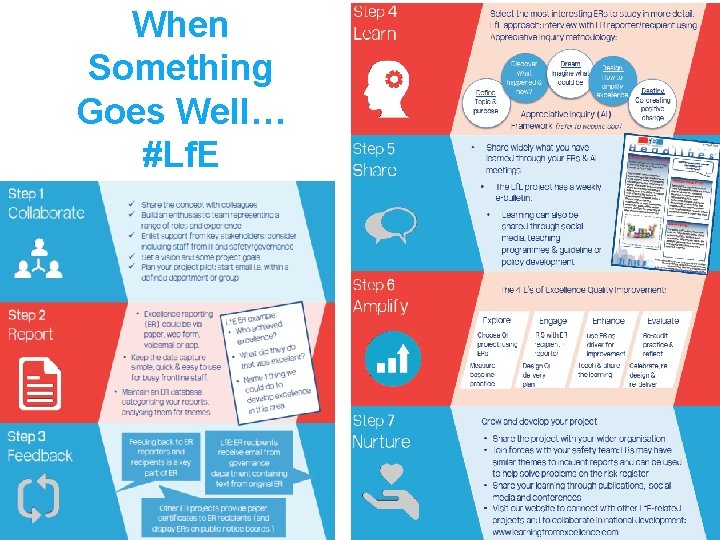
When Something Goes Well… #Lf. E
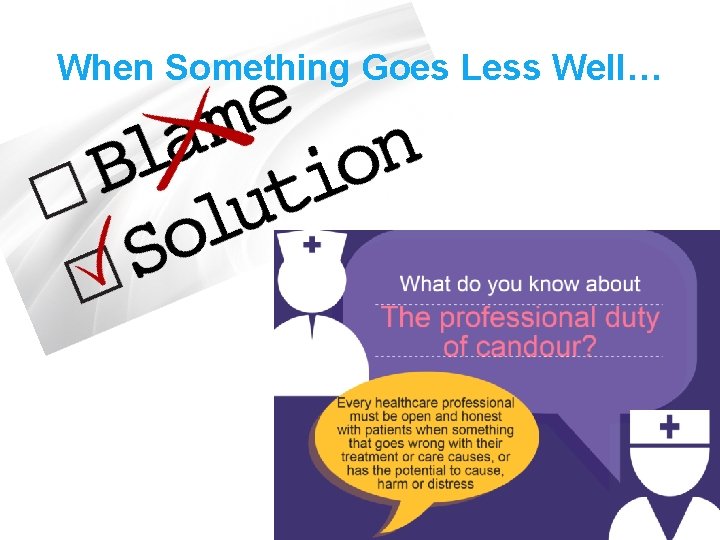
When Something Goes Less Well…

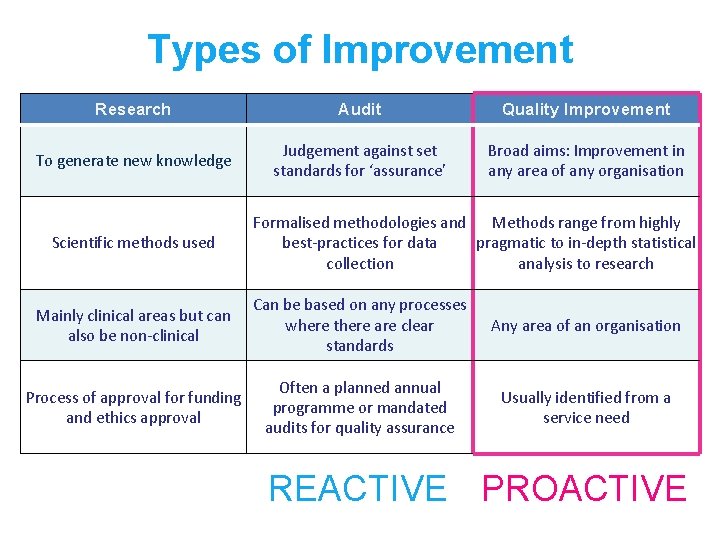
Types of Improvement Research Audit Quality Improvement To generate new knowledge Judgement against set standards for ‘assurance’ Broad aims: Improvement in any area of any organisation Scientific methods used Formalised methodologies and Methods range from highly best-practices for data pragmatic to in-depth statistical collection analysis to research Mainly clinical areas but can also be non-clinical Can be based on any processes where there are clear standards Any area of an organisation Process of approval for funding and ethics approval Often a planned annual programme or mandated audits for quality assurance Usually identified from a service need REACTIVE PROACTIVE
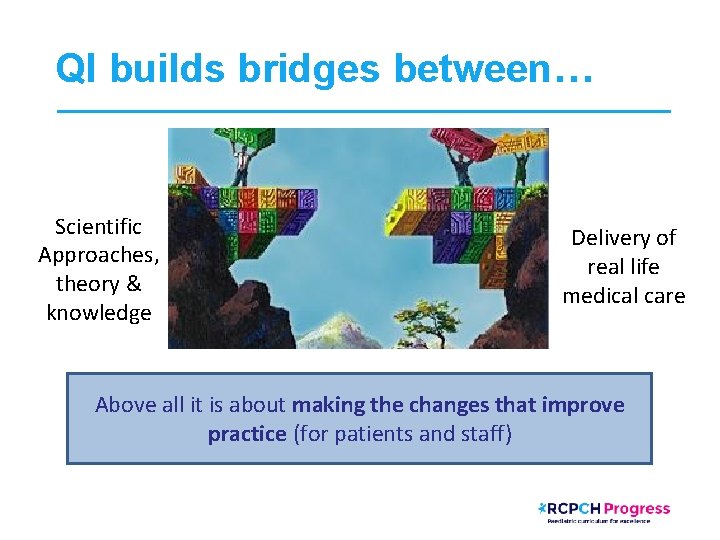
QI builds bridges between… Scientific Approaches, theory & knowledge Delivery of real life medical care Above all it is about making the changes that improve practice (for patients and staff)

IHI Model for Improvement http: //www. ihi. org/resources/Pages/Howto. Improve/default. aspx
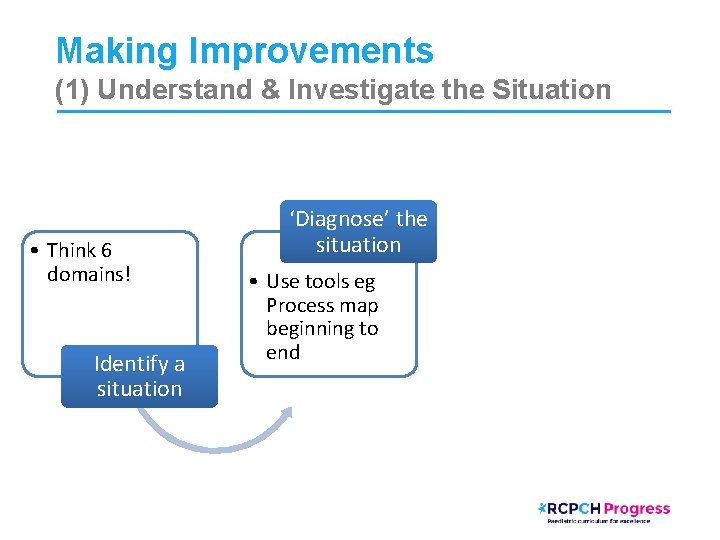
Making Improvements (1) Understand & Investigate the Situation • Think 6 domains! Identify a situation ‘Diagnose’ the situation • Use tools eg Process map beginning to end
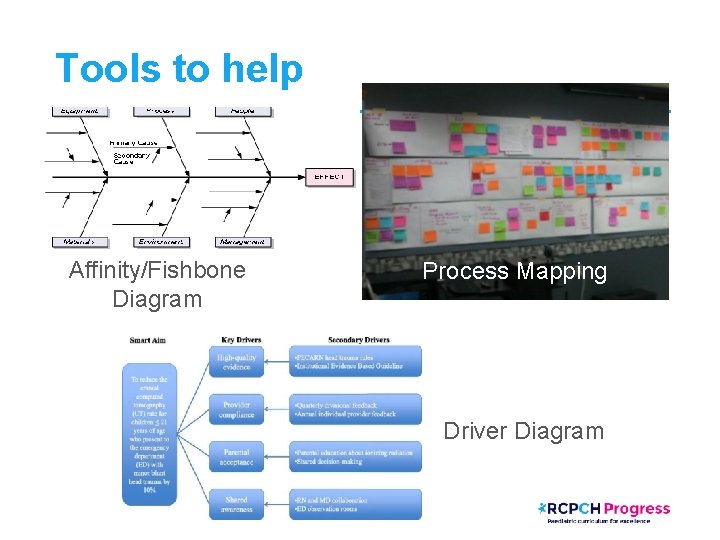
Tools to help Affinity/Fishbone Diagram Process Mapping Driver Diagram
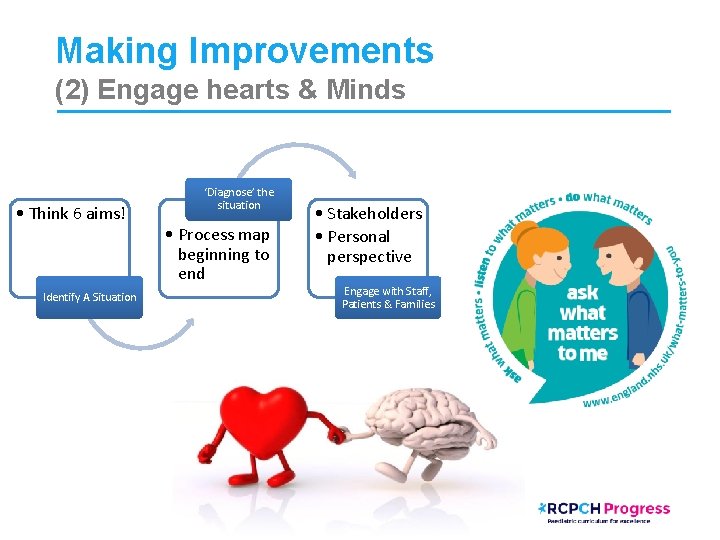
Making Improvements (2) Engage hearts & Minds • Think 6 aims! Identify A Situation ‘Diagnose’ the situation • Process map beginning to end • Stakeholders • Personal perspective Engage with Staff, Patients & Families
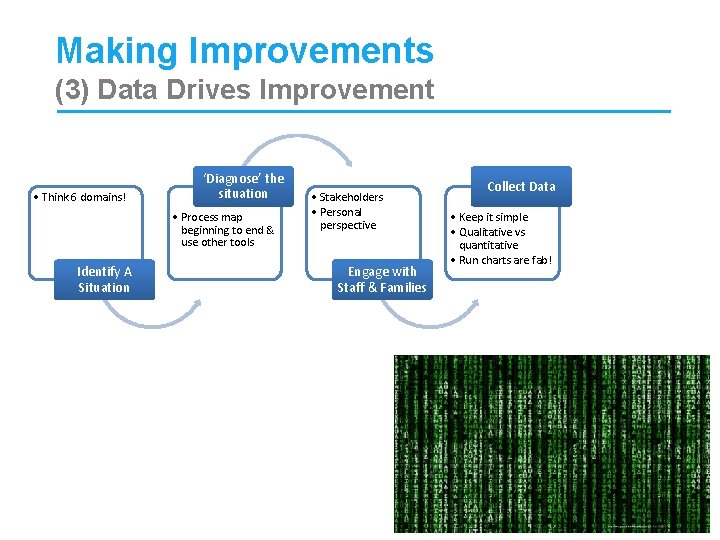
Making Improvements (3) Data Drives Improvement • Think 6 domains! ‘Diagnose’ the situation • Process map beginning to end & use other tools Identify A Situation • Stakeholders • Personal perspective Engage with Staff & Families Collect Data • Keep it simple • Qualitative vs quantitative • Run charts are fab!
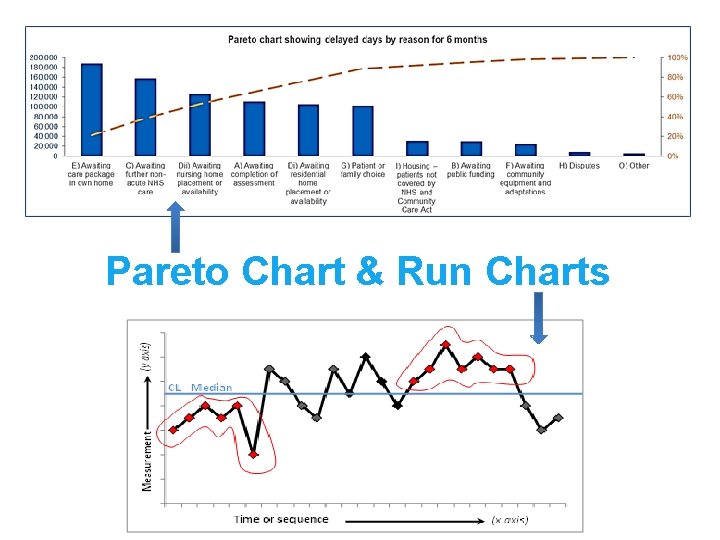
Pareto Chart & Run Charts
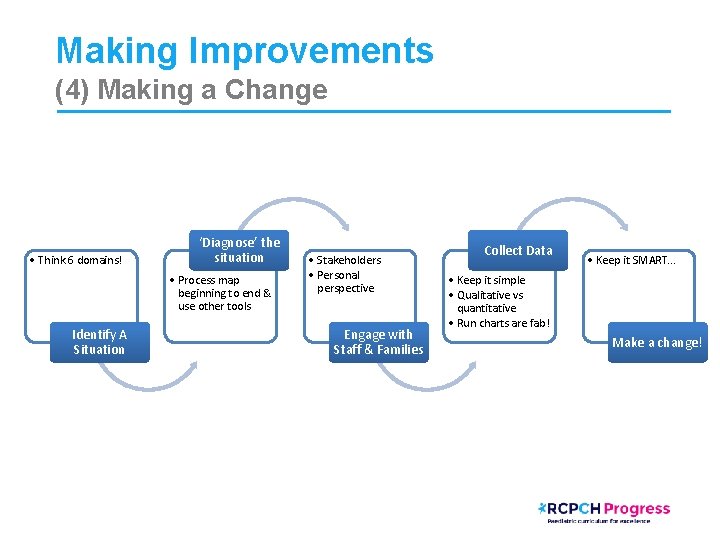
Making Improvements (4) Making a Change • Think 6 domains! ‘Diagnose’ the situation • Process map beginning to end & use other tools Identify A Situation • Stakeholders • Personal perspective Engage with Staff & Families Collect Data • Keep it SMART. . . • Keep it simple • Qualitative vs quantitative • Run charts are fab! Make a change!
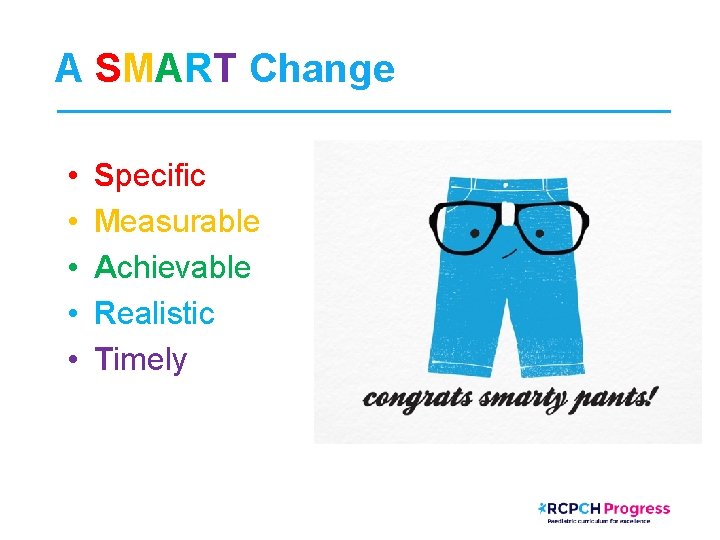
A SMART Change • • • Specific Measurable Achievable Realistic Timely
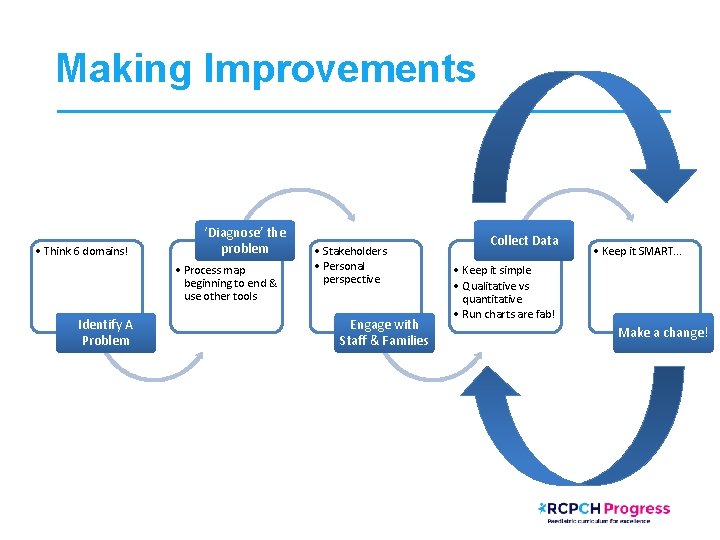
Making Improvements • Think 6 domains! ‘Diagnose’ the problem • Process map beginning to end & use other tools Identify A Problem • Stakeholders • Personal perspective Engage with Staff & Families Collect Data • Keep it SMART. . . • Keep it simple • Qualitative vs quantitative • Run charts are fab! Make a change!
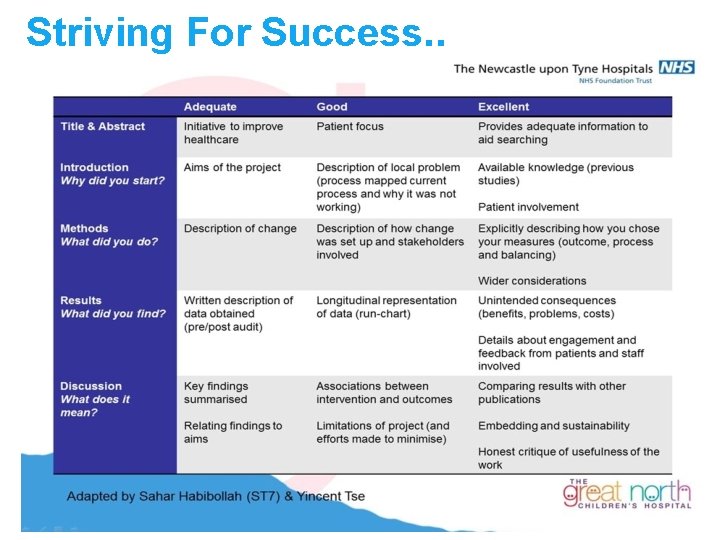
Striving For Success. .
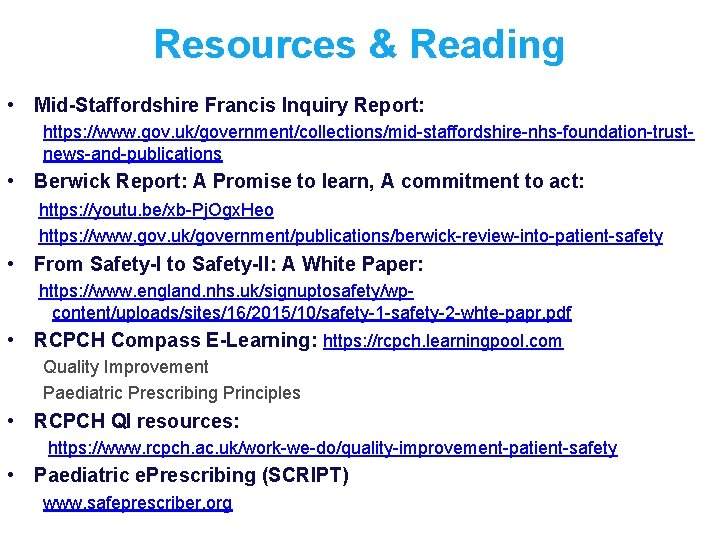
Resources & Reading • Mid-Staffordshire Francis Inquiry Report: https: //www. gov. uk/government/collections/mid-staffordshire-nhs-foundation-trustnews-and-publications • Berwick Report: A Promise to learn, A commitment to act: https: //youtu. be/xb-Pj. Ogx. Heo https: //www. gov. uk/government/publications/berwick-review-into-patient-safety • From Safety-I to Safety-II: A White Paper: https: //www. england. nhs. uk/signuptosafety/wpcontent/uploads/sites/16/2015/10/safety-1 -safety-2 -whte-papr. pdf • RCPCH Compass E-Learning: https: //rcpch. learningpool. com Quality Improvement Paediatric Prescribing Principles • RCPCH QI resources: https: //www. rcpch. ac. uk/work-we-do/quality-improvement-patient-safety • Paediatric e. Prescribing (SCRIPT) www. safeprescriber. org
Resources & Reading • Staff engagement toolkit: https: //www. nhsemployers. org/~/media/Employers/Documents/Site. Collection Documents/staff-engagement-toolkit. pdf • IHI Joy in work: https: //qi. elft. nhs. uk/wp-content/uploads/2017/07/IHI-Framework-for. Improving-Joy-In-Work. pdf • Learning from Excellence: https: //learningfromexcellence. com/resources-and-evidence/ • Duties of a Doctor https: //www. gmc-uk. org/ethical-guidance-for-doctors/goodmedical-practice/duties-of-a-doctor • Serious Incident Framework: https: //improvement. nhs. uk/resources/serious-incident-framework/ • IHI Model for improvement: http: //www. ihi. org/resources/Pages/Howto. Improve/default. aspx • The Health Foundation: https: //www. health. org. uk/ • NHS Improvement: https: //improvement. nhs. uk/
Useful Conferences/Meetings • http: //www. ihi. org/education/Conferences/Pages/default. aspx Next meeting March 27– 29 th, 2019 Glasgow, Scotland BMJ and IHI, with strategic partners, will bring together more than 3, 000 health care leaders and practitioners from 70+ countries And if travelling not possible they also have virtual training modules: http: //www. ihi. org/education/Web. Training/Pages/default. aspx • https: //www. risky-business. com/london. php] Yearly conference with Paediatrics Day June 5 th-7 th, London, England • https: //www. fmlm. ac. uk/ Regular meetings with opportunities for trainees to showcase their quality improvement work • https: //www. rcpch. ac. uk/news-events/rcpch-conference/programme-at-a-glance Quality Improvement Committee Specialist Interest Group Sessions to attend May 13 th-15 th May, Birmingham, England
- Slides: 36