
Patient no 67 A 39 years old male
- Slides: 22
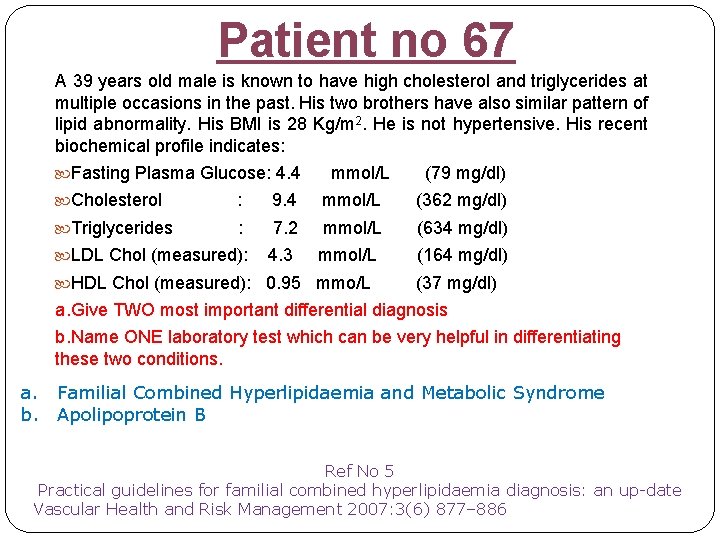
Patient no 67 A 39 years old male is known to have high cholesterol and triglycerides at multiple occasions in the past. His two brothers have also similar pattern of lipid abnormality. His BMI is 28 Kg/m 2. He is not hypertensive. His recent biochemical profile indicates: Fasting Plasma Glucose: 4. 4 mmol/L (79 mg/dl) Cholesterol : 9. 4 mmol/L (362 mg/dl) Triglycerides : 7. 2 mmol/L (634 mg/dl) 4. 3 mmol/L (164 mg/dl) LDL Chol (measured): HDL Chol (measured): 0. 95 mmo/L (37 mg/dl) a. Give TWO most important differential diagnosis b. Name ONE laboratory test which can be very helpful in differentiating these two conditions. a. Familial Combined Hyperlipidaemia and Metabolic Syndrome b. Apolipoprotein B Ref No 5 Practical guidelines for familial combined hyperlipidaemia diagnosis: an up date Vascular Health and Risk Management 2007: 3(6) 877– 886
Familial Combined Hyperlipidaemia (FCHL) FCHL is characterized by hypercholesterolemia and/or hypertriglyceridemia in at least two members of the same family with intraindividual and intra-familial variability. Its an important predisposing factor for premature CHD FCHL is one of the most common genetic hyperlipidemias in the general population
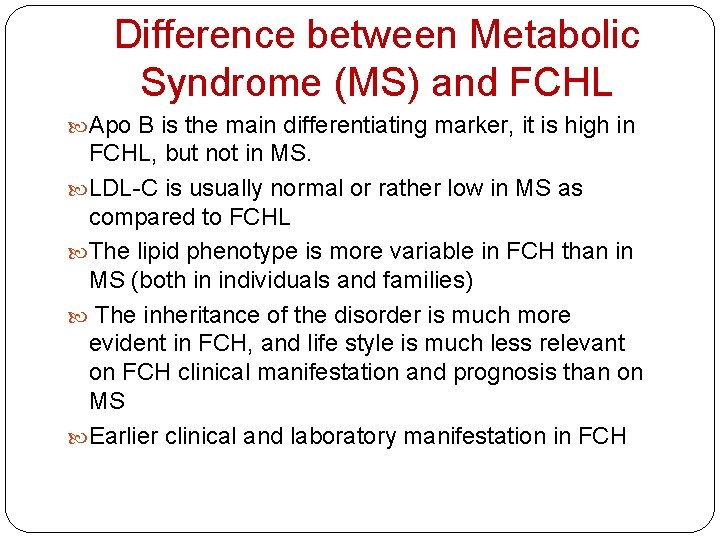
Difference between Metabolic Syndrome (MS) and FCHL Apo B is the main differentiating marker, it is high in FCHL, but not in MS. LDL-C is usually normal or rather low in MS as compared to FCHL The lipid phenotype is more variable in FCH than in MS (both in individuals and families) The inheritance of the disorder is much more evident in FCH, and life style is much less relevant on FCH clinical manifestation and prognosis than on MS Earlier clinical and laboratory manifestation in FCH
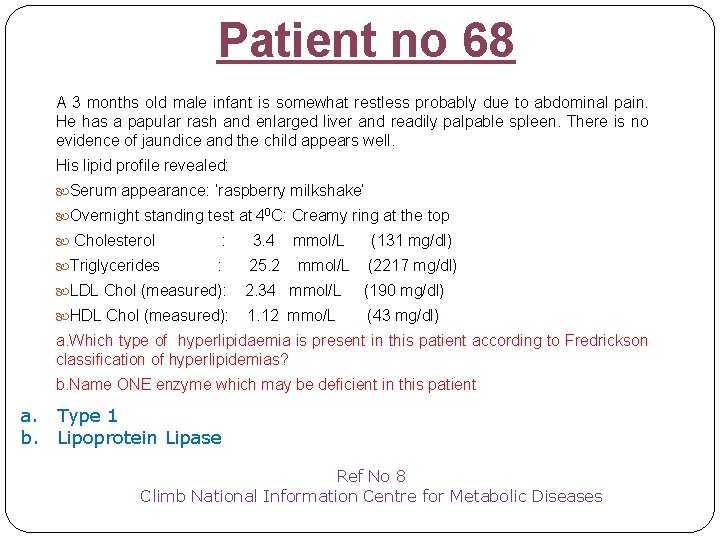
Patient no 68 A 3 months old male infant is somewhat restless probably due to abdominal pain. He has a papular rash and enlarged liver and readily palpable spleen. There is no evidence of jaundice and the child appears well. His lipid profile revealed: Serum appearance: ‘raspberry milkshake’ Overnight standing test at 40 C: Creamy ring at the top Cholesterol : 3. 4 Triglycerides : 25. 2 mmol/L (131 mg/dl) (2217 mg/dl) LDL Chol (measured): 2. 34 mmol/L (190 mg/dl) HDL Chol (measured): 1. 12 mmo/L (43 mg/dl) a. Which type of hyperlipidaemia is present in this patient according to Fredrickson classification of hyperlipidemias? b. Name ONE enzyme which may be deficient in this patient a. Type 1 b. Lipoprotein Lipase Ref No 8 Climb National Information Centre for Metabolic Diseases
Lipoprotein Lipase Deficiency Type 1 Hyperlipoproteinaemia Characterized by very high triglycerides and normal cholesterol In a Routine Chem Path lab can be diagnosed by overnight tube test i. e. putting the serum sample of the patient at 40 C. A ring at the top of the tube indicates increased chylomicrons in the sample Usually present in children < 1 y of age Abdominal pain may be due to pancreatitis Hepato-splenomegaly may also be present.
Patient no 69 A 1 month old infant has a highly chylous sample. Her lipid profile is as following: Cholesterol : 3. 4 mmol/L Triglycerides : 22. 1 mmol/L LDL Chol (measured): 1. 34 mmol/L HDL Chol (measured): 1. 1 mmo/L Overnight incubation of serum sample at 40 C shows a ring on the top of a clear sample a. What is the most probable diagnosis? b. Which type of hyperlipidaemia this infant is suffering from as per Frederickson Classification. a. Lipoprotein Lipase Deficiency b. Type I Hyperlipidaemia Ref No 4 John D Brunzell. Familial Lipoprotein Lipase Deficiency Gene. Reviews® [Internet] 2014. Available at: http: //www. ncbi. nlm. nih. gov/books/NBK 1308/
Lipoprotein Lipase Deficiency A childhood hyperlipidaemia Severe hypertriglyceridaemia is the characteristic finding It’s a type I hyperlipidaemia mainly due to hyperchylomicronaemia Abdominal pain or pancreatitis may be the presenting feature.
Patient no 70 (Recent Updates) A 57 years old male is a known patient of Ischaemic Heart Disease for which he underwent CABG about 5 years ago. He and many of his closed relatives had hypercholesterolaemia for which he is being given statins at the maximum does. Unfortunately his tolerance to this medicine is very poor and he experiences a lot of muscular pains. His recent biochemical profile shows: Total Cholesterol: 6. 5 mmol/L Triglycerides: 0. 78 mmol/L LDL-C: 4. 7 mmol/L HDL-C: 1. 1 mmol/L ALT: 123 U/L CK: 327 U/L a. What is most likely diagnosis? b. Name ONE very recently reported drug which can be helpful to this patient (Please write full biochemical name) a. Familial Hypercholesterolaemia b. Evolocumab (PCSK 9 Inhibitor) Ref No 10 Efficacy and Safety of Evolocumab in Reducing Lipids and Cardiovascular Events. N Engl J Med 2015; 372: 1500 9.
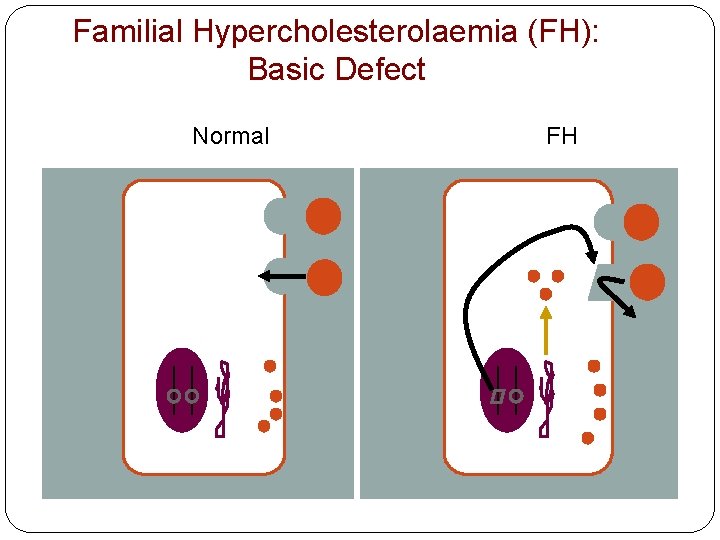
Familial Hypercholesterolaemia (FH): Basic Defect Normal FH
Salient Features of FH Inheritable, autosomal dominant disorder Usually due to mutations in LDL receptor gene that result in decreased clearance of LDL particles from plasma Other mutations include those in the Apo B and PCSK 9 genes Clinical manifestations include Severe hypercholesterolemia due to accumulation of plasma LDL May be accompanied by cholesterol deposition in tendons and skin (xanthomas) and in the eyes Evidence of CVD early in life
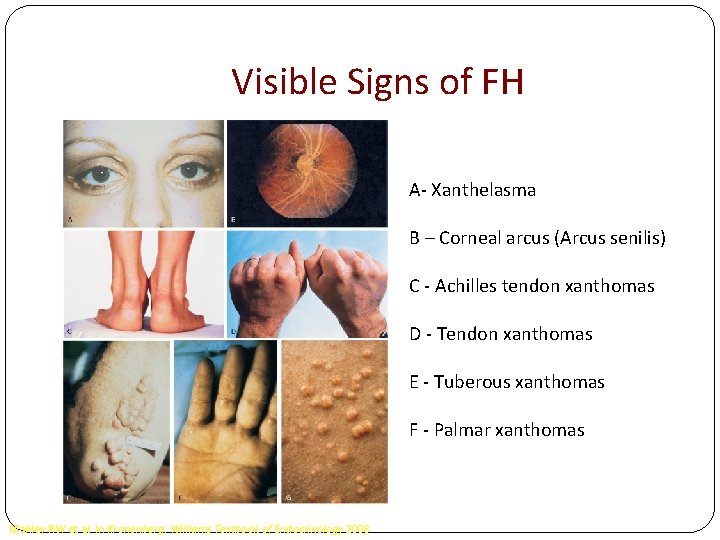
Visible Signs of FH A- Xanthelasma B – Corneal arcus (Arcus senilis) C - Achilles tendon xanthomas D - Tendon xanthomas E - Tuberous xanthomas F - Palmar xanthomas Mahley RW et al. In Kronenberg: Williams Textbook of Endocrinology 2008
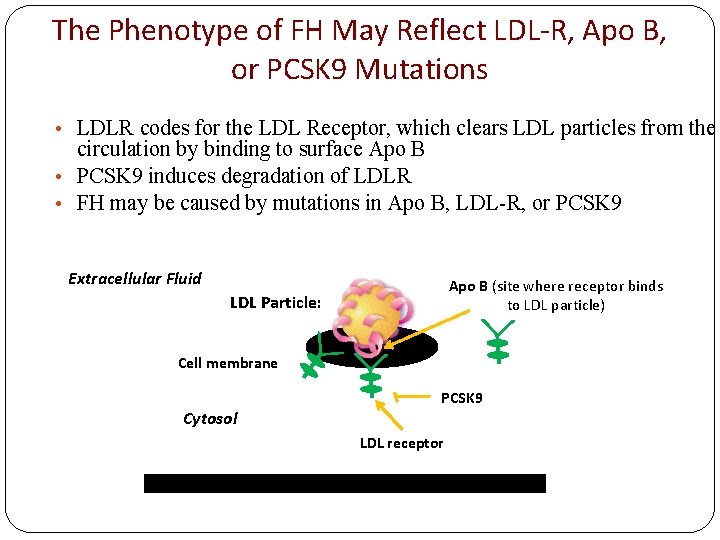
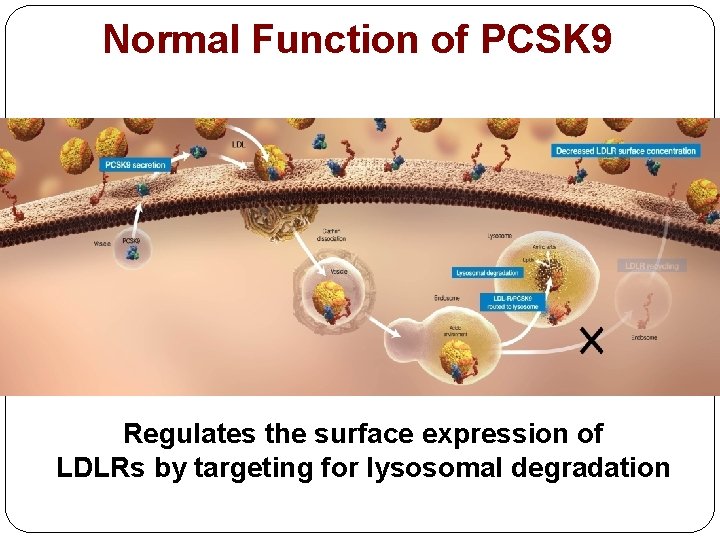
The Phenotype of FH May Reflect LDL-R, Apo B, or PCSK 9 Mutations • LDLR codes for the LDL Receptor, which clears LDL particles from the circulation by binding to surface Apo B • PCSK 9 induces degradation of LDLR • FH may be caused by mutations in Apo B, LDL-R, or PCSK 9 Extracellular Fluid Apo B (site where receptor binds to LDL particle) LDL Particle: Cell membrane PCSK 9 Cytosol LDL receptor
Normal Function of PCSK 9 Regulates the surface expression of LDLRs by targeting for lysosomal degradation
PFD Patient No 10 Normal function of PCSK 9 is degradation of LDL Receptors (LDLR). So its action leads to increased LDL-C as occurs in other forms of FH. Why mutation in the gene forming PCSK 9 leads to increased LDL-C? Can there be Hypocholesterolaemia in a patient with PCSK 9 mutation? Name ONE feature which differentiates FH from Familial Combined Hyperlipidaemia.
Patient no 71 A 19 year old male has strong family history of dyslipidaemia and Coronary Artery Disease. His biochemical investigations revealed: Cholesterol : 5. 4 mmol/L (208 mg/dl) Triglycerides : 3. 1 mmol/L (279 mg/dl) LDL Chol (measured): 2. 14 mmol/L (83 mg/dl) HDL Chol (measured): 1. 01 mmo/L (39 mg/dl) Apolipoprotein B: 3. 1 g/L (0. 7 – 1. 74) LDL-C / Apo B ratio: 0. 69 (>1. 4) a. b. Give TWO most important differential diagnosis Name the most probable sub-type of LDL particles present in this patient in greater excess. a. Familial Combined Hyperlipidaemia and Hyperapobetalipoproteinaemia b. Small dense LDL Ref No 6 Inherited disorders of LDL cholesterol metabolism www. uptodate. com © 2015
Familial Combined Hyperlipidaemia (FCHL) Metabolic disorder characterized by Increased in triglycerides and / or cholesterol levels in at least two members of the same family Intra-individual or intra-familial variability of lipid phenotype Increased risk of premature coronary heart disease
Metabolism of Lipoproteins in FCHL Overproduction of hepatically derived Apolipprotein B 100 associated with VLDL. LDL phenotype B (small, dense LDL particles) make it very strongly atherogenic Raised LDL C levels and Triglyceride levels Reduced HDL C LDL C / Apo B ratio < 1. 2 (Normal > 1. 4)
Variants of FCHL Hyperapobetalipoproteinemia Characterized by over production of Apo B Normal concentration of LDL C/Apo B ratio < 1. 2 (normal >1. 4) Lipoprotein Lipase (LPL) deficiency Characterized by increased triglycerides Confirmed by measuring LPL activity
Patient no 72 (Recent Updates) A 51 years old male has recently returned from United States. He is a known patient of Coronary Heart disease. He has shown you his recent Lipid tests from a state-of-the-art US lab to seek your opinion: Cholesterol: 274 mg/dl Triglycerides: 215 mg/dl LDL-C: 165 mg/dl HDL-C: 37 mg/dl Non-HDL-C: 237 mg/dl Lipoprotein – Associated Phospholipase A 2 (Lp-PLA 2) Activity: 576 nmol/min/m (< 284) a. What raised Lp-PLA 2 indicates in this patient? b. To which Lipoprotein this enzyme (Lp-PLA 2) is bound to in circulation? a. Lp PLA 2 is a marker of atherosclerosis b. Mostly LDL but also to HDL Ref No 10 Lipoprotein-associated phospholipase A 2 and risk of coronary disease, stroke, and mortality: Lancet 2010; 375: 1536– 44
Lipoprotein – Associated Phospholipase A 2 (Lp -PLA 2) This marker is now available in the labs of developed countries as a part of the risk assessment of Coronary Artery Disease It is implicated in many events leading to plaque formation and disruption Secondly it is claimed to be an link between oxidative modification of LDL and inflammatory response. Both activity and mass of this enzyme
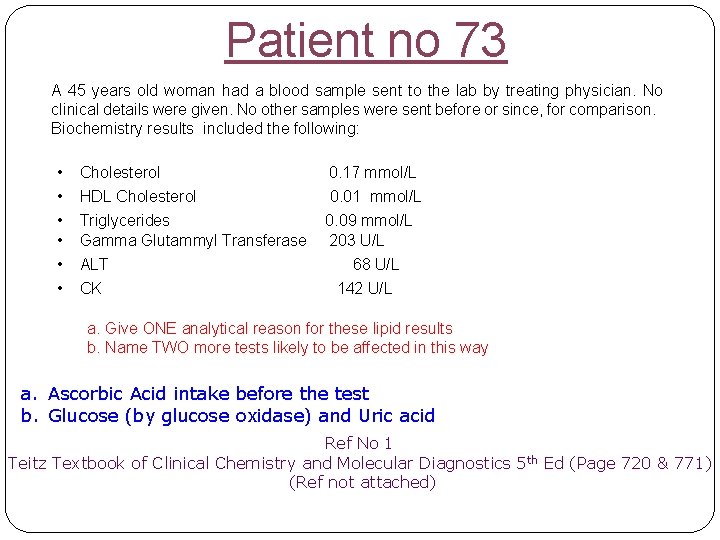
Patient no 73 A 45 years old woman had a blood sample sent to the lab by treating physician. No clinical details were given. No other samples were sent before or since, for comparison. Biochemistry results included the following: • • • Cholesterol HDL Cholesterol Triglycerides Gamma Glutammyl Transferase ALT CK 0. 17 mmol/L 0. 01 mmol/L 0. 09 mmol/L 203 U/L 68 U/L 142 U/L a. Give ONE analytical reason for these lipid results b. Name TWO more tests likely to be affected in this way a. Ascorbic Acid intake before the test b. Glucose (by glucose oxidase) and Uric acid Ref No 1 Teitz Textbook of Clinical Chemistry and Molecular Diagnostics 5 th Ed (Page 720 & 771) (Ref not attached)
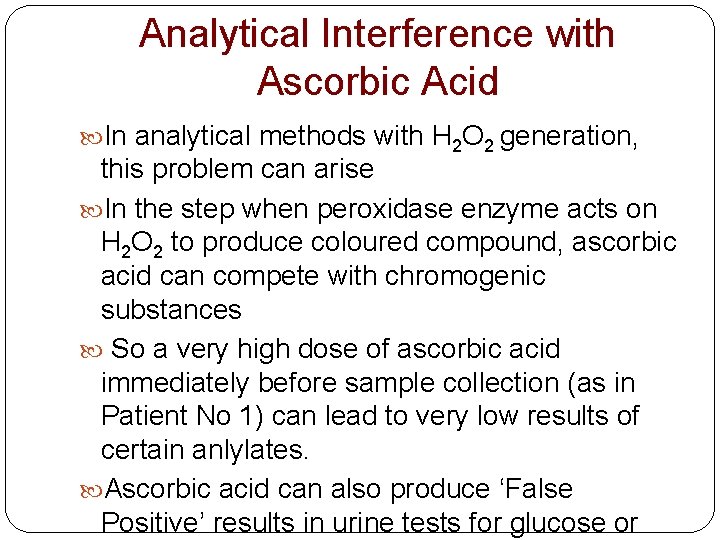
Analytical Interference with Ascorbic Acid In analytical methods with H 2 O 2 generation, this problem can arise In the step when peroxidase enzyme acts on H 2 O 2 to produce coloured compound, ascorbic acid can compete with chromogenic substances So a very high dose of ascorbic acid immediately before sample collection (as in Patient No 1) can lead to very low results of certain anlylates. Ascorbic acid can also produce ‘False Positive’ results in urine tests for glucose or