
Patient no 1 A 55 year old male
- Slides: 30
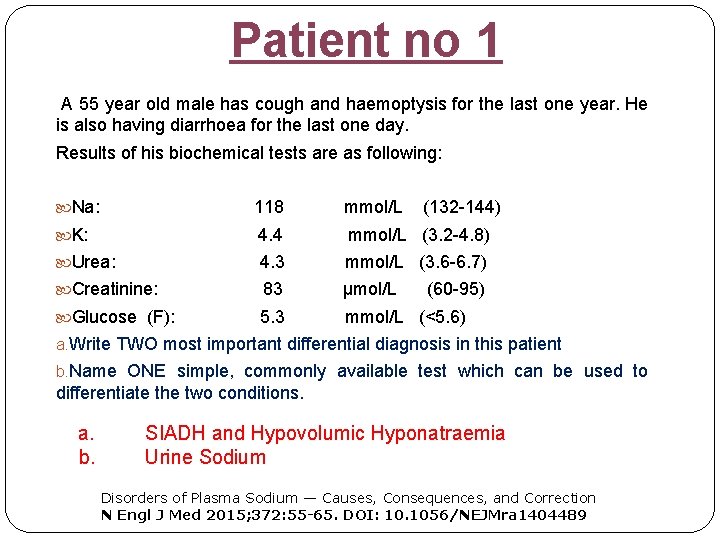
Patient no 1 A 55 year old male has cough and haemoptysis for the last one year. He is also having diarrhoea for the last one day. Results of his biochemical tests are as following: Na: 118 mmol/L (132 144) K: 4. 4 mmol/L (3. 2 4. 8) Urea: 4. 3 mmol/L (3. 6 6. 7) Creatinine: 83 µmol/L Glucose (F): 5. 3 mmol/L (<5. 6) (60 95) a. Write TWO most important differential diagnosis in this patient b. Name ONE simple, commonly available test which can be used to differentiate the two conditions. a. b. SIADH and Hypovolumic Hyponatraemia Urine Sodium Disorders of Plasma Sodium — Causes, Consequences, and Correction N Engl J Med 2015; 372: 55 -65. DOI: 10. 1056/NEJMra 1404489
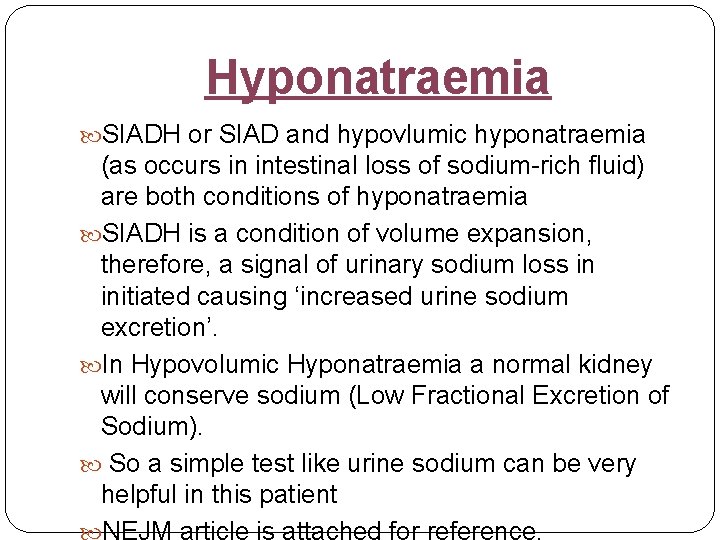
Hyponatraemia SIADH or SIAD and hypovlumic hyponatraemia (as occurs in intestinal loss of sodium rich fluid) are both conditions of hyponatraemia SIADH is a condition of volume expansion, therefore, a signal of urinary sodium loss in initiated causing ‘increased urine sodium excretion’. In Hypovolumic Hyponatraemia a normal kidney will conserve sodium (Low Fractional Excretion of Sodium). So a simple test like urine sodium can be very helpful in this patient
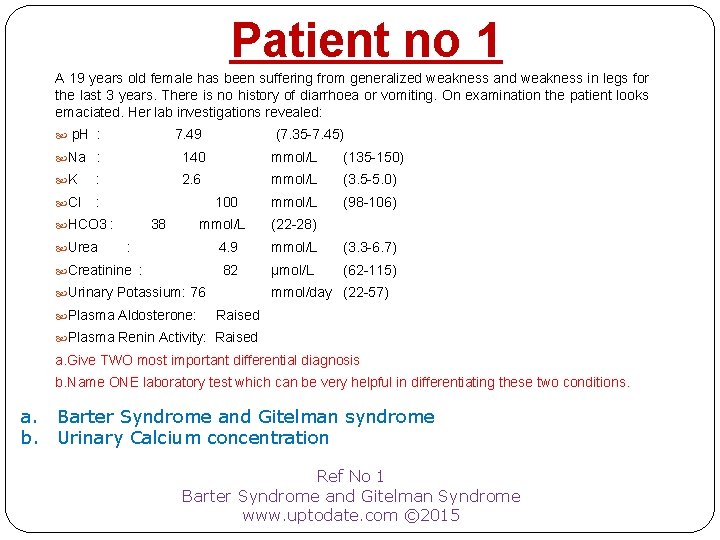
Patient no 1 A 19 years old female has been suffering from generalized weakness and weakness in legs for the last 3 years. There is no history of diarrhoea or vomiting. On examination the patient looks emaciated. Her lab investigations revealed: p. H : 7. 49 (7. 35 7. 45) Na : 140 mmol/L (135 150) K : 2. 6 mmol/L (3. 5 5. 0) Cl : mmol/L (98 106) 100 HCO 3 : Urea 38 mmol/L : Creatinine : 4. 9 mmol/L (3. 3 6. 7) 82 µmol/L (62 115) Urinary Potassium: 76 Plasma Aldosterone: (22 28) mmol/day (22 57) Raised Plasma Renin Activity: Raised a. Give TWO most important differential diagnosis b. Name ONE laboratory test which can be very helpful in differentiating these two conditions. a. Barter Syndrome and Gitelman syndrome b. Urinary Calcium concentration Ref No 1 Barter Syndrome and Gitelman Syndrome www. uptodate. com © 2015
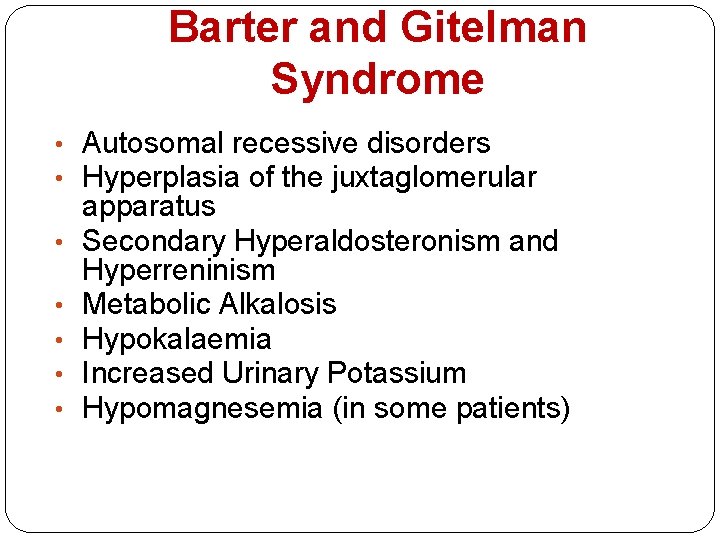
Barter and Gitelman Syndrome • Autosomal recessive disorders • Hyperplasia of the juxtaglomerular • • • apparatus Secondary Hyperaldosteronism and Hyperreninism Metabolic Alkalosis Hypokalaemia Increased Urinary Potassium Hypomagnesemia (in some patients)
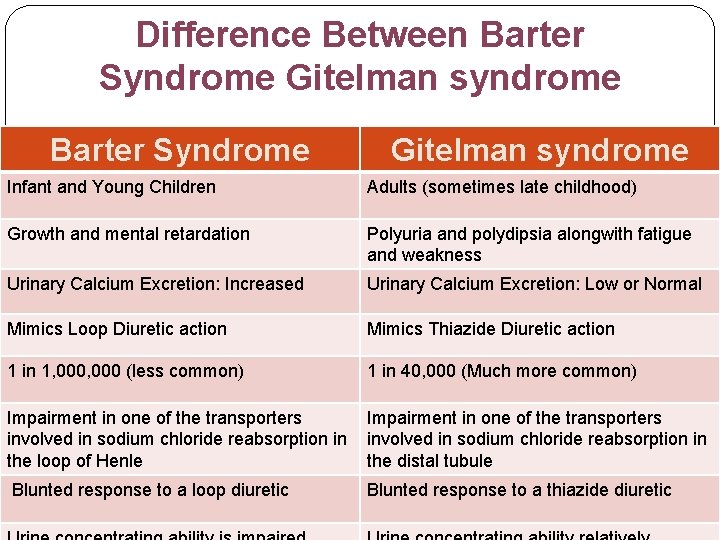
Difference Between Barter Syndrome Gitelman syndrome Infant and Young Children Adults (sometimes late childhood) Growth and mental retardation Polyuria and polydipsia alongwith fatigue and weakness Urinary Calcium Excretion: Increased Urinary Calcium Excretion: Low or Normal Mimics Loop Diuretic action Mimics Thiazide Diuretic action 1 in 1, 000 (less common) 1 in 40, 000 (Much more common) Impairment in one of the transporters involved in sodium chloride reabsorption in the loop of Henle Impairment in one of the transporters involved in sodium chloride reabsorption in the distal tubule Blunted response to a loop diuretic Blunted response to a thiazide diuretic
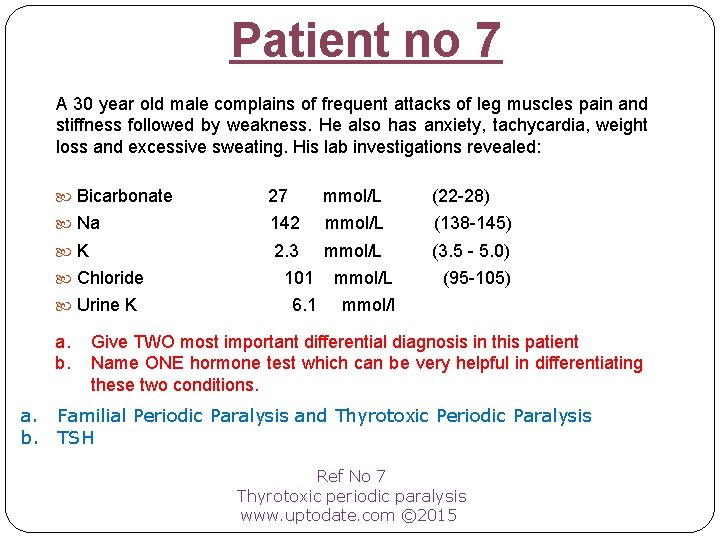
Patient no 7 A 30 year old male complains of frequent attacks of leg muscles pain and stiffness followed by weakness. He also has anxiety, tachycardia, weight loss and excessive sweating. His lab investigations revealed: Bicarbonate 27 mmol/L (22 28) Na 142 mmol/L (138 145) K 2. 3 mmol/L (3. 5 5. 0) Chloride 101 mmol/L Urine K 6. 1 mmol/l a. b. (95 105) Give TWO most important differential diagnosis in this patient Name ONE hormone test which can be very helpful in differentiating these two conditions. a. Familial Periodic Paralysis and Thyrotoxic Periodic Paralysis b. TSH Ref No 7 Thyrotoxic periodic paralysis www. uptodate. com © 2015
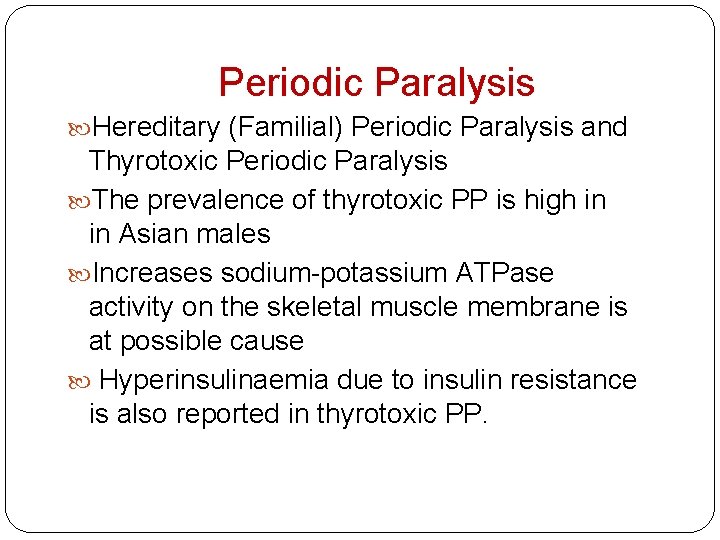
Periodic Paralysis Hereditary (Familial) Periodic Paralysis and Thyrotoxic Periodic Paralysis The prevalence of thyrotoxic PP is high in in Asian males Increases sodium potassium ATPase activity on the skeletal muscle membrane is at possible cause Hyperinsulinaemia due to insulin resistance is also reported in thyrotoxic PP.
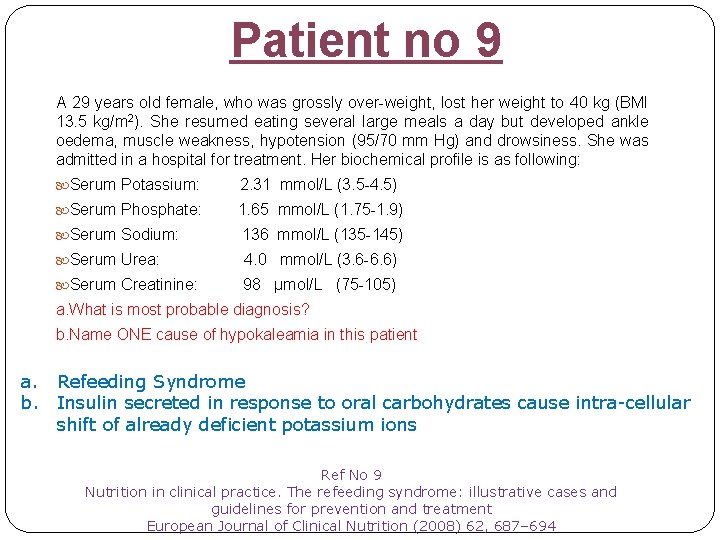
Patient no 9 A 29 years old female, who was grossly over weight, lost her weight to 40 kg (BMI 13. 5 kg/m 2). She resumed eating several large meals a day but developed ankle oedema, muscle weakness, hypotension (95/70 mm Hg) and drowsiness. She was admitted in a hospital for treatment. Her biochemical profile is as following: Serum Potassium: 2. 31 mmol/L (3. 5 4. 5) Serum Phosphate: 1. 65 mmol/L (1. 75 1. 9) Serum Sodium: 136 mmol/L (135 145) Serum Urea: 4. 0 mmol/L (3. 6 6. 6) Serum Creatinine: 98 μmol/L (75 105) a. What is most probable diagnosis? b. Name ONE cause of hypokaleamia in this patient a. Refeeding Syndrome b. Insulin secreted in response to oral carbohydrates cause intra-cellular shift of already deficient potassium ions Ref No 9 Nutrition in clinical practice. The refeeding syndrome: illustrative cases and guidelines for prevention and treatment European Journal of Clinical Nutrition (2008) 62, 687– 694
Refeeding Syndrome In a patient who fast or suffers mal nourishment due to any reason may suffer ‘Refeeding Syndrome’ when they are given diets rich in carbohydrates or intravenous glucose Insulin secretion in response to carbohydrates or glucose causes intra cellular shift of K , Mg and P. These electrolyte changes may be severe enough to be fatal
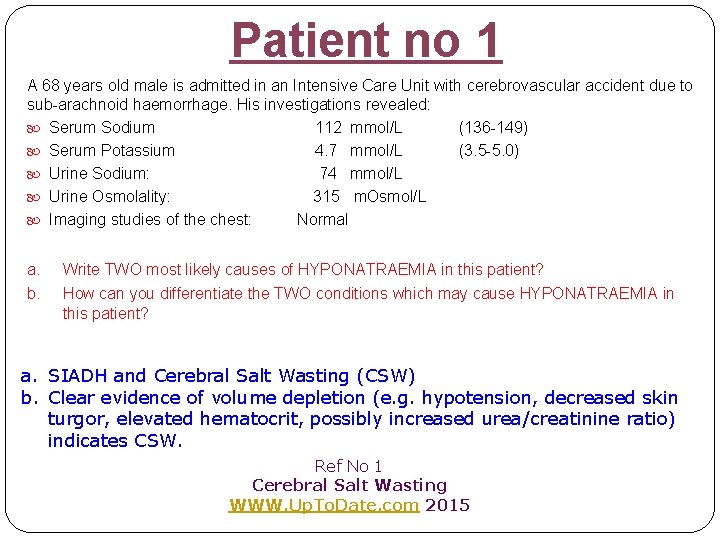
Patient no 1 A 68 years old male is admitted in an Intensive Care Unit with cerebrovascular accident due to sub arachnoid haemorrhage. His investigations revealed: Serum Sodium 112 mmol/L (136 149) Serum Potassium 4. 7 mmol/L (3. 5 5. 0) Urine Sodium: 74 mmol/L Urine Osmolality: 315 m. Osmol/L Imaging studies of the chest: Normal a. Write TWO most likely causes of HYPONATRAEMIA in this patient? b. How can you differentiate the TWO conditions which may cause HYPONATRAEMIA in this patient? a. SIADH and Cerebral Salt Wasting (CSW) b. Clear evidence of volume depletion (e. g. hypotension, decreased skin turgor, elevated hematocrit, possibly increased urea/creatinine ratio) indicates CSW. Ref No 1 Cerebral Salt Wasting WWW. Up. To. Date. com 2015
SIADH and CSW Both conditions present with hyponatraemia Both can occur in cerebrovascular diseases SIADH is much more commonly associated with CNS disorders as compared to CSW is probably due to impaired sympathetic release decreasing renal reabsorption of sodium and uric acid BNP has also been implicated as a causative factor for natriuresis
PFD Patient No 1 Why potassium remains normal in SIADH and CSW On replenishing isotonic fluids to patients of CSW and SIADH what happens to urine osmolality in these patients?
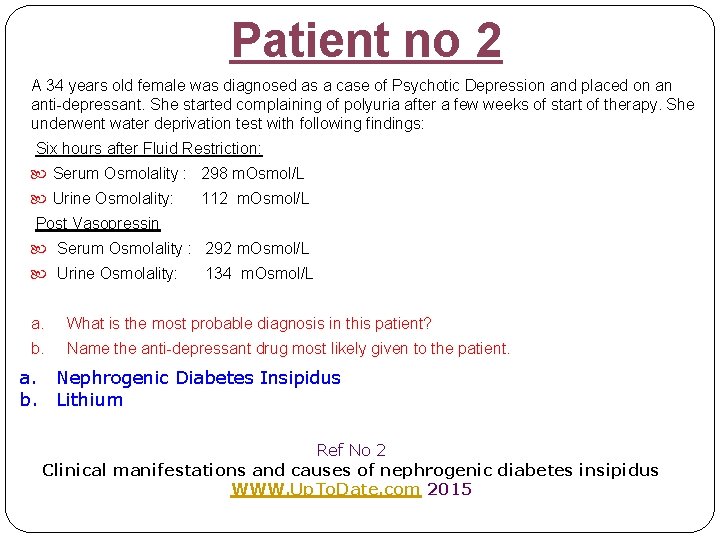
Patient no 2 A 34 years old female was diagnosed as a case of Psychotic Depression and placed on an anti depressant. She started complaining of polyuria after a few weeks of start of therapy. She underwent water deprivation test with following findings: Six hours after Fluid Restriction: Serum Osmolality : 298 m. Osmol/L Urine Osmolality: 112 m. Osmol/L Post Vasopressin Serum Osmolality : 292 m. Osmol/L Urine Osmolality: 134 m. Osmol/L a. What is the most probable diagnosis in this patient? b. Name the anti depressant drug most likely given to the patient. a. Nephrogenic Diabetes Insipidus b. Lithium Ref No 2 Clinical manifestations and causes of nephrogenic diabetes insipidus WWW. Up. To. Date. com 2015
Nephrogenic Diabetes Insipidus (NDI) NDI is either due to resistance to ADH at collecting tubules or due to defect in the Na. Cl transporter in the Loop of Henle Mild NDI is quite common especially in elderly Lithium toxicity is the most common cause of NDI in adults In children ‘Hereditary NDI’ is the most common cause due to mutations in the AVPR 2 gene, which encodes for a dysfunctional vasopressin V 2 receptor.
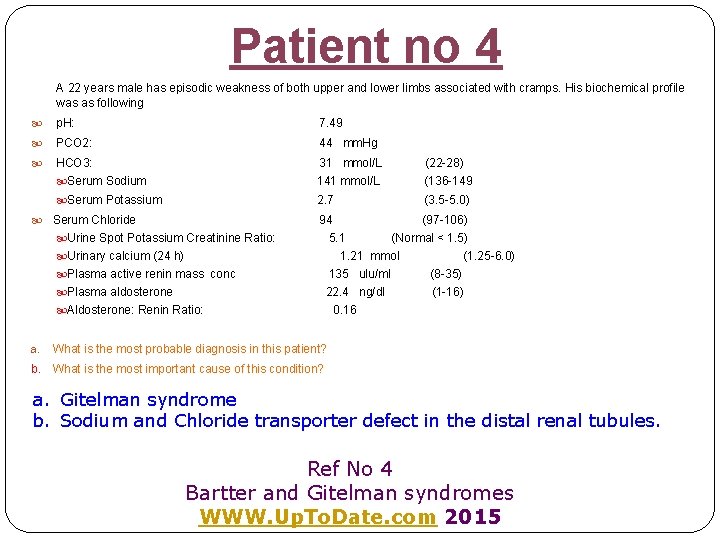
Patient no 4 A 22 years male has episodic weakness of both upper and lower limbs associated with cramps. His biochemical profile was as following p. H: 7. 49 PCO 2: 44 mm. Hg HCO 3: 31 mmol/L (22 28) Serum Sodium 141 mmol/L (136 149 Serum Potassium 2. 7 (3. 5 5. 0) 94 (97 106) Serum Chloride Urine Spot Potassium Creatinine Ratio: 5. 1 Urinary calcium (24 h) 1. 21 mmol (1. 25 6. 0) Plasma active renin mass conc 135 ulu/ml (8 35) Plasma aldosterone 22. 4 ng/dl (1 16) Aldosterone: Renin Ratio: a. (Normal < 1. 5) 0. 16 What is the most probable diagnosis in this patient? b. What is the most important cause of this condition? a. Gitelman syndrome b. Sodium and Chloride transporter defect in the distal renal tubules. Ref No 4 Bartter and Gitelman syndromes WWW. Up. To. Date. com 2015
Gitelman Syndrome (GS) GS is a recessive salt-losing tubulopathy of children/young adults due to a mutation of genes encoding the human Na. Cl cotransporters. There is a compensatory hypertrophy of JG Apparatus of the adrenals Increased secretion of Renin Increased Aldosterone secretion Sodium levels become normal
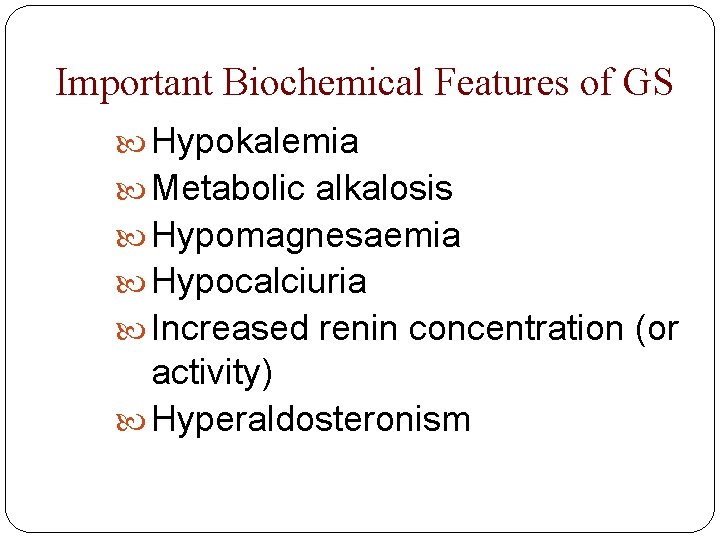
Important Biochemical Features of GS Hypokalemia Metabolic alkalosis Hypomagnesaemia Hypocalciuria Increased renin concentration (or activity) Hyperaldosteronism
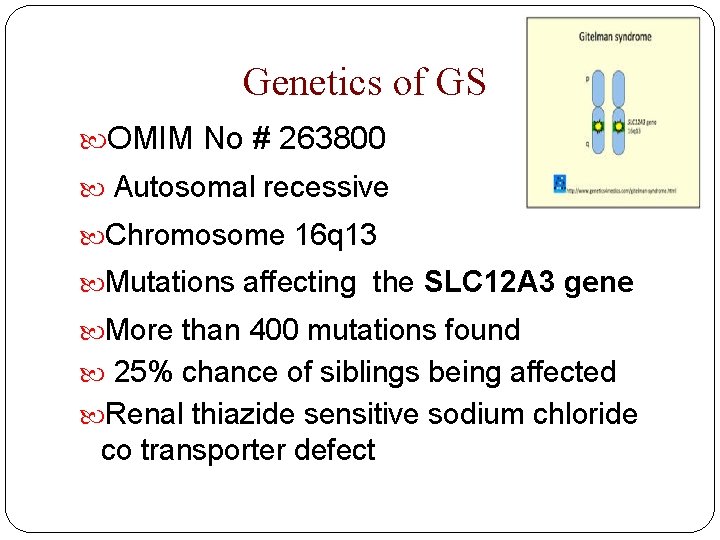
Genetics of GS OMIM No # 263800 Autosomal recessive Chromosome 16 q 13 Mutations affecting the SLC 12 A 3 gene More than 400 mutations found 25% chance of siblings being affected Renal thiazide sensitive sodium chloride co transporter defect
PFD Patient No 4 How can you differentiate Primary Hyperaldosterone from GS clinically and biochemically.
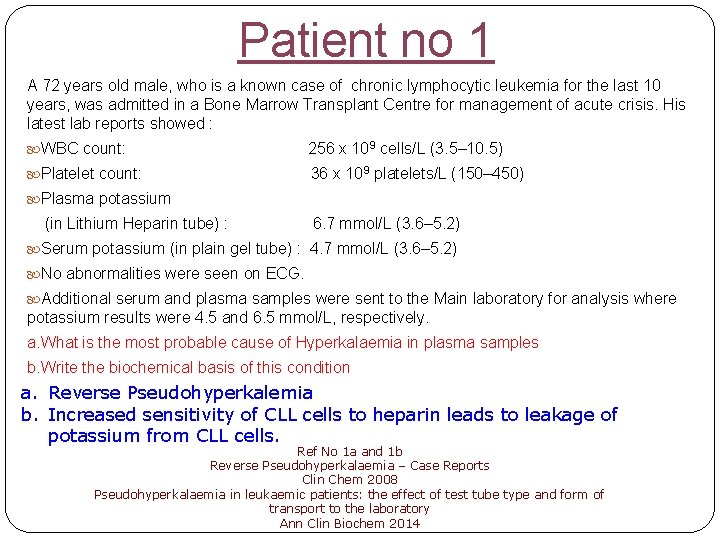
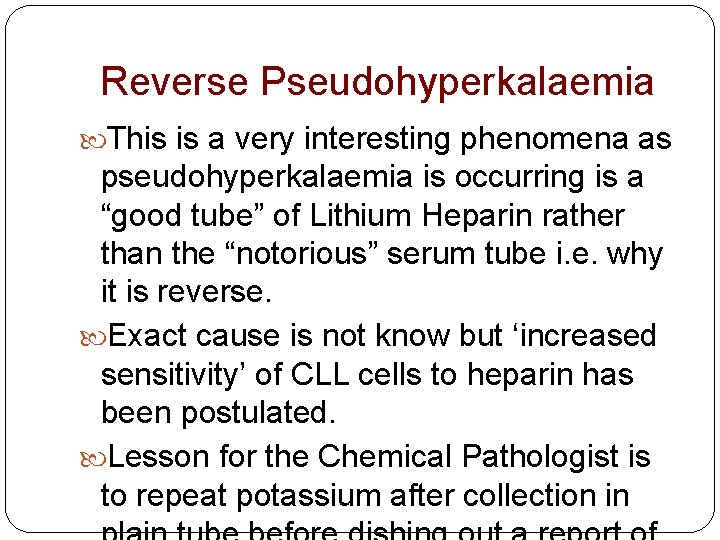
Patient no 1 A 72 years old male, who is a known case of chronic lymphocytic leukemia for the last 10 years, was admitted in a Bone Marrow Transplant Centre for management of acute crisis. His latest lab reports showed : WBC count: 256 x 10 9 cells/L (3. 5– 10. 5) Platelet count: 36 x 10 9 platelets/L (150– 450) Plasma potassium (in Lithium Heparin tube) : 6. 7 mmol/L (3. 6– 5. 2) Serum potassium (in plain gel tube) : 4. 7 mmol/L (3. 6– 5. 2) No abnormalities were seen on ECG. Additional serum and plasma samples were sent to the Main laboratory for analysis where potassium results were 4. 5 and 6. 5 mmol/L, respectively. a. What is the most probable cause of Hyperkalaemia in plasma samples b. Write the biochemical basis of this condition a. Reverse Pseudohyperkalemia b. Increased sensitivity of CLL cells to heparin leads to leakage of potassium from CLL cells. Ref No 1 a and 1 b Reverse Pseudohyperkalaemia – Case Reports Clin Chem 2008 Pseudohyperkalaemia in leukaemic patients: the effect of test tube type and form of transport to the laboratory Ann Clin Biochem 2014
Reverse Pseudohyperkalaemia This is a very interesting phenomena as pseudohyperkalaemia is occurring is a “good tube” of Lithium Heparin rather than the “notorious” serum tube i. e. why it is reverse. Exact cause is not know but ‘increased sensitivity’ of CLL cells to heparin has been postulated. Lesson for the Chemical Pathologist is to repeat potassium after collection in
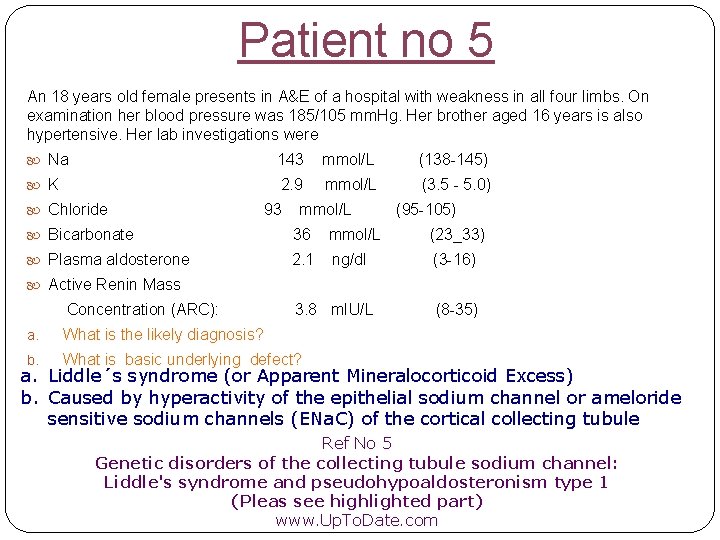
Patient no 5 An 18 years old female presents in A&E of a hospital with weakness in all four limbs. On examination her blood pressure was 185/105 mm. Hg. Her brother aged 16 years is also hypertensive. Her lab investigations were Na 143 mmol/L (138 145) K 2. 9 mmol/L (3. 5 5. 0) Chloride 93 mmol/L (95 105) Bicarbonate 36 mmol/L (23_33) Plasma aldosterone 2. 1 ng/dl (3 16) Active Renin Mass Concentration (ARC): 3. 8 m. IU/L a. What is the likely diagnosis? b. What is basic underlying defect? (8 35) a. Liddle´s syndrome (or Apparent Mineralocorticoid Excess) b. Caused by hyperactivity of the epithelial sodium channel or ameloride sensitive sodium channels (ENa. C) of the cortical collecting tubule Ref No 5 Genetic disorders of the collecting tubule sodium channel: Liddle's syndrome and pseudohypoaldosteronism type 1 (Pleas see highlighted part) www. Up. To. Date. com
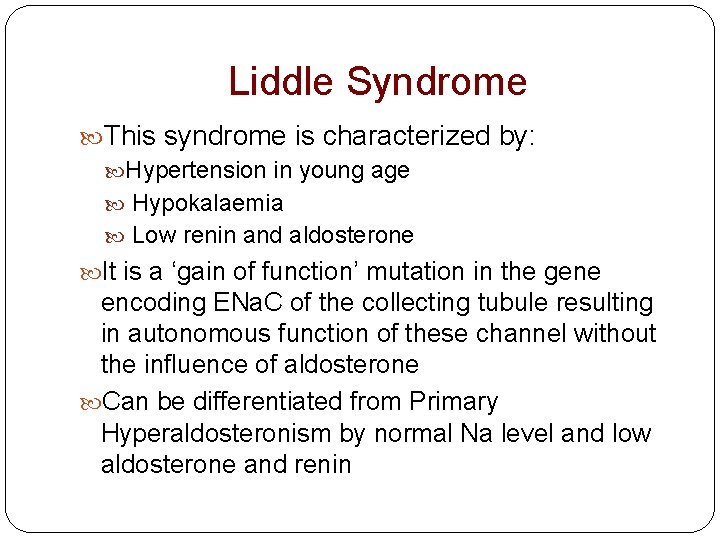
Liddle Syndrome This syndrome is characterized by: Hypertension in young age Hypokalaemia Low renin and aldosterone It is a ‘gain of function’ mutation in the gene encoding ENa. C of the collecting tubule resulting in autonomous function of these channel without the influence of aldosterone Can be differentiated from Primary Hyperaldosteronism by normal Na level and low aldosterone and renin
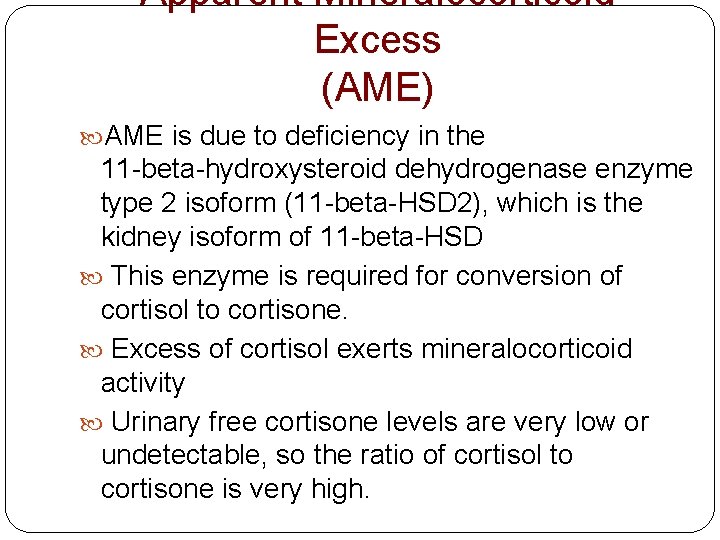
Apparent Mineralocorticoid Excess (AME) AME is due to deficiency in the 11 beta hydroxysteroid dehydrogenase enzyme type 2 isoform (11 beta HSD 2), which is the kidney isoform of 11 beta HSD This enzyme is required for conversion of cortisol to cortisone. Excess of cortisol exerts mineralocorticoid activity Urinary free cortisone levels are very low or undetectable, so the ratio of cortisol to cortisone is very high.
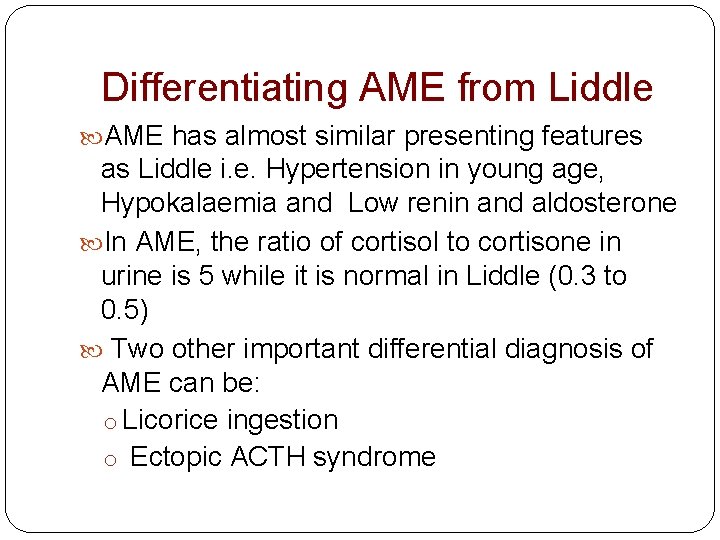
Differentiating AME from Liddle AME has almost similar presenting features as Liddle i. e. Hypertension in young age, Hypokalaemia and Low renin and aldosterone In AME, the ratio of cortisol to cortisone in urine is 5 while it is normal in Liddle (0. 3 to 0. 5) Two other important differential diagnosis of AME can be: o Licorice ingestion o Ectopic ACTH syndrome
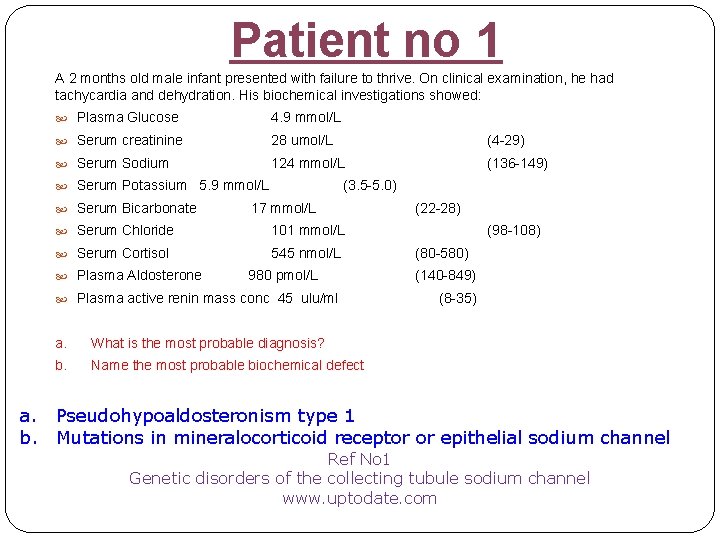
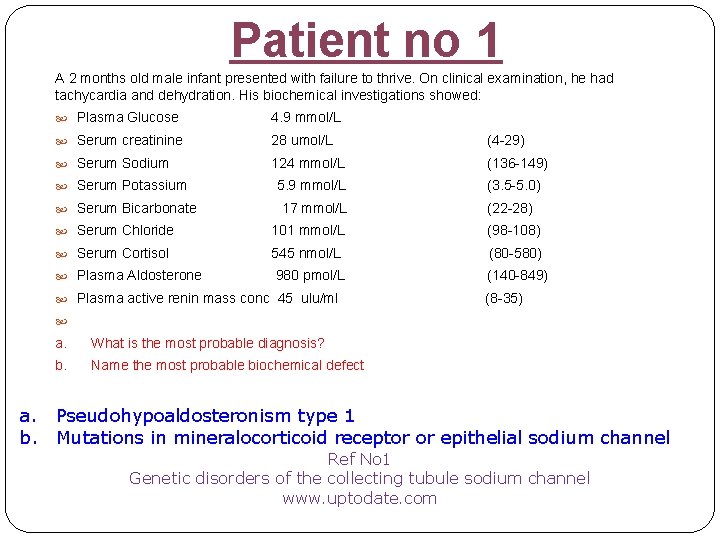
Patient no 1 A 2 months old male infant presented with failure to thrive. On clinical examination, he had tachycardia and dehydration. His biochemical investigations showed: Plasma Glucose 4. 9 mmol/L Serum creatinine 28 umol/L (4 29) Serum Sodium 124 mmol/L (136 149) Serum Potassium 5. 9 mmol/L Serum Bicarbonate (3. 5 5. 0) 17 mmol/L Serum Chloride 101 mmol/L Serum Cortisol 545 nmol/L Plasma Aldosterone 980 pmol/L Plasma active renin mass conc 45 ulu/ml a. What is the most probable diagnosis? b. Name the most probable biochemical defect (22 28) (98 108) (80 580) (140 849) (8 35) a. Pseudohypoaldosteronism type 1 b. Mutations in mineralocorticoid receptor or epithelial sodium channel Ref No 1 Genetic disorders of the collecting tubule sodium channel www. uptodate. com
Patient no 1 A 2 months old male infant presented with failure to thrive. On clinical examination, he had tachycardia and dehydration. His biochemical investigations showed: Plasma Glucose 4. 9 mmol/L Serum creatinine 28 umol/L (4 29) Serum Sodium 124 mmol/L (136 149) 5. 9 mmol/L (3. 5 5. 0) 17 mmol/L (22 28) Serum Potassium Serum Bicarbonate Serum Chloride 101 mmol/L (98 108) Serum Cortisol 545 nmol/L (80 580) Plasma Aldosterone 980 pmol/L Plasma active renin mass conc 45 ulu/ml (140 849) (8 35) a. What is the most probable diagnosis? b. Name the most probable biochemical defect a. Pseudohypoaldosteronism type 1 b. Mutations in mineralocorticoid receptor or epithelial sodium channel Ref No 1 Genetic disorders of the collecting tubule sodium channel www. uptodate. com
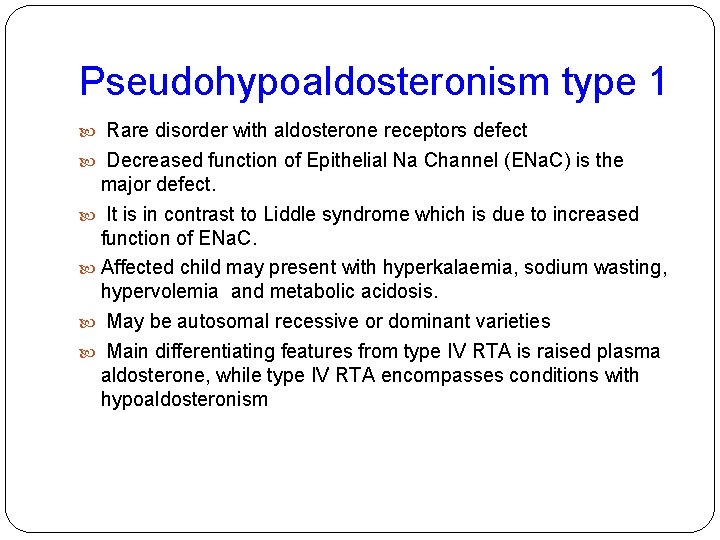
Pseudohypoaldosteronism type 1 Rare disorder with aldosterone receptors defect Decreased function of Epithelial Na Channel (ENa. C) is the major defect. It is in contrast to Liddle syndrome which is due to increased function of ENa. C. Affected child may present with hyperkalaemia, sodium wasting, hypervolemia and metabolic acidosis. May be autosomal recessive or dominant varieties Main differentiating features from type IV RTA is raised plasma aldosterone, while type IV RTA encompasses conditions with hypoaldosteronism
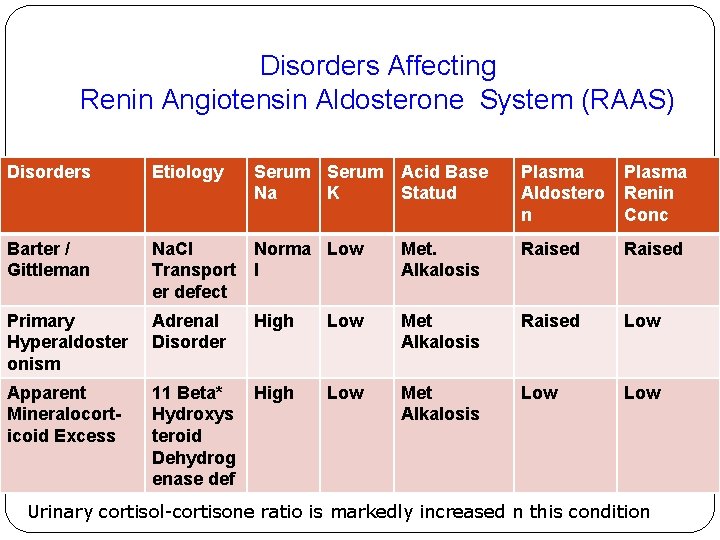
Disorders Affecting Renin Angiotensin Aldosterone System (RAAS) Disorders Etiology Serum Acid Base Na K Statud Plasma Aldostero n Plasma Renin Conc Barter / Gittleman Na. Cl Transport er defect Norma Low l Met. Alkalosis Raised Primary Hyperaldoster onism Adrenal Disorder High Low Met Alkalosis Raised Low Apparent Mineralocorticoid Excess 11 Beta* Hydroxys teroid Dehydrog enase def High Low Met Alkalosis Low Urinary cortisol-cortisone ratio is markedly increased n this condition
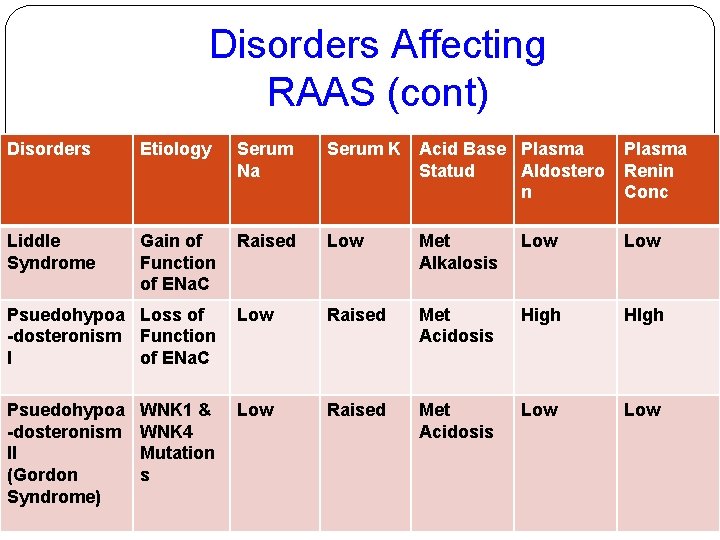
Disorders Affecting RAAS (cont) Disorders Etiology Serum Na Serum K Acid Base Plasma Statud Aldostero n Plasma Renin Conc Liddle Syndrome Gain of Function of ENa. C Raised Low Met Alkalosis Low Psuedohypoa Loss of -dosteronism Function I of ENa. C Low Raised Met Acidosis High HIgh Psuedohypoa -dosteronism II (Gordon Syndrome) Low Raised Met Acidosis Low WNK 1 & WNK 4 Mutation s