
Patient Navigation Transitions of Care Cardiology Objectives Statistics
Patient Navigation Transitions of Care: Cardiology

Objectives • Statistics and etiology of heart disease • How to provide education and the treatment plan for heart disease • Describe the navigators role in client care • Explain a navigator’s role in collaborating with the health care team using an interdisciplinary approach • Discuss the transitions of care continuum • Describe the difference in navigating in an inpatient setting and transitioning to an outpatient setting
Statistics 2018 • Heart Disease remains the No. 1 cause of death in the US • Cardiovascular disease, listed as the underlying cause of death, accounts for nearly 836, 546 deaths in the US This Photo by Unknown Author is licensed under CC BY-SA • About 2, 300 Americans die of cardiovascular disease each day, an average of 1 death every 38 seconds
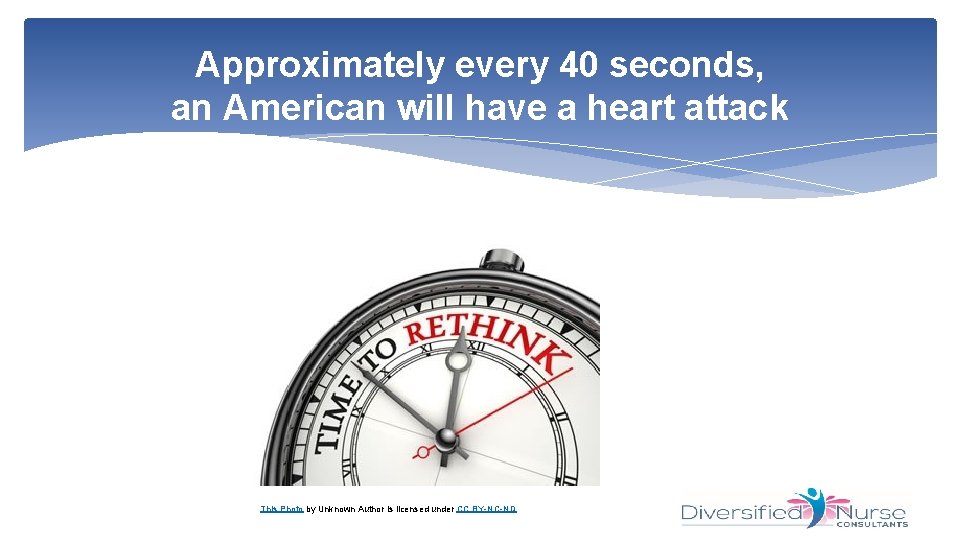
Approximately every 40 seconds, an American will have a heart attack This Photo by Unknown Author is licensed under CC BY-NC-ND
Cardiovascular Disease • Direct and indirect costs of total cardiovascular diseases and stroke are estimated to total more than $329. 7 billion; that includes both health expenditures and lost productivity. • Between 2013 and 2030, medical costs of Coronary Heart Disease are projected to increase by about 100 percent.
Stroke • Someone in the US has a stroke about once every 40 seconds • Each year, about 795, 000 people experience a new or recurrent stroke. Approximately 610, 000 of these are first attacks, and 185, 000 are recurrent attacks • Stroke is a leading cause of serious long-term disability in the US
High Blood Pressure (hypertension) • 2017 Hypertension Clinical Guidelines now defines high blood pressure to be anyone with a systolic blood pressure (SBP) ≥ 130 mm Hg or diastolic blood pressure (DBP) ≥ 80 mm Hg. • Projections show that by 2035, the total direct costs of High Blood Pressure could increase to an estimated $220. 9 billion • It is called the “silent killer” because it often has no warning signs or symptoms
High blood pressure is the single most important treatable risk factor for stroke!
It’s not just adults… The Centers for Disease Control report, 800, 000 youths, aged 12 -19, are now considered to have hypertension
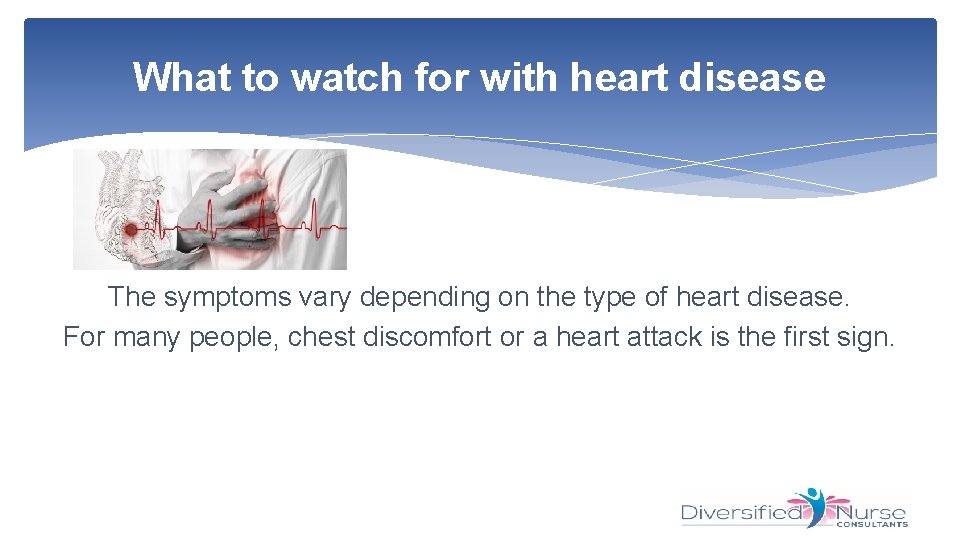
What to watch for with heart disease The symptoms vary depending on the type of heart disease. For many people, chest discomfort or a heart attack is the first sign.
Heart Attack Someone having a heart attack may experience several symptoms, including: • Chest pain or discomfort that doesn’t go away after a few minutes. • Pain or discomfort in the jaw, neck, or back. • Weakness, light-headedness, nausea (feeling sick to your stomach), or a cold sweat. • Pain or discomfort in the arms or shoulder. • Shortness of breath.
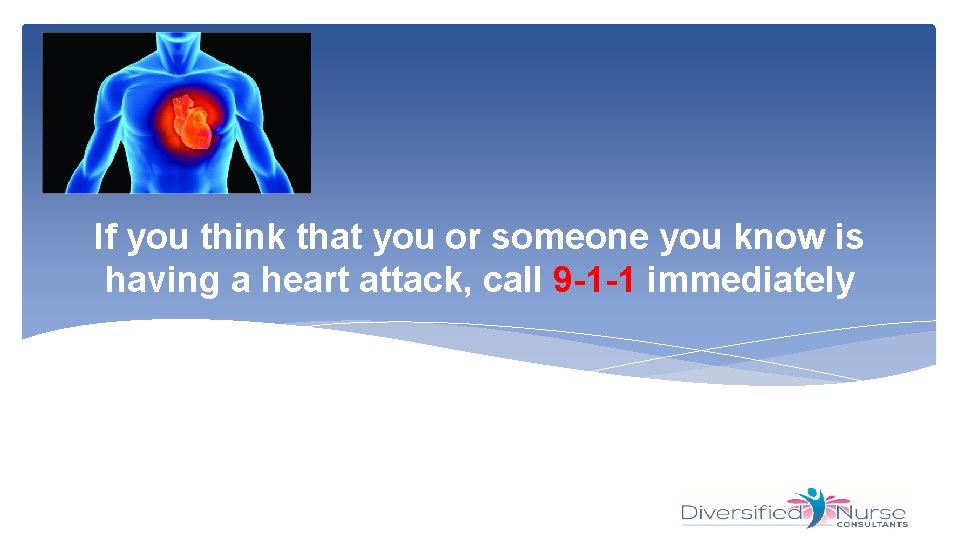
If you think that you or someone you know is having a heart attack, call 9 -1 -1 immediately
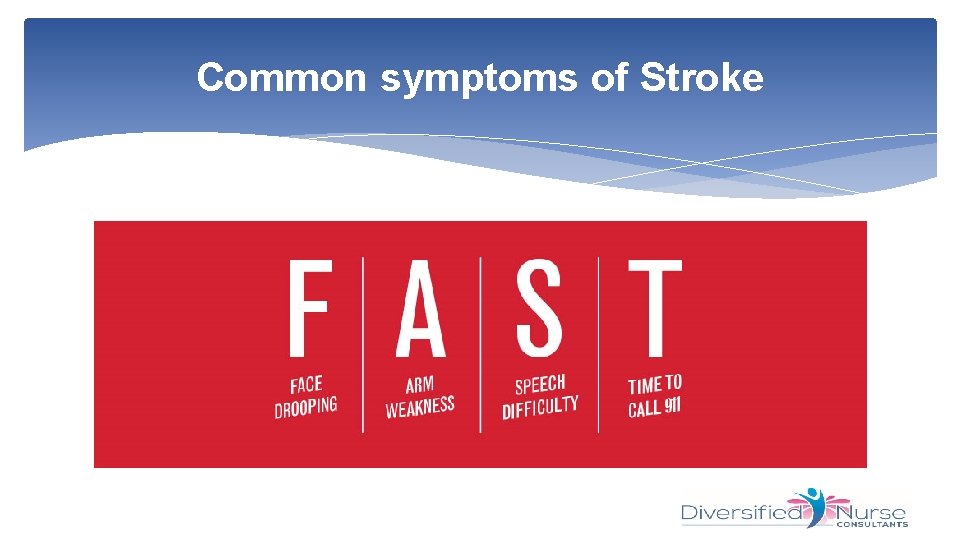
Common symptoms of Stroke
Additional symptoms of a stroke If someone shows any of these symptoms, immediately call 9 -1 -1 • Sudden NUMBNESS or weakness • Sudden TROUBLE WALKING, of face, arm, or leg, especially on dizziness, loss of balance or one side of the body coordination • Sudden CONFUSION, trouble • Sudden SEVERE HEADACHE with speaking or understanding speech no known cause • Sudden TROUBLE SEEING in one or both eyes • Sudden onset double vision or problems with your vision
Common symptoms of Heart Failure • Shortness of breath especially during daily activities. • Having trouble breathing when lying down. • Generally feeling tired, weak, or anxious. • Weight gain with swelling in the feet, legs, ankles, or stomach. • Persistent cough or coughing that produces white or pink blood-tinged mucus. • Confusion, impaired thinking.
Treatment: Healthy Living The common treatment of ALL chronic conditions remain the same… • Healthy weight • Healthy eating • Exercising • Lowering blood pressure, blood sugar, & cholesterol • No smoking • Limiting alcohol
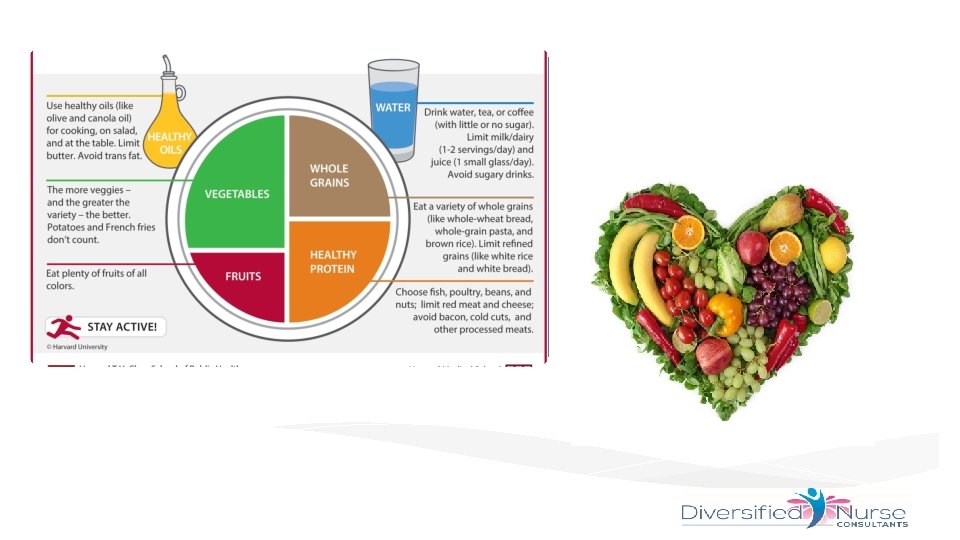

Sounds simple right…?
Healthy eating emphasizes: Eat Limit • a variety of fruits and vegetables • whole grains • low-fat dairy products • skinless poultry and fish • nuts and legumes • non-tropical vegetable oils • • • trans fats sodium red meat sweets sweetened beverages alcohol
Planning is Key! • Sit down and map out meals that include the family’s hearthealthy favorites. Update a list with new recipe ideas. • Use the weekend to make menus. • If working during the week, cook over the weekend and store leftovers in the fridge or freezer. • Cut up vegetables and fruits and keep them handy as a healthy snack.
Other ideas… • Shop sales, clip coupons and buy fruits and vegetables in season. Skip the ready-made foods. • Replace high-calorie or high-fat favorites with nutrition-rich ones one at a time. • Remember that there is more than one way to shop for healthy produce. Buying local at a farmer’s market is one option that can help. • Make healthy snacks-it’s healthier and cheaper! • Involve the whole family in mealtime. Let the kids be chef for a day, and assign each family member to a particular meal.
Add Activity Recommendation from the AHA • Regular physical activity can • Increase the amount and help maintain, keep off or help intensity of your physical activity lose weight to match the number of calories taken in. • Aim for at least 150 minutes of moderate physical activity or 75 • To lower Blood Pressure and minutes of vigorous physical Cholesterol an average of 40 activity – or an equal minutes of moderate- to vigorous combination of both – each week. -intensity aerobic activity 3 or 4 times per week
Fitness for older adults: Always check with your physician before starting • Participating in a balanced fitness program contributes to well-being at every age — and regular exercise is vital for older adults. • Regular exercise can reduce the risk of hardened arteries, heart attack, and stroke. • Focus on endurance, strength, balance, & flexibility. • Start slowly and build up gradually.
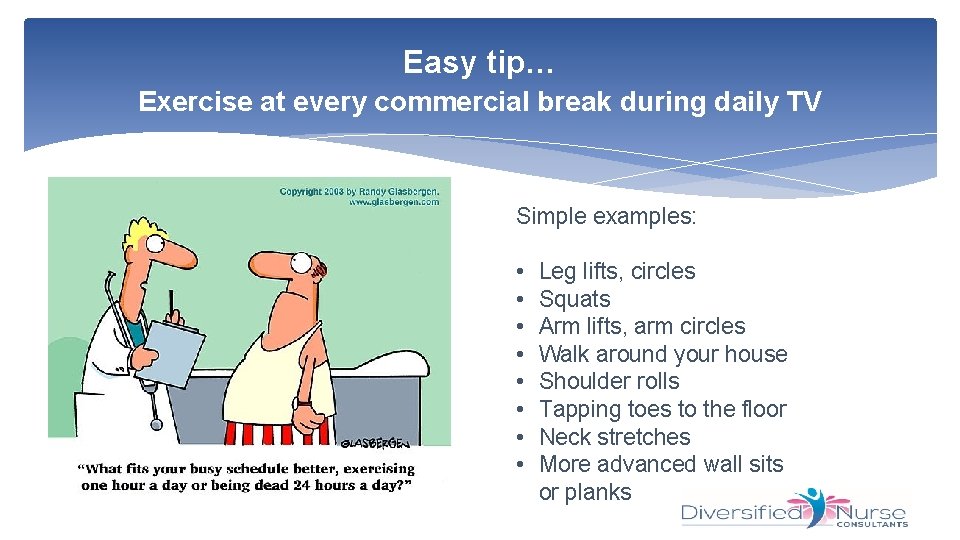
Easy tip… Exercise at every commercial break during daily TV Simple examples: • • Leg lifts, circles Squats Arm lifts, arm circles Walk around your house Shoulder rolls Tapping toes to the floor Neck stretches More advanced wall sits or planks
Limit Alcohol • • If you drink alcohol, do so in moderation. An average of one to two drinks per day for men and one drink per day for women. (A drink is one 12 oz. beer, 4 oz. of wine, 1. 5 oz. of 80 -proof spirits, or 1 oz. of 100 -proof spirits. ) Drinking too much alcohol can raise the levels of some fats in the blood (triglycerides). It can also lead to high blood pressure, heart failure and an increased calorie intake. Other serious problems include fetal alcohol syndrome, cardiomyopathy, cardiac arrhythmia and sudden cardiac death.
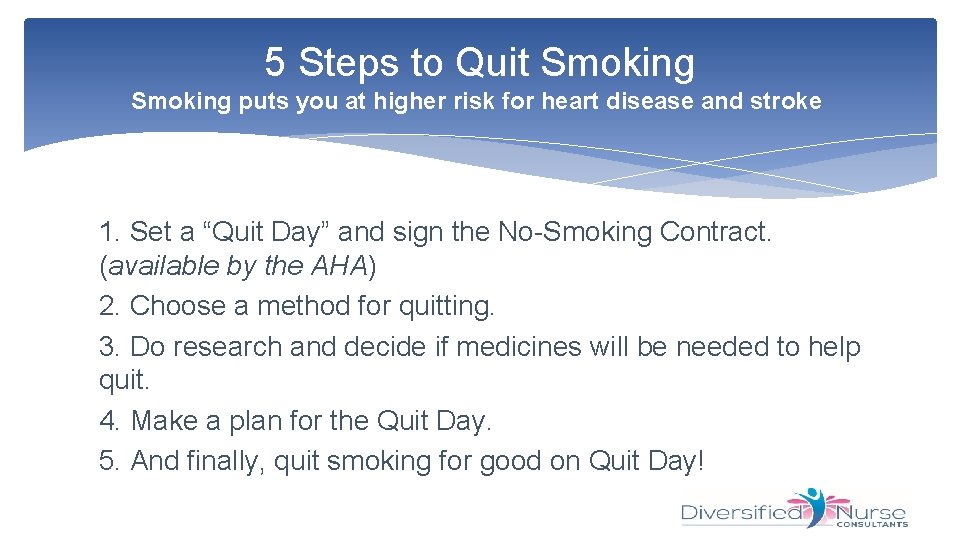
5 Steps to Quit Smoking puts you at higher risk for heart disease and stroke 1. Set a “Quit Day” and sign the No-Smoking Contract. (available by the AHA) 2. Choose a method for quitting. 3. Do research and decide if medicines will be needed to help quit. 4. Make a plan for the Quit Day. 5. And finally, quit smoking for good on Quit Day!
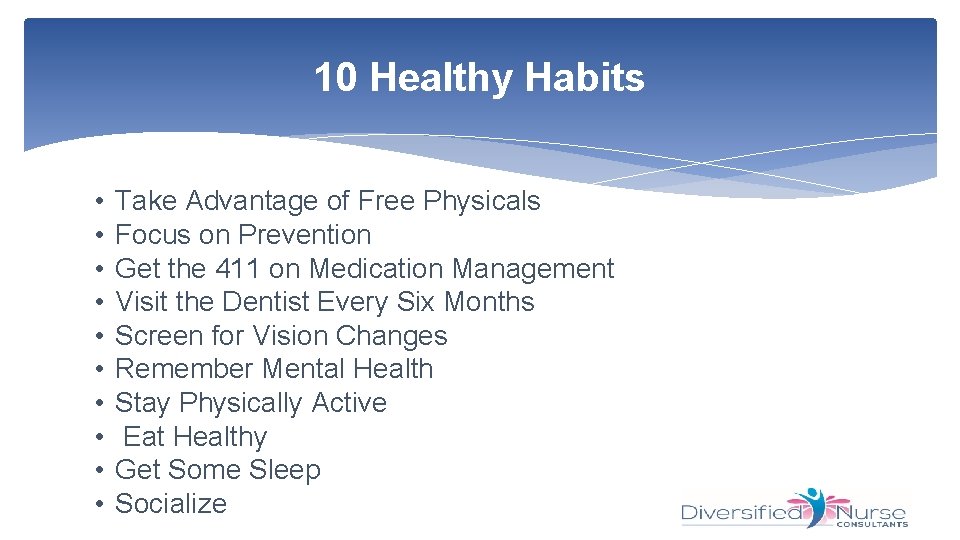
10 Healthy Habits • • • Take Advantage of Free Physicals Focus on Prevention Get the 411 on Medication Management Visit the Dentist Every Six Months Screen for Vision Changes Remember Mental Health Stay Physically Active Eat Healthy Get Some Sleep Socialize
Be the support! Healthy living is a lifestyle change it takes hard work, dedication, patience, practice, and lots of support!
How do you help?

Educate about treatment options…
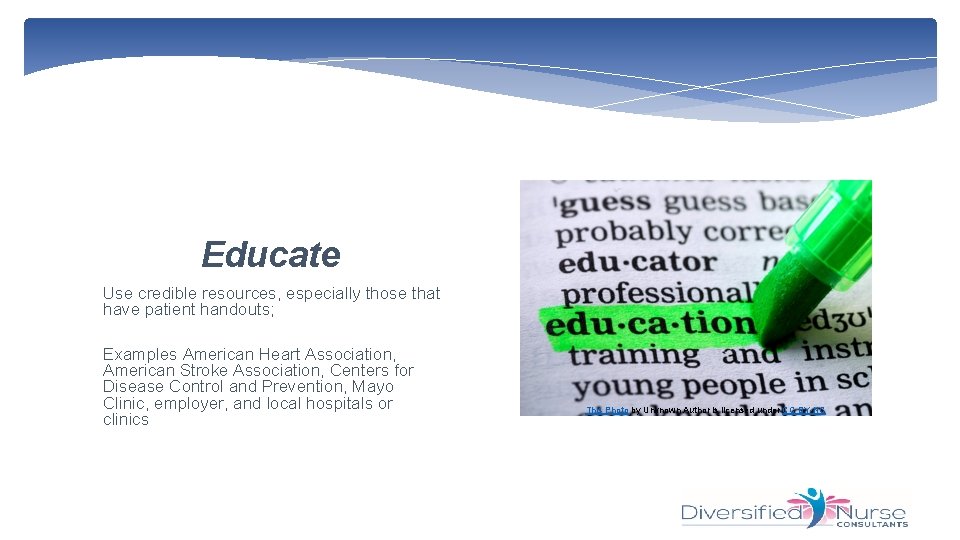
Educate Use credible resources, especially those that have patient handouts; Examples American Heart Association, American Stroke Association, Centers for Disease Control and Prevention, Mayo Clinic, employer, and local hospitals or clinics This Photo by Unknown Author is licensed under CC BY-NC

The Role of an Advocate Advocacy in all its forms seeks to ensure that people, particularly those who are most vulnerable in society, are able to: • Have their voice heard on issues that are important to them. • Defend and safeguard their rights. • Have their views and wishes genuinely considered when decisions are being made about their lives.

Be an Accountability. Partner


Working as a team Interdisciplinary/Interprofessional teams • Care is best provided by interprofessional teams where work is role-based, not task-based, and the team must be empowered to create effective approaches for delivering care. • The team will address the unmet needs identified by the patients and their care givers/families. • The most common needs are • • Care management and coordination Social and psychosocial support Financial support and counseling Disease specific and nutritional support and education
Who’s Who on the Health Care Team In the acute care setting everyone is more readily available. The team may consist of: After discharge/depends on the company and program, more challenging getting answers. DNC team example: • • • • • Nurse Discharge planner MD/NP Clinical nurse specialist Patient navigator (if available) Dietician Therapies (OT/PT/ST) Pharmacy Social work Respiratory therapy Care manager Nurse Social work Psychology MD Pharmacy CMA (Care manager assistant/CHW) if they ae involved with the client • Therapy if they are involved with the client
Be the greatest part of the Transition • Transitional care refers to a collection of services aimed at ensuring optimal communication and coordination of services to provide continuity of safe, timely, high-quality care during transitions. • Optimal management of care transitions includes patient and family education, coordination and arrangement of care in the post-acute care setting, and aiding communication among healthcare professionals involved in the patient’s care transition.
Your Role on the Team • Meet the client in their home to help assess for any other health risks • Work from the team’s plan of care • Get input on the type of education to help assist the client with chronic conditions self-management • Provide social support and care coordination to the client • Engage, empower, and coach the client with follow through with their plan (i. e. . healthy life style change, PCP visits, prevention services) • Ask for assistance if needed when setting up services • Report client/family questions or concerns • Report any medical or psychosocial changes
How to be Effective In general the patient navigator or the community health worker will have the most contact and usually the closest relationship with the clients, the caregivers, and the families.
Be Effective • Serve as the eyes and ears of the team • Serve as a bridge between the communities and the health care and social service systems. • Be in a better position to understand help people overcome the barriers to accessing care and maintaining good health. • Provide culturally competent and language-accessible health education, care coordination, and patient and caregiver support.
Summary • Important takeaway, no matter what the chronic condition, the treatment is the same • You are an important part of the next phase of healthcare, the team approach • You can and will make a difference being an educator, advocate, accountability partner, and the community liason for every client you touch!
“Alone we can do so little; together we can do so much. " – Helen Keller "You need to be aware of what others are doing, applaud their efforts, acknowledge their successes, and encourage them in their pursuits. When we all help one another, everybody wins. " – Jim Stovall
References • Partnership for Solutions. Johns Hopkins University. Chronic conditions: making the case for ongoing care. Baltimore, MD: Johns Hopkins University; 2002. Wenger NS, Young RT. Quality indicators for continuity and coordination of care in vulnerable elders. J Am Geriatr Soc. 2007; 55 (Suppl 2): S 285–S 292. [Pub. Med] • Weaver FM, et al. Patients’ and caregivers’ transition from hospital to home: needs and recommendations. Home Health Care Serv Q. 1998; 17(3): 27– 48. [Pub. Med] • https: //professional. heart. org/professional/Science. News/UCM_496965_2017 Hypertension-Clinical-Guidelines. jsp • https: //healthmetrics. heart. org/wp-content/uploads/2018/02/At-A-Glance-Heart. Disease-and-Stroke-Statistics-2018. pdf • https: //www. cdc. gov/heartdisease/docs/Consumer. Ed_Heart. Disease. pdf • https: //www. cdc. gov/dhdsp/data_statistics/fact_sheets/fs_heart_failure. htm
• https: //www. heart. org/en/healthy-living/healthy-eating • http: //www. heart. org/en/healthy-living/healthy-eating/eat-smart/nutritionbasics/aha-diet-and-lifestyle-recommendations • https: //www. heart. org/en/healthy-living/fitness-basics/aha-recs-forphysical-activity-in-adults • http: //www. aplaceformom. com/blog/11 -5 -14 -healthy-habits-for-seniors/ • http: //www. heart. org/en/healthy-living/healthy-eating/eat-smart/nutritionbasics/alcohol-and-heart-health • http: //www. heart. org/en/healthy-living/healthy-lifestyle/quit-smokingtobacco/5 -steps-to-quit-smoking • http: //keepitsacred. itcmi. org/wp-content/uploads/sites/5/2017/12/s 10. pdf
• https: //www. aha. org/system/files/201801/15 carecontinuum. pdf • https: //www. health. ny. gov/professionals/patients/discharge _planning/discharge_transition. htm • https: //www. studentdoctor. net/2007/10/28/whos-who-on-the -health-care-team-an-interdisciplinary-approach/ • https: //www. americannursetoday. com/transitional-care-canreduce-hospital-readmissions/
- Slides: 47