
Patient Identification systems Suzie Ann Richards Applications of



- Slides: 19
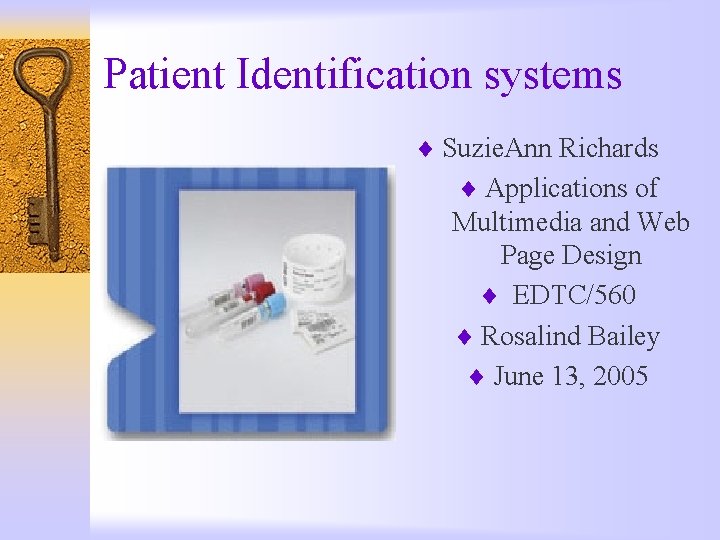
Patient Identification systems ¨ Suzie. Ann Richards ¨ Applications of Multimedia and Web Page Design ¨ EDTC/560 ¨ Rosalind Bailey ¨ June 13, 2005
Healthcare needs ¨ Hospital visits have increased nationwide. ¨ There is a shortage of registered nurses. ¨ There is a shortage of experience and licensed technicians.
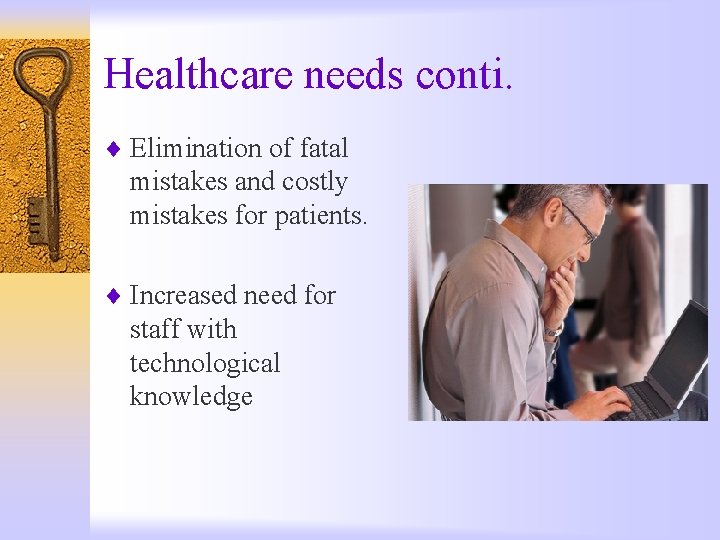
Healthcare needs conti. ¨ Elimination of fatal mistakes and costly mistakes for patients. ¨ Increased need for staff with technological knowledge
Technological Need ¨ A system that can be used to identify patient simultaneously while pulling the ordered procedure from the Hospital Information System (HIS), Laboratory information System (LIS) and eventually Radiology Information System (RIS).
THE SOLUTION!!!!!! What to do?
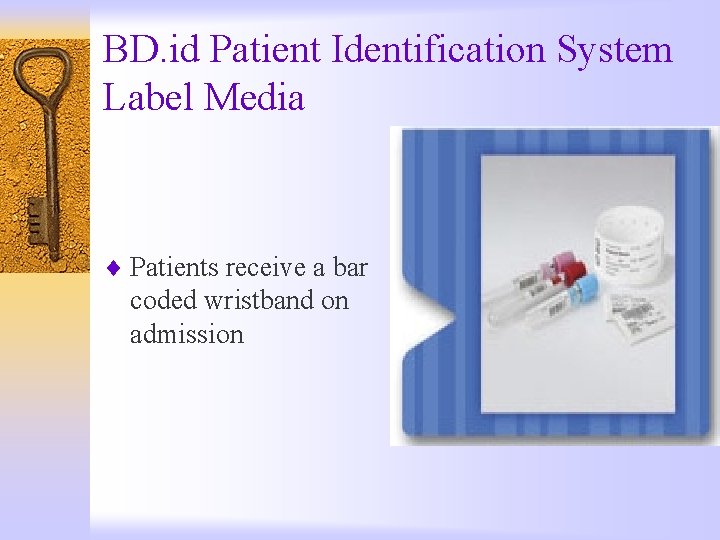
BD. id Patient Identification System Label Media ¨ Patients receive a bar coded wristband on admission
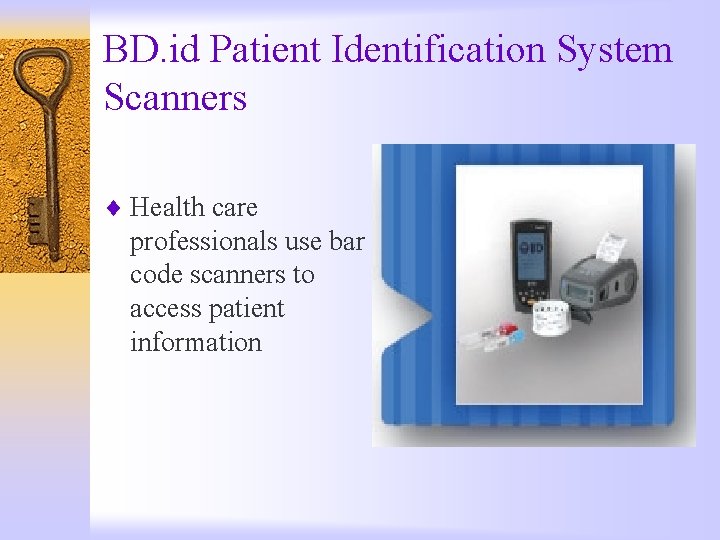
BD. id Patient Identification System Scanners ¨ Health care professionals use bar code scanners to access patient information
¨ Scan User ID badge ¨ Scan Patient wristband ¨ Collect Specimen ¨ Scan Bar code on tube
BD. id Patient Identification System ¨ Positively identifies healthcare professional and the right ¨ ¨ ¨ patient Communicates which tests have been ordered for the patient Verifies correct specimen container for each test Displays correct priority of specimen collection and captures time of collection Prints the correct specimen label with bar code at point of collection Generates detailed management reports for materials management, productivity, and quality management
Advantages of BD. id Patient Identification System ¨ Authorizes System access ¨ Protects patient privacy ¨ Positively identifies healthcare professional ¨ Confirms ID of patient ¨ Captures precise time/date of collection ¨ Specimen is collected with standard procedure ¨ Confirms accuracy of container ¨ Receives new bar coded label ¨ Prints new labels at bedside
Patient Safety and the Need for reduction of errors ¨ 2005 National Patient Safety Goals released by the Joint Commission on Accreditation of Healthcare Organizations (JCAHO): ¨ National Institute of Health Report : Errors in Health Care: A Leading Cause of Death and Injury
Patient Safety and the need for reduction of medical Errors ¨ 44, 000 - 98, 000 Americans die in hospitals each year as a result of medical errors. ¨ 50% of errors are preventable ¨ $200 - $400 million – Cost of specimen related errors.
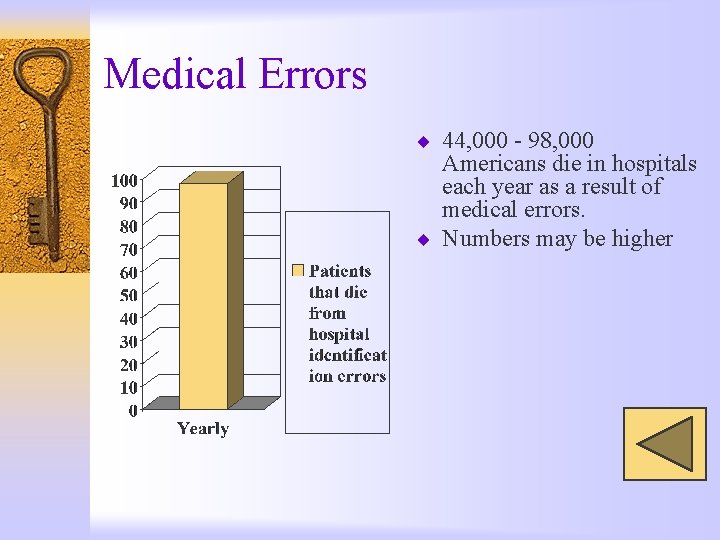
Medical Errors ¨ 44, 000 - 98, 000 Americans die in hospitals each year as a result of medical errors. ¨ Numbers may be higher
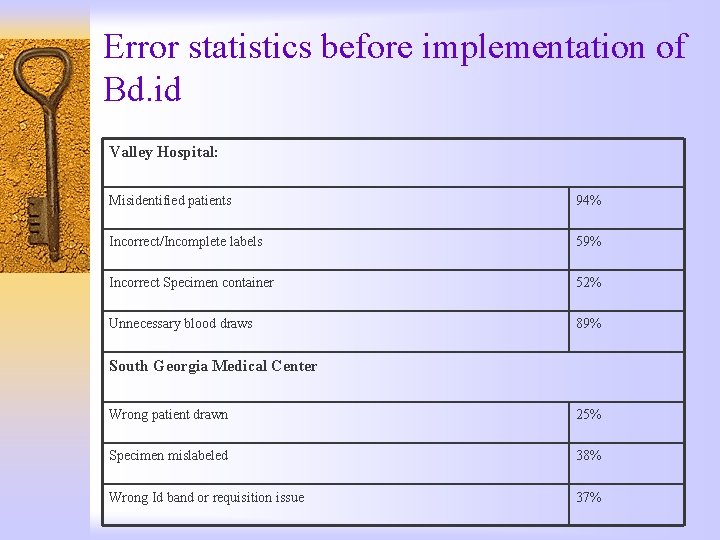
Error statistics before implementation of Bd. id ¨ The following facilities reported errors before the implementation of the patient identification system. These numbers are large and significant to adversely affecting patient care. South Georgia stated that “the results of a misidentified patient results got all the way through the system, out of the laboratory, and reported. “
Error statistics before implementation of Bd. id Valley Hospital: Misidentified patients 94% Incorrect/Incomplete labels 59% Incorrect Specimen container 52% Unnecessary blood draws 89% South Georgia Medical Center Wrong patient drawn 25% Specimen mislabeled 38% Wrong Id band or requisition issue 37%
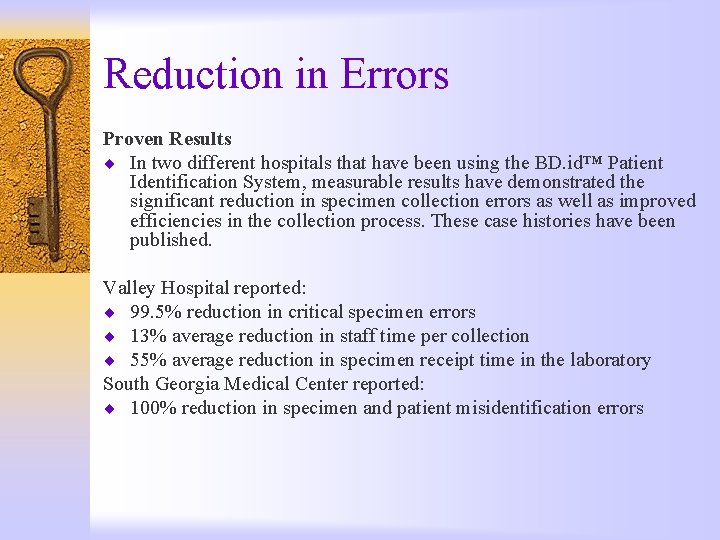
Reduction in Errors Proven Results ¨ In two different hospitals that have been using the BD. id™ Patient Identification System, measurable results have demonstrated the significant reduction in specimen collection errors as well as improved efficiencies in the collection process. These case histories have been published. Valley Hospital reported: ¨ 99. 5% reduction in critical specimen errors ¨ 13% average reduction in staff time per collection ¨ 55% average reduction in specimen receipt time in the laboratory South Georgia Medical Center reported: ¨ 100% reduction in specimen and patient misidentification errors
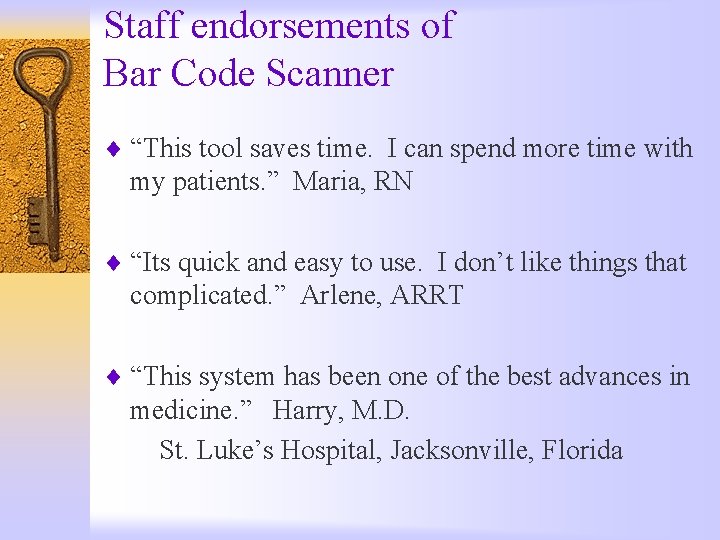
Staff endorsements of Bar Code Scanner ¨ “This tool saves time. I can spend more time with my patients. ” Maria, RN ¨ “Its quick and easy to use. I don’t like things that complicated. ” Arlene, ARRT ¨ “This system has been one of the best advances in medicine. ” Harry, M. D. St. Luke’s Hospital, Jacksonville, Florida
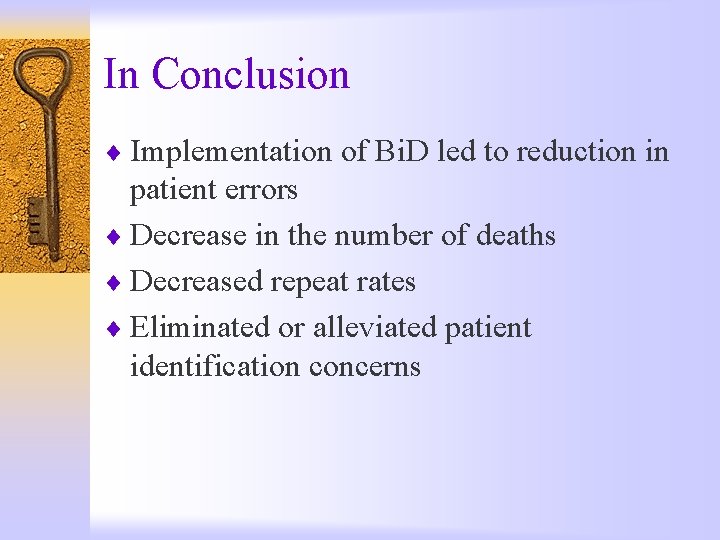
In Conclusion ¨ Implementation of Bi. D led to reduction in patient errors ¨ Decrease in the number of deaths ¨ Decreased repeat rates ¨ Eliminated or alleviated patient identification concerns
References http: //www. bd. com/bdid/about http: //www. bd. com/bdid/studies Klaas, M (January, 2005) Facility Products. Health Facilities Management, 18(1), 49 -52.