
Patient Follow Up and Work Flow Map Presented
- Slides: 6
Patient Follow Up and Work Flow Map Presented by Course code and unit University Date
Introduction Appropriate follow up is essential in health care Follow ups are classified into two: Post cared reminder methods Prescheduled appointment method Immediate appointment arrangement on leaving the health care facility is most common
When Immediate Scheduling of Appointment is not Possible • Conflict with patient's personal or business schedules • Patient forgets to make follow up appointment when leaving • Busy schedule of physician that makes instant agreement impossible • Lack of booking capabilities in the clinical system to further dates
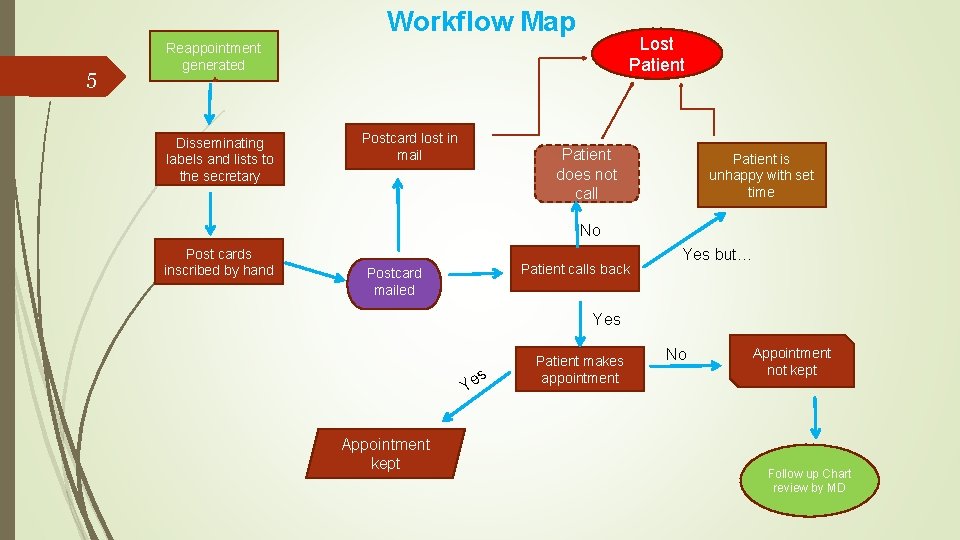
4 Disadvantages of Post Card Reminders Post cards might get lost in the mail Post cards laying around in offices might lead to HIPPA violations If patients change their address the reminders will be ineffective or get to unintended individuals Writing post cards or designing them is a tedious task and time consuming
Workflow Map 5 Lost Patient Reappointment generated Disseminating labels and lists to the secretary Postcard lost in mail Patient does not call Patient is unhappy with set time No Post cards inscribed by hand Patient calls back Postcard mailed Yes but… Yes s Ye Appointment kept Patient makes appointment No Appointment not kept Follow up Chart review by MD
References 6 Saine, P. J. , & Baker, S. M. (2003). What is the best way to schedule patient follow-up appointments? . The Joint Commission Journal on Quality and Safety, 29(6), 309 -315.