
Patient Engagement and Quality by Design CoDeveloping an
Patient Engagement and Quality by Design: Co-Developing an Implementation Roadmap for Clinical Trials
What is the Patient Engagement Open Forum A series of virtual events (in 2020) where we will work together, in a multi-stakeholder context, to turn patient engagement into reality. The Forum aims to provide a holistic perspective of patient engagement, the landscape and actors, and foster collaboration and co-creation while breaking down fragmentation that are often present in patient engagement work.
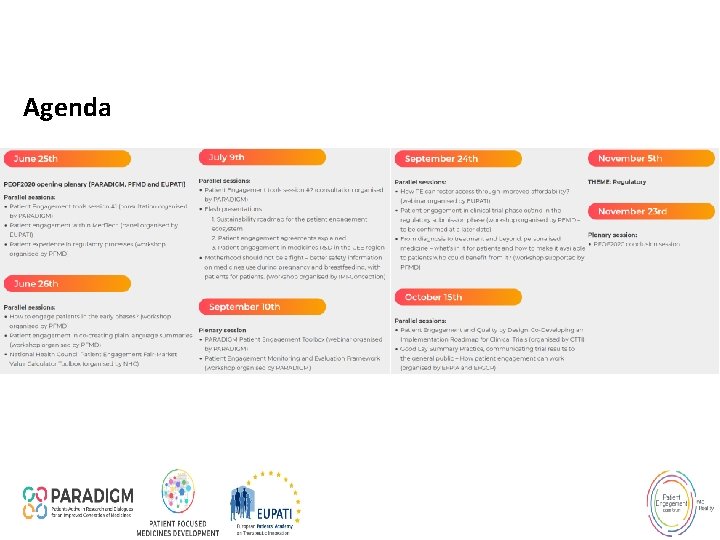
Agenda
Let’s work together to spread the word #PEOF 2020 @imi-paradigm @eupatients @PFMDwith. Patient
15 October 2020 Patient Engagement and Quality by Design: Co-Developing an Implementation Roadmap for Clinical Trials
Disclaimer The views and opinions expressed in this presentation are those of the individual presenter and do not necessarily reflect the views of the Clinical Trials Transformation Initiative or of the institutions with which presenters are individually affiliated.
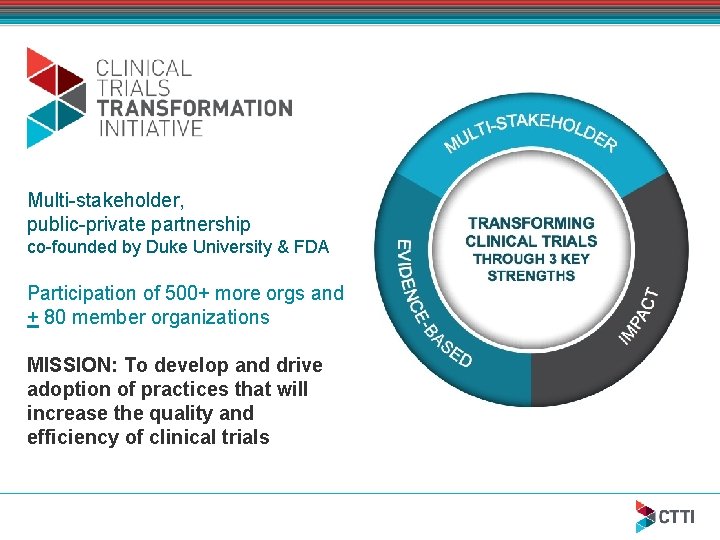
Multi-stakeholder, public-private partnership co-founded by Duke University & FDA Participation of 500+ more orgs and + 80 member organizations MISSION: To develop and drive adoption of practices that will increase the quality and efficiency of clinical trials
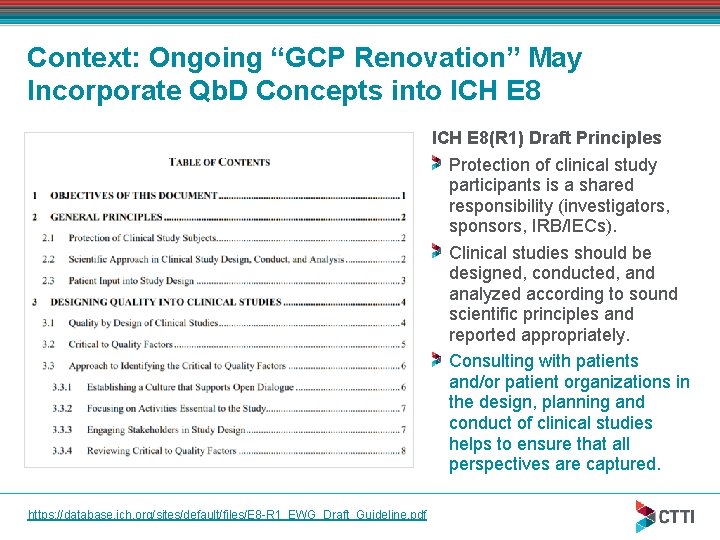
Context: Ongoing “GCP Renovation” May Incorporate Qb. D Concepts into ICH E 8(R 1) Draft Principles Protection of clinical study participants is a shared responsibility (investigators, sponsors, IRB/IECs). Clinical studies should be designed, conducted, and analyzed according to sound scientific principles and reported appropriately. Consulting with patients and/or patient organizations in the design, planning and conduct of clinical studies helps to ensure that all perspectives are captured. https: //database. ich. org/sites/default/files/E 8 -R 1_EWG_Draft_Guideline. pdf
Today’s Objectives Discuss the role of patient engagement in a Quality by Design (Qb. D) approach to study planning Identify opportunities for patient input at key decision points in clinical trial design Support sponsor and patient group stakeholders in articulating the broader value proposition of Qb. D and patient engagement Agenda: ▶ ▶ ▶ Welcome and Introduction (10 min) Quality by Design: Key Concepts (10 min) Case Studies (25 min) Aligning Qb. D and Patient Engagement (25 min) Discussion and Q&A (20 min)
Please Share Your Knowledge With Us Session is Recorded Chat Box for detailed comments and questions to panelists Click “chat” button at bottom of Zoom window to open Polling questions throughout Please go to www. menti. com now Enter code 40 84 66 8 Or look in the chat box for a direct link
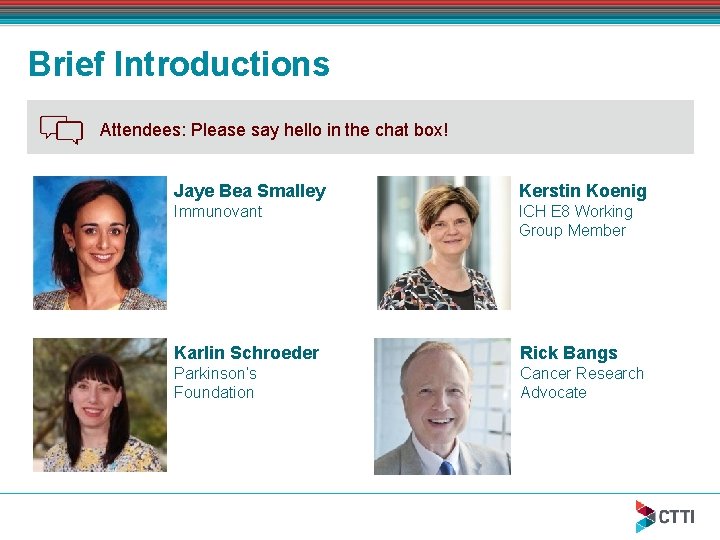
Brief Introductions Attendees: Please say hello in the chat box! Jaye Bea Smalley Kerstin Koenig Immunovant ICH E 8 Working Group Member Karlin Schroeder Rick Bangs Parkinson’s Foundation Cancer Research Advocate
Please respond in Mentimeter How familiar are you with the principles of Quality by Design for clinical trials? a) Very familiar b) Somewhat familiar c) Not very familiar d) Not at all familiar
Quality by Design: Key Concepts Kerstin Koenig, ICH E 8 Working Group Member
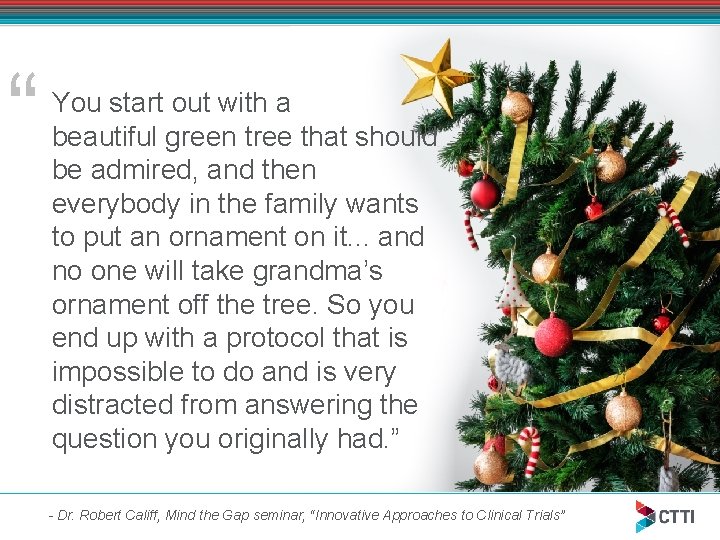
“ You start out with a beautiful green tree that should be admired, and then everybody in the family wants to put an ornament on it. . . and no one will take grandma’s ornament off the tree. So you end up with a protocol that is impossible to do and is very distracted from answering the question you originally had. ” - Dr. Robert Califf, Mind the Gap seminar, “Innovative Approaches to Clinical Trials”
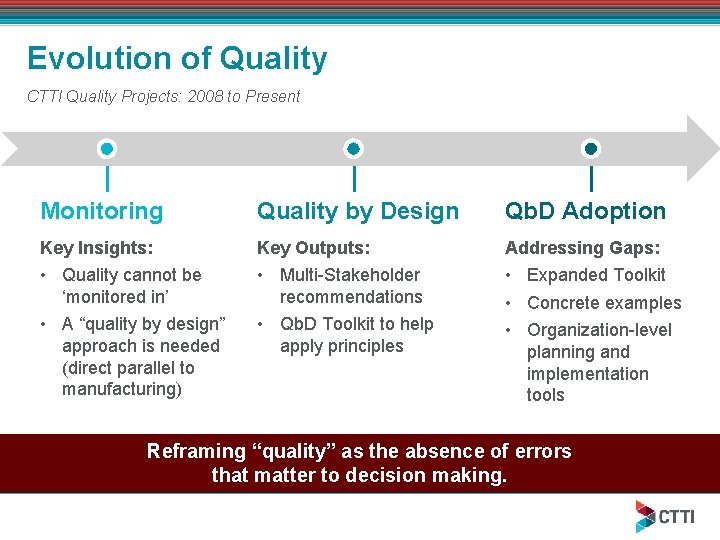
Evolution of Quality CTTI Quality Projects: 2008 to Present Monitoring Quality by Design Qb. D Adoption Key Insights: Key Outputs: Addressing Gaps: • Quality cannot be ‘monitored in’ • A “quality by design” approach is needed (direct parallel to manufacturing) • Multi-Stakeholder recommendations • Qb. D Toolkit to help apply principles • Expanded Toolkit • Concrete examples • Organization-level planning and implementation tools Reframing “quality” as the absence of errors that matter to decision making.
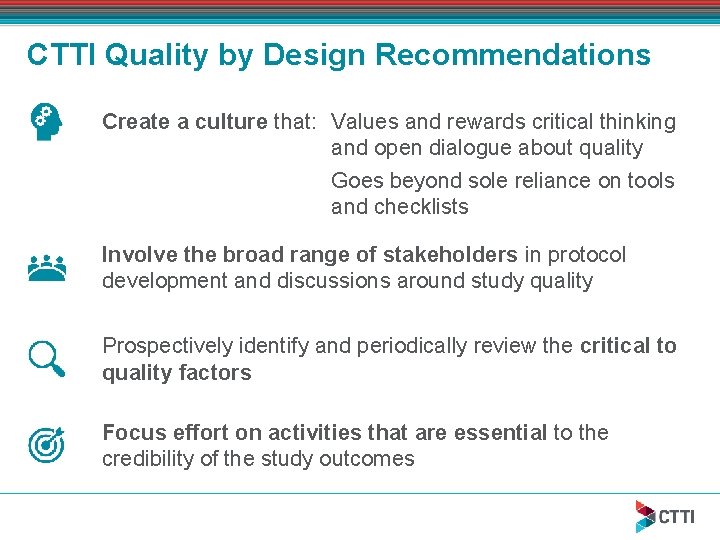
CTTI Quality by Design Recommendations Create a culture that: Values and rewards critical thinking and open dialogue about quality Goes beyond sole reliance on tools and checklists Involve the broad range of stakeholders in protocol development and discussions around study quality Prospectively identify and periodically review the critical to quality factors Focus effort on activities that are essential to the credibility of the study outcomes
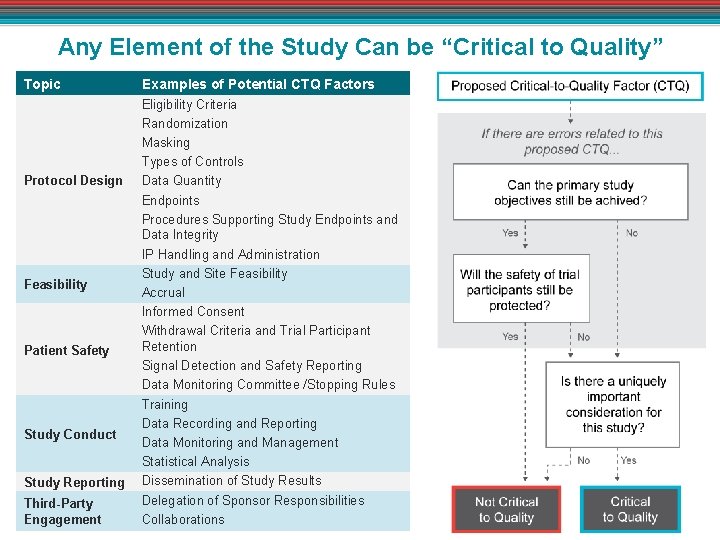
Any Element of the Study Can be “Critical to Quality” Topic Protocol Design Feasibility Patient Safety Study Conduct Study Reporting Third-Party Engagement Examples of Potential CTQ Factors Eligibility Criteria Randomization Masking Types of Controls Data Quantity Endpoints Procedures Supporting Study Endpoints and Data Integrity IP Handling and Administration Study and Site Feasibility Accrual Informed Consent Withdrawal Criteria and Trial Participant Retention Signal Detection and Safety Reporting Data Monitoring Committee /Stopping Rules Training Data Recording and Reporting Data Monitoring and Management Statistical Analysis Dissemination of Study Results Delegation of Sponsor Responsibilities Collaborations
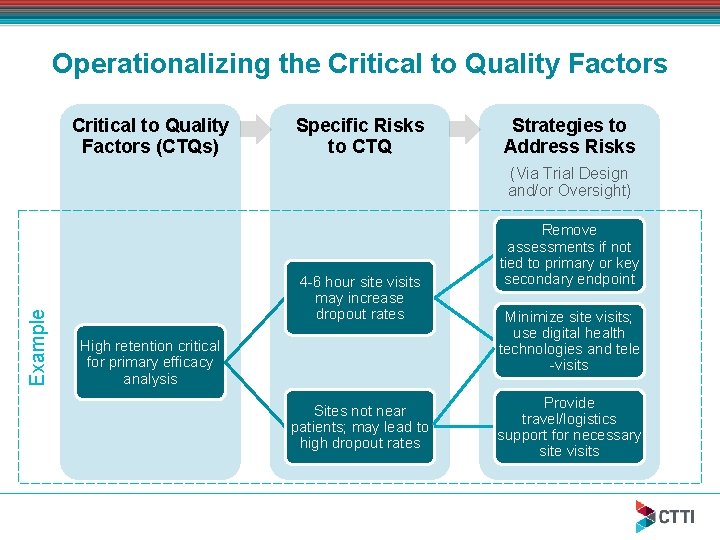
Example Operationalizing the Critical to Quality Factors (CTQs) Specific Risks to CTQ Strategies to Address Risks (Via Trial Design and/or Oversight) 4 -6 hour site visits may increase dropout rates High retention critical for primary efficacy analysis Sites not near patients; may lead to high dropout rates Remove assessments if not tied to primary or key secondary endpoint Minimize site visits; use digital health technologies and tele -visits Provide travel/logistics support for necessary site visits
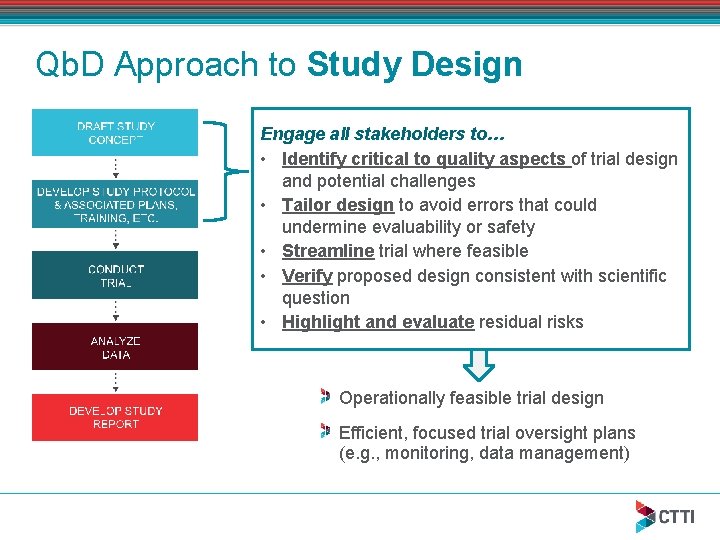
Qb. D Approach to Study Design Engage all stakeholders to… • Identify critical to quality aspects of trial design and potential challenges • Tailor design to avoid errors that could undermine evaluability or safety • Streamline trial where feasible • Verify proposed design consistent with scientific question • Highlight and evaluate residual risks Operationally feasible trial design Efficient, focused trial oversight plans (e. g. , monitoring, data management)
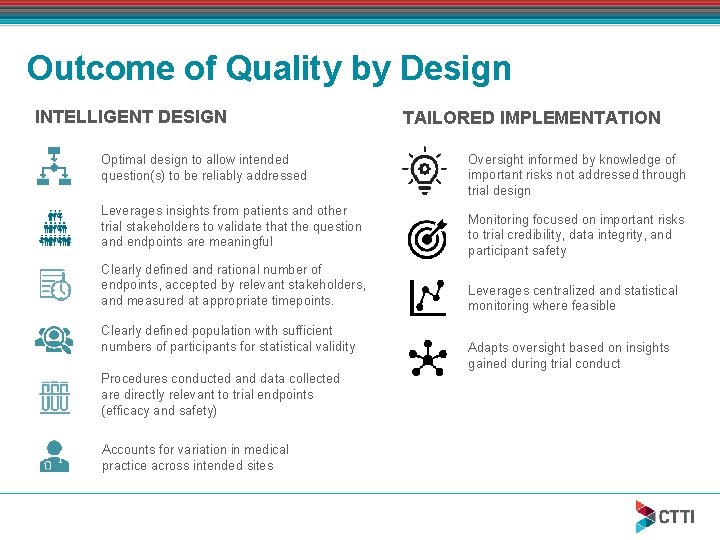
Outcome of Quality by Design INTELLIGENT DESIGN Optimal design to allow intended question(s) to be reliably addressed Leverages insights from patients and other trial stakeholders to validate that the question and endpoints are meaningful Clearly defined and rational number of endpoints, accepted by relevant stakeholders, and measured at appropriate timepoints. Clearly defined population with sufficient numbers of participants for statistical validity Procedures conducted and data collected are directly relevant to trial endpoints (efficacy and safety) Accounts for variation in medical practice across intended sites TAILORED IMPLEMENTATION Oversight informed by knowledge of important risks not addressed through trial design Monitoring focused on important risks to trial credibility, data integrity, and participant safety Leverages centralized and statistical monitoring where feasible Adapts oversight based on insights gained during trial conduct
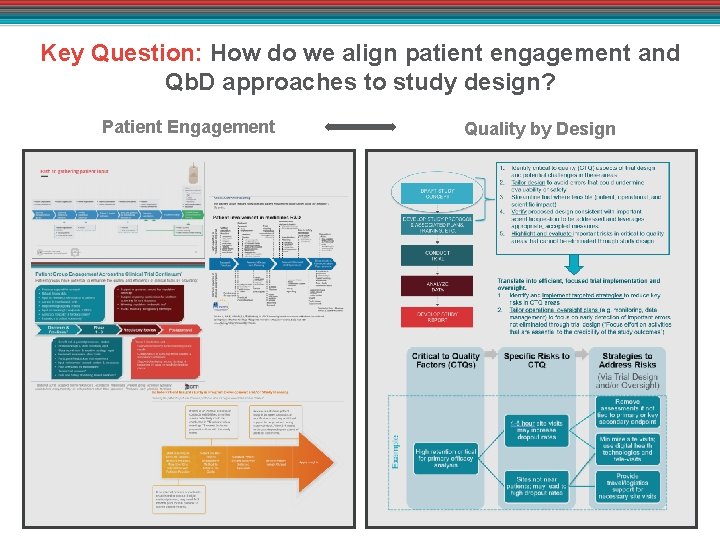
Key Question: How do we align patient engagement and Qb. D approaches to study design? Patient Engagement Quality by Design
Please respond in Mentimeter How clear is the intersection between patient engagement and Qb. D? a) Very clear b) Somewhat clear c) Not very clear d) Not at all clear e) I’m not sure yet Why did you give your answer? Please tell us more in the chat box.
Aligning Patient Engagement and Qb. D: Case Studies Karlin Schroeder, Parkinson’s Foundation Jaye Bea Smalley, Immunovant Rick Bangs, Cancer Research Advocate
Case Study 1: Improving a Phase II Drug Trial
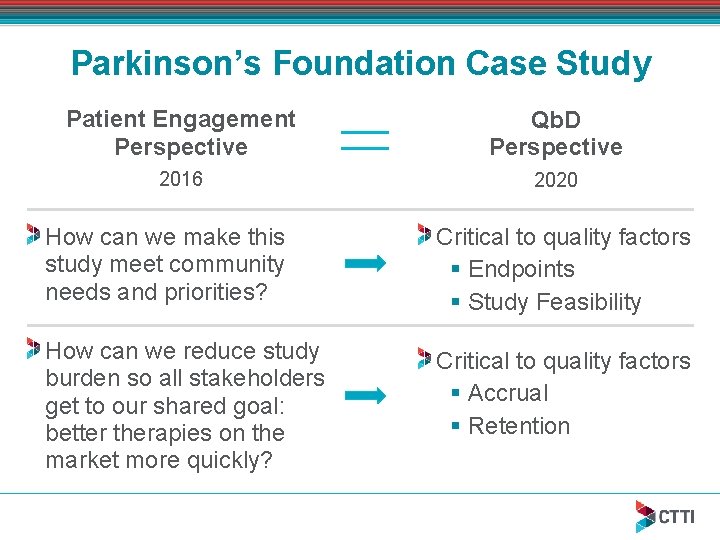
Parkinson’s Foundation Case Study Patient Engagement Perspective Qb. D Perspective 2016 2020 How can we make this study meet community needs and priorities? Critical to quality factors § Endpoints § Study Feasibility How can we reduce study burden so all stakeholders get to our shared goal: better therapies on the market more quickly? Critical to quality factors § Accrual § Retention
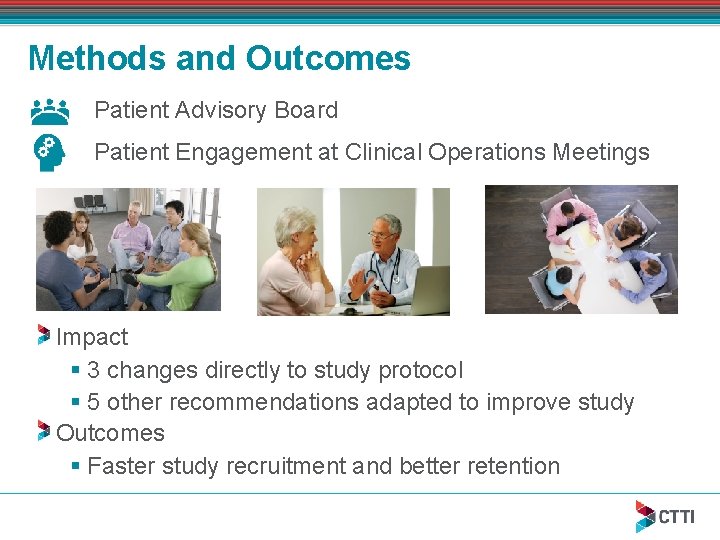
Methods and Outcomes Patient Advisory Board Patient Engagement at Clinical Operations Meetings Impact § 3 changes directly to study protocol § 5 other recommendations adapted to improve study Outcomes § Faster study recruitment and better retention
Basis for Success in Patient Engagement in Qb. D Critical to quality factors for patient community and research team naturally aligned (ex: reduced study burden benefits everyone) Partners were fully dedicated to patient engagement Patient engagement occurred in a standard way around aspects of the research process that are low hanging fruit.
Gaps/Challenges/What’s Next? Patient engagement can often be the overlooked component of Qb. D. How do we support embedding it as an integral part of the process? Existing tools and resources to support Qb. D in patient engagement are underutilized. How do we increase uptake and fill the gaps? How can we use Qb. D to drive more advanced models of patient engagement and pilot new ways of working together?
Case Study 2: Patient Engagement in Drug Development Content is the opinion of Jaye Bea Smalley, not Immunovant
Sponsors May Be Well Positioned to Enhance Qb. D Due to Evolving Patient Engagement Capabilities Drivers of patient engagement in clinical development: Changing expectations on the part of patient advocacy partners to be engaged in clinical development plans, design of clinical trials, and recruitment strategies Greater awareness on the part of project teams on the potential for patients to address issues of burden or feasibility for patient participation Advisory board methodology in place; policies and processes that can easily be adapted to accommodate patients, carers and advocates Emerging role of patient engagement professionals embedded with in companies
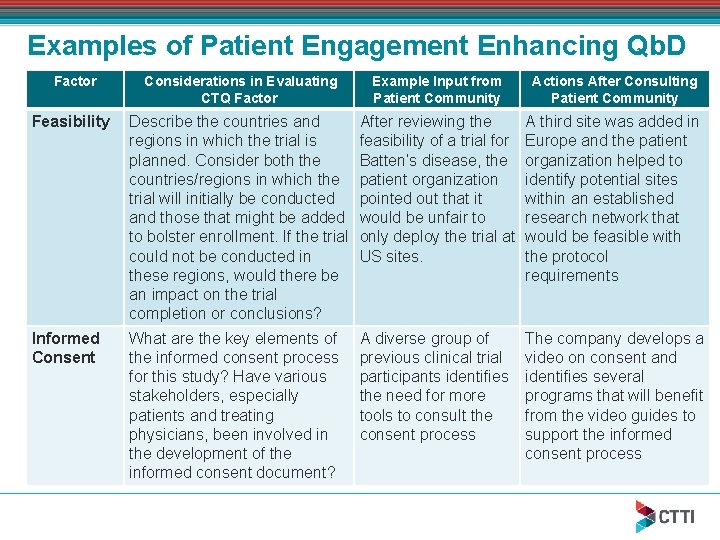
Examples of Patient Engagement Enhancing Qb. D Factor Considerations in Evaluating CTQ Factor Example Input from Patient Community Actions After Consulting Patient Community Feasibility Describe the countries and regions in which the trial is planned. Consider both the countries/regions in which the trial will initially be conducted and those that might be added to bolster enrollment. If the trial could not be conducted in these regions, would there be an impact on the trial completion or conclusions? After reviewing the feasibility of a trial for Batten’s disease, the patient organization pointed out that it would be unfair to only deploy the trial at US sites. A third site was added in Europe and the patient organization helped to identify potential sites within an established research network that would be feasible with the protocol requirements Informed Consent What are the key elements of the informed consent process for this study? Have various stakeholders, especially patients and treating physicians, been involved in the development of the informed consent document? A diverse group of previous clinical trial participants identifies the need for more tools to consult the consent process The company develops a video on consent and identifies several programs that will benefit from the video guides to support the informed consent process
Gaps and Challenges Still Exist for Sponsors to Adopt a Comprehensive Approach to Patient Engagement in Qbd How do you take a more systematic approach to addressing critical quality factors through patient engagement? Can Qb. D framework for patient input help further define the diverse informational needs of project teams? The advisory board method can be time consuming and expensive. What other methods can be leveraged to gain patient input with the aim of enhancing Qb. D? Who are the organizational champions for patient engagement? Expand the value proposition of incorporating the patient perspective in Qb. D
Case Study 3: Patient Advocate Engagement: Lessons Learned from the SWOG and National Cancer Institute Patient Advocate Committees Content is the opinion of Rick Bangs, not SWOG or NCI
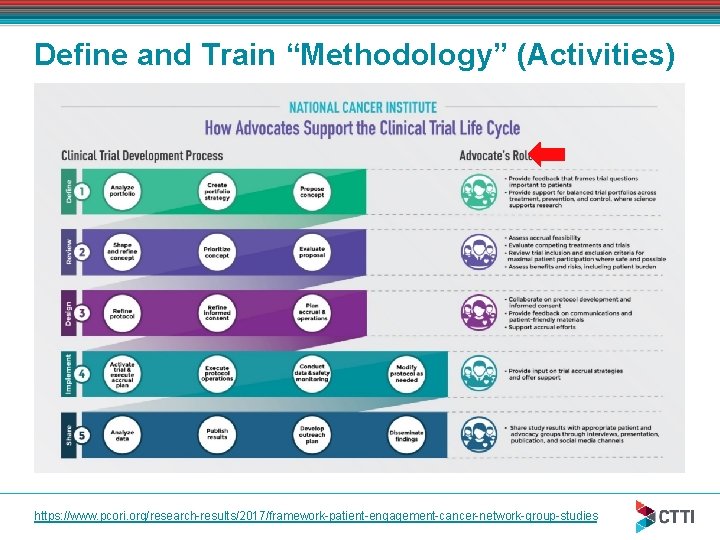
Define and Train “Methodology” (Activities) https: //www. pcori. org/research-results/2017/framework-patient-engagement-cancer-network-group-studies
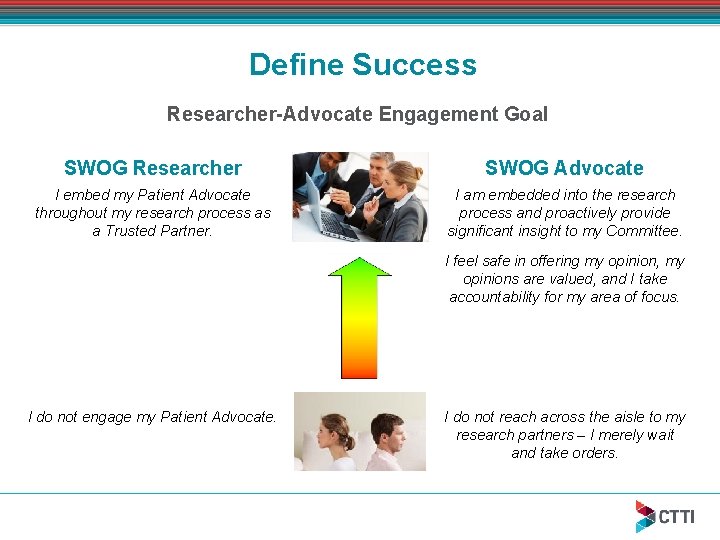
Define Success Researcher-Advocate Engagement Goal SWOG Researcher SWOG Advocate I embed my Patient Advocate throughout my research process as a Trusted Partner. I am embedded into the research process and proactively provide significant insight to my Committee. I feel safe in offering my opinion, my opinions are valued, and I take accountability for my area of focus. I do not engage my Patient Advocate. I do not reach across the aisle to my research partners – I merely wait and take orders.
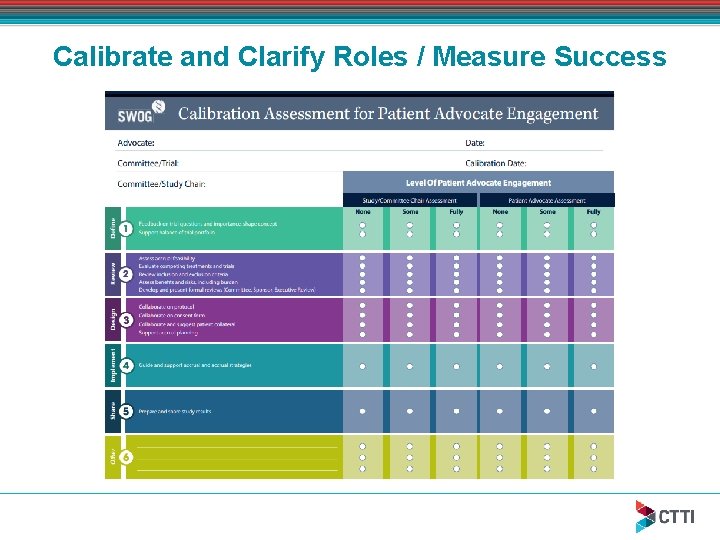
Calibrate and Clarify Roles / Measure Success
Prepare Templates and Accelerators 7. Patient Advocacy Evaluation Questions 7. 1 How important is this trial to people who have been or will be diagnosed with this disease? 7. 2 What aspects of this trial design might attract patients or be of concern to patients? 7. 3 How well does this trial balance the risk, benefits, and burdens of the patient and/or the caregiver? 7. 4 What effect will the eligibility/inclusion and exclusion criteria have on the target patient population? 7. 5 Is this study likely to be able to meet accrual goals and retain patients through completion? 7. 6 Are there other patient-related issues that should be considered?
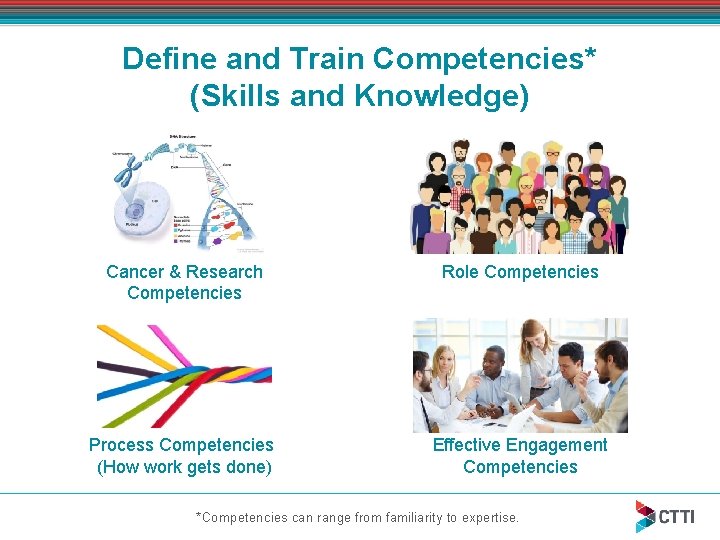
Define and Train Competencies* (Skills and Knowledge) Cancer & Research Competencies Role Competencies Process Competencies (How work gets done) Effective Engagement Competencies *Competencies can range from familiarity to expertise.
Patient Advocate Input – Qb. D (Strawman) Possible Core Activities (CTQ; many are iterative) Study Population Inclusions/Exclusions Diversity and Representativeness Endpoints Patient Reported Outcomes Accrual Forecasts, Plans, and Feasibility Retention Data Safety and Monitoring Boards Consent Form Etc.
Please respond in Mentimeter After hearing the case studies: Have you already been doing patient engagement work that can enhance Qb. D? a) Yes, almost definitely b) Maybe, but I’m not sure c) No, probably not Why did you give your answer? Please tell us more in the chat box.
Any questions about the case studies? Please submit questions and comments in the chat box!
Aligning Qb. D and Patient Engagement
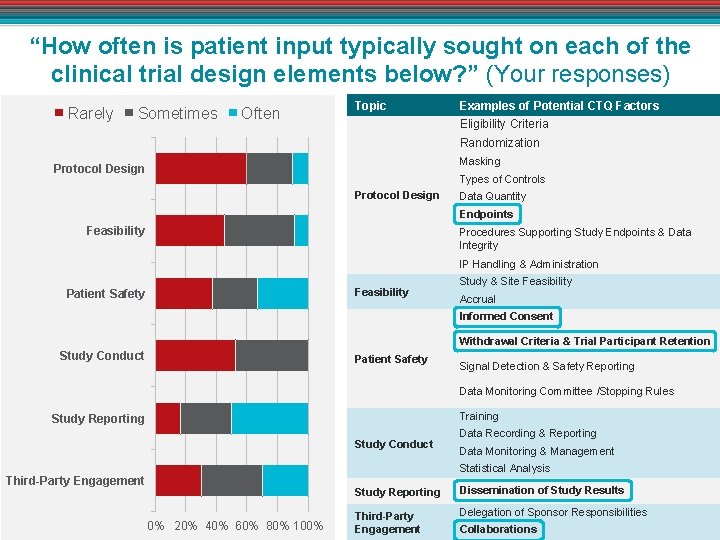
“How often is patient input typically sought on each of the clinical trial design elements below? ” (Your responses) Rarely Sometimes Often Topic Examples of Potential CTQ Factors Eligibility Criteria Randomization Masking Protocol Design Types of Controls Protocol Design Data Quantity Endpoints Feasibility Procedures Supporting Study Endpoints & Data Integrity IP Handling & Administration Feasibility Patient Safety Study & Site Feasibility Accrual Informed Consent Withdrawal Criteria & Trial Participant Retention Study Conduct Patient Safety Signal Detection & Safety Reporting Data Monitoring Committee /Stopping Rules Training Study Reporting Study Conduct Data Recording & Reporting Data Monitoring & Management Statistical Analysis Third-Party Engagement 0% 20% 40% 60% 80% 100% Study Reporting Dissemination of Study Results Third-Party Engagement Delegation of Sponsor Responsibilities Collaborations
Please respond in Mentimeter Let’s confirm… In your experience, how often is patient input sought on protocol design elements such as eligibility criteria, randomization, masking, and types of controls? a) Rarely b) Sometimes c) Often Why did you give your answer? Please tell us more in the chat box.
Please respond in Mentimeter What are the major barriers to getting patient input on all aspects of study design? (Open ended question. Please take a moment to type your response in Mentimeter. ) Why did you give your answer? Please tell us more in the chat box.
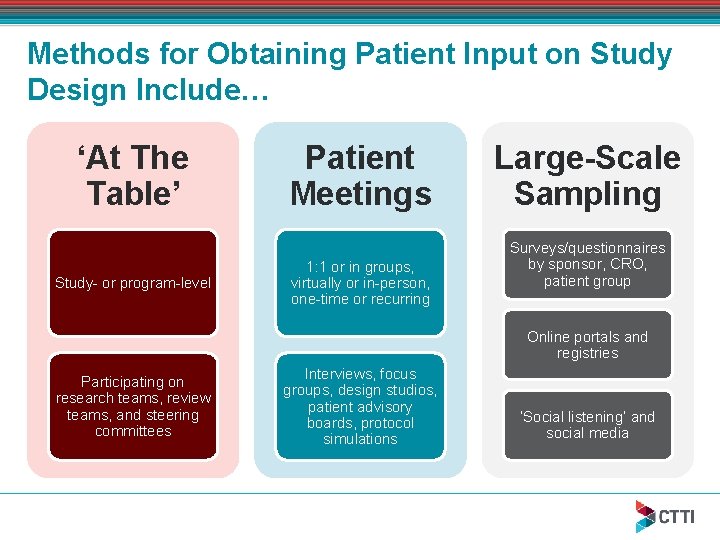
Methods for Obtaining Patient Input on Study Design Include… ‘At The Table’ Study- or program-level Patient Meetings 1: 1 or in groups, virtually or in-person, one-time or recurring Large-Scale Sampling Surveys/questionnaires by sponsor, CRO, patient group Online portals and registries Participating on research teams, review teams, and steering committees Interviews, focus groups, design studios, patient advisory boards, protocol simulations ‘Social listening’ and social media
Please respond in Mentimeter How can we get patients ‘at the table’ with the sponsor, CRO and other stakeholders early in study design? (Open ended question. Please take a moment to type your response in Mentimeter. ) Why did you give your answer? Please tell us more in the chat box.
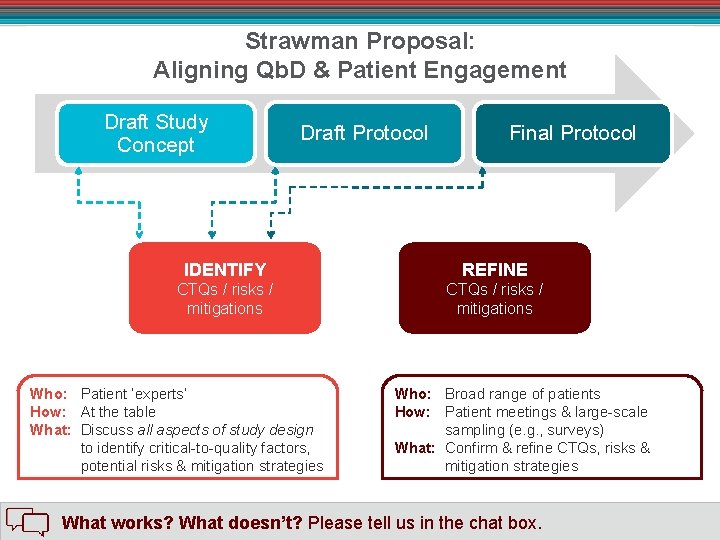
Strawman Proposal: Aligning Qb. D & Patient Engagement Draft Study Concept Draft Protocol Final Protocol IDENTIFY REFINE CTQs / risks / mitigations Who: Patient ‘experts’ How: At the table What: Discuss all aspects of study design to identify critical-to-quality factors, potential risks & mitigation strategies Who: Broad range of patients How: Patient meetings & large-scale sampling (e. g. , surveys) What: Confirm & refine CTQs, risks & mitigation strategies What works? What doesn’t? Please tell us in the chat box.
Discussion and Q&A Please submit your questions and comments in the chat box!
Please respond in Mentimeter How can researchers and research sponsors start integrating Qb. D and patient engagement? Please suggest one ‘next step’. (Open ended question. Please take a moment to type your response in Mentimeter. ) Why did you give your answer? Please tell us more in the chat box.
Please respond in Mentimeter How can patients and patient organizations start integrating Qb. D and patient engagement? Please suggest one ‘next step’. (Open ended question. Please take a moment to type your response in Mentimeter. ) Why did you give your answer? Please tell us more in the chat box.
THANK YOU. www. ctti-clinicaltrials. org
- Slides: 52