
Patient Driven Goal Setting Tool Within the Total
- Slides: 1
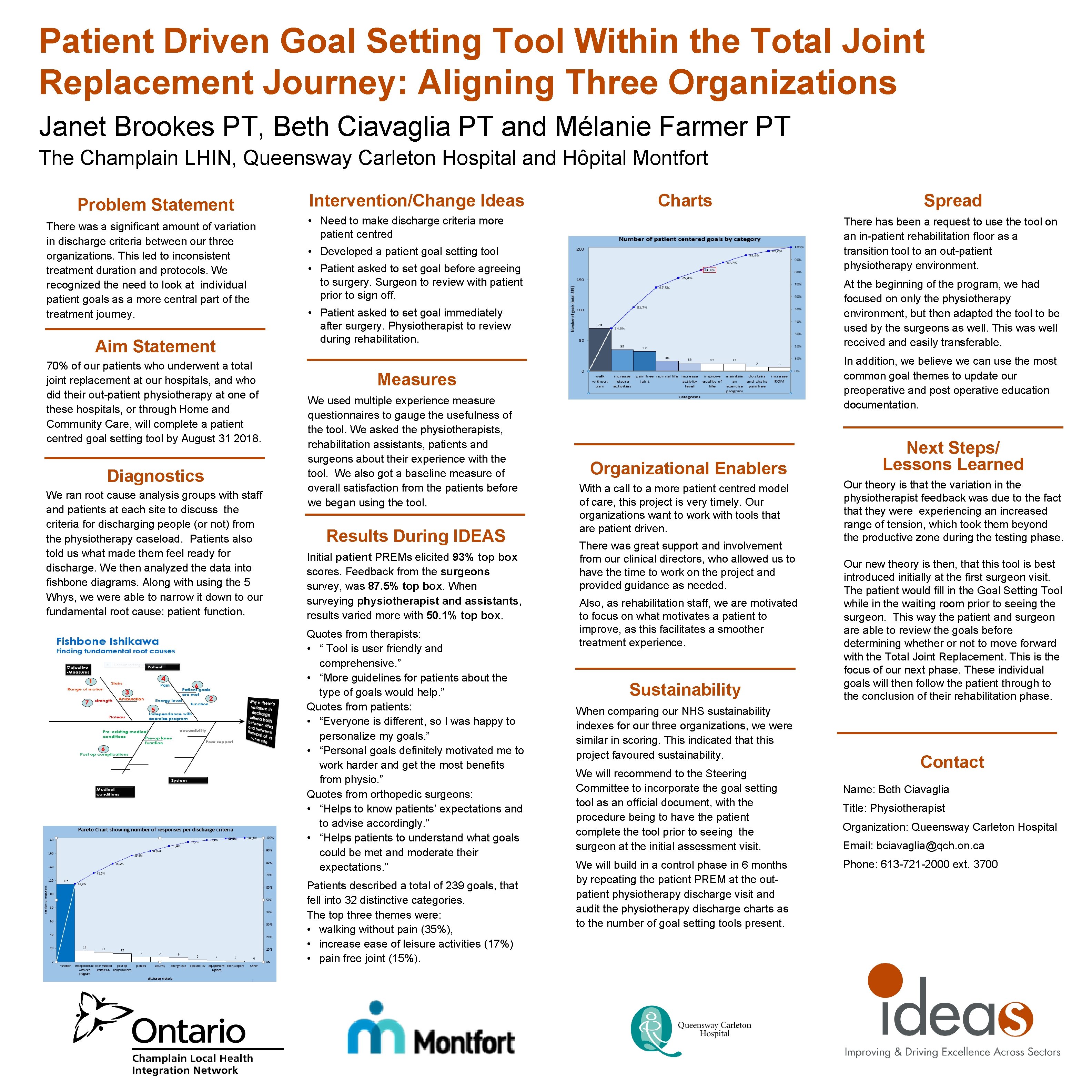
Patient Driven Goal Setting Tool Within the Total Joint Replacement Journey: Aligning Three Organizations Janet Brookes PT, Beth Ciavaglia PT and Mélanie Farmer PT The Champlain LHIN, Queensway Carleton Hospital and Hôpital Montfort Problem Statement There was a significant amount of variation in discharge criteria between our three organizations. This led to inconsistent treatment duration and protocols. We recognized the need to look at individual patient goals as a more central part of the treatment journey. Aim Statement 70% of our patients who underwent a total joint replacement at our hospitals, and who did their out-patient physiotherapy at one of these hospitals, or through Home and Community Care, will complete a patient centred goal setting tool by August 31 2018. Diagnostics We ran root cause analysis groups with staff and patients at each site to discuss the criteria for discharging people (or not) from the physiotherapy caseload. Patients also told us what made them feel ready for discharge. We then analyzed the data into fishbone diagrams. Along with using the 5 Whys, we were able to narrow it down to our fundamental root cause: patient function. Lj Lkj Lj Intervention/Change Ideas Charts • Need to make discharge criteria more patient centred There has been a request to use the tool on an in-patient rehabilitation floor as a transition tool to an out-patient physiotherapy environment. • Developed a patient goal setting tool • Patient asked to set goal before agreeing to surgery. Surgeon to review with patient prior to sign off. At the beginning of the program, we had focused on only the physiotherapy environment, but then adapted the tool to be used by the surgeons as well. This was well received and easily transferable. • Patient asked to set goal immediately after surgery. Physiotherapist to review during rehabilitation. . In addition, we believe we can use the most common goal themes to update our preoperative and post operative education documentation. Measures We used multiple experience measure questionnaires to gauge the usefulness of the tool. We asked the physiotherapists, rehabilitation assistants, patients and surgeons about their experience with the tool. We also got a baseline measure of overall satisfaction from the patients before we began using the tool. Results During IDEAS Initial patient PREMs elicited 93% top box scores. Feedback from the surgeons survey, was 87. 5% top box. When surveying physiotherapist and assistants, results varied more with 50. 1% top box. Quotes from therapists: • “ Tool is user friendly and comprehensive. ” • “More guidelines for patients about the type of goals would help. ” Quotes from patients: • “Everyone is different, so I was happy to personalize my goals. ” • “Personal goals definitely motivated me to work harder and get the most benefits from physio. ” Quotes from orthopedic surgeons: • “Helps to know patients’ expectations and to advise accordingly. ” • “Helps patients to understand what goals could be met and moderate their expectations. ” Patients described a total of 239 goals, that fell into 32 distinctive categories. The top three themes were: • walking without pain (35%), • increase of leisure activities (17%) • pain free joint (15%). Spread Organizational Enablers With a call to a more patient centred model of care, this project is very timely. Our organizations want to work with tools that are patient driven. There was great support and involvement from our clinical directors, who allowed us to have the time to work on the project and provided guidance as needed. Also, as rehabilitation staff, we are motivated to focus on what motivates a patient to improve, as this facilitates a smoother treatment experience. Sustainability When comparing our NHS sustainability indexes for our three organizations, we were similar in scoring. This indicated that this project favoured sustainability. We will recommend to the Steering Committee to incorporate the goal setting tool as an official document, with the procedure being to have the patient complete the tool prior to seeing the surgeon at the initial assessment visit. We will build in a control phase in 6 months by repeating the patient PREM at the outpatient physiotherapy discharge visit and audit the physiotherapy discharge charts as to the number of goal setting tools present. Next Steps/ Lessons Learned Our theory is that the variation in the physiotherapist feedback was due to the fact that they were experiencing an increased range of tension, which took them beyond the productive zone during the testing phase. Our new theory is then, that this tool is best introduced initially at the first surgeon visit. The patient would fill in the Goal Setting Tool while in the waiting room prior to seeing the surgeon. This way the patient and surgeon are able to review the goals before determining whether or not to move forward with the Total Joint Replacement. This is the focus of our next phase. These individual goals will then follow the patient through to the conclusion of their rehabilitation phase. Contact Name: Beth Ciavaglia Title: Physiotherapist Organization: Queensway Carleton Hospital Email: bciavaglia@qch. on. ca Phone: 613 -721 -2000 ext. 3700