
Patient Care and Safety Learning Objectives Perform accurate
Patient Care and Safety

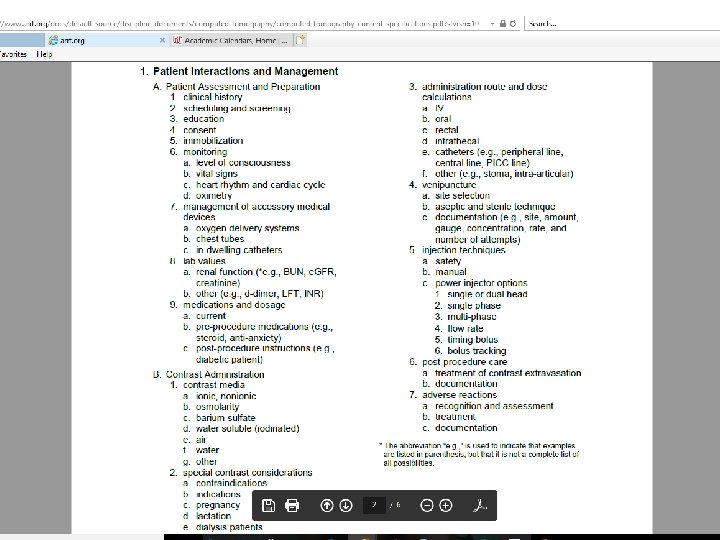
Learning Objectives • Perform accurate and complete clinical histories and obtain appropriate consent prior to performing a CT scan. • Identify lab values, medications, vital signs, and any other medical devices that are necessary for the patient prior performing a CT scan. • Determine proper administration and appropriate contrast media for the CT scan patient is receiving. • Assess the patient for any contraindications prior to contrast media delivery and for any adverse reactions after administering contrast media to a CT patient. • Determine the route(s) of contrast media for the CT scan performed. • Justify the radiation dose given to patients for specific CT scans and identify parameters that can lower radiation dose given to the patient. 2
3
4
Patient Assessment and Prep • Establish good rapport with patient • Explain procedures clearly • Encourage patients to ask questions • Obtain detailed history from patient • Make sure you are able to see and hear the patient at all times • Patient understand importance of keeping still 5
Informed Consent • Informed Consent: Full disclosure of facts (in understandable terms) which allow patient to decide • Purpose of procedure • Nature of procedure and technique to be used • Potential risks and complications of procedure • Hoped for benefits • Alternative procedures • Patient has ability to make decision • If unable, then POA may consent • If under 18, then parent/guardian consents • EXCEPTION -- emergency circumstances 6
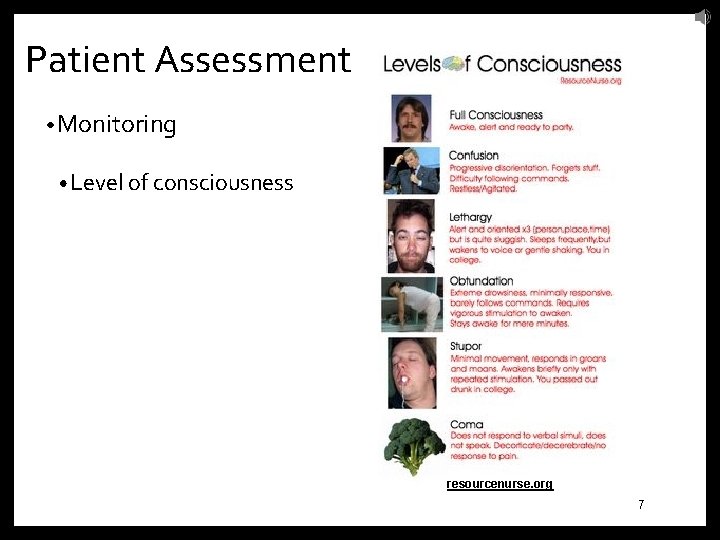
Patient Assessment • Monitoring • Level of consciousness resourcenurse. org/ 7
Patient Assessment Vital Signs: • Temperature • Pulse Rate • Respiratory Rate • Blood Pressure 8
Temperature Normal: • 97. 7 -99. 5 ˚ (36. 5 -37 ˚ C) 9
Pulse Rate • Adult: 60 -100 beats/minute on average • Pediatric: 70 -120 beats/minute • Pulse Locations: • Apical • Radial • Carotid • Femoral • Popliteal • Temporal • Dorsalis pedis • Posterior tibial • Brachial 10
Respiratory Rate • Respiratory Rate: • Normal adult: 12 to 20 breaths/minute • Child under 10: 20 to 30 breaths/minute • Medical Terms relating to breathing: • Bradypnea - decrease in breathing • Dyspnea - difficult breathing • Tachypnea - rapid breathing 11
Blood Pressure • BP: • Systolic: • The highest pressure reached during contraction of the left ventricle of the heart as it pumps blood into the aorta. • Normal ranges from 90 – 140 mm Hg • Diastolic: • The lowest point to which the pressure drops during relaxation of the ventricles and indicates the minimal pressure exerted against the arterial walls continuously. • Ranges from 60 – 90 mm Hg 12
ECG • ECG: Graphic record of electrical activity only • Tells nothing about pumping action • Electrodes sense electrical impulse from the skin • ECG machine records positive and negative impulses as positive (upward) or negative (downward) deflections on oscilloscope • Isoelectric line is the flat baseline = no impulses 13
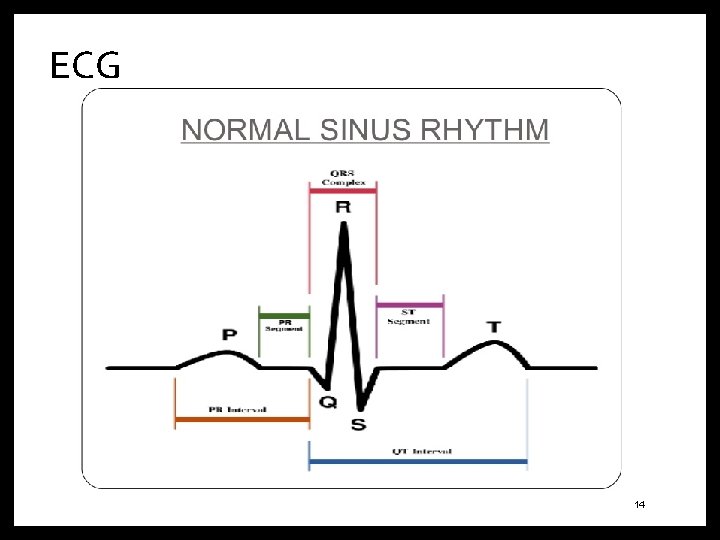
ECG 14
Pulse Oximetry Pulse oximetry: • adequate 95% - 100% Saturation: • test for measuring blood oxygen level; inadequate under 90% 15
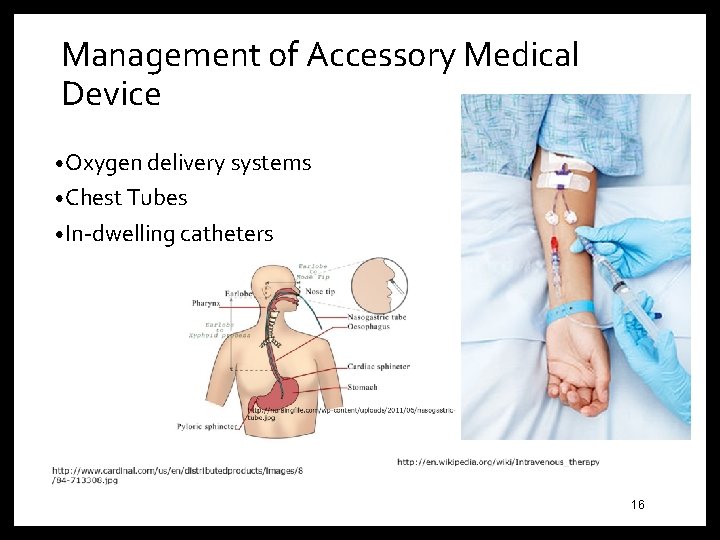
Management of Accessory Medical Device • Oxygen delivery systems • Chest Tubes • In-dwelling catheters 16
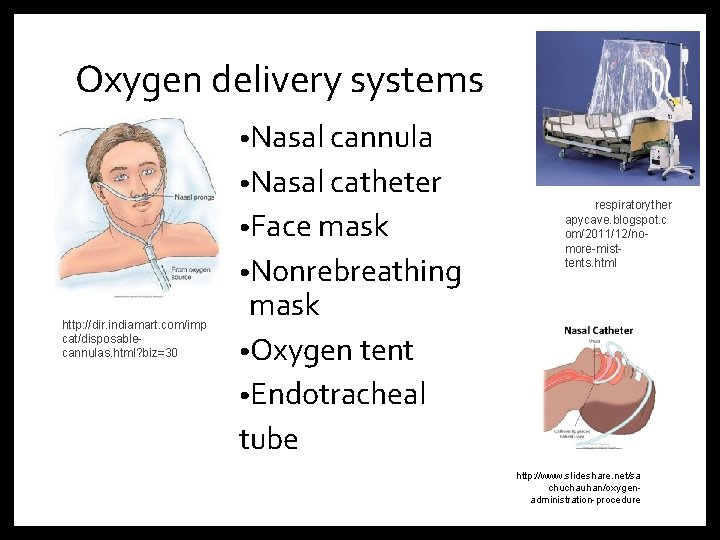
Oxygen delivery systems • Nasal cannula • Nasal catheter • Face mask • Nonrebreathing http: //dir. indiamart. com/imp cat/disposablecannulas. html? biz=30 http: //respiratoryther apycave. blogspot. c om/2011/12/nomore-misttents. html mask • Oxygen tent • Endotracheal tube http: //www. slideshare. net/sa chuchauhan/oxygenadministration-procedure
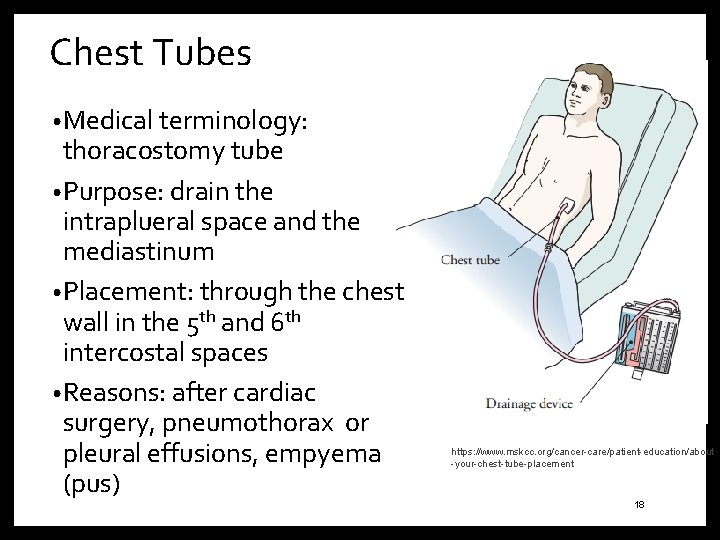
Chest Tubes • Medical terminology: thoracostomy tube • Purpose: drain the intraplueral space and the mediastinum • Placement: through the chest wall in the 5 th and 6 th intercostal spaces • Reasons: after cardiac surgery, pneumothorax or pleural effusions, empyema (pus) https: //www. mskcc. org/cancer-care/patient-education/about -your-chest-tube-placement 18
Urinary Catheter • Placed in the bladder to collect urine • Foley catheter vs. straight cathether • Below patients bladder 19
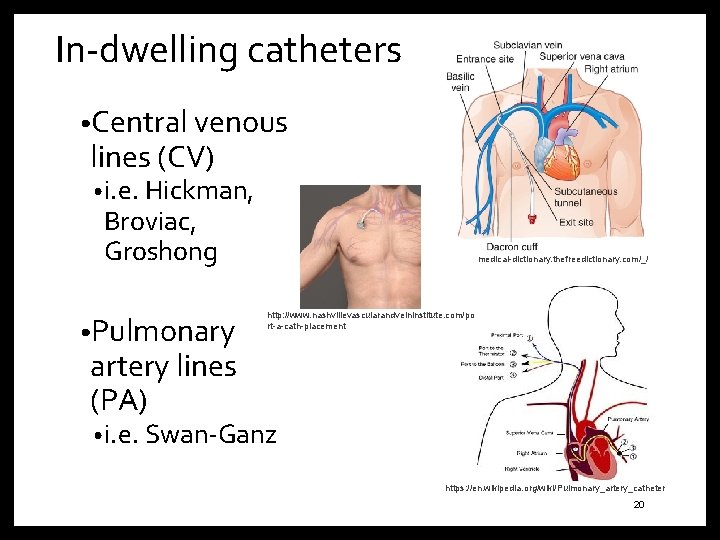
In-dwelling catheters • Central venous lines (CV) • i. e. Hickman, Broviac, Groshong • Pulmonary http: //medical-dictionary. thefreedictionary. com/_/ http: //www. nashvillevascularandveininstitute. com/po rt-a-cath-placement artery lines (PA) • i. e. Swan-Ganz https: //en. wikipedia. org/wiki/Pulmonary_artery_catheter 20
Lab Values • Renal function • Blood Coagulation • PTT • Platelet • INR • Other • D-dimer • LFT 21
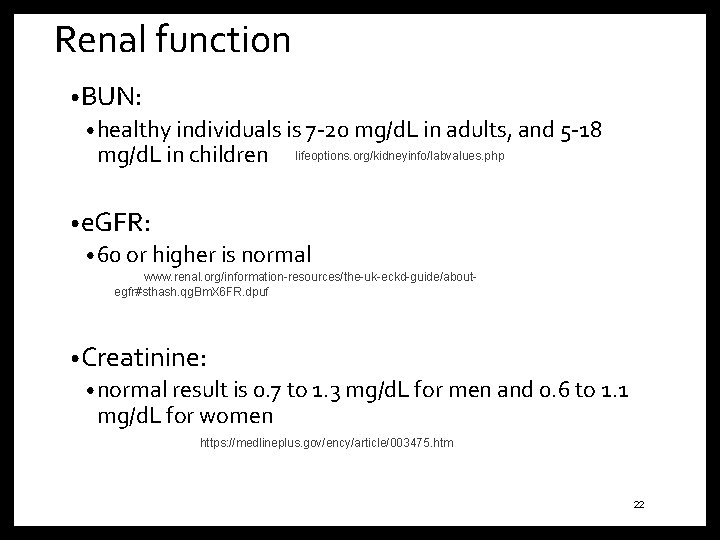
Renal function • BUN: • healthy individuals is 7 -20 mg/d. L in adults, and 5 -18 mg/d. L in children lifeoptions. org/kidneyinfo/labvalues. php • e. GFR: • 60 or higher is normal http: //www. renal. org/information-resources/the-uk-eckd-guide/aboutegfr#sthash. qg. Bm. X 6 FR. dpuf • Creatinine: • normal result is 0. 7 to 1. 3 mg/d. L for men and 0. 6 to 1. 1 mg/d. L for women https: //medlineplus. gov/ency/article/003475. htm 22
Chronic Kidney Disease • Stage 1 • Stage 2 • Stage 3 a • Stage 3 b • Stage 4 • Stage 5 https: //www. kidney. org/blog/kidney-cars/what-are-stages-chronickidney-disease. National Kidney Foundation 23
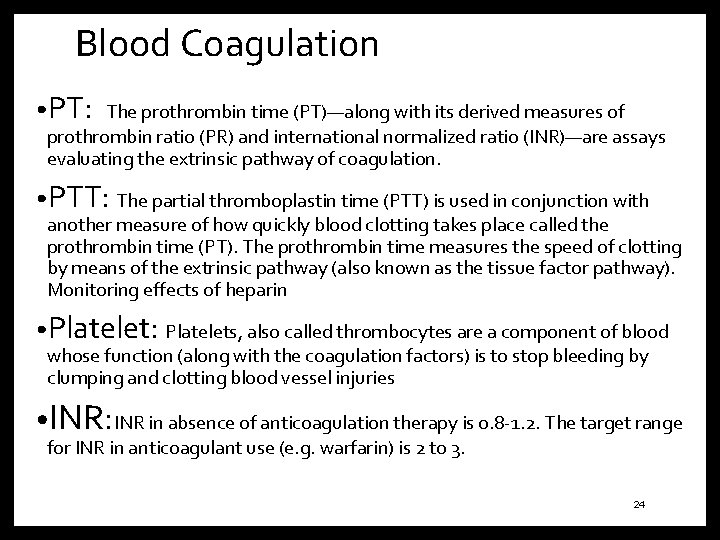
Blood Coagulation • PT: The prothrombin time (PT)—along with its derived measures of prothrombin ratio (PR) and international normalized ratio (INR)—are assays evaluating the extrinsic pathway of coagulation. • PTT: The partial thromboplastin time (PTT) is used in conjunction with another measure of how quickly blood clotting takes place called the prothrombin time (PT). The prothrombin time measures the speed of clotting by means of the extrinsic pathway (also known as the tissue factor pathway). Monitoring effects of heparin • Platelet: Platelets, also called thrombocytes are a component of blood whose function (along with the coagulation factors) is to stop bleeding by clumping and clotting blood vessel injuries • INR: INR in absence of anticoagulation therapy is 0. 8 -1. 2. The target range for INR in anticoagulant use (e. g. warfarin) is 2 to 3. 24
Medications and Dosage • Current Reconciliation • Pre-procedure medications (steroid, anti-anxiety) • Post-procedure instructions 25
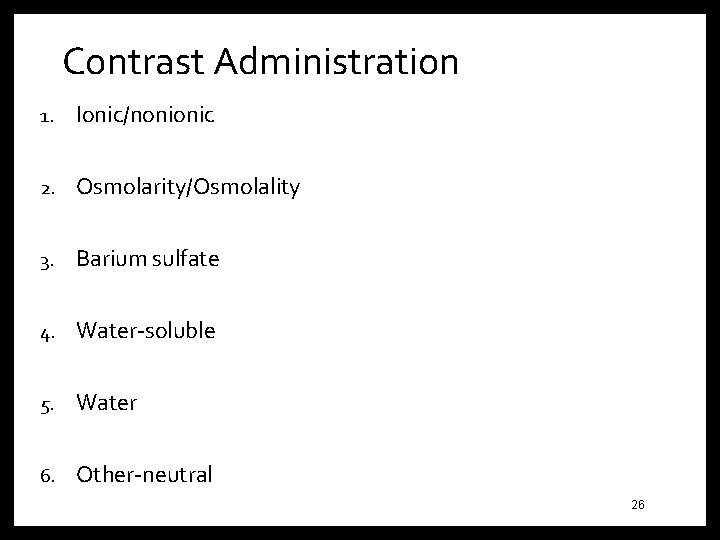
Contrast Administration 1. Ionic/nonionic 2. Osmolarity/Osmolality 3. Barium sulfate 4. Water-soluble 5. Water 6. Other-neutral 26
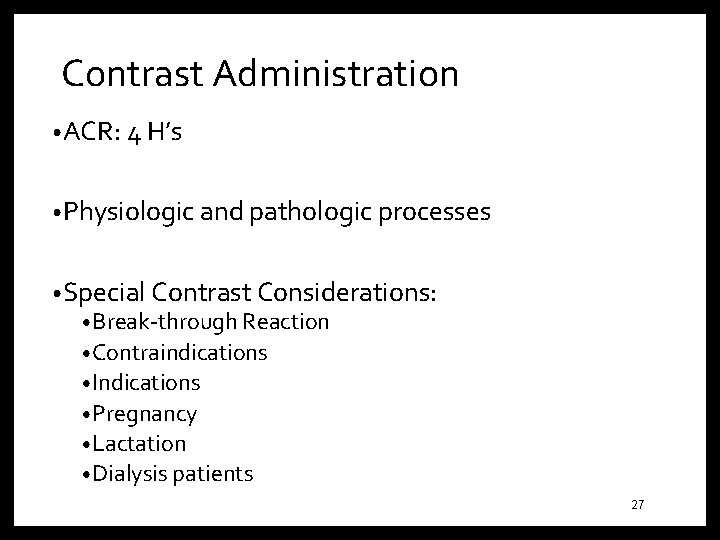
Contrast Administration • ACR: 4 H’s • Physiologic and pathologic processes • Special Contrast Considerations: • Break-through Reaction • Contraindications • Indications • Pregnancy • Lactation • Dialysis patients 27
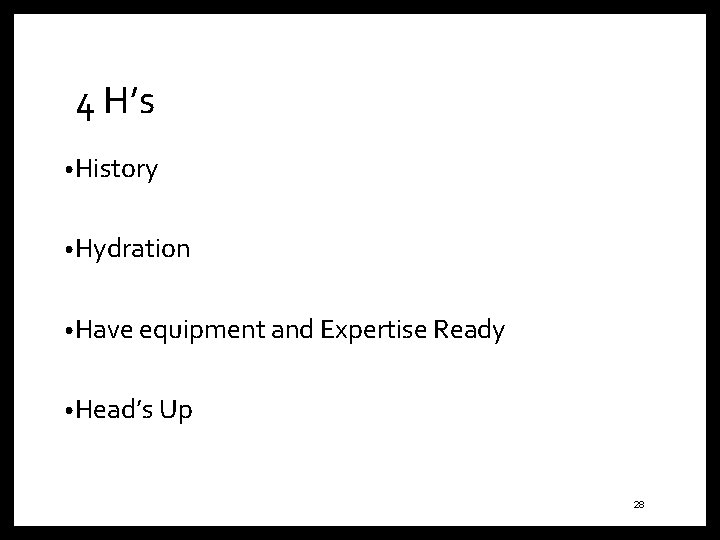
4 H’s • History • Hydration • Have equipment and Expertise Ready • Head’s Up 28

Physiologic and Pathologic Processes • Asthma • Enviromental/food allergies • Renal disease • Multiple Myeloma • Diabetes Mellitus • Pheochromocytoma • Sickle Cell disease • Hyperthyroidism • Significant cardiac disease • Anxiety 29
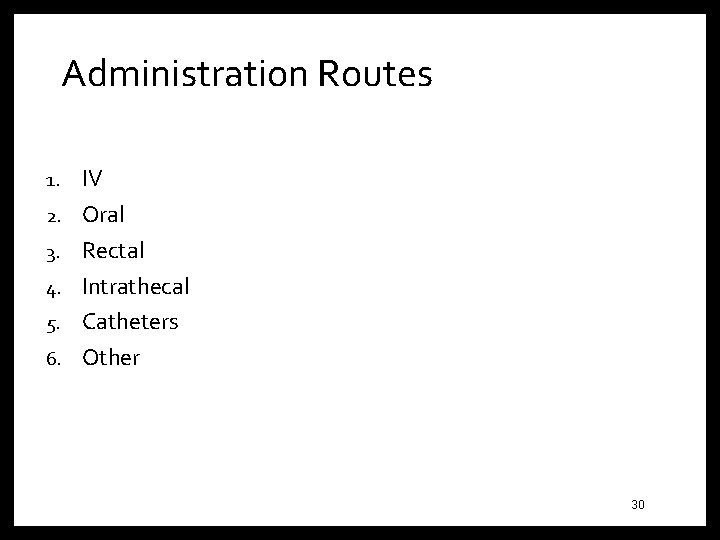
Administration Routes 1. 2. 3. 4. 5. 6. IV Oral Rectal Intrathecal Catheters Other 30
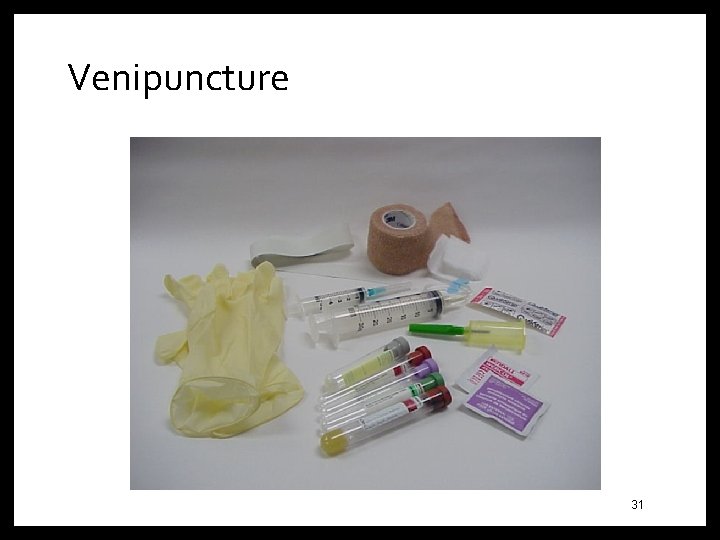
Venipuncture Figure 10 -06 The “head” and “body” CT scanner dosimetry phantoms are solid acrylic with holes placed strategically to receive a pencil ionization chamber. Although the phantoms differ in diameter, they are both 15 -cm long. 31
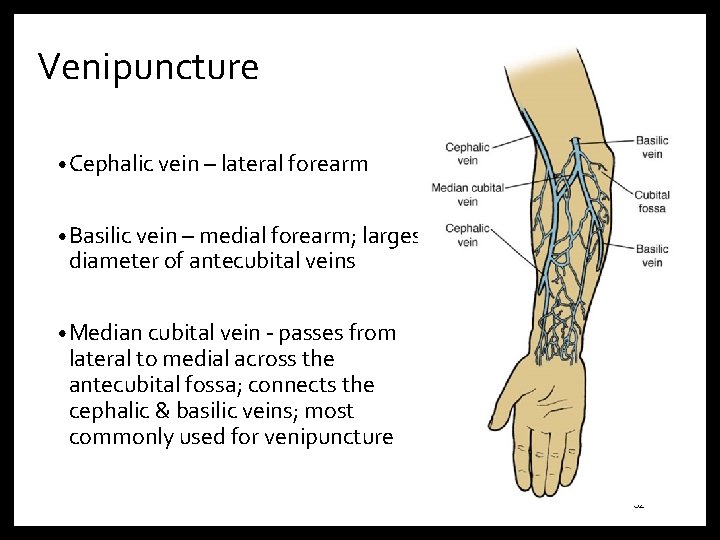
Venipuncture • Cephalic vein – lateral forearm • Basilic vein – medial forearm; largest diameter of antecubital veins • Median cubital vein - passes from lateral to medial across the antecubital fossa; connects the cephalic & basilic veins; most commonly used for venipuncture 32
Venipuncture • Prior to injection check: - any previous history of allergy - patient height & weight - renal, liver and cardiac function - patient medication/drug history • Set up all needed equipment – even emergency equipment should be close by • Preliminarily select venipuncture site 33
Venipuncture • Wash hands and put on gloves • Apply tourniquet around arm 3 -4 inches above venipuncture site. Do not leave tourniquet on the arm for more than 1 -2 minutes. • Select venipuncture site • Cleanse venipuncture site w/ antiseptic, usually betadine or 70% isopropyl alcohol, using circular motion towards the periphery. Allow area to dry before proceeding. 34
Venipuncture • Grasp patient's arm firmly, placing the thumb 1 -2 inches below the chosen site to draw skin taut. This will anchor the vein. • Perform venipuncture keeping bevel side of needle up. • Align needle bevel up • Pierce skin at a 15 -30 degree angle • Decrease angle until parallel to skin surface, then pierce vein • If needle is withdrawn above skin surface, do not attempt venipuncture again with same needle 35
Venipuncture • Grasp barrel of syringe firmly and pull firmly on plunger until required amount of blood is in the syringe • Ask patient to open fist and remove tourniquet as soon as desired amount of blood has been obtained. Remember not to release tourniquet until blood collection is completed. Release tourniquet before injecting contrast media. 36
• Immediately after the needle is removed from the vein, apply direct pressure with gauze to puncture site for a few minutes. Check site for bleeding or swelling. If site is still bleeding, continue direct pressure. Do not bandage until bleeding has completely stopped. Once bleeding has stopped, apply bandage over the gauze pad at site. Advise patient to leave bandage on for at least 15 minutes. 37
Injection Techinques 1. Manual 2. Power injector • Single or dual head • Single phase • Multi-phase • Flow rate • Timing bolus • Bolus tracking 38
Adverse Reactions Mild: • Signs and symptoms self-limiting Urticaria Cough Sweats Nausea/Vomiting Notify physician immediately • Treatment: Antihistamine delivered, observation of • • • patient 39
Extravasation • Is the leakage of a fluid out of its container. In the case of inflammation. • Catheter removed immediately • Pressure • Warm compress 40
Adverse Reactions • Moderate: • Signs and symptoms are more pronounced. Moderate degree of clinically evident systemic signs • Hypertension • Tachycardia • Dyspnea • Prompt treatment. Careful observation for possible progression to life-threatening event 41
Adverse Reactions Severe: • Signs and symptoms are life-threatening • Laryngeal edema • Hypotension • Convulsions • Unresponsiveness • Treatment: Prompt recognition and aggressive treatment 42
Adverse Reactions Anaphylactic Shock: • A massive allergic reaction • Vasogenic shock • Adrenaline (epinephrine) is often administered • Observe for bronchoconstriction Patients with cardiac arrest should be treated with CPR 43
Adverse Reactions Anaphylactic Shock: • Treatment/Management • Screen for allergies • Administer meds (often benadryl, epinephrine, corticosteroid) and fluids • Document 44
Adverse Reaction Rates • 70% in first 5 minutes • 16% after 5 minutes • 14% after 15 minutes • Dose relation to toxicity is unpredictable 45
Contrast-Induced Nephrotoxicity (CIN) • Delayed effect of contrast agent administration • Increase in creatinine level • Pre-exsisting renal function • Factors • Diabetes • Myeloma • Advanced age • Cardiovascular disease 46
Safety 47

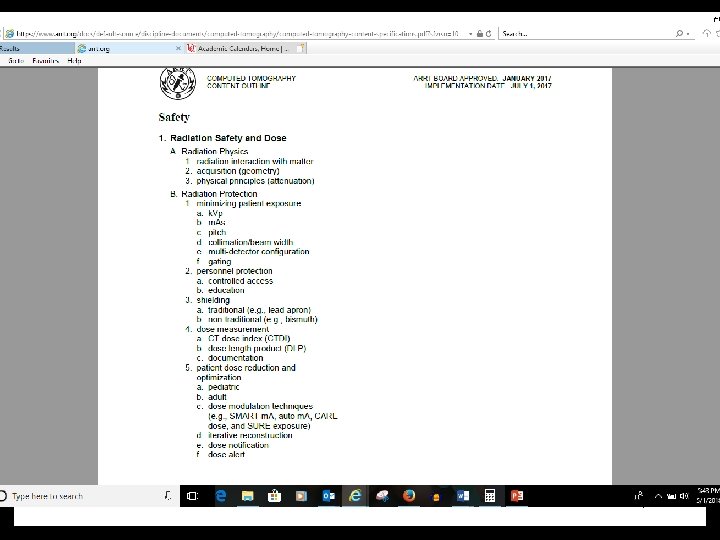
Radiation • Interaction with matter • Acquisition (geometry) • Physical Principles (attenuation) 48
Radiation Safety and Dosimetry Factors affecting dose: Direct Indirect 49
Exposure Technique Factors • Kilovoltage (k. Vp) • Milliamperage (m. A) • Constant • Effective • Time (s) • Automatic Exposure Control/Modulation 50
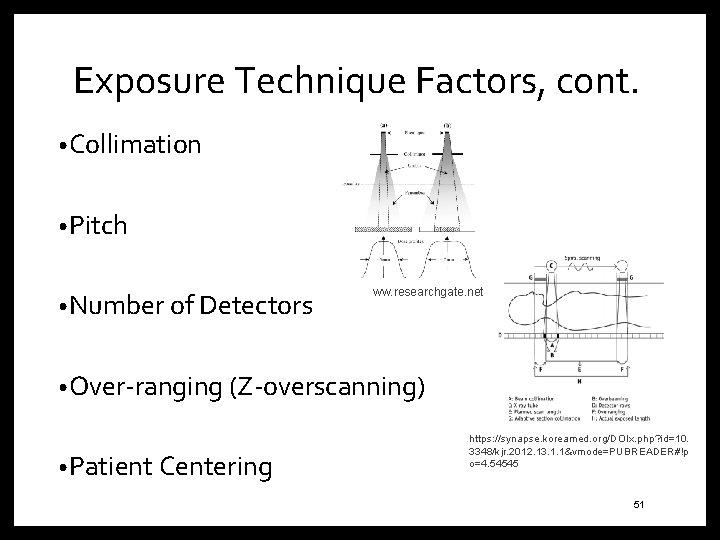
Exposure Technique Factors, cont. • Collimation • Pitch • Number of Detectors www. researchgate. net- • Over-ranging (Z-overscanning) • Patient Centering https: //synapse. koreamed. org/DOIx. php? id=10. 3348/kjr. 2012. 13. 1. 1&vmode=PUBREADER#!p o=4. 54545 51
Iterative Reconstruction Algorithms • Reduced noise and minimize the higher radiation dose inherent in the filtered back projection. • All manufactures offer IR algorithms • Assumption 52
Gating • Cardiac studies • Prospective gating 53
Personal Protection • Controlled access • Education • Guardian/family member • Best practices in protocol optimization 54
Dose Reduction and Optimization • ALARA • Radiation protection principles • Early dose optimization strategies • Pediatric/Adult • Image Gently/Image Wisely • Examinations are needed-communication between ordering physician and radiologist • Dose notification • Dose alert • Techniques: • SURE exposure, Smart m. A, CARE dose, auto m. A 55
The role of the CT Technologist • Technologist careful attention when optimizing an scan: • Risks of radiation and CT dose in particular • Current technical advances in CT • CT dose metrics CTDI, DPL • CT image quality metrics, spatial resolution, contrast resolution, noise and artifacts • CT patient dose: exposure factors, IR algorithms, anatomical coverage, etc. • Scan protocols and reviewing protocols with radiologist ongoing basis with the goal of scan optimization and image quality. • Pre and post scan CTDI and DPL reports • Getting involved in CT dose monitoring within the department • Participating in research on CT patient dose and image quality optimization • Continuous professional development. 56
Dose Measurement • Slice sensitivity profile (SSP) • Exposure vs. absorbed dose • Kerma 57
Dose Measurement • CT Dose Index • Approximate measure of the dose received in a single CT section or slice • Calculated for central slice and seven slices on each side • Mean absorbed dose in scanned object volume 58
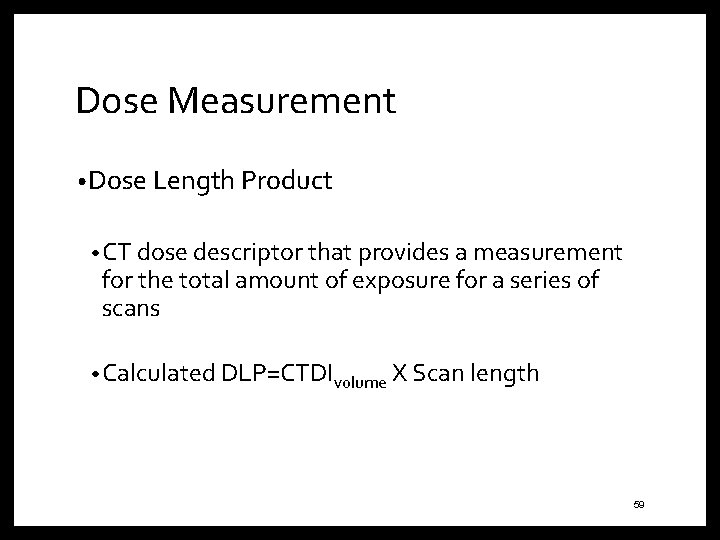
Dose Measurement • Dose Length Product • CT dose descriptor that provides a measurement for the total amount of exposure for a series of scans • Calculated DLP=CTDIvolume X Scan length 59
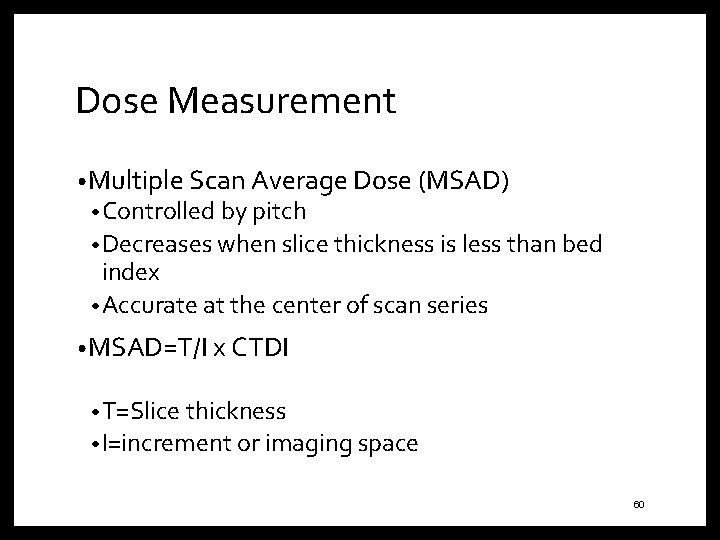
Dose Measurement • Multiple Scan Average Dose (MSAD) • Controlled by pitch • Decreases when slice thickness is less than bed index • Accurate at the center of scan series • MSAD=T/I x CTDI • T=Slice thickness • I=increment or imaging space 60
Dose Check • Dose notification • Dose Alert 61
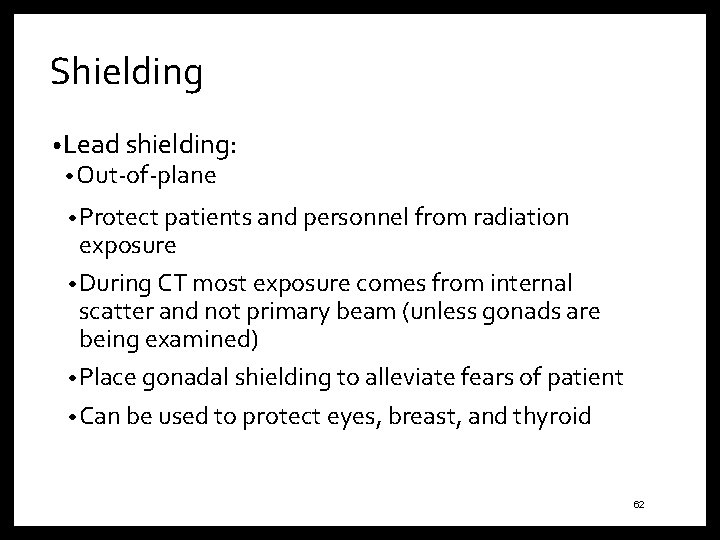
Shielding • Lead shielding: • Out-of-plane • Protect patients and personnel from radiation exposure • During CT most exposure comes from internal scatter and not primary beam (unless gonads are being examined) • Place gonadal shielding to alleviate fears of patient • Can be used to protect eyes, breast, and thyroid 62
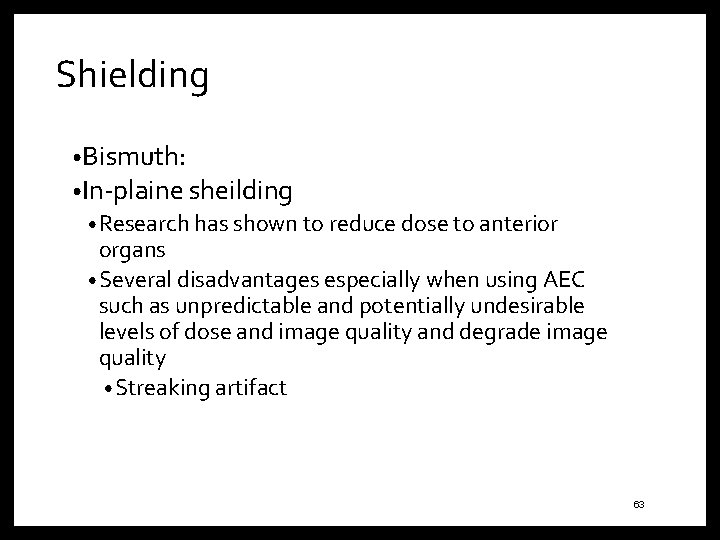
Shielding • Bismuth: • In-plaine sheilding • Research has shown to reduce dose to anterior organs • Several disadvantages especially when using AEC such as unpredictable and potentially undesirable levels of dose and image quality and degrade image quality • Streaking artifact 63
• References: • Adler, A. MEd. RT (R), FAEIRS and Carlton, R. MS. RT (R), (CT), FAEIRS 2012. Introduction to Radiologic Sciences and Patient Care. Elsevier 5 th Ed. • Seeram, Euclid, 2016. Computed Tomography Physical Principles, Clinical Applications, and Quality Control. Elsevier, 4 th Ed. • Demaio, D. MEd. RT ( R), CT 2018. Mosby’s Exam Review for Computed Tomography. Elsevier. 3 rd ed.
- Slides: 64