
Patient Assessment in the Wilderness 6 Key Steps
- Slides: 48
Patient Assessment in the Wilderness
6 Key Steps 1. Scene Size Up (Are YOU Safe? ) 2. Initial Assessment (ABC’s, AVPU) 3. Focused history (SAMPLE) 4. Physical Exam (Head to Toe) 5. Criticality and transport decision 6. Ongoing assessment (. . cause you might be there for a while)
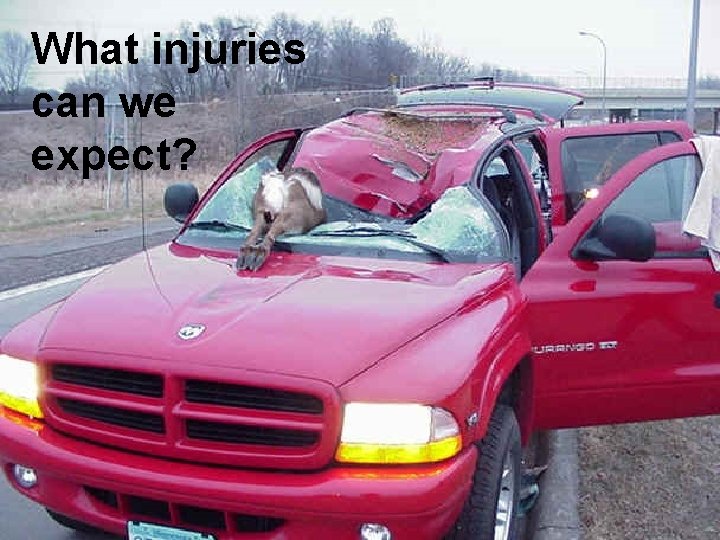
What injuries can we expect?
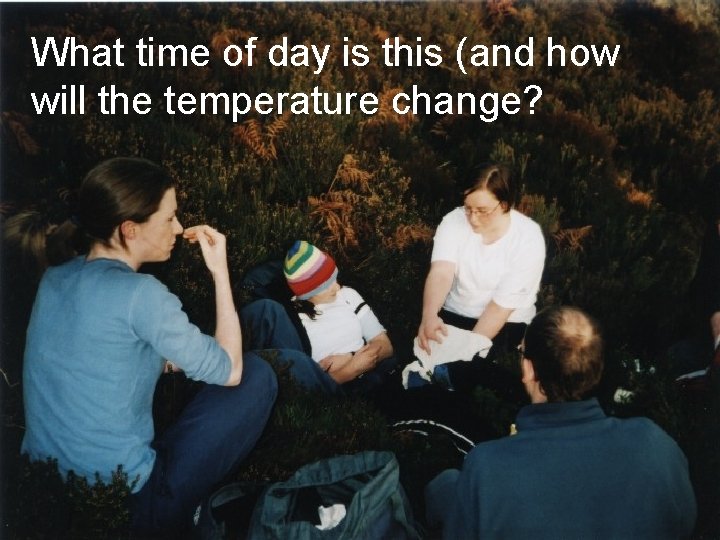
What time of day is this (and how will the temperature change?
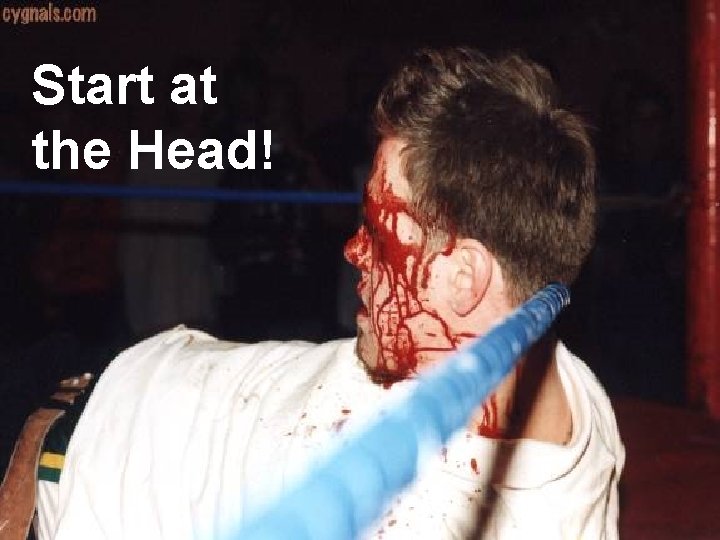
Start at the Head!
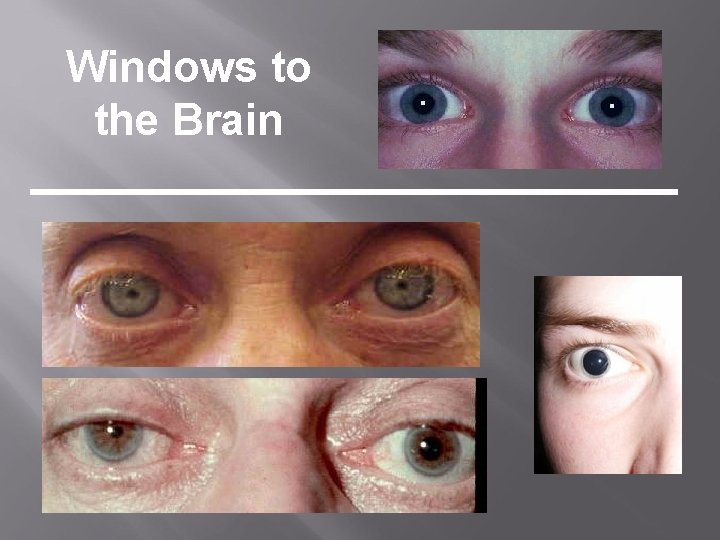
The Head Look for obvious injuries Check the eyes Feel top/back of head for instability (under their hair) Check for any impacts to airway/breathing
Windows to the Brain
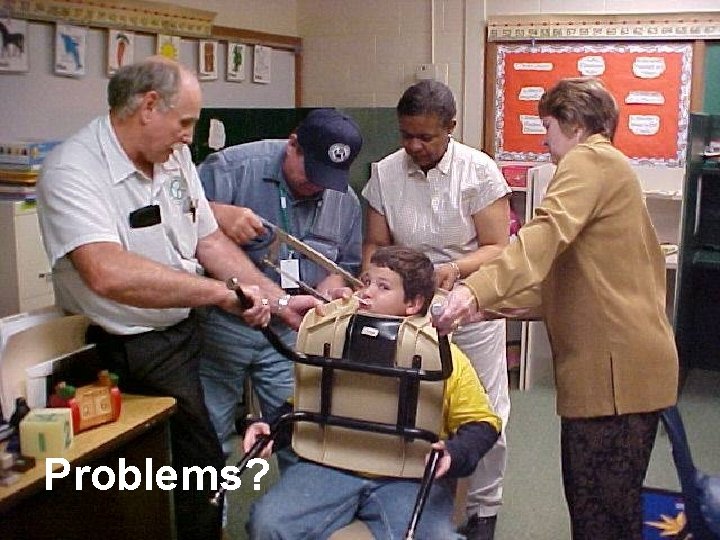
Problems?
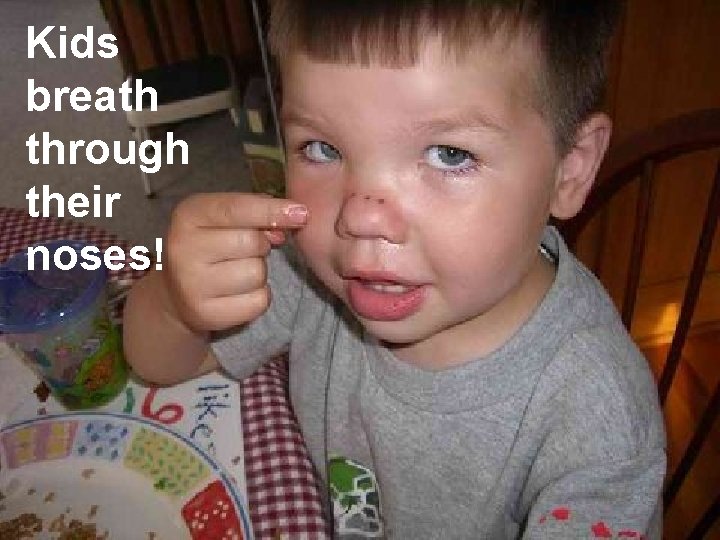
Kids breath through their noses!
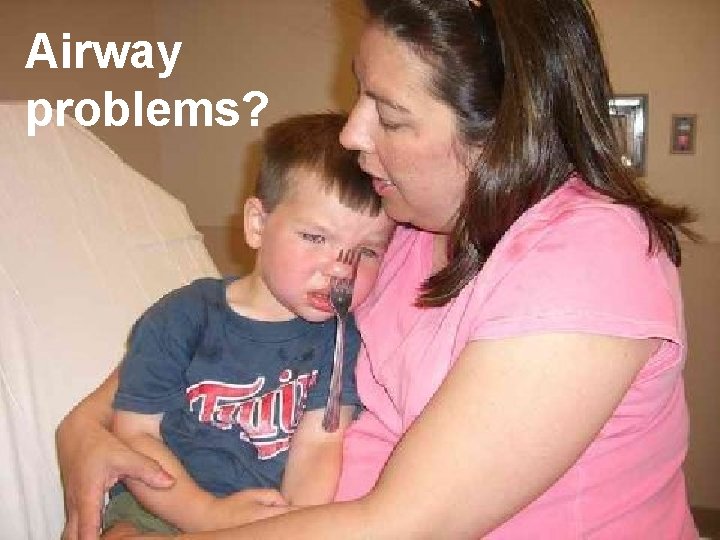
Airway problems?
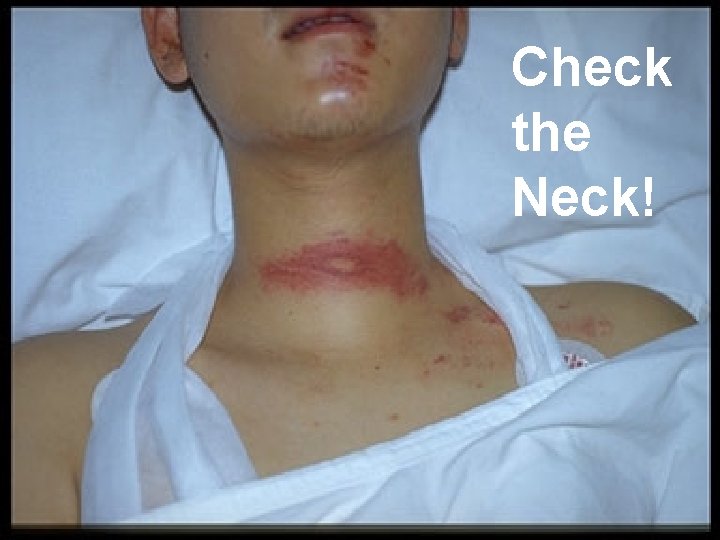
Check the Neck!
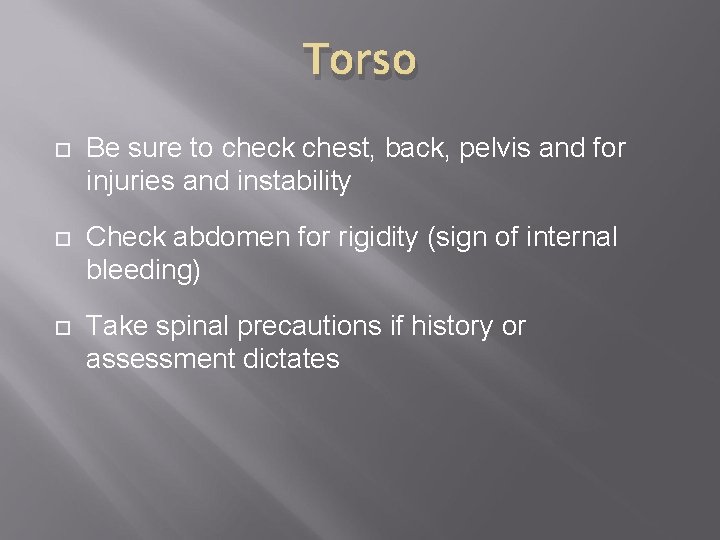
Torso Be sure to check chest, back, pelvis and for injuries and instability Check abdomen for rigidity (sign of internal bleeding) Take spinal precautions if history or assessment dictates
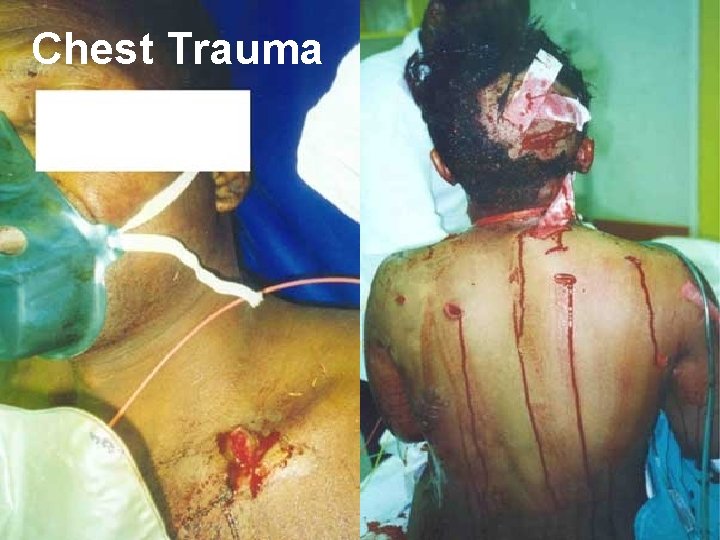
Chest Trauma
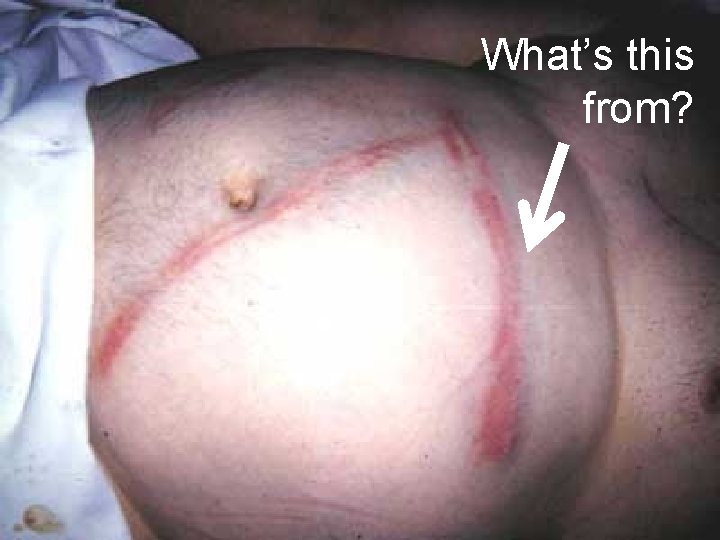
What’s this from?
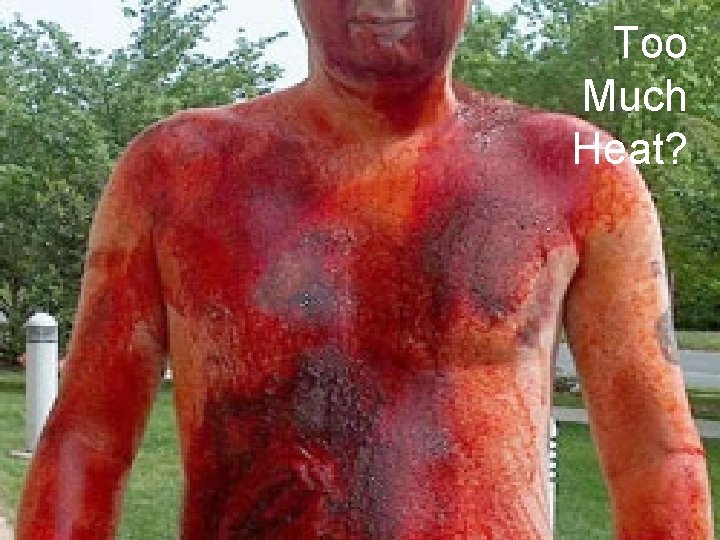
Too Much Heat?
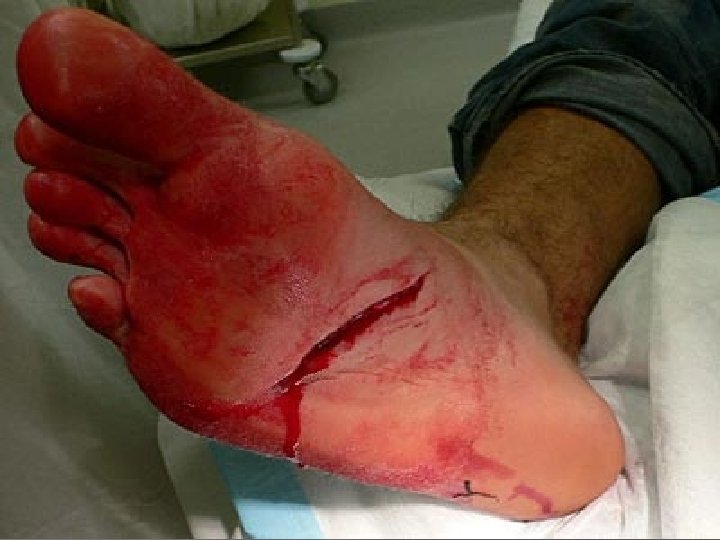
Extremities Feel down each arm and leg Look for injuries Have patient wiggle fingers and toes Have them squeeze your hands Have them push their feet against your hands to check equal strength Check capillary refill on finger (and toe if necessary)
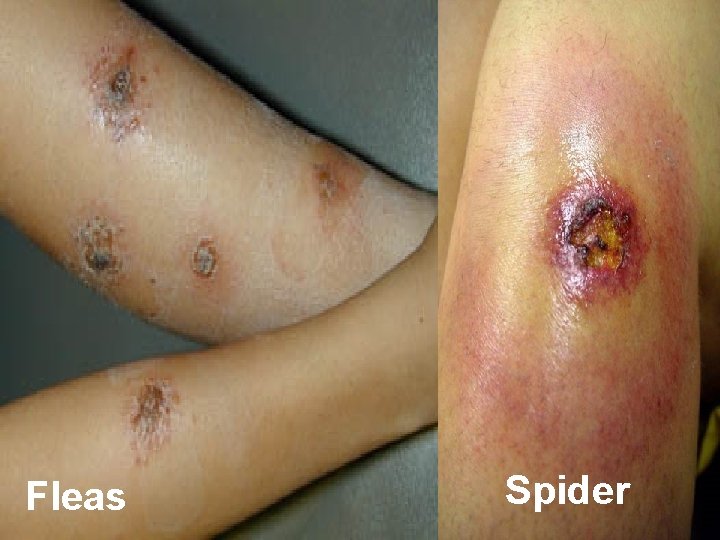
Fleas Spider
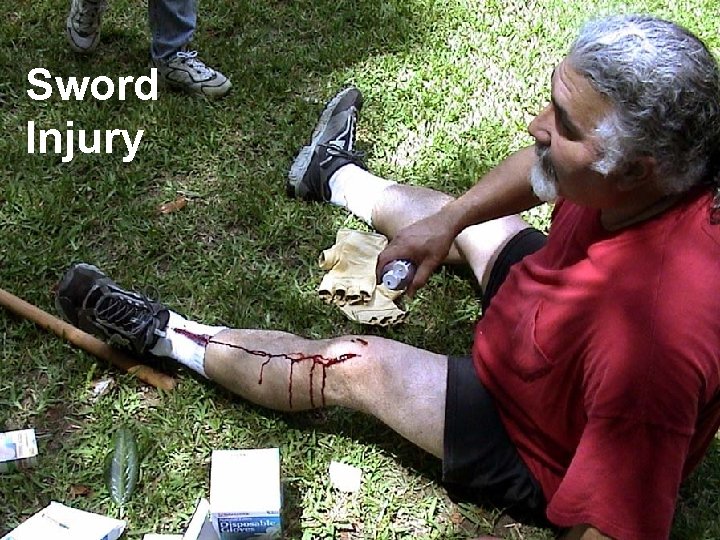
Sword Injury
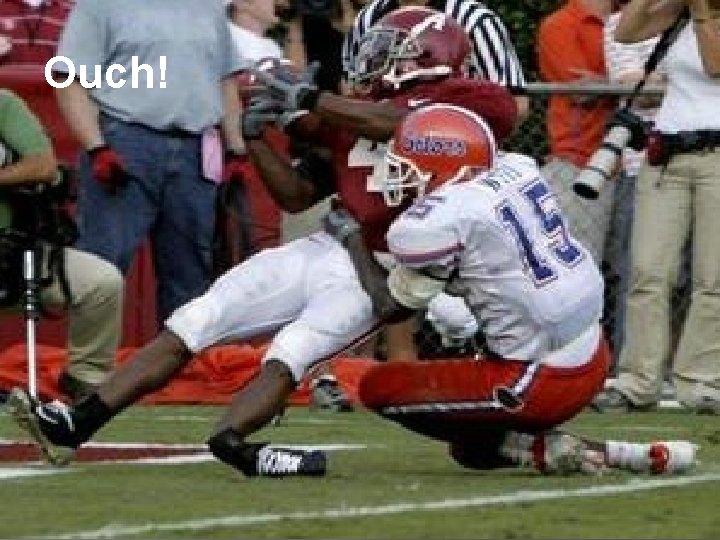
Ouch!
Ongoing Assessment Call for help early! Determine response time and need to move patient to rescuers Consider changes in temperature and weather Continue to reassess to catch changes in patient’s condition or injuries that take longer to be apparent
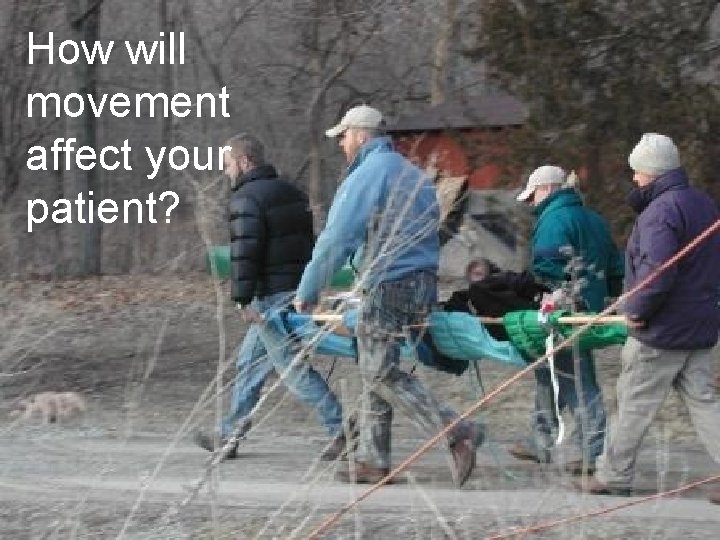
How will movement affect your patient?
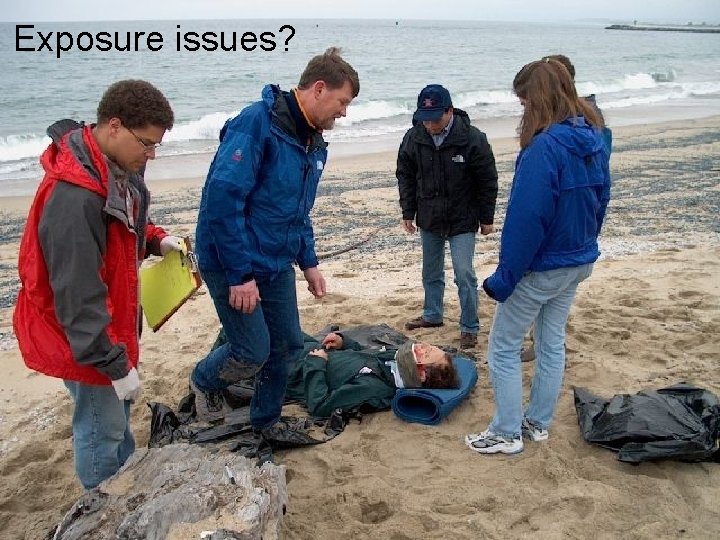
Exposure issues?
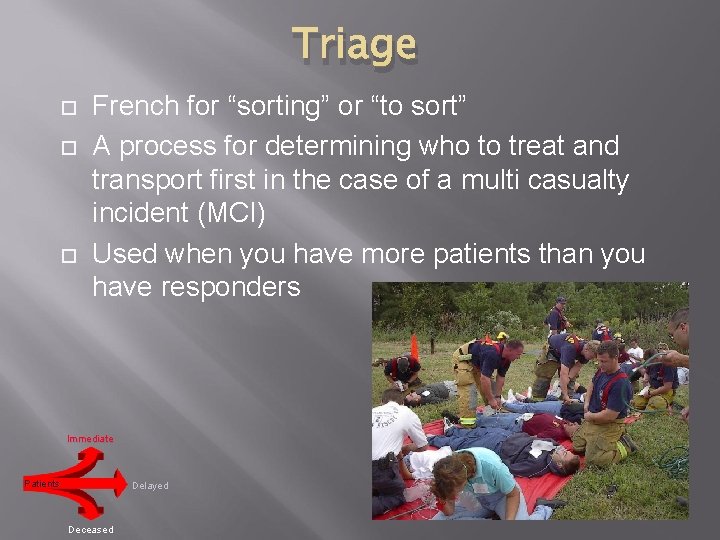
Triage French for “sorting” or “to sort” A process for determining who to treat and transport first in the case of a multi casualty incident (MCI) Used when you have more patients than you have responders Immediate Patients Delayed Deceased
First Responders Responsibility One responder takes charge Other members starts the Triage process Start calling for additional resources (EMS, fire department) that you think you might need Immediate Patients Delayed Deceased
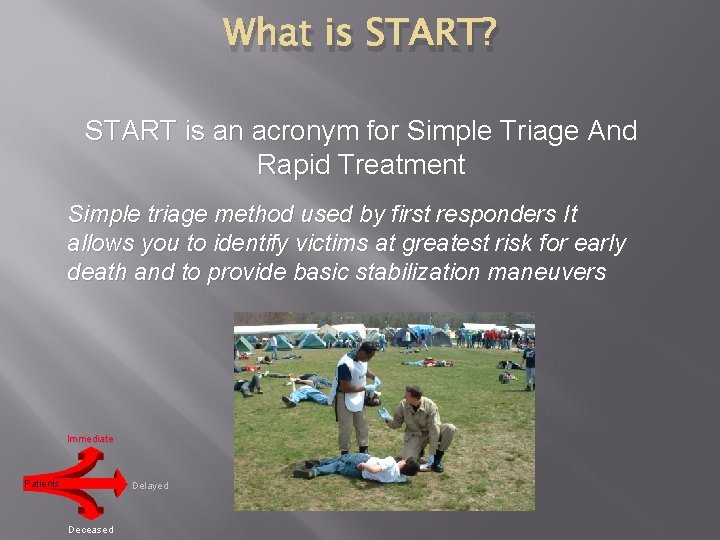
What is START? START is an acronym for Simple Triage And Rapid Treatment Simple triage method used by first responders It allows you to identify victims at greatest risk for early death and to provide basic stabilization maneuvers Immediate Patients Delayed Deceased
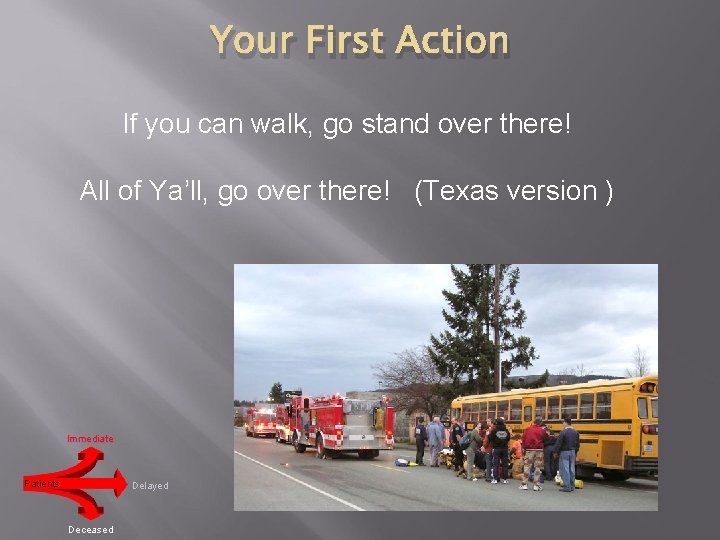
Your First Action If you can walk, go stand over there! All of Ya’ll, go over there! (Texas version ) Immediate Patients Delayed Deceased
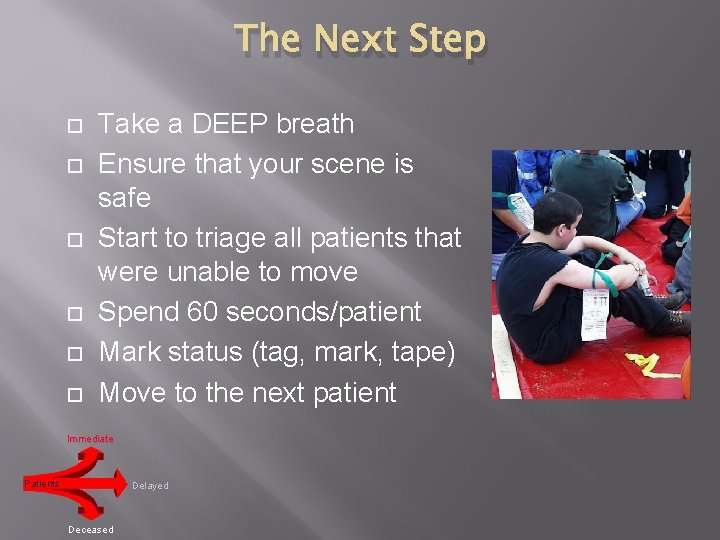
The Next Step Take a DEEP breath Ensure that your scene is safe Start to triage all patients that were unable to move Spend 60 seconds/patient Mark status (tag, mark, tape) Move to the next patient Immediate Patients Delayed Deceased
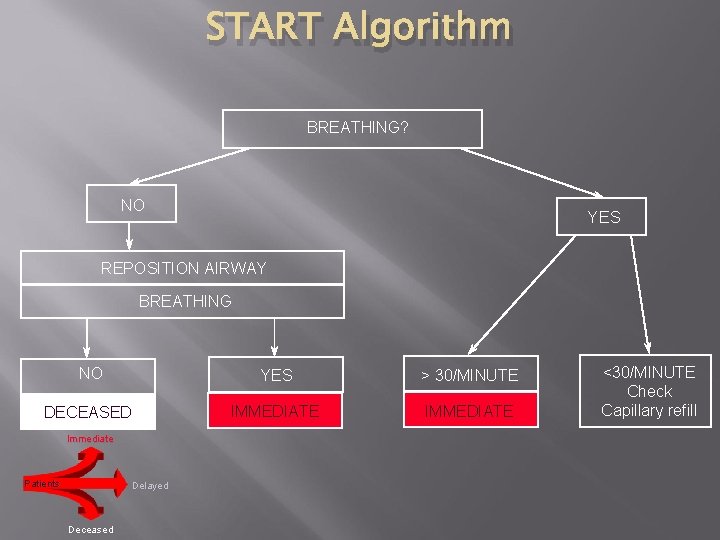
START Algorithm BREATHING? NO YES REPOSITION AIRWAY BREATHING NO YES > 30/MINUTE DECEASED IMMEDIATE Immediate Patients Delayed Deceased <30/MINUTE Check Capillary refill
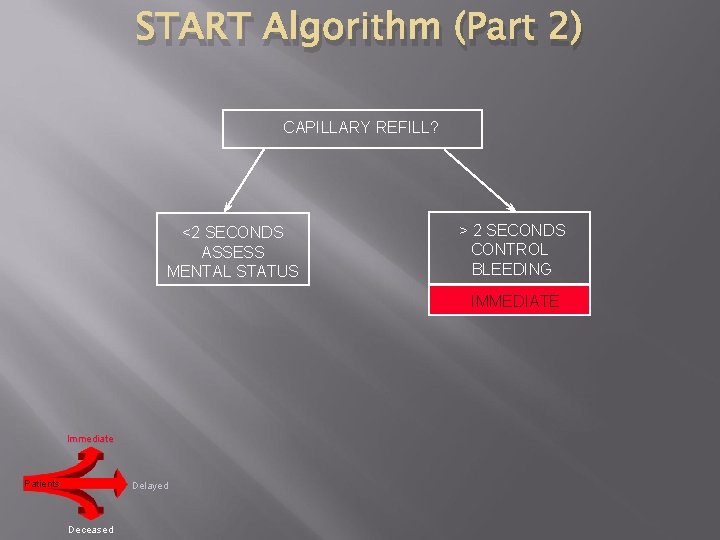
START Algorithm (Part 2) CAPILLARY REFILL? <2 SECONDS ASSESS MENTAL STATUS > 2 SECONDS CONTROL BLEEDING IMMEDIATE Immediate Patients Delayed Deceased
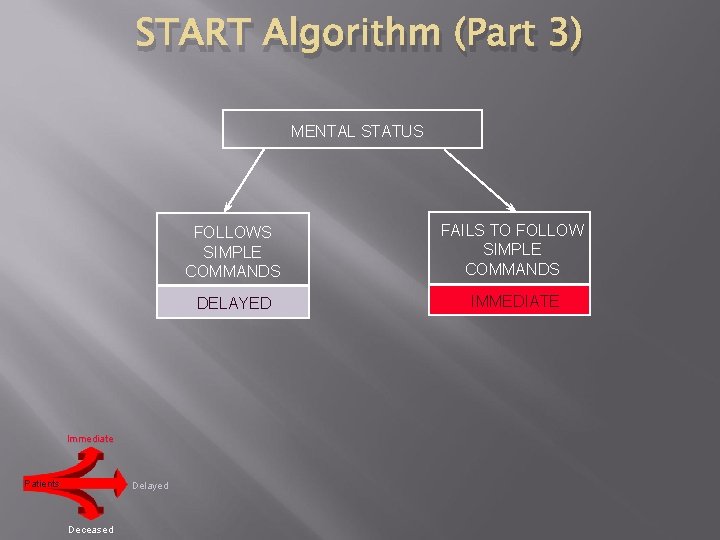
START Algorithm (Part 3) MENTAL STATUS Immediate Patients Delayed Deceased FOLLOWS SIMPLE COMMANDS FAILS TO FOLLOW SIMPLE COMMANDS DELAYED IMMEDIATE
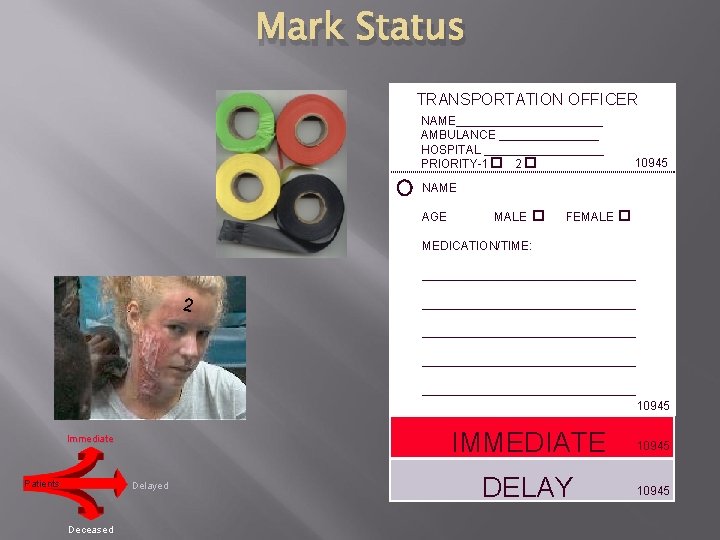
Mark Status TRANSPORTATION OFFICER NAME___________ AMBULANCE ________ HOSPITAL _________ PRIORITY-1 2 10945 NAME AGE MALE FEMALE MEDICATION/TIME: ________________ 2 ________________________________ 10945 Immediate Patients Delayed Deceased IMMEDIATE 10945 DELAY 10945
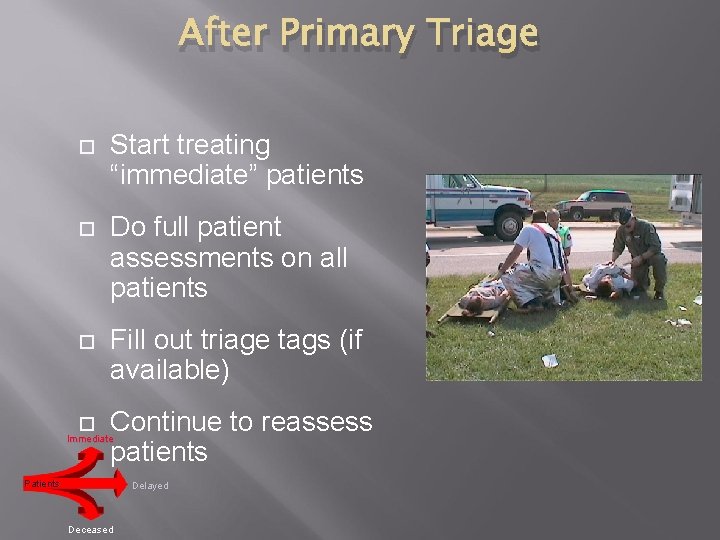
After Primary Triage Start treating “immediate” patients Do full patient assessments on all patients Fill out triage tags (if available) Continue to reassess patients Immediate Patients Delayed Deceased
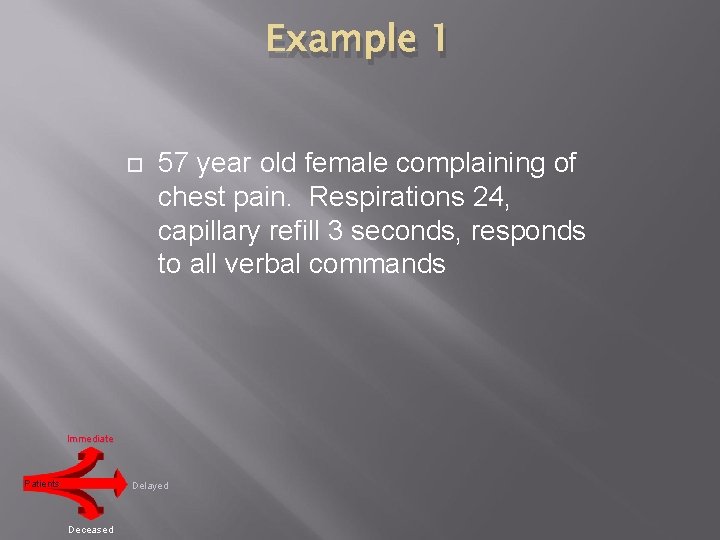
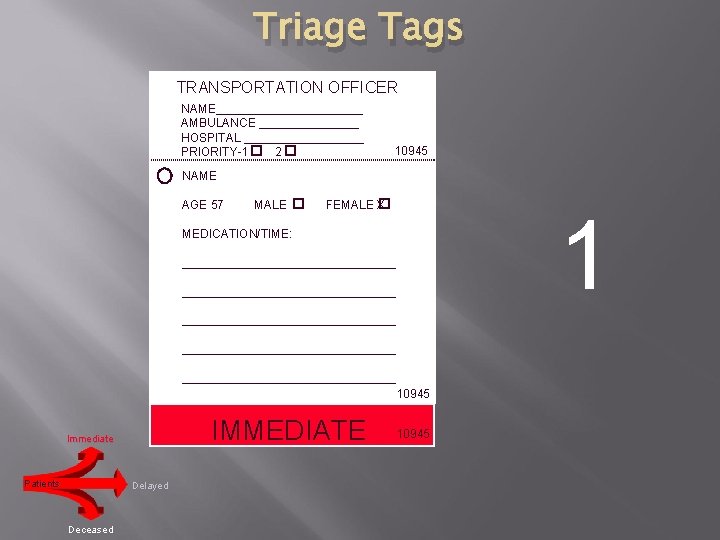
Example 1 57 year old female complaining of chest pain. Respirations 24, capillary refill 3 seconds, responds to all verbal commands Immediate Patients Delayed Deceased
Triage Tags TRANSPORTATION OFFICER NAME___________ AMBULANCE ________ HOSPITAL _________ PRIORITY-1 2 10945 NAME AGE 57 MALE FEMALE X 1 MEDICATION/TIME: ________________________________ ________________ 10945 IMMEDIATE Immediate Patients Delayed Deceased 10945
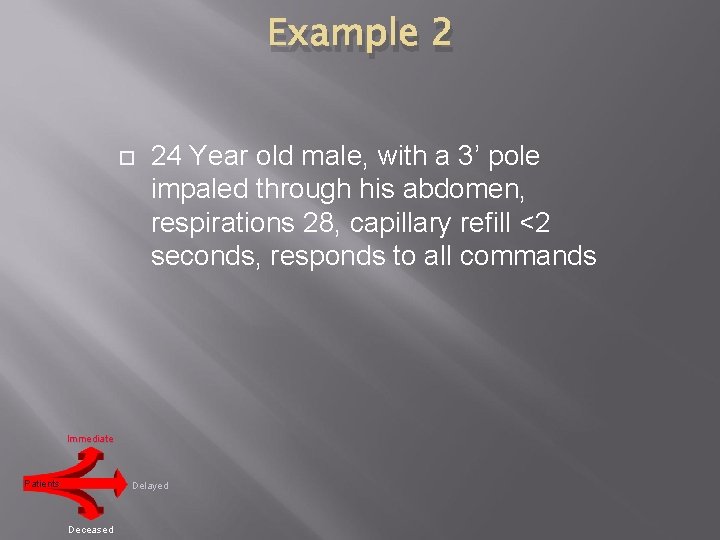
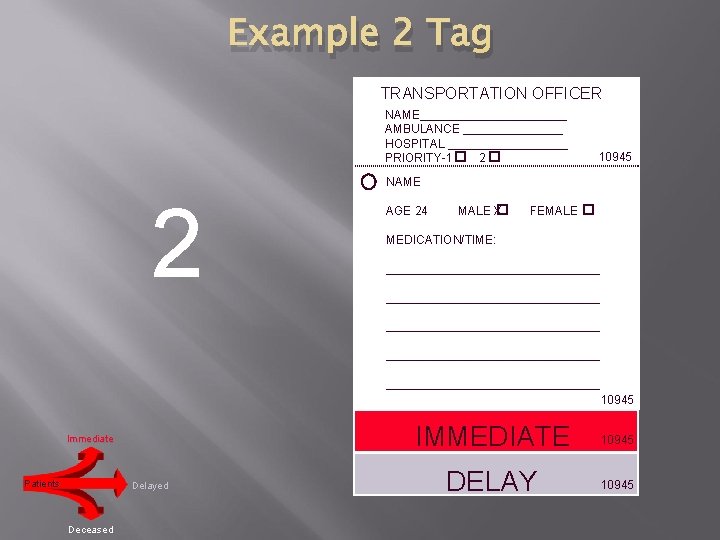
Example 2 24 Year old male, with a 3’ pole impaled through his abdomen, respirations 28, capillary refill <2 seconds, responds to all commands Immediate Patients Delayed Deceased
Example 2 Tag TRANSPORTATION OFFICER NAME___________ AMBULANCE ________ HOSPITAL _________ PRIORITY-1 2 10945 NAME 2 AGE 24 MALE X FEMALE MEDICATION/TIME: ________________________________ ________________ 10945 Immediate Patients Delayed Deceased IMMEDIATE 10945 DELAY 10945
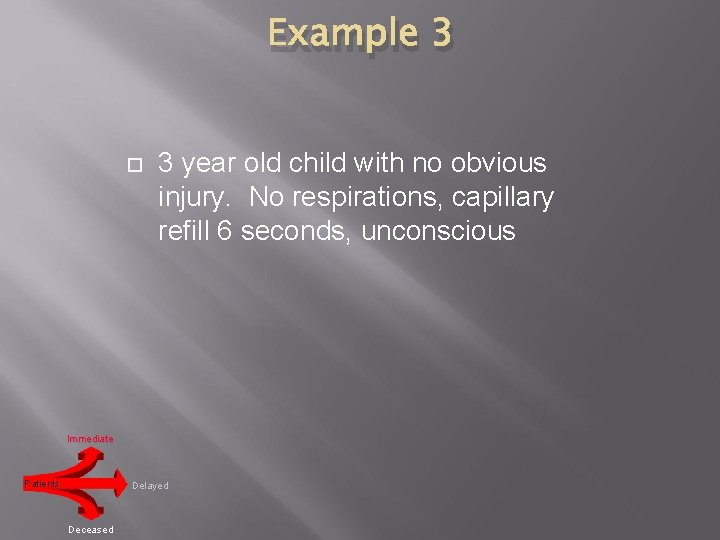
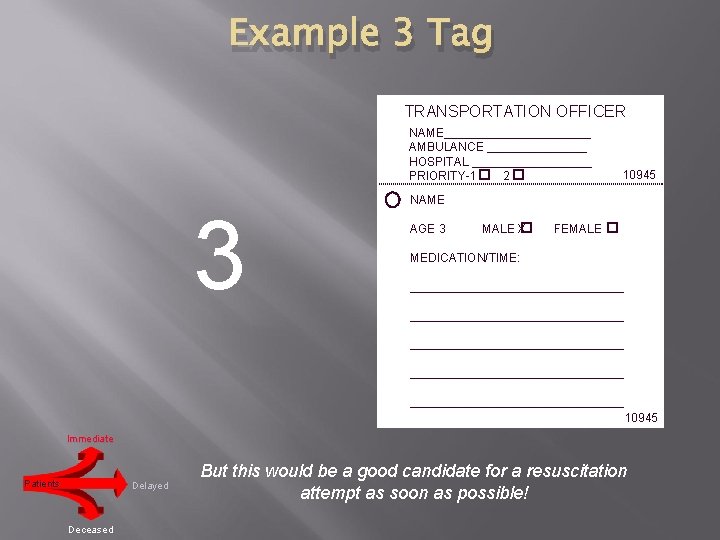
Example 3 3 year old child with no obvious injury. No respirations, capillary refill 6 seconds, unconscious Immediate Patients Delayed Deceased
Example 3 Tag TRANSPORTATION OFFICER NAME___________ AMBULANCE ________ HOSPITAL _________ PRIORITY-1 2 3 10945 NAME AGE 3 MALE X FEMALE MEDICATION/TIME: ________________________________ ________________ 10945 Immediate Patients Delayed Deceased But this would be a good candidate for a resuscitation attempt as soon as possible!
Texas A&M Bonfire Collapse November 18, 1999 2: 30 AM bonfire stack collapsed 150 people believed to be on bonfire site at time of collapse As stack collapsed, all lighting was pulled down leaving the area in total darkness First Responders reported hearing screaming in the darkness Immediate Patients Delayed Deceased
First Responder Actions Immediate call for additional help Dispatch declared a Mass Casualty Incident and paged all personnel as well as College Station and Brian Fire Departments; Texas Fire Training Center resources and Montgomery County EMS Fire Department and Tx. Dot light trucks were immediately called for Triage started by flashlight
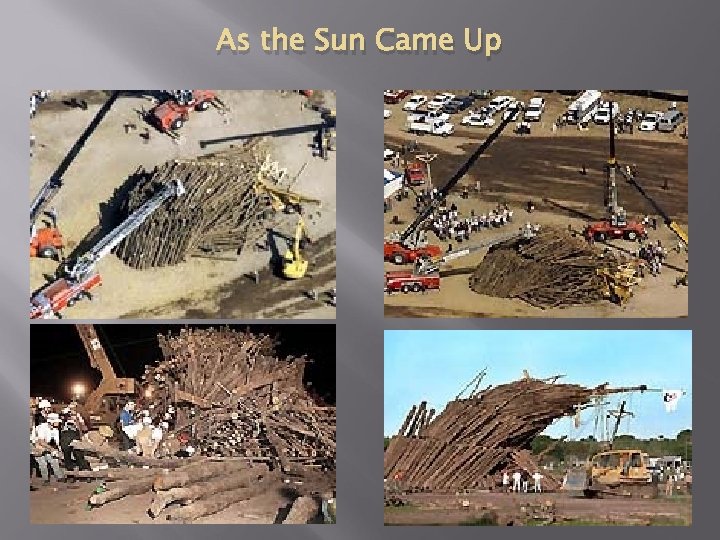
As the Sun Came Up
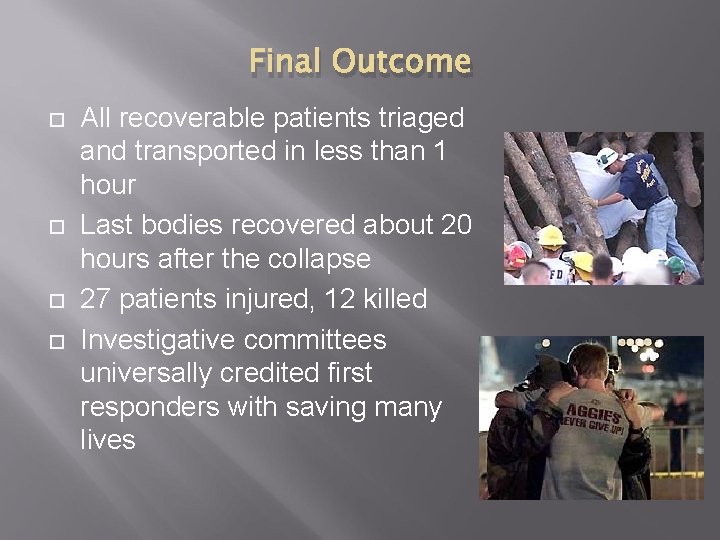
Final Outcome All recoverable patients triaged and transported in less than 1 hour Last bodies recovered about 20 hours after the collapse 27 patients injured, 12 killed Investigative committees universally credited first responders with saving many lives
So. . How does this apply to me? Major incidents can occur First responders are generally involved in these incidents Most responders face few large incidents in their career Preparation is the key to successful handling of these incidents Immediate Patients Delayed Deceased
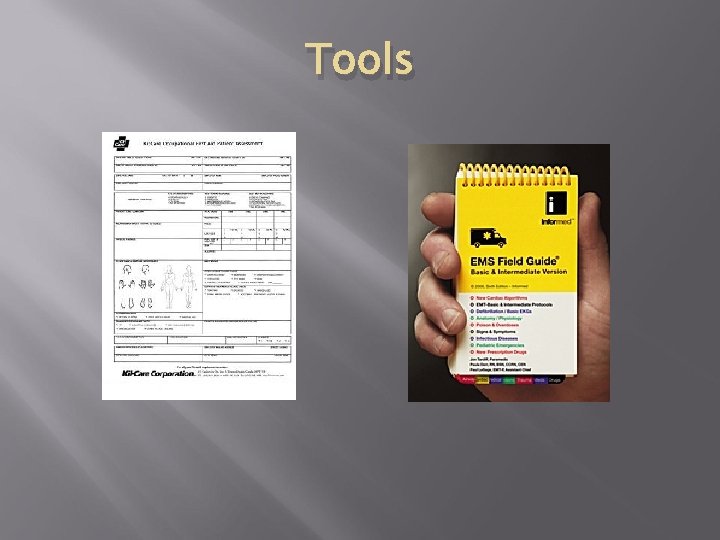
Tools