
Patient Assessment 2 1 Patient Assessment When assessing
![Homework [3] • Write about the “Code of Ethics in Radiology Technology”. – Note:](https://slidetodoc.com/presentation_image_h2/6e7bdaed005e88feab8689a0dbdf01d6/image-21.jpg "Homework [3] • Write about the “Code of Ethics in Radiology Technology”. – Note:")



- Slides: 24
Patient Assessment 2
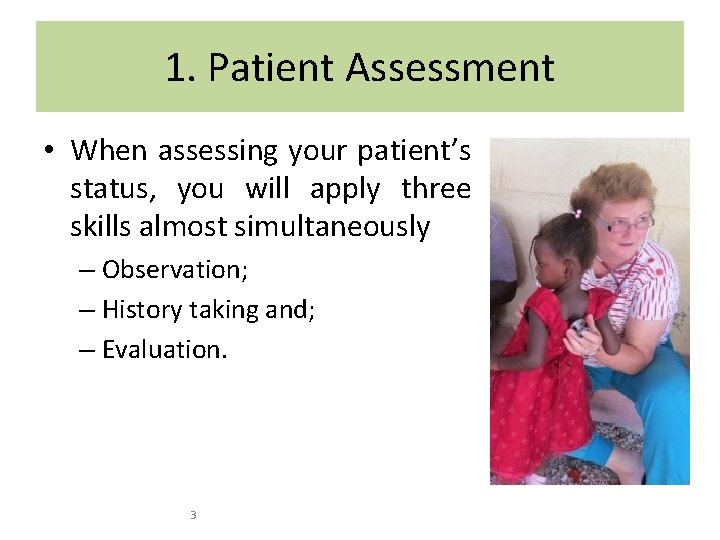
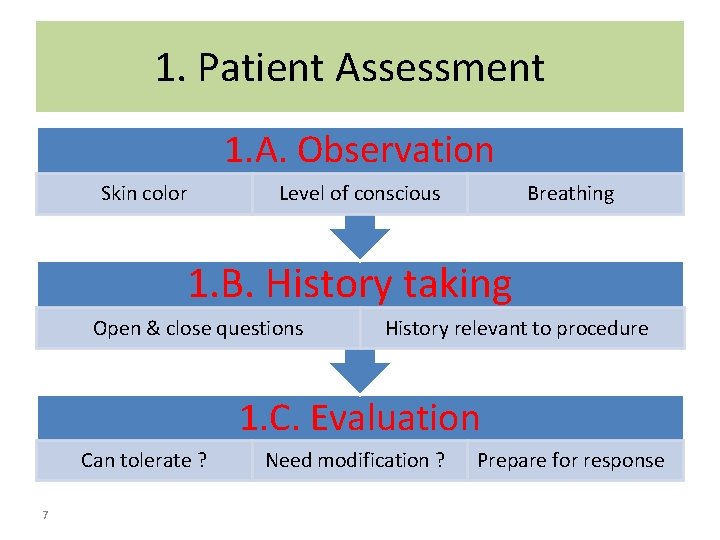
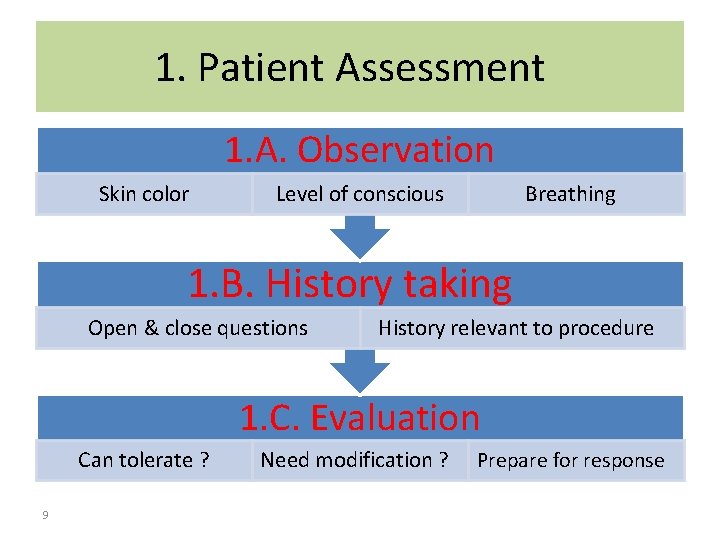
1. Patient Assessment • When assessing your patient’s status, you will apply three skills almost simultaneously – Observation; – History taking and; – Evaluation. 3
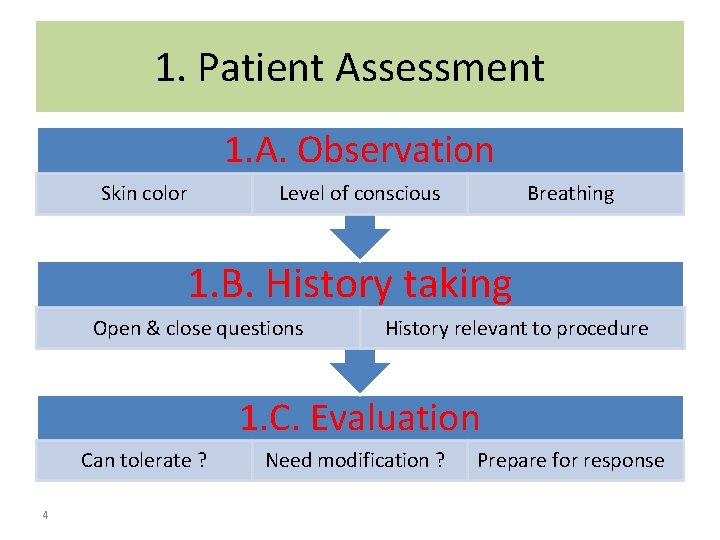
1. Patient Assessment 1. A. Observation Skin color Level of conscious Breathing 1. B. History taking Open & close questions History relevant to procedure 1. C. Evaluation Can tolerate ? 4 Need modification ? Prepare for response
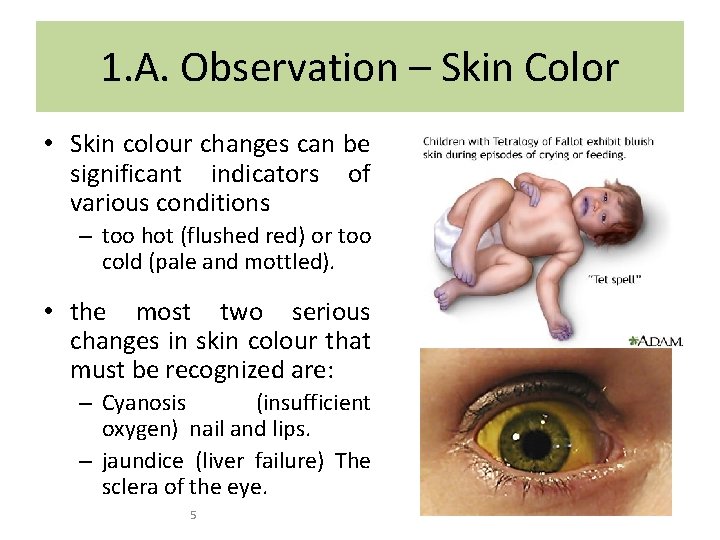
1. A. Observation – Skin Color • Skin colour changes can be significant indicators of various conditions – too hot (flushed red) or too cold (pale and mottled). • the most two serious changes in skin colour that must be recognized are: – Cyanosis (insufficient oxygen) nail and lips. – jaundice (liver failure) The sclera of the eye. 5
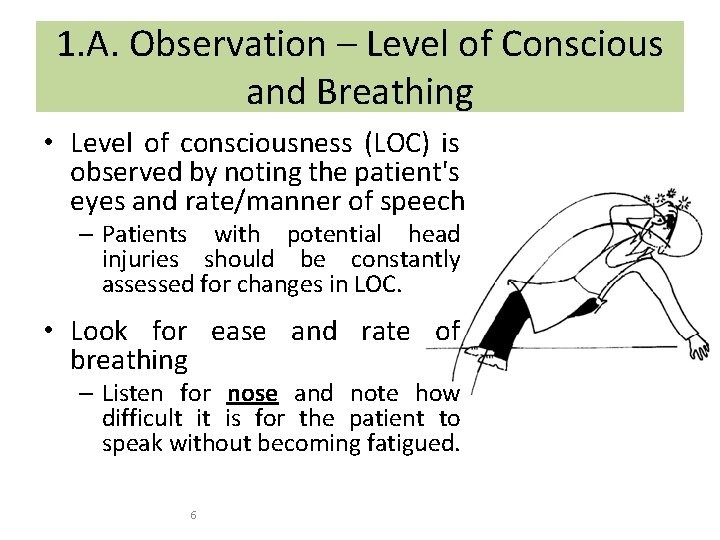
1. A. Observation – Level of Conscious and Breathing • Level of consciousness (LOC) is observed by noting the patient's eyes and rate/manner of speech – Patients with potential head injuries should be constantly assessed for changes in LOC. • Look for ease and rate of breathing – Listen for nose and note how difficult it is for the patient to speak without becoming fatigued. 6
1. Patient Assessment 1. A. Observation Skin color Level of conscious Breathing 1. B. History taking Open & close questions History relevant to procedure 1. C. Evaluation Can tolerate ? 7 Need modification ? Prepare for response
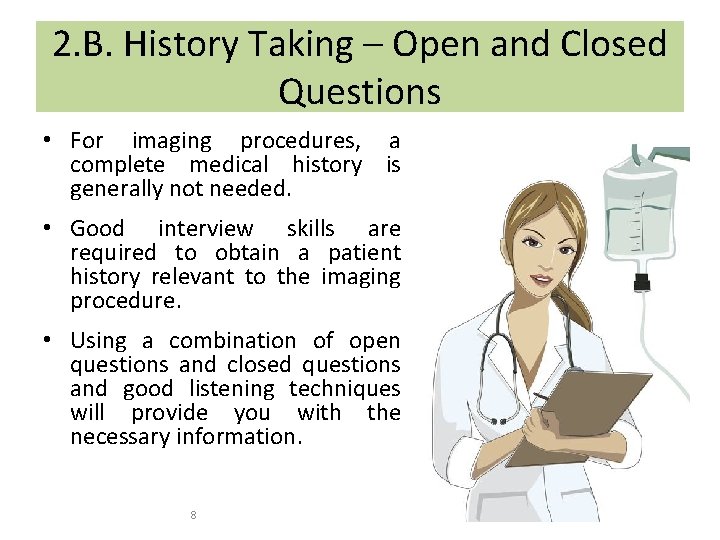
2. B. History Taking – Open and Closed Questions • For imaging procedures, a complete medical history is generally not needed. • Good interview skills are required to obtain a patient history relevant to the imaging procedure. • Using a combination of open questions and closed questions and good listening techniques will provide you with the necessary information. 8
1. Patient Assessment 1. A. Observation Skin color Level of conscious Breathing 1. B. History taking Open & close questions History relevant to procedure 1. C. Evaluation Can tolerate ? 9 Need modification ? Prepare for response
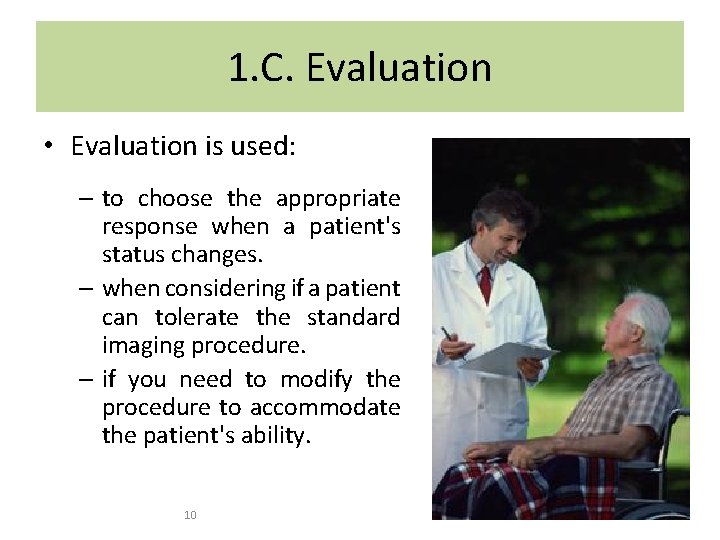
1. C. Evaluation • Evaluation is used: – to choose the appropriate response when a patient's status changes. – when considering if a patient can tolerate the standard imaging procedure. – if you need to modify the procedure to accommodate the patient's ability. 10
2. Vital Signs • Vital signs are the evidence that the body systems essential to maintaining life are functioning properly. • Changes in vital signs signify problems with the health status of the patient. • Technologists must have the ability to measure vital signs quickly and accurately to provide quality patient care. 11
2. A. Temperature • Body temperature indicates the metabolic activity in the body. • Depending on the patient's age and health condition, temperature measurement may be obtained by any of four routes: oral, tympanic, rectal, or axillary. • Normal temperature ranges vary by age and route. • Fever (pyrexia, hyperthermia) – Fever indicates an increased metabolism and is a common body response to an infection. • Hypothermia – Hypothermia may occur in prolonged exposure to cooler weather or water. 12
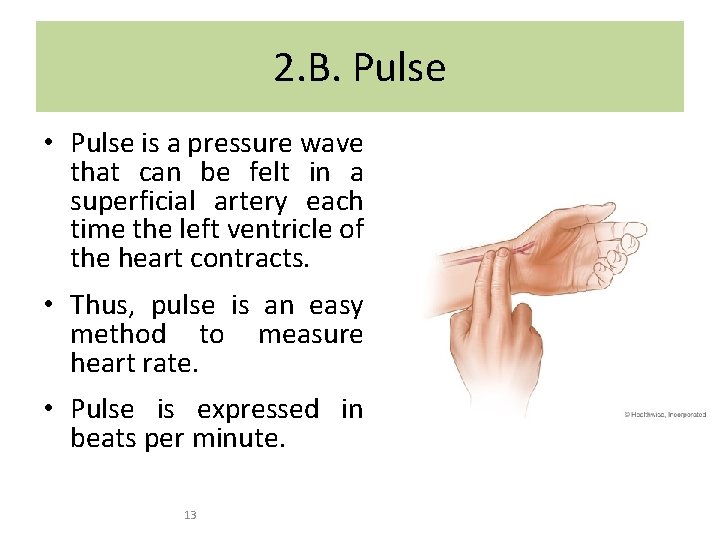
2. B. Pulse • Pulse is a pressure wave that can be felt in a superficial artery each time the left ventricle of the heart contracts. • Thus, pulse is an easy method to measure heart rate. • Pulse is expressed in beats per minute. 13
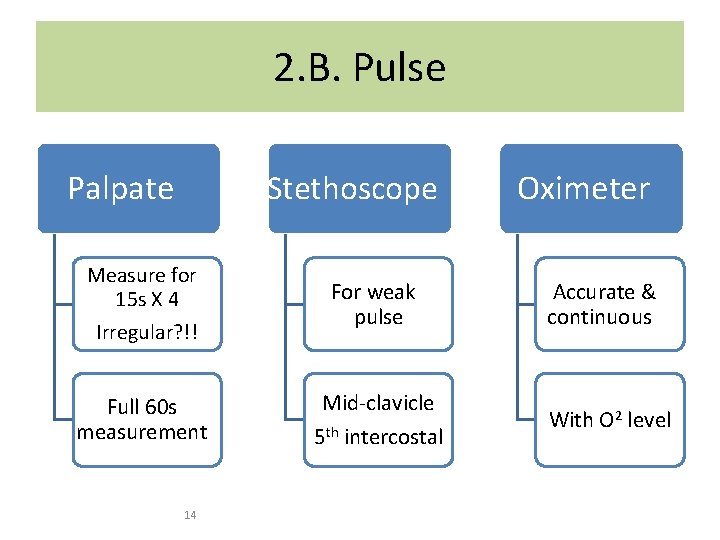
2. B. Pulse Palpate Stethoscope Measure for 15 s X 4 Irregular? !! Full 60 s measurement 14 For weak pulse Mid-clavicle 5 th intercostal Oximeter Accurate & continuous With O 2 level
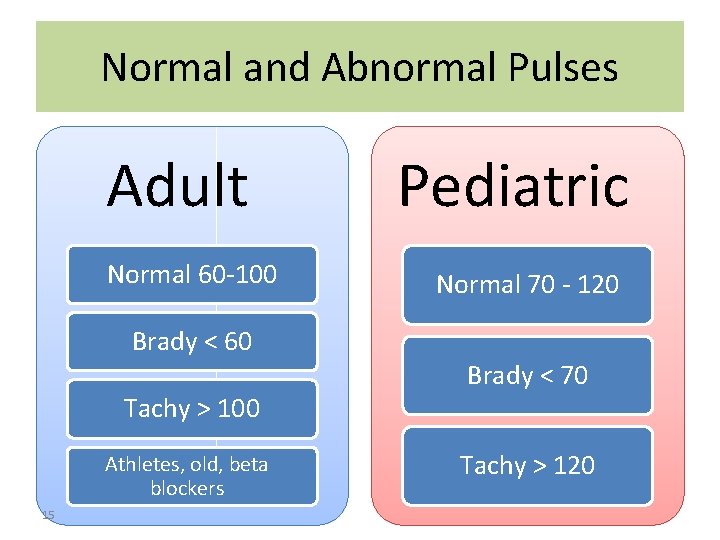
Normal and Abnormal Pulses Adult Normal 60 -100 Brady < 60 Tachy > 100 Athletes, old, beta blockers 15 Pediatric Normal 70 - 120 Brady < 70 Tachy > 120
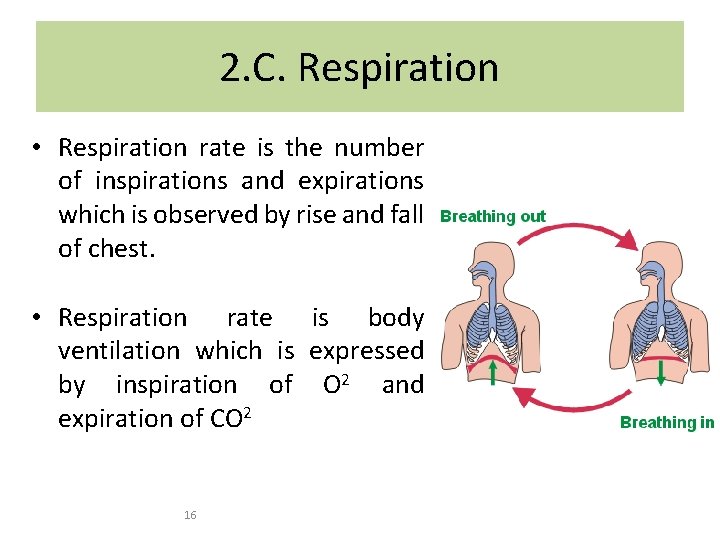
2. C. Respiration • Respiration rate is the number of inspirations and expirations which is observed by rise and fall of chest. • Respiration rate is body ventilation which is expressed by inspiration of O 2 and expiration of CO 2 16
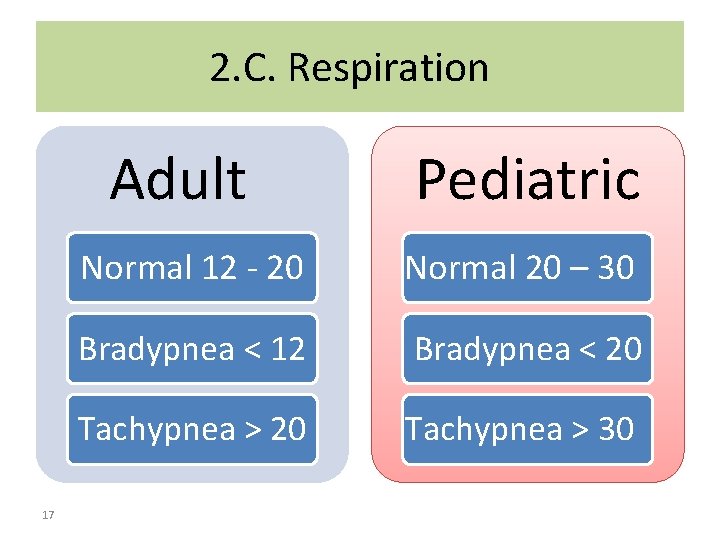
2. C. Respiration Adult 17 Pediatric Normal 12 - 20 Normal 20 – 30 Bradypnea < 12 Bradypnea < 20 Tachypnea > 30
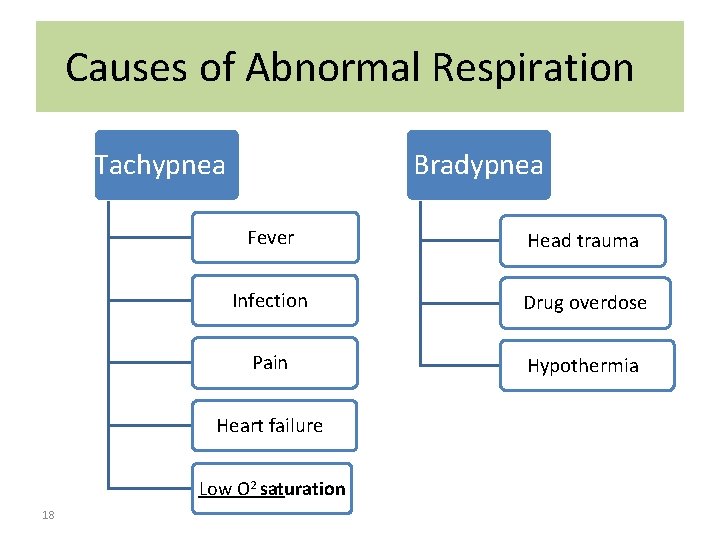
Causes of Abnormal Respiration Tachypnea Bradypnea Fever Head trauma Infection Drug overdose Pain Hypothermia Heart failure Low O 2 saturation 18
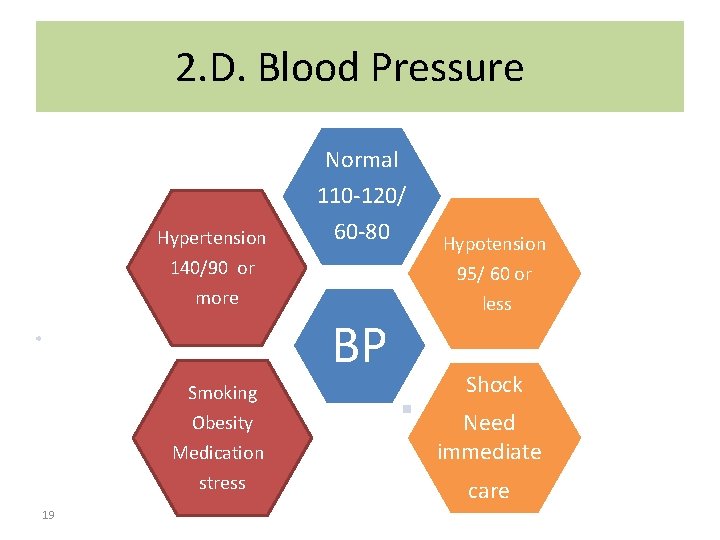
2. D. Blood Pressure Normal 110 -120/ Hypertension 60 -80 140/90 or more BP Smoking Obesity Medication stress 19 Hypotension 95/ 60 or less Shock Need immediate care
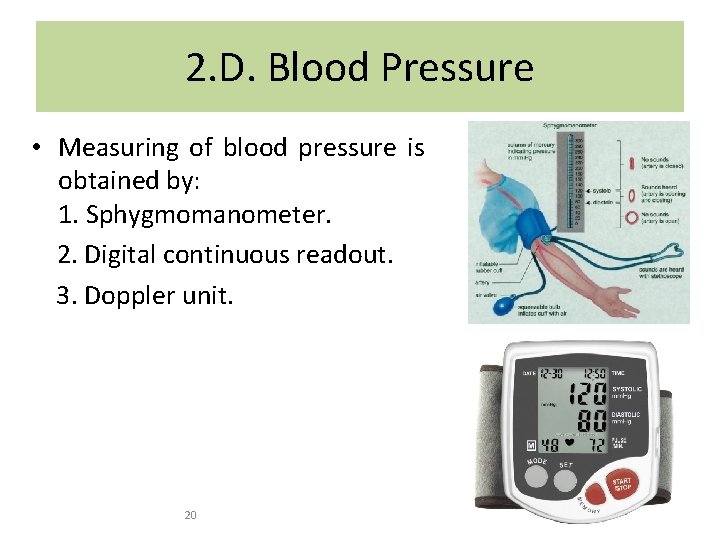
2. D. Blood Pressure • Measuring of blood pressure is obtained by: 1. Sphygmomanometer. 2. Digital continuous readout. 3. Doppler unit. 20
Homework [3] • Write about the “Code of Ethics in Radiology Technology”. – Note: Mention the electronic link for your answers 21
Questions !! Any Questions ? 22
23
24