
Pathway Guide AUB GP Referral Pathway Saint Marys
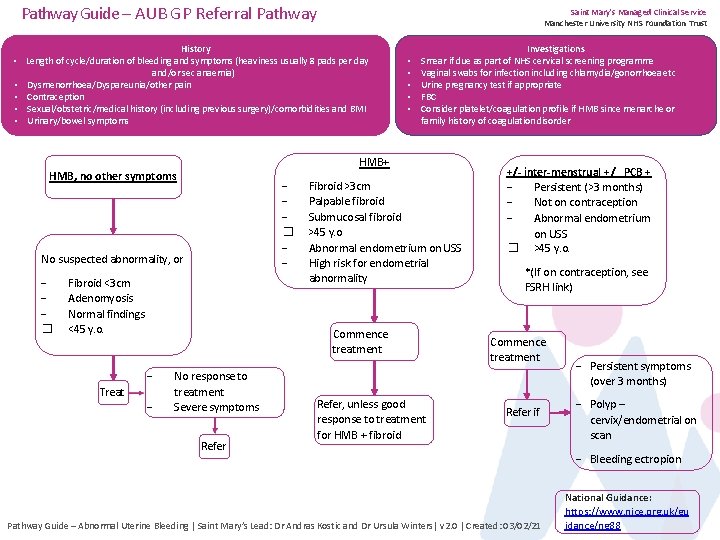
Pathway Guide – AUB GP Referral Pathway • • • Saint Mary's Managed Clinical Service Manchester University NHS Foundation Trust History Length of cycle/duration of bleeding and symptoms (heaviness usually 8 pads per day and/or sec anaemia) Dysmenorrhoea/Dyspareunia/other pain Contraception Sexual/obstetric/medical history (including previous surgery)/comorbidities and BMI Urinary/bowel symptoms � No suspected abnormality, or Fibroid <3 cm Adenomyosis Normal findings <45 y. o. Fibroid >3 cm Palpable fibroid Submucosal fibroid >45 y. o Abnormal endometrium on USS High risk for endometrial abnormality Commence treatment Treat Investigations Smear if due as part of NHS cervical screening programme Vaginal swabs for infection including chlamydia/gonorrhoea etc Urine pregnancy test if appropriate FBC Consider platelet/coagulation profile if HMB since menarche or family history of coagulation disorder HMB+ HMB, no other symptoms � • • • No response to treatment Severe symptoms Refer, unless good response to treatment for HMB + fibroid +/- inter-menstrual +/_ PCB + Persistent (>3 months) Not on contraception Abnormal endometrium on USS � >45 y. o. *(If on contraception, see FSRH link) Commence treatment Refer if Pathway Guide – Abnormal Uterine Bleeding | Saint Mary’s Lead: Dr Andras Kostic and Dr Ursula Winters| v 2. 0 | Created: 03/02/21 Persistent symptoms (over 3 months) Polyp – cervix/endometrial on scan Bleeding ectropion National Guidance: https: //www. nice. org. uk/gu idance/ng 88
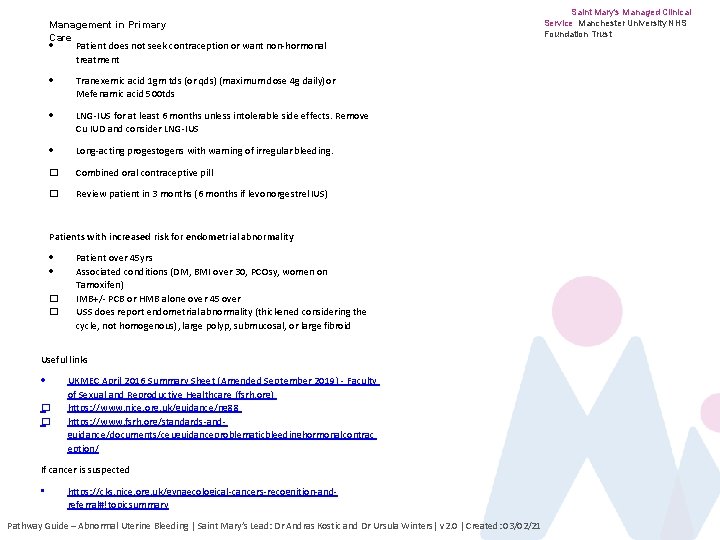
Management in Primary Care Patient does not seek contraception or want non-hormonal treatment Tranexemic acid 1 gm tds (or qds) (maximum dose 4 g daily) or Mefenamic acid 500 tds LNG-IUS for at least 6 months unless intolerable side effects. Remove Cu IUD and consider LNG-IUS Long-acting progestogens with warning of irregular bleeding. � Combined oral contraceptive pill � Review patient in 3 months (6 months if levonorgestrel IUS) Patients with increased risk for endometrial abnormality � � Patient over 45 yrs Associated conditions (DM, BMI over 30, PCOsy, women on Tamoxifen) IMB+/- PCB or HMB alone over 45 over USS does report endometrial abnormality (thickened considering the cycle, not homogenous), large polyp, submucosal, or large fibroid Useful links � � UKMEC April 2016 Summary Sheet (Amended September 2019) - Faculty of Sexual and Reproductive Healthcare (fsrh. org) https: //www. nice. org. uk/guidance/ng 88 https: //www. fsrh. org/standards-andguidance/documents/ceuguidanceproblematicbleedinghormonalcontrac eption/ If cancer is suspected • https: //cks. nice. org. uk/gynaecological-cancers-recognition-andreferral#!topicsummary Pathway Guide – Abnormal Uterine Bleeding | Saint Mary’s Lead: Dr Andras Kostic and Dr Ursula Winters| v 2. 0 | Created: 03/02/21 Saint Mary's Managed Clinical Service Manchester University NHS Foundation Trust
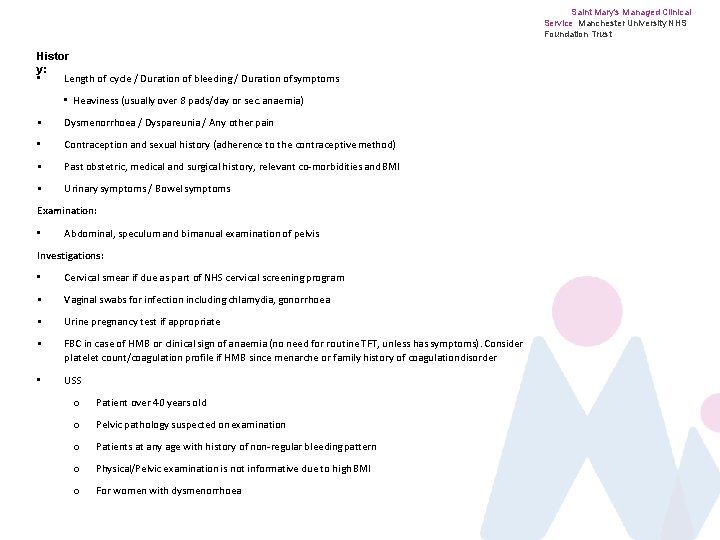
Saint Mary's Managed Clinical Service Manchester University NHS Foundation Trust Histor y: • Length of cycle / Duration of bleeding / Duration of symptoms • Heaviness (usually over 8 pads/day or sec. anaemia) • Dysmenorrhoea / Dyspareunia / Any other pain • Contraception and sexual history (adherence to the contraceptive method) • Past obstetric, medical and surgical history, relevant co-morbidities and BMI • Urinary symptoms / Bowel symptoms Examination: • Abdominal, speculum and bimanual examination of pelvis Investigations: • Cervical smear if due as part of NHS cervical screening program • Vaginal swabs for infection including chlamydia, gonorrhoea • Urine pregnancy test if appropriate • FBC in case of HMB or clinical sign of anaemia (no need for routine TFT, unless has symptoms). Consider platelet count/coagulation profile if HMB since menarche or family history of coagulation disorder • USS o Patient over 40 years old o Pelvic pathology suspected on examination o Patients at any age with history of non-regular bleeding pattern o Physical/Pelvic examination is not informative due to high BMI o For women with dysmenorrhoea
- Slides: 3