
PATHTRACING IN PRACTICE Advanced Computer Graphics 2014 Erik
- Slides: 50
PATHTRACING IN PRACTICE Advanced Computer Graphics 2014 Erik Sintorn
Overview • Motivation and problem statement • Light Transport Equation (aka The Rendering Equation) • Monte Carlo Integration • Naïve Path Tracing • Making Path Tracing usable • Separating Direct and Indirect lighting • Importance sampling • Stratified sampling • Multiple Importance Sampling
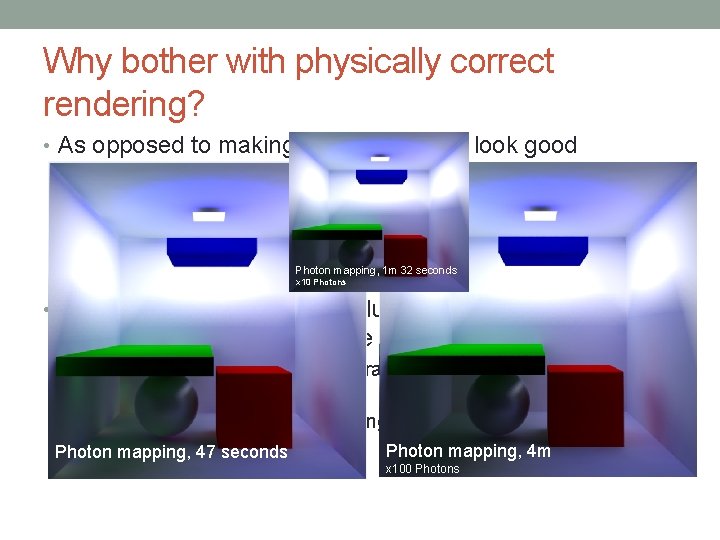
Why bother with physically correct rendering? • As opposed to making up shaders that look good • When something goes wrong, you can reason about why, and how to fix it. • It is easy to hack a material shader that looks realistic for specific lighting conditions, but extremely difficult to hack something that mapping, 1 m 32 seconds allways looks realistic. Photon x 10 Photons • Why bother with unbiased solutions, as opposed to e. g. Photon mapping or Irradiance caching? • An unbiased method (e. g. path-tracing) may take longer to converge • But we will know early if something looks wrong Photon mapping, 47 seconds Photon mapping, 4 m x 100 Photons
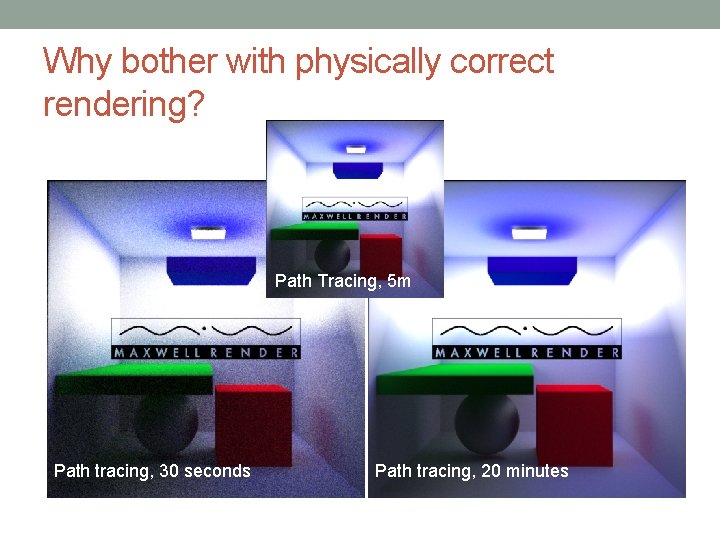
Why bother with physically correct rendering? Path Tracing, 5 m Path tracing, 30 seconds Path tracing, 20 minutes
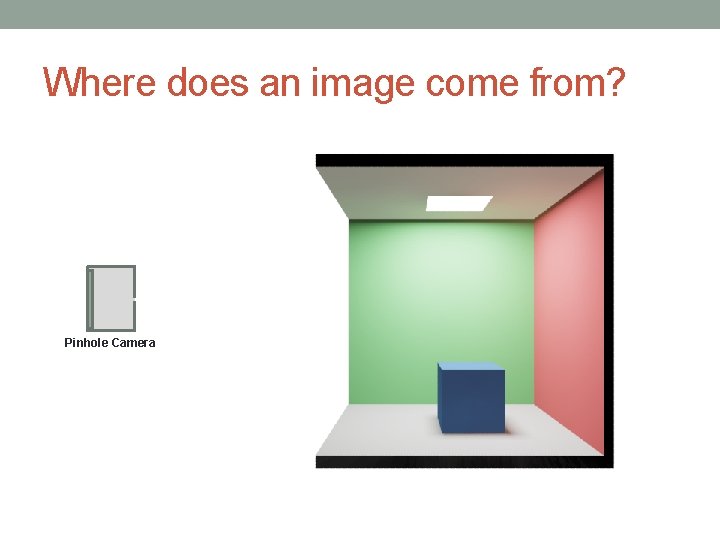
Where does an image come from? Pinhole Camera
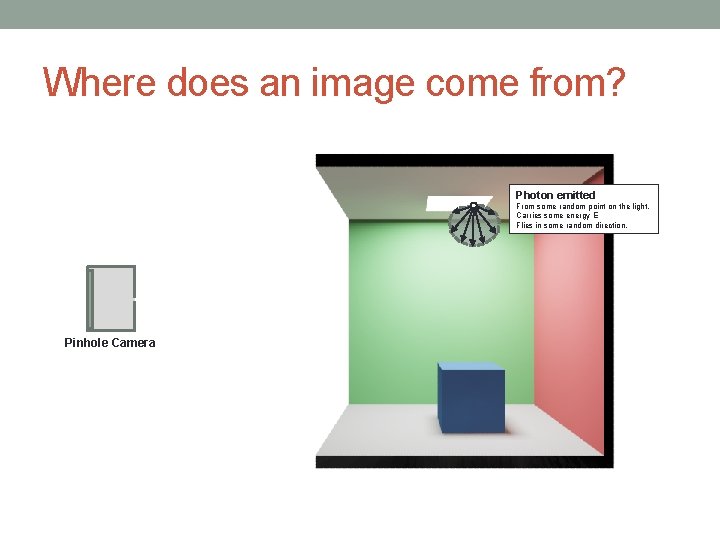
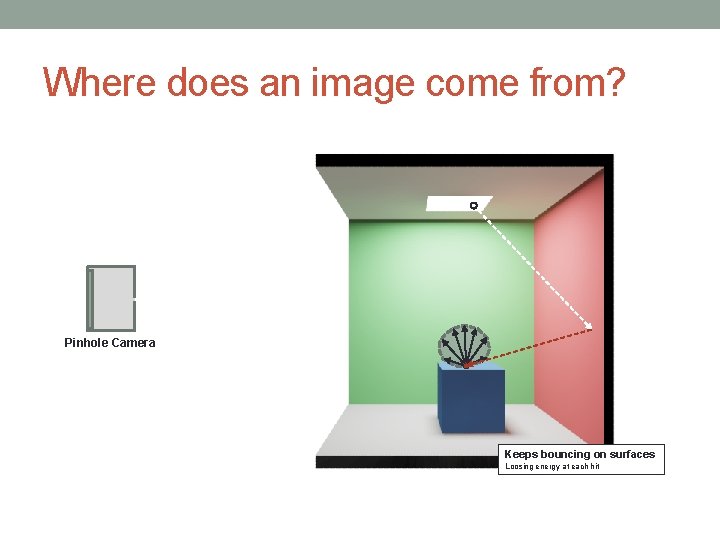
Where does an image come from? Photon emitted From some random point on the light. Carries some energy E Flies in some random direction. Pinhole Camera
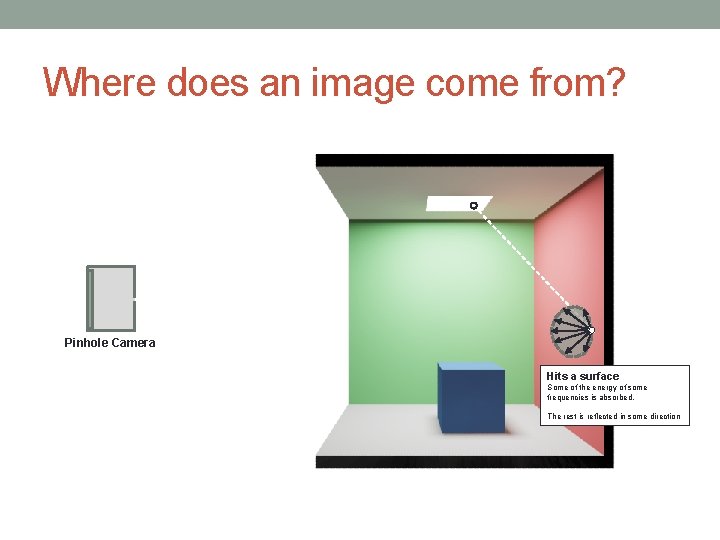
Where does an image come from? Pinhole Camera Hits a surface Some of the energy of some frequencies is absorbed. The rest is reflected in some direction
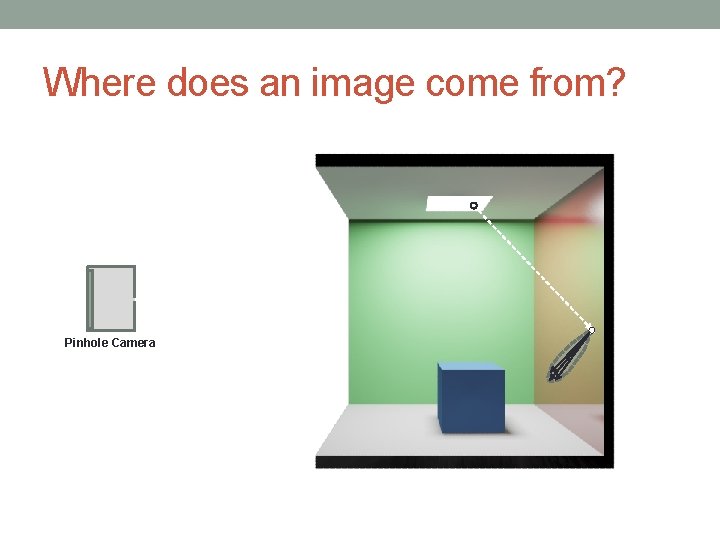
Where does an image come from? Pinhole Camera
Where does an image come from? Pinhole Camera Keeps bouncing on surfaces Loosing energy at each hit
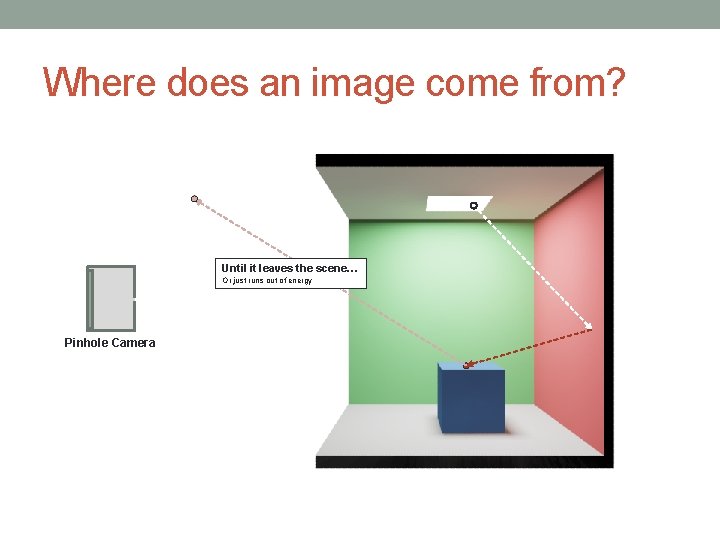
Where does an image come from? Until it leaves the scene… Or just runs out of energy Pinhole Camera
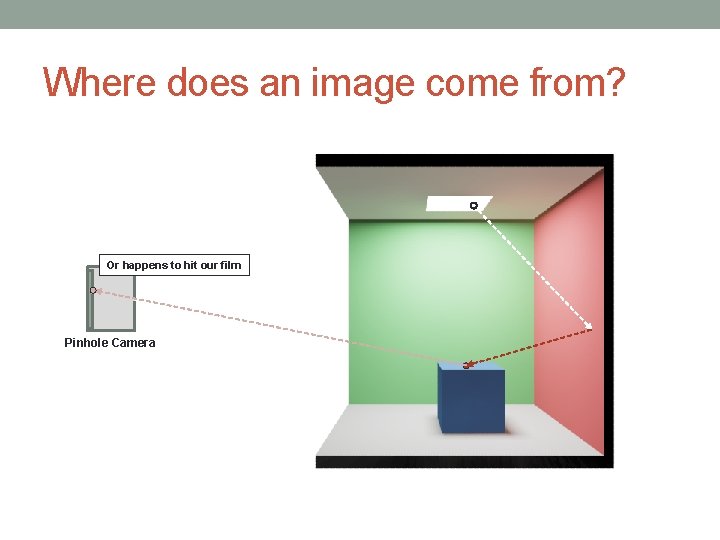
Where does an image come from? Or happens to hit our film Pinhole Camera
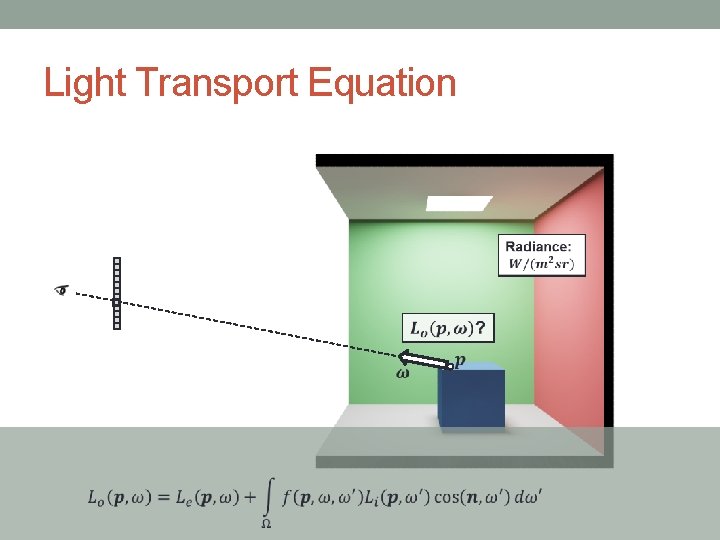
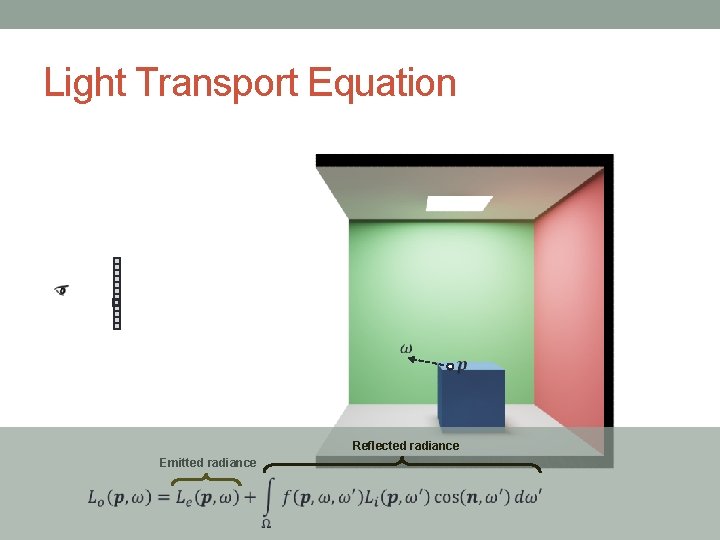
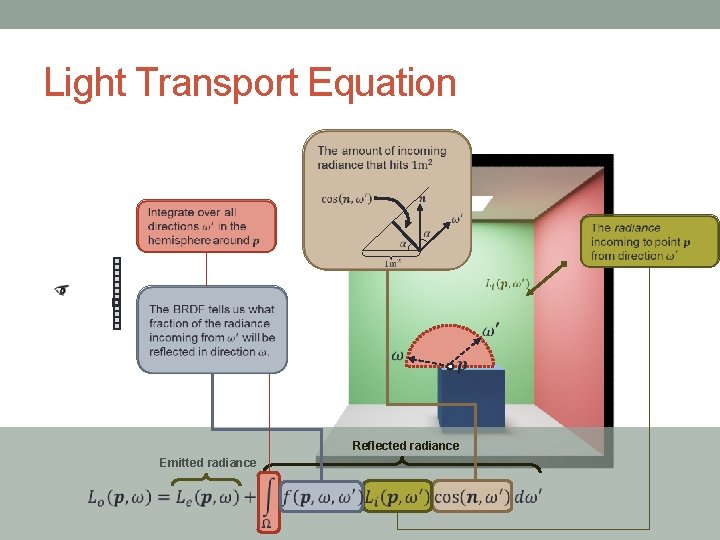
Light Transport Equation
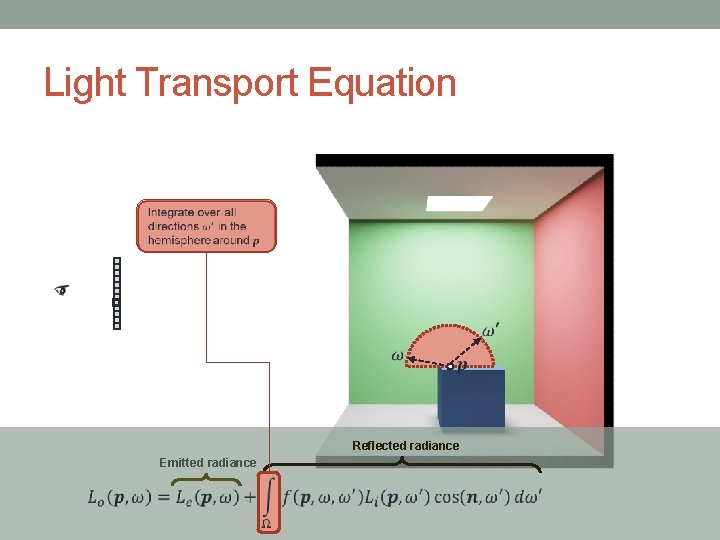
Light Transport Equation Reflected radiance Emitted radiance
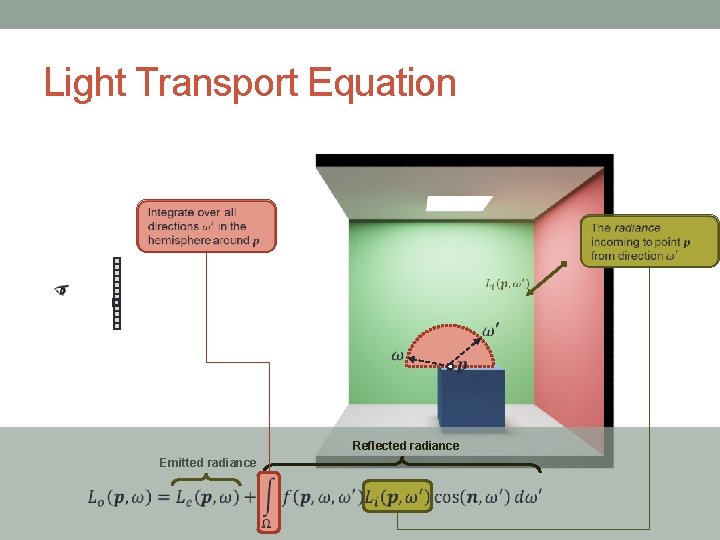
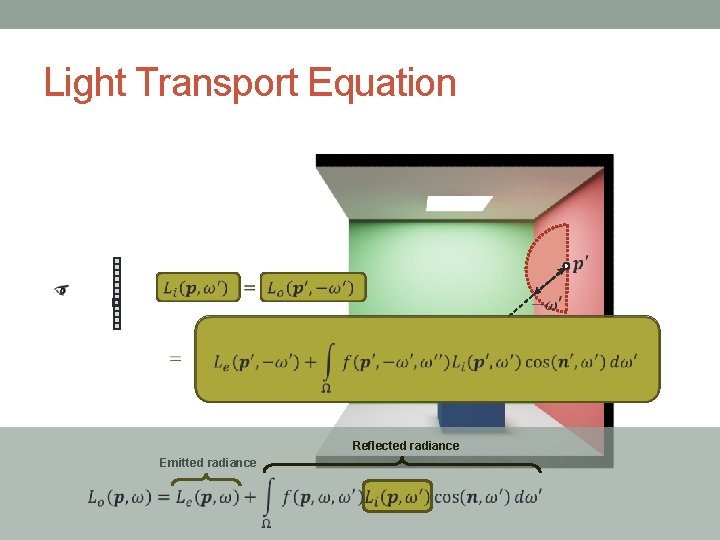
Light Transport Equation Reflected radiance Emitted radiance
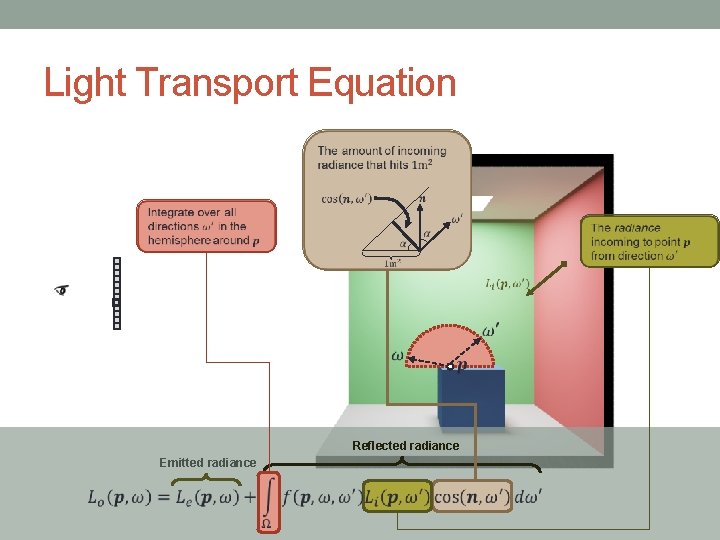
Light Transport Equation Reflected radiance Emitted radiance
Light Transport Equation Reflected radiance Emitted radiance
Light Transport Equation Reflected radiance Emitted radiance
Light Transport Equation Reflected radiance Emitted radiance
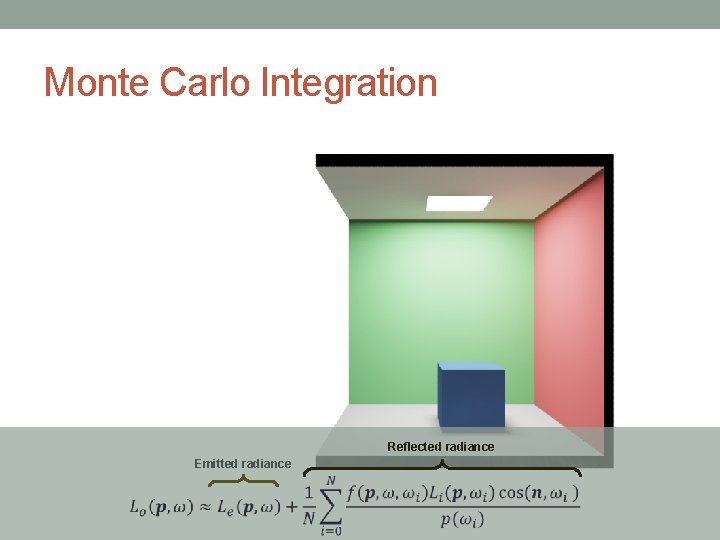
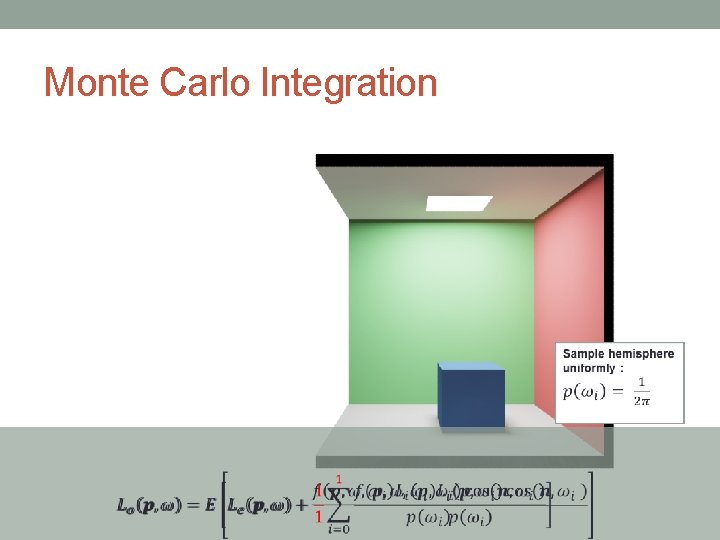
Monte Carlo Integration Reflected radiance Emitted radiance
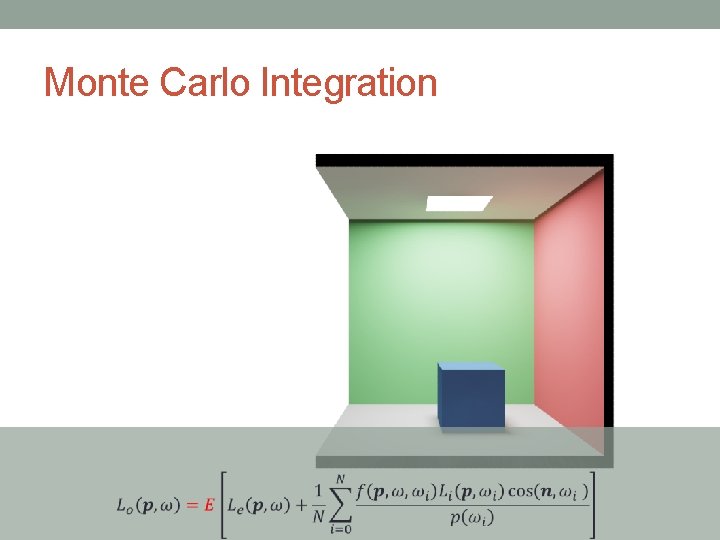
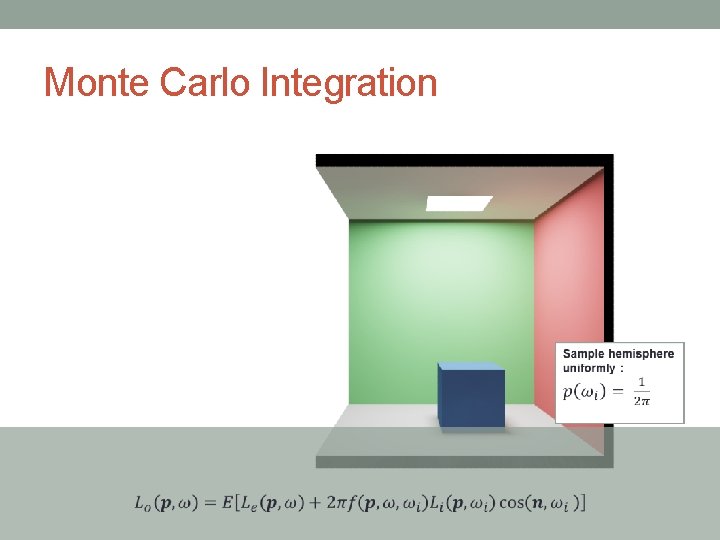
Monte Carlo Integration
Monte Carlo Integration
Monte Carlo Integration
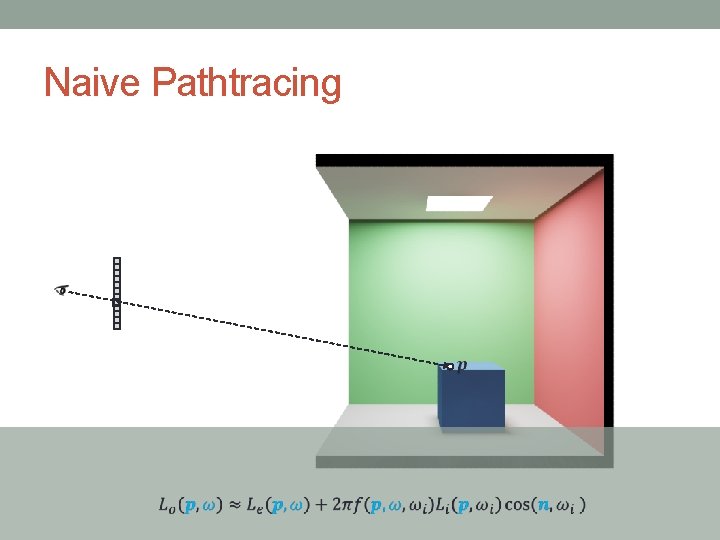
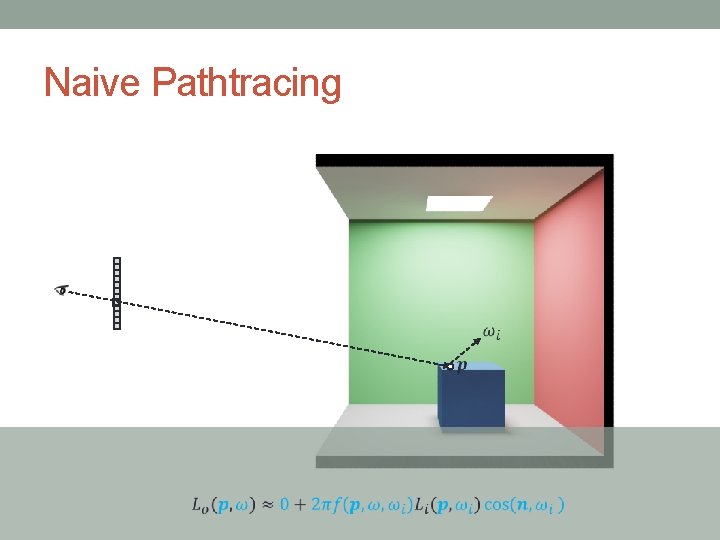
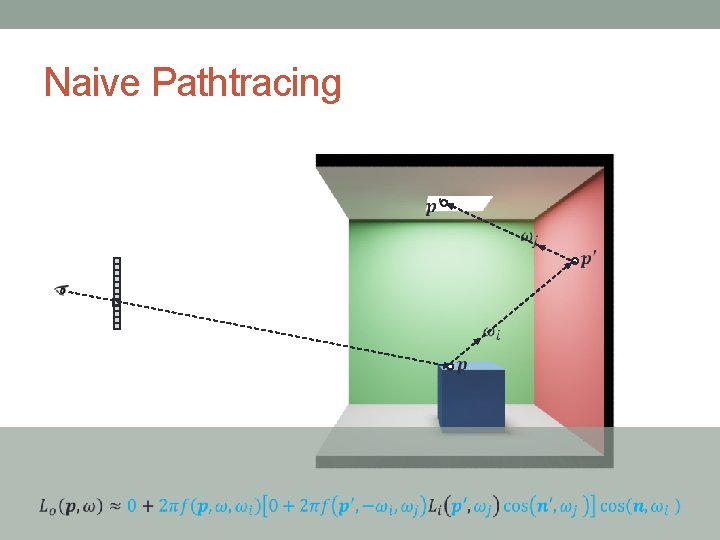
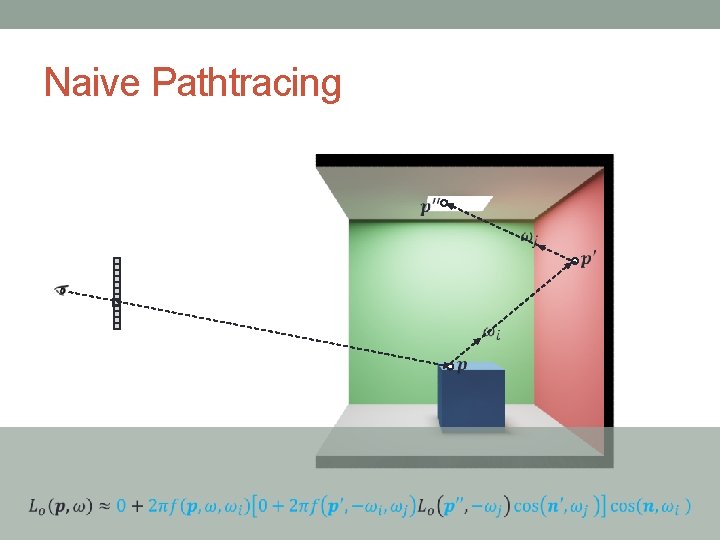
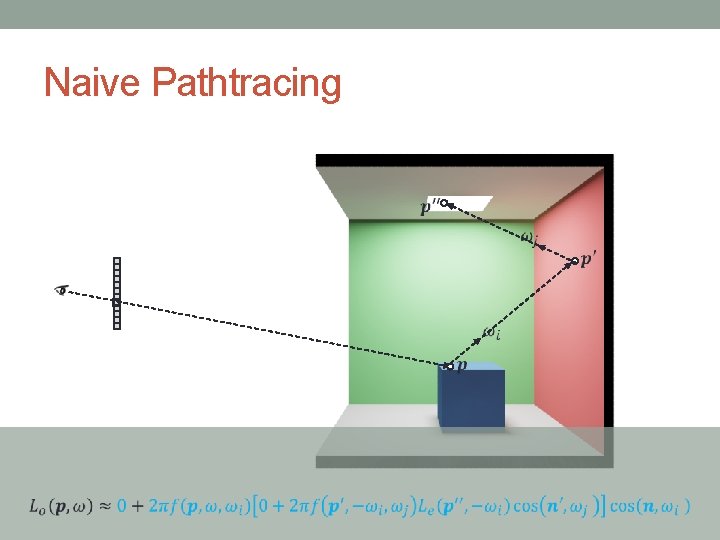
Naive Pathtracing
Naive Pathtracing
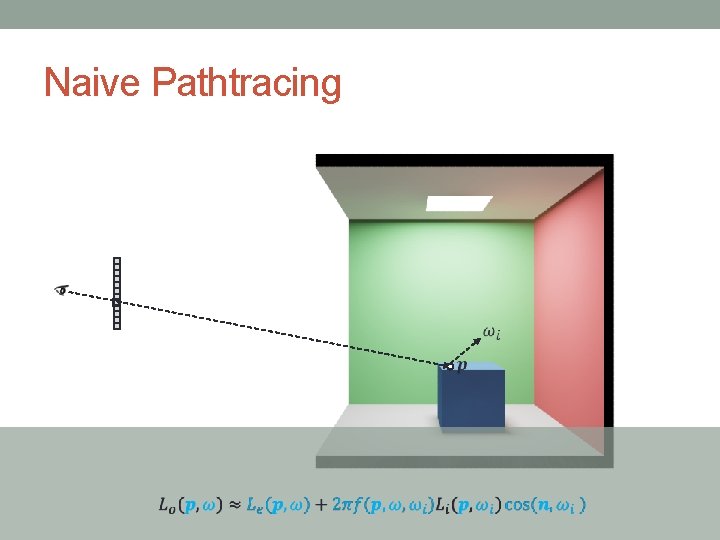
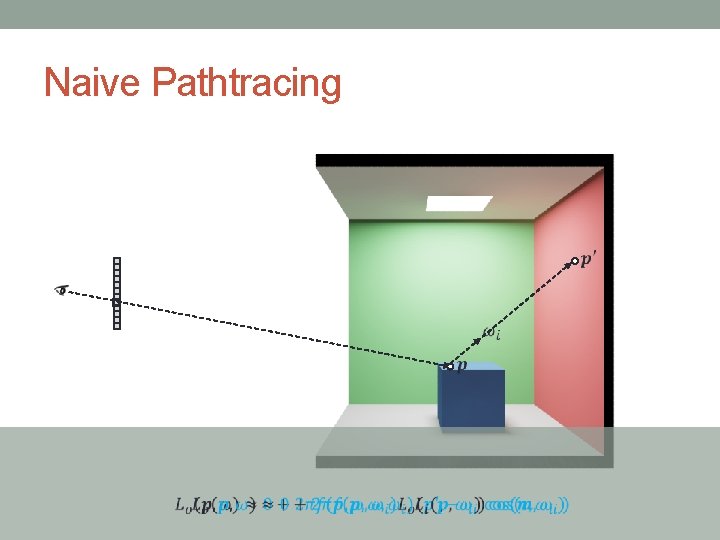
Naive Pathtracing
Naive Pathtracing
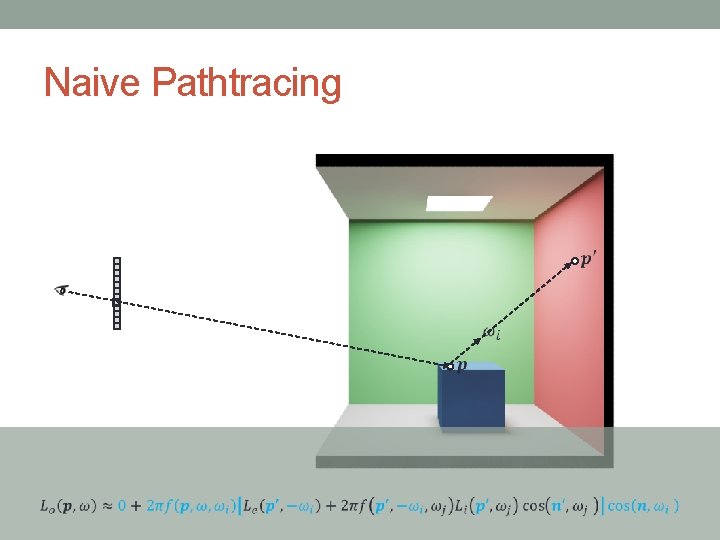
Naive Pathtracing
Naive Pathtracing
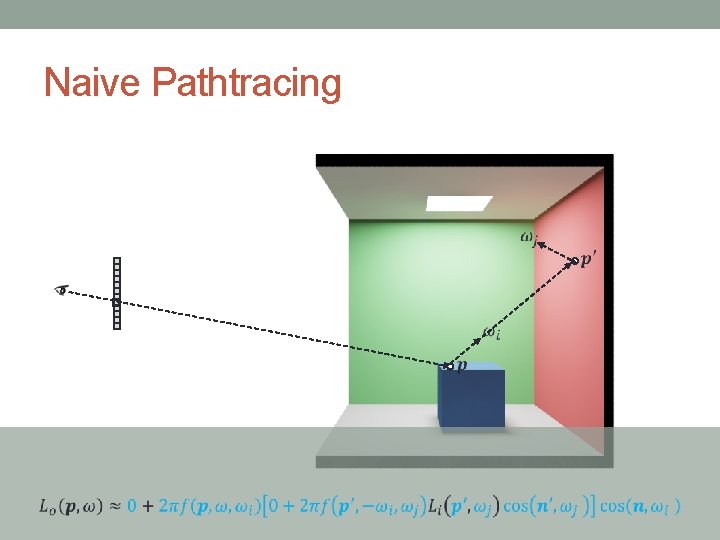
Naive Pathtracing
Naive Pathtracing
Naive Pathtracing
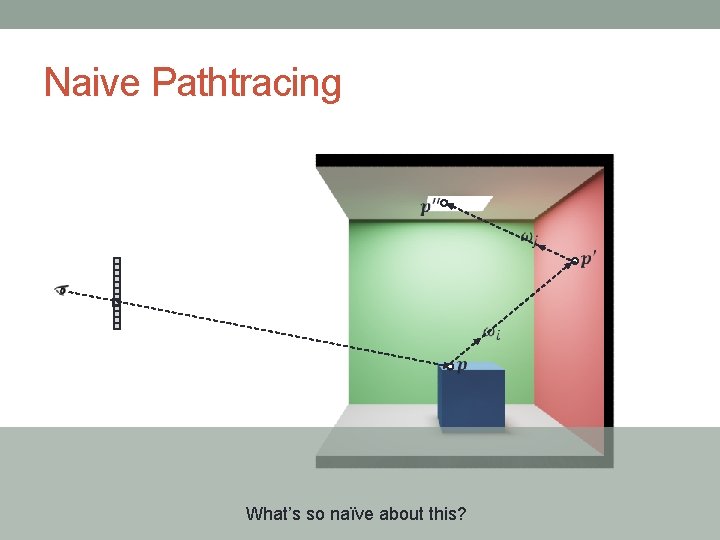
Naive Pathtracing What’s so naïve about this?
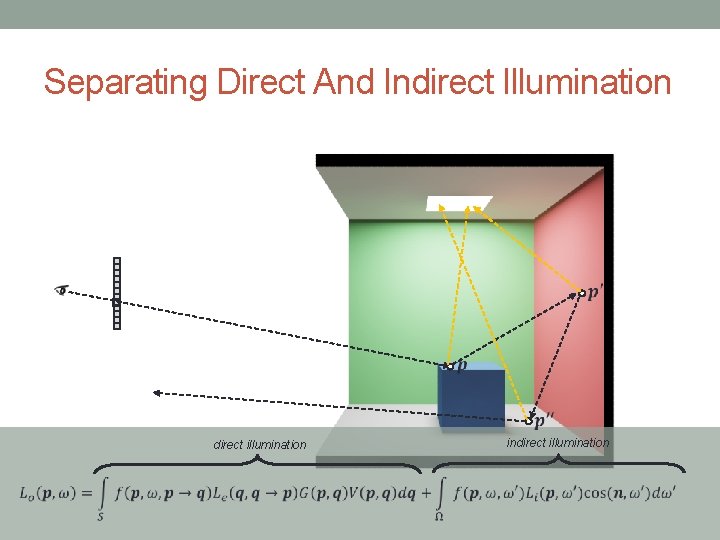
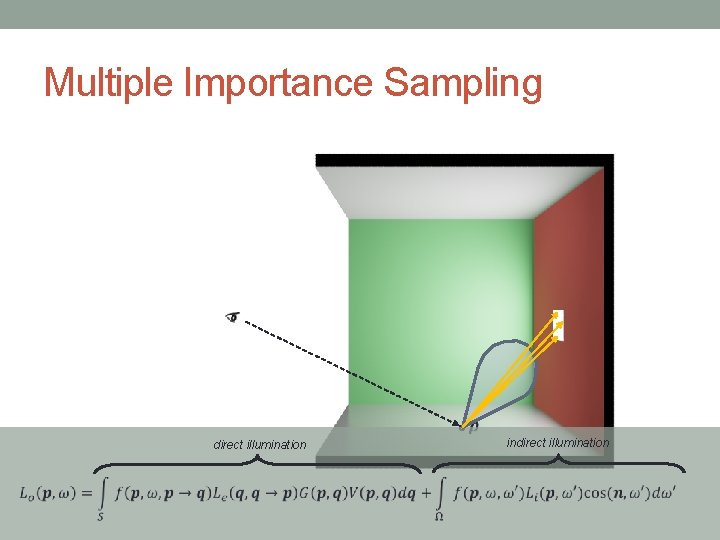
Separating Direct And Indirect Illumination direct illumination indirect illumination
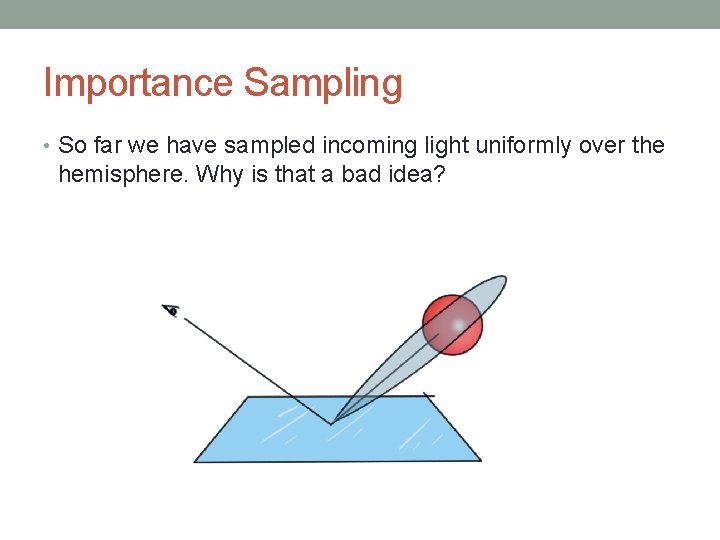
Importance Sampling • So far we have sampled incoming light uniformly over the hemisphere. Why is that a bad idea?
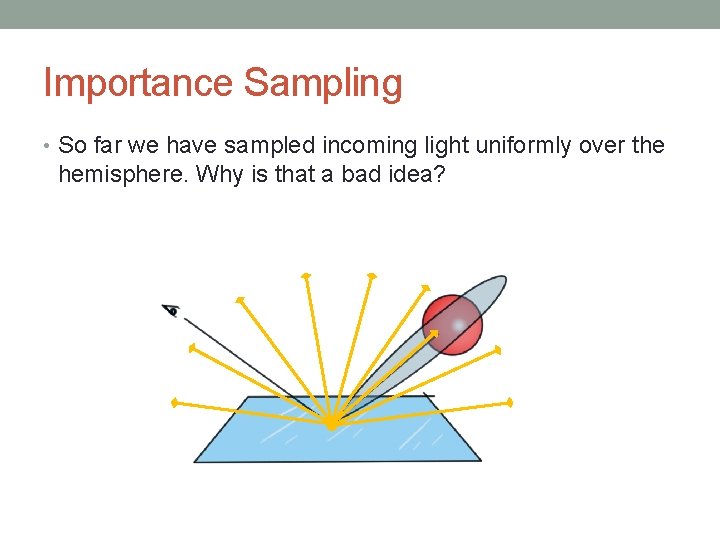
Importance Sampling • So far we have sampled incoming light uniformly over the hemisphere. Why is that a bad idea?
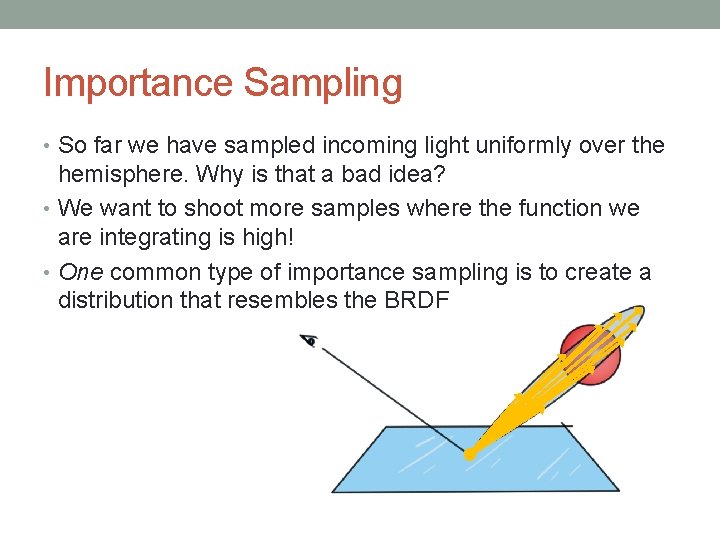
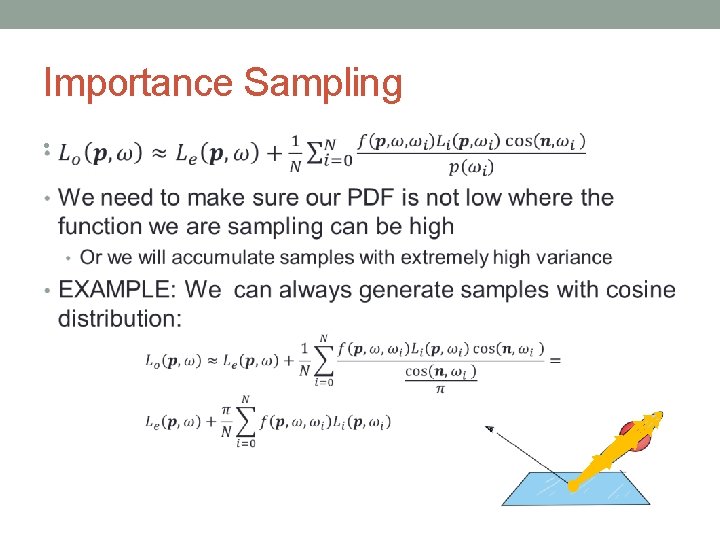
Importance Sampling • So far we have sampled incoming light uniformly over the hemisphere. Why is that a bad idea? • We want to shoot more samples where the function we are integrating is high! • One common type of importance sampling is to create a distribution that resembles the BRDF
Importance Sampling •
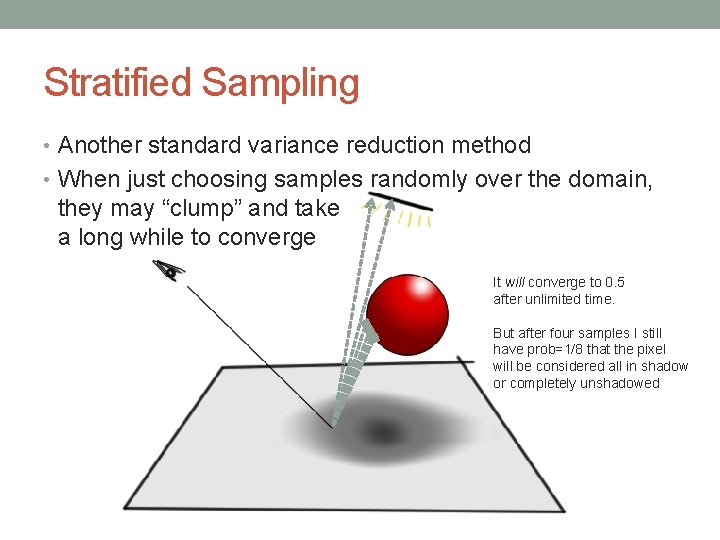
Stratified Sampling • Another standard variance reduction method • When just choosing samples randomly over the domain, they may “clump” and take a long while to converge It will converge to 0. 5 after unlimited time. But after four samples I still have prob=1/8 that the pixel will be considered all in shadow or completely unshadowed
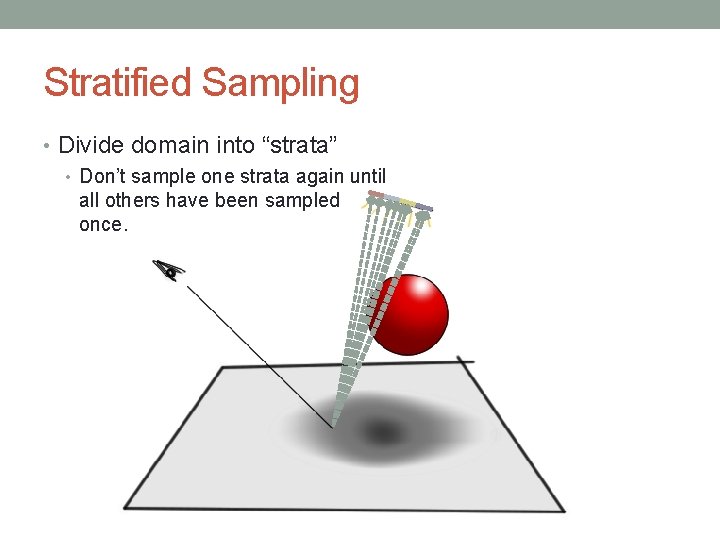
Stratified Sampling • Divide domain into “strata” • Don’t sample one strata again until all others have been sampled once.
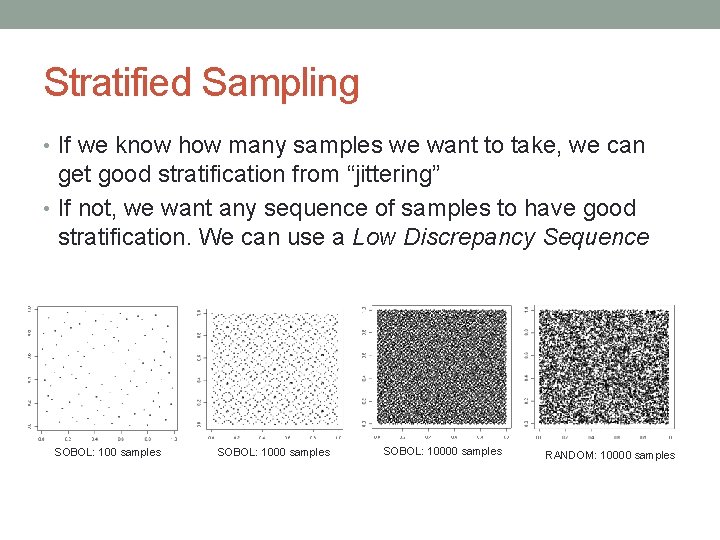
Stratified Sampling • If we know how many samples we want to take, we can get good stratification from “jittering” • If not, we want any sequence of samples to have good stratification. We can use a Low Discrepancy Sequence SOBOL: 100 samples SOBOL: 10000 samples RANDOM: 10000 samples
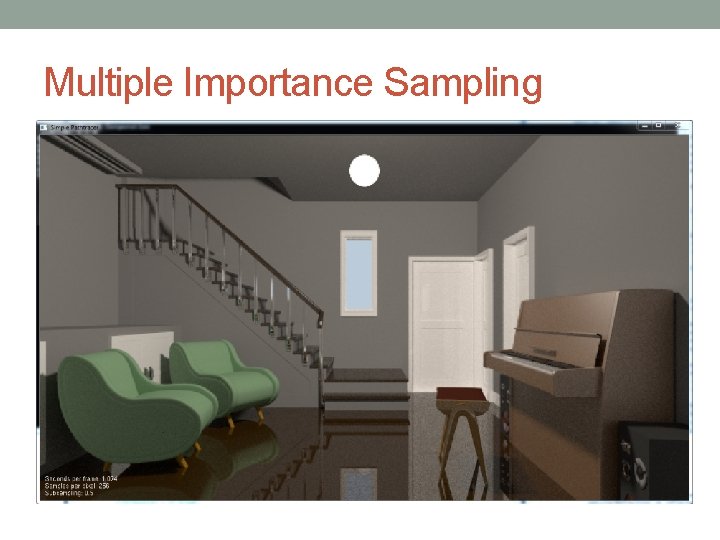
Multiple Importance Sampling direct illumination indirect illumination
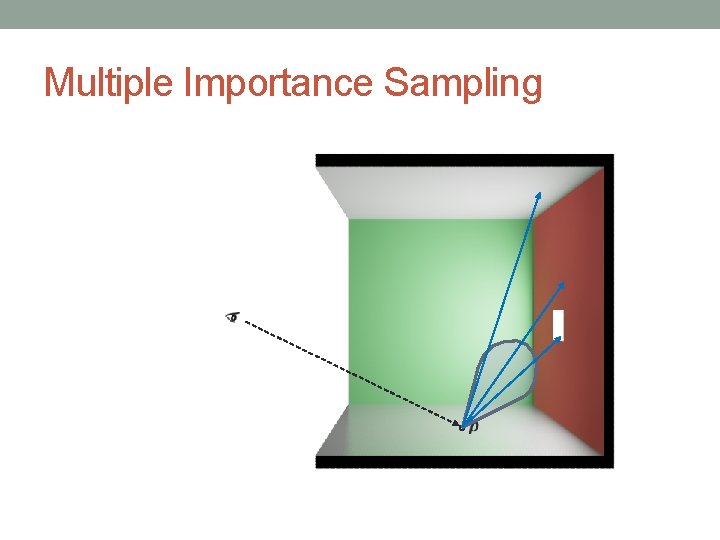
Multiple Importance Sampling
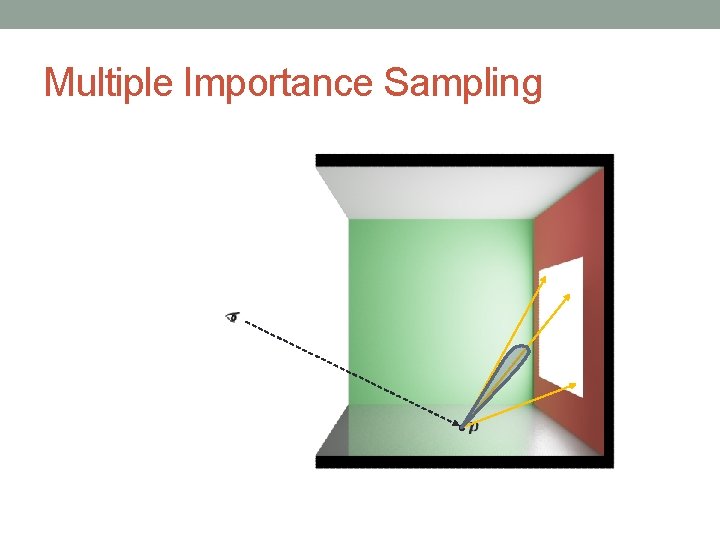
Multiple Importance Sampling
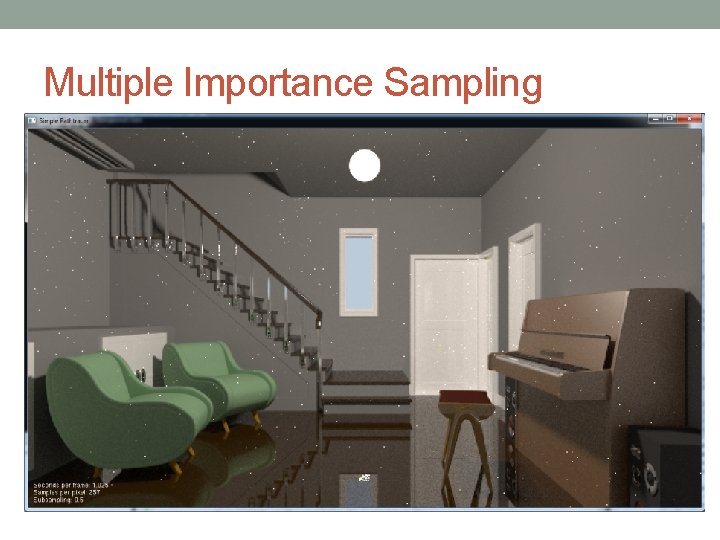
Multiple Importance Sampling
Multiple Importance Sampling Do both! • Sample brdf first • Then light • PDF of this sampling strategy is (weighted) sum • - Only very low if neither technique is likely to choose dir
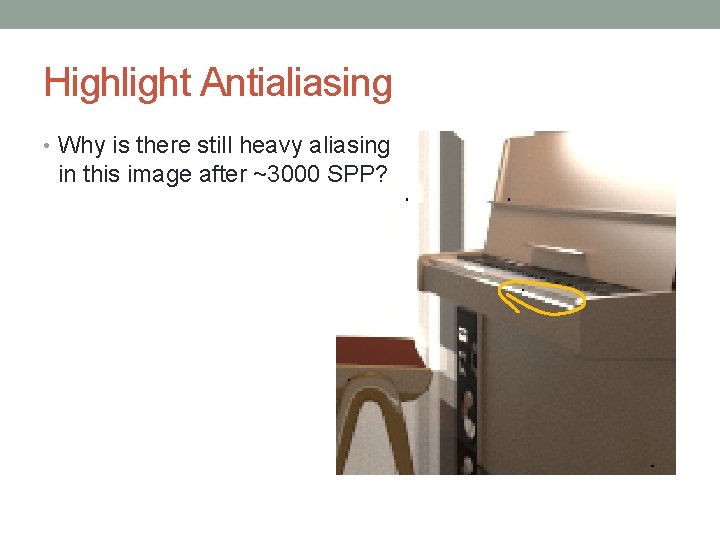
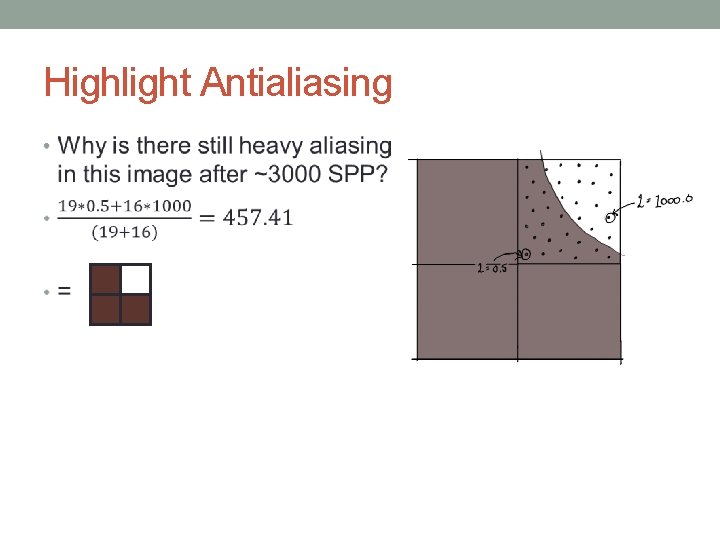
Highlight Antialiasing • Why is there still heavy aliasing in this image after ~3000 SPP?
Highlight Antialiasing •
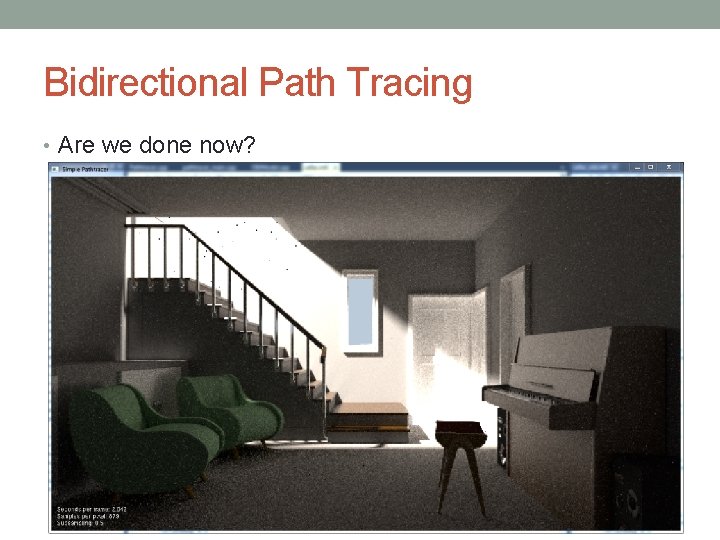
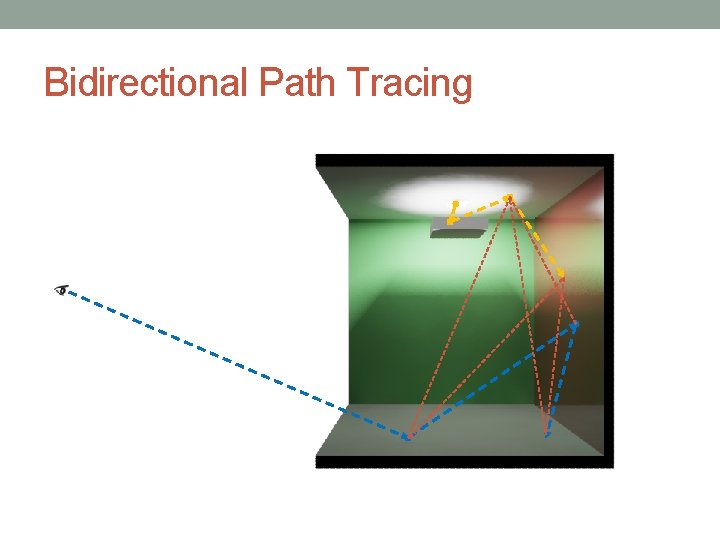
Bidirectional Path Tracing • Are we done now?
Bidirectional Path Tracing
Further Reading