
Paths Lesson 7 Recognising and Controlling Anger Objectives
Paths Lesson 7 – Recognising and Controlling Anger Objectives: • • • To recognise anger in ourselves and others. To understand internal and external cues for emotions. To provide ways to calm down.
How do you know you are feeling angry? FEELS INSIDE SHOWS OUTSIDE
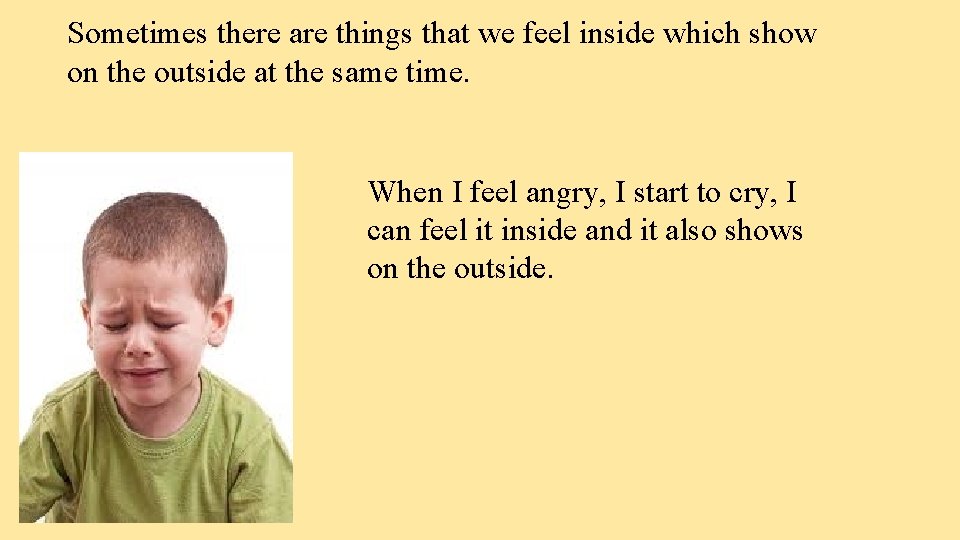
Sometimes there are things that we feel inside which show on the outside at the same time. When I feel angry, I start to cry, I can feel it inside and it also shows on the outside.
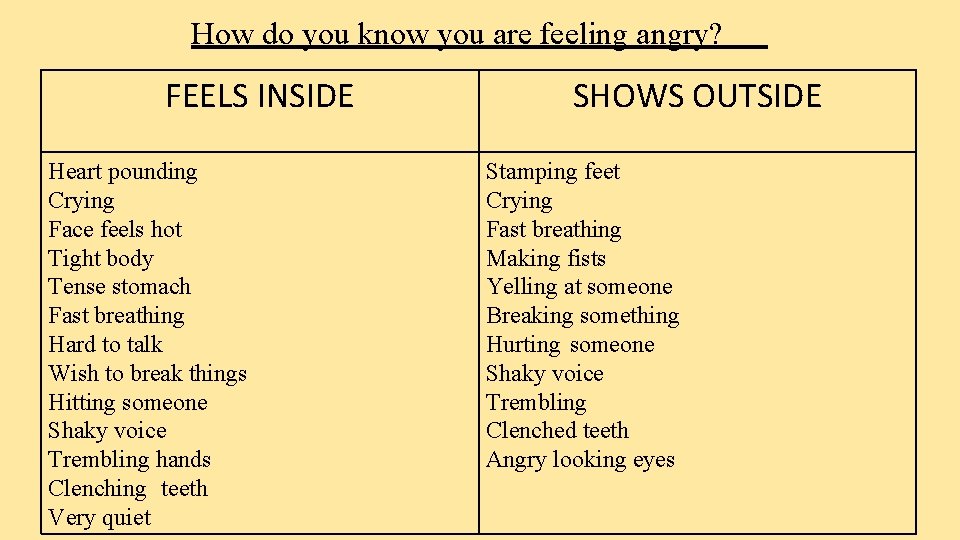
How do you know you are feeling angry? FEELS INSIDE Heart pounding Crying Face feels hot Tight body Tense stomach Fast breathing Hard to talk Wish to break things Hitting someone Shaky voice Trembling hands Clenching teeth Very quiet SHOWS OUTSIDE Stamping feet Crying Fast breathing Making fists Yelling at someone Breaking something Hurting someone Shaky voice Trembling Clenched teeth Angry looking eyes
Can we ever feel angry on the inside without showing it on the outside? Yes, we can feel angry on the inside and not show it on the outside. Sometimes we keep our angry feelings private and we don’t show other people how we feel.

Sometimes when we are very angry or upset or excited it is difficult to have control over our behaviours, especially when these feelings are very strong.
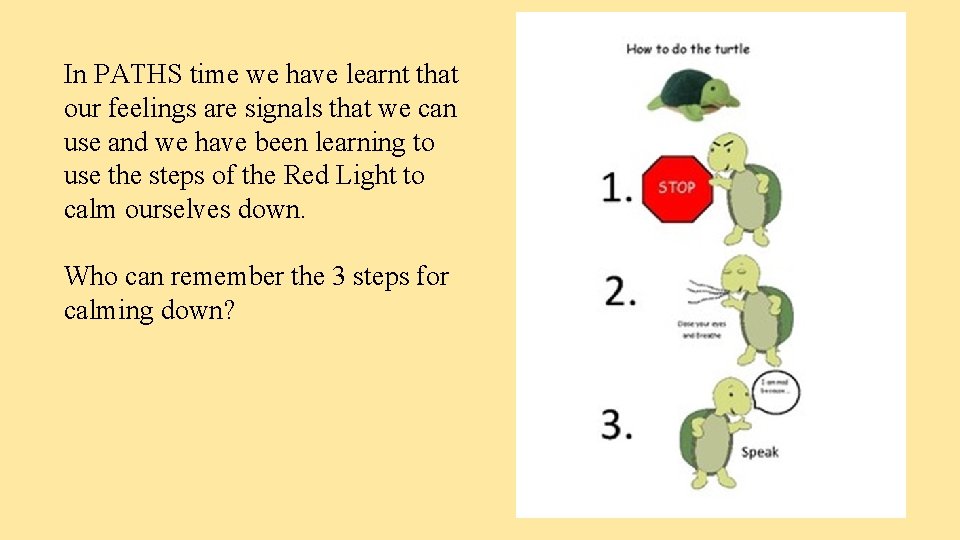
In PATHS time we have learnt that our feelings are signals that we can use and we have been learning to use the steps of the Red Light to calm ourselves down. Who can remember the 3 steps for calming down?
His is only one method for calming down. What else could you do? Say things to yourself like “cool it”, “calm down” Count to 10 Take one long deep breath Think of nice things Think to yourself “I’m okay” Go and sit down somewhere else Stand very still Walk away
Sometimes using the 3 Steps for Calming Down is the best way; other times we might try one of the other ideas. What is important , is that when we become very upset or excited, we can use one of these ways to calm down and not make our problem worse. Sometimes, calming down is all we need to solve our problem. Other times, calming down is just the first step. When we calm we can think of a better solution to our problem.
Tell your partner your preferred method of calming down.
- Slides: 10